
Ötzi the Ice Man caused a sensation when he was “discovered” in 1991. There are hundreds and hundreds of reports, analysis, research and conjecture both published and floating through the internet.
This is most of Chapter 14 of a book, “A Little History of Archaeology” by Brian Fagan.
“In September 1991, German climbers Helmut and Erika Simon spotted something brown protruding from ice and meltwater at the base of a gully some 3,210 metres up in the Alps, near Hauslabjoch, on the border between Italy and Austria. They realised it was the skull, back and shoulders of a man who had his face in water.
At first police assumed he was the victim of a climbing accident, and he became simply corpse 91/619 on the local coroner’s dissection table (coroners are the officials who certify deaths). But the official soon realised that the body was very old and called in the archaeologists. An excavation was organised at the site, now buried under fresh snow. Diggers used a steam blower and a hair dryer to recover a grass cloak, leaves, tufts of grass and wood fragments. By the end of the quick excavation, the recovery team had named the victim Ötzi the Ice Man. He had put down his axe, bow and backpack on a sheltered ledge. Then he lain down on his left side, his head resting on a boulder. His relaxed limbs suggested that the exhausted man had gone to sleep and frozen to death within a few hours. Ötzi was preserved undisturbed in cold storage, just like a side of beef.
A complex detective story now unfolded. Experts radiocarbon dated the body to between 3350 and 3150 BC, the early European Bronze Age. They calculated that he stood 1.6 metres tall, and was forty-seven years old when he died some 5,000 years ago. Ötzi was a self-sufficient man and had spent his last on the move. He was carrying a leather backpack on a wooden frame, a flint dagger and a copper-bladed axe with a wooden handle. He also had a long bow made of yew wood and a roe deer-skin quiver with fourteen arrows. He had spare arrowheads on him, together with dry fungus and iron pyrite – equipment for lighting fires.
His clothing was well suited to the mountains. He wore a sheepskin loincloth fastened with a leather belt. Suspenders from the belt held up a pair of goatskin leggings. His outer coat was a sturdy garment made from alternating strips of black and brown skin from several animals. Over his coat he wore a cape of twisted grass – just like those worn in the Alps as recently as the nineteenth century. A bearskin cap fastened below his chin kept his head warm. Bearskin and deerskin shoes stuffed with grass protected his feet, the grass kept in place by string “socks”.
Height and age calculations were routine stuff. But where had Ötzi lived? A research team used his bones, intestines and teeth to answer that question. Dental enamel is fixed when a tooth is first formed, and so the teeth the researchers examined had traces of chemical elements from whatever foods Ötzi had eaten when he was three to five years old. Bone re-mineralises (regenerates) every ten to twenty years, and so the researchers also had information on where the Ice Man had lived as an adult.
He was born in one of the many river valleys of the southern Tyrol (the most likely candidate being the Eisack Valley, south of the mountains). Ötzi’s bone chemistry showed that he had lived at a higher altitude as an adult. The scientists zeroed in on the tiny fragments of mica in Ötzi’s intestine. They believed that this mineral came from the grindstones used to prepare his food. Potassium-argon dating (see Chapter 27) of the specks identified them as belonging to mica formations in the lower Vinschgau area, west of the Eisack Valley. Ötzi’s biography was complete. He had spent his early years in the lowlands, and then lived in the nearby mountains. He never moved more than about 60 kilometres from his birthplace.
The Ice Man’s corpse also provided a wealth of medical information. His bones revealed that he had experienced malnutrition in his nineth, fifteenth and sixteenth years. He suffered from an irritating intestinal parasite caused by whipworms, the eggs of which were in his intestines. Two fleas came from his clothing. The smoke he had inhaled from indoor fires had made Ötzi’s lungs as black as those of a heavy tobacco smoker today. His hands and fingernails were battered, scarred and chipped from constant manual labour. Ötzi’s stomach was empty, and so he was probably weak and hungry at the time of his death.
It is almost if we are meeting Ötzi face to face. But what was he doing in the mountains and how did he die? Originally, the researchers thought that Ötzi had died a peaceful death, perhaps caught out in bad weather. But they changed their minds when they discovered an arrowhead buried deep in his left shoulder. There is also a dagger wound on one of his hands, as if he had defended himself against a close-quarters attack. DNA came into play again. Samples revealed that he had fought with at least four people. In the end, it was the arrow wound that proved fatal, causing him to bleed to death. Perhaps Ötzi had fled into the mountains and died of his wounds at high altitude.
The Ice Man has a surprisingly complete biography, pieced together at enormous expense by teams of scientists from teams of scientists from many countries. Hundreds of scientific papers describe his body and his medical conditions. It was the deep-freeze of the high Alps that allowed us to study him: the cold preserved his clothing, equipment and weapons. We know far more about Ötzi than we do about millions of other prehistoric hunters and fisherfolk, farmers and cattle herders, Roman soldiers and medieval craftspeople. He gives us a vivid impression of the difficult conditions in which he and others of the time lived. We’re lucky to know what we do from this single humble individual. The find reminds us that archaeology is about people, not things.
Archaeologists have always been fascinated by human skeletons. We have long relied on biological anthropologists to get at the details of the lives as they were lived. They can determine the sex of a skeleton and its age, identify lower backs ruined by hard labour or leg bones bowed by constant horse-riding.
Recently we have moved beyond bones and can look at the once-living human behind them. Thanks to cutting-edge medical technology, even skeletons can be made flesh-and-blood bodies from the tiniest of clues. Biological anthropologists use DNA to trace human migrations. And they use medical imaging technology to study mummies without unwrapping them. Analysis of bone chemistry tells us where people lived their early lives and what diets they preferred. Thanks to medical science, we know more about the Ice Man than he knew himself. Ancient bodies, whether well preserved or mere bones, are a hot topic in today’s archaeology.”
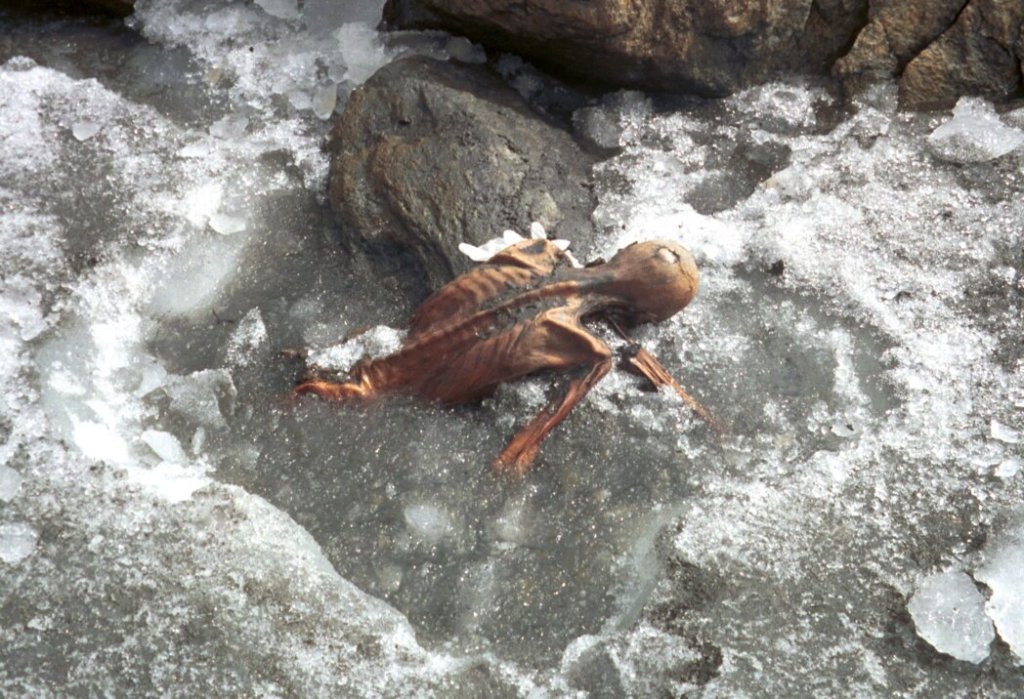

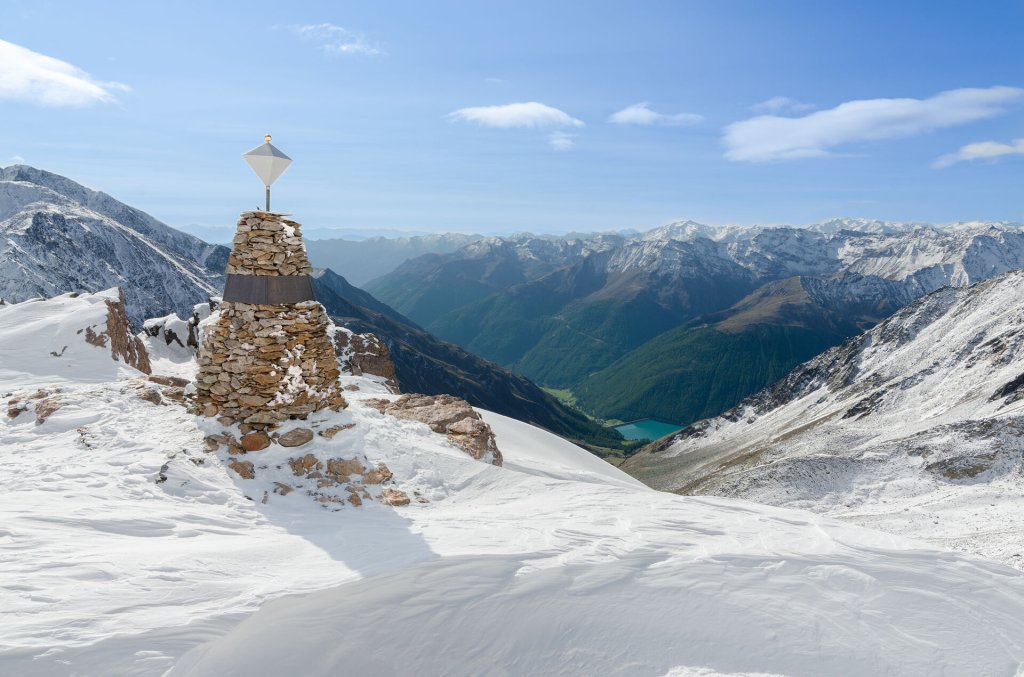
Since 1998, the mummy has been housed in a specially devised cold cell in the South Tyrol Museum of Archaeology in Bolzano. The cold cell simulates glacier conditions. The mummy weighs approximately 13 kg and is 1.54 m long. It lies on precision scales at -6°C and 99% humidity and is visible to the public through a small window. The mummy is regularly sprayed with sterile water to prevent loss of its natural moisture. The discovery site was at 3210 m above sea level on Tisenjoch/Giogo di Tisa, below the Finail peak. The corpse lay in a 3-by-7-metre-wide gully and was thus protected from the destructive forces of the moving glacier. Subsequently, he must have been covered by snow and the glacier ice. When the mummy was found in 1991, the ice had melted considerably due to the warm summer, and this is why his upper body was clearly visible protruding from the melt water. Today, a large stone pyramid stands near the discovery site to commemorate this fortuitous archaeologic find.
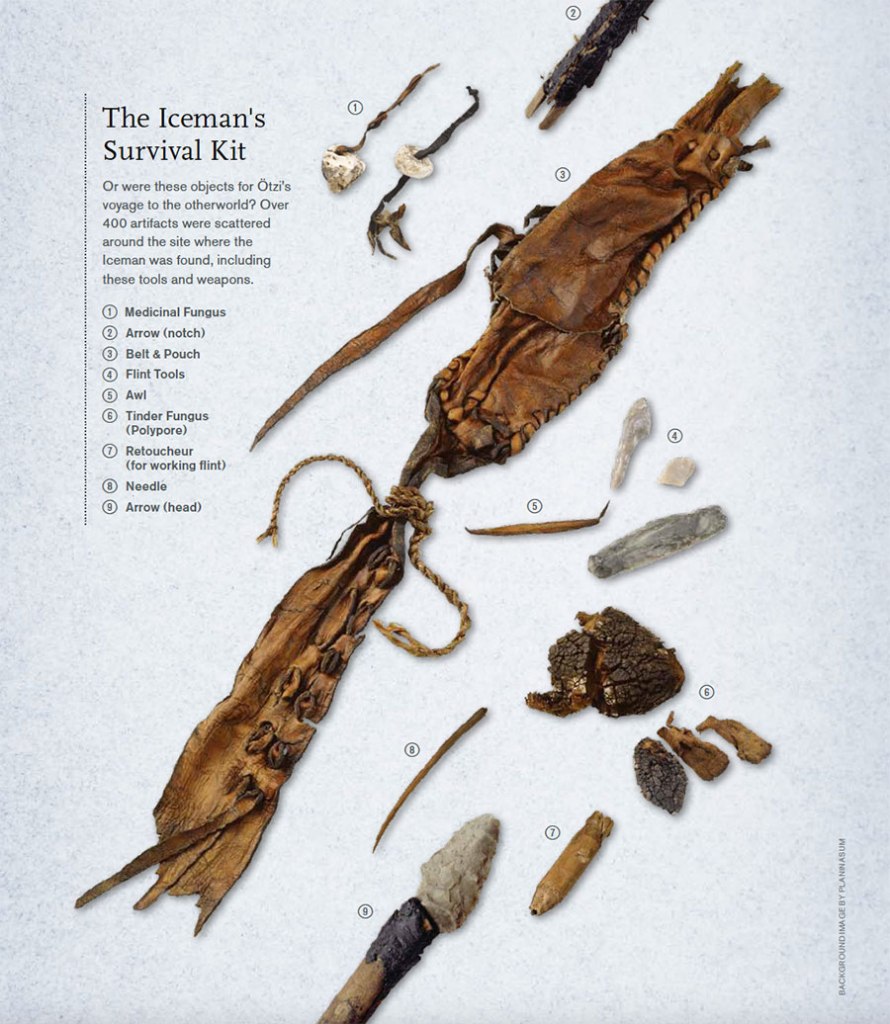
Ötzi also had the marks of a leader of his time, with prestigious weapons (dagger, axe, bow, and arrows), tools, and an ornament (a marble bead). The stone and copper components of these objects precisely match those found in the contemporary graves of the floodplain, but most striking are the preserved, highly refined garments. The care with which various animal skins of contrasting colors were selected and matched and the elaboration and coordination of the attire point to a complex encoding of role and personal identity. Ötzi’s coat and belt match the highly symbolic imagery of the monumental stone stelae that, in the later Alpine Copper Age, feature armed heroic ancestors or deities. In this light, while Ötzi may have been a revered tribal chief, later stelae celebrate impersonal, perhaps sacred, ancestral identities.
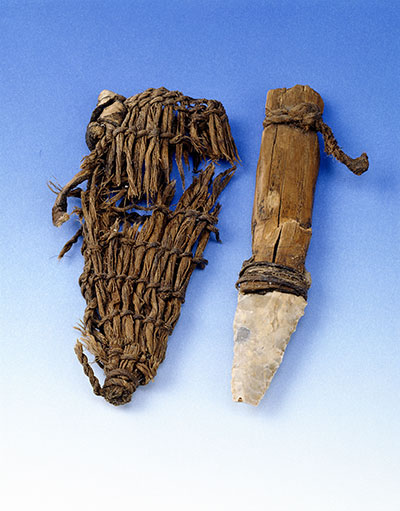
Ötzi’s flint dagger and sheath.


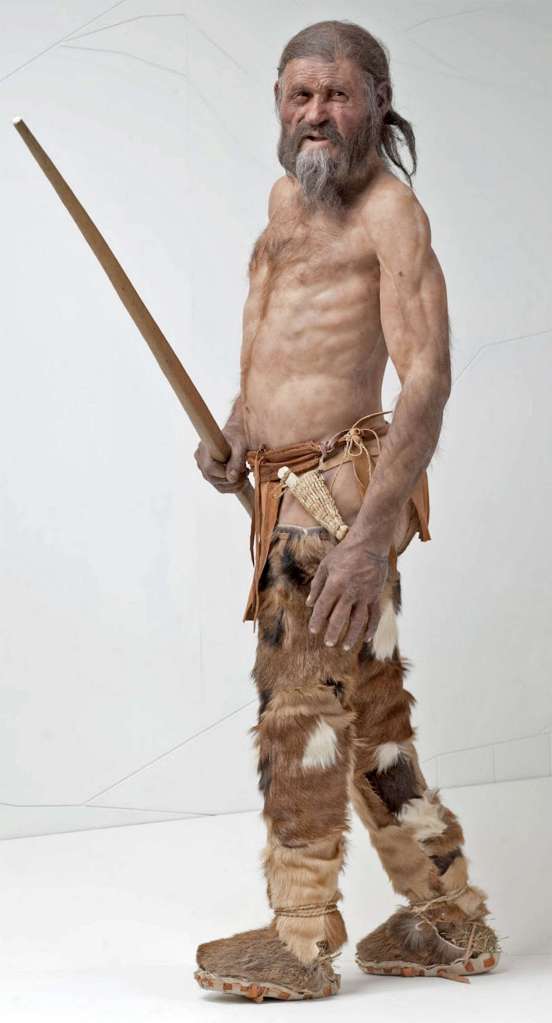
This is a beautifully made model of what Ötzi looked like, and his clothing and equipment.
Close up of Ötzi showing his copper axe.
This is the latest, and supposedly most accurate, reconstruction of Ötzi, a natural mummy from the Stone Age discovered 20 years ago frozen in the Italian Alps near the Austrian border. Based on new research and the latest technology, it shows that he looked much older than his age and that his eyes were brown.

The evidence strongly indicates that the Iceman’s last journey began in the low-altitude deciduous forests to the south, in the springtime when the hop hornbeams were in bloom. When he reached a mountain pass now known as Tisenjoch, he likely paused to rest. He had completed a vertical climb of 6,500 feet (2,000 meters) from the valley below, and to the north faced a desolate, glacier-riven landscape. Perhaps the rocky hollow where he found himself offered some shelter from the wind. We do not know if his enemies caught up with him at that spot, or were waiting there in ambush for him to arrive. What we do know is that he never left that hollow alive.
Photo: National Geographic Magazine, July 2007 from an article by Stephen S. Hall.
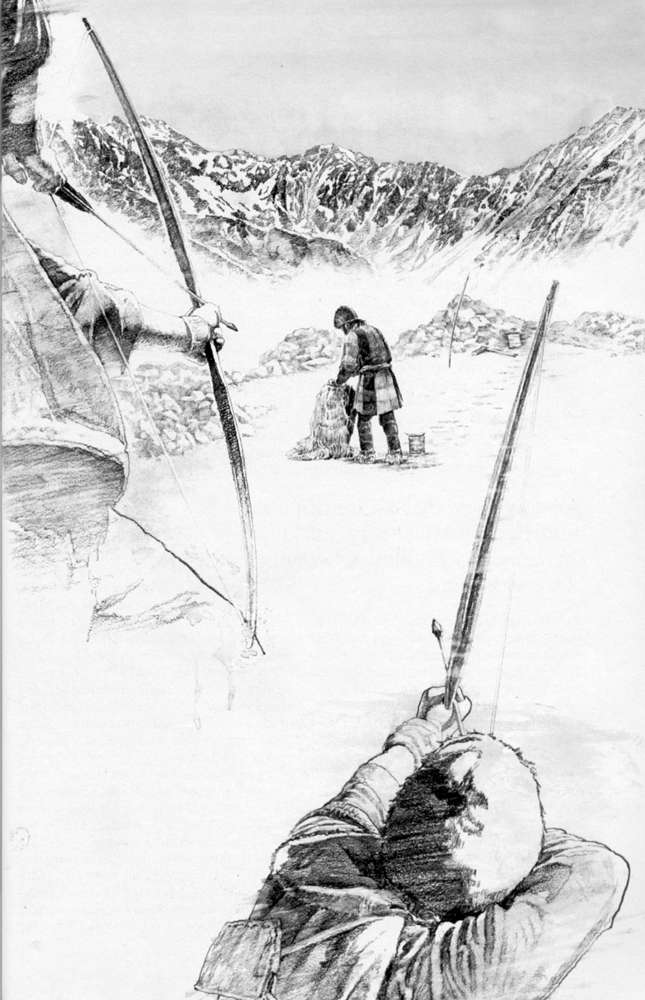
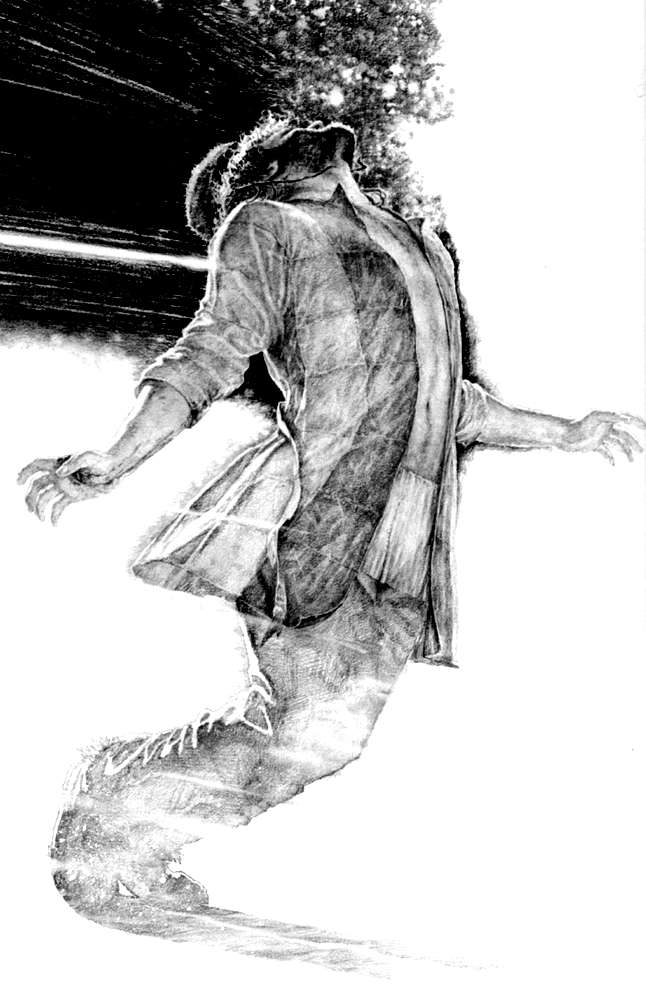
This new medical evidence suggests that an attacker, positioned behind and below his victim, fired a single arrow that struck the Iceman’s left shoulder blade—precisely the area at which prehistoric hunters aimed to bring down game with one shot. The arrow went clean through the bone and pierced the artery. Blood instantly began to gush out, filling the space between the shoulder blade and the ribs. In his few remaining minutes of life, the Iceman became a textbook case of what is now known as hemorrhagic shock. His heart started to race. Sweat drenched his garments, even at an altitude two miles (three kilometers) above sea level. He felt increasingly faint because not enough oxygen was reaching his brain. In a matter of a few minutes, the Iceman collapsed, lost consciousness, and bled out.
Photo: National Geographic Magazine, July 2007 from an article by Stephen S. Hall, with artwork by Kazuhiko Sano.
Do we have an accurate understanding of the lives our ancestors lived?
The 12,000-year-old skeletal remains of a prehistoric teenager were discovered in another remarkable find in 1963 at Grotta del Romito in southern Italy. The Romito cave is a natural limestone cave in the Lao Valley of Pollino National Park near the town of Papasidero in Calabria, Italy. Rock art, skeletons and burial sites were found in and around this cave. There have been thousands of similar discoveries of prehistoric life, but this one found something quite unique.
ROMITO: International researchers have used ancient DNA to genetically diagnose a rare disease in a person with short stature who lived over 12,000 years ago. The team tested two skeletons which were unearthed in an embraced position in 1963 from an unusual grave in Romito Cave in Italy. One labelled Romito 1, was a short adult 145cm tall, while the other, labelled Romito 2, was a 110cm tall adolescent. Genetic material from the inner ear was tested and the individuals were found to be female, first-degree relatives (such as a mother and daughter, or two sisters) from a hunter-gatherer population. While they had trouble testing DNA for Romito 1, Romito 2 was found to have typical features of Acromesomelic dysplasia, Maroteaux type (AMDM), a genetic disease affecting skeletal growth, which would have challenged her movement over distance and across terrains, as well as limited movement in her elbows that would’ve affected her daily life. Her diet and nutritional stress appeared similar to other Romito people, the team adds, and this along with her survival until adolescence implies others in her family group provided care.
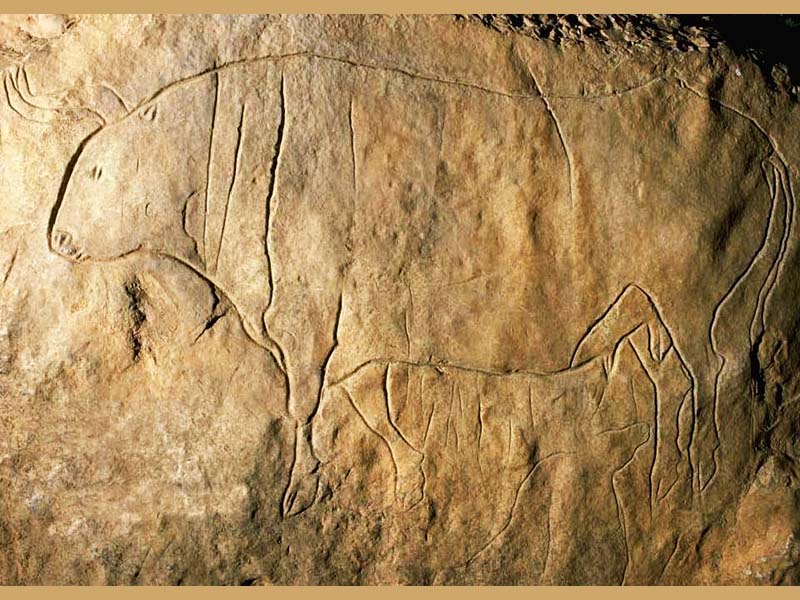


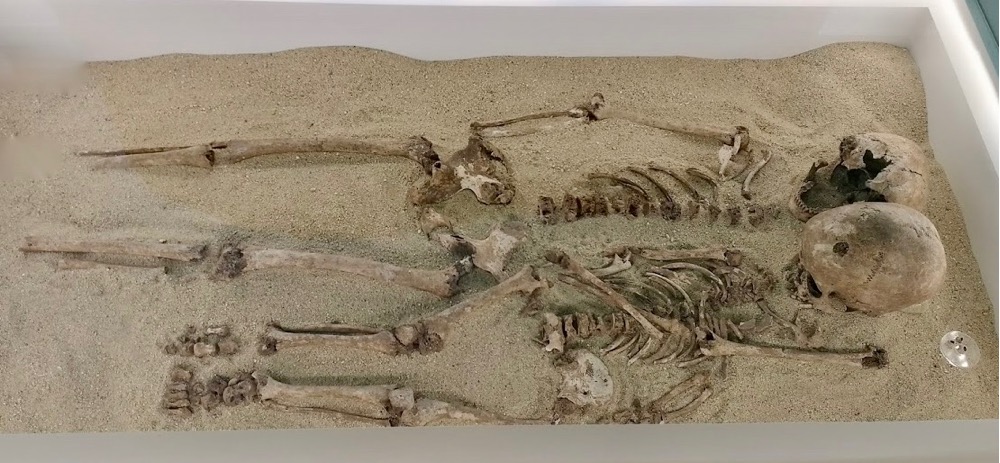
It is easy to look at the analysis of Ötzi’s possible/probable life and conclude, as many “experts” have done, that prehistoric life was nasty, brutish and short. However, other cases such as Romito 2 suggest that despite generally poor levels of health and nutrition, that same community of hunter-gatherers still took pains to support individuals through infancy and into early adulthood, granting them the same share of meat as everyone else, and ultimately giving them a careful, sheltered burial. Despite what we may experience or observe in 2026 we can also claim that our species is compassionate, nurturing and caregiving.
WHERE DID ALL THIS INFORMATION COME FROM?
Don’s Maps
The internet is a magnificent research tool; and this site, created by a Queenslander, Don Hitchcock, is magnificent, spectacular and humbling. I encourage everyone to spend a little time on his website which is simply brilliant. I am in awe.
Otzi the Iceman/ South Tyrol Museum of Archaeology
https://www.iceman.it › oetzi › the-iceman
Penn Museum – Expedition Magazine
PHYS.ORG
https://phys.org/news/2026-06-tzi-iceman-microbiome-year-relationship.html
FamilyTreeDNA Blog
Wikipedia
https://en.wikipedia.org/wiki/Ötzi#
scimex
“A Little History of Archaeology” Brian Fagan
“Archaeology The Whole Story” Paul Bahn – General Editor
“Atlas of the Invisible” James Cheshire & Oliver Uberti
“The Dawn of Everything” David Graeber and David Wengrow


Leave a Reply