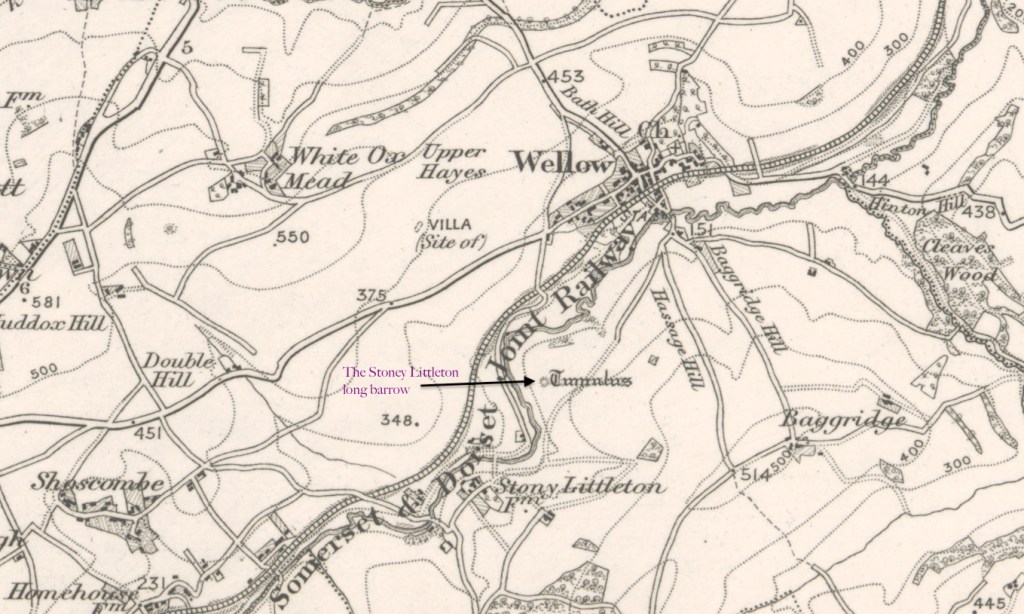
When we were researching the life of Vicki’s 2nd great grandmother, Mary Weston (1816-1888), who migrated to Victoria in August 1854 from the Somerset village of Wellow, we discovered that Mary’s uncle, Zebedee Weston (1782-1856) was mentioned in a book written by the Reverend John Skinner (1772-1839). The good Reverend was the vicar of a neighbouring village, Camerton, from 1800 to 1839 and was something of an amateur antiquarian and archaeologist operating mainly in the area of Bath and the villages of northern Somerset. He excavated numerous antiquities, especially barrows such as those at Priddy, Ashen Hill and Stoney Littleton. Zebedee Weston was known and recorded as the labourer assisting these excavations. Fascinated by this local connection and “notoriety” we determined to find out more about his life and the range and scope of these things called barrows.
Most of what follows is taken straight from Wikipedia.
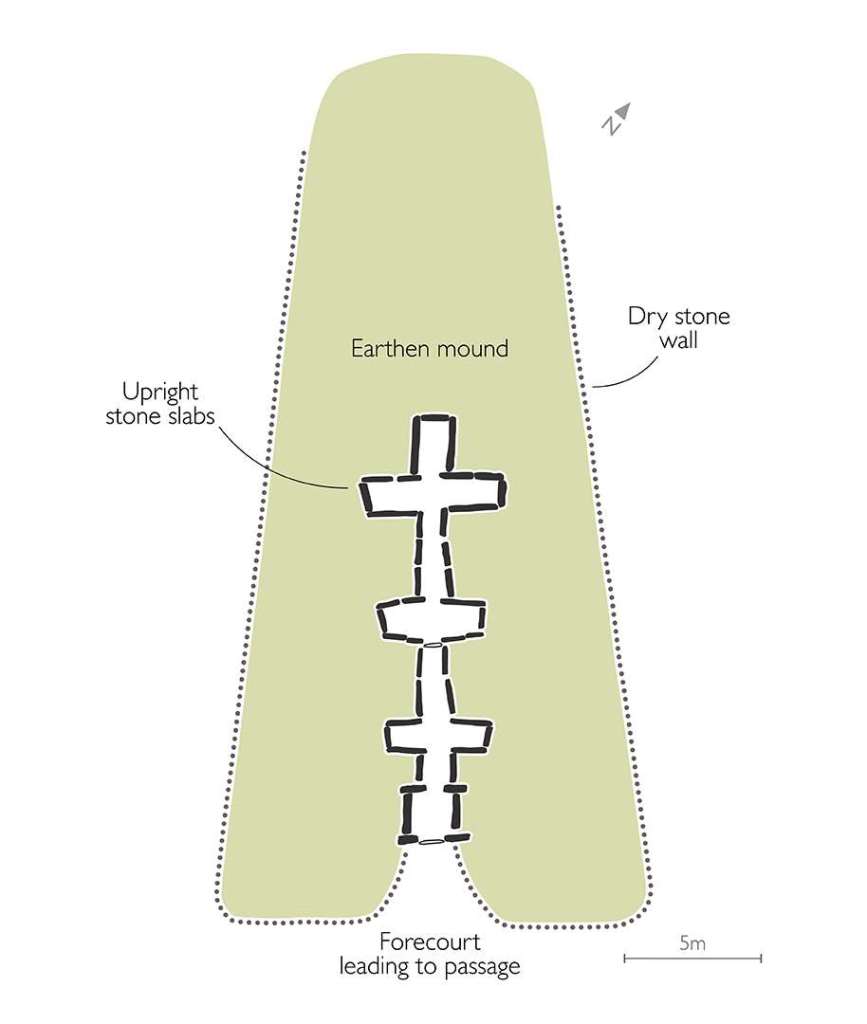
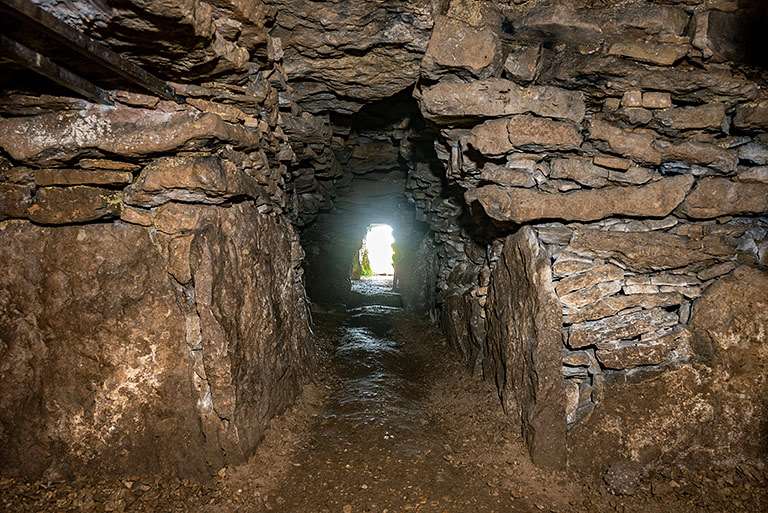
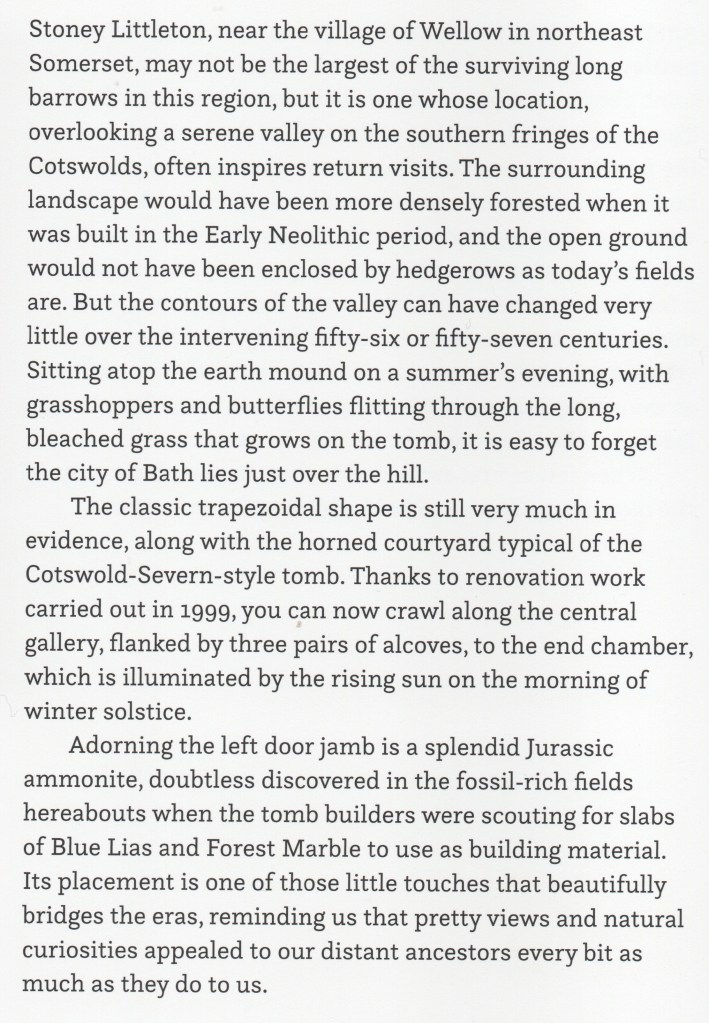
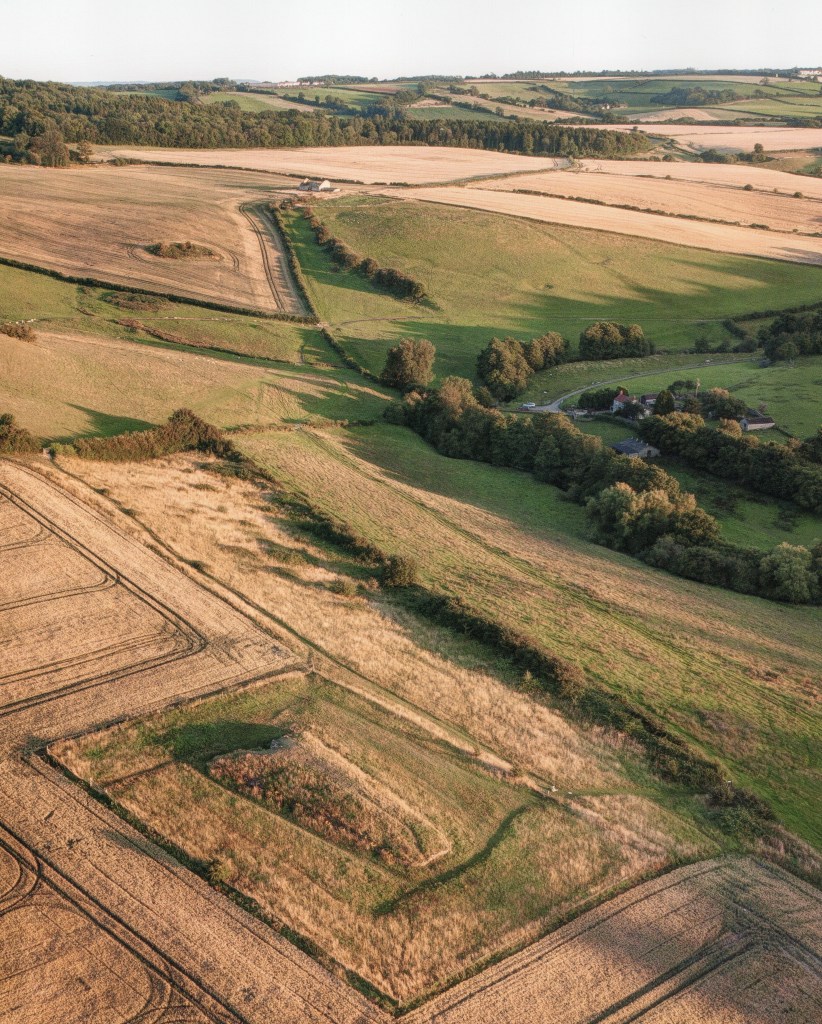
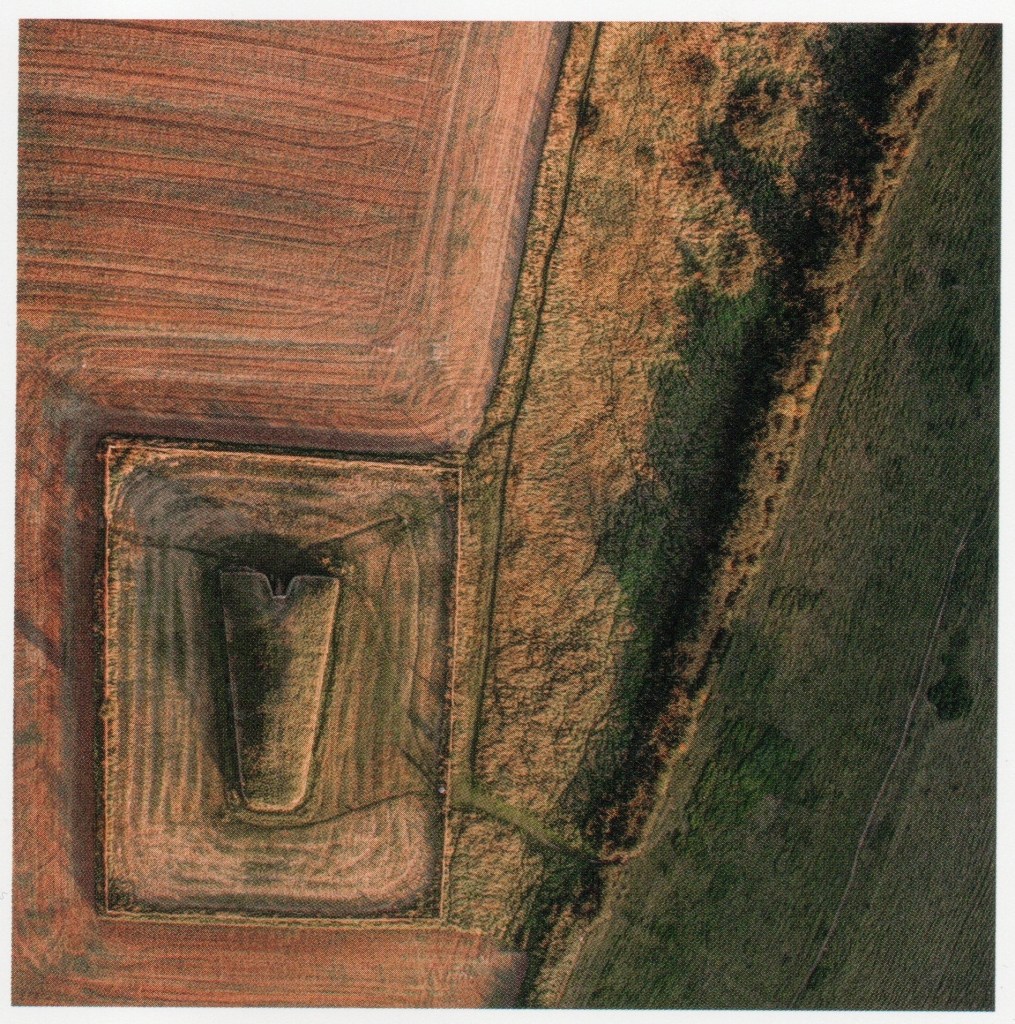
The Stoney Littleton Long Barrow (also known as the Bath Tumulus and the Wellow Tumulus) is a Neolithic chamberedtomb with multiple burial chambers, located near the village of Wellow. It was built around 5,500 years ago. Excavations in the early 19th century uncovered bones from several individuals. The stone structure is about 30 metres (98 ft) in length and contains a 12.8-metre (42 ft) long gallery with three pairs of side chambers and an end chamber. The tomb was first opened around 1760 by a local farmer to obtain stone for road building. The site was excavated by The Reverend John Skinner and Richard Hoare in 1816–17, along with a labourer Zebedee Weston, who gained the entry through the hole which was made previously. Yes, that is Vicki’s 3rd great grand uncle! The excavation revealed the bones (some burned) of several individuals. The Reverend also uncovered bronze daggers and spear head, decorative amber beads, a bronze ring and a small incense cup. Some of these artefacts from the excavations are in the Bristol Museum & Art Gallery.
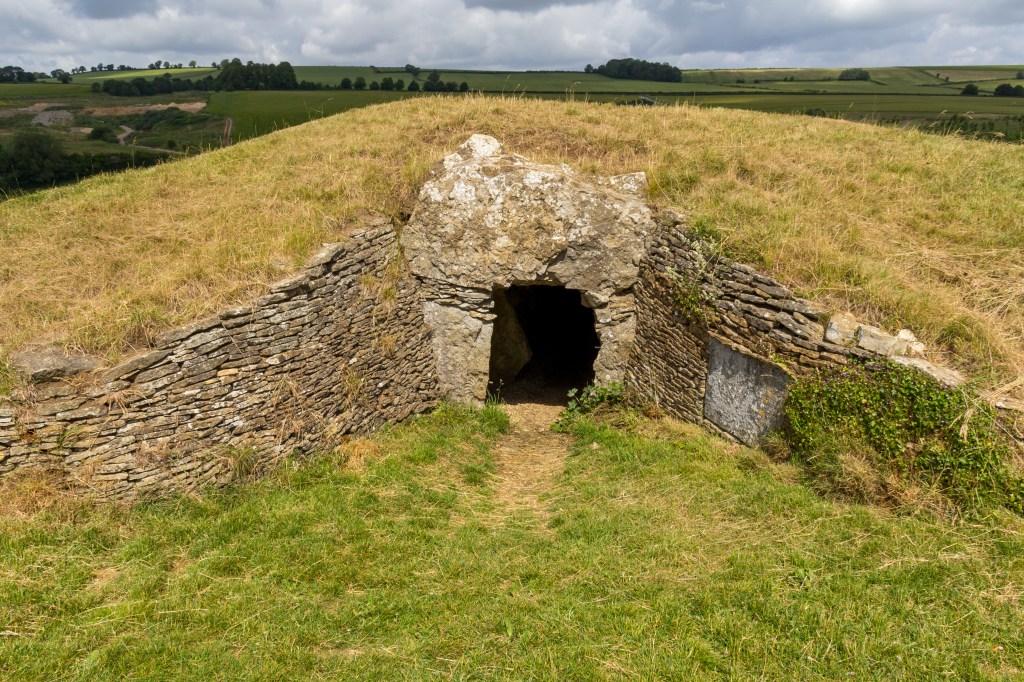
Long barrows are a style of monument constructed across Western Europe about 5,000 to7,000 years ago, during the Early Neolithic period. Typically constructed from earth and either timber or stone, those using the latter material represent the oldest widespread tradition of stone construction in the world. Around 40,000 long barrows survive today.
The structures have a long earthen tumulus, or “barrow”, that is flanked on two sides with linear ditches. These typically stretch for between 20 and 70 metres in length, although some exceptional examples are either longer or shorter than this. Some examples have a timber or stone chamber in one end of the tumulus. These monuments often contained human remains interred within their chambers, and as a result, are often interpreted as tombs, although there are some examples where this appears not to be the case. The choice of timber or stone may have arisen from the availability of local materials rather than cultural differences. Those that contained chambers inside of them are often termed chambered long barrows while those which lack chambers are instead called unchambered long barrows or earthen long barrows.
The earliest examples developed in Iberia and western France during the mid-fifth millennium BCE. The tradition then spread northwards, into the British Isles and then the Low Countries and southern Scandinavia. Each area developed its own variations of the long barrow tradition, often exhibiting their own architectural innovations. The purpose and meaning of the barrows remains an issue of debate among archaeologists. One argument is that they are religious sites, perhaps erected as part of a system of ancestor veneration or as a religion spread by missionaries or settlers. An alternative explanation views them primarily in economic terms, as territorial markers delineating the areas controlled by different communities as they transitioned toward farming.
Communities continued to use these long barrows long after their construction. In both the Roman period and the Early Middle Ages, many long barrows were reused as cemeteries. Since the sixteenth century they have attracted interest from antiquarians and archaeologists; it is from the excavations of the latter that our knowledge about them derives. Some have been reconstructed and have become tourist attractions or sacred sites used for rituals by modern Pagan and other religious groups.
The purpose and meaning of Early Neolithic long barrows are not known, though archaeologists can make suggestions on the basis of recurring patterns that can be observed within the tradition. Archaeologists have not, however, agreed upon the most likely meaning and purpose of these monuments, with various different interpretations being put forward. It has been suggested that the long barrows likely had “broad religious and social roles” for the communities who built and used them, comparing them in this way to the churches of medieval and modern Europe. Many of the long barrows were used as tombs in which to place the remains of deceased individuals. For this reason, archaeologists like Malone have referred to them as “houses of the dead”. Conversely, many of the long barrows do not appear to have been used as tombs; various examples that have been excavated by archaeologists have shown no evidence of having had human remains deposited there. The archaeologists David Lewis-Williams and David Peace, however, noted that these long barrows were more than tombs, also being “religious and social foci”, suggesting that they were places where the dead were visited by the living and where people maintained relationships with the deceased.
In some cases, the bones deposited in the chamber may have been old when placed there. In other instances, they may have been placed into the chamber long after the long barrow was built. In some instances, collections of bone originally included in the chamber might have been removed and replaced during the Early Neolithic itself.
The human remains placed in long barrows often included a mix of men, women, and children. The bones of various individuals were often mixed together. This may have reflected a desire to obliterate distinctions of wealth and status among the deceased. Not all of those who died in the Early Neolithic were buried in these long barrows, although it remains unknown what criteria were used to determine whose remains were interred there and whose were not. Large sections of the Early Neolithic population were not buried in them, although how their bodily remains are dealt with is not clear. It is possible that they were left in the open air.
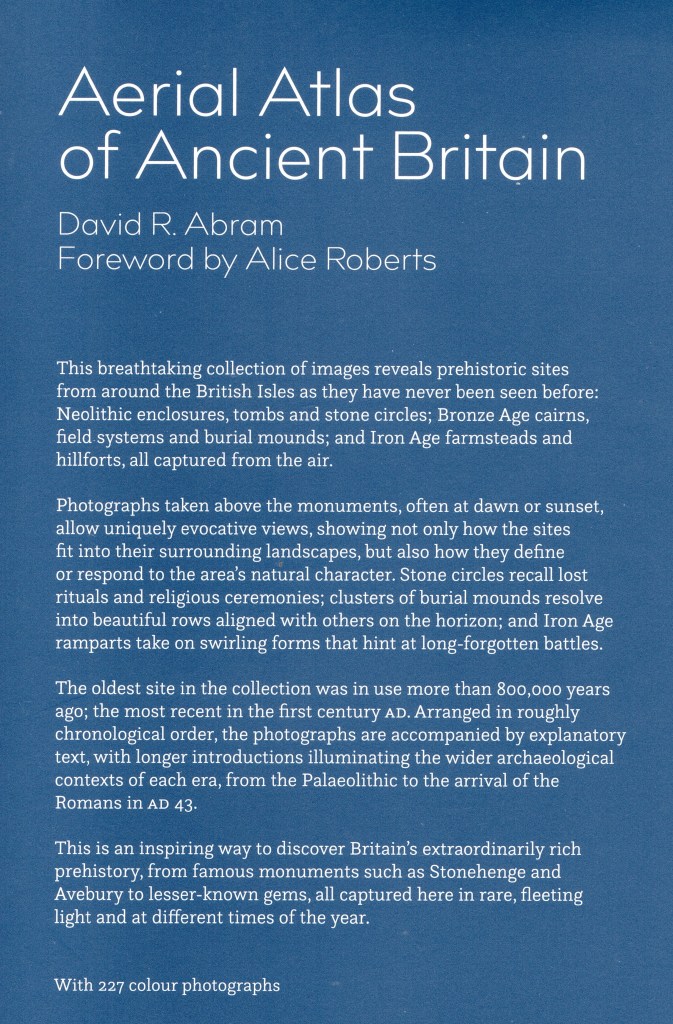
I stumbled onto an incredible resource (again!) when researching the barrow that Zebedee Weston provided the labour to excavate. For many years David R Abram has been chasing the location of monuments at archaeological sites across the British Isles. A photographer by profession, David has utilised drones to capture magnificent aerial photographs that reveal prehistoric sites from a perspective not seen before.
He has a website: https://www.davidabram.co.uk
He has a Substack newsletter: https://davidrabram.substack.com
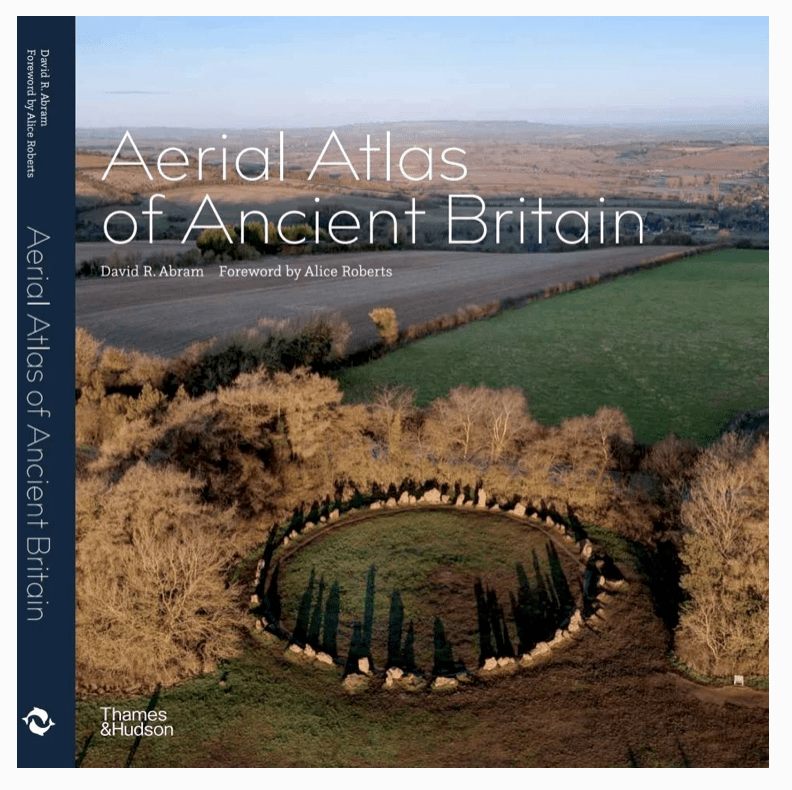
And he has published a book: Aerial Atlas of Ancient Britain that Vicki purchased for me as a “unbirthday” present. When it arrived I found that the foreword is by Professor Alice Roberts, my favourite anatomist and archaeologist.
The Stoney Littleton Long Barrow has its own entry.
This is the link to David R Abram’s Substack Newsletter of April 16, 2022 simply (and appropriately) titled “Bronze Age Barrows: A Beginner’s Guide!
He gives talks and exhibitions all over the UK – makes me tempted to make one more journey to England!
~ ~ ~ ~ ~ ~ ~ ~
WHERE DID ALL THIS INFORMATION COME FROM?
Encyclopaedia Britanica
https://www.britannica.com/science
Natural History Museum
The Leakey Foundation
The Bradshaw Foundation
https://www.bradshawfoundation.com
Nature
Wikipedia
The Megalithic Portal
Smithsonian National Museum of Natural History
“Europe The First 100 Million Years” Tim Flannery
“Origin Story A Big History of Everything” David Christian
“A Little History of Archaeology” Brian Fagan
“Archaeology The Whole Story” Paul Bahn – General Editor
“Atlas of the Invisible” James Cheshire & Oliver Uberti
“Death as told by a Sapiens to a Neanderthal” Juan Jose Millas & Juan Luis Arsuaga
“Maps of Time” David Christian
“Sapiens A Brief History of Humankind” Yuval Noah Harari
“Aerial Atlas of Ancient Britain” David R Abram
“Homo Deus” Yuval Noah Harari
“The Dawn of Everything” David Graeber and David Wengrow
“The Silk Roads A New History of the World” Peter Frankopan
“The Earth Transformed an Untold History” Peter Frankopan

