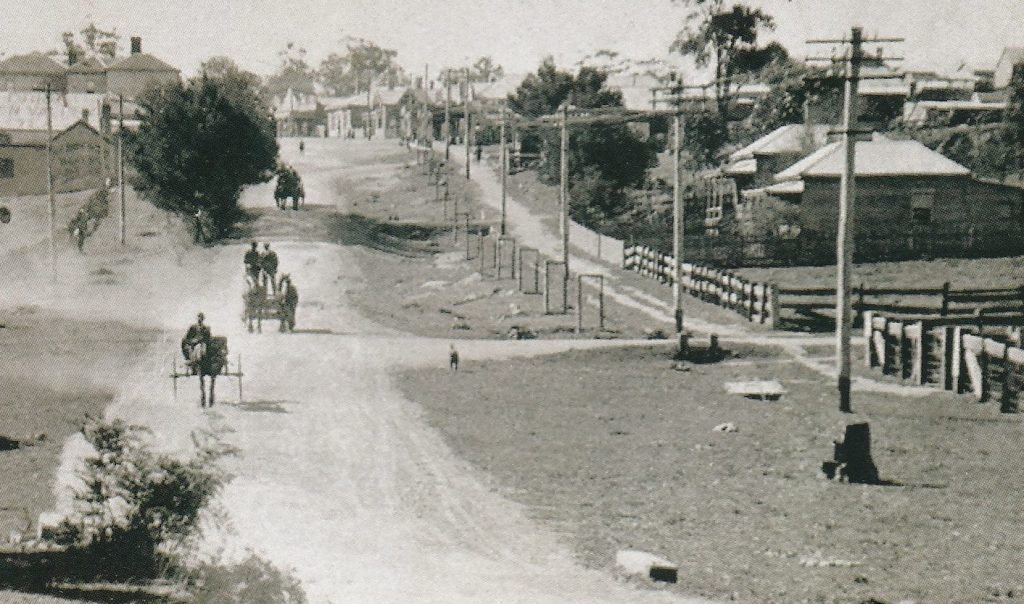
NEW SOUTH WALES 1863 – 1886
At birth, the central character in this story – the fifth child and third son to parents William Swan and Elizabeth Cassidy, was officially named “Aden”. He was born on the 13th of April 1863 and registered in Sydney, NSW, simply as “ADEN SWAN”. The Registration Number is 1863/000918.
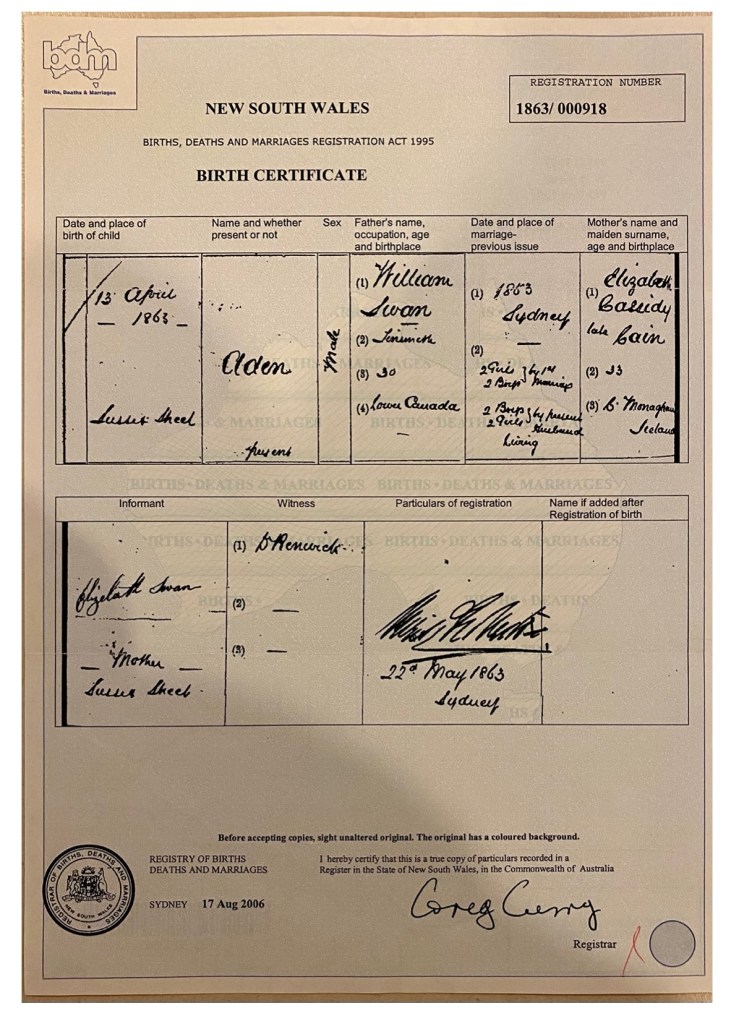
Over his life span of 70 years, he took on variations of his name to include ADEN, HAYDON, HENRY, and EDWARD which were sometimes used in different sequences and combinations. He fathered ten children to three women, two of whom he married. For the sake of consistency, I’ll refer to him as “Haydon” throughout this story except where he used the different names in official documents.
His father, William Swan (1819-1895), a tinsmith from Quebec, Canada, taught his sons the trade of tinsmith as it evolved and expanded during the 20th century into both gas fitting and plumbing. Haydon also taught this trade to his sons.
Haydon first comes to attention when in the middle of 1881, at 18 years of age, he is gaoled for “throwing stones in a public place” endangering passengers on a local steam tram that was travelling south on Kent Street to Ultimo.
NSW Police Gazette of 31st August 1881, page 316:
Sydney – A warrant of commitment for want of distress for the sum of 12s. 6d., fine and costs, in default four days’ imprisonment, for throwing stones in a public place off Kent-street, to the danger of passengers on the 11th ultimo, has been issued by the Central Police Bench against Haydon Swan. He is about 20 years of age, 5 feet 8 or 9 inches high, fair hair and complexion, no beard or whiskers; dressed in dark tweed suit, and soft black felt hat.
Was throwing stones at a tram the mark of youthful exuberance perhaps? Did all 18-year-old lads in Sydney at that time practice their cricket skills in a similar manner? Had Haydon been with a group of young men performing high jinks and he was the only one nabbed by the local police? Had he been given a verbal warning before being fined and imprisoned for four days? We’ll give him the benefit of doubt and suggest that he was just plumb unlucky to be caught.
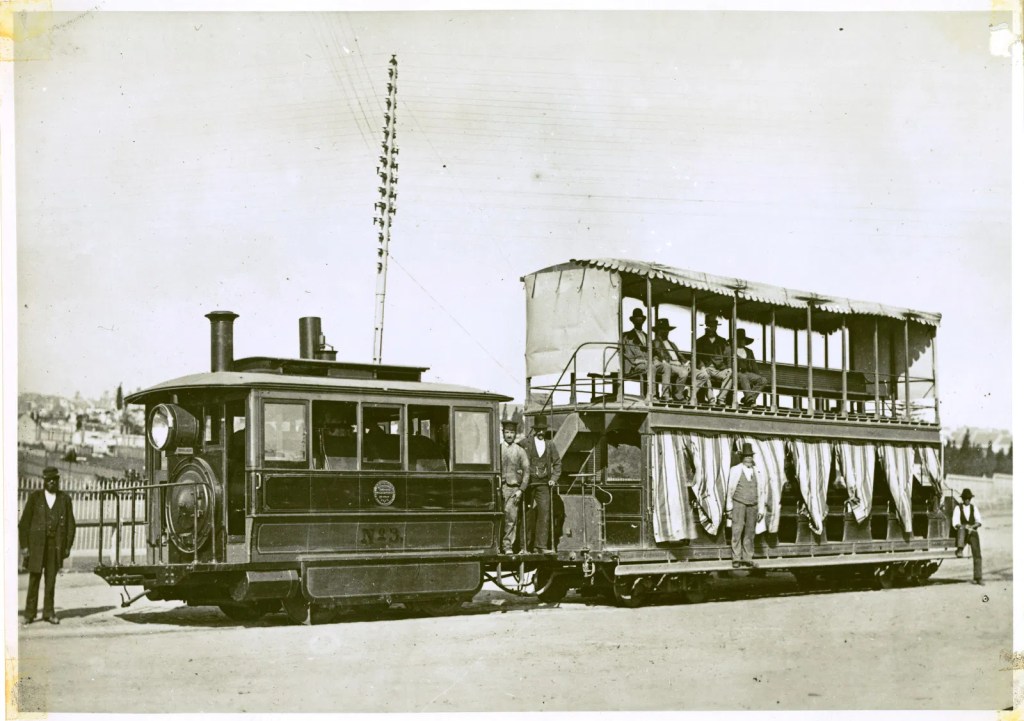
The 1879 International Exhibition marked the return of trams to Sydney. Four steam motors and six double-decker cars were imported from the United States of America for use on the new tramway. Fittingly, steam-powered trams were the very embodiment of the innovative technology and city improvements promoted by the Exhibition. For the reasonable sum of two pence, trams transported passengers from Redfern Station along Elizabeth Street to the Exhibition, which was held in the Garden Palace (located in the Botanic Gardens). The service ran every 15 minutes and carried more than one million visitors. This new mode of public transport was reputedly one of the most memorable experiences for those attending the event. Although the tramline was initially built as a temporary measure, its ensuing popularity ensured that steam trams operated in the city until 1905. Indeed, the speedy Oxford Street route through Paddington was so popular that a colloquial term was coined: ‘Shooting through like a Bondi tram’.
On December 27th, 1882, Haydon married Phoebe Elizabeth Birch (1866-1915) in the Parish Church of St Michaels Sydney. The marriage certificate shows that he is “Haydon Henry Swan”, a 20-year-old plumber living on Forbes Street; and Phoebe, an 18-year-old spinster is living on Barcom St, just a few blocks from Haydon. Both Haydon and Phoebe sign their names and Phoebe’s mother, Jane Ann was one of the witnesses.
Marriage Certificate 1876/1882:
December 27th, 1882, in the Parish Church of St Michaels Sydney
Haydon Henry Swan, Bachelor, NSW, Plumber, 20 years old, Forbes St Sydney, son of William Swan married Phoebe Elizabeth Birch, Spinster, NSW, 18 years old, Barcom St Sydney, daughter of Richard Birch and Jane Ann Hope. Both bride and groom signed their names; witnesses were Jane Ann Birch and George Hutchinson.
The marriage between Haydon and Phoebe produced two sons, the first, Leslie William Swan (1884-1960) was born on 27th January 1884 when the family was living at 78 Oxford St., Paddington. The second son, George Richard Swan (1885-1947) was born on the 2nd of November 1885 and the family were now living in Surrey Hills.
Birth Registration 8858/1884
January 27th, 1884, a son Leslie William Swan to Haydon & Phoebe Swan, 78 Oxford St Paddington
Birth Registration 3618/1885
November 2nd, 1885, a son George Richard to Haydon Henry & Phoebe E Swan, Sydney
One year later we find that Haydon has gone missing. Phoebe reported him as a “missing friend” in the NSW Police Gazette on the 10th of November 1886. He is noted as a plumber and gas fitter and had been in Newcastle some time earlier as the Gazette said he had “Left Newcastle for Sydney about a month ago”. The plot thickens quickly when we find that the NSW Police Gazette, in the section “Deserting Wives and Families etc”. notes that
“A warrant has been issued by the Water Police Bench for the arrest of Haydon Henry Swan, charged with unlawfully deserting his wife Phoebe Swan, leaving her without means of support …. Last heard of in Newcastle”.
NSW Police Gazette of 10th November 1886, page 341 “Missing Friends”.
Haydon Henry Swan, 23 years of age, 5 feet 8 inches high, stout build, fair complexion, light curly hair, moustache only, freckled; a plumber and gasfitter. Left Newcastle for Sydney about a month ago. Information to Mrs. Swan, 178, Dowling-street, Woolloomooloo.
NSW Police Gazette of 15th December 1886, page 385 “Deserting Wives and Families &c. Sydney. – A warrant has been issued by the Water Police Bench for the arrest of Haydon Henry Swan, charged with unlawfully deserting his wife Phoebe Swan, leaving her without means of support. He is about 23 years of age, 5 feet 8 inches high, medium build, fair moustache, fair complexion, freckled; a plumber and gas fitter; last heard of in Newcastle. Complainant at 178 Dowling-street, Woolloomooloo.
Haydon and Phoebe had been married for just less than four years when Haydon deserted Phoebe and their two infant children. The Police Gazettes published all cases of “Deserting Wives and Families” when they occurred and the number of warrants issued suggests that it was an all-too-common problem. With no social financial safety net in place, it was left to the immediate and sometimes extended families of both husband and wife to provide support. It is a problem that still exists today.
VICTORIA 1889 – 1933
April 1889
A little more than three years later, Haydon Swan has taken part in his elder brother’s marriage in Melbourne, Victoria.
As documented in the Chapter on Aden’s elder brother, Thomas C.C. Swan (1858-1943); we see that on the 29th of April 1889, at the St. James Church, Melbourne, Thomas C.C. married his second wife, Esther Baines (1857-1932). The Marriage Certificate shows Thomas C.C. as a plumber residing in Warragul, Victoria; and it also shows that Haydon Swan, born in Sydney N.S.W. is a witness. The other witness listed is Elizabeth Baines, Esther’s younger sister.
Haydon Swan’s attendance at the marriage poses some questions. I must assume that this is Thomas C.C.’s brother who had been using the name Haydon Henry Swan on all documentation since his marriage to Phoebe on December 27th, 1882. The mind boggles!
What sort of communication was there between the two brothers?
Were other siblings also in communication with Haydon?
Where has Haydon been during those three years?
What was Thomas C.C. doing in Warragul? We think that he “should” have been somewhere near Wychitella where Esther was living.
Was Haydon working with Thomas C.C. in Warragul or was this simply a ruse to make Haydon difficult to track down?
Warragul is 105kms east of St James Church in Melbourne; St James Church to Wychitella is 234kms to the northwest. There was regular train service between Warragul and Melbourne in 1889. The Gippsland railway line, which included Warragul, was opened in stages between 1877 and 1878. By 1889, there was an established, active rail service that included daily trains to Melbourne, sometimes taking an “express” route. At that time the journey by train between Warragul and Melbourne took between 3 and 3 ½ hours. It is possible that Thomas C.C. and Haydon were both working in Warragul, though it would have been a long-distance romance for Thomas and Esther Baines if she was still living in Wychitella. Or was she? Elizabeth Baines was a witness to the marriage, perhaps the two sisters came down to Melbourne by train for the wedding? Irrespective, Warragul in the late 1890’s was typical of many Gippsland towns as they struggled to grow and provide services for their pioneering inhabitants.
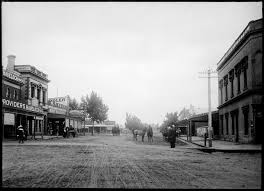
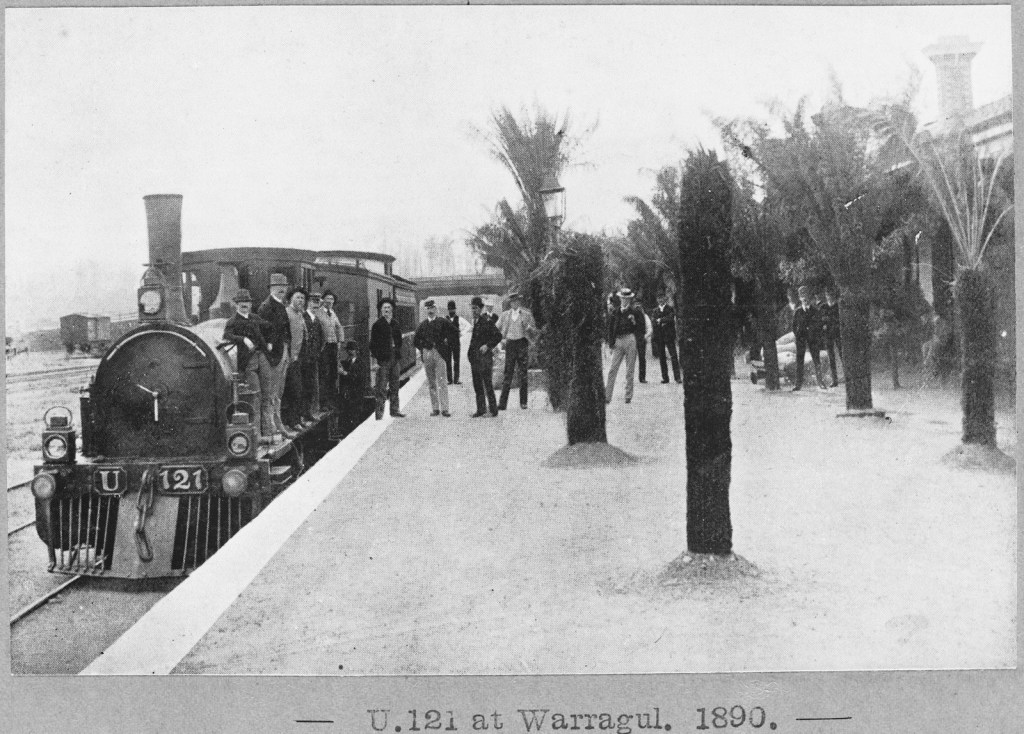
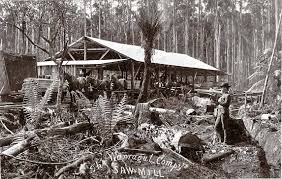
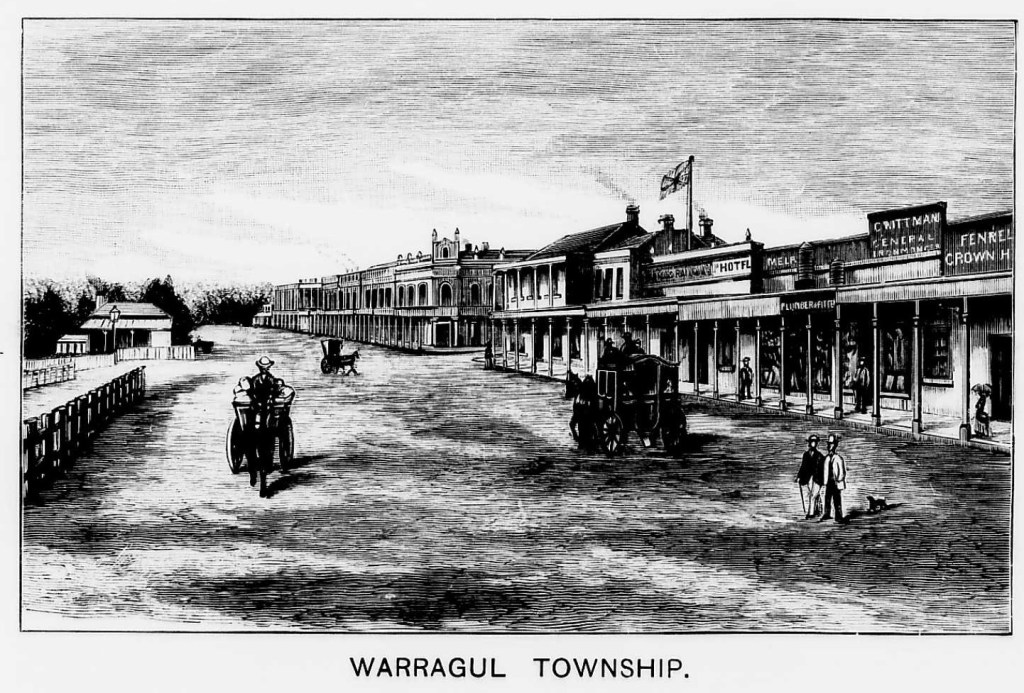
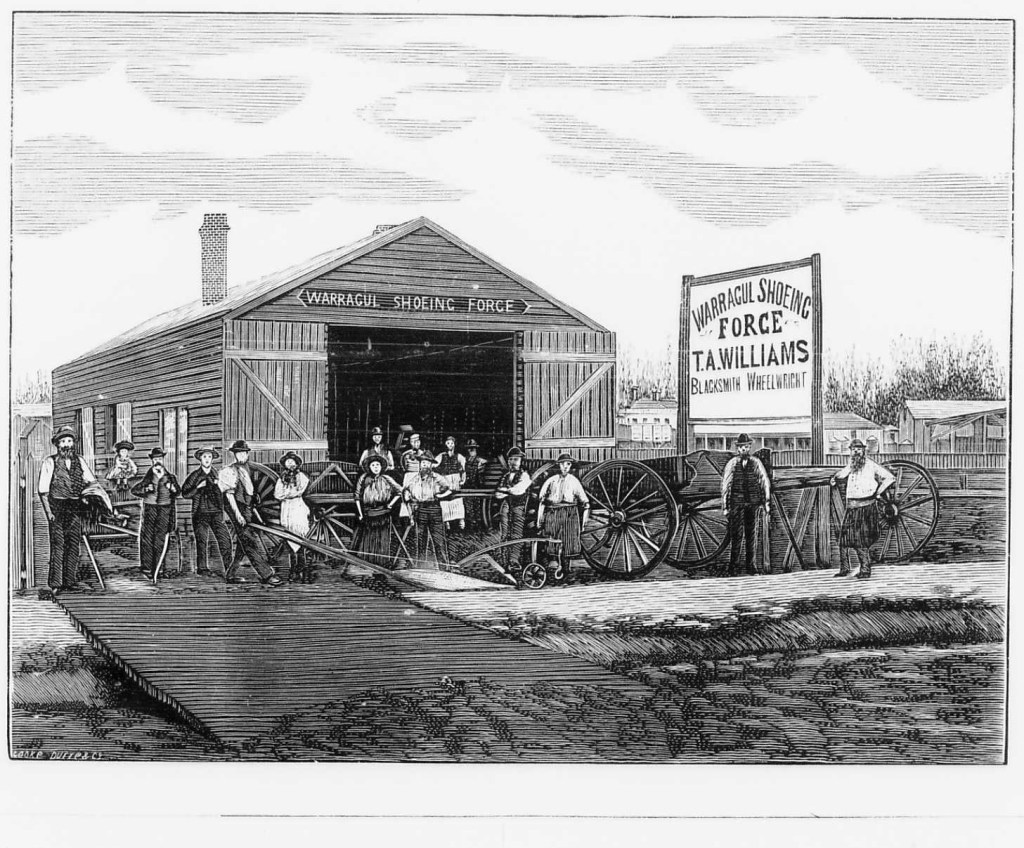
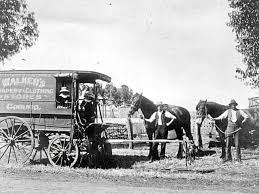
Warragul in the late 1890’s and early 1900’s
September 1890. Sixteen months after being in Melbourne for Thomas C.C. and Esther’s wedding, Haydon appears to be quite settled in regional eastern Victoria marrying for the second time in his life. There are congratulations all around when Haydon, now 27 and using the name Edward Swan, married Emma Dinah Jefferson, 19 years old in Bairnsdale on the 11th of September 1890. Bairnsdale, Emma’s birthplace, is 175km east of Warragul, 95kms west of Orbost and 125kms south of Omeo.
The distances between these Victorian towns are outlined here because for the next 40 years Haydon and Emma lived in Bairnsdale, Omeo and Orbost, settling into married life, establishing a family and going into business.
The marriage between Haydon and Emma was held in the Presbyterian Manse in Bairnsdale, with the groom named as Edward Swan, a bachelor, born in Sydney NSW, a plumber by profession and the son of William Swan, also a plumber, and Elizabeth Lock. What is fascinating about the parents named on the Marriage Certificate is that firstly, Haydon’s father is a William Swan, plumber by profession; and Elizabeth Lock, four years older than Aden is the name of his first cousin. Elizabeth is also the name of his mother, Bessie Cassidy (Cain) Swan.
Coincidence or fraud? Information about deserters and other crimes, such as bigamy possibly didn’t cross borders to any of the other colonies. Having a few details on a marriage certificate or births and deaths would enable a background story to have some truth, which ensured a clean simple story with somewhat consistent details. Like Warragul, the townships of Bairnsdale, Omeo and Orbost would have been pioneering places where gold was still being sought; where infrastructure was minimal; where business opportunities existed for capable tradesmen and willing labourers; where people had backgrounds as diverse as Canada, America, Europe and the colonies of Van Dieman’s Land, Victoria, New South Wales, Queensland, South Australia and Western Australia. Ideal for people who didn’t want their whereabouts and backgrounds to be open and transparent. Particularly as being found guilty of bigamy would result in four years hard labour in gaol.
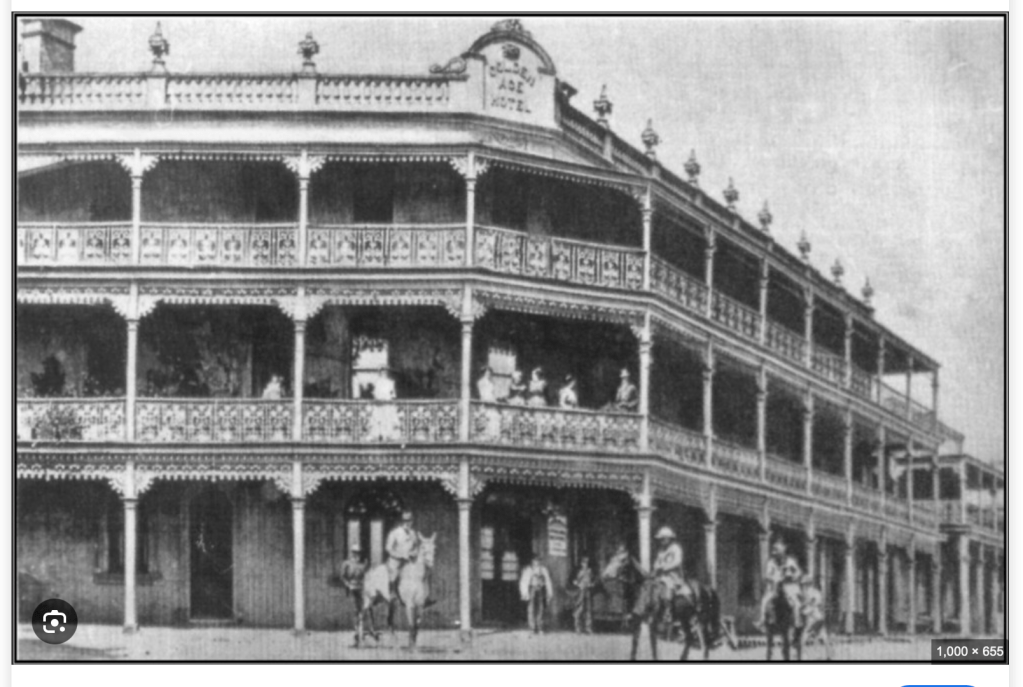
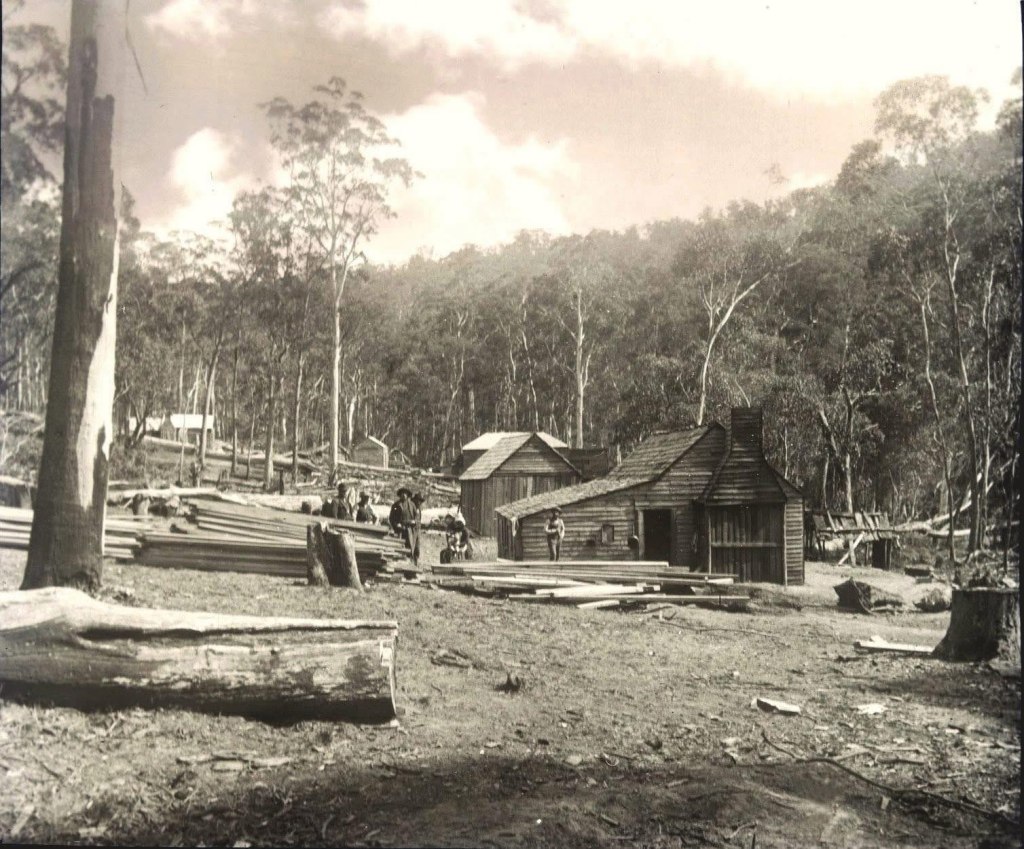
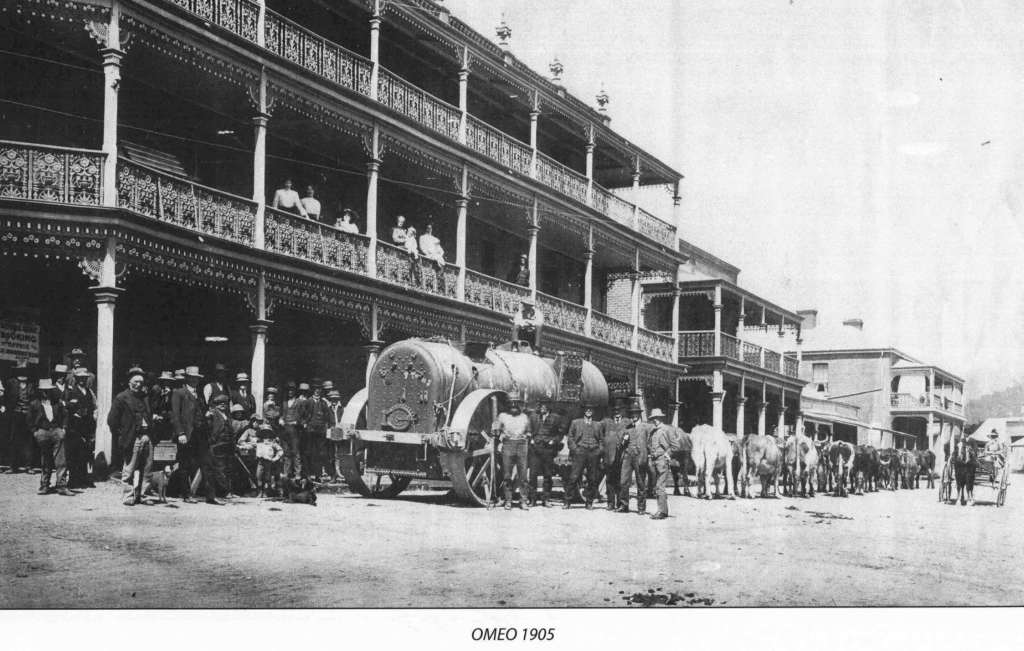
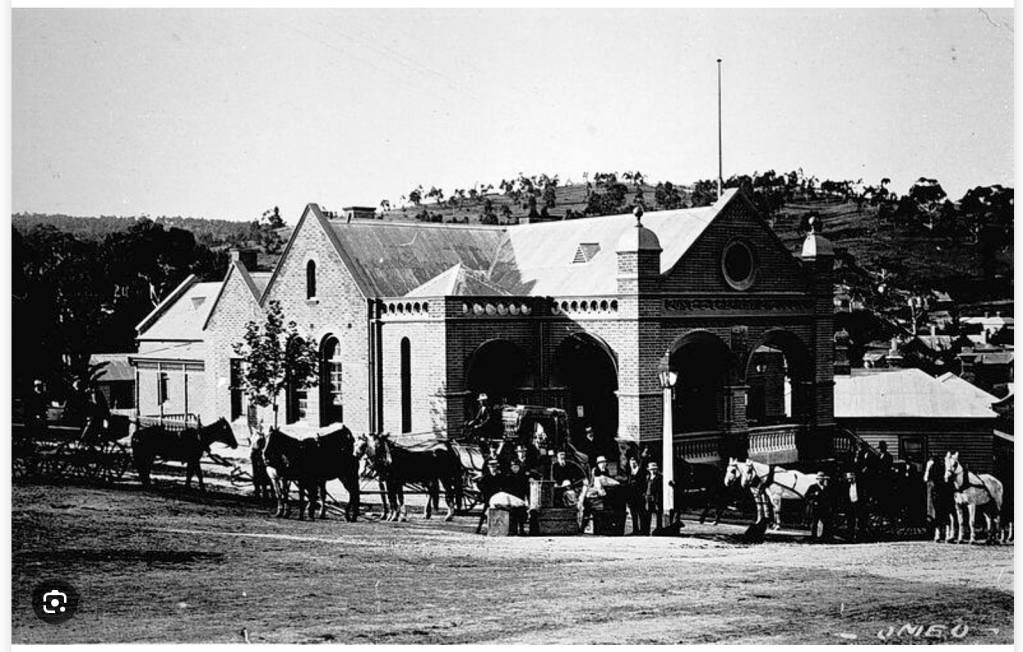
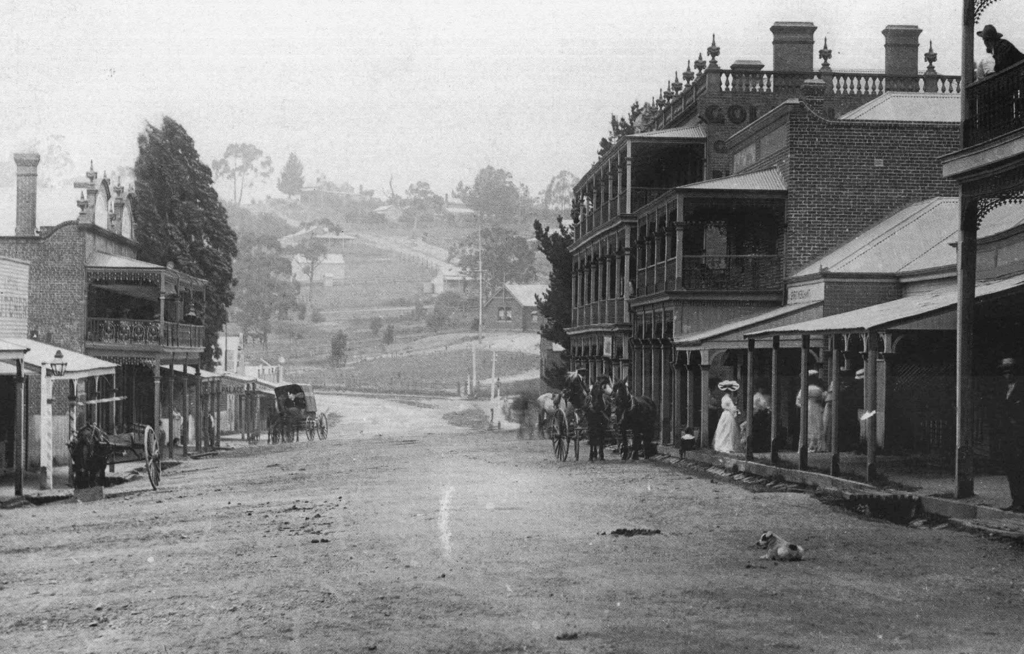
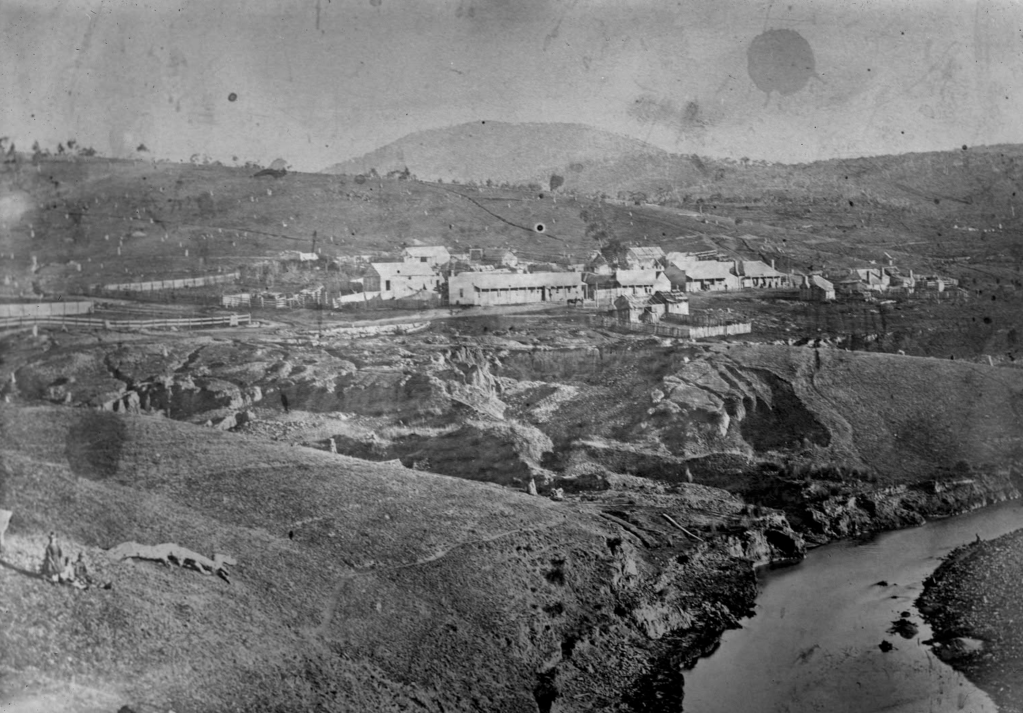
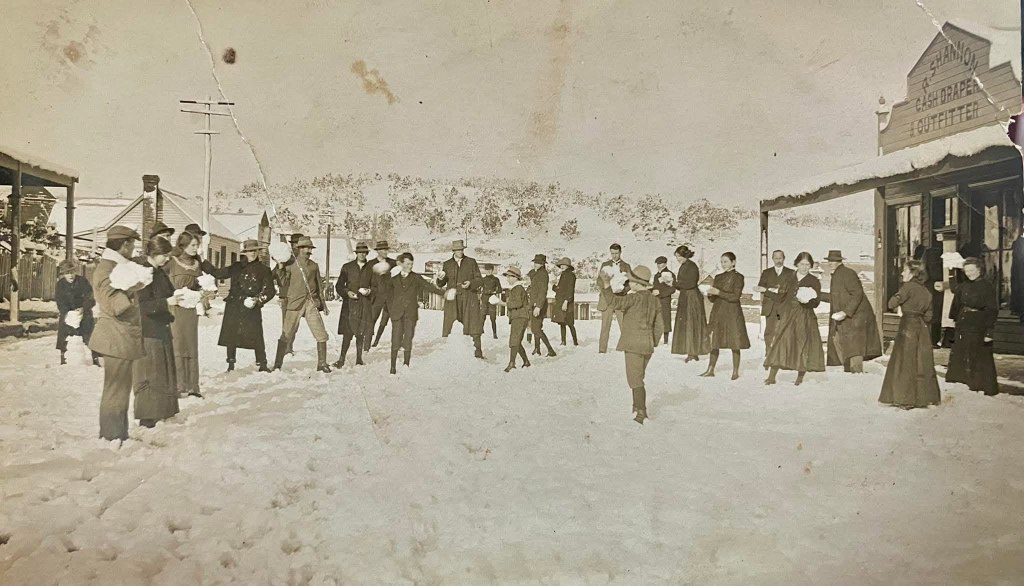
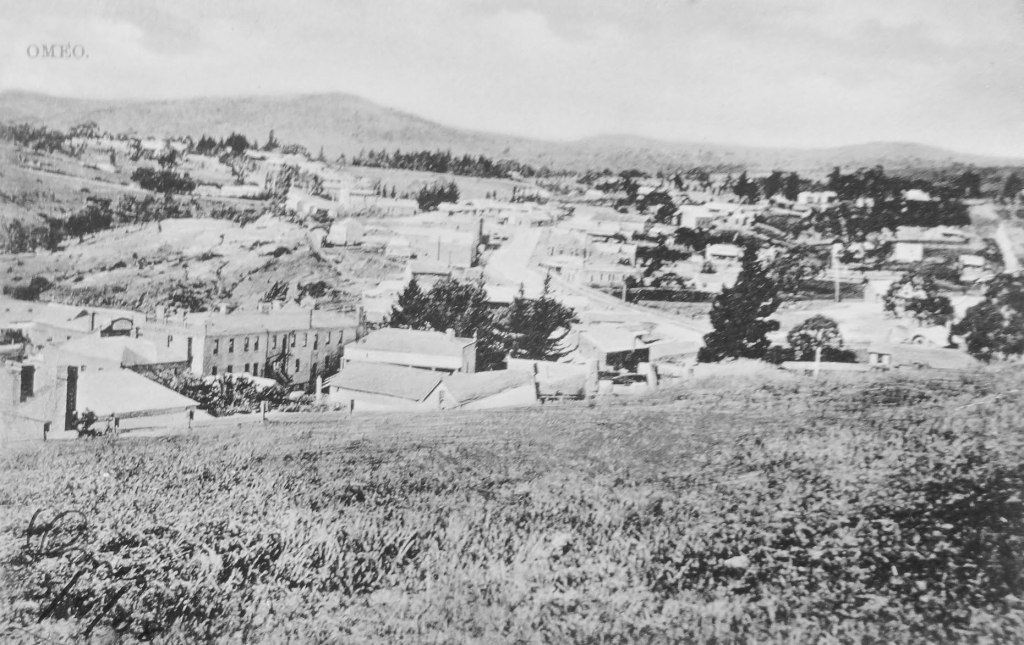
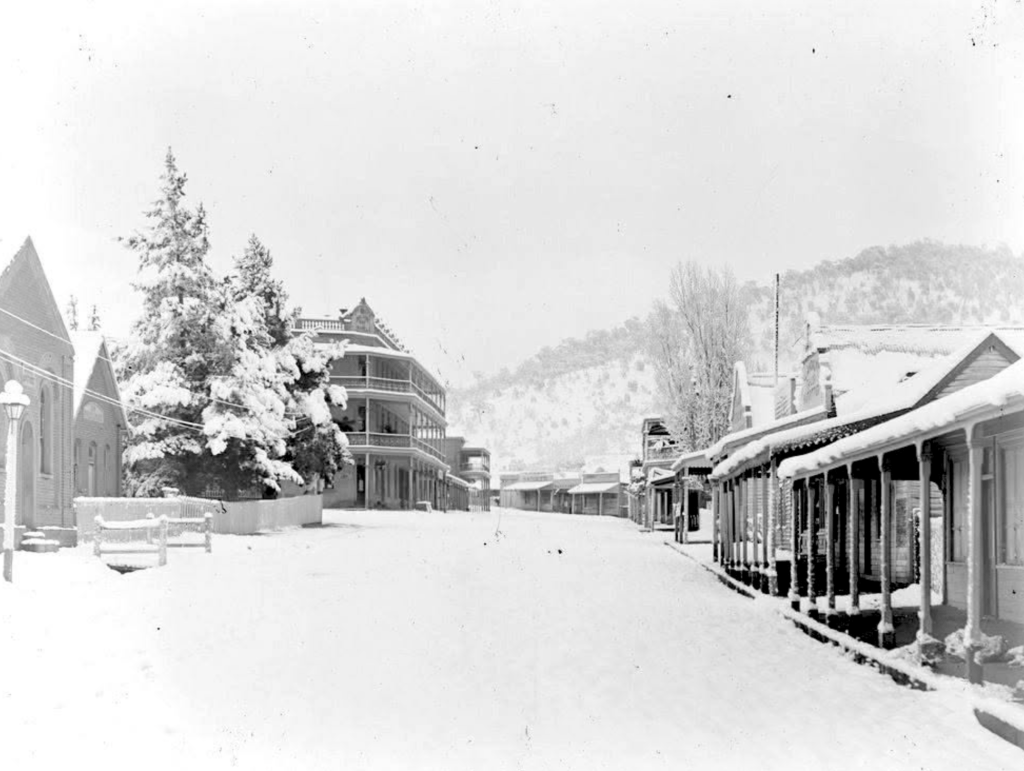
Omeo in the 1890’s and 1900’s
Haydon, now Edward Swan, and his second wife Emma Dinah (Jefferson) are listed on the Electoral Rolls in Bairnsdale for 1903, 1905 and 1906. There are no Bairnsdale or Omeo Electoral Rolls for the years following their 1890 marriage in Bairnsdale. However, the birthplace of their first four children was Omeo, suggesting that after a few years in Omeo, they then lived in Bairnsdale from 1899 to late 1905 to early 1906 when they moved to Orbost.
A March 2010 Newsletter published by the Orbost & District Historical Society Inc. includes some notes about a local businessman which gives a strong indication of why Edward Swan moved his family to the town of Orbost, on the Snowy River:
“Mr Carl Otto (Clyde) Drevermann was born at Lucknow and worked in various parts of Victoria before coming to Orbost in about 1902. In July 1902 he entered into partnership with Mr Edward Fisher Reynolds and the ironmongery, hardware and tin smithing business was carried on by the new firm as Drevermann and Reynolds. In about 1905 Mr Drevermann assumed proprietorship and the tinsmith and plumbing section of the business was sold off to Mr Edward Swan. The ironmongery, hardware and timber business was known as Carl Dreverman & Co until 1917 when it was changed to Orbost Hardware and Timber Co.”
So, either in late 1905 or early 1906 Haydon Swan established himself in the tin smithing and plumbing business operating in Orbost, a business that would continue until just before his death in 1933.
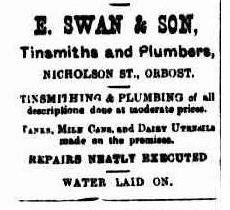
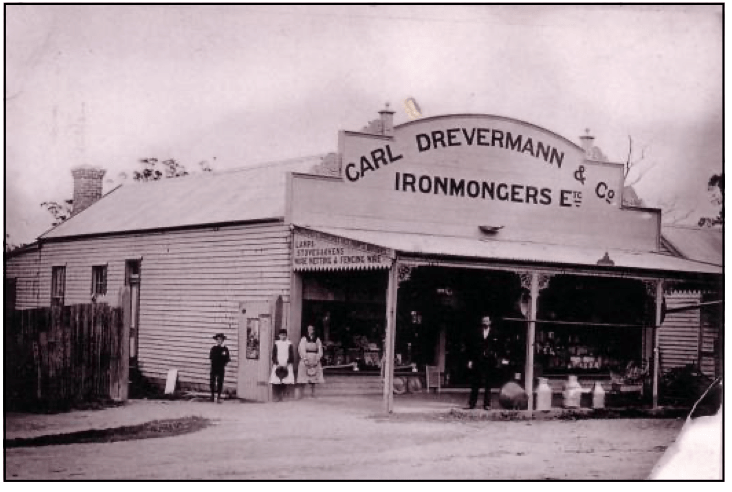
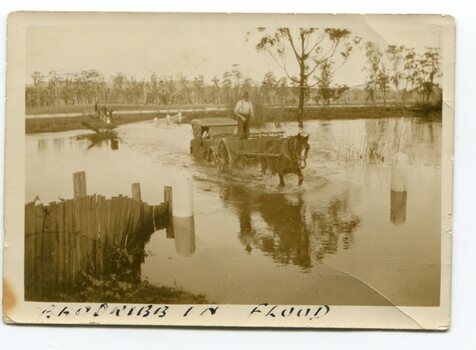
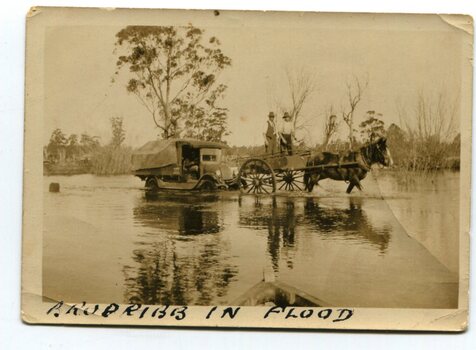
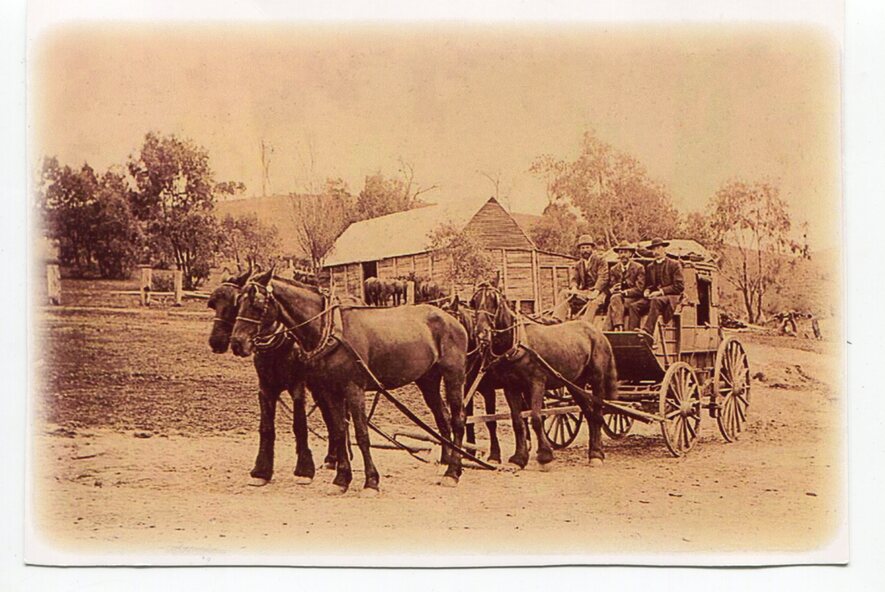
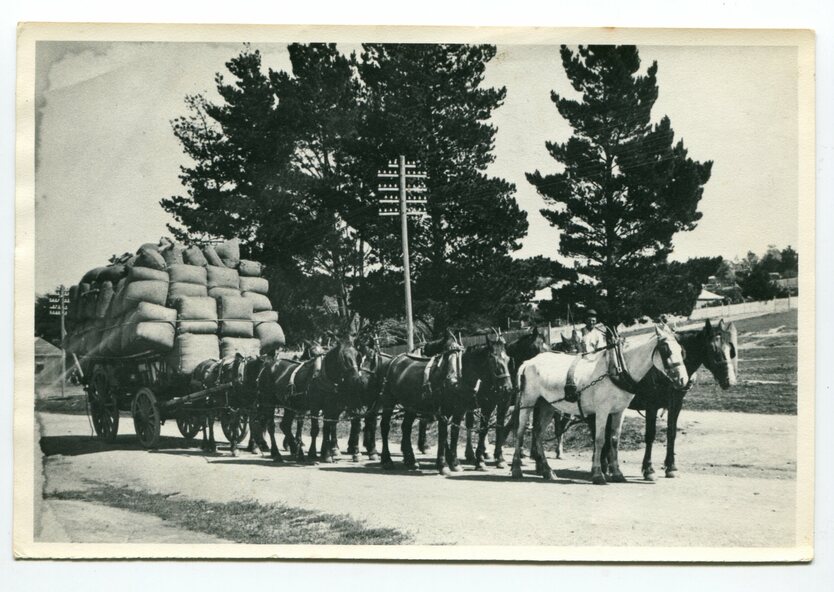
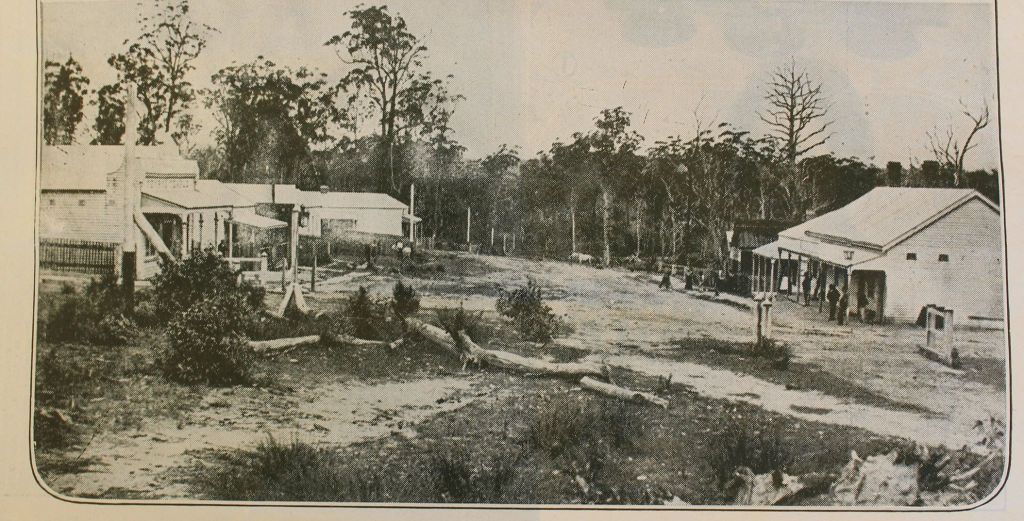
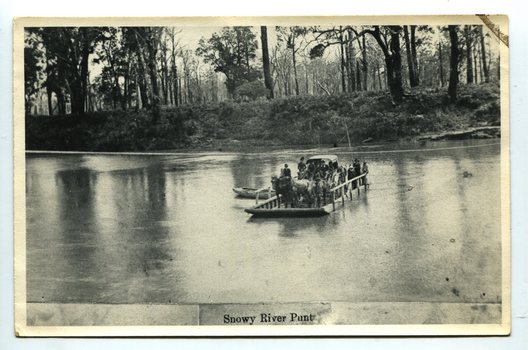
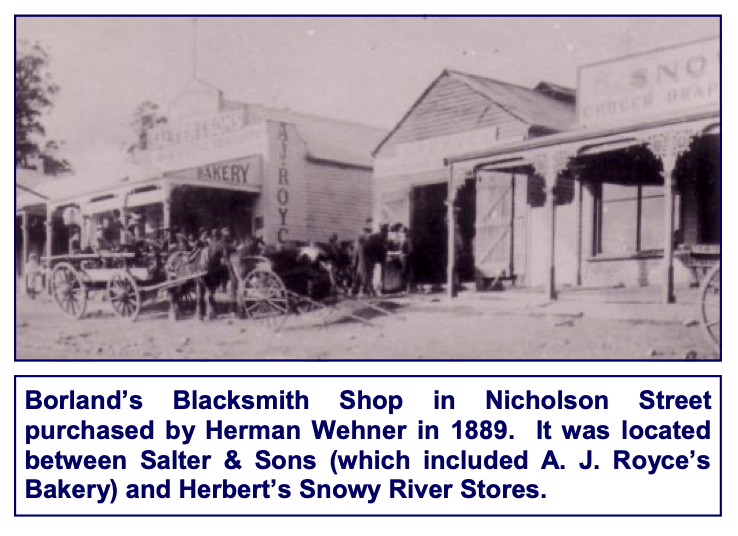
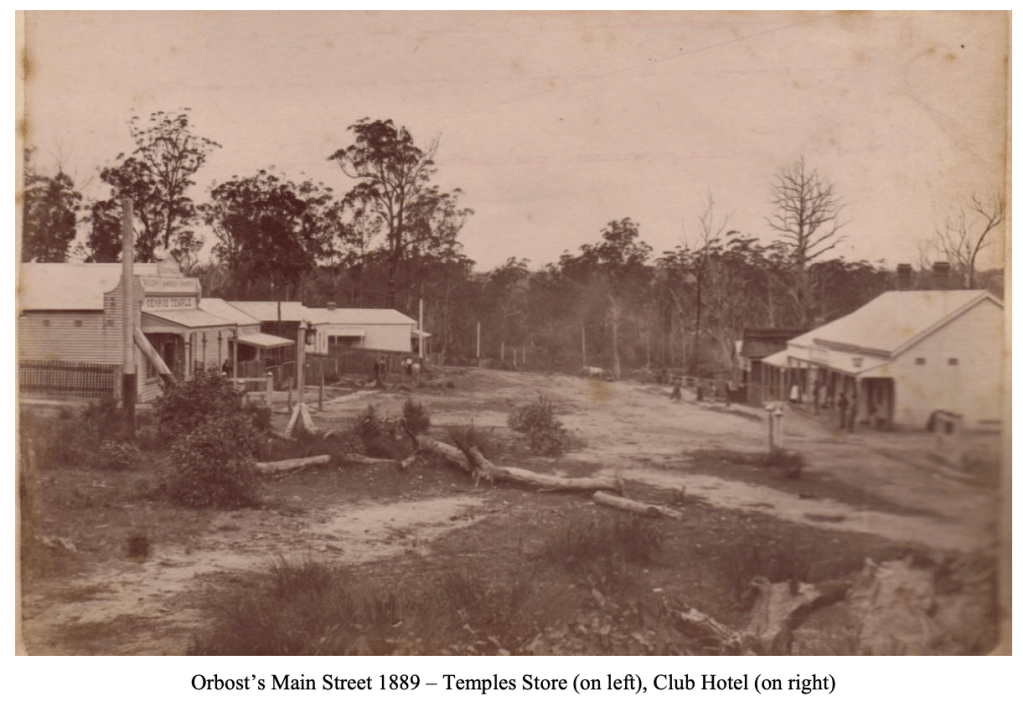
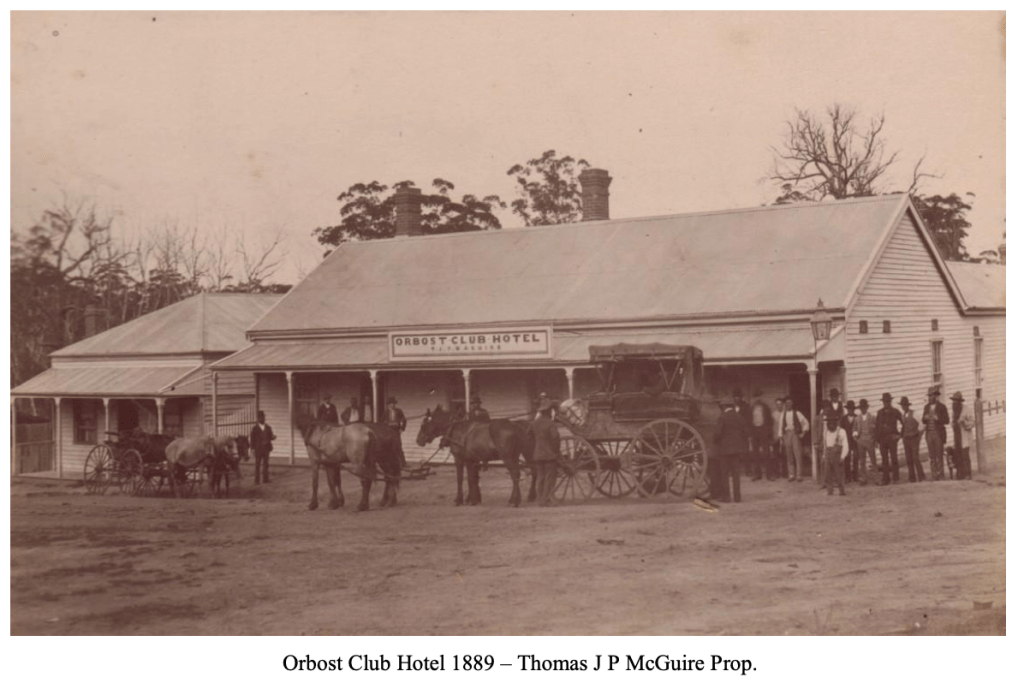
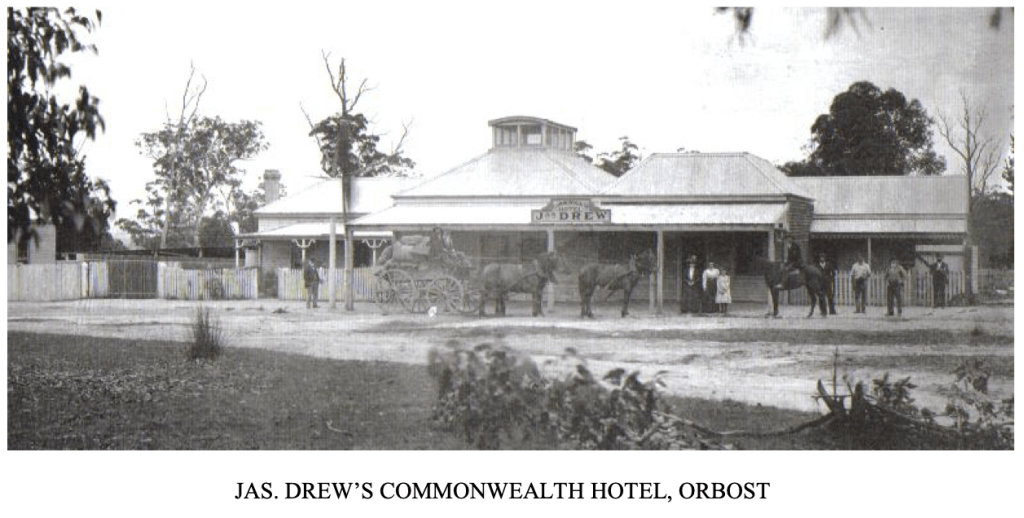
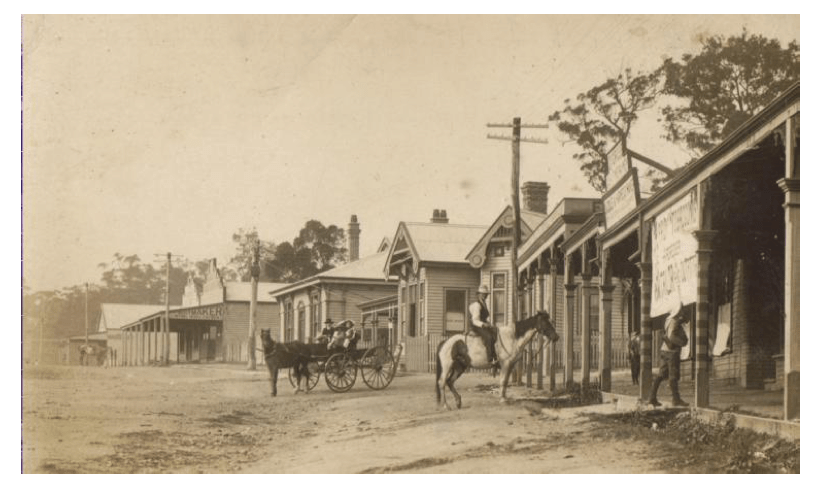
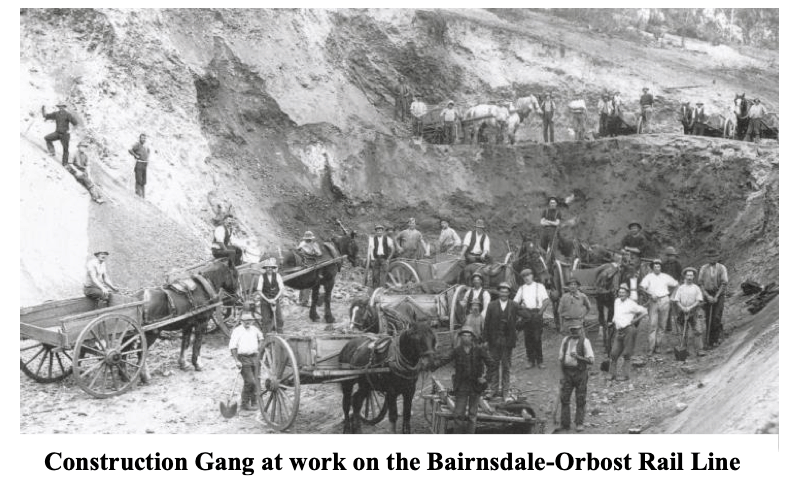
Orbost: 1885 to early 1900’s
From 1892 to 1910 Haydon/Edward and Emma had seven children:
- Martha Louise Swan was born in 1892 in Omeo and died in the same year.
- Elsie May Swan was born in Omeo in 1893 Reg. No: 34223/1893. She married Frederick James Waddell in 1916 Reg. No: 1832/1916 and died in 1964 in Fitzroy, Victoria Reg. No: 23474/1964. They had one son, Walter Frederick Waddell, who was born in 1920 in Orbost.
- Walter Thomas Swan was born in 1896 in Omeo Reg. No: 22377/1896. He married Helen Kathleen Jelleff in 1926 Reg. No: 11782/1926. They had one child, a son. Helen died in 1963 at Cambrian Hill, just south of Ballarat and Walter was living in Melbourne, at Malvern East when he died in 1988. I have no clue (yet) when they moved from Orbost
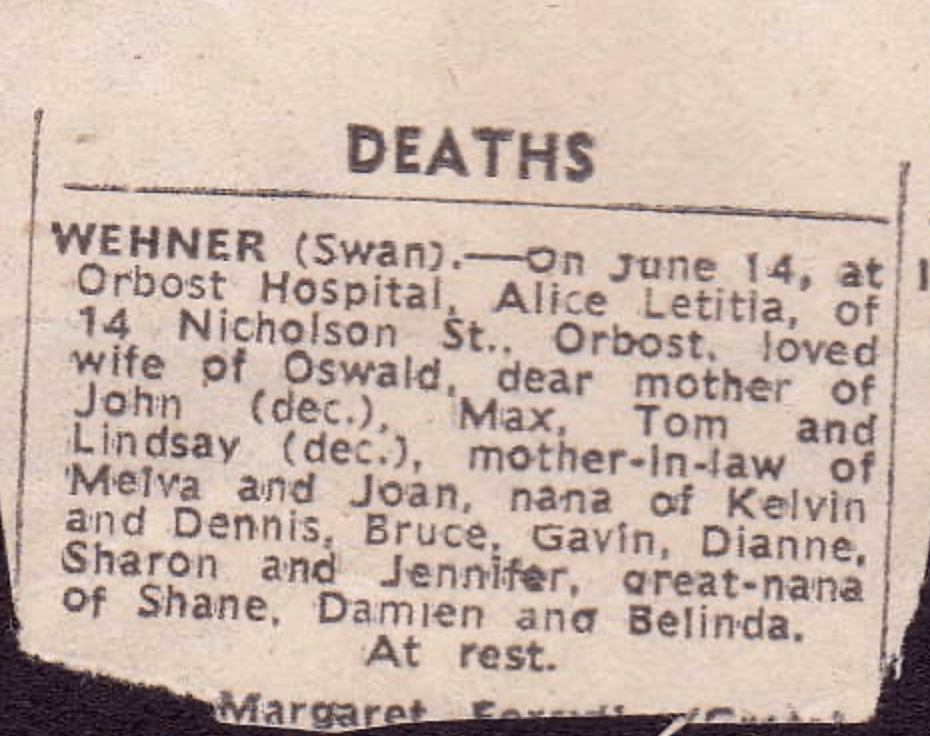
- Alice Letitia Swan was born in Omeo in 1899 Reg. No: 12802/1899. In June 1923, she married Herman Oswald (Ossie) Wehner (1895-1979) in Orbost. The Wehner family was a prominent family in Orbost from the late 19th century. Carl Herman Wehner founded Wehner’s Blacksmith’s at Orbost in 1889, buying an existing business. His eldest son, Alice’s future husband, Oswald “Ossie” Wehner began working in 1910 with his father. Alice Letitia Swan and “Ossie” Werner had four sons two of whom married and had children. In 1947 Ossie’s son Tom started blacksmithing with his father, retiring in 1991 and closing the business, The building remains in Nicholson Street. Alica died on 14th of June 1979 in Orbost Reg. No: 13927/1979.
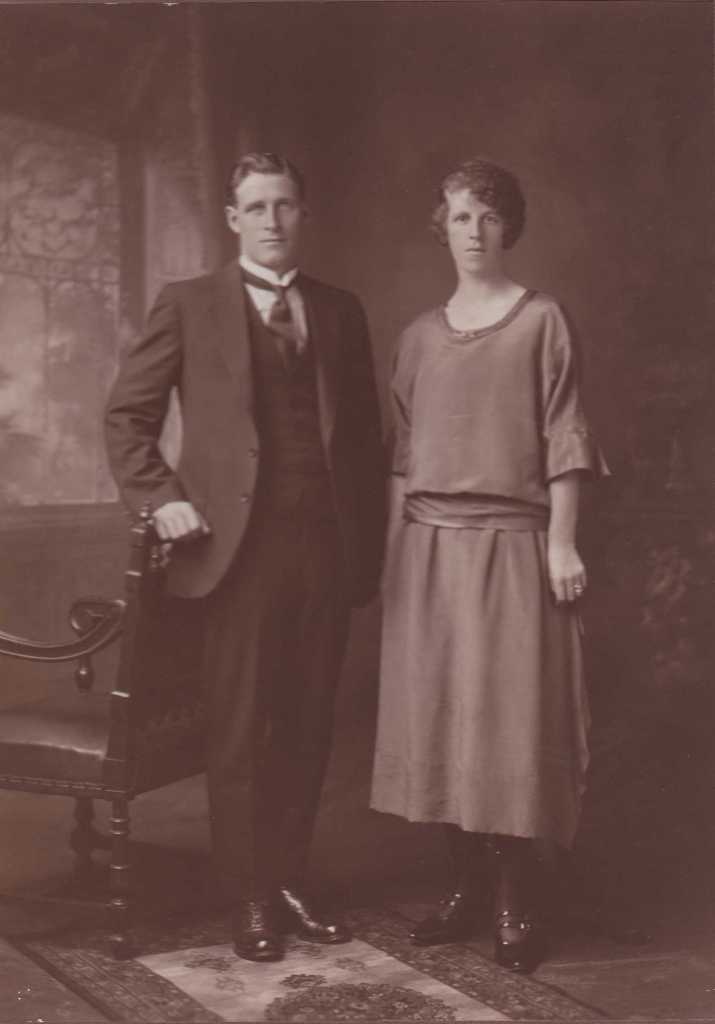
- Thomas Edward Swan (1902-1979) was born in Bairnsdale Reg. No: 15304/1902. He married Irene Rose Bunning (1912-??) in Orbost in 1933 (Reg No: 4923/1933). It appears they may have had one child, but by 1969 they were living in Nerang, Queensland, probably retired. Thomas appears on the Orbost 1925 Electoral Roll, listed as a plumber. His listing on the Electoral Roll is repeated in 1926, 1927 and 1928.
- Vera Jean Swan was born on the 25th of June in 1906 in Orbost Reg. No: 13029/1906. In 1926 she married Herbert John Leeson (1896-1955) in Orbost Reg. No: 61/1926. They moved to Gardenvale in Melbourne by 1930 where their only child, a daughter, was born. Vera died on the 25th of June 1979.
- The last of Haydon/Edward and Emma’s children, Ivy Mary Swan (1910-1991), was born in Orbost in 1910 Reg. No: 29759/1910. She married George Andrew Smerger Drought (1901-1980) in Victoria sometime in 1940 (Reg No: 2724/1940). Ivy was in Alice Springs when she died in 1991, her husband died eleven years earlier in Heidelberg, Melbourne.
Haydon/Edward and Emma are listed on the Orbost Electoral Rolls for 1908, 1909, 1912, 1913, 1914, 1915, 1916, 1917 and 1919. They appear to be well established in Orbost.
On the 7th of February 1916 their eldest son, Walter Thomas Swan, enlisted in the Australian Army. His age was shown as 19 years 6 months and that his next of kin was his father, Mr. Edward Swan c/- of Orbost, Victoria. Communication with the Armed Forces show that his parents were living on Nicholson Street, Orbost. Walter was posted to Cairo, Egypt as a 2nd Air Force mechanic and discharged on 11th November 1917 with a pre-existing goitre on his neck which needed to be operated on in Australia.
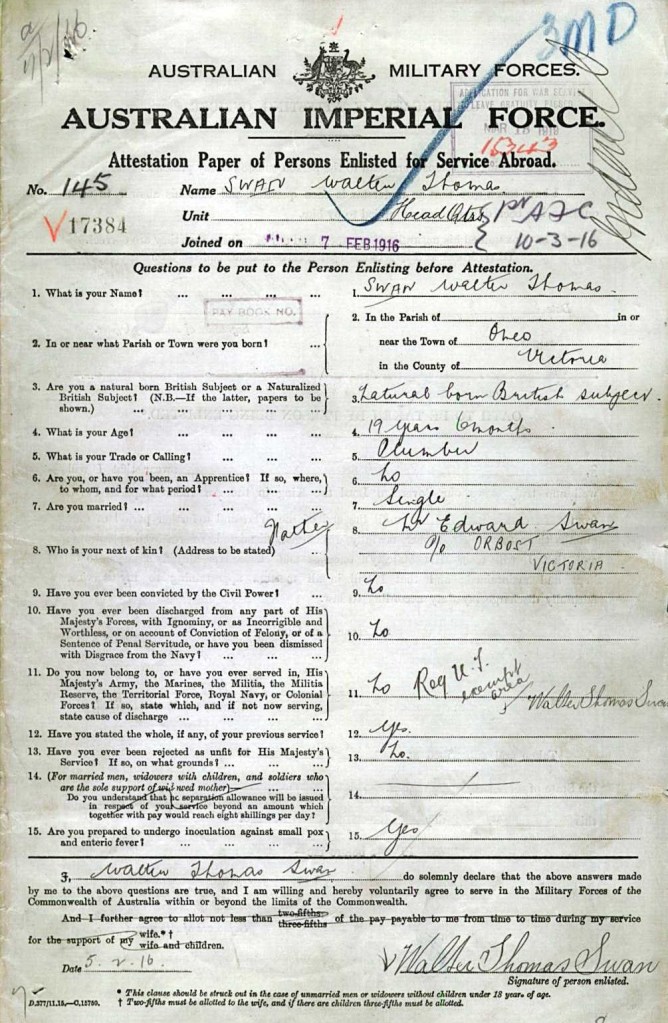
The 1919 Orbost Electoral Roll shows that Walter Thomas Swan was back in Orbost, listed as a plumber, continuing the generations of Swans in that trade. Walter’s Military Records include letters from Edward to the Air Force about his mail from him to Walter not being delivered. Aden’s handwriting is identical to that on his marriage certificate and to his signature as a witness at his brother, Thomas C.C.’s marriage in Melbourne back in 1889.
The Victorian Business Directories in 1923, 1924, 1928, 1929, 1930 and 1931 list
“Swan, Edward and Son, Plumbers, Orbost”
indicating that their business was probably quite successful. Haydon/Edward is also listed individually on the Orbost Electoral Roll from 1919 to 1931 as a tinsmith.
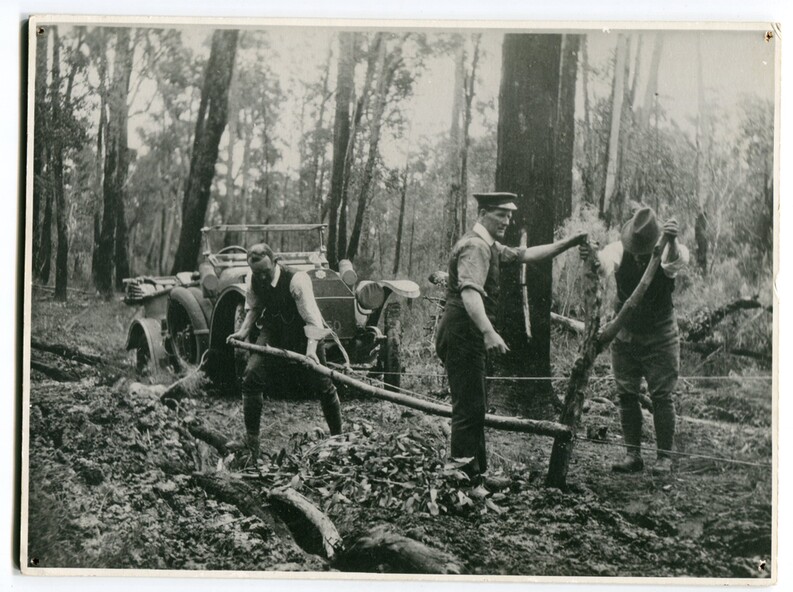
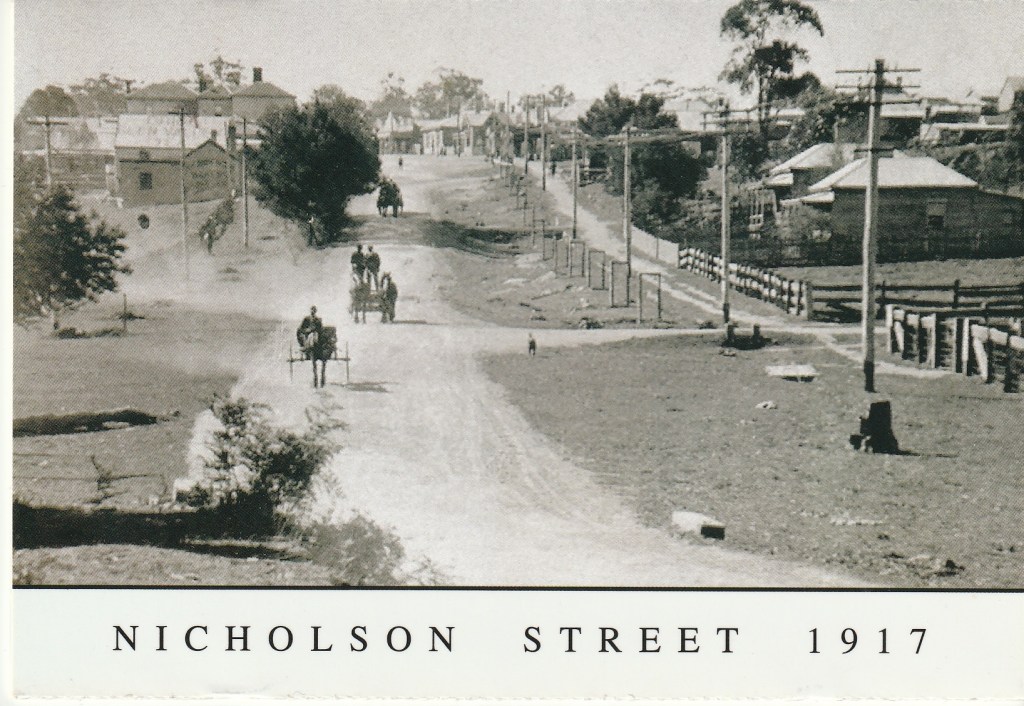
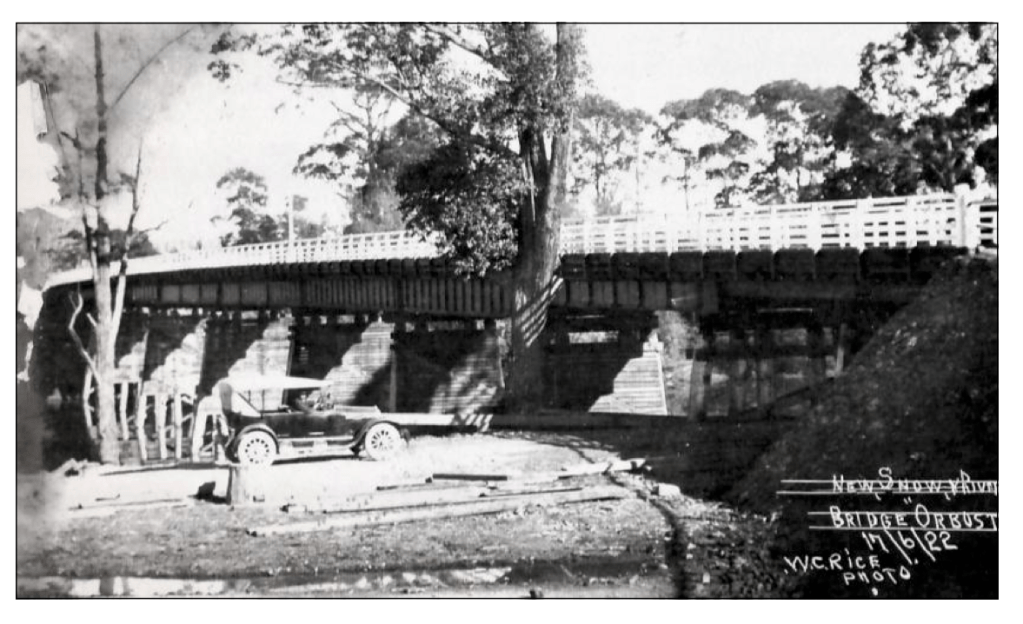
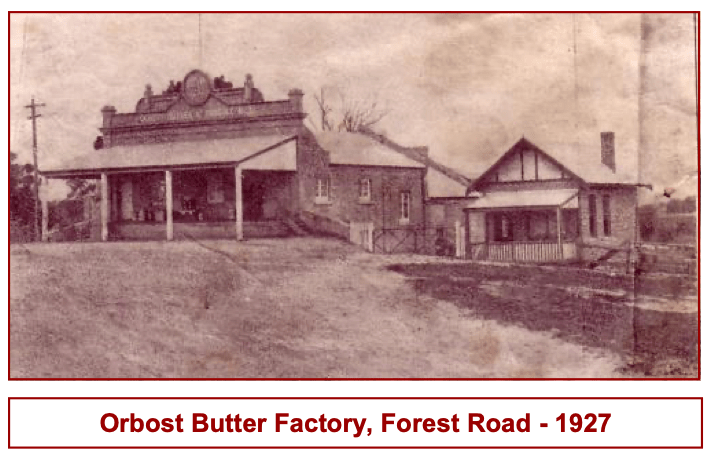
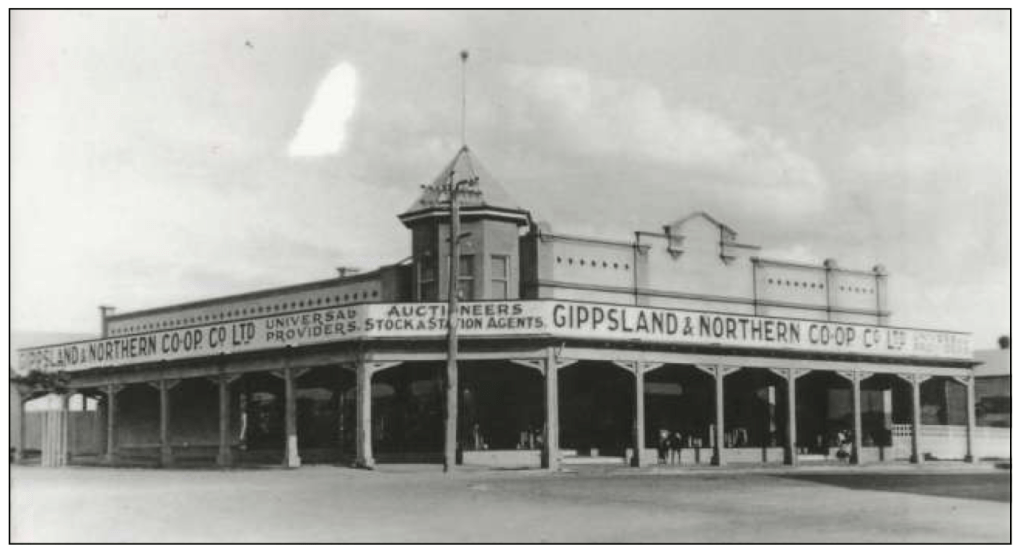
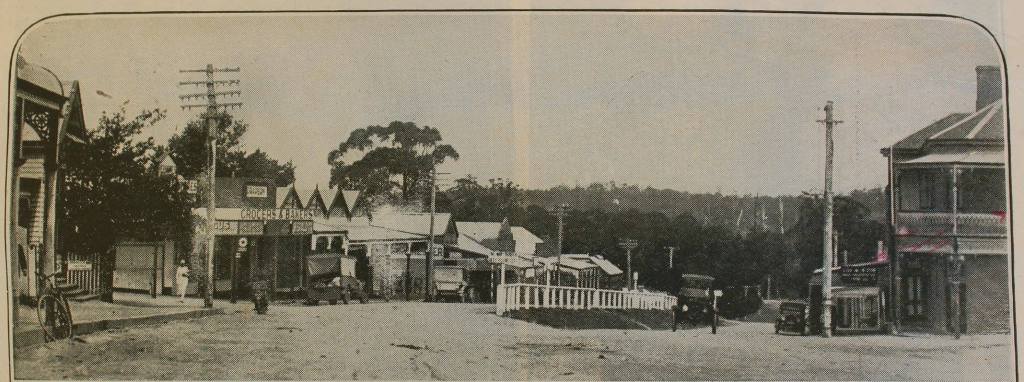
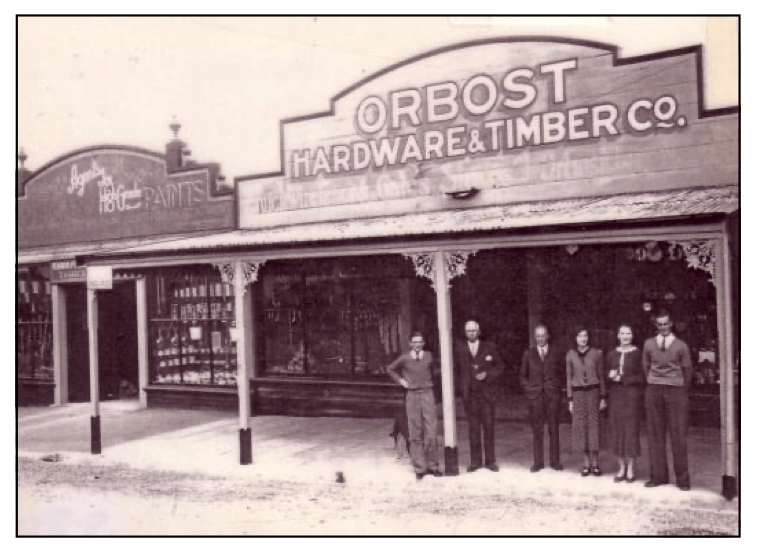
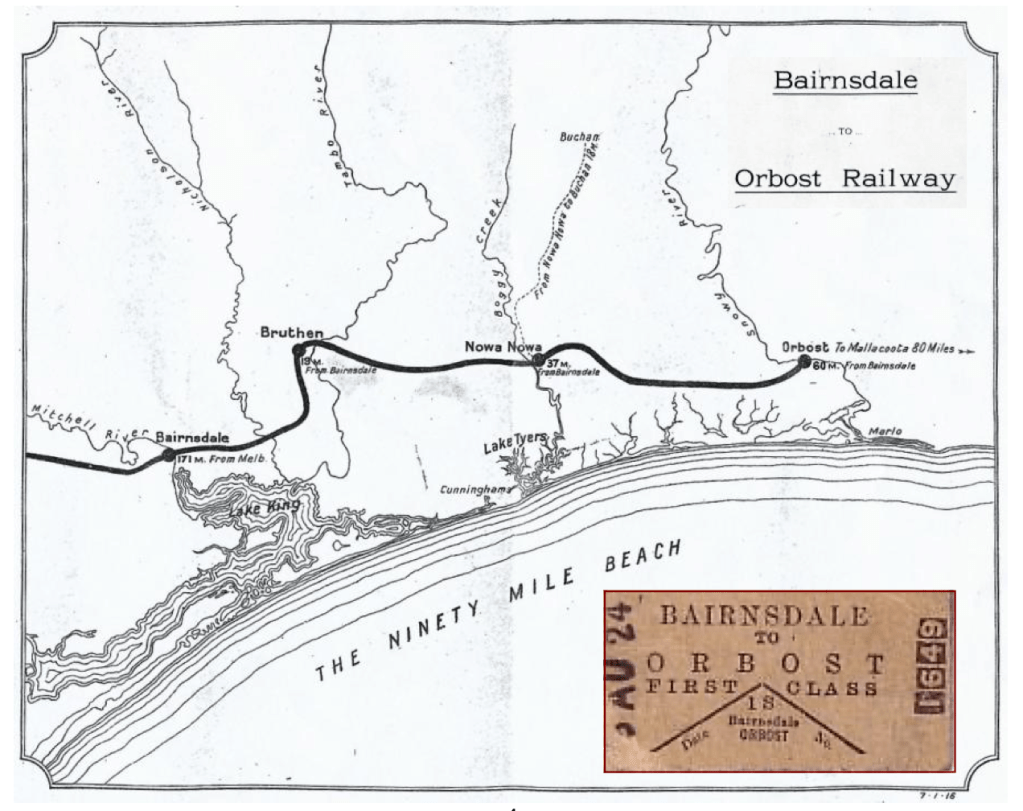
Orbost 1913-1927
Sometime in 1930 or 1931 Emma leaves Orbost and moves to the outskirts of Melbourne.
In 1931, the Electoral Roll for Moonee Ponds shows that Haydon/Edward’s second wife, Emma Dinah (Jefferson) Swan (1871-1949) was living at 74 Athol Street, Moonee Ponds, halfway between Essendon Airport and the centre of Melbourne. At the same address was her daughter Ivy Mary Swan and her youngest son, Thomas Edward Swan. Ivy is listed as an Examiner; Thomas as an ironmonger and Emma as having home duties.
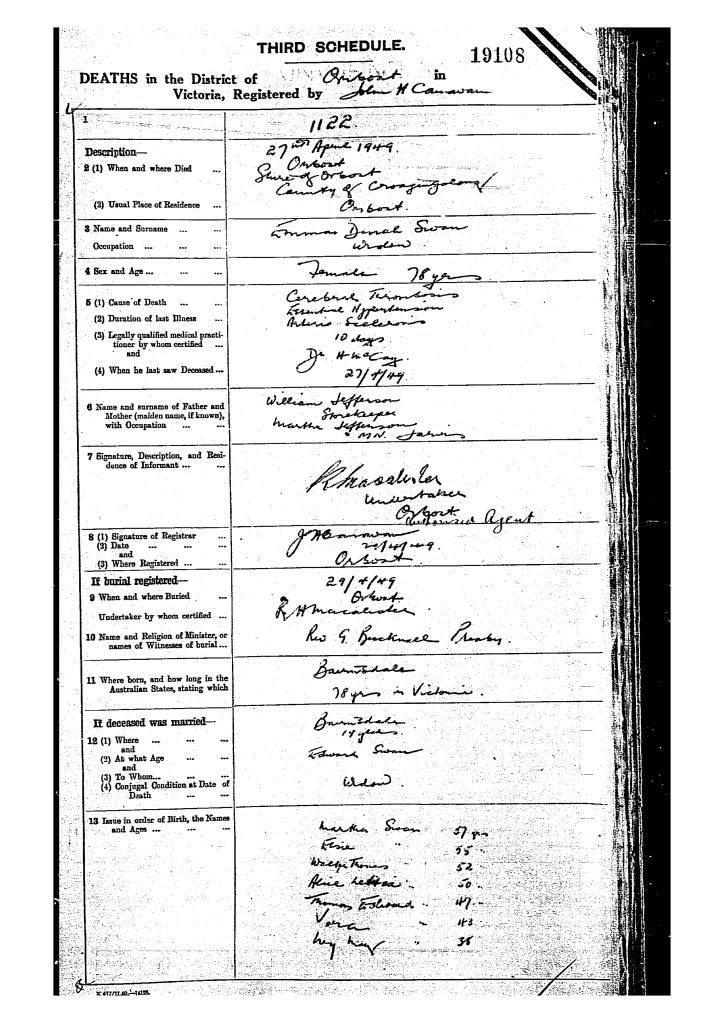
Haydon/Edward Swan died in Orbost on January 14th, 1933, from a carcinoma of the stomach. The death certificate showed that he was a plumber; 72 years old; his father was William Swan, a plumber; his mother was Louise Swan, maiden name Nash; that he was born in Sydney, N.S.W. and had spent 28 years in N.S.W. and 44 years in Victoria; that he married Emma D Jefferson in Bairnsdale when he was 28 years-old and that information was provided by O Wehner from Orbost. Ossie Wehner was his son-in-law. All seven of his children to Emma were correctly listed. Haydon/Edward was buried at the Orbost Cemetery on the 15th of January 1933.
We next see Emma in the 1934 Coburg Electoral Rolls where she is living at 565 Sydney Road Coburg, about 8km northeast of Moonee Ponds.
The 1936 Electoral Roll for Melbourne East shows Emma living at 24 Evelyn Street, some 16km due south from Coburg and just on the edge of St Kilda.
One year later the 1937 Electoral Roll for Collingwood shows Emma is living at 9 Victoria Parade, Fitzroy South, about 8km north from the Evelyn Street address and two blocks from the Fitzroy Gardens.
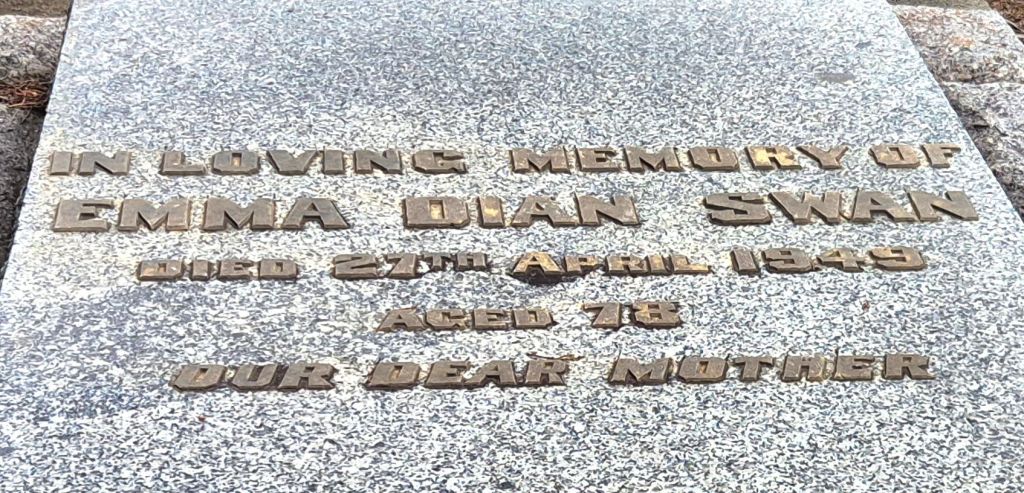
I can’t find any further reference to Emma until her death and burial. She died on the 27th of April 1949 in Orbost and was buried at the Orbost Cemetery on the 29th of April 1949, aged 78 years.
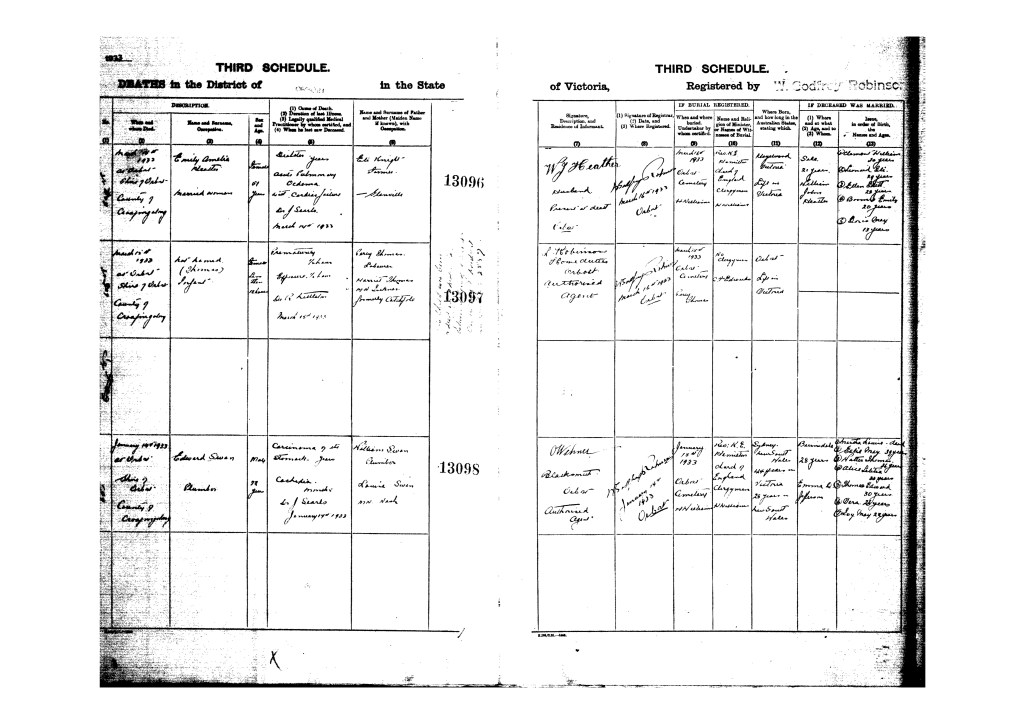
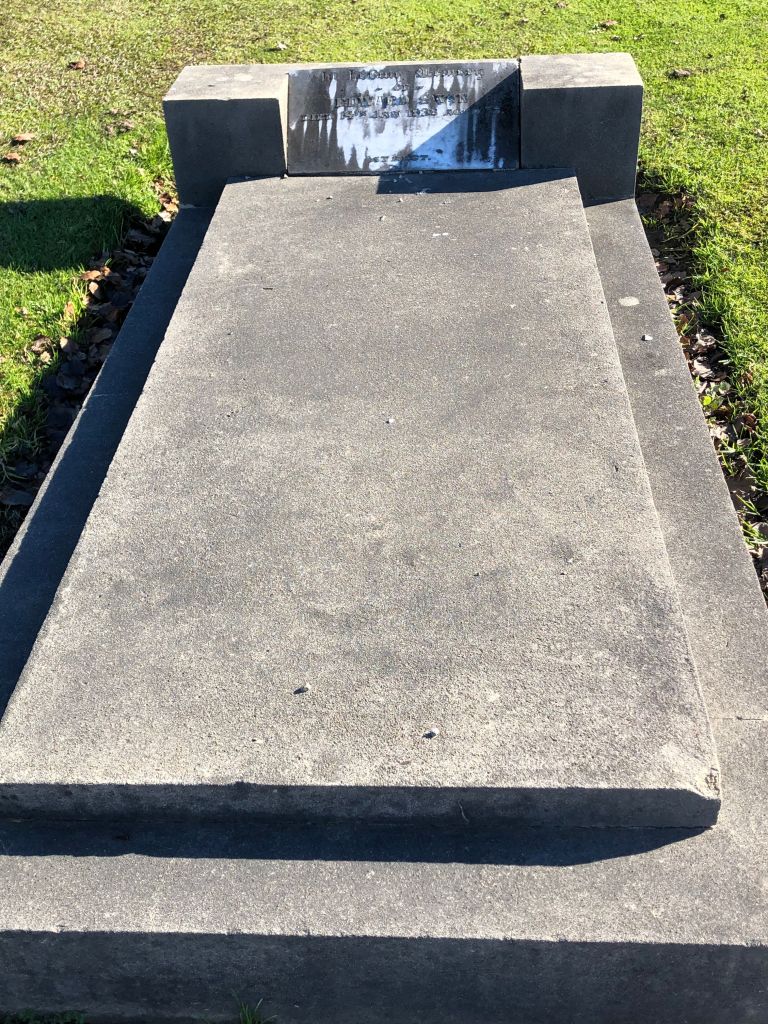
A Wrinkle in the Family History
In January 2024 I initiated correspondence with a woman who shared a good chunk of DNA (87.7 cM’s) with me. Her research gave her some clues as to where the common connection might be. My subsequent research led me to believe that she was a descendent of Aden/Edward Swan. She was not completely convinced that her grandfather, who was known as Edward Swan was the same person as my 3rd great uncle Haydon/Edward Swan; and was reticent about further exploring the possible match. Out of deference to her grandmother and her father she did not want her ancestry made public.
Fully respecting her wishes, I will briefly outline my rationale in true Quentin Taratino style by using changed names.
The family narrative suggests that in Orbost in 1925, a woman, Mrs (Pink) White gave birth to a son, Mr. White Jnr. He was to be the last of her children. Her husband, Mr. White Snr. was listed as the father of this son born in 1925 on the Victorian Birth Certificate. Mr White Snr. although the owner of the house, was living elsewhere.
The story goes that the actual father of Mr. White Jnr. was our very own Haydon/Edward Swan, who was a boarder in the house that Mrs (Pink) White’s was living in from 1924 until his death in January 1933. This suggests that Haydon/Edward could have been living with Mrs (Pink) White for nine years. This abridged narrative came from the woman who shares a DNA match with me – Ms. White, daughter of Mr White Jnr.
This further suggests that the marriage between Haydon/Edward and Emma was having some difficulties.
I have been assured by cousins, close and distant, that scenarios where spouses live apart and children are born “out of wedlock” have many precedents in small townships and large cities. Scenarios that have been prevalent for centuries. So, I accept the DNA evidence without any moral judgment – we do not have the slightest understanding of the tangled lives that are sometimes woven.
Ancestry.com.au, with a very large database, has many tools available to find and verify DNA matches between distant cousins.
The Ancestry.com.au results highlight an extremely strong case for Ms. White being part of the extended family fathered by William Swan (1819-1895) and Elizabeth Cassidy (1829-1870) as 31 of the 74 shared matches have a direct lineage back to these two – my 3rd great grandparents.
Ancestry.com.au suggests that genetically Ms. White is a cousin of mine – either a 4th cousin or half 3rd cousin 1x removed.
My genealogy software shows her as a 2nd cousin 2x removed
When I select Ms. White as a shared match with me on the Ancestry.com.au platform, it returns 74 individuals who are a DNA match of more than 8cM’s with both of us.
Of those 74 individuals, 27 have “Common Ancestors”, an Ancestry.com.au tool available from their global database which identifies possible shared ancestry confirmed by common DNA.
And yes, Ms. White is one of those 27!
This strongly suggests to me that Haydon/Edward Swan is the father of Mr. White Jnr; and that the man who married Phoebe Elizabeth Birch (1866-1915) in 1882 is the same person who married Emma Dinah (Jefferson) Swan in 1890.
That same man was in Melbourne, Victoria in April 1889 when he attended his elder brother’s marriage to Esther Baines.
The plumbing trade runs in the Swan family: Thomas CC Swan and Haydon/Edward Swan, sons of William Swan (1819-1895), the Canadian tinsmith from Quebec were both tinsmiths and/or plumbers. Walter Thomas Swan and Thomas Edward Swan, Haydon/Edward’s sons to Emma Dinah (Jefferson) Swan were also both plumbers.
Haydon/Edward Swan was in Omeo, an isolated town in East Gippsland during the late 1890’s. Gold had been discovered in Omeo in 1851 but the townships growth was hampered by the remote and mountainous location. Known as a rough and tough place it developed rapidly during the 1890’s, with the 1891 Census showing a population of 939. These conditions could have been very attractive to a man such as Haydon/Edward – isolated, a stagnant rather than growing population but a good place to be inconspicuous. By 1901 the Omeo population had diminished to 643 and perhaps Haydon/Edward started to look at other options.
The purchase of an existing business in Orbost could have been very attractive. Orbost was on the Snowy River, had a nearby port, Marlo, and a much more diversified economy that was not reliant on gold seam mining, as Omeo was. Orbost had a smaller population of 368 than Omeo in 1891, but by 1911 that population had risen to 1,130. In 1933, the year of Haydon/Edward’s death the population of Orbost was 1,660 and it continued to grow for the next forty years.
His first wife, Phoebe, died in Sydney in 1915, an event which may have made him feel a little “safer” from discovery. His eldest son, Walter, joined the Armed Forces in 1917 and served in Cairo. Perhaps Haydon/Edward sensed that it was now a different world and he was in no danger of his bigamy being discovered.
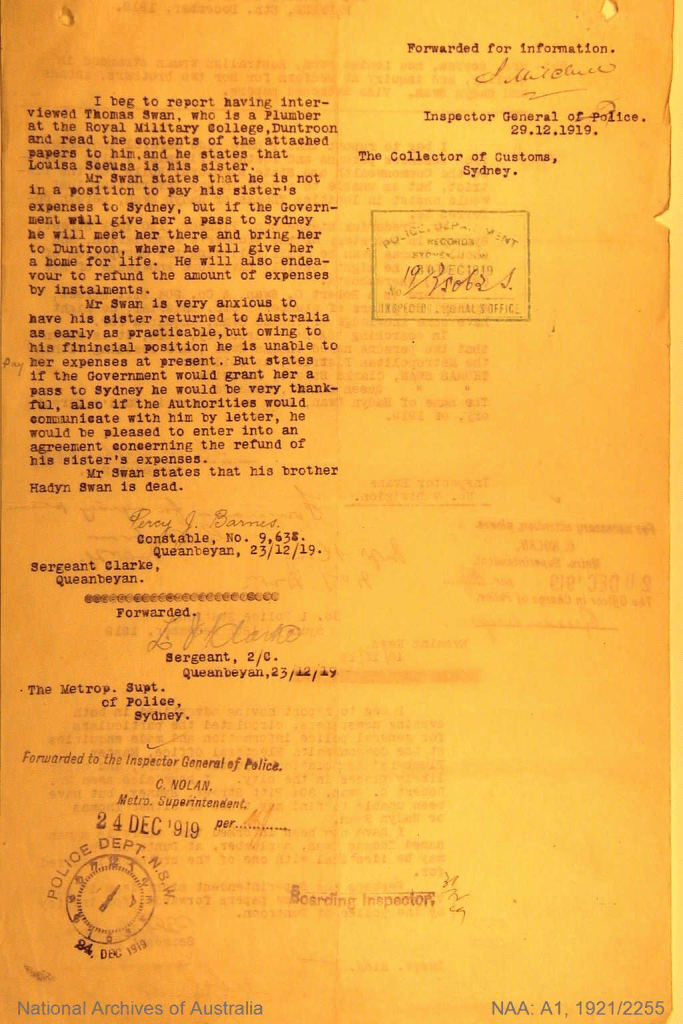
In 1919 his brother Thomas C.C. Swan was contacted by the Australian High Commission in regard to the repatriation from Sicily of their sister, Louisa (Swan) Sceusa. Thomas CC advised the authorities that he “his brother was dead”. This was accepted without any further investigation and Haydon/Edward, now in his late 50’s, with his business going well, may have suffered from some remorse, or guilt?
As outlined earlier, Haydon/Edward and his eldest son Walter were listed in the Victorian Business Directories in 1923, 1924, 1928, 1929, 1930 and 1931 as Swan, Edward and Son, Plumbers, Orbost.
Haydon/Edward is also listed in the Orbost Electoral Roll from 1919 to 1931 as a tinsmith. His eldest daughter, Elsie May married in 1916. His second eldest daughter, Alice Letitia married in 1923. Two of his children, Vera and Walter, were both married in 1926. He had grandchildren born in 1920, 1925, 1927 and 1929. So, living as a boarder with all that other normality of life going on around him does seem a tad cosy.
Anecdotally, Mr. White Snr “was a very mean and grumpy man who gave no affection to any of the children” and when he “moved out of the family home, Edward moved in as a boarder. By my aunties stories Edward was a loving man who was a lot of fun to be around. He died in 1933 in the home my nana lived in with her 6 children under 18. After Edward died Mr. White Snr returned and sold the house and left my nana with nowhere to live and raise her children”.
It appears that all parties accepted the changed marital and living arrangements without too much rancour until about 1930 when Emma moved to Melbourne. She is found on the 1931 Moonee Ponds Electoral Roll living with the youngest daughter, Ivy and youngest son, Thomas Edward. A show of support if Haydon/Edward has been “caught out” perhaps?
At the age of 69, Haydon/Edward died in early 1933 and was buried in the Church of England Section of the Orbost Cemetery.
Emma didn’t come back to Orbost for many years, possibly as late as 1949, her death year. She was buried in the Presbyterian Section of the Orbost Cemetery.
All the children except Alice, who married an Orbost icon, Ossie the blacksmith, seem to have simply drifted away from Orbost in the 1930’s and had very few children.
HISTORY REPEATS ITSELF
After Haydon went missing in 1886 his first family continued to live in Sydney.
Haydon’s eldest son, Leslie William Swan (1884-1960) did not marry nor have children during his long lifetime. Leslie lived to be 75. However, Haydon’s youngest child, also a son, George Richard Swan, did marry and had children.
The Sydney Sands Directory for 1905 shows George Swan living at 412 Riley Street, between Arthur and Tudor streets.
George was married on the 15th April 1908 in St Peter’s Church in Sydney. The Marriage Certificate (3632/1908) shows George Richard Swan, Carter, 168 Dowling St, Bachelor, Sydney, 22 years old, son of Haydon Henry Swan, Plumber & Phoebe Birch; married Sene Brodersen, Housemaid, Leichardt, Spinster, Sydney, 19 years old, daughter of Carl Frederick Herman Brodersen, Farmer & Hansen Madsen. Both bride and groom signed their names; witnesses were Leslie William Swan and Nellie Beatrice Borley.
George Richard Swan and Sene Broderson had four children
- George Alfred Swan was born on 29th October 1908, the family were living in Sydney at 13 Stephen Street. Birth Registration 32131/1908. George Alfred Swan died, an infant, on the 21st of February 1910.
- Gladys Jean Swan was born on 15th May 1910. Birth Registration 11428/1910
- A son, Leslie William Swan (named after George’s older brother) was born on 9th October 1913. Birth Registration 39747/1913
- A daughter, Alma Eva Swan was born in 1917 Birth Registration 450/1917
George Richard Swan’s mother, Phoebe Elizabeth (Birch) Swan died in Sydney on the 17th of September 1915 seemingly without any further contact with Haydon, nor any support from him.
Tragically history repeats itself when George Richard Swan appears to behave in a similar manner as his father did in 1886.
In 1919 he deserts his wife and young children.
The NSW Police Gazette for 29th October 1919 under the heading of “Deserting Wives and families, Service etc.” lists the following:
Darlinghurst – A warrant has been issued by the Children’s Court Bench, Sydney for the arrest of George Richard Swan, charged with disobeying a magisterial order for the support of his wife and children (£6 and costs 6s due). He is 34 years of age, 5 feet 10 inches high, ruddy complexion, clean shaved; dressed in a dark suit, and straw hat. His wife resides at 14 Stephen-street, Sydney.
The NSW Police Gazette for 12 November 1919 suggest he has been arrested and charged:
George Richard Swan (34) charged on warrant with disobeying a magisterial order for the support of his wife, has been arrested by Constable Maher and McEntee, Sydney Police. Committed to Gaol until the order is complied with.
The records do not show that the order has been complied with, or when George Richard Swan was released. However, the NSW Police Gazette for 12 November 1921 suggests that the matter had not been resolved.
Darlinghurst – A warrant has been issued by the Children’s Court Bench, Sydney for the arrest of George Richard Swan, charged with disobeying a magisterial order for the support of his wife and children (£19 and 8s costs due). He is 34 years of age, 5 feet 10 inches high, ruddy complexion, clean shaved; dressed in a dark suit, and straw hat. Identical with offender same name (vide Police Gazette, 1919, page 578).
After almost three years the long arm of the law once more makes an arrest. The NSW Police Gazette for 21 May 1924 shows that George Richard Swan has been arrested and the matter recharged with an amended order.
Vide Police Gazette, 1921, page 586
GEORGE RICHARD SWAN charged on warrant with disobeying a magisterial order for the support of his wife and children ($19 and 8s costs due), has been arrested by Constables Laycock, Spithill and A. W. Wright, Sydney Police. Charge withdrawn. Recharged with neglecting to pay the sum of $293 due on the same order. Ordered to pay £20 forthwith, and £2 10s per week off the arrears.
Less than a year later it becomes obvious that George Richard Swan has not complied with the court orders and has a severe problem. The NSW Police Gazette for 8 April 1925 shows:
Annandale – A warrant has been issued by the Children’s Court Bench, Sydney for the arrest of GEORGE RICHARD SWAN, charged with disobeying a magisterial order for the support of his wife and children (£284 15s due). He is 39 years of age, 5 feet 7 or 8 inches high, medium build, fair complexion and hair, blue eyes clean shaved, good teeth, small hole between the eye-brows; a labourer; addicted to drink.
The warrant was successful as George was arrested three weeks later. The NSW Police Gazette for 29 April, 1925 suggests that his addiction to drink will make it highly unlikely that the total arrears will be paid.
Vide Police Gazette, 1925, page 190.
GEORGE RICHARD SWAN, charged on warrant with disobeying a magisterial order for the support of his wife and children, has been arrested by Sergeant 2nd Class Phillpott and Constables Crimston and Clayden. Sydney Police. Ordered to pay £10 into Court and 5s per week off the arrears.
I have been unable to find any detail of George Richard Swan’s life from the April 1925 Police Gazette until 1946 and his death in 1947. At this time, alcoholism was regarded as a disease and those suffering were invariably housed in various Hospitals and other institutions. Medical records are not able to be obtained for more than 100 years after death; however, a 1946 Electoral Roll for the Sydney Subdivision of Liverpool lists a George Richard Smith as a male labourer at “State Hospital”. This was found after extensive research as George Richard Swan’s Death Certificate notes that he is “known as Smith”. The Newspaper notice of his funeral also shows Smith as an alternate surname:
SYDNEY MORNING HERALD, Sat., April 5, 1947
“SWAN (SMITH). The Relatives and Friends of the late GEORGE RICHARD SWAN (SMITH) late of 14 Marriott Street Redfern are kindly invited to attend his Funeral to leave our Private Chapel 604 Crown Street Sydney This Afternoon at 1 o’clock for the Church of England Cemetery, Rookwood. LABOR MOTOR FUNERALS LIMITED 604 Crown Street”
The Death Certificate shows that he died, 61 years-old on the 2nd of April 1947 at The Prince Henry Hospital Little Bay; that he had been living at 14 Marriott Street Redfern; that he died from Coronary Occlusion, Atheroma of Coronary Arteries; that he was admitted to Hospital on the 13th of March 1947; that his father was Hayden Henry Swan; that his mother was Phoebe Elizabeth Birch; that information was certified by his brother, Leslie William Swan; that he had been married for 21 years to Sene Broderson; that 3 of his 4 children, Gladys, Leslie & Alma were living; and that one child, a male, was deceased.
His wife, Sene Broderson, is listed on the 1933 Electoral Rolls for Annandale at 300 Young Street with her eldest daughter, Gladys Jean Swan (1910-1983) at the same address. His brother, Leslie William Swan (1884-1960) is listed on the same Roll living at 264A Annandale St, only a short distance from Sene and Gladys. The 1937 Electoral Roll lists the same information for Sene, Gladys and Leslie with the addition of another Leslie William Swan (1913-1983) at the same address as his mother, Sene.
The 1943 Electoral Roll shows Sene and her youngest daughter Alma Eva Swan (1917-1966) at the same address, 300 Young St; and George’s brother Leslie still at 264A Annandale St.
The 1946 Electoral Roll shows Sene at the same address, 300 Young St; and George’s brother Leslie still at 264A Annandale St. The three children of Sene and George are now all married.
The 1949 Electoral Roll shows Sene at the same address, 300 Young St; and George’s brother Leslie still at 264A Annandale St.
As noted earlier, Leslie William Swan (1884-1960), George’s brother, did not marry.
Gladys Jean Swan (1910-1983) married Milford Roy Hicks (1910-1971) in May 1938. They had one daughter.
Leslie William Swan (1913-1983), Sene and George’s son, married Mary Connolly (1918-1992) in 1941. They had three children.
Alma Eva Swan (1917-1996) married John Buckley and did not have children.
In 1949 Sene (Broderson) Swan (1889-1968) married a widower, John Henry Perry (1887-1976) in Wollongong.
~ ~ ~ ~ ~
WHERE DID ALL THIS INFORMATION COME FROM?
Wikipedia
Ancestry.com.au
https://familyhistory.bdm.nsw.gov.au
https://mhnsw.au Museums of History New South Wales
https://naa.gov.au National Archives Of Australia
https://dictionaryofsydney.org State Library NSW Dictionary Of Sydney
https://orbosthistory.com.au Orbost & District Historical Society
https://www.omeo.org.au Omeo Historical Society
https://www.eastgippsland.vic.gov.au
https://www.australianhistoryresearch.info
https://dictionaryofsydney.org
https://www.visitsydneyaustralia.com.au
Many conversations with many cousins regarding family anecdotes.
 miles of irvings
Leave a comment