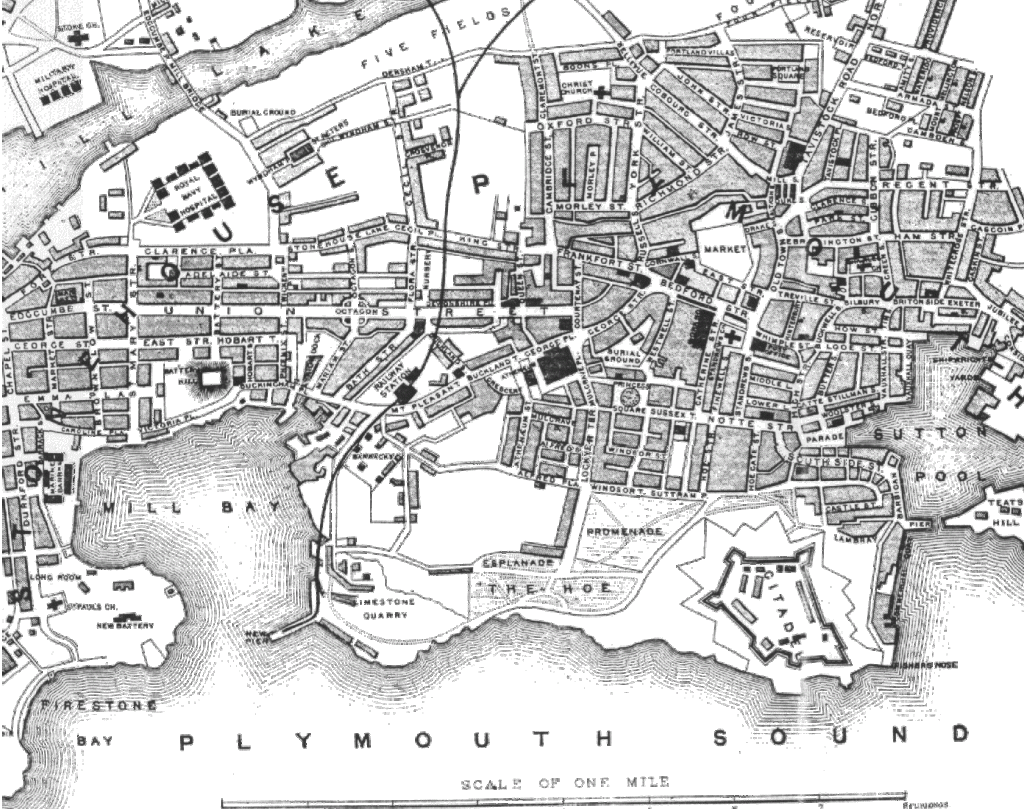
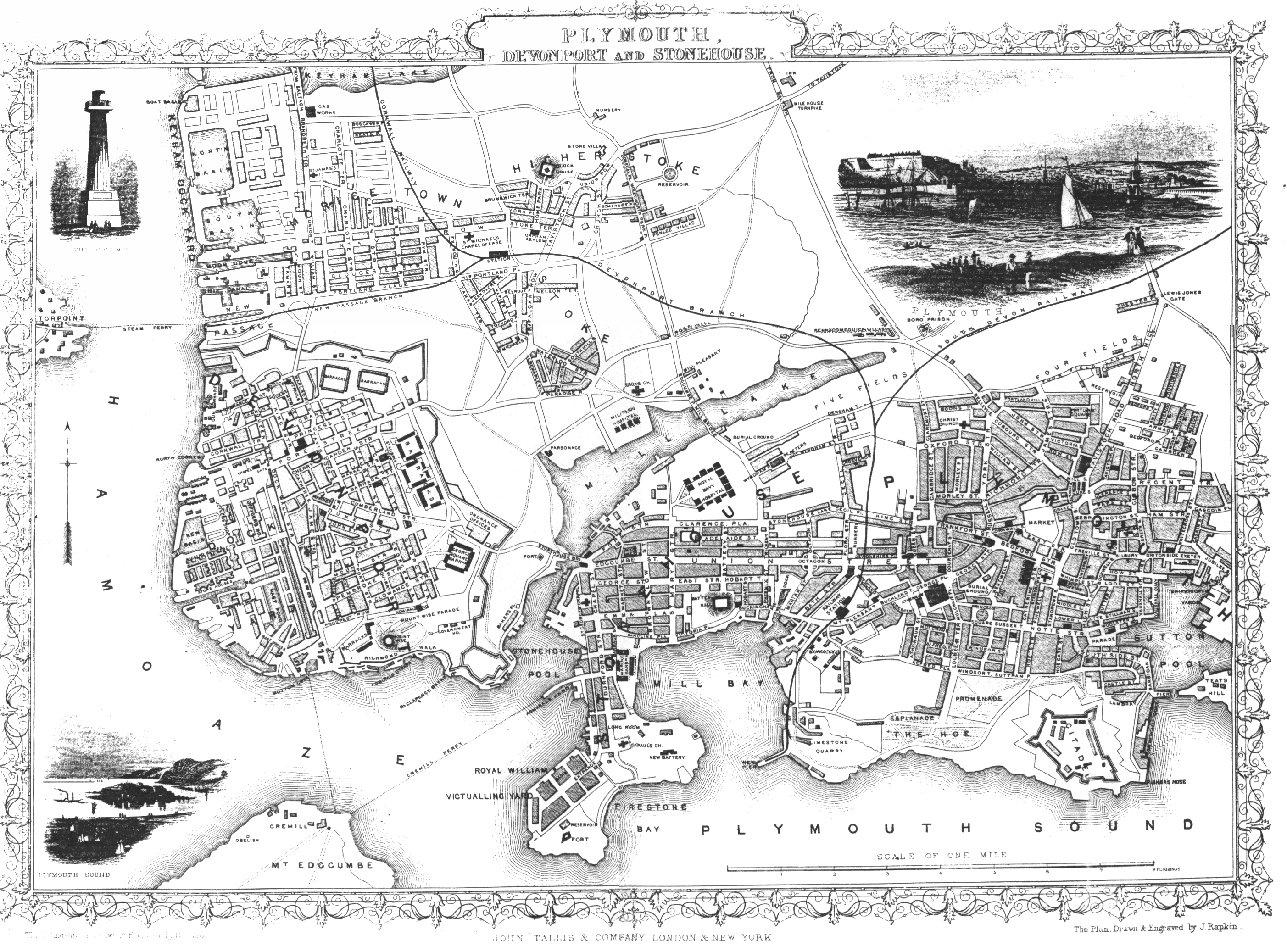
William Rundell was born in 1788 in Maker, a small Cornish village very near where the Tamar River enters the Hamoaze Harbour which then joins the Plymouth Sound, no more than five miles from Devonport. This safe anchorage had been a major naval port for centuries – as early as 1287 a fleet of 325 vessels assembled at Plymouth for operations against France. Fleets were constantly in the harbour in the time of Edward III and, in 1355, the Black Prince embarked there. It was in the reign of Elizabeth I that this harbour began to assume greater importance, and the part it played during the Spanish Wars is written large in history. Drake, Howard, Raleigh, and all the other great seamen of that and of later times, are connected to Plymouth and its extensive history. The period from 1693 to 1777 saw the building and extension of a stone dockyard but it wasn’t until the year before William Rundell’s birth that a fully commissioned first-rate sovereign ship was built at Devonport Dockyard. William became very involved in shipbuilding, moving to Devonport and spending the rest of his life immersed in the building and re-fitting of Royal Navy ships. It would have been an exciting, vibrant time – in 1727 there were about 310 men directly employed in shipbuilding at Devonport, but by the time William Rundell retired, that number had grown to almost 4,000!
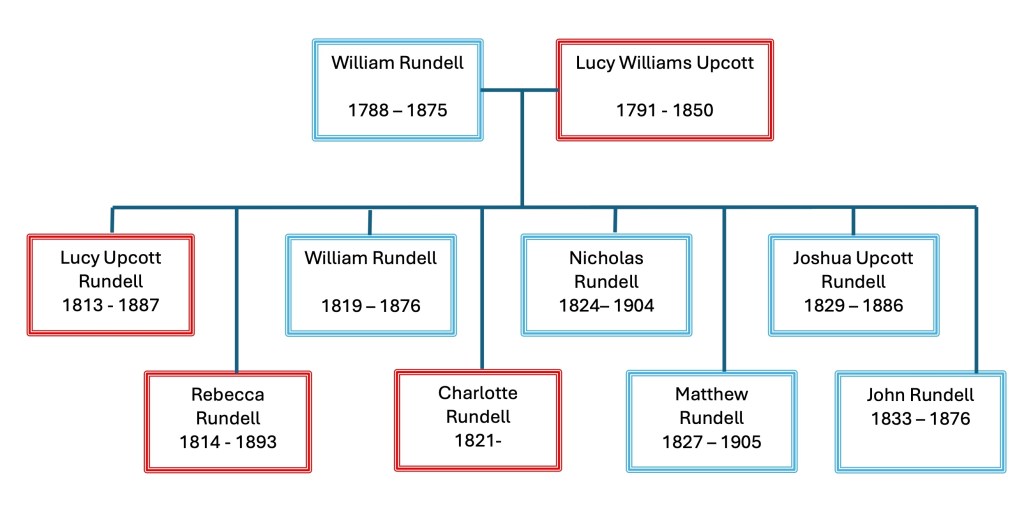
William married Lucy Williams Upcott, a publican’s daughter in 1810 in Stoke Damerel, the town where she was born.
The 1841 England census shows Lucy & William Rundell living in Granby Street, Devonport, just near the Devonport barracks – Devonport being a major naval centre. William is listed as a 53-year-old shipwright and the family living with him are his wife, Lucy Rundell, (50), sons William Rundell, (23) Nicholas Rundell, (18) Matthew Rundell, (14) Joshua Rundell, (12) John Rundell (8) and a daughter, Charlotte Rundell (20). The other daughters, Lucy and Rebecca are living in Chelsea with Lucy’s husband, William Netherton and two of their three daughters. In December 1841 Charlotte married Isaac Hardy, who was a carpenter/joiner.
Sometime in the early 1840’s Lucy Upcott (Rundell) Netherton and her husband, William relocated from Chelsea back to Devonport; she is involved in haberdashery, he is operating an “eating and coffee house” a few blocks away. In 1843 tragically, William Netherton dies, leaving Lucy with four children. Lucy remarried to a Naval gunner, James Marshall in 1848. A fifth child, a daughter, Ellen Rundell Marshall is born in 1850.
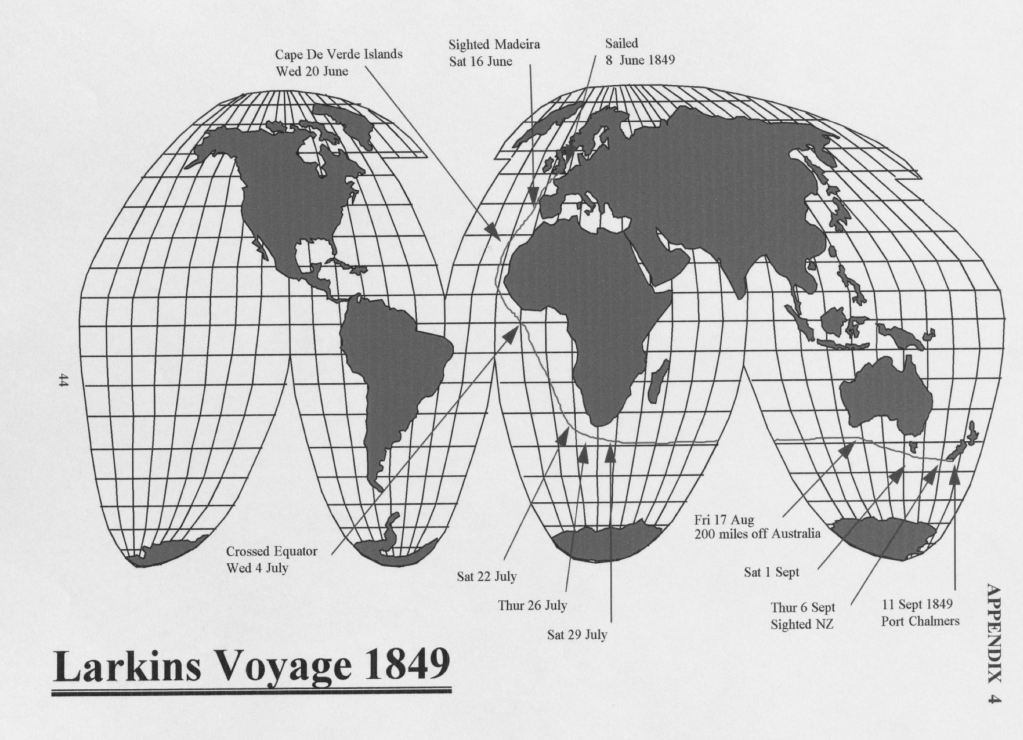
A year earlier, mid 1849, the first of five of William and Lucy’s children, Rebecca and her family left England, bound for Nelson on the top of New Zealand’s South Island. The ship was the 777 ton “Larkins”, commanded by Captain John Burton. It left London on June 7th, 1849, making landfall at Port Chalmers, Otago on the southeast of the South Island on September 11th. It would be almost two months later that the ship reached Nelson after disembarking passengers at Wellington, and New Plymouth. This voyage saw the birth of Rebecca and Isaac’s son who arrived at 1:30pm on the 13th of August, a severely cold and windy day. It must have been a most difficult and painful voyage for the pregnant Rebecca, particularly as their two daughters, Sarah and Anne were infants 3 and 1 years old and didn’t sail very well. The baby was named William – surprise, surprise!
Isaac kept a diary of the voyage, outlining the “duties” of the settlers and recording the latitude and longitude daily. Isaac also included a recipe for gruel. The diary is preserved in the Turnbull Library, New Zealand.
Rebecca and Isaac had another daughter born in New Zealand, named Lucy, in 1851. They then moved to Victoria where the family was increased by another daughter, Emily in 1854; and a son, Charles born in 1858.
Lucy Williams (Upcott) Rundell died in 1850. The 1851 census shows William Rundell, now 63 and widowed, living at 51 Charlotte Street with four of his sons, Nicholas, Matthew, Joshua & John and a 22-year-old house servant, Maria Bennett. William is listed as a Timber Converter at HM Dockyard; Nicholas, Married, and an Iron Founder; Matthew and Joshua both unmarried and Shipwrights at HM Dockyard and John also unmarried as an apprentice Iron Moulder.
His eldest son, William (1819-1876) was living in Deptford, Kent with his wife Sarah Reeve, their two-year-old son, also a William; and his mother-in-law, Elizabeth Reeve. Now in his early 30’s, William was employed as a shipwright at HM Dockyards.
The next three of William and Lucy’s children all left England for Australia in the first half of 1853. Matthew Rundell (1827 – 1905) and his younger brother, Joshua Upcott Rundell (1829 – 1886) both shipwrights, sailed together on the “John Barrow” arriving at Port Phillip, Victoria in April 1853. Adventure, fame and fortune were what these young men sought in Victoria, the colony full of gold that promised wealth to so many who made their way to this land of opportunity. They both settled in the Bendigo region, one of the main hubs for prospectors from all over the world. As testament to their family closeness, both Matthew and Joshua were married on the same day – the 25th of June 1857 at the same church in Collingwood. There will be a post on this blog in the future about their lives and the (sometimes) great success of many of their descendants. Joshua Upcott Rundell and his wife, Mary Ann Elizabeth Hodgson-Brown (1831-1877) are Kerry Morgan’s 2ndgreat grandparents.
Lucy Upcott Rundell (1813 – 1887), the eldest child of William and Lucy and the fourth of their children to leave England for the southern colonies; arrived in Port Phillip, Victoria in July 1853 on board the “Euphemus”.
She landed in Victoria with four daughters and one son from two husbands who had both died. The family anecdote is that she was looking for newly wealthy (and single) husbands for her children. The 1850’s was the start of the Gold Rush in many parts of Australia with Victoria benefitting from gold discoveries throughout the colony. Lucy’s middle child, Susannah Netherton (1838 – 1930) and her husband, William Samuel Rawlings Hambly (1823-1898) who married in 1855 are my 2nd great grandparents. His story is here.
The fifth and final member of William and Lucy’s family to make the three-month voyage was William Rundell (1819 – 1876). He was two years behind his older sister Lucy Upcott Rundell, arriving on board the “Shalimar” in 1855. This ship was captained by Amos Robertson. Carrying 435 passengers the “Shalimar” departed from Liverpool on the 22nd of November 1854 and landed in Port Phillip, Victoria on the 8th of February 1855.
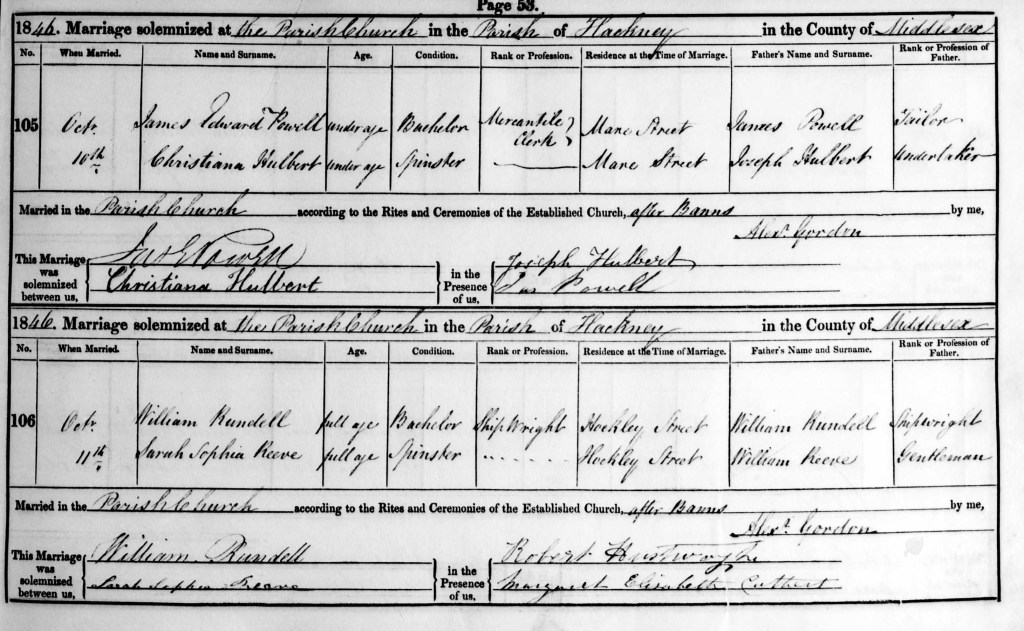
William’s wife, Sarah Sophia Reeve and their 8-year-old son, William Reeve Rundell, sailed from London to Melbourne on board the “Startled Fawn” The ship, captained by James Carlyle departed on the 31st of July 1856; and arrived on the 1st of November 1856. We think that William felt he could establish himself more readily by having Sophia and William Reeve land in Victoria 18 months after he did.
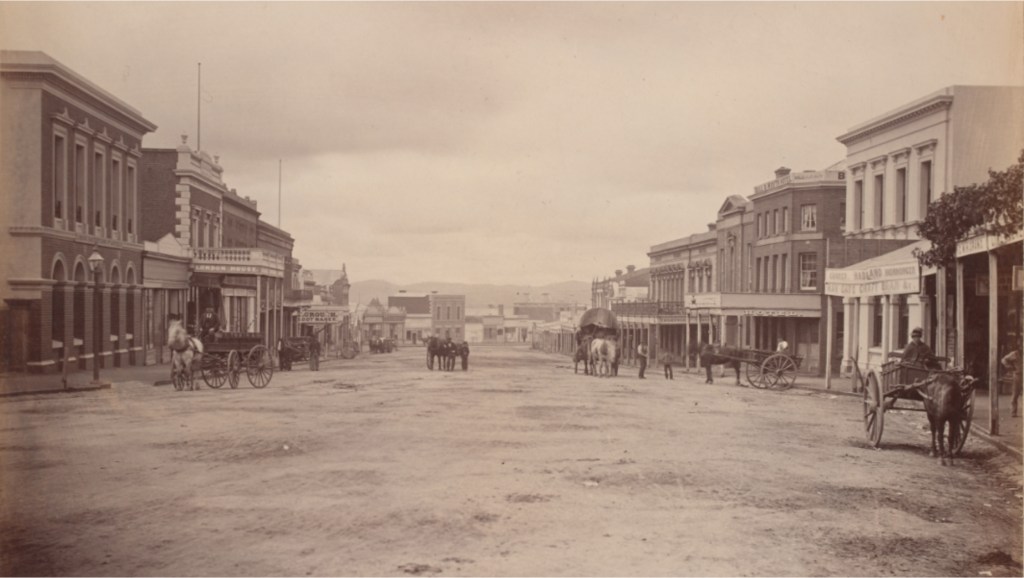
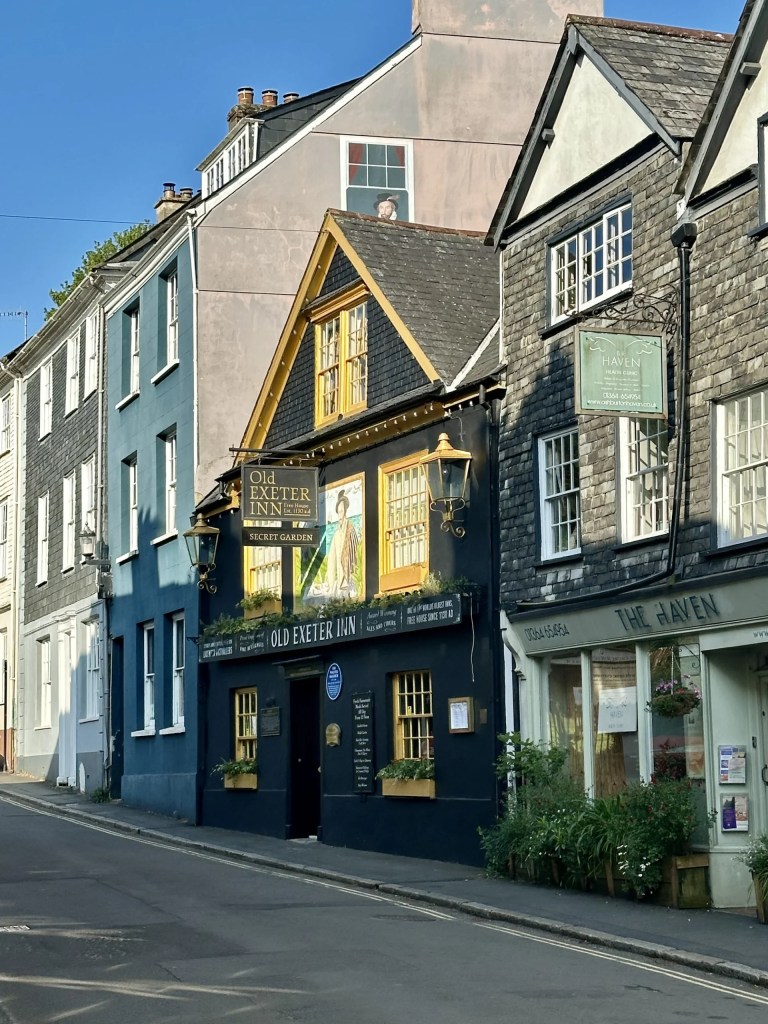
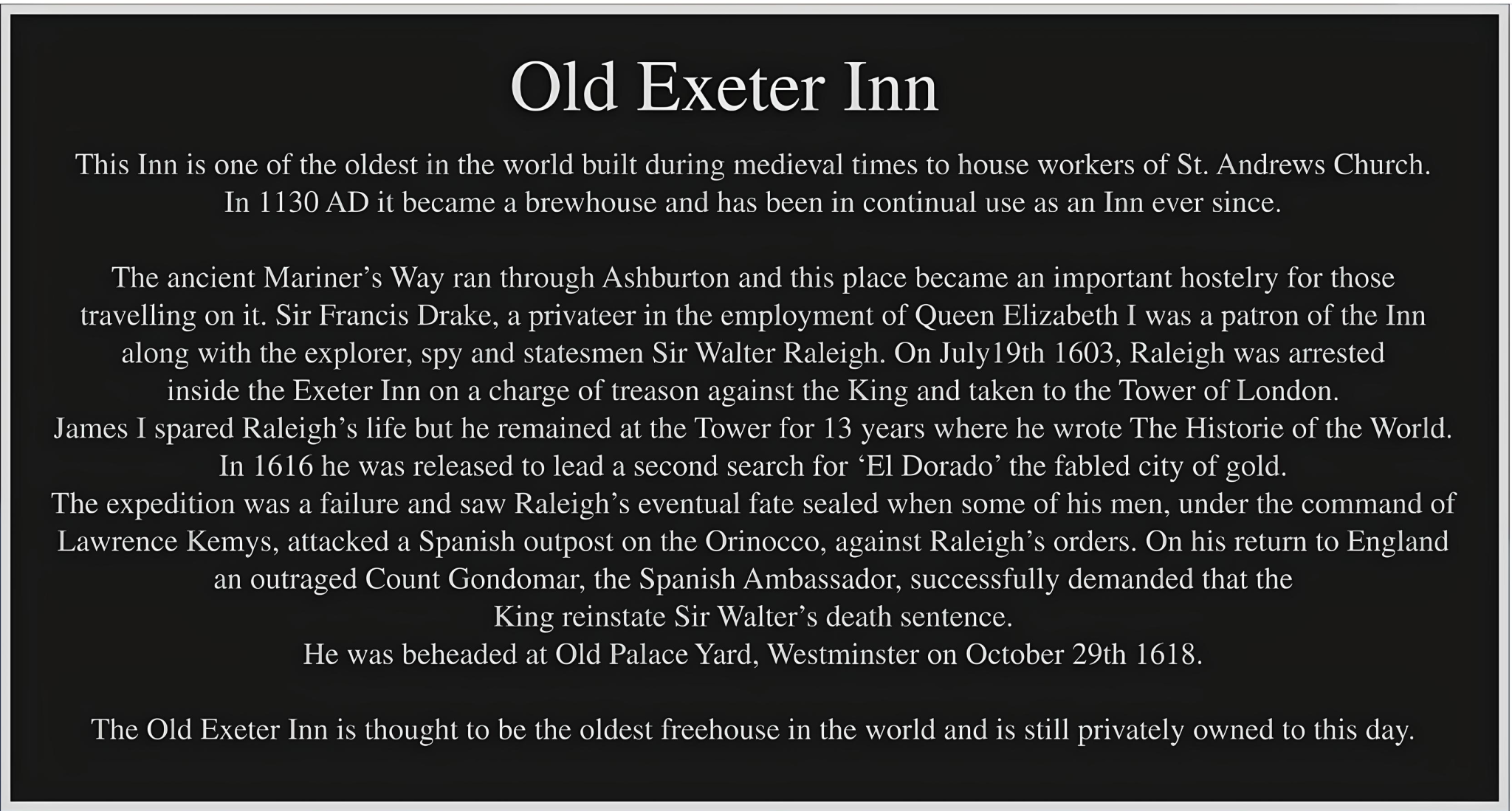
He became a well-known publican of the Court House Hotel, at Ararat, Victoria; one of the town’s oldest surviving gold rush-era pubs. He was a prominent local figure after arriving in the area in the 1850s, successfully operating the establishment until his death in 1876. The hotelier business was in his blood – his grandfather on his mother’s side, William Upcott (1754-1809) enjoyed prosperity with “The Old Exeter Inn” in Ashburton, about 25 miles from Stoke Damerel. A rich history surrounds this old pub, possibly the fifth oldest in England!
Devonport, Morice Town and Stoke Damerel were all villages that became part of Plymouth as the English shipyard grew in naval importance. The name Stoke Damerel combines the Old English word stoc (meaning a place, dairy farm, or fortified settlement) with D’Albemarle, the surname of the Norman family who owned the manor after the Norman Conquest.
Back in Devonport, how did William Rundell, the father of these five adventurers in the fare in the last two decades of his life?
The 1861 England census shows William as a 73-year-old “Assistant Converter Dockyard Pensioner” living at 123 Navy Row, Devonport with his second wife Frances Light (60), a 17-year-old Frances J Light (stepdaughter) and two lodgers, both Engineers with the Royal Navy – Richard Holman (41) and James R.C. Weatherby (21).
Then in the 1871 England census we see that William is listed as a retired Converter Royal Dockyard – living at 118 Albert Road with a 17-year-old granddaughter, Lavinia Light and a 16-year-old domestic servant Elizabeth Drake. Lavinia is the daughter of Alfred Light and Lavinia Walkey who both died when she about 10. Also living at the same address is Frances J Moses (27) Naval Engineers wife, her daughters Lillian (2) & Bessie (6 months) and Martha Moses (19) listed as a daughter-in-law of Frances Moses and a Civil Engineers daughter.
William Rundell is listed in the England & Wales Free BDM as dying in the fourth quarter of 1875 at a grand age of 87.His two sons who remained in Devonport, Nicholas Rundel (1824 – 1904) and John Rundell, (1833 – 1876) both had careers with the English Navy. They were involved in the new technology of iron forging and steel ships, the 1881 England Census showing Nicholas as an “Iron and Brass Founder”. John, theonly member of the family who did not marry, served overseas with the Royal Navy, the 1861 England Census showing him to be on the “Island of Sacrificious Vera Cruz”; the 1871 England Census finds at sea on the ship “Galatea”. I’ll leave you to chase up the meaning of sacrificious!
~ ~ ~ ~ ~


Leave a Reply