It took about 30 seconds to decide that we would join Alison Weir on her latest adventure to the ancient kingdom of Northumbria. Northumbria comprises modern North Yorkshire and the counties of Durham and Northumberland. It is the northernmost county of England – almost 2,000 square miles (yes, the UK still uses miles) of “breathtaking countryside, award-winning coastlines, rolling hills, magnificent castles and charming market towns”.
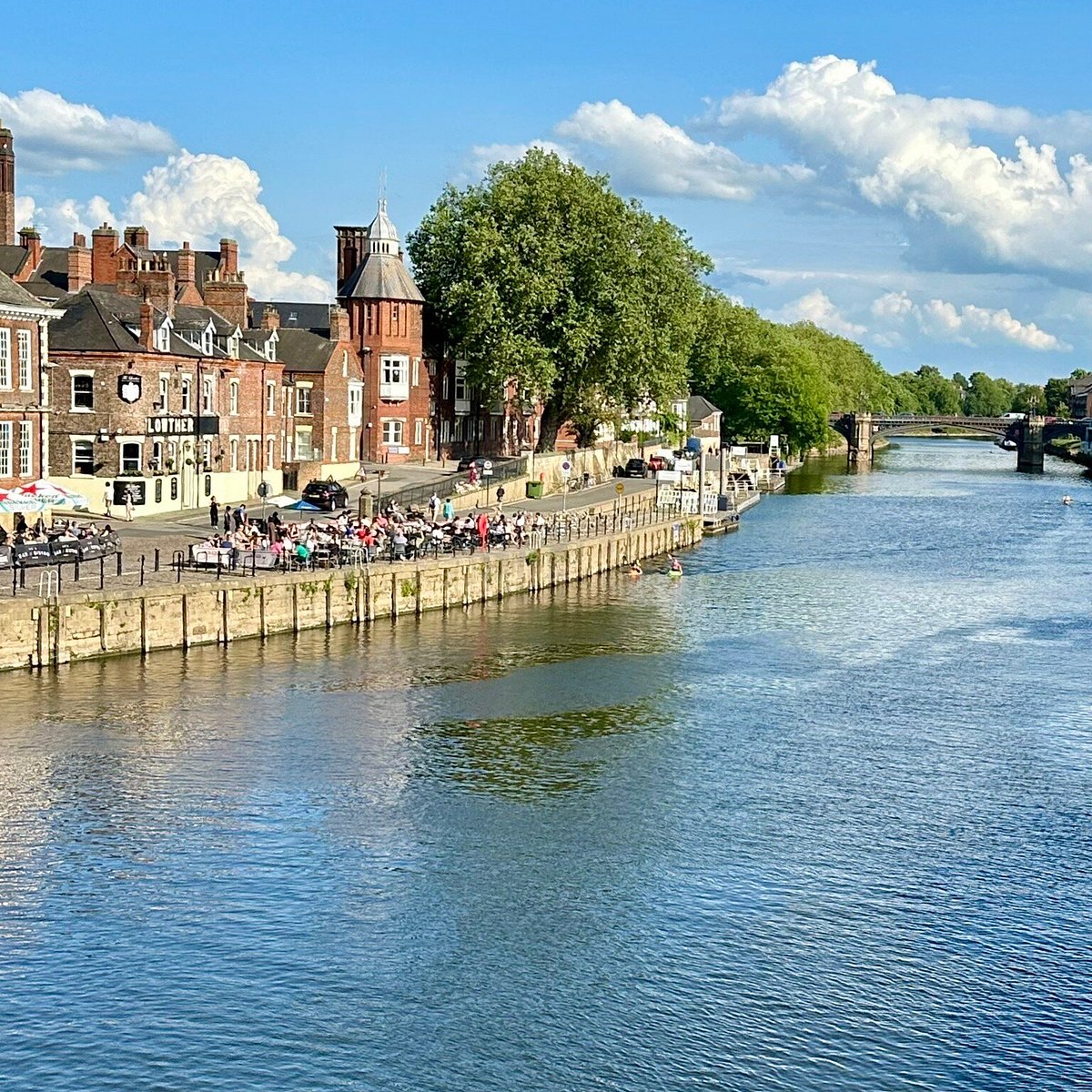
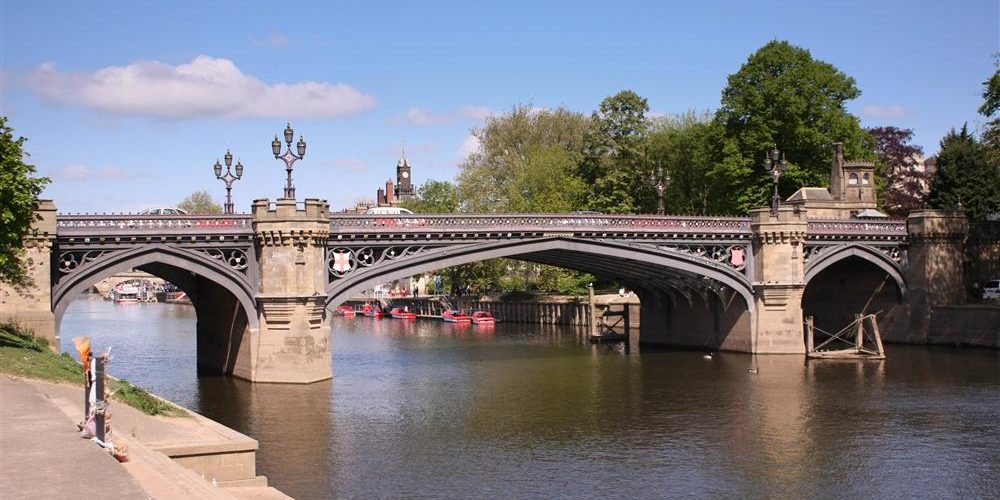
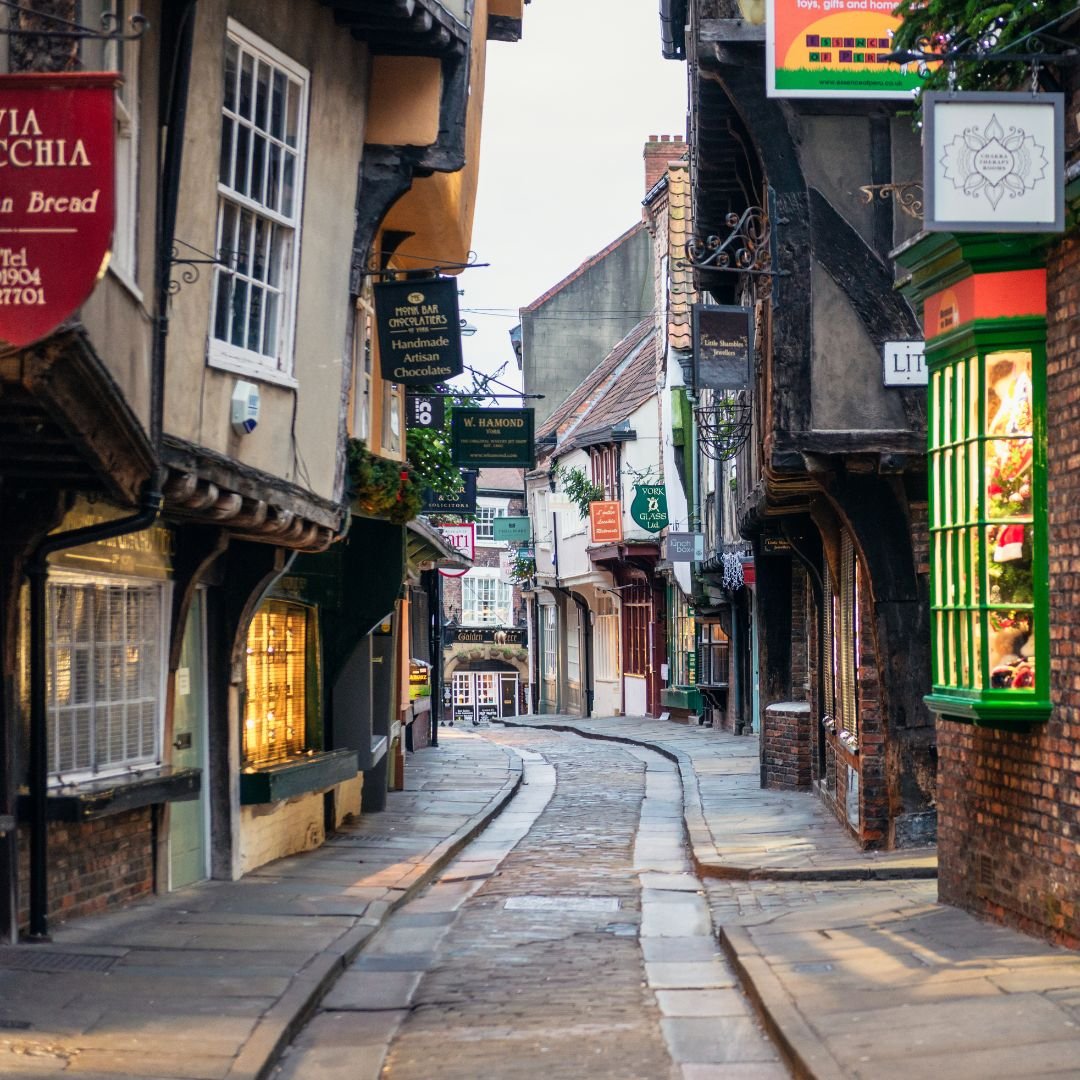
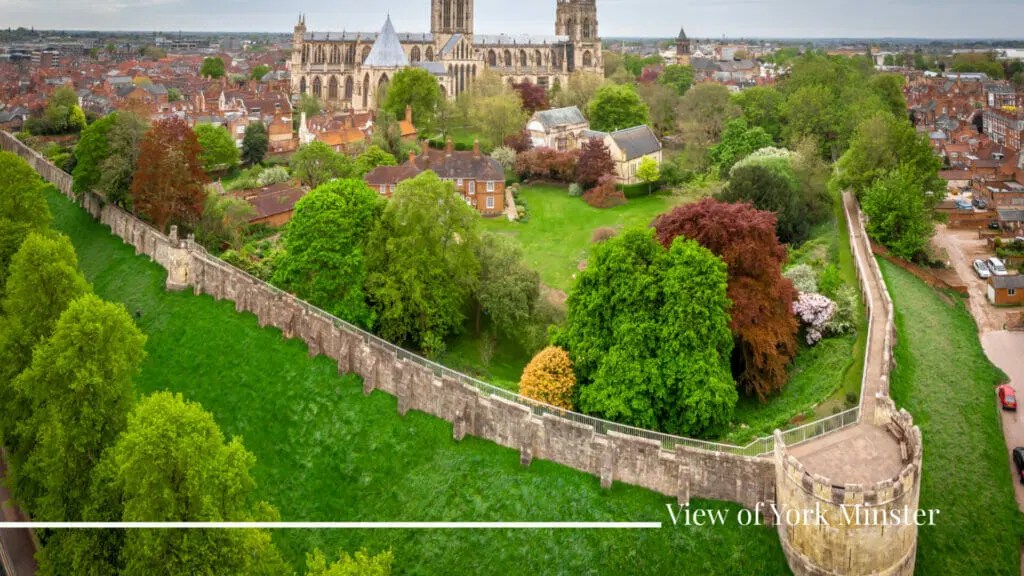
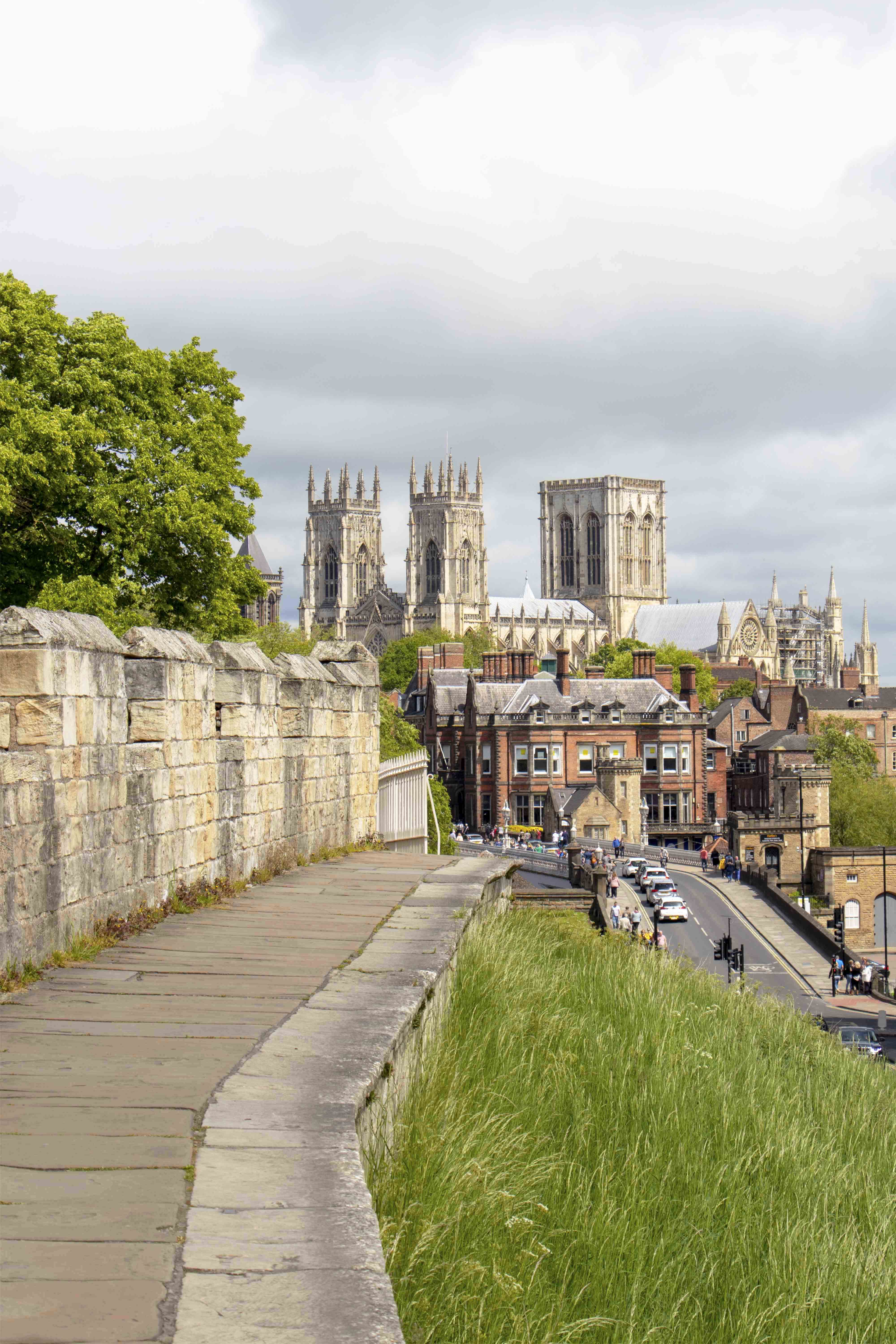
We’d felt a bit cheated when last in York (2016); floods had caused the Viking Centre, Jorvik, to shut down and as that 2016 visit was “around the UK in 50 days” we decided to drive north after only wandering about the walls and taking in the museum and Shambles. So, this time around we decided to arrive a bit earlier, get over jetlag and spend a few days exploring the wonderful aspects of this northern tourist town that straddles the Ouse River. The tour was to begin and end at York which meant we could also spend a few days on the back end to catch anything we might miss or need to revisit.
Alison Weir with her team of historians and special guest speakers promised that we would “walk in the footsteps, or hear the stories, of saints (including St Cuthbert, St Hilda and St Margaret Clitherow), kings (among them Richard III), queens, the great northern families of Percy (covering Henry Percy and Anne Boleyn) and Neville (including Joan Beaufort and Cecily Neville, Duchess of York), Count Dracula, the Wars of the Roses, the Reformation, the Pilgrimage of Grace, the Northern Rising under Elizabeth I, the present Duchess of Kent, the screaming skull of Burton Agnes Hall and the ghosts of Chillingham Castle, heroine Grace Darling, Guy Fawkes, Margaret Beaufort and the late Mary, Princess Royal.”
How could we refuse, especially after meeting and socialising with the same historians on Alison’s 2024 Tour to Scotland?
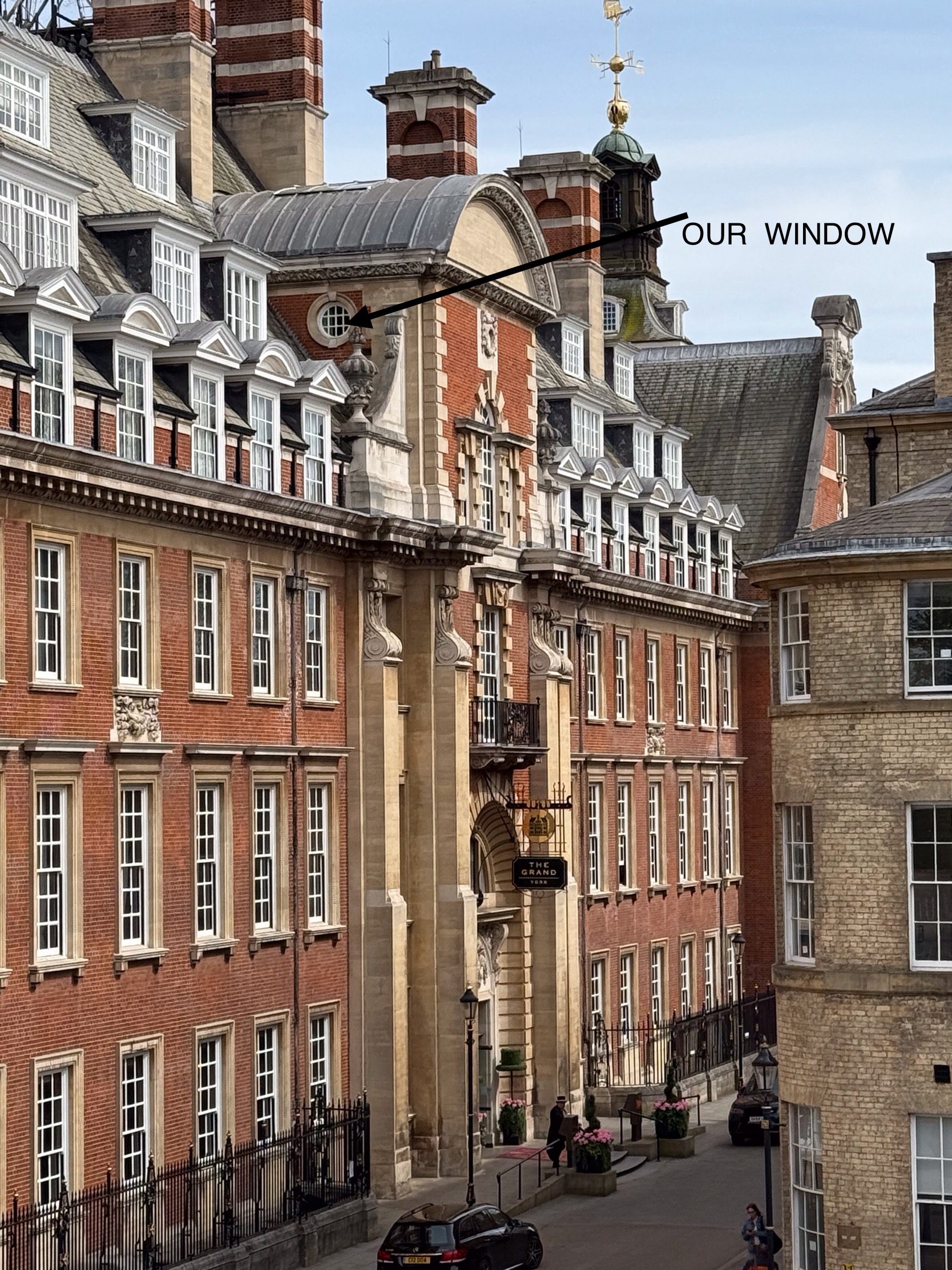
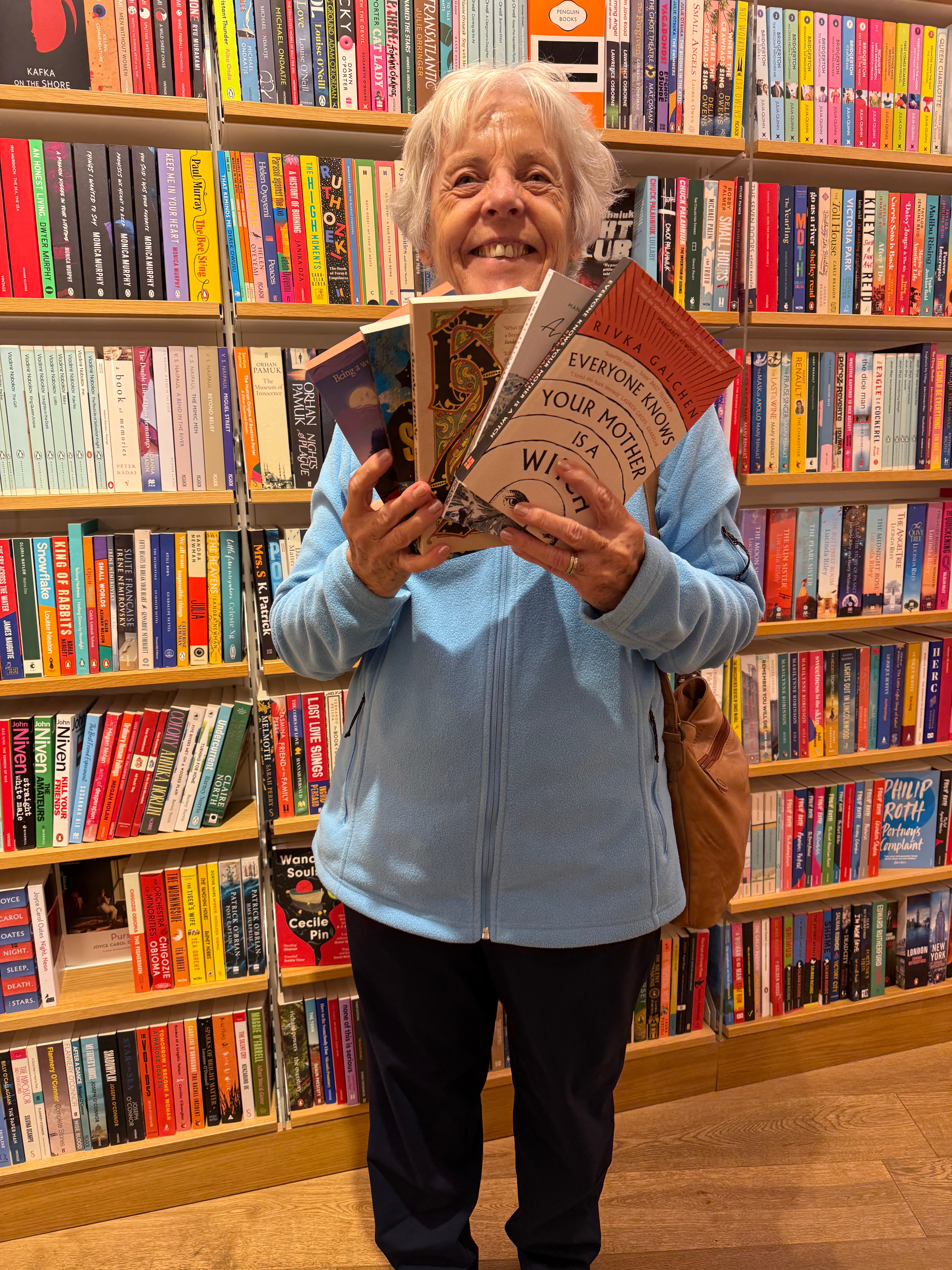
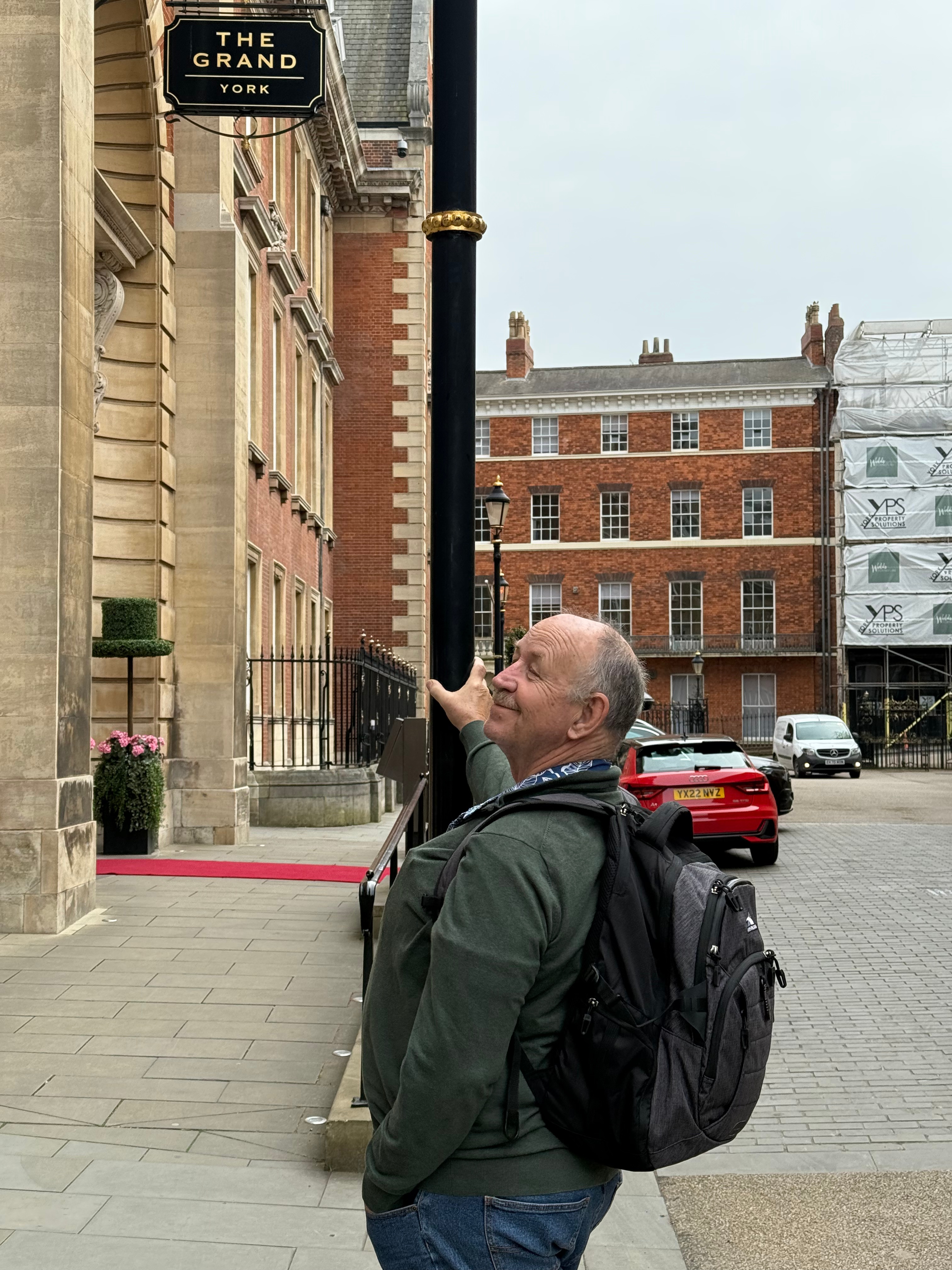
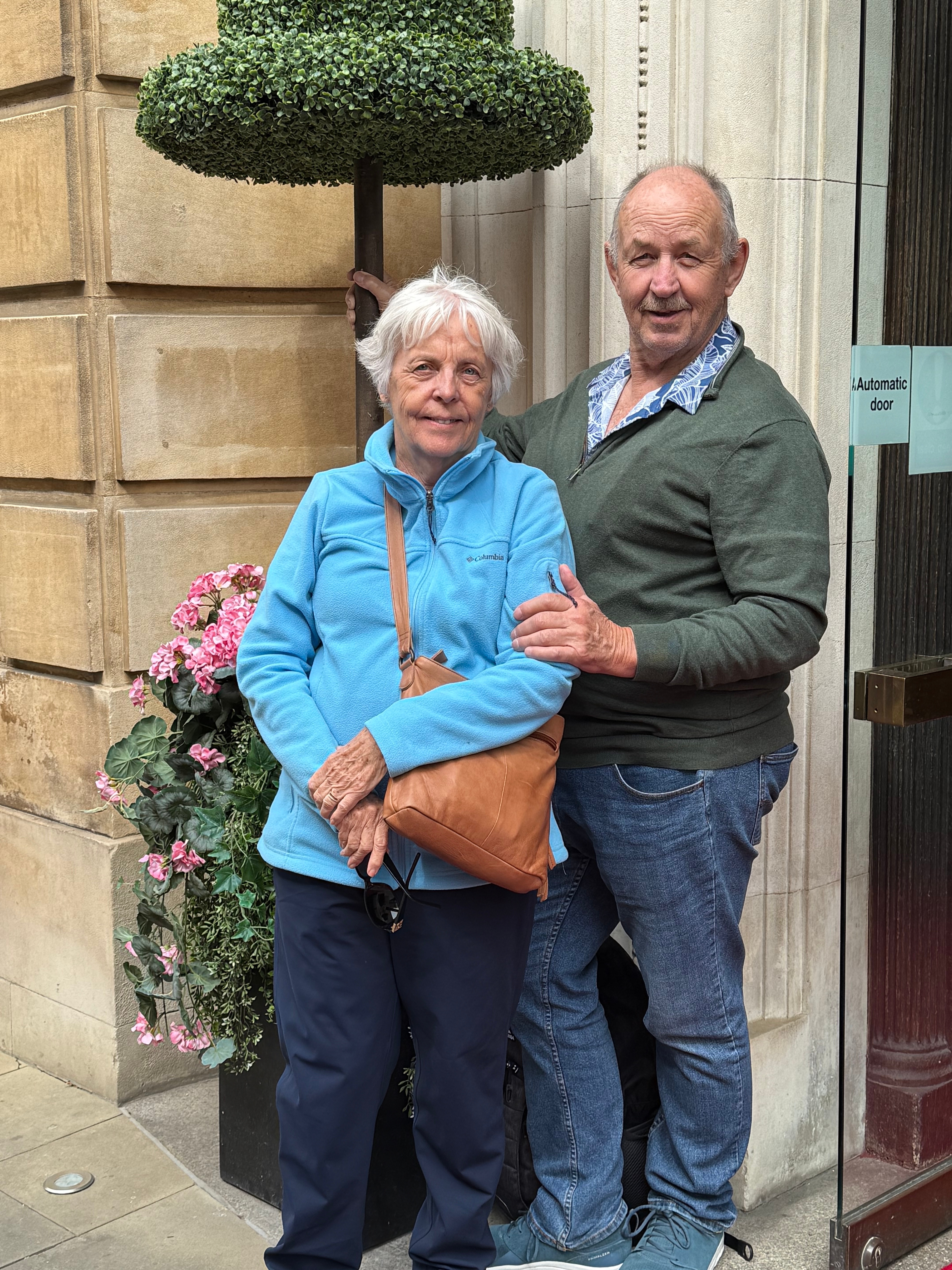
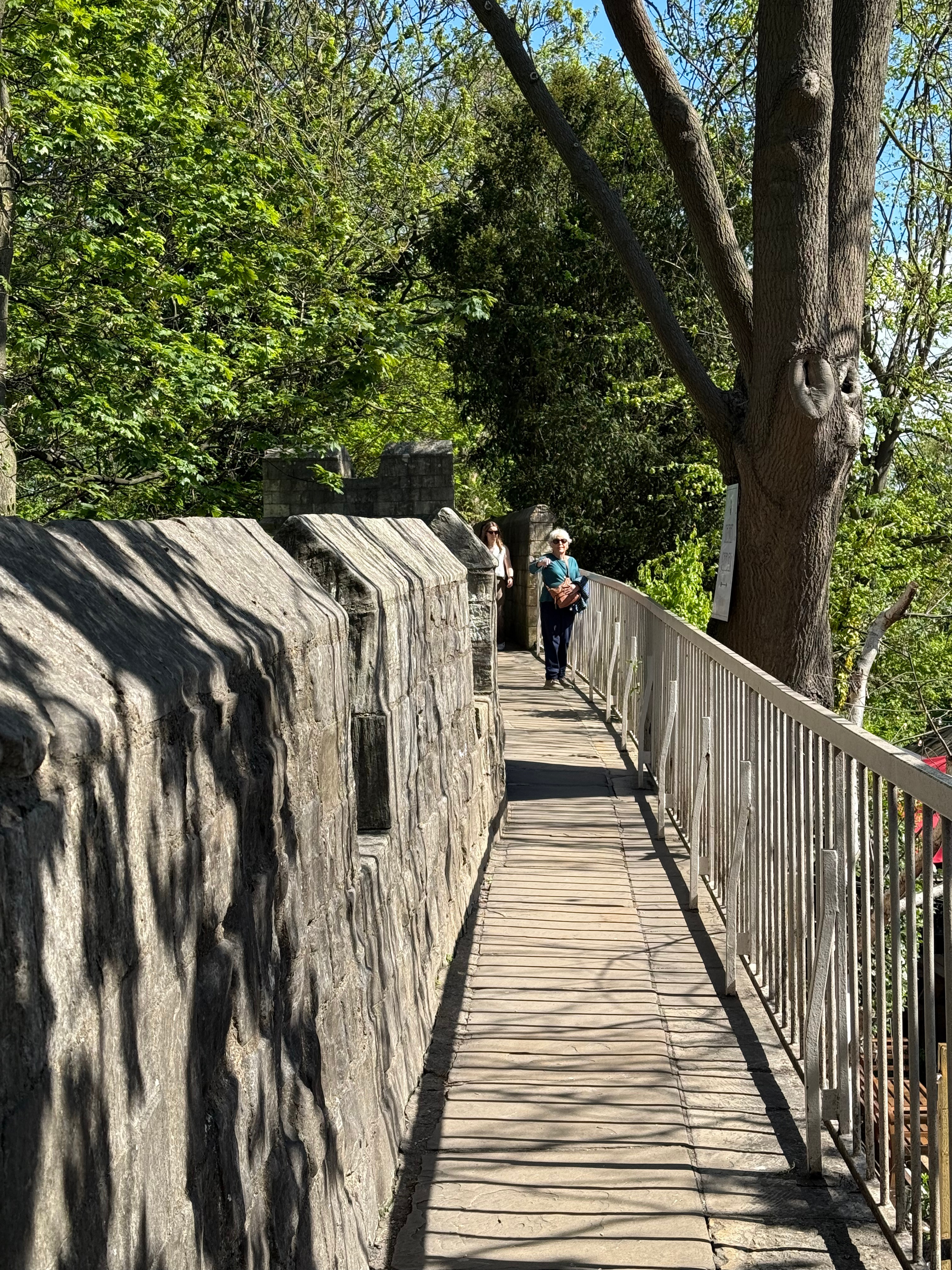
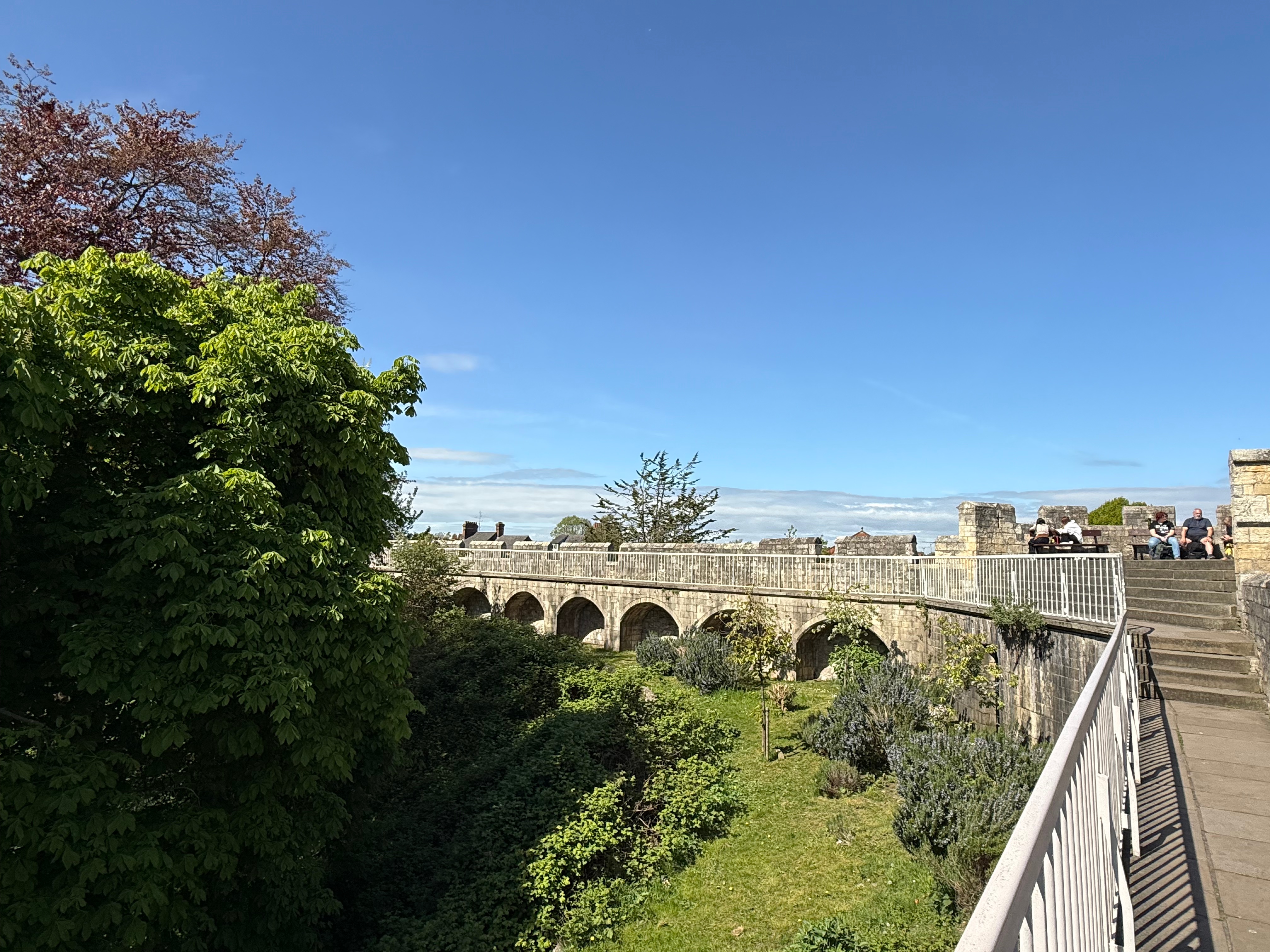
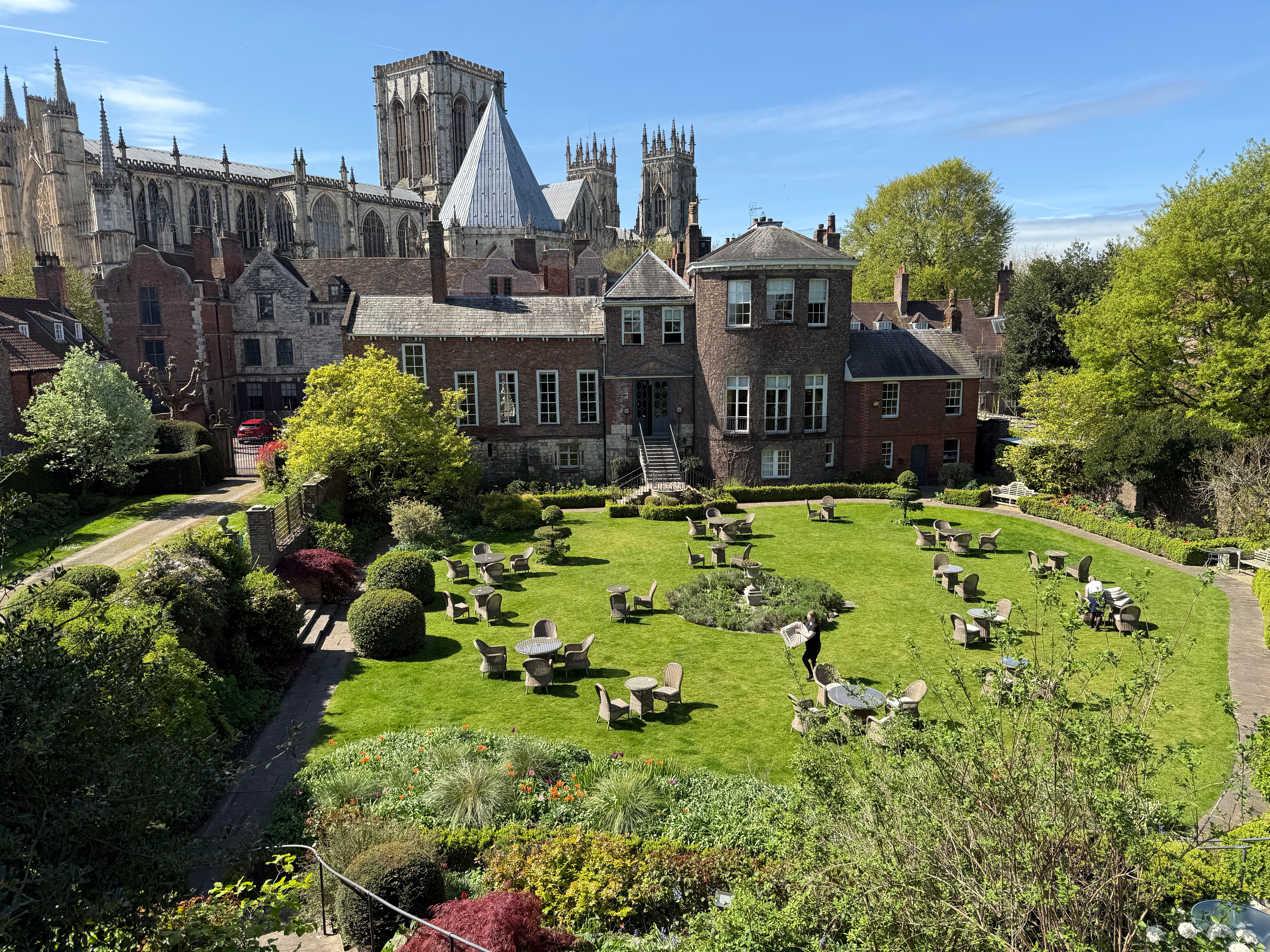
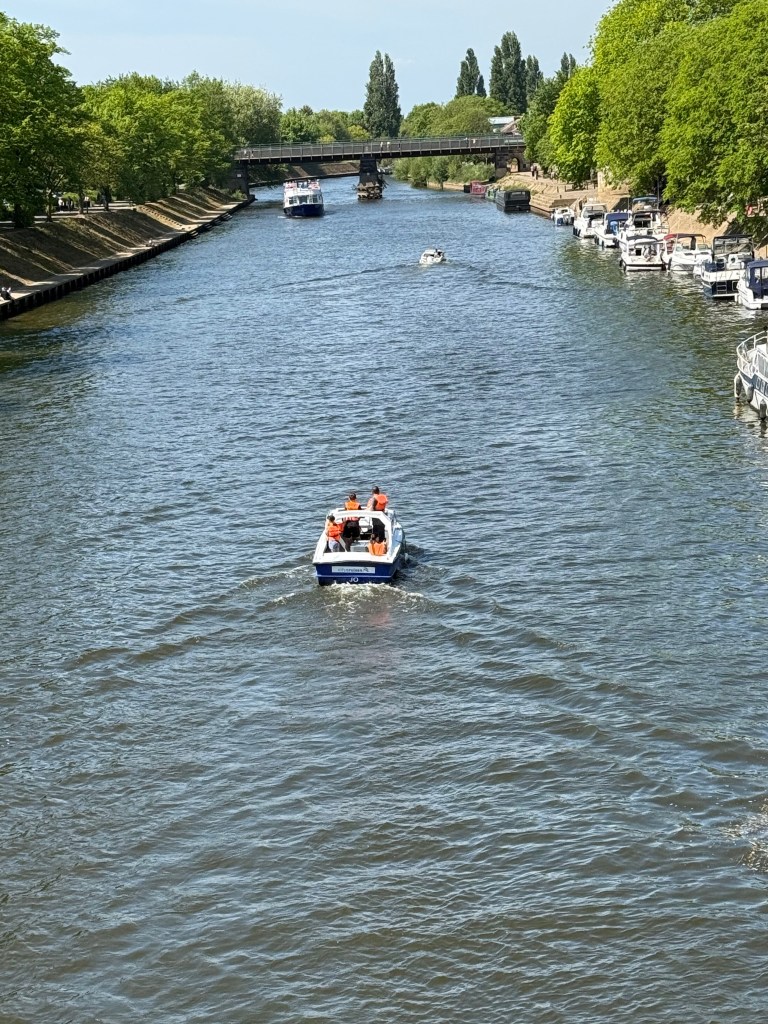
We decided to fly to England and arrived at the hotel – The Grand in York – in the afternoon of the 25th April. Beautiful hotel, great location, lovely room. After checking in and checking out the neighbourhood we slept for 14 hours straight waking to glorious sunshine. Over the next three days we spent a few hours on the “hop-on hop-off” bus; shopped through the Shambles; spent hours at the Jorvik Viking Centre; found two cafes that had beaut coffee; walked the northwest portion of the city walls; took a river cruise and found a few books that we just couldn’t live without. It seemed that everyone in York was overjoyed with the glorious weather, so we claimed that we’d brought it up from Australia and if the good folks of this fair town liked to chip in a few shekels we’d be happy to stay on a week or two to guarantee continuance of the sunshine!
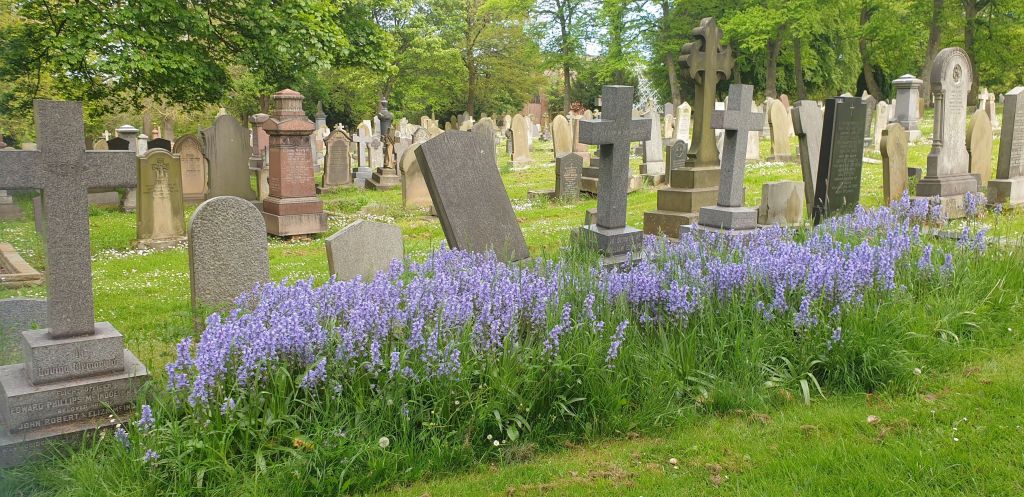
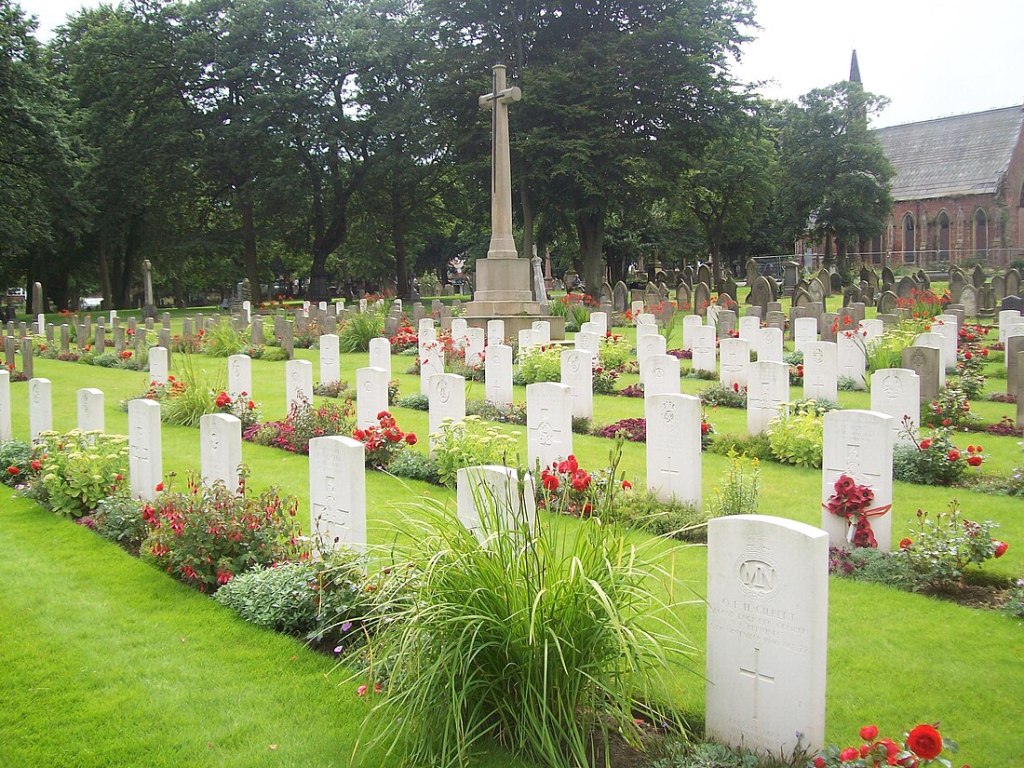
And we also took a train to Sunderland, then Ubered to the Bishopwearmouth Cemetery to pay respects to Vicki’s great-grandparents.
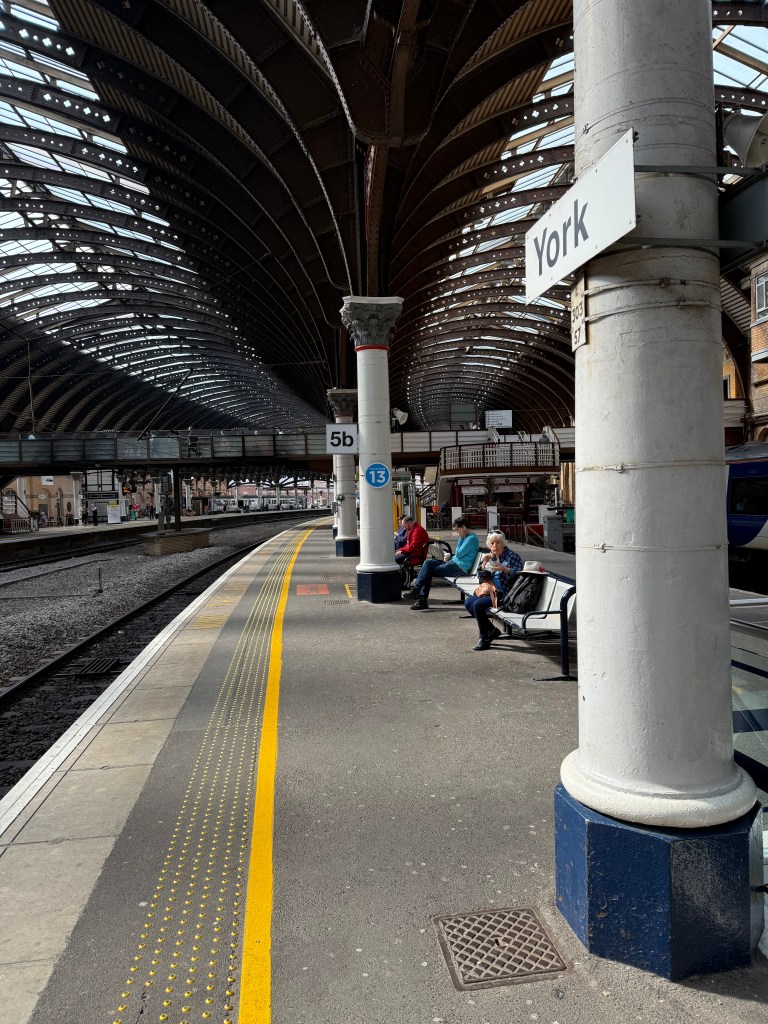
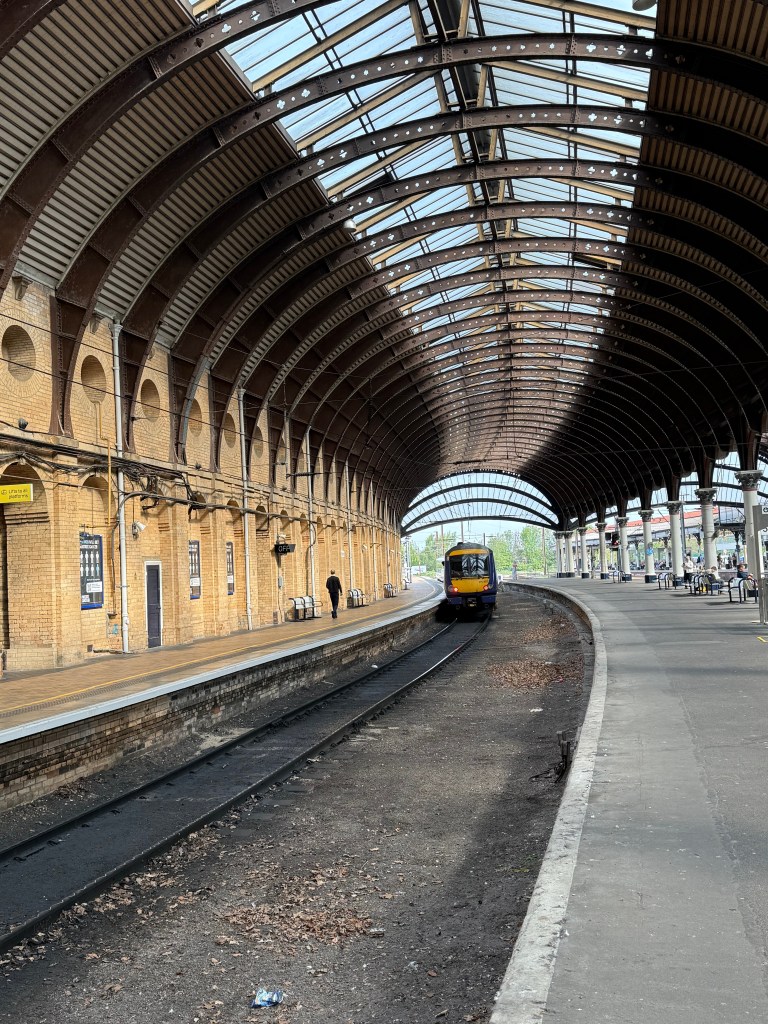
Then on to the tour!
Day 1: Wednesday, 30th April
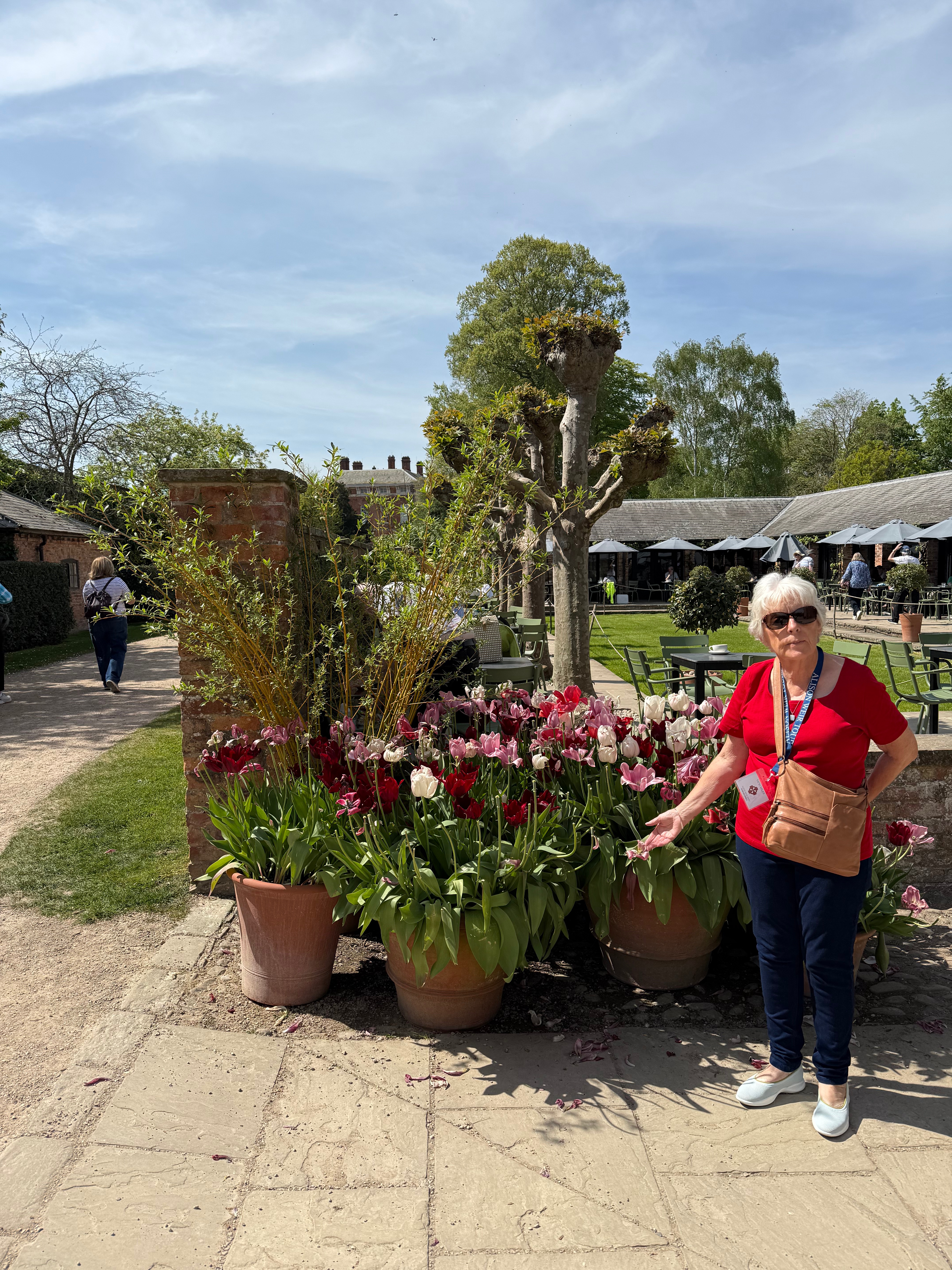
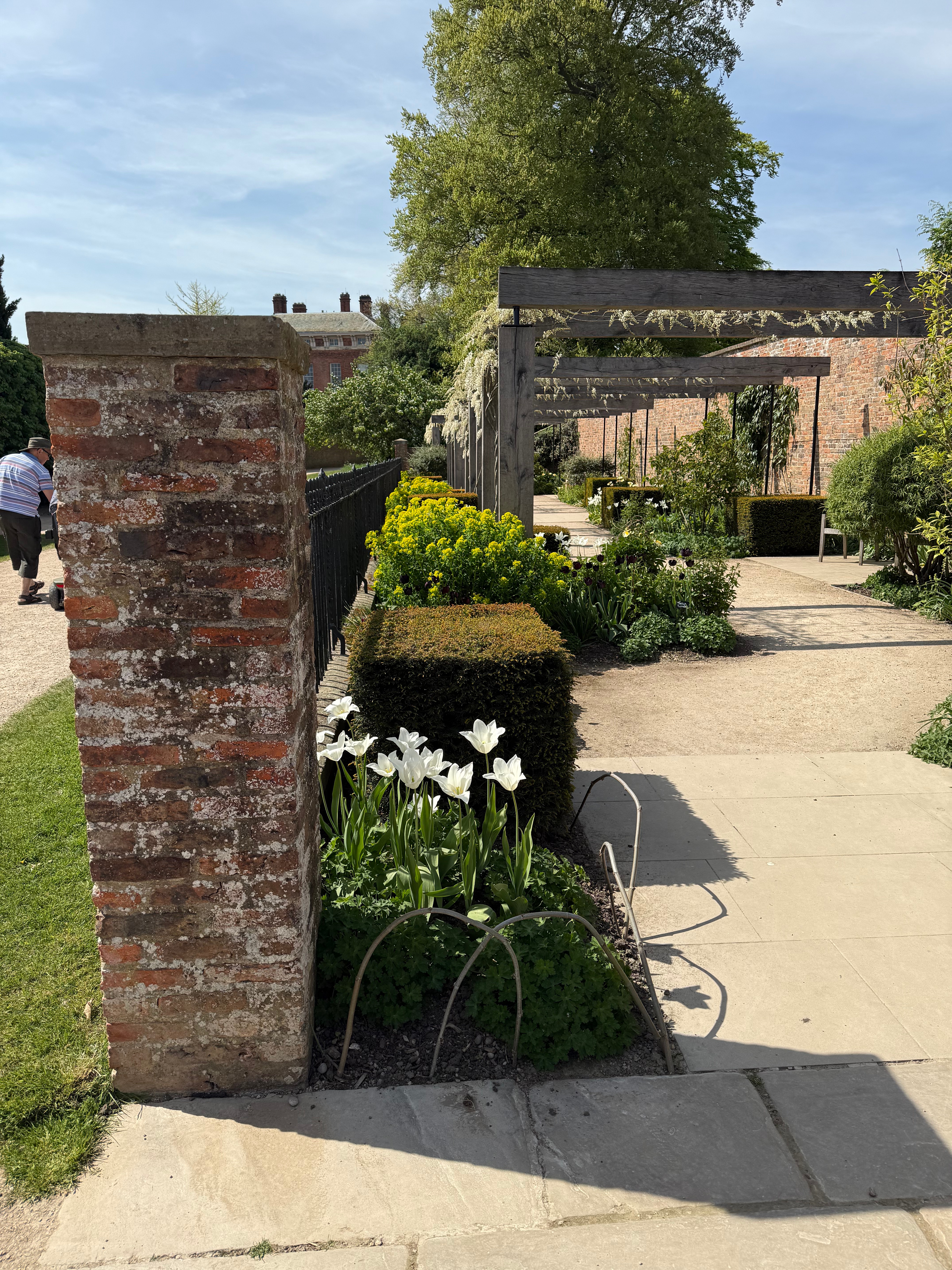
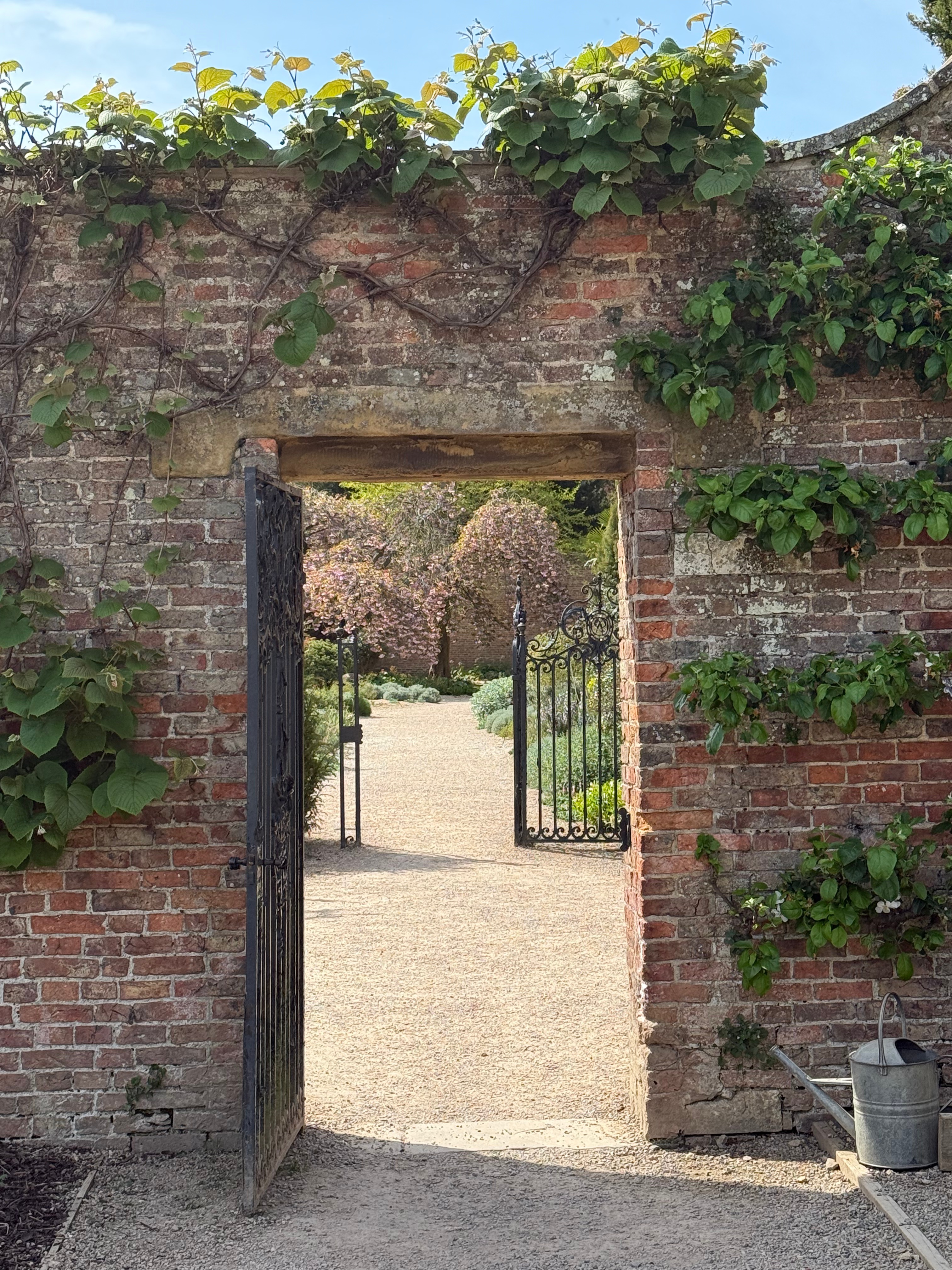
We registered for the tour, caught up with Alison, John (Chef de Village) & Jo Marston, Nicola Tallis and Mike Jones, had a quick buffet lunch then opted for a small bus trip to a nearby grand house – Beningbrough Hall with Nicola and Mike as our hosts. The rest of the tour group spent the afternoon on a walking tour of York, hosted by Alison and Elizabeth Norton.
The Tour notes on Beningbrough Hall: Following a two-year hiatus, Beningbrough Hall, one of the most remarkable baroque houses in England, has reopened with brighter interiors and even more fascinating stories to tell. Beningbrough Hall is an elegant red brick mansion overlooking the River Ouse, eight miles north-west of York. It boasts one of Britain’s finest baroque interiors and an attractive walled garden, as well as being home to over 100 portraits on loan from the National Portrait Gallery. The eight-acre garden is currently undergoing its own renaissance thanks to award-winning designer Andy Sturgeon and is surrounded by 380 acres of parkland.
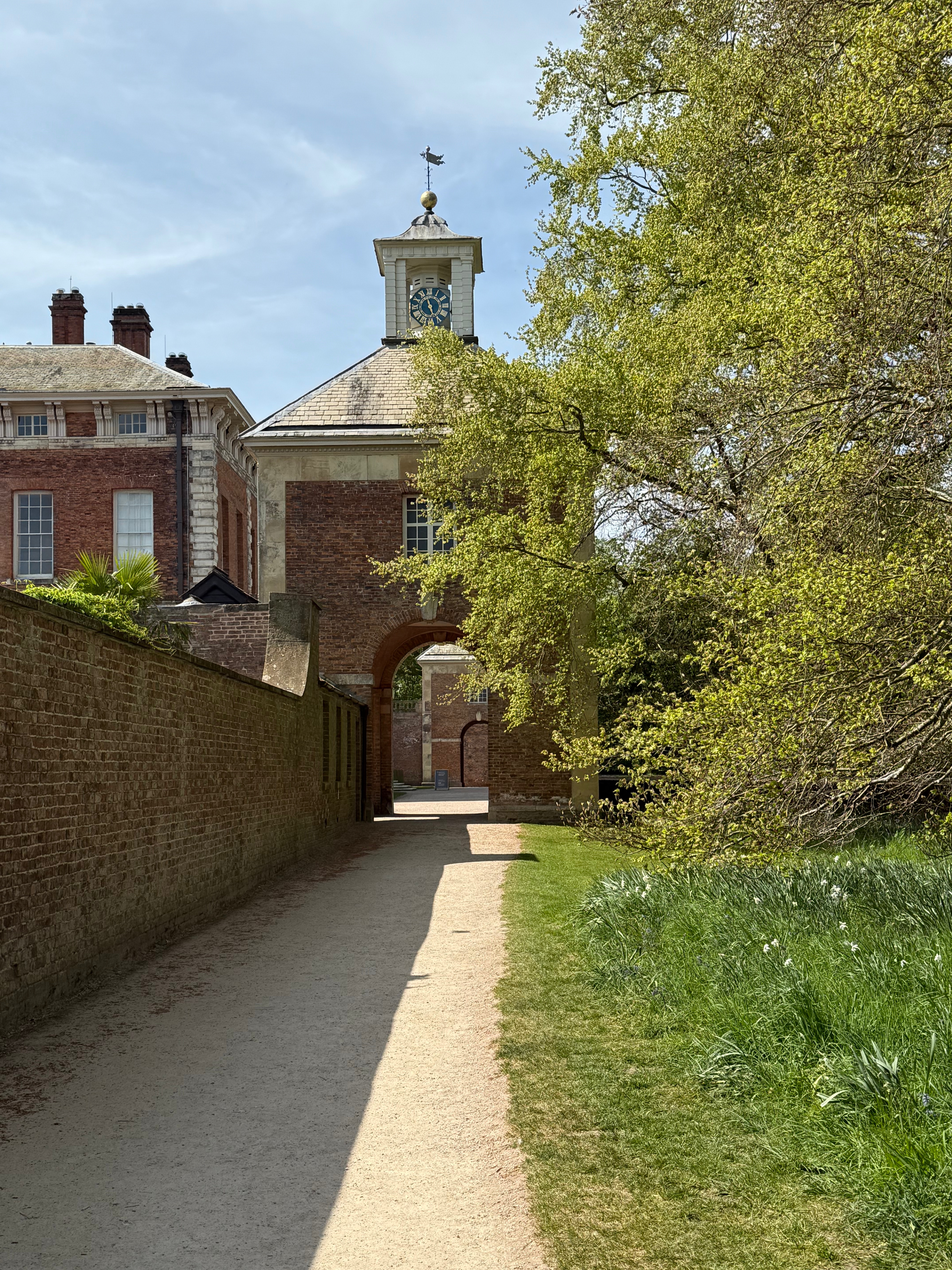
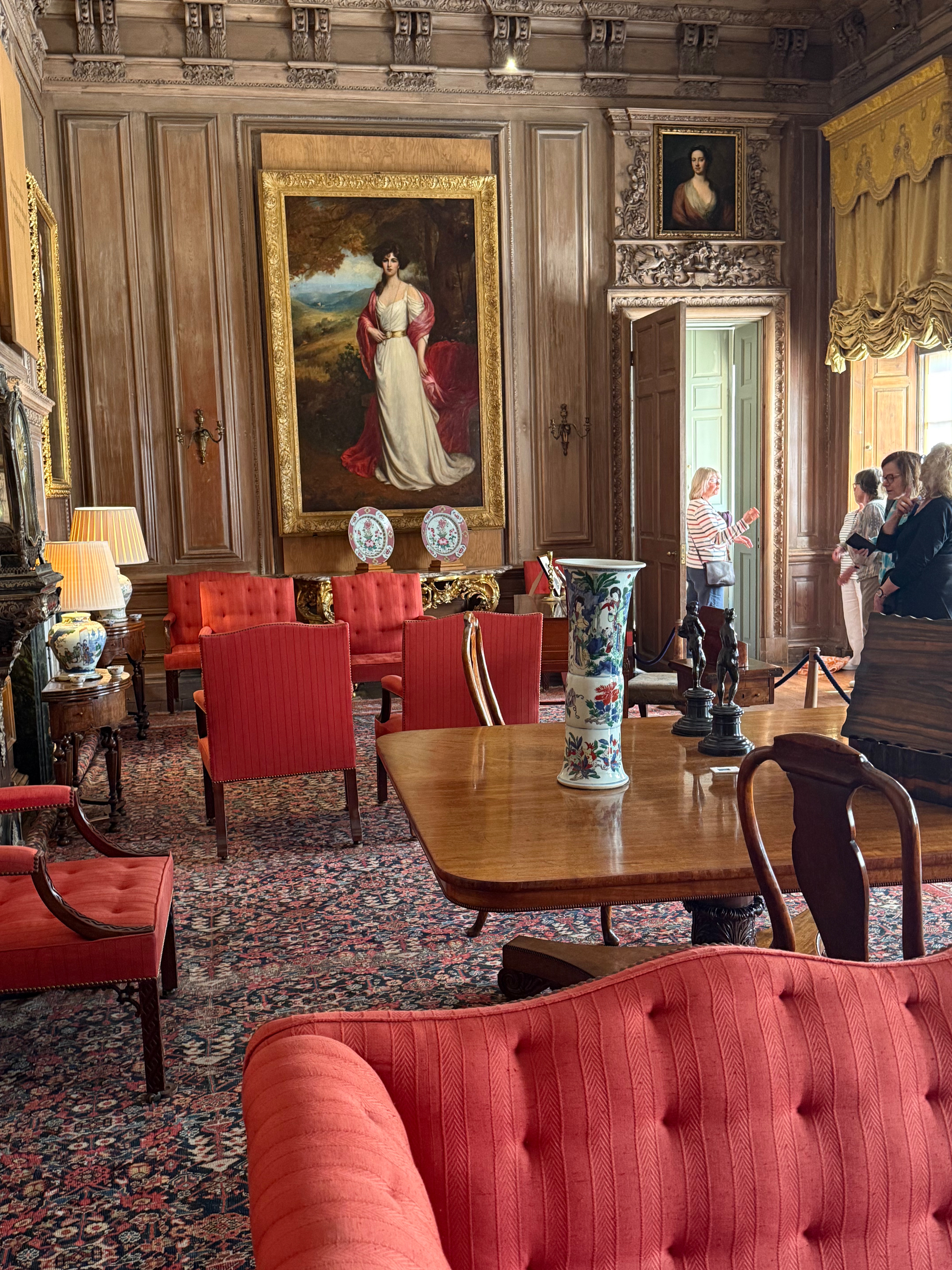
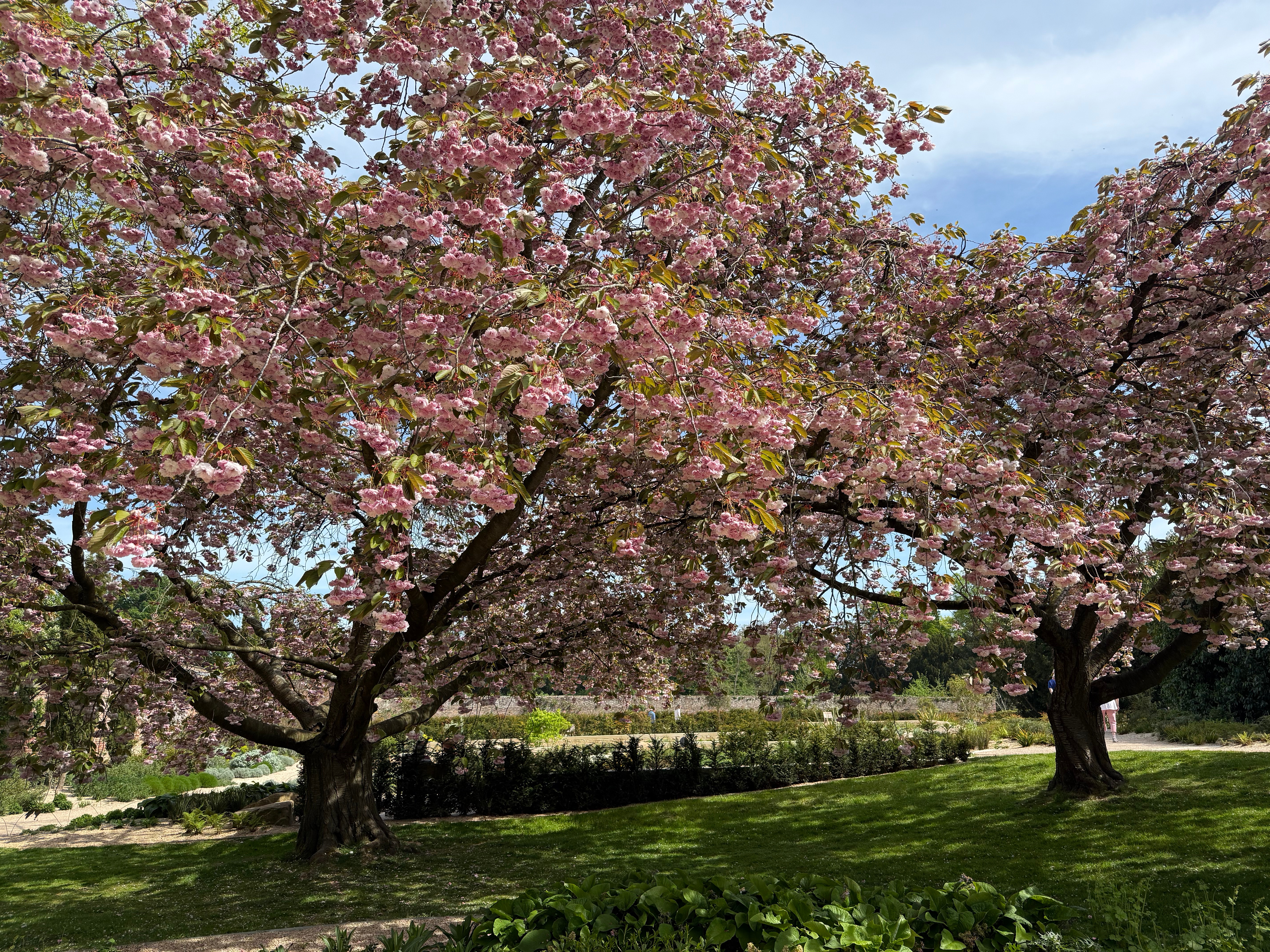
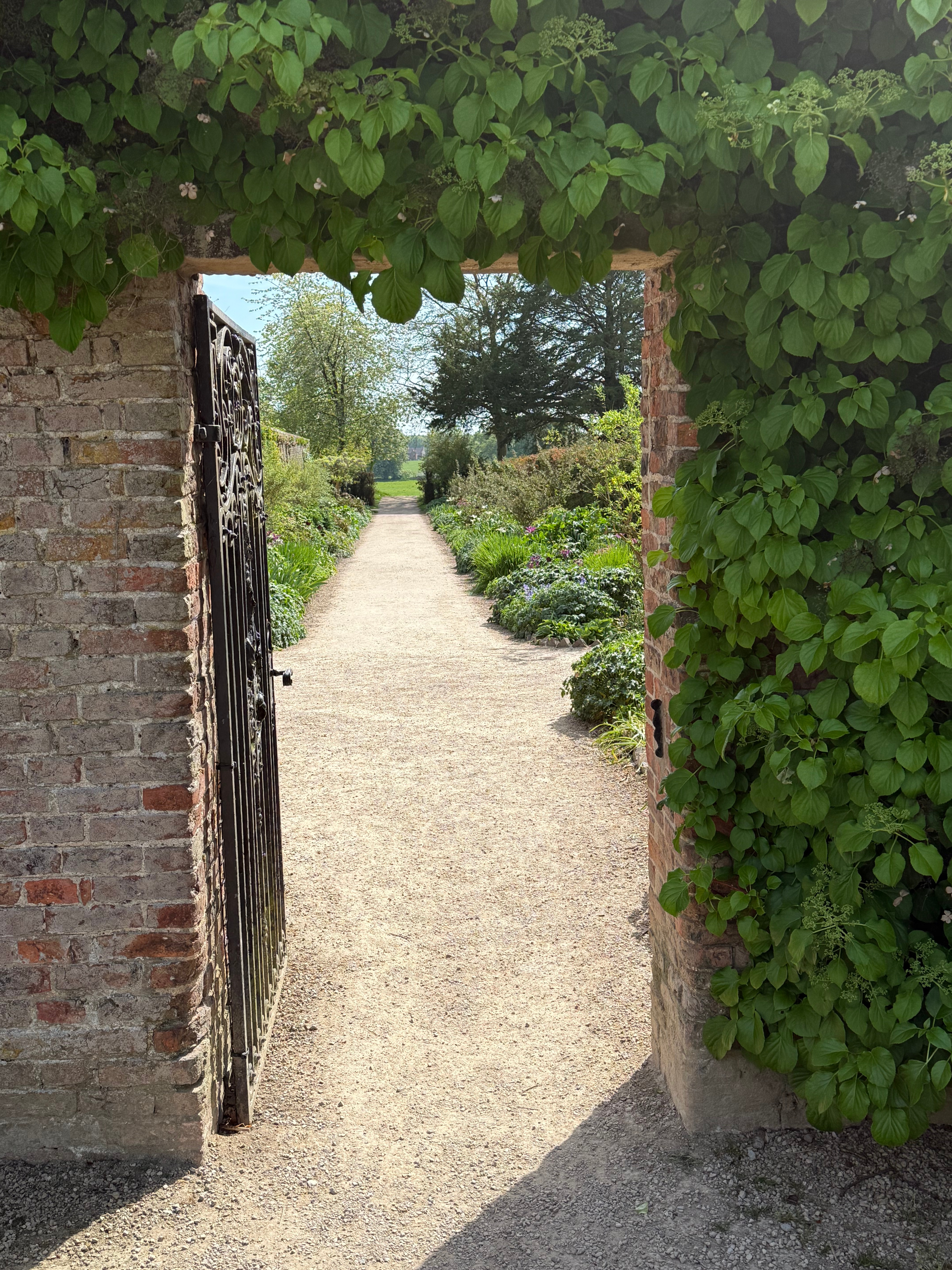
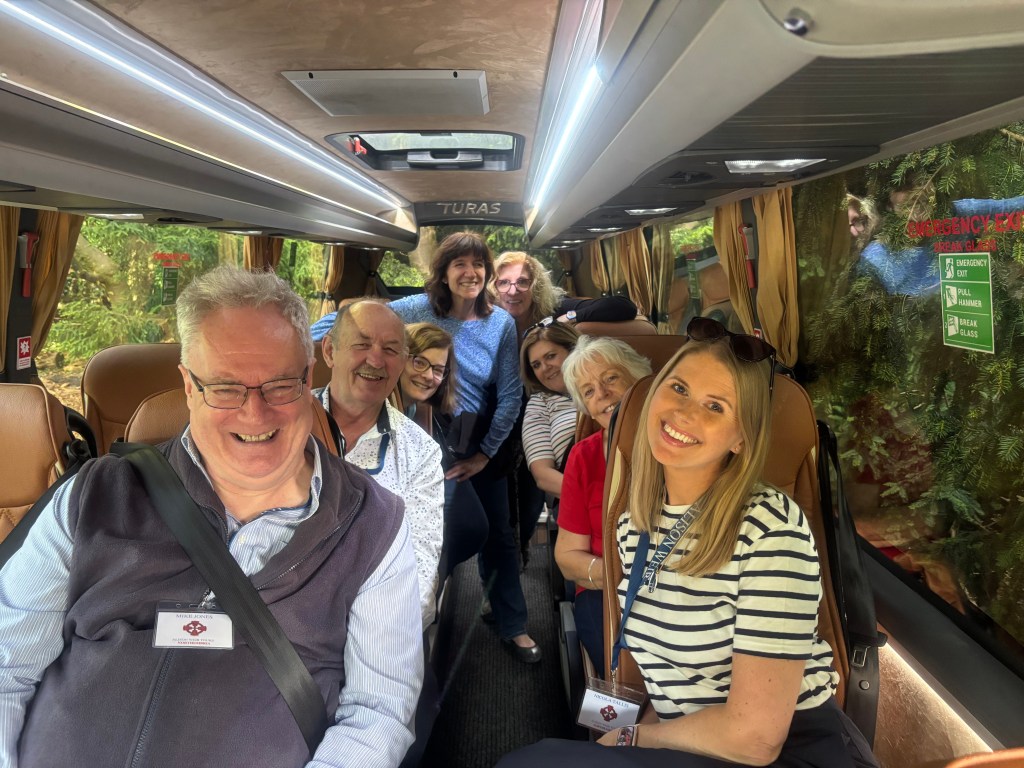
One of the wonderful aspects of all Alison Weir Tours is the interaction with the historian experts. Every day, on the bus, going to and from the various destinations we were treated to talks by the historians on a huge variety of locations and topics, all germane to the overall history of Northumbria. On the short drive to Beningbrough Hall Nicola gave us a very concise history of this grand house. In the afternoon, back at the hotel, Mike entertained us with a talk entitled “Warrior kings, fiery dragons and ominous portents – the creation of Medieval Northumbria” before enjoying social drinks and dinner at the hotel where we met our fellow travellers.
Day 2: Thursday, 1st May
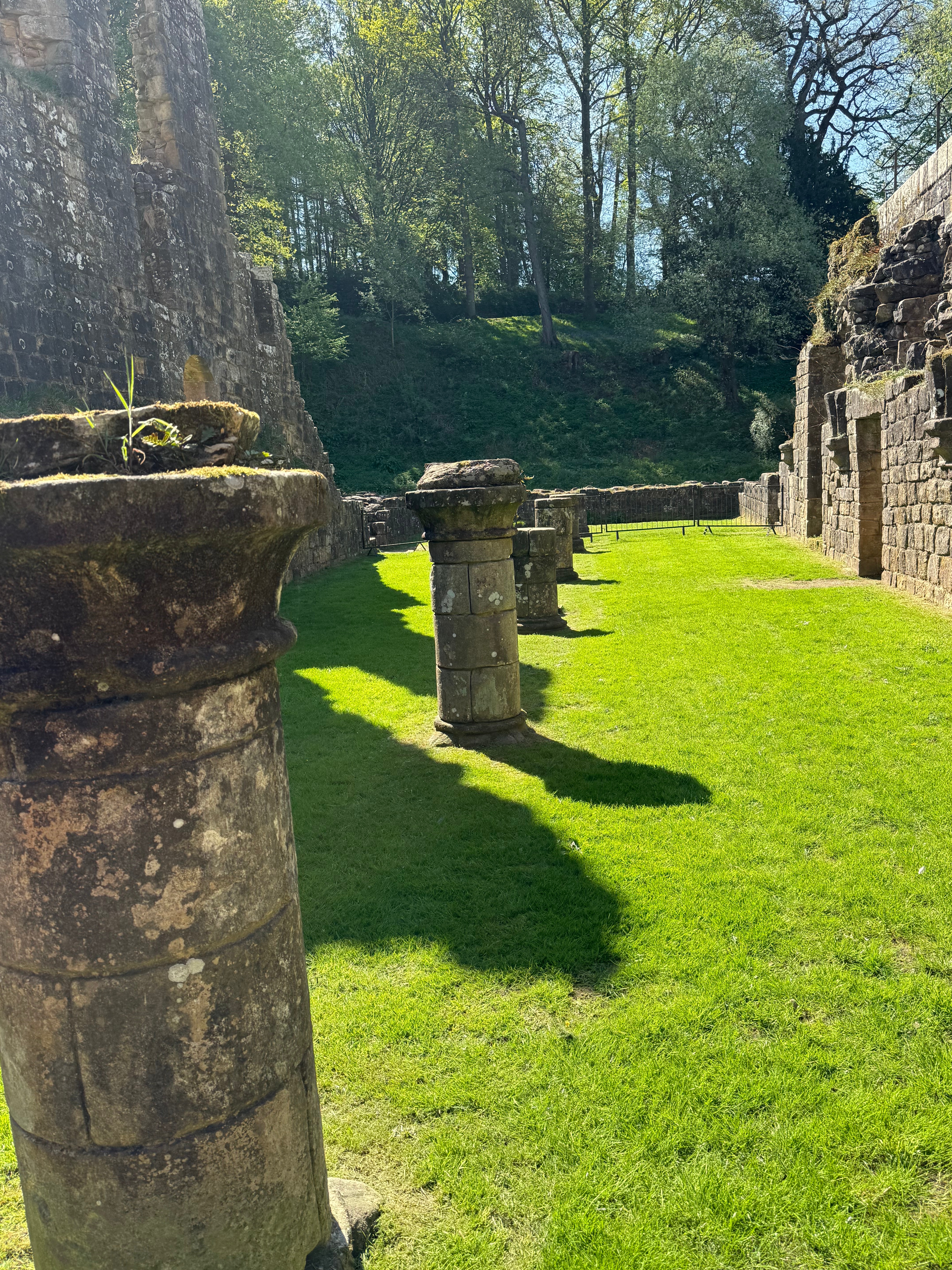
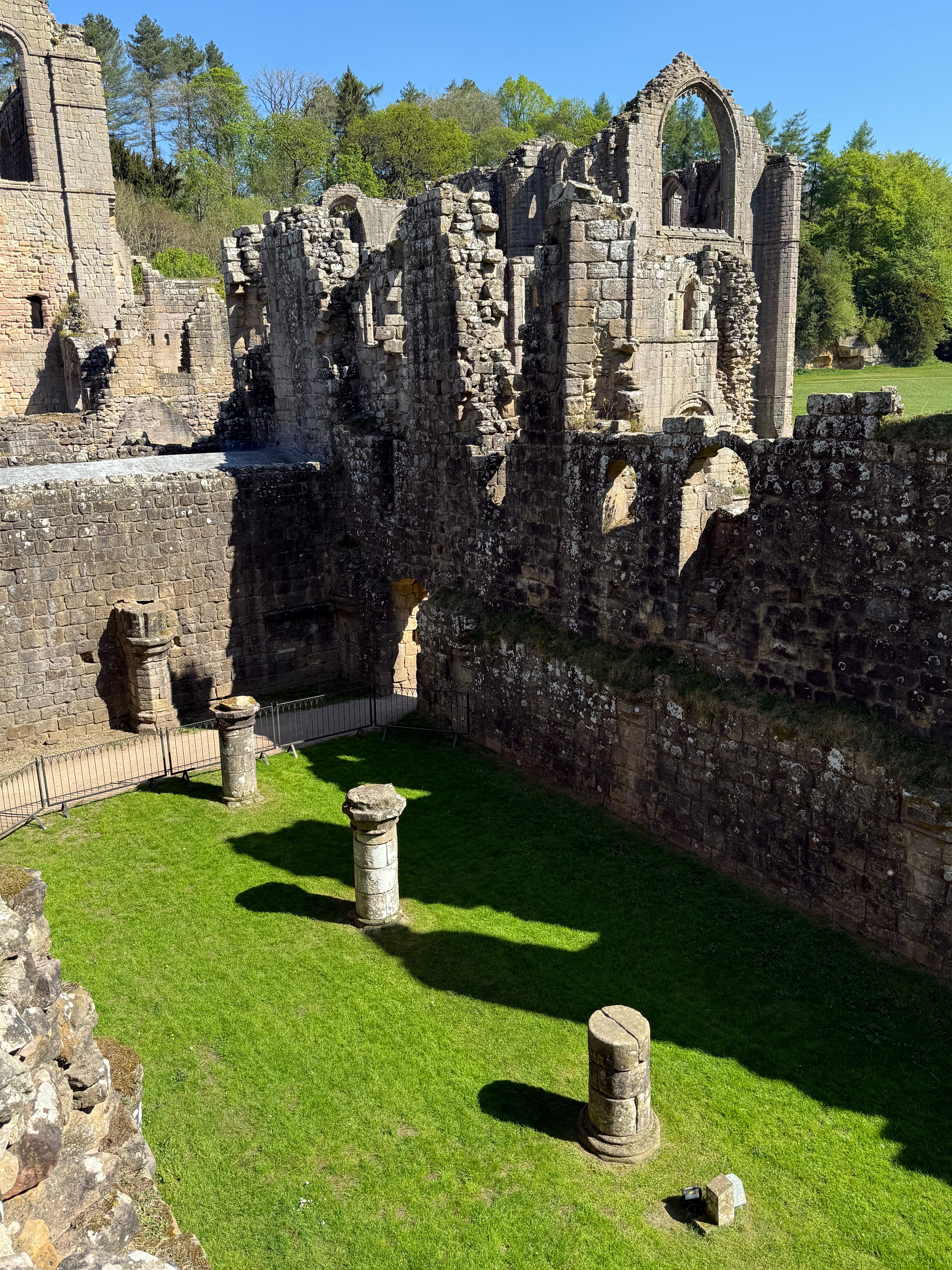
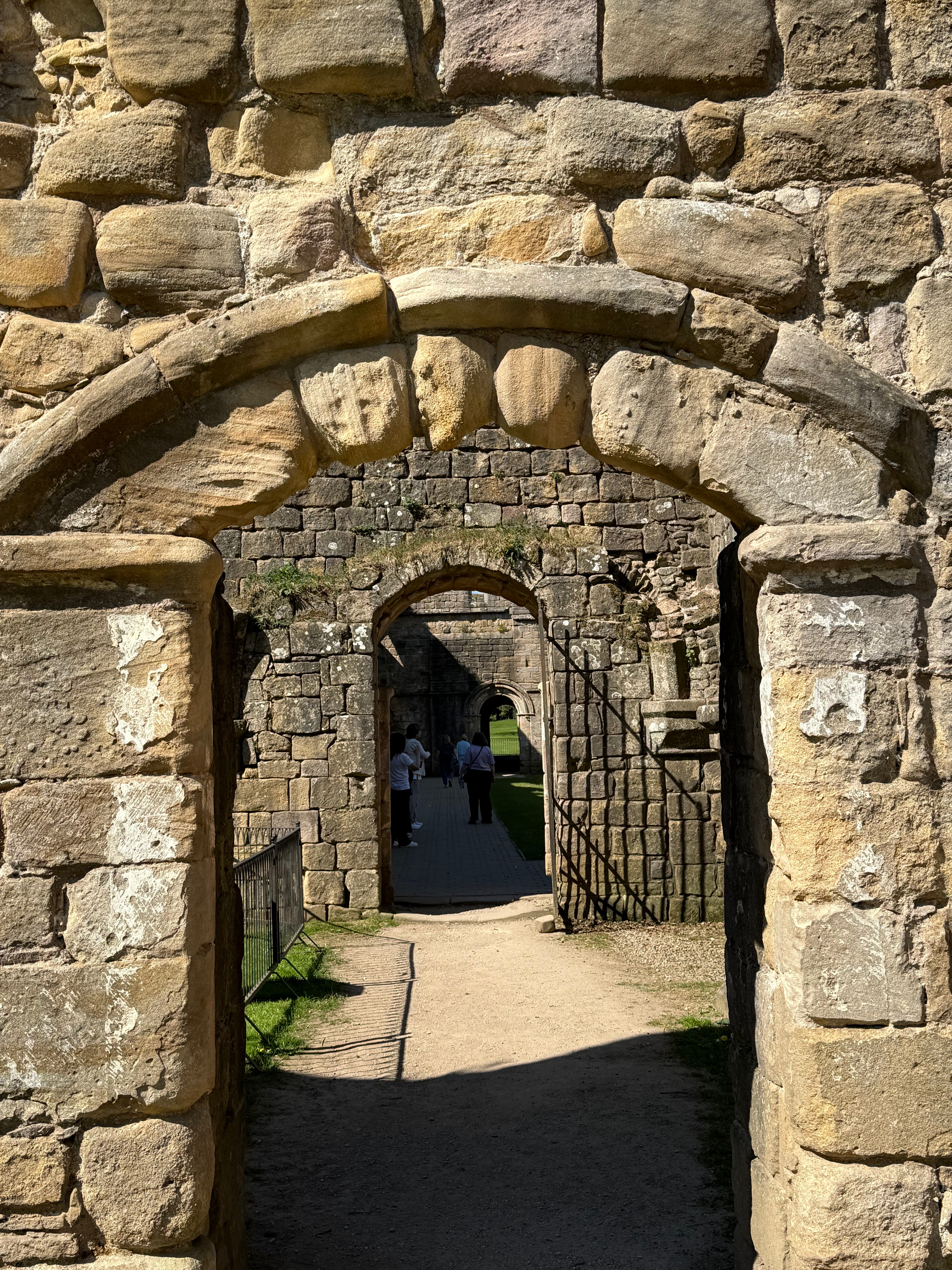
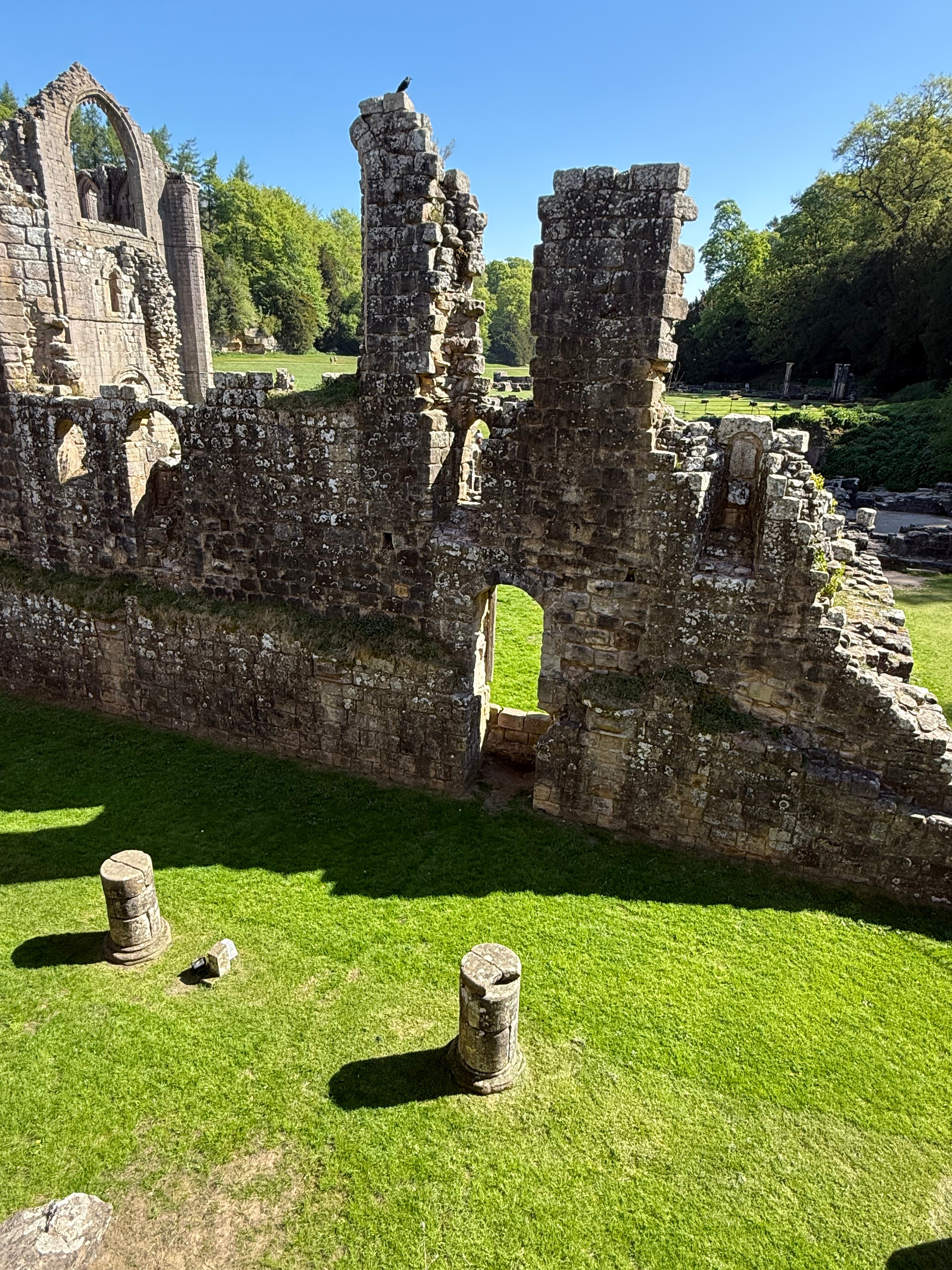
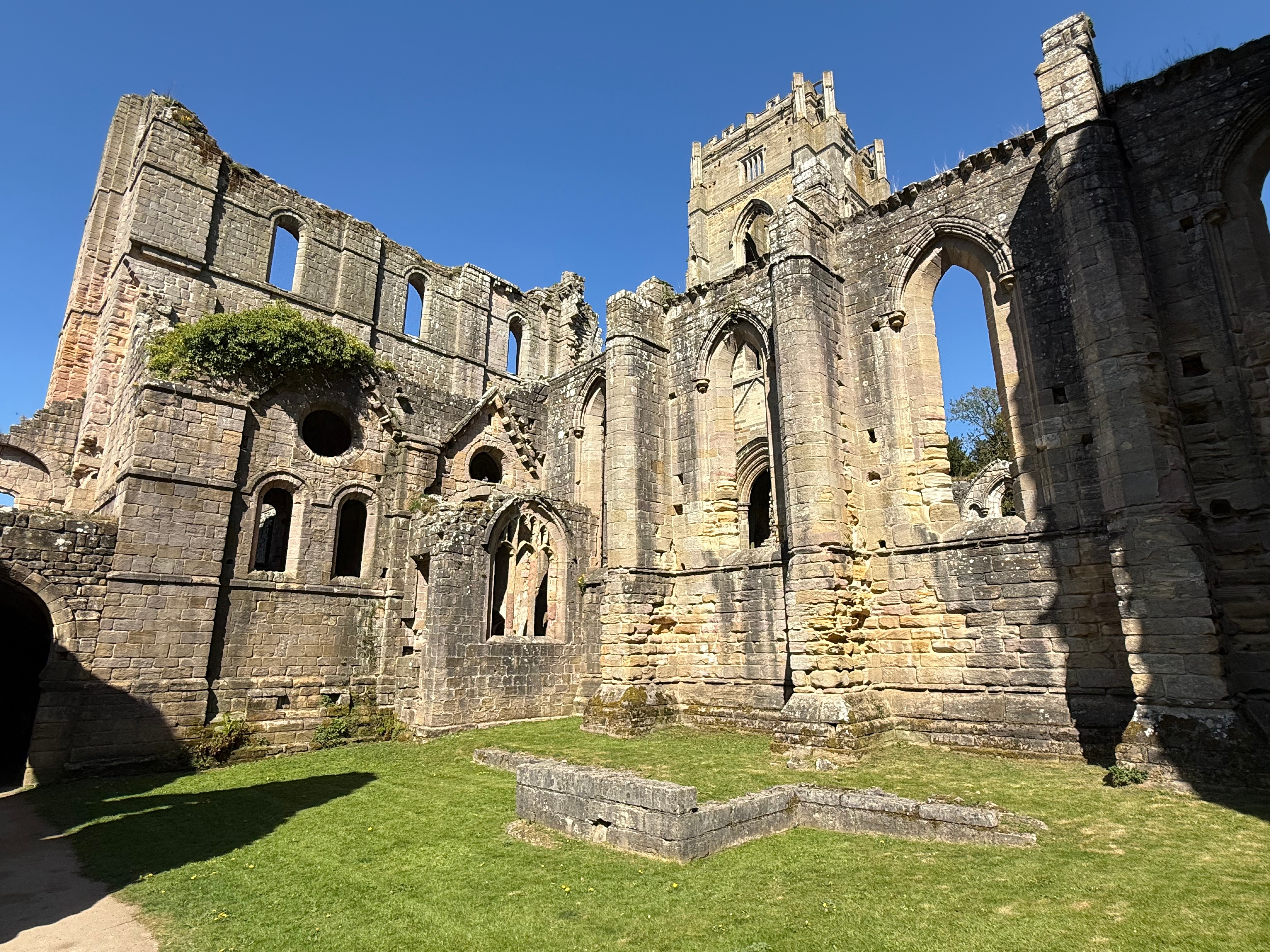
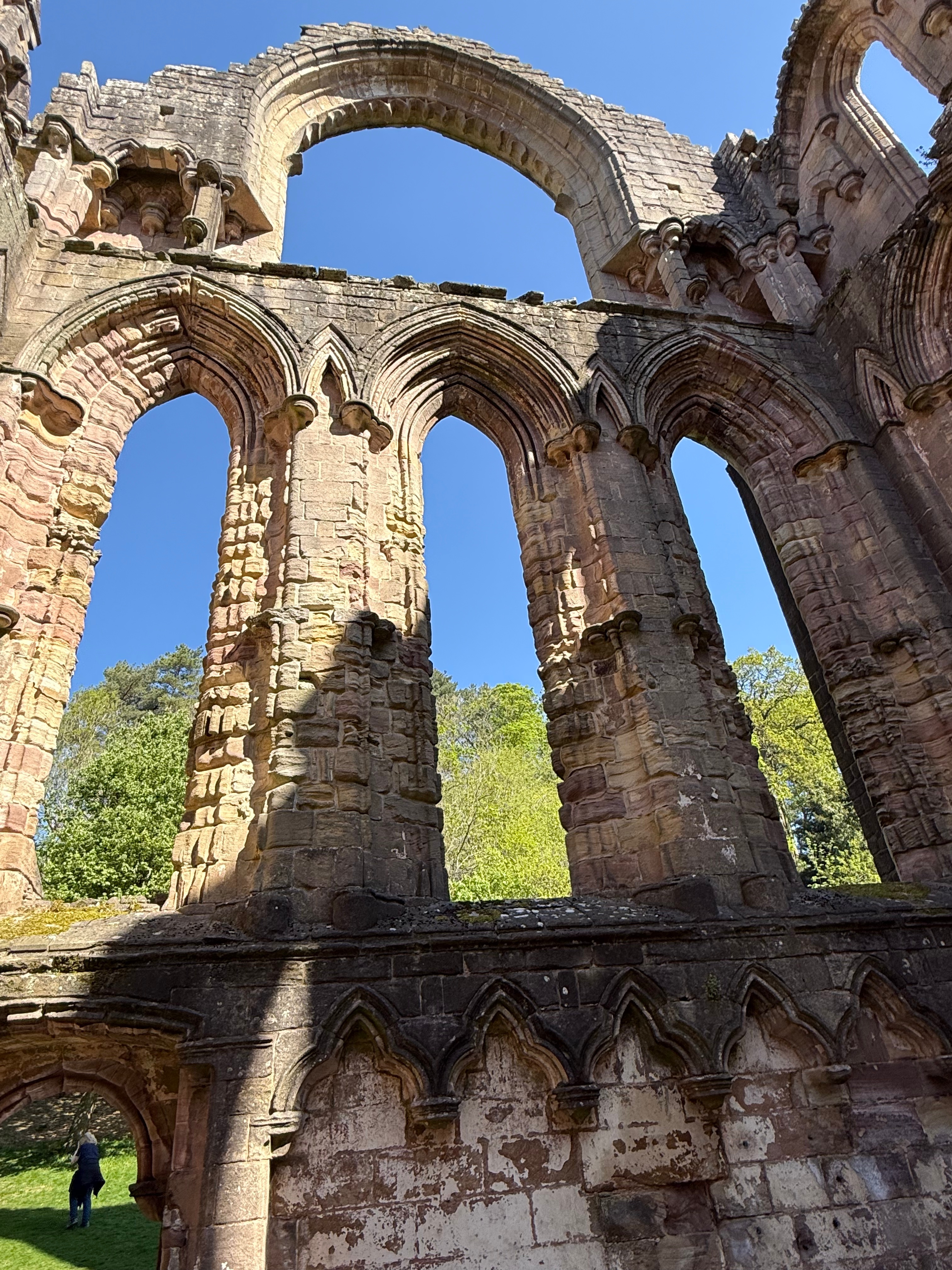
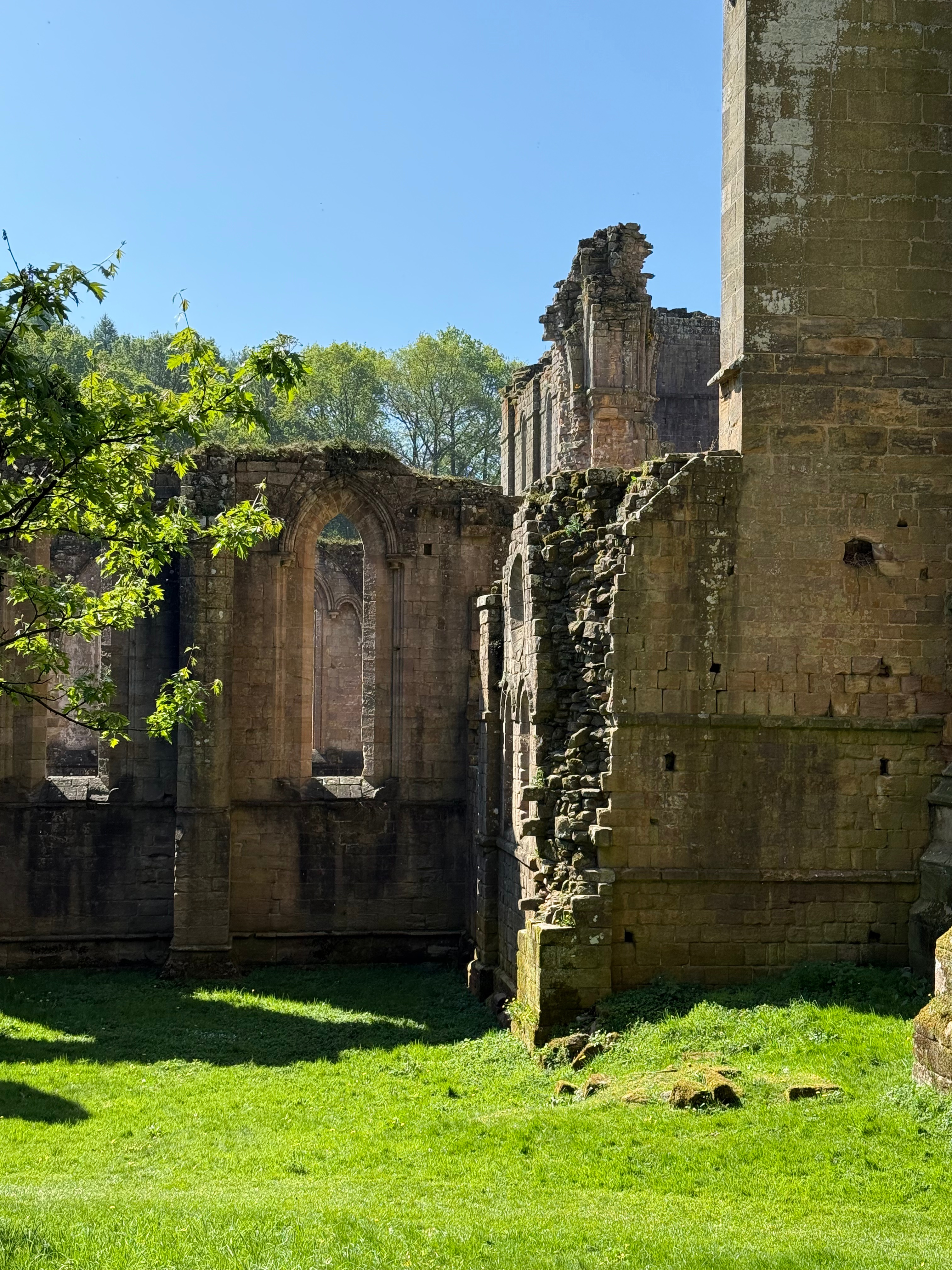
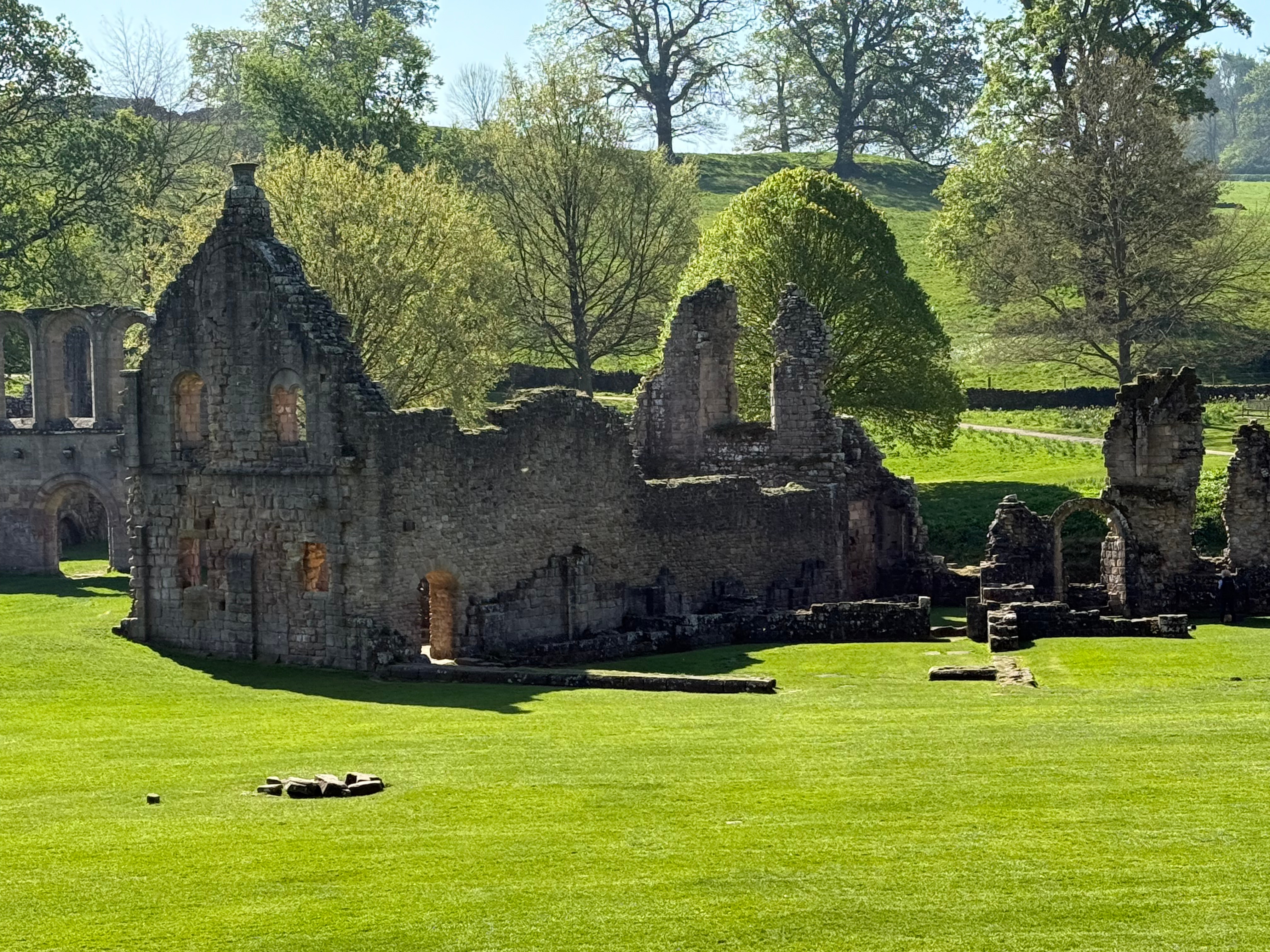
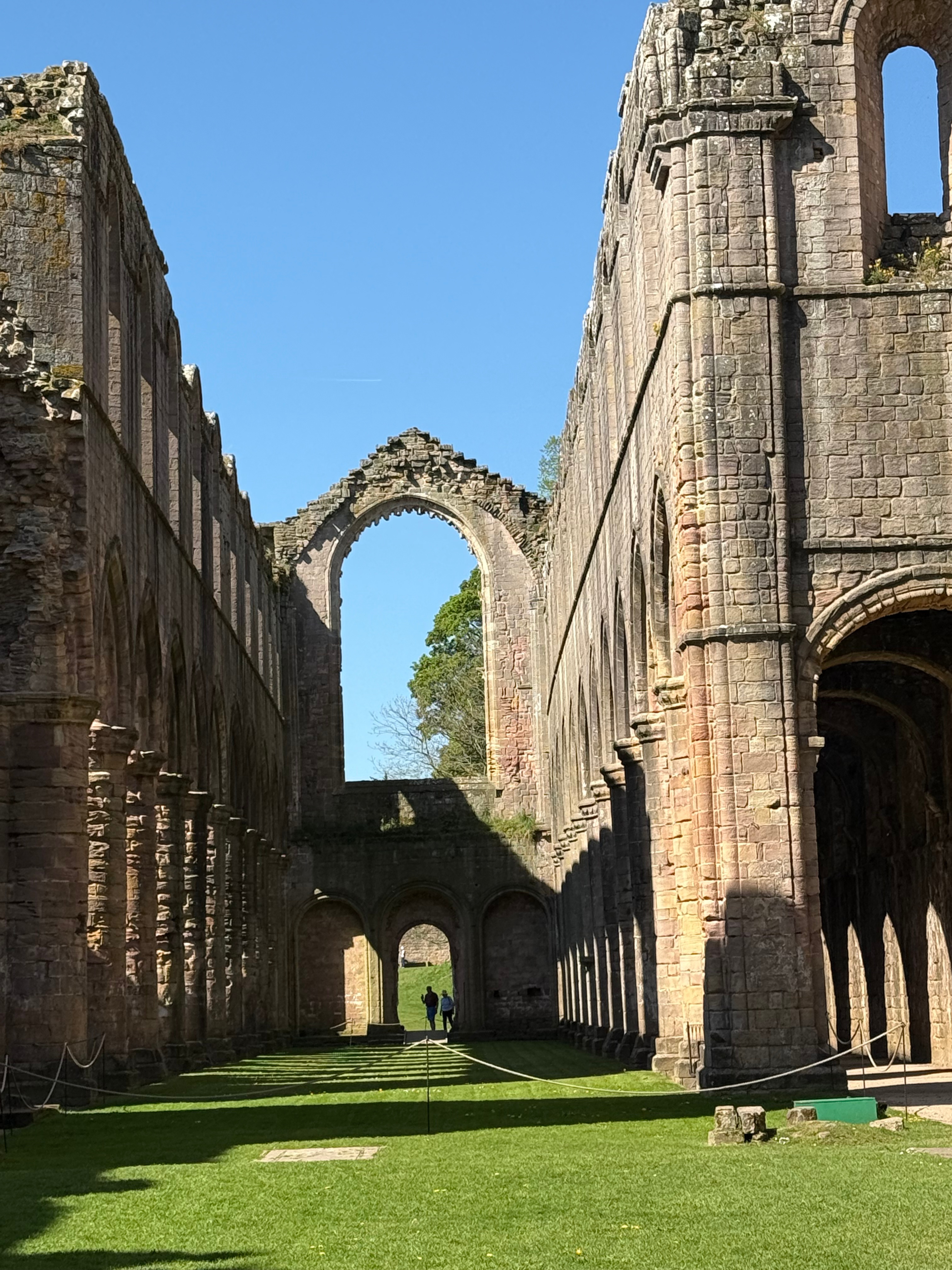
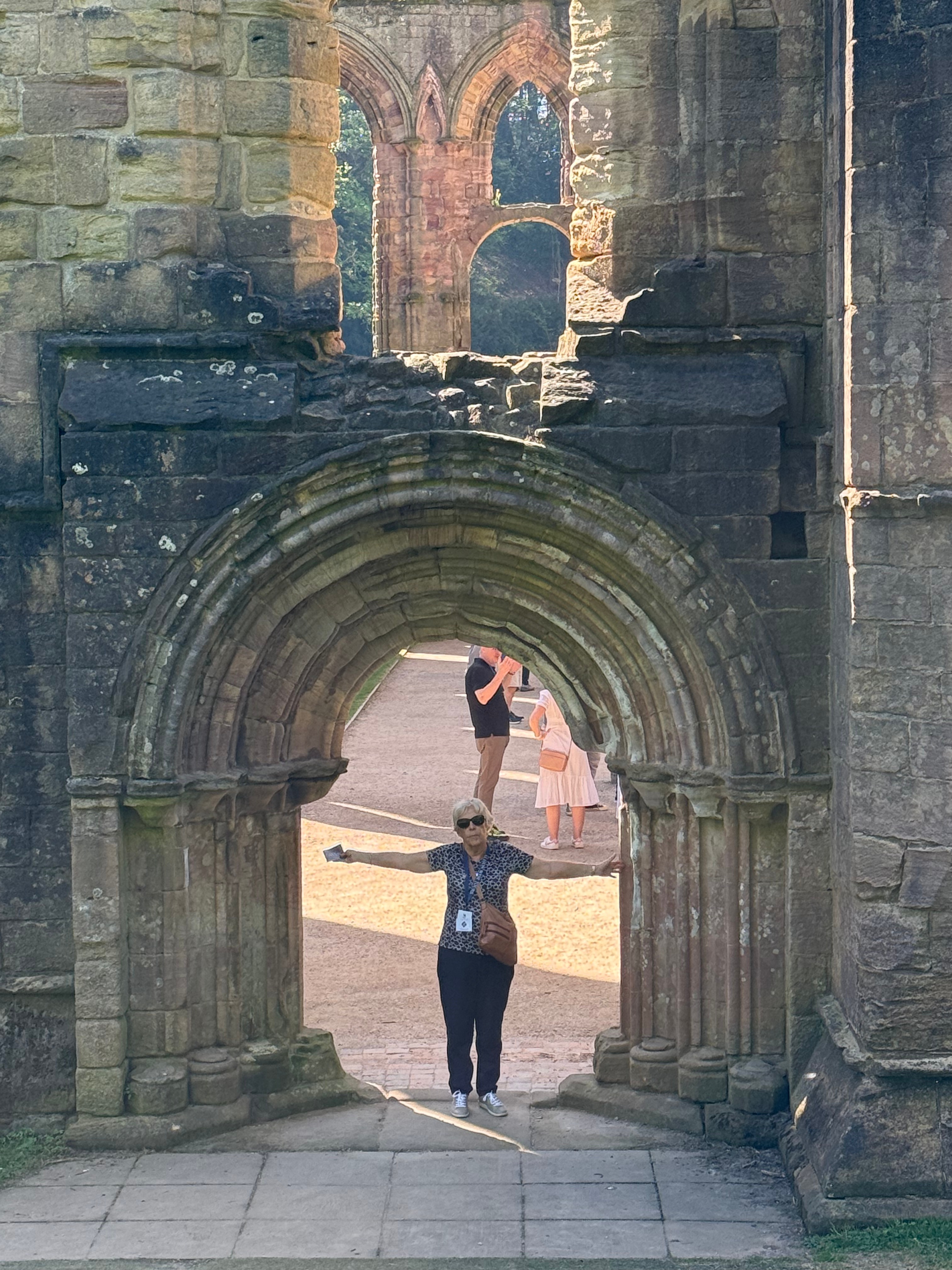
Tour notes Fountains Abbey: The ancient abbey ruins are a World Heritage Site and the most extensive monastic ruins in the country. The abbey was founded in 1132 by 13 Benedictine monks from St Mary’s in York. They’d grown tired of the extravagant and rowdy way that the monks lived in York and so they escaped, seeking to live a devout and simple lifestyle elsewhere. This was how they came to Fountains. Three years later, the foundation was admitted to the austere Cistercian Order. The abbey was abruptly closed in 1539 during the Dissolution of the Monasteries under Henry VIII. The estate was sold by the Crown to a merchant, Sir Richard Gresham. It remained in private hands until the 1960s. The National Trust bought the estate from the West Riding County Council in 1983.
Our talks on the drive to these beautiful ruins on the edge of the river Skell were given by Alison “Fountains Abbey”; Elizabeth Norton “The Dissolution of the Monasteries” and Nicola “The Pilgrimage of Grace”.

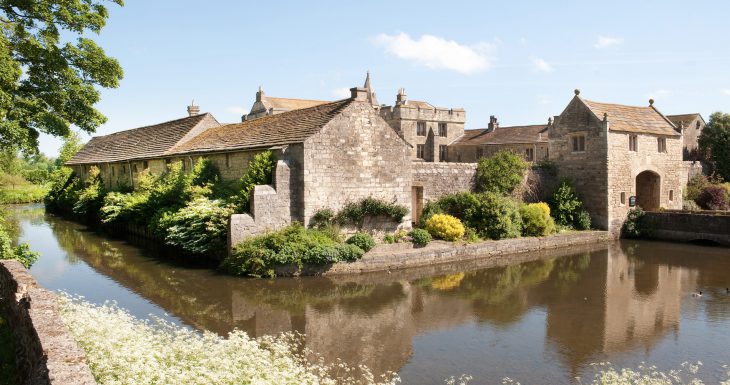
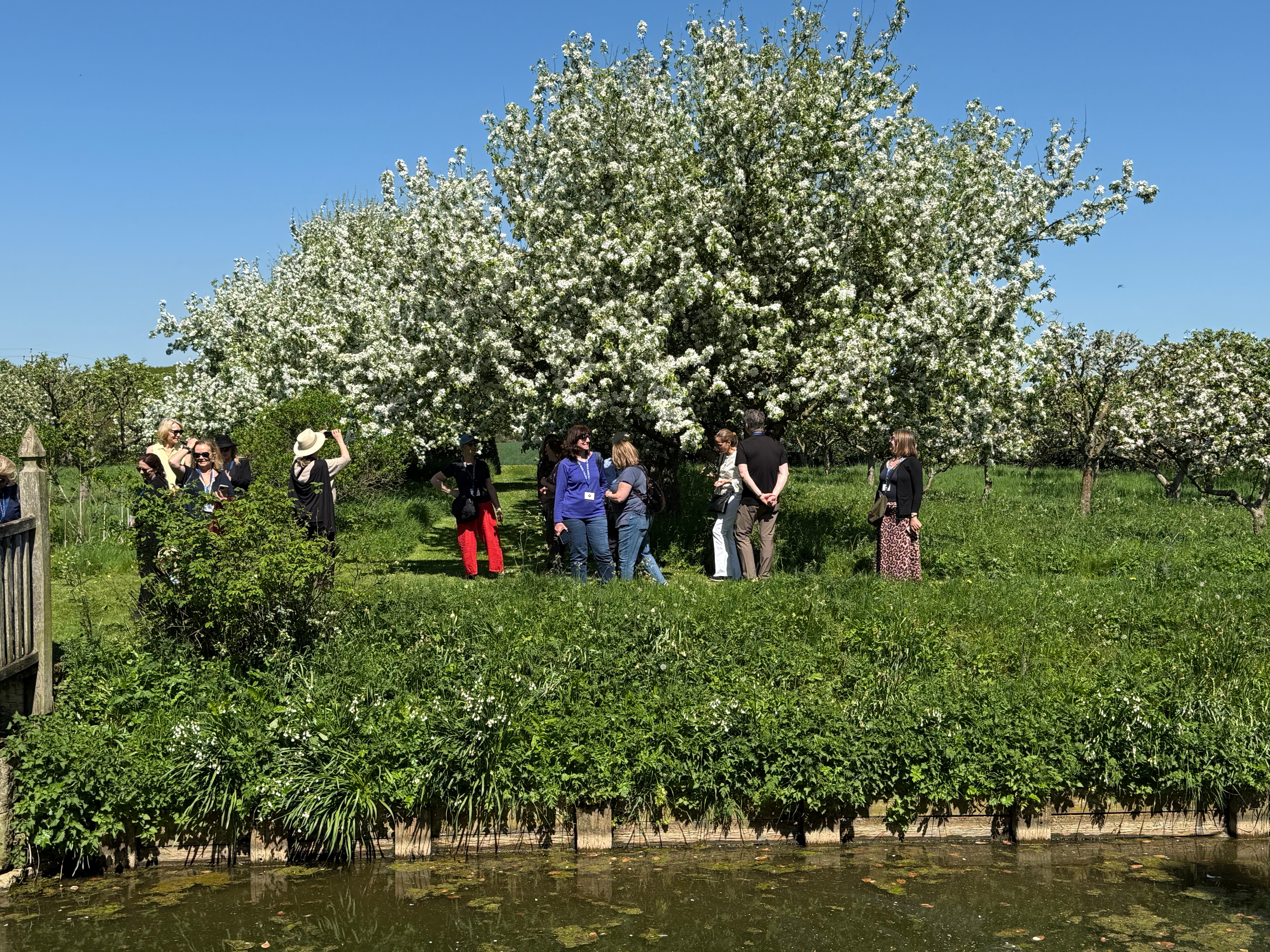
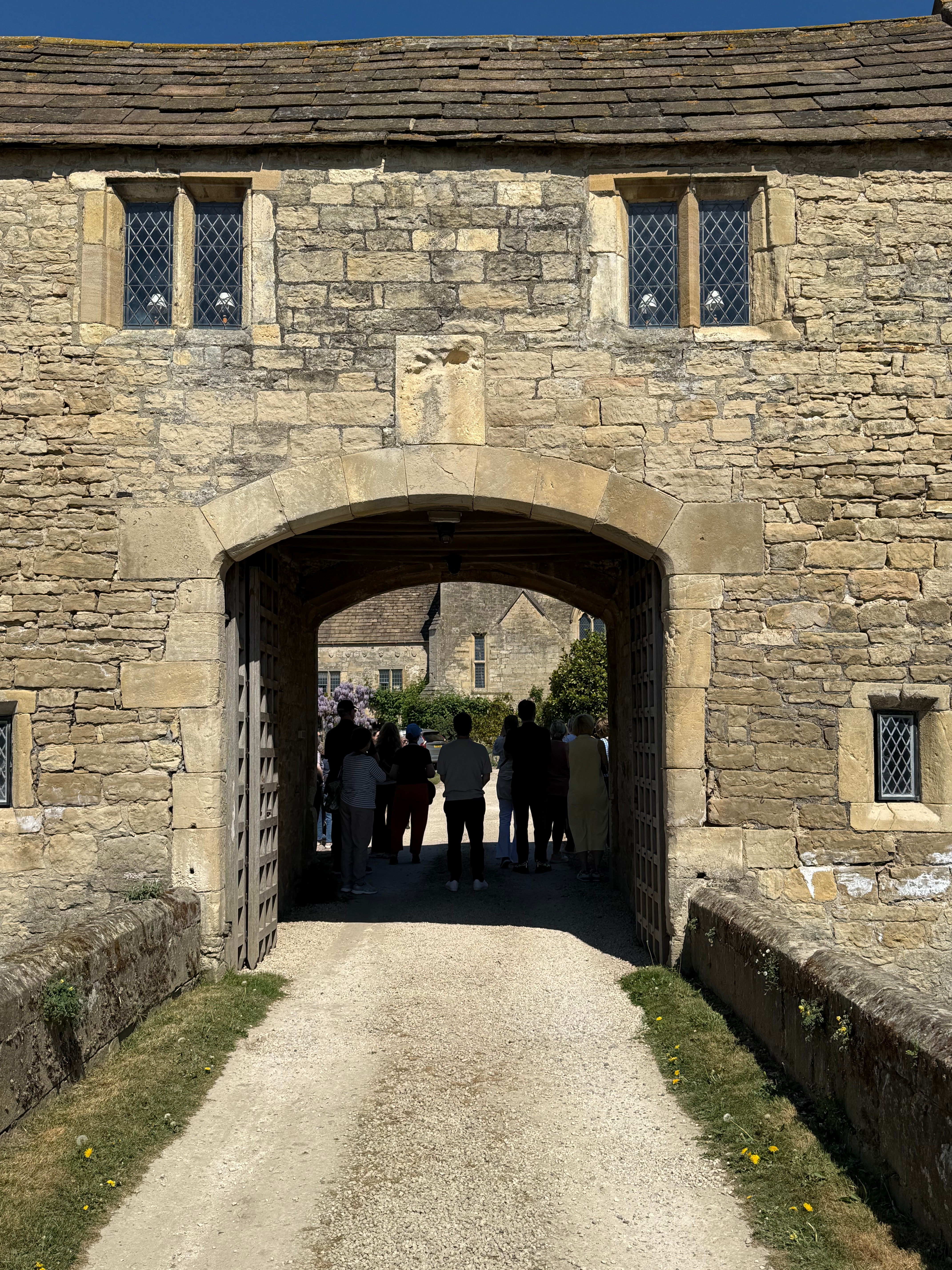
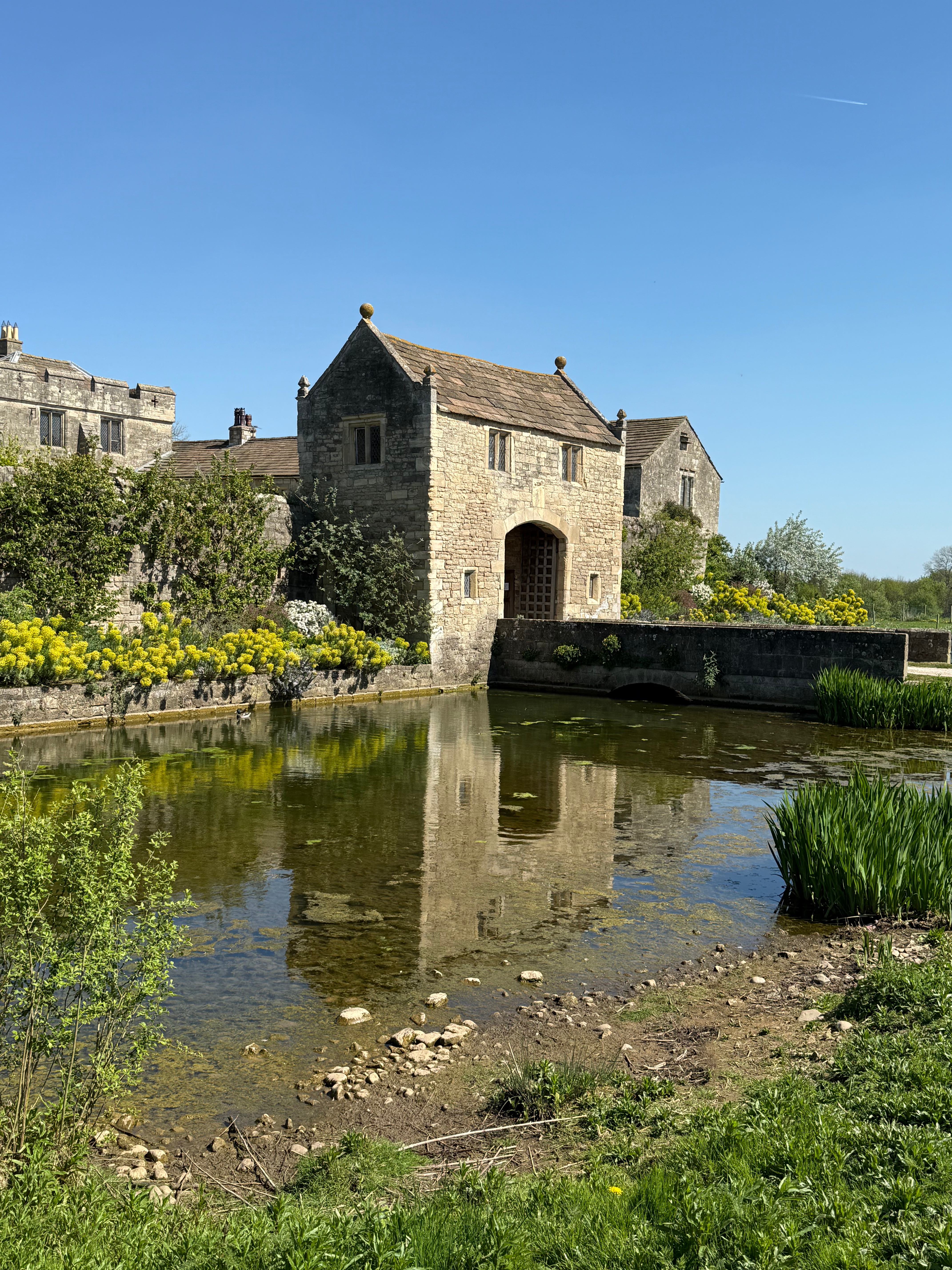
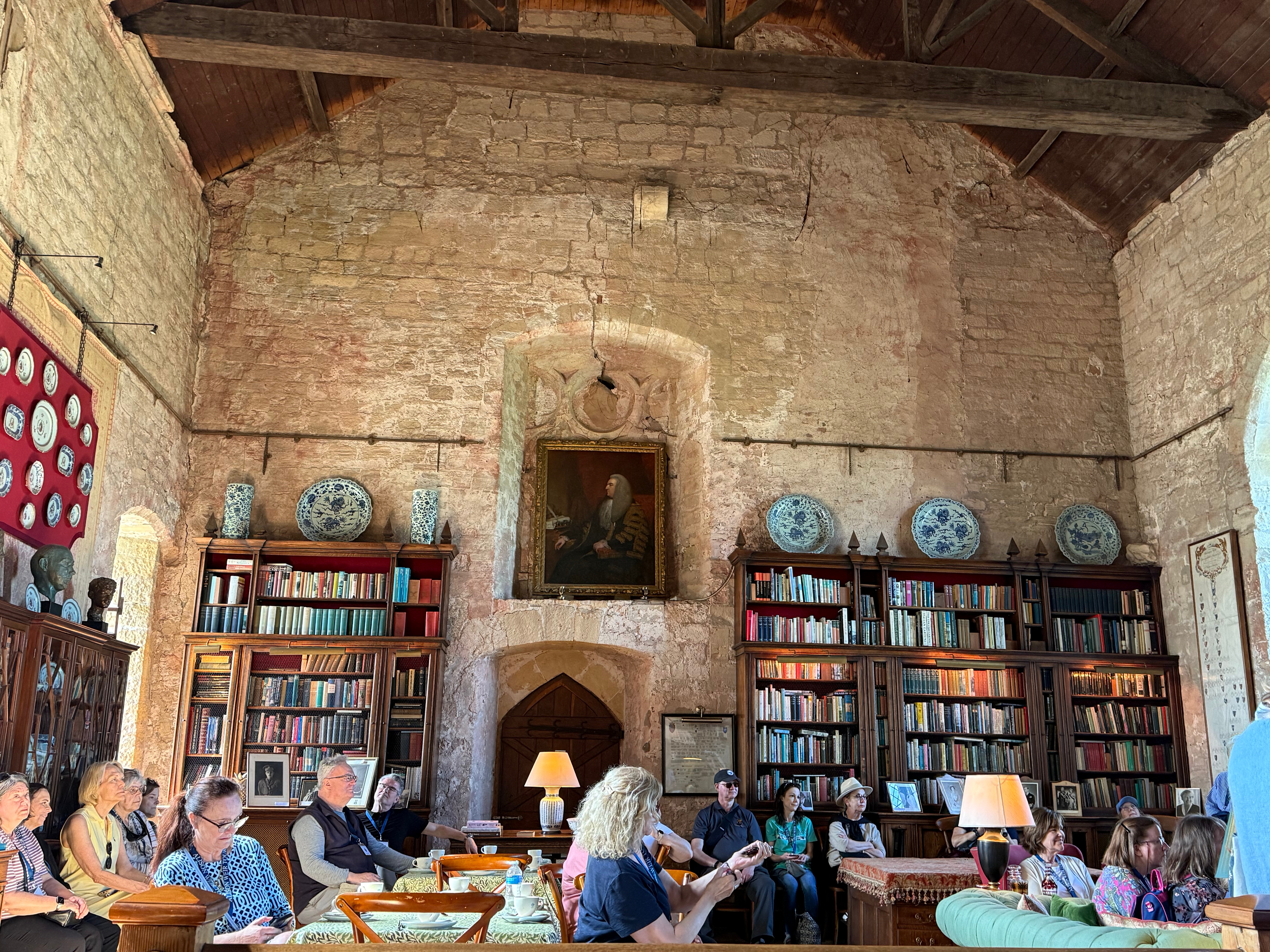
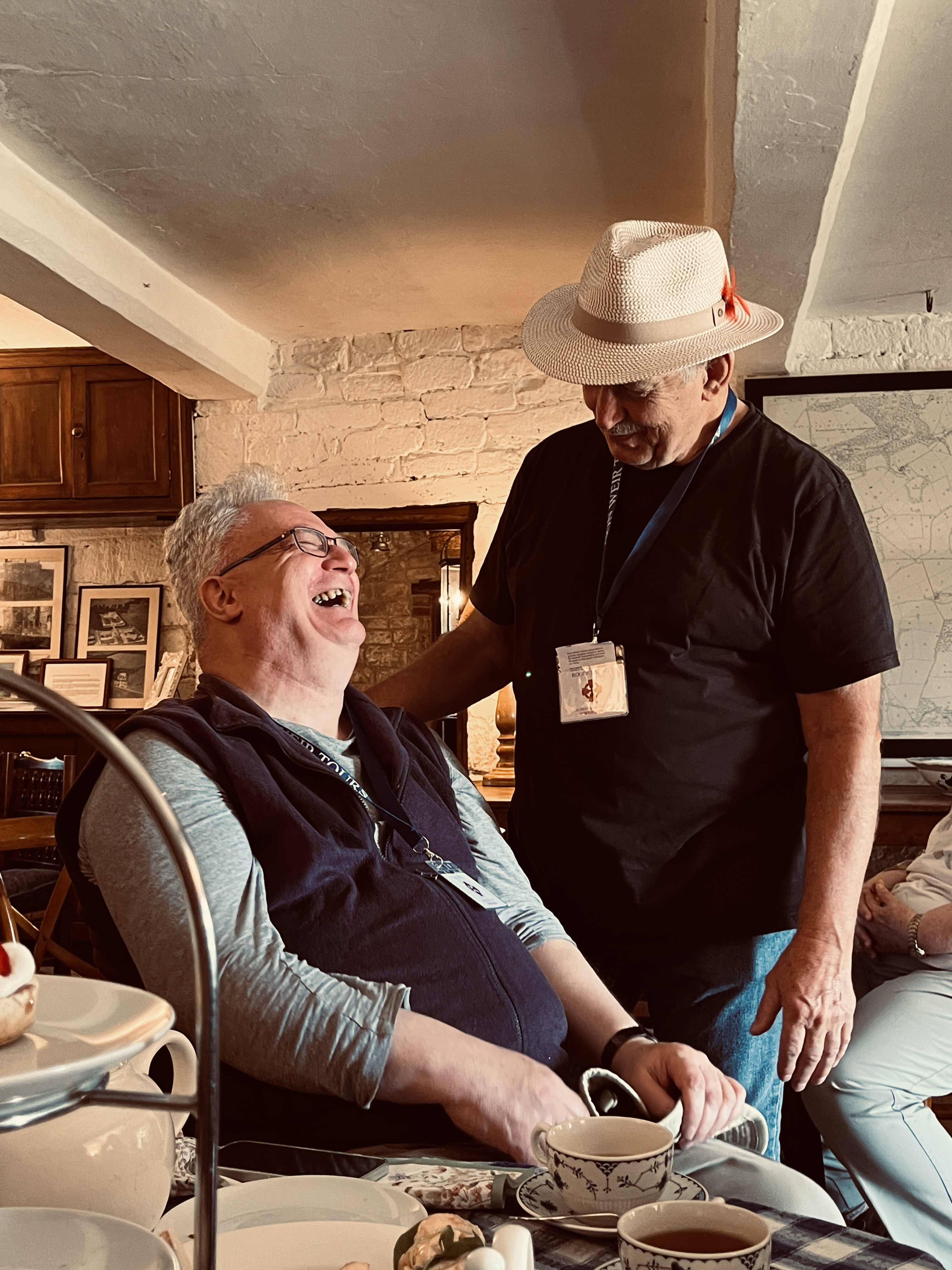
Our next stop was only a few miles away; the quiet, private and spectacular Markenfield Hall only has a few visitors per year, either as small groups (like us, thanks Alison) or perhaps a local wedding. There is no shop, nor wi-fi, and it was the only place we visited that had no “teasels” to create limitations on where to sit. The Grantley family, owners since 1761 can trace their lineage back to the Markenfield family, the property thus remaining in the ownership of the same family for 500 years. Its history goes back to the Domesday Book in 1086. They served a delicious and simple lunch of sandwiches and cakes with pots of tea. The curator’s candid talk on all things Markenfield was remarkable and so very interesting.
historichouses.org says: “A medieval, moated and much-loved family home, Markenfield Hall is a historic house unlike any other. Set within stunning Yorkshire countryside south of Ripon, Markenfield has remained largely untouched, and is one of a handful of moated, medieval manor houses that could still be recognised by their original owners; indeed the Hall is instantly recognisable thanks to its crenelated silhouette reflected in its encircling moat, which was patrolled by two black swans until 2019 when we discovered we had acquired an otter… Despite its bloody history, the Hall exudes a tranquil and welcoming atmosphere and, although only open generally for short periods of time, there are opportunities to visit throughout the year, either individually or as a group.”
The short talks on the way to Markenfield were given by Alison “Markenfield Hall”; and Mike “Sir Thomas Markenfield – Loyal Retainer of Richard III”. Mike’s talk opened the door to much ongoing discussion for the rest of the tour on Richard III. Good or bad, murderer or misunderstood, brute or gentleman?
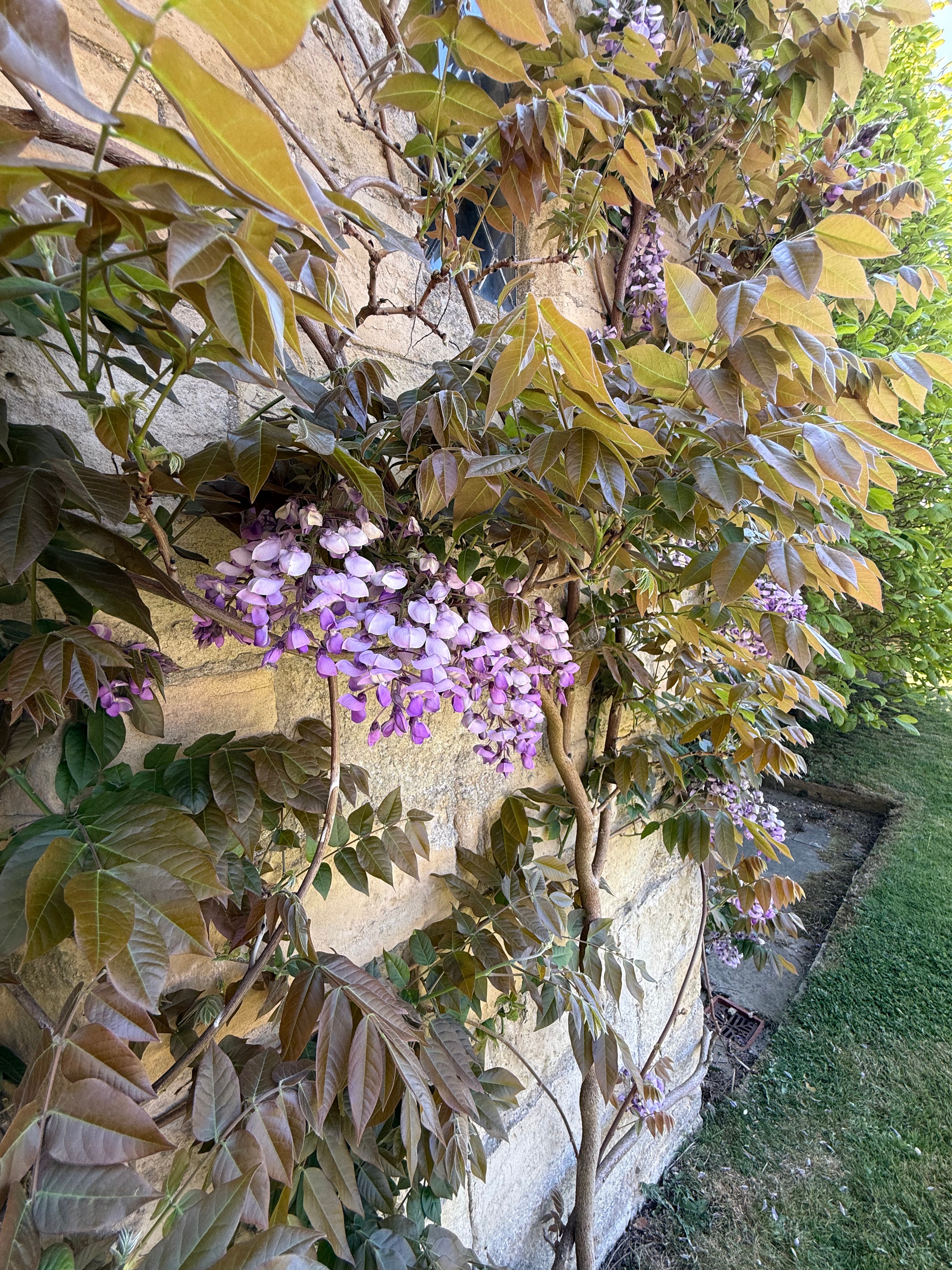
Well nourished and in great spirits we next drove 8 miles of country road to Newby Hall, enjoying Nicola’s short talk – simply “Newby Hall”.
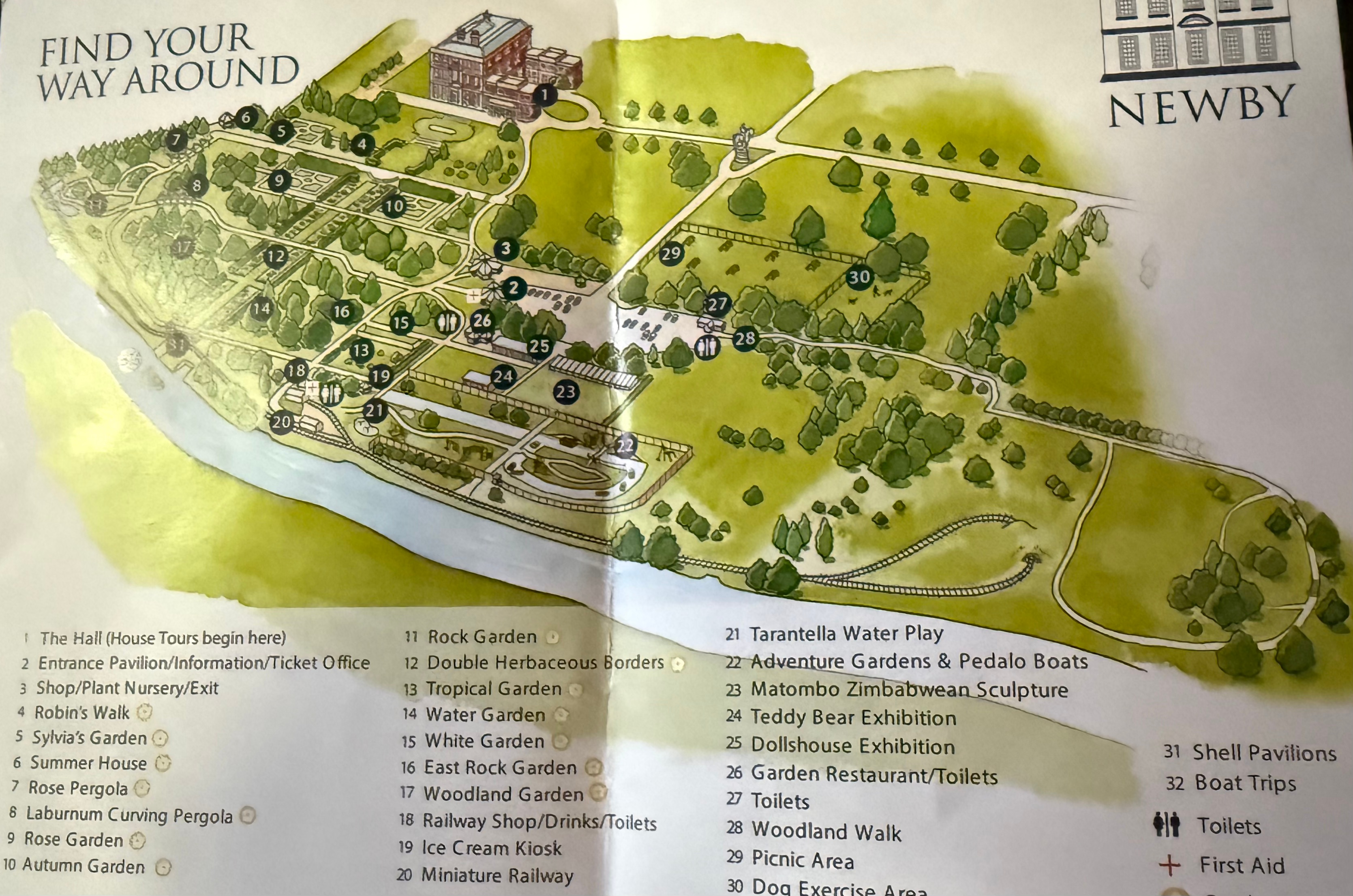
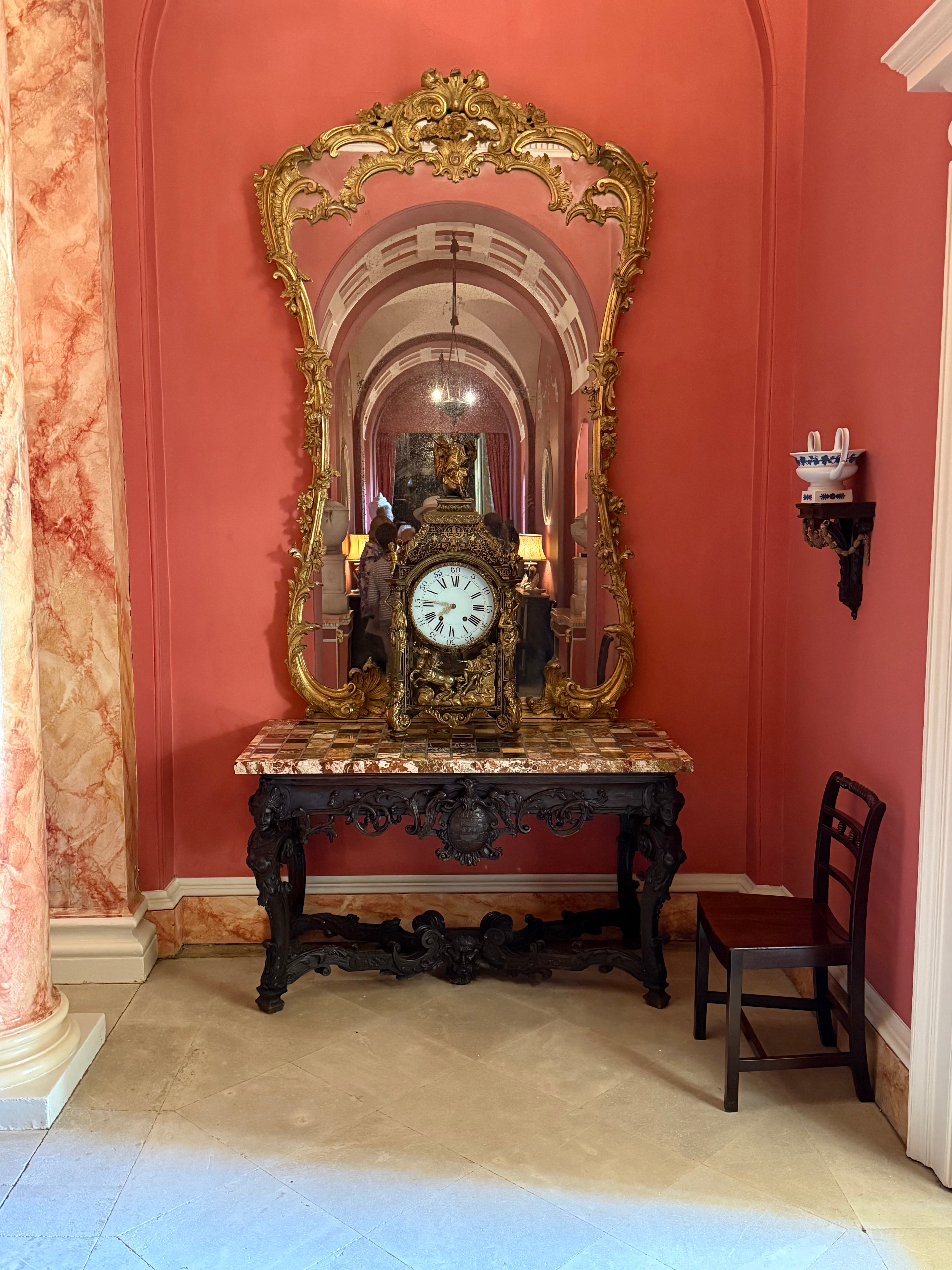
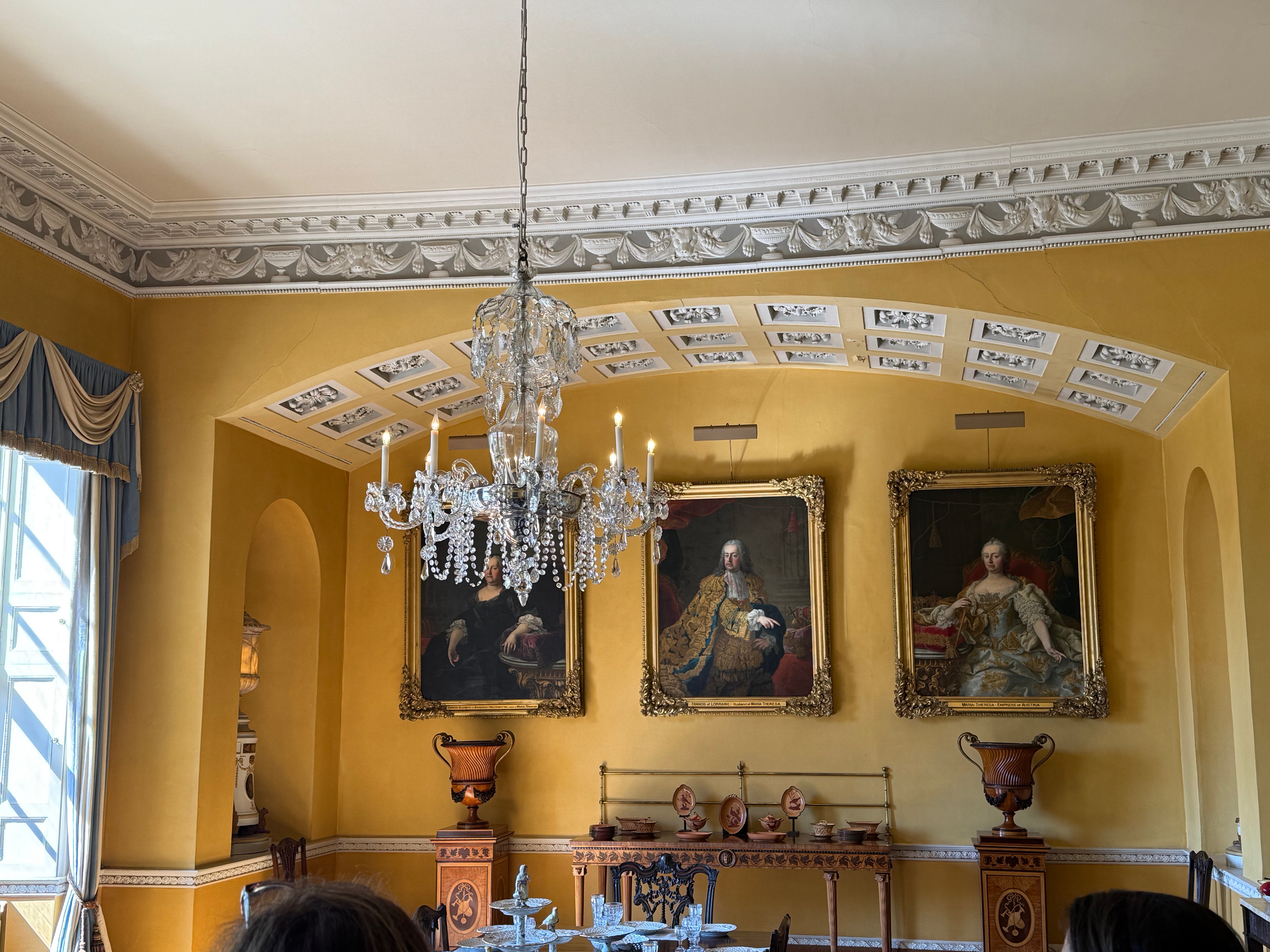
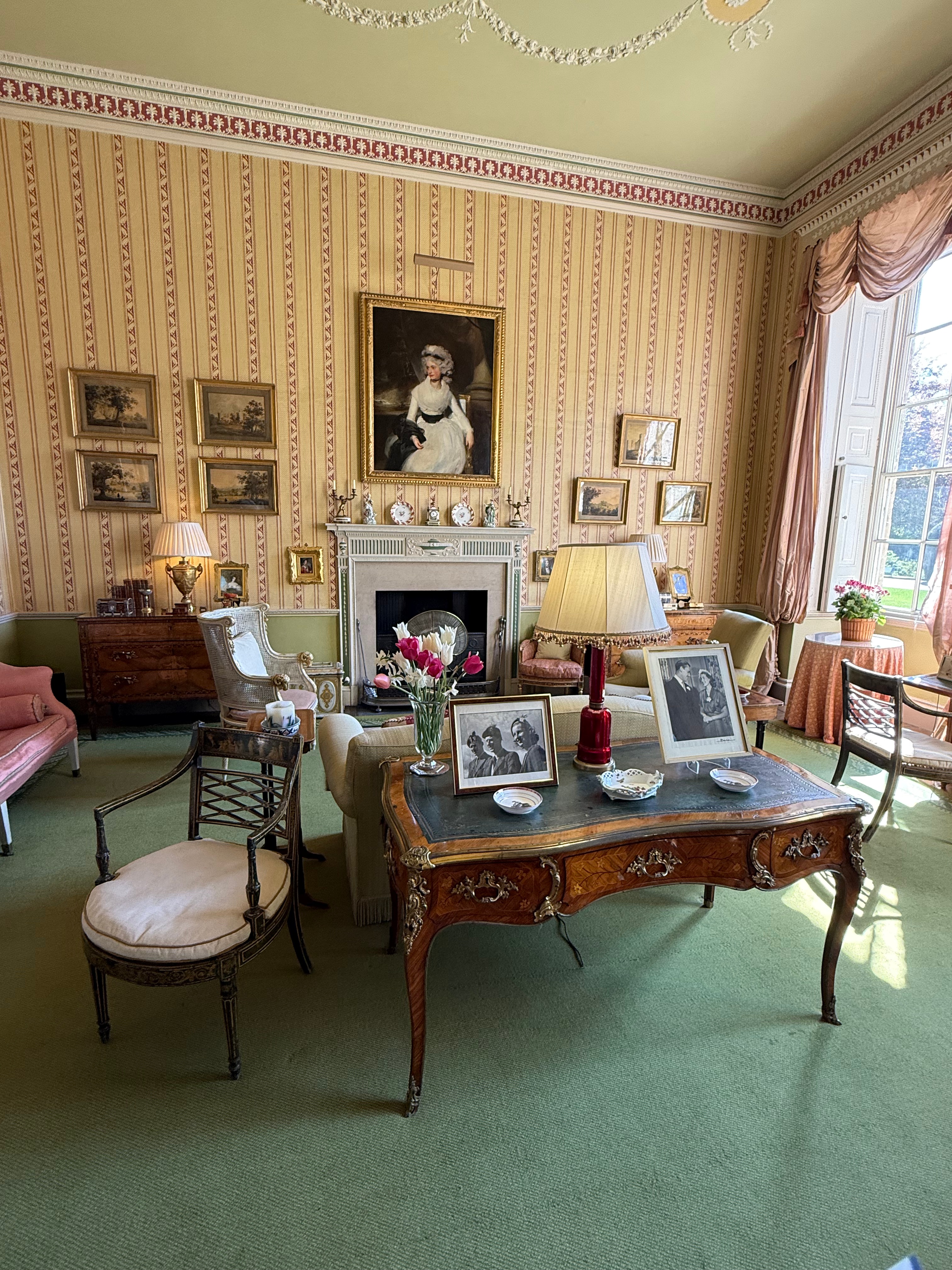
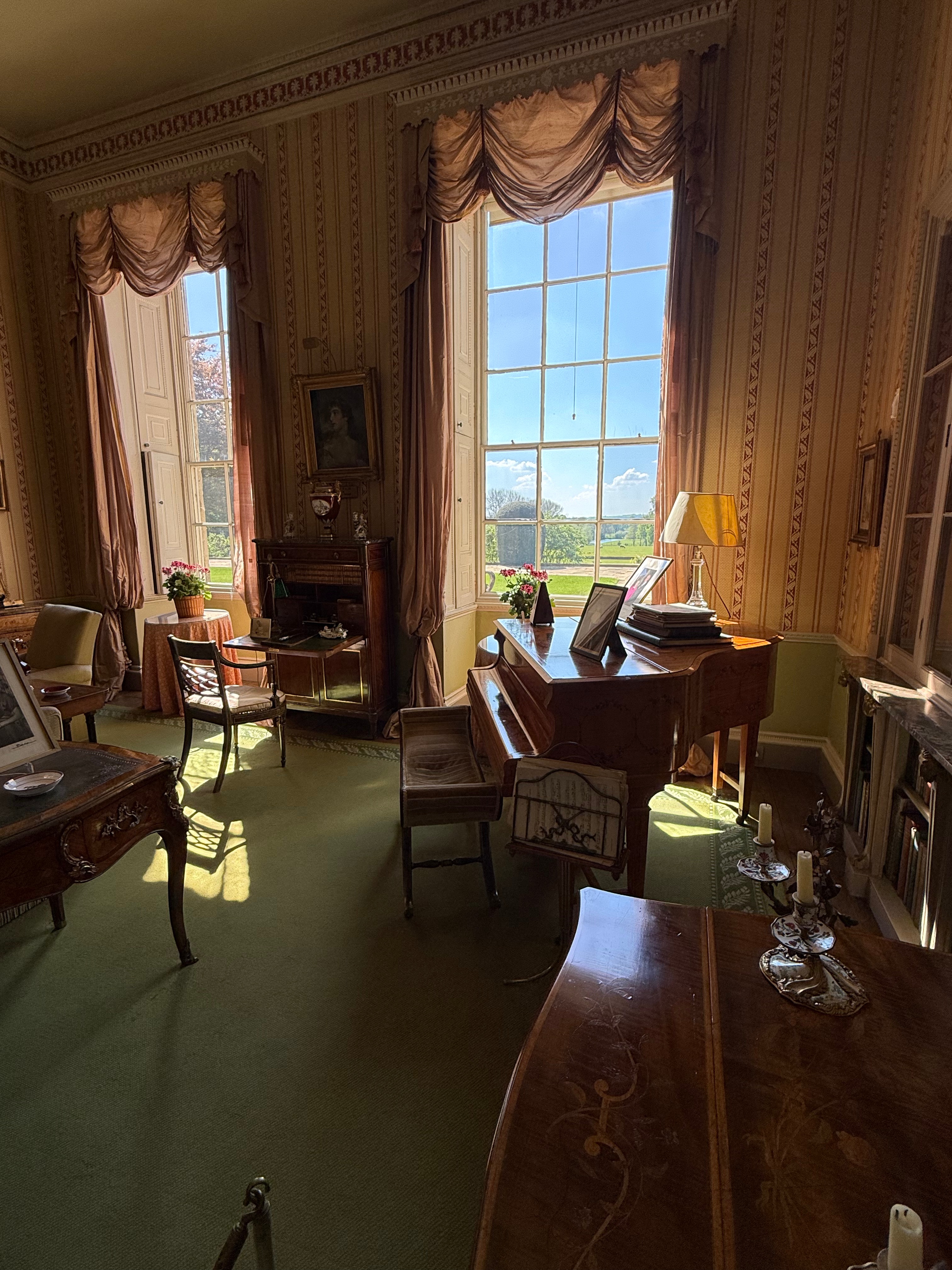
The Tour notes on Newby Hall: the family home of Mr & Mrs Richard Compton, is one of England’s finest houses, an exceptional example of 18th century interior decoration. Built in the 1690s in the style of Sir Christopher Wren, the house was later enlarged and adapted by John Carr and subsequently Robert Adam. Its superb contents, collected by an ancestor of the Compton family on the Grand Tour, include a rare set of Gobelin Tapestries, a gallery of classical statuary and some of Chippendale’s finest furniture.
Visitors to Newby Hall can also enjoy 25 acres of award-winning gardens full of rare and beautiful plants. The famous double herbaceous borders are flanked by numerous compartmented gardens such as the rose and autumn gardens and the water garden.
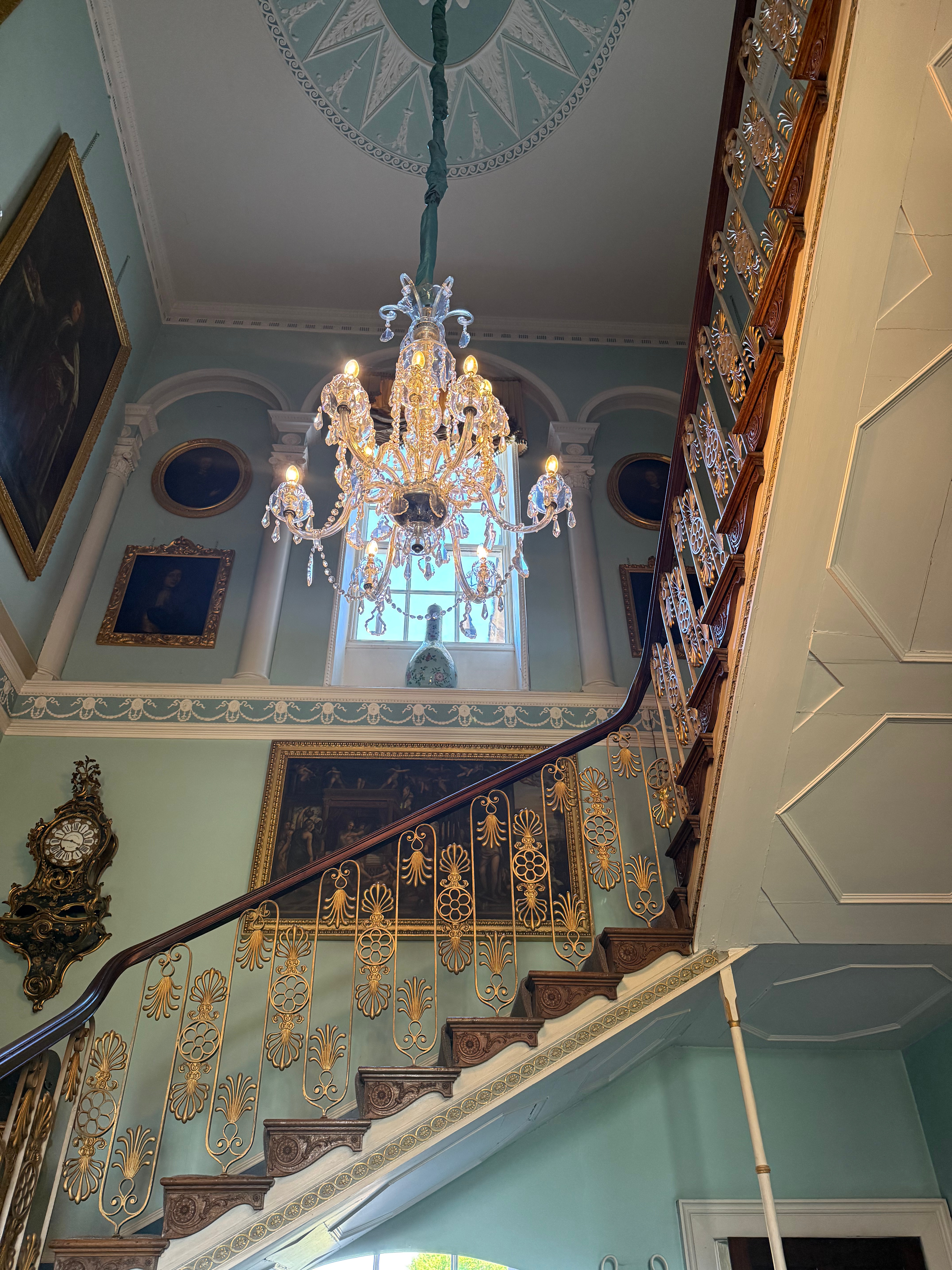
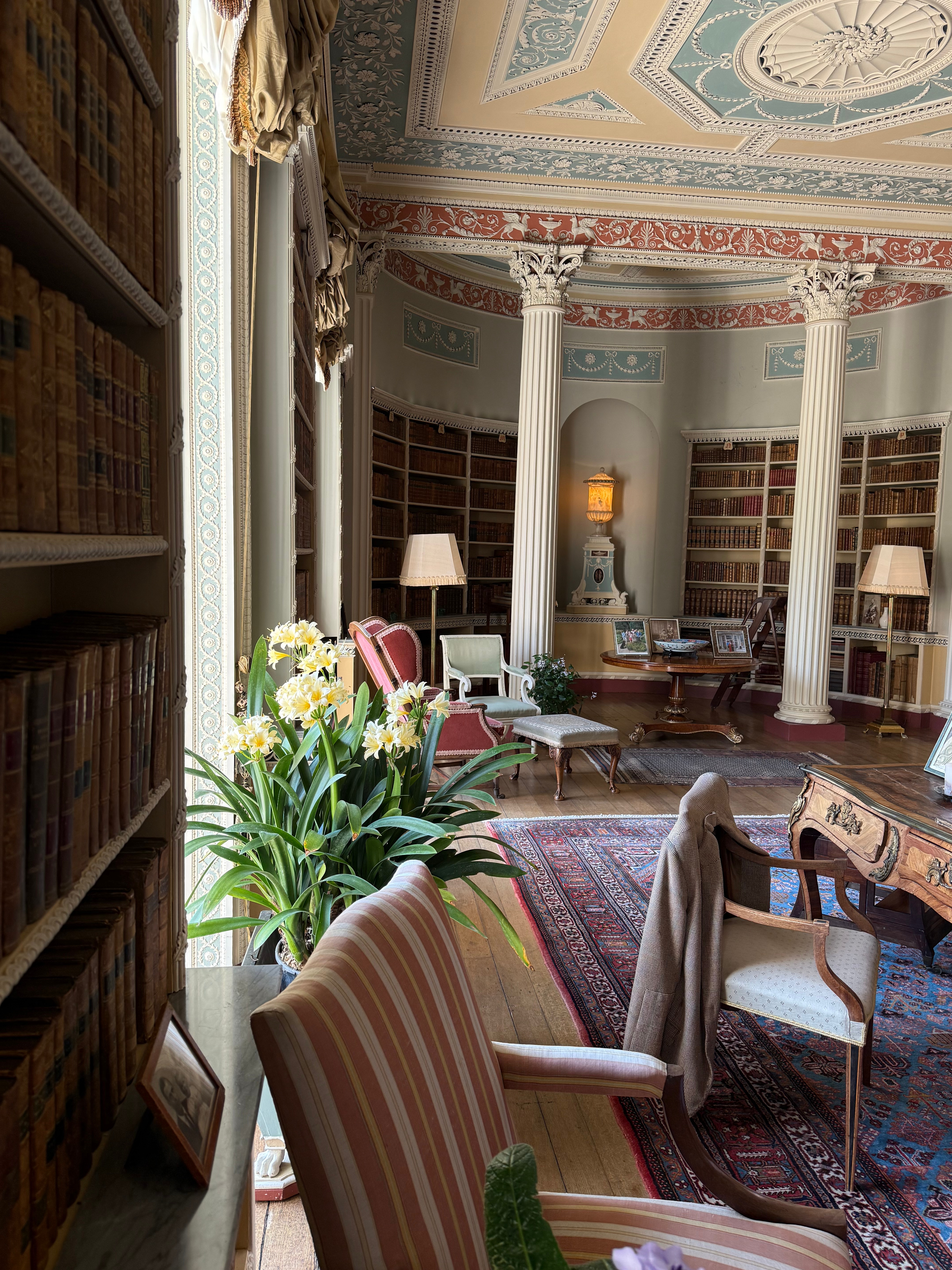
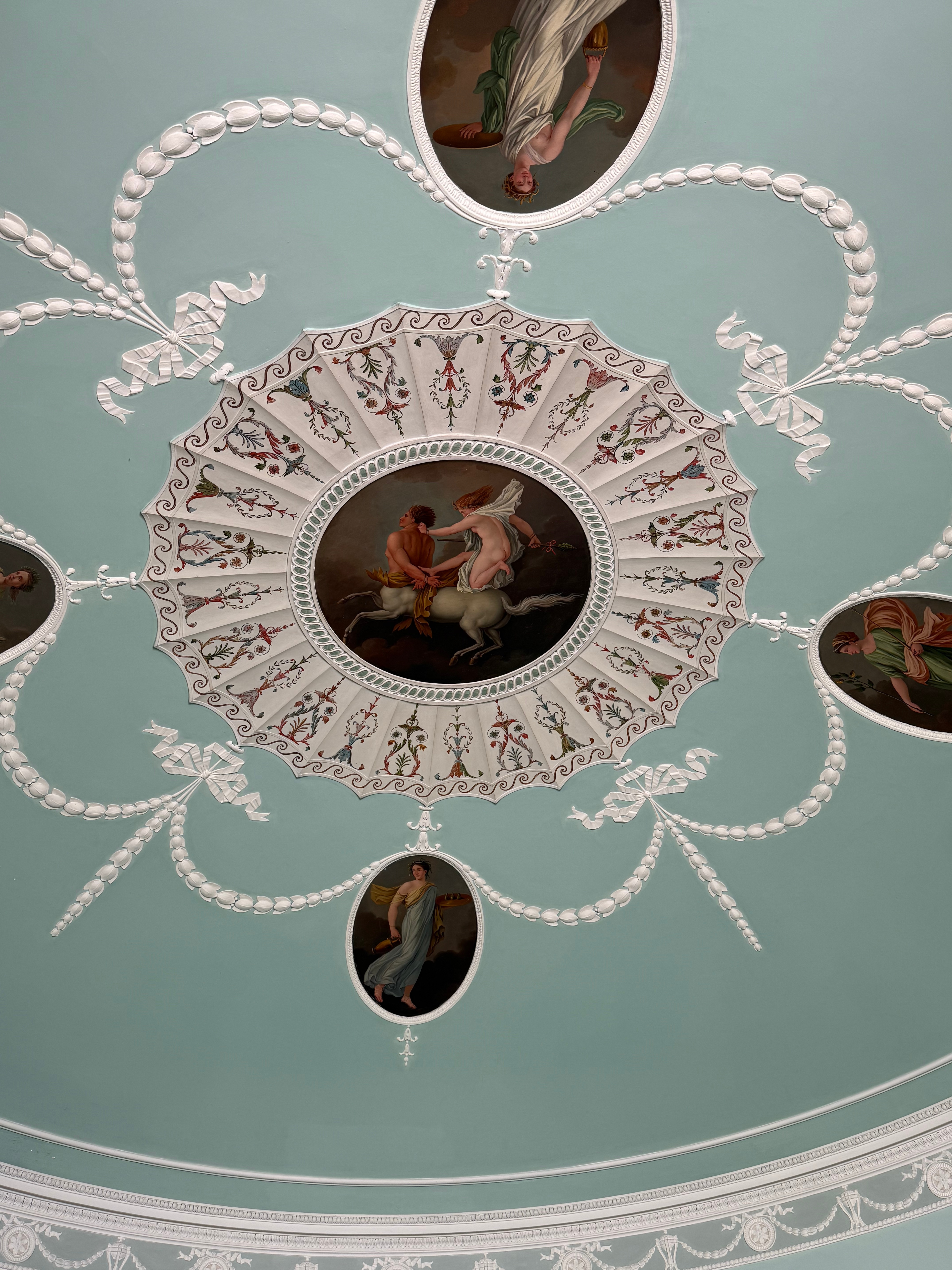
Spectacular indeed! My humble photographic attempts to encapsulate this house and its grounds fail miserably. The official “book” lists 20 rooms. The family lives on-site and are committed to constant renovation and improvement. The house, or Hall, drips opulence, wealth and privilege. Such a contrast to the other places we have visited today – the ruins of Fountains Abbey and Markenfield Hall. Time limitation meant that we had no hope of walking the grounds after the guided tour of the house. The drive back to York was greatly enlivened by Alison who spoke on three possibly linked topics: “Sex and the Medieval Queen”, “Royal Weddings of the House of York” and “The Princess’s Secret”. At one stage of the journey the whole bus, including Alison was helpless with laughter!

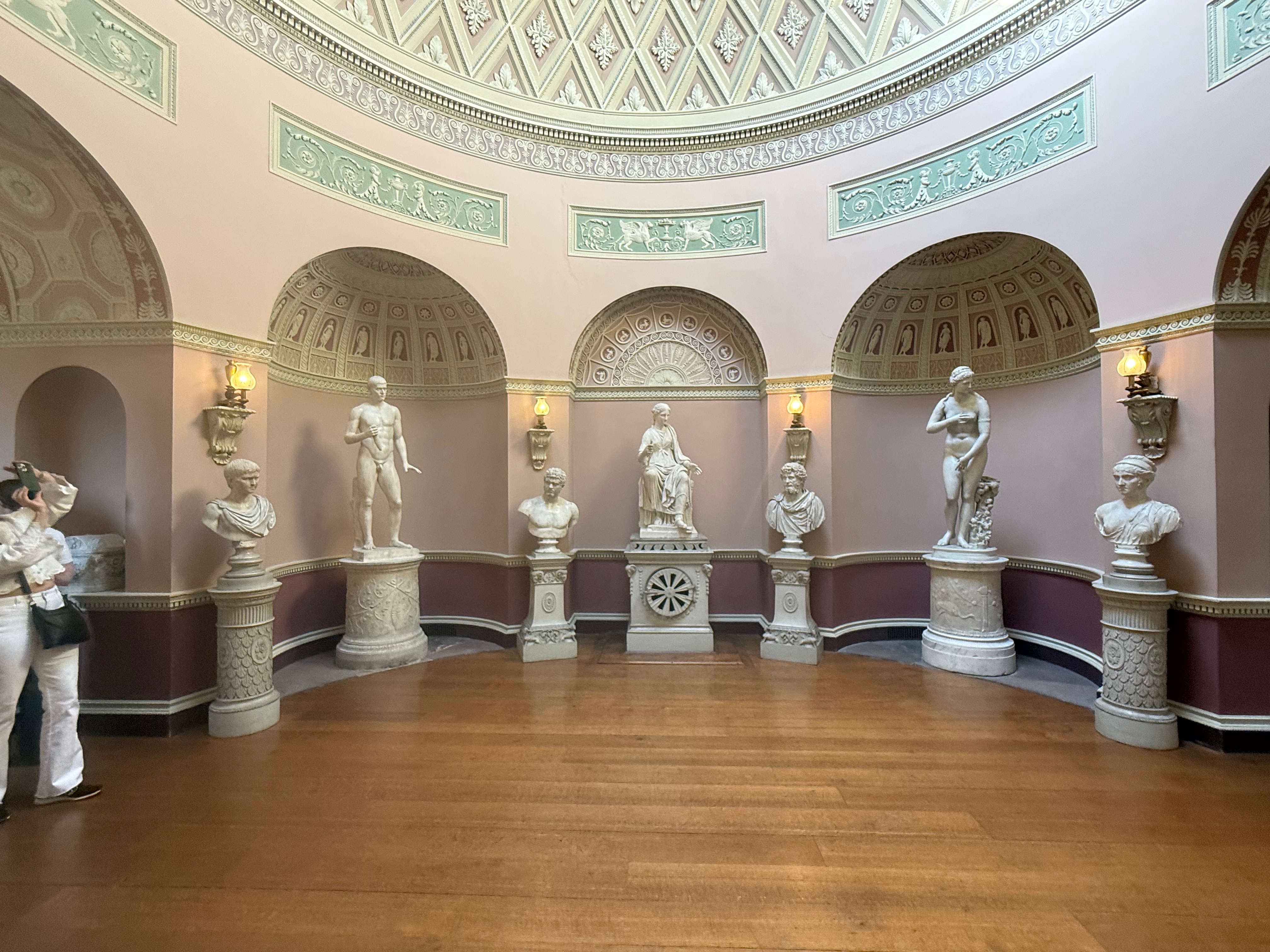
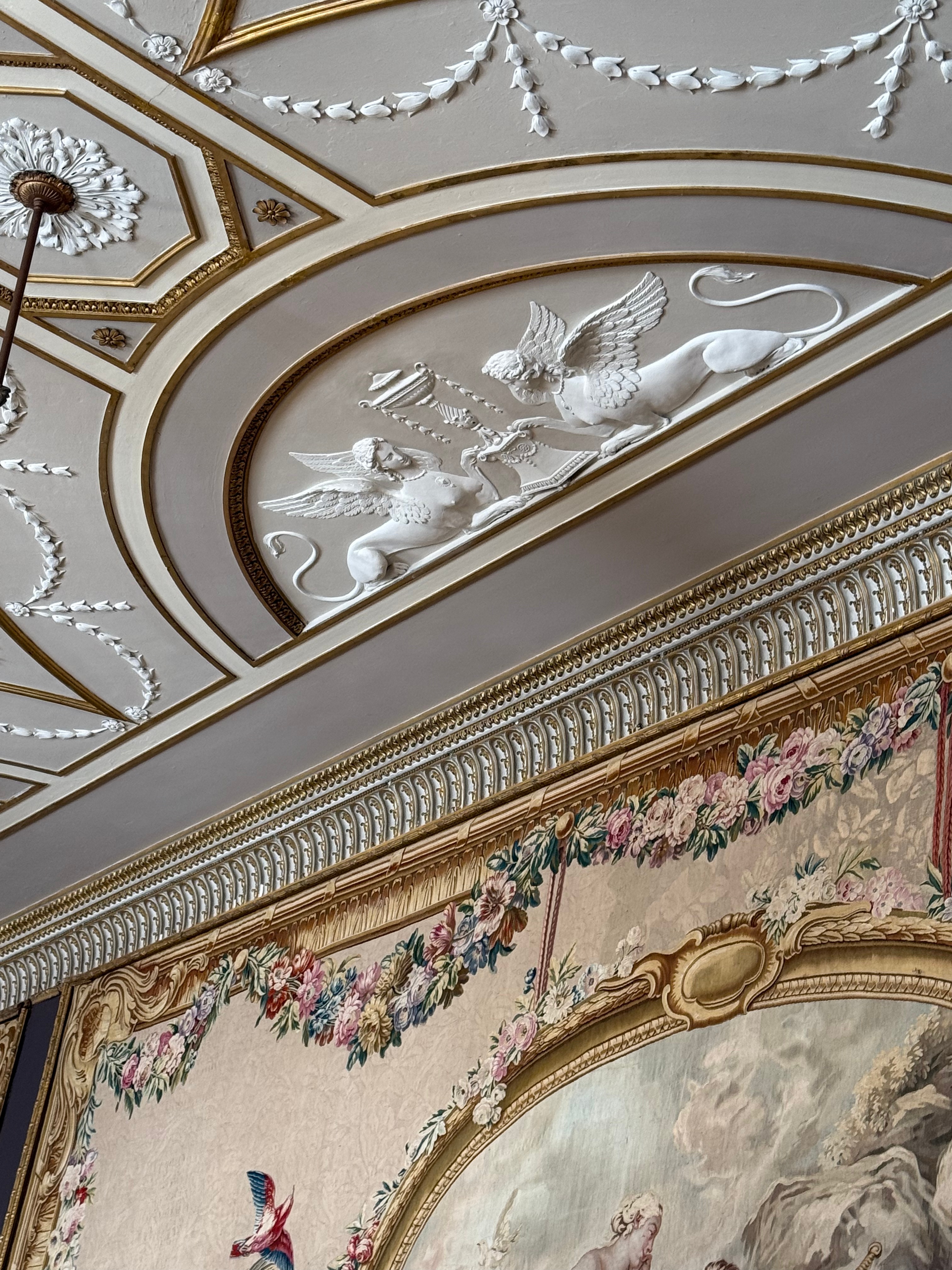
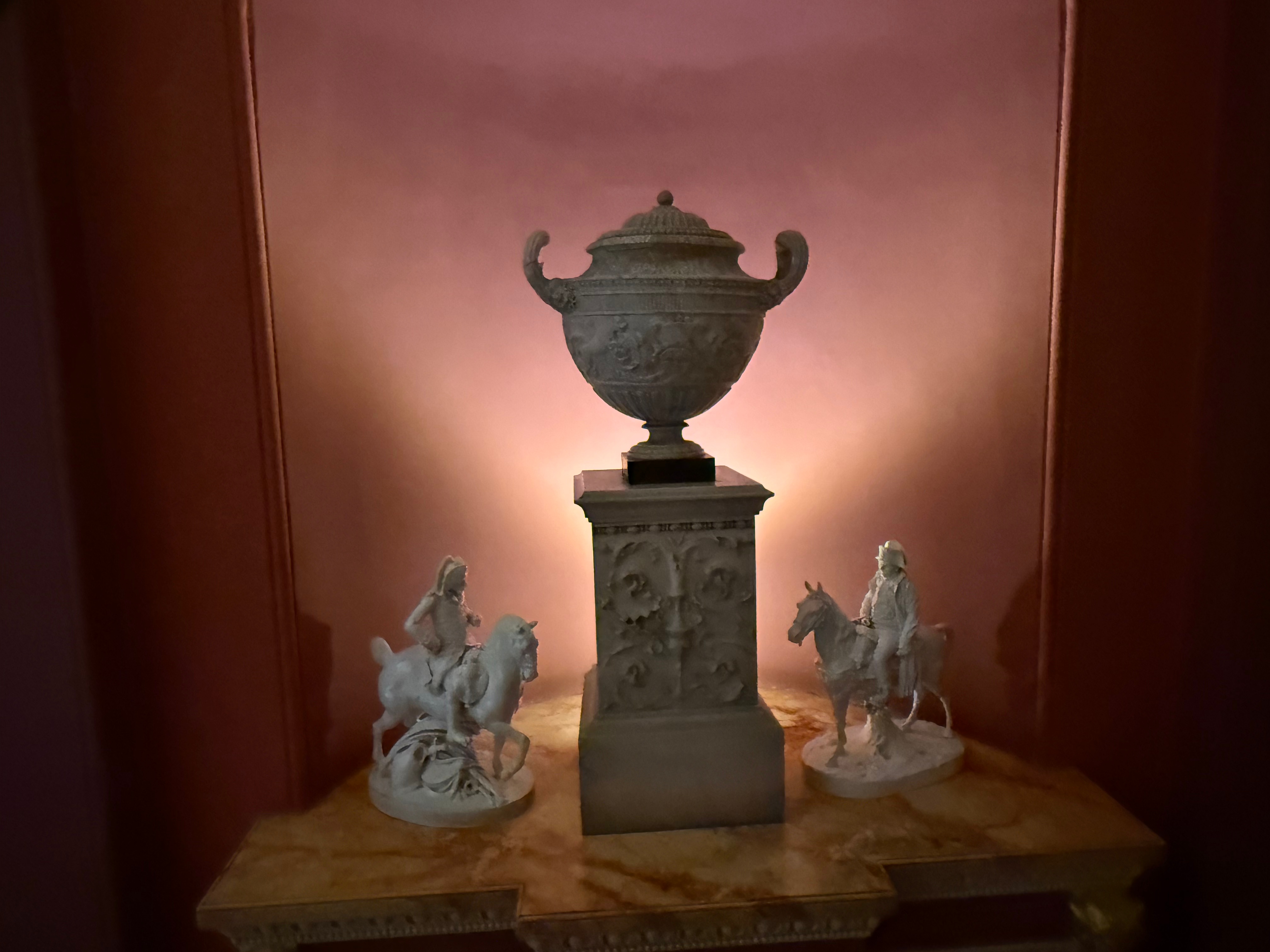
Day 3: Friday, 2nd May
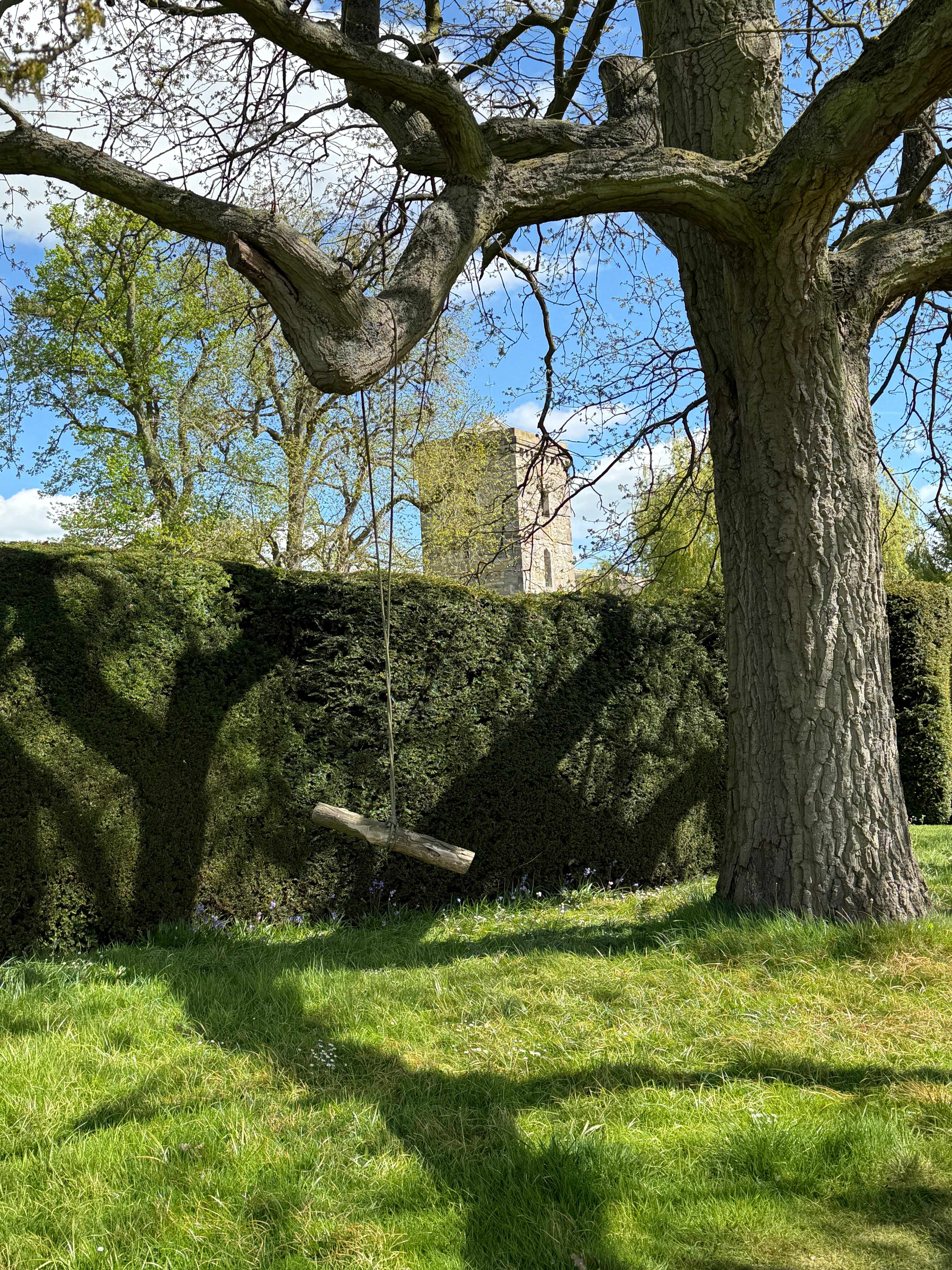
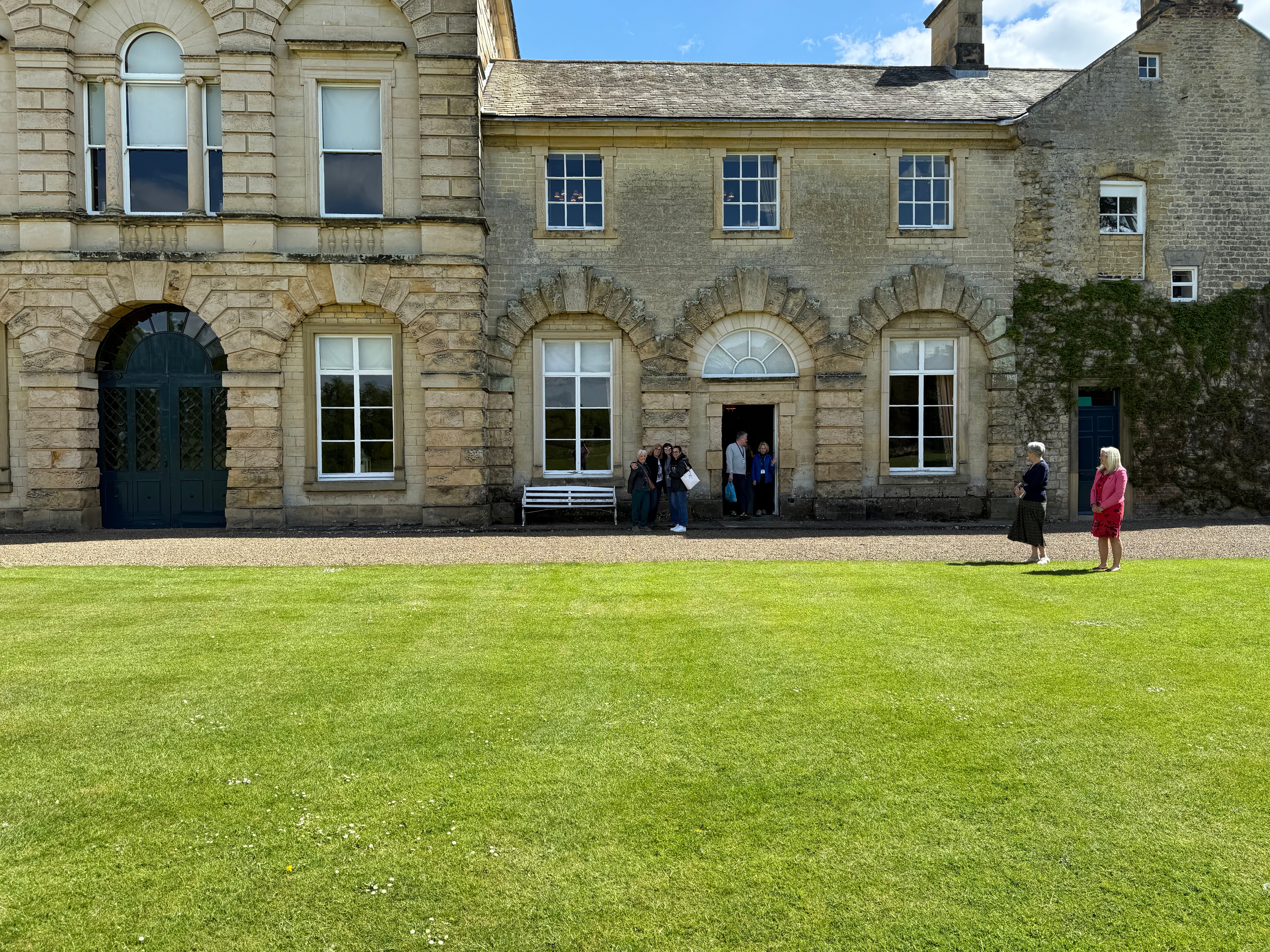
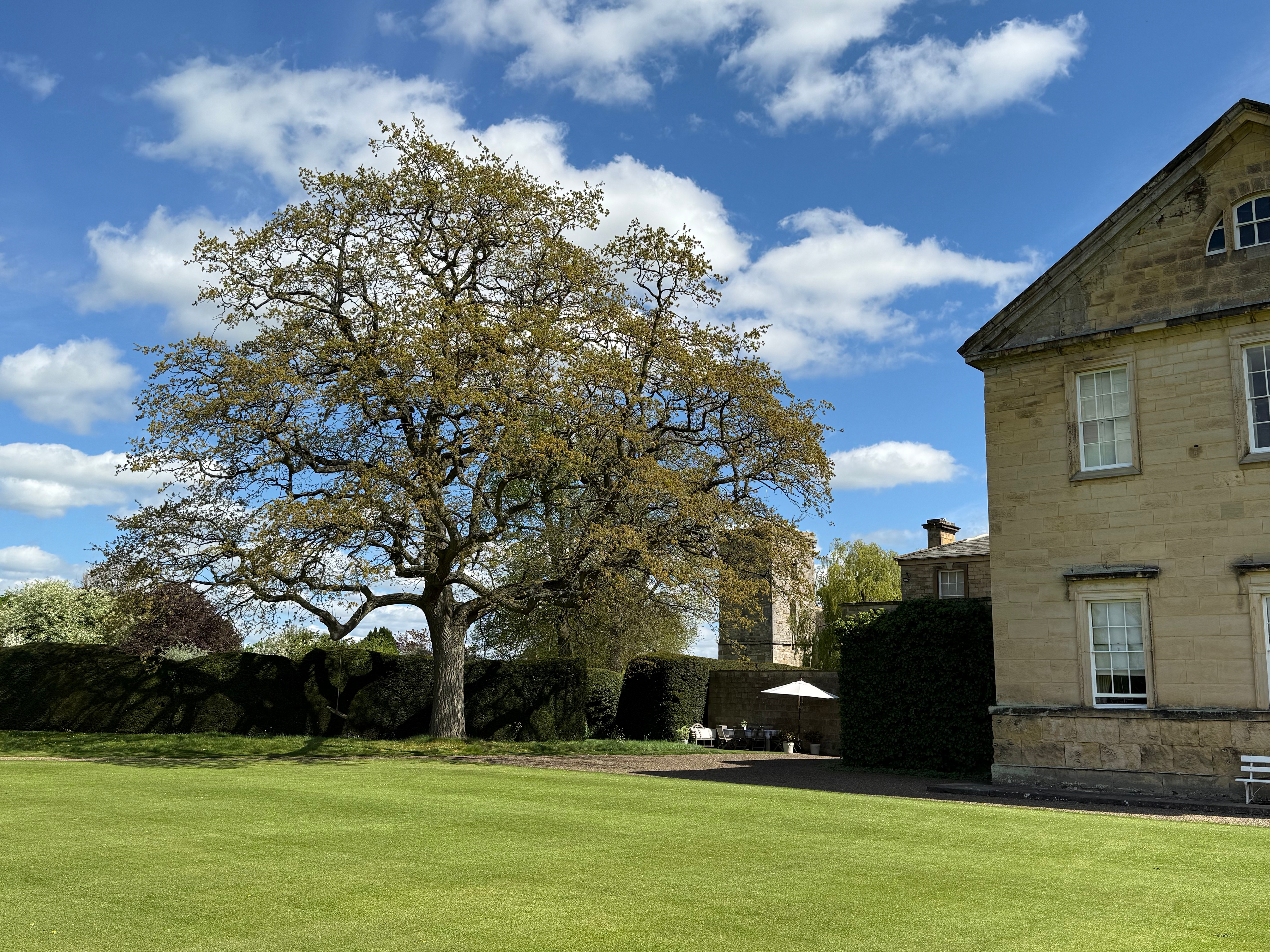
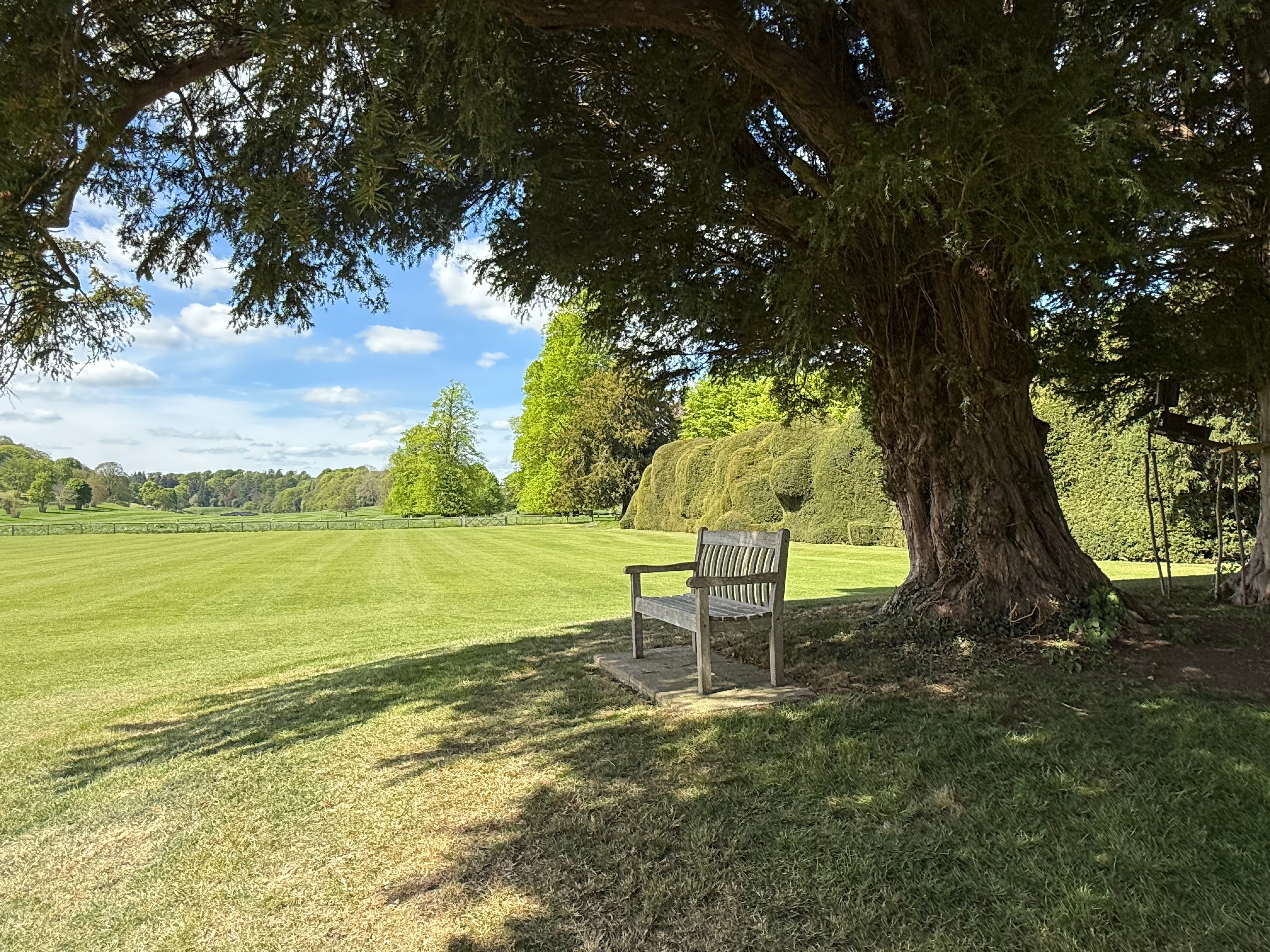
We were on the road by a few minutes past 9 this morning on our way to Hovingham Hall with talks by Sarah Gristwood “Moorland Magic” and Alison “Hovingham Hall and Katharine Worsley, Duchess of Kent”.
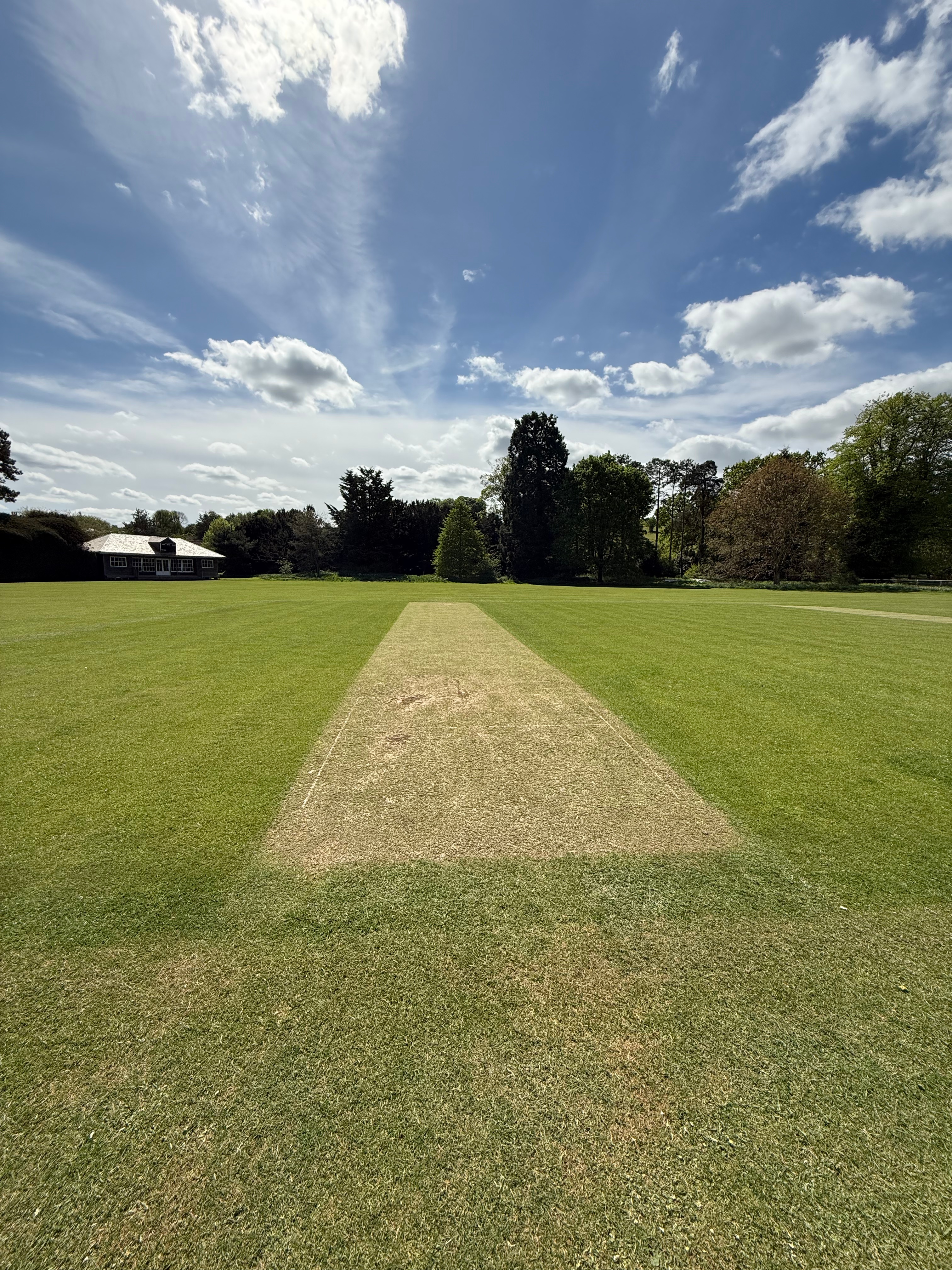
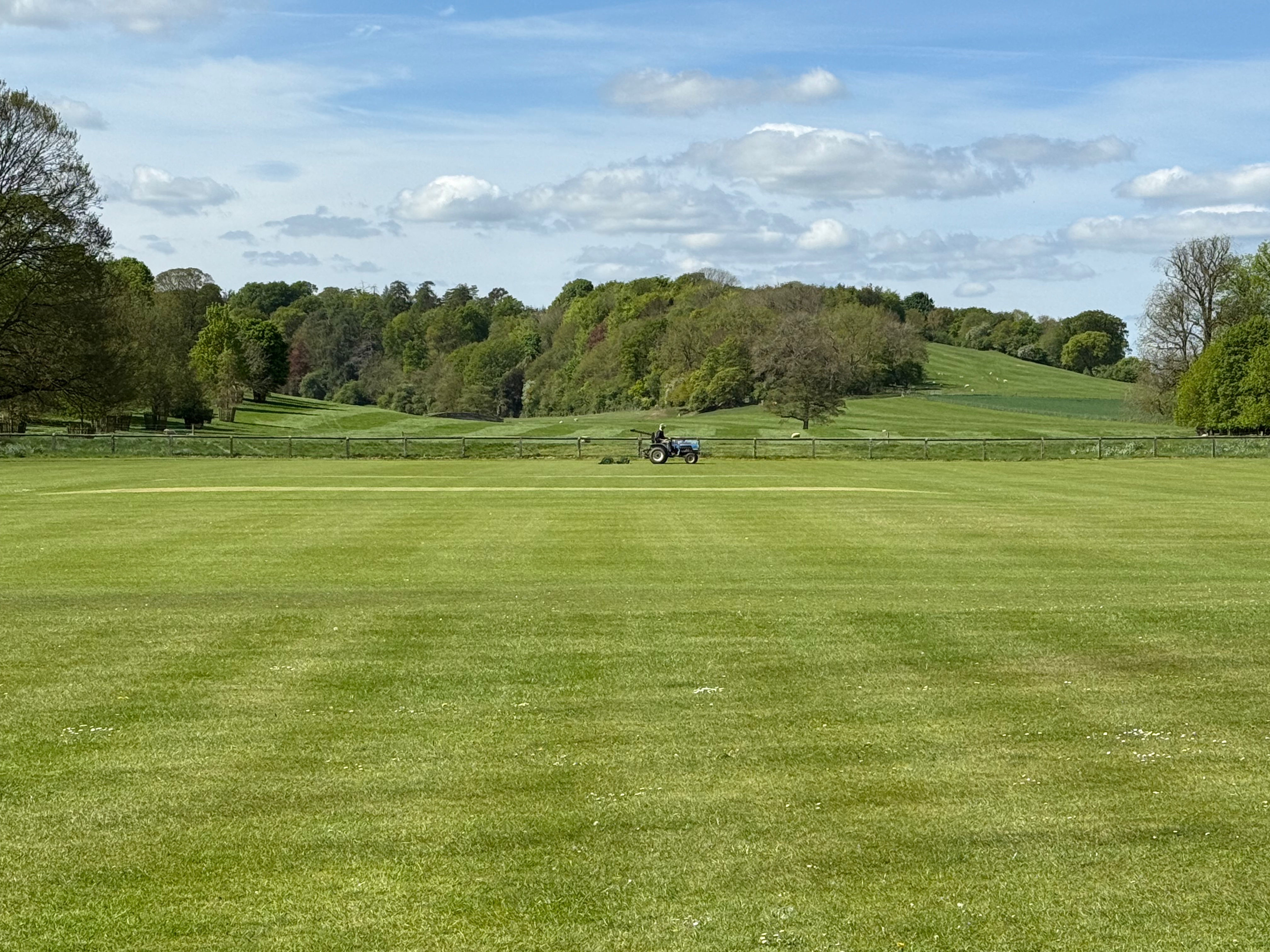
The Tour notes: This attractive family home, with its stunning architecture, was designed and built by Thomas Worsley between 1750 and 1770. The house was the childhood home of Katharine Worsley, Duchess of Kent, who was married from here in 1961 with a reception attended by many of the crowned heads of Europe. The house is unique in being entered through an enormous Riding School which is approached through a large stone arch from the village street. There are wonderful vaulted ceilings on the ground floor and the principal rooms have different architectural styles and are gracefully decorated and furnished. The house has an important collection of pictures and furniture. Cricket has been played in front of the house since the 1830s and the ground has been played on by many of the Yorkshire greats. Music festivals have taken place since 1887.
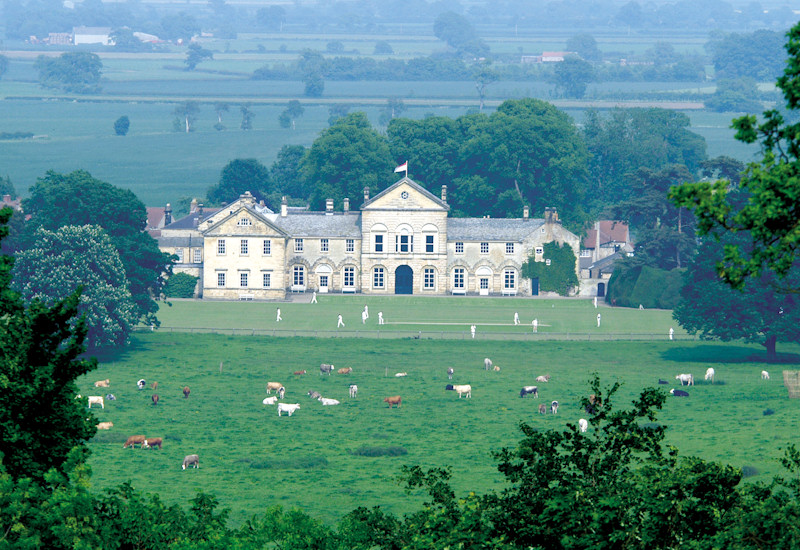
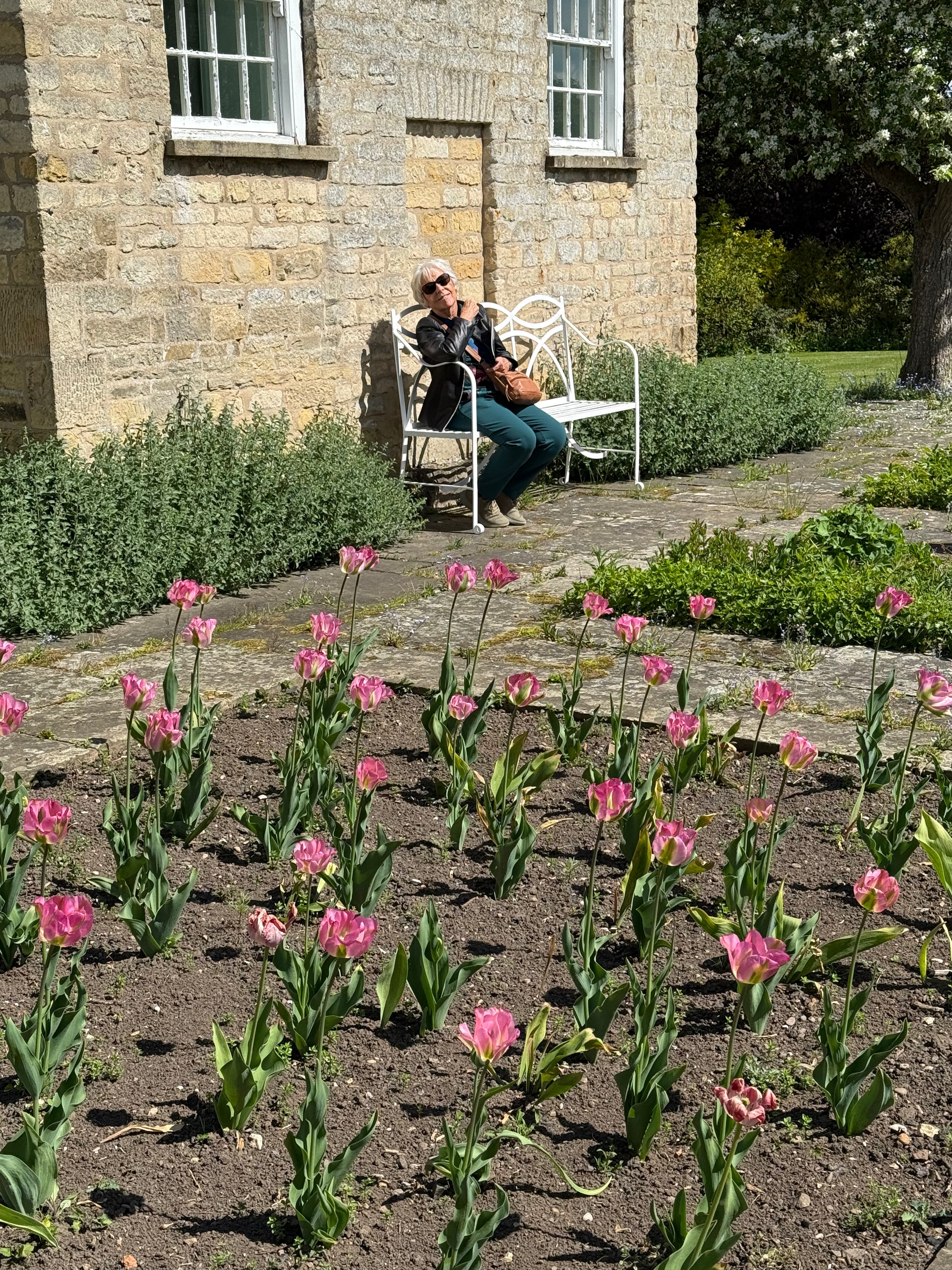
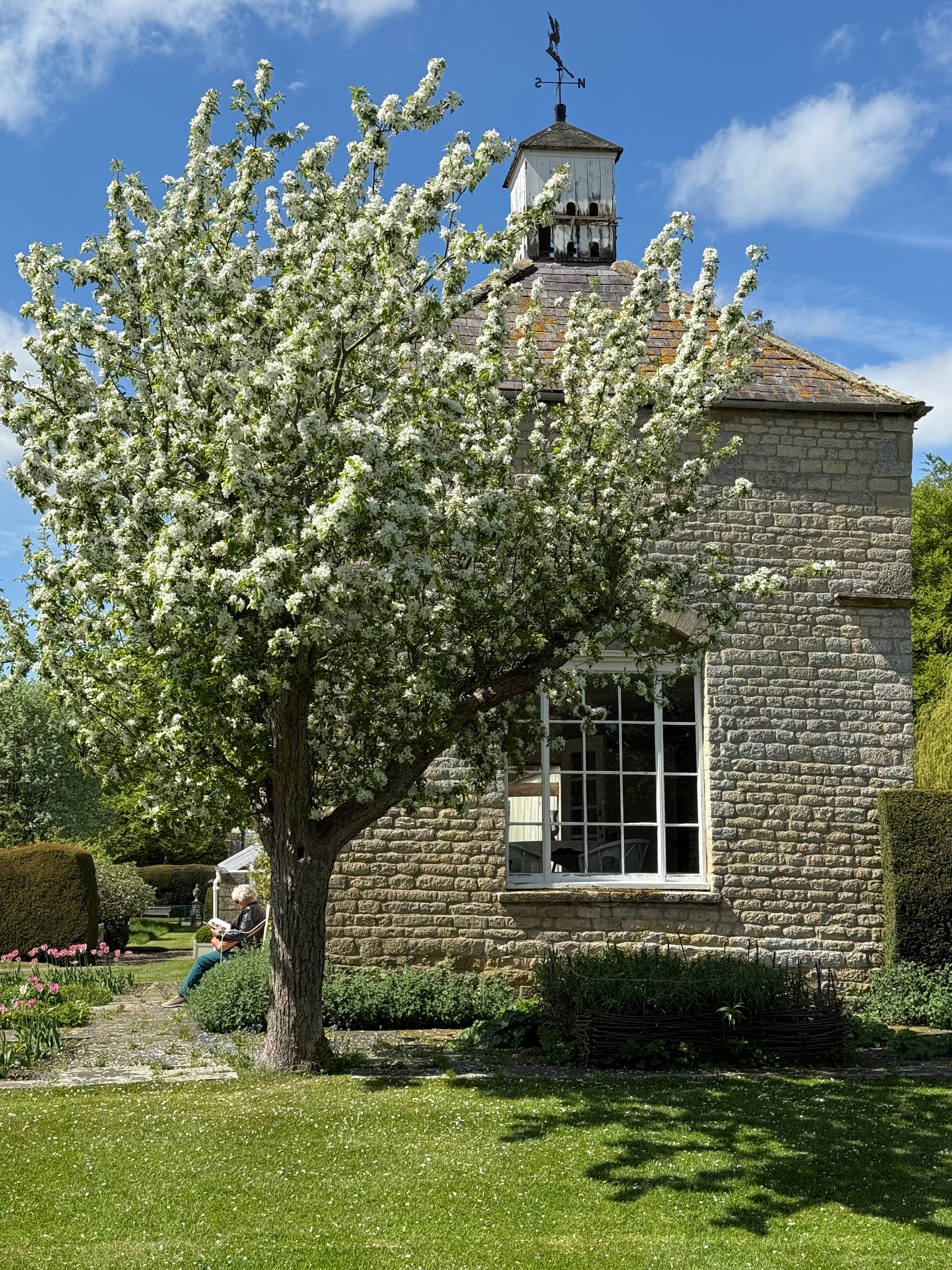
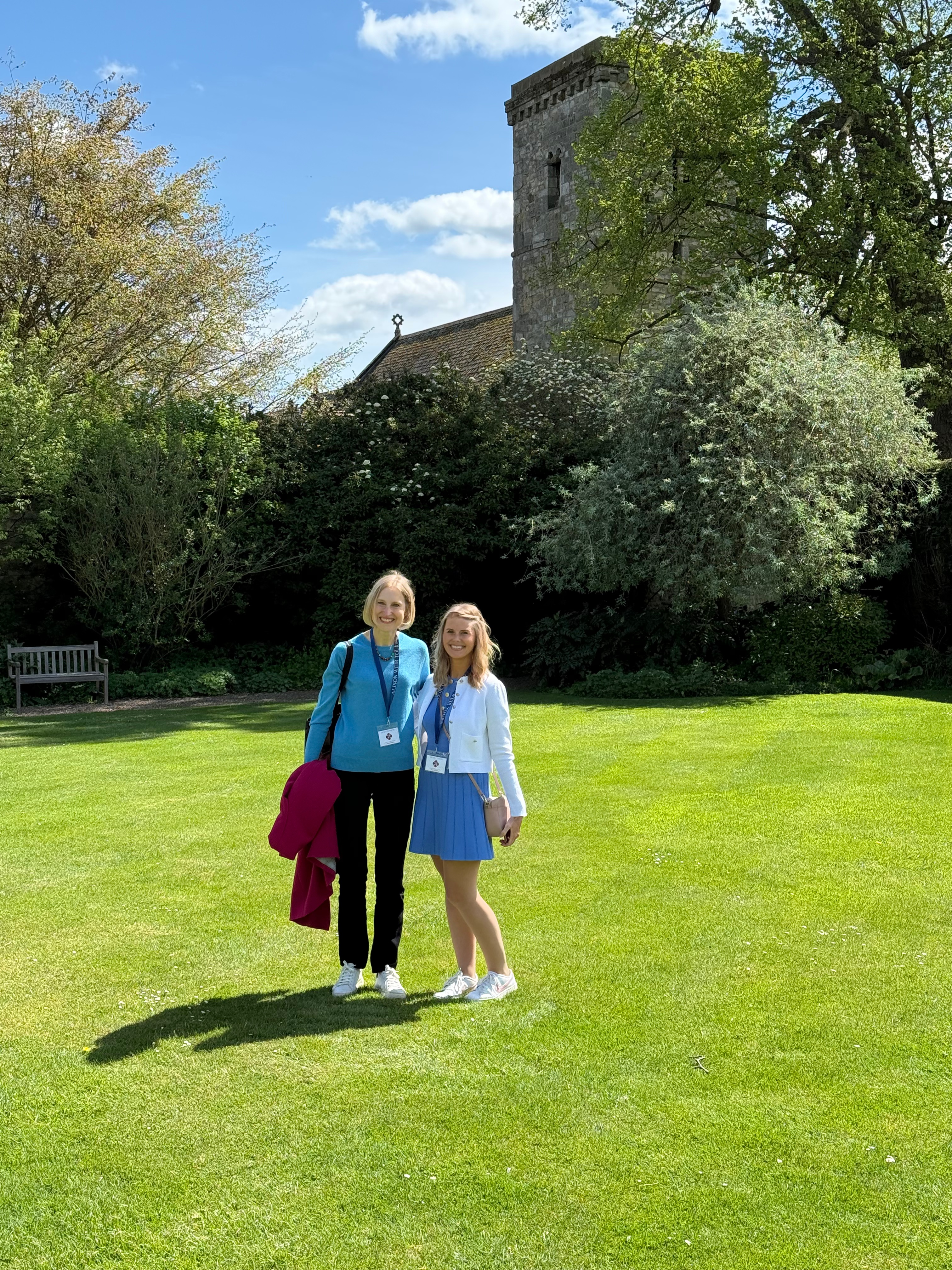
This is a beautiful House and Estate, just 17 miles from York. A riding school forms the main entrance to the house and was used for exercising horses under cover. The sixth Thomas Worsley (1710-1778) was passionate about horses and architecture and the family has been living at Hovingham hall for more than 200 years. The house is reflective of a continued architectural passion. From this unassuming and private family the only daughter of Sir William Worsley, Katherine, married His Royal Highness, The Duke of Kent in 1961 and has been very visible at Wimbledon tennis events. The house has a well-maintained cricket pitch in front of it which is in regular use. The grounds are clean and simple, the Estate used for many agricultural businesses. The current owners/residents, William and Marie-Noelle Worsley went out of their way to greet and chat with our tour group.
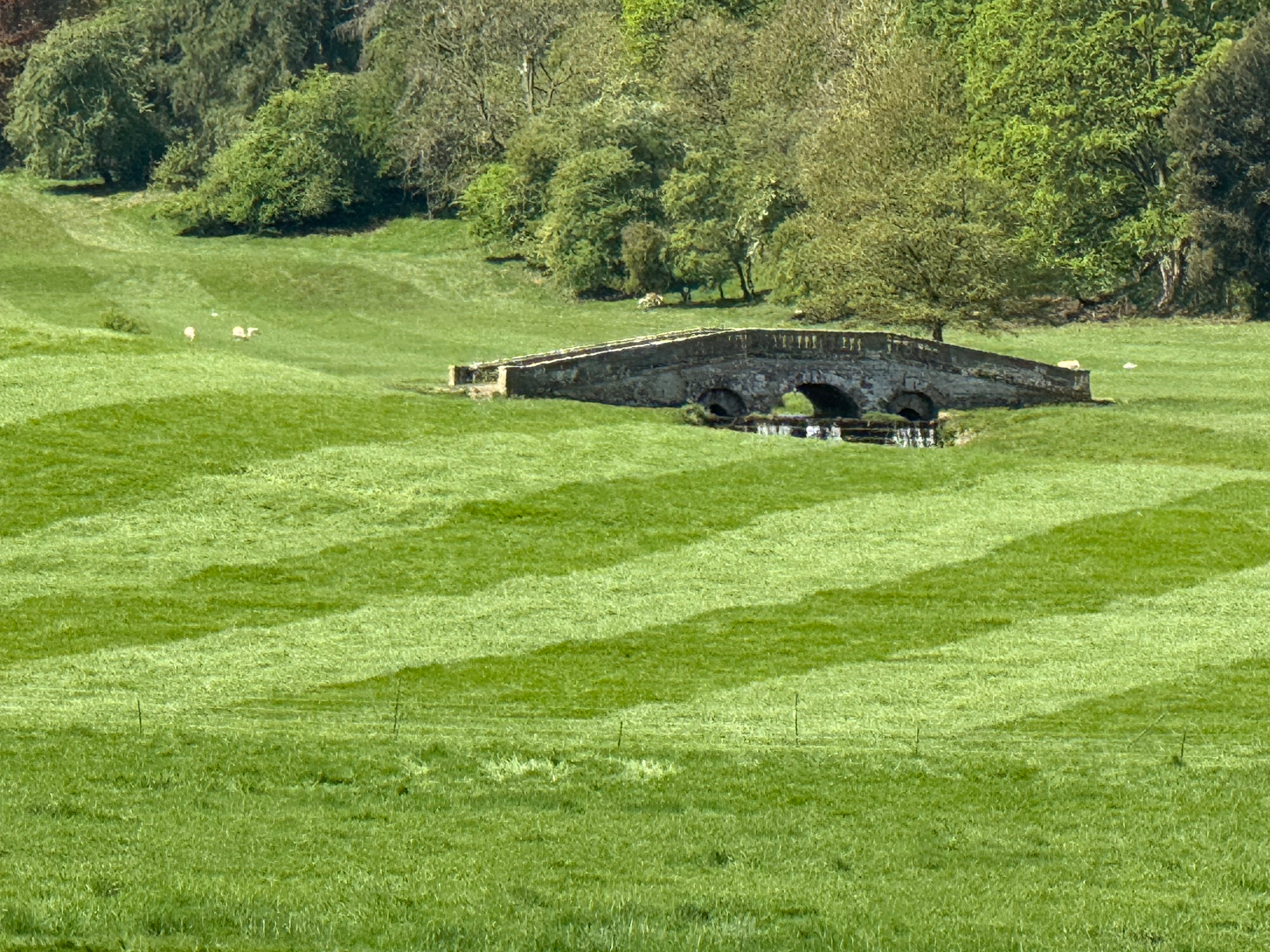
On the drive back to York for a free afternoon before dinner at Bedern Hall, we enjoyed the following talks: Nicola on “Margaret Clitherow”; Tracy Borman on “Two Royal Weddings at York Minster”; Nicola again with her favourite topic, jewellery on “The Middleham Jewel” and Alison on “Bedern Hall”.
We walked from the hotel this evening to Bedern Hall for a group dinner.
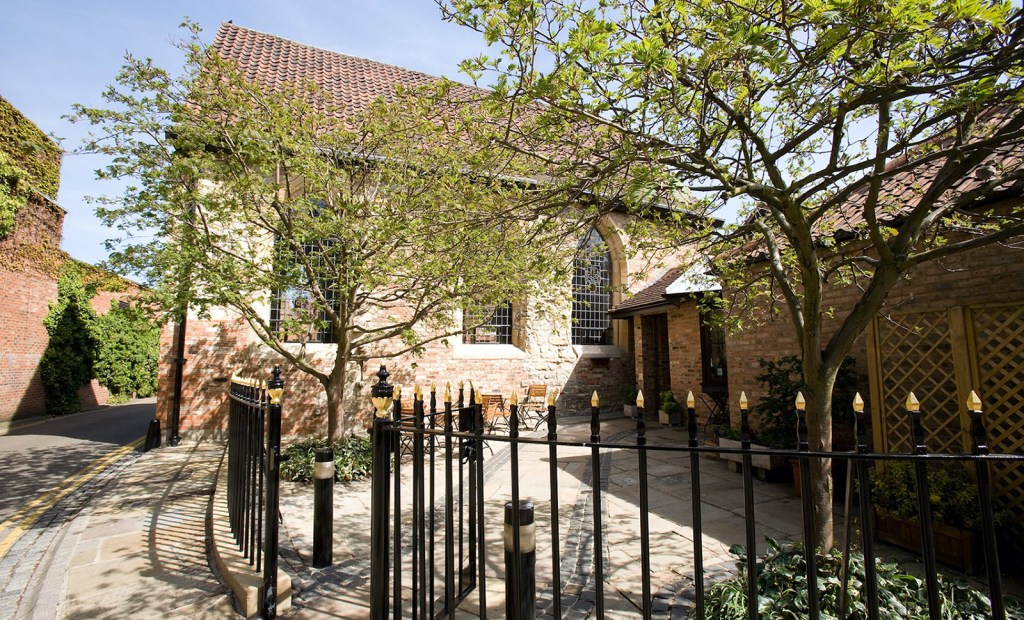
From the Bedern Hall website: “The history of Bedern Hall is closely tied to that of York Minster. It was originally part of the College of the Vicars Choral which occupied the area between Goodramgate, St Andrewgate and Aldwark. The hall was the refectory (or dining hall) for the college from the 1390s until the middle of the 17th century when it passed into private hands. The hall, chapel and gatehouse are all that remain of the college. With the Reformation, the numbers of vicars declined and many of the individual houses in the area were let to lay people. With permission to marry now granted, many vicars married and moved away, meaning that a decision was made to stop common dining altogether. Although the Hall was used for meetings and feasts for about another half century the upkeep of the Hall was difficult and in 1650 part of the Hall was incorporated into a private house.
After restoration, the Hall now has a floor of York stone, but it was originally covered with green glazed tiles, two of which were found during excavations. Medieval timber-framing is still visible in one wall. The Company of Cordwainers, the Gild of Freemen and the York Guild of Building formed the Bedern Hall Company. The company raised the funds to add further facilities to complement the Hall, and a modern annexe was added to ensure that the building was equipped for the needs of future generations. Among the most striking of the modern additions are the stained-glass panels in the windows, commemorating Guild members. Since restoration, the Hall has been used by a variety of organisations as a venue for dinners, meetings and conferences. In 2005, it was licensed for civil wedding celebrations.”
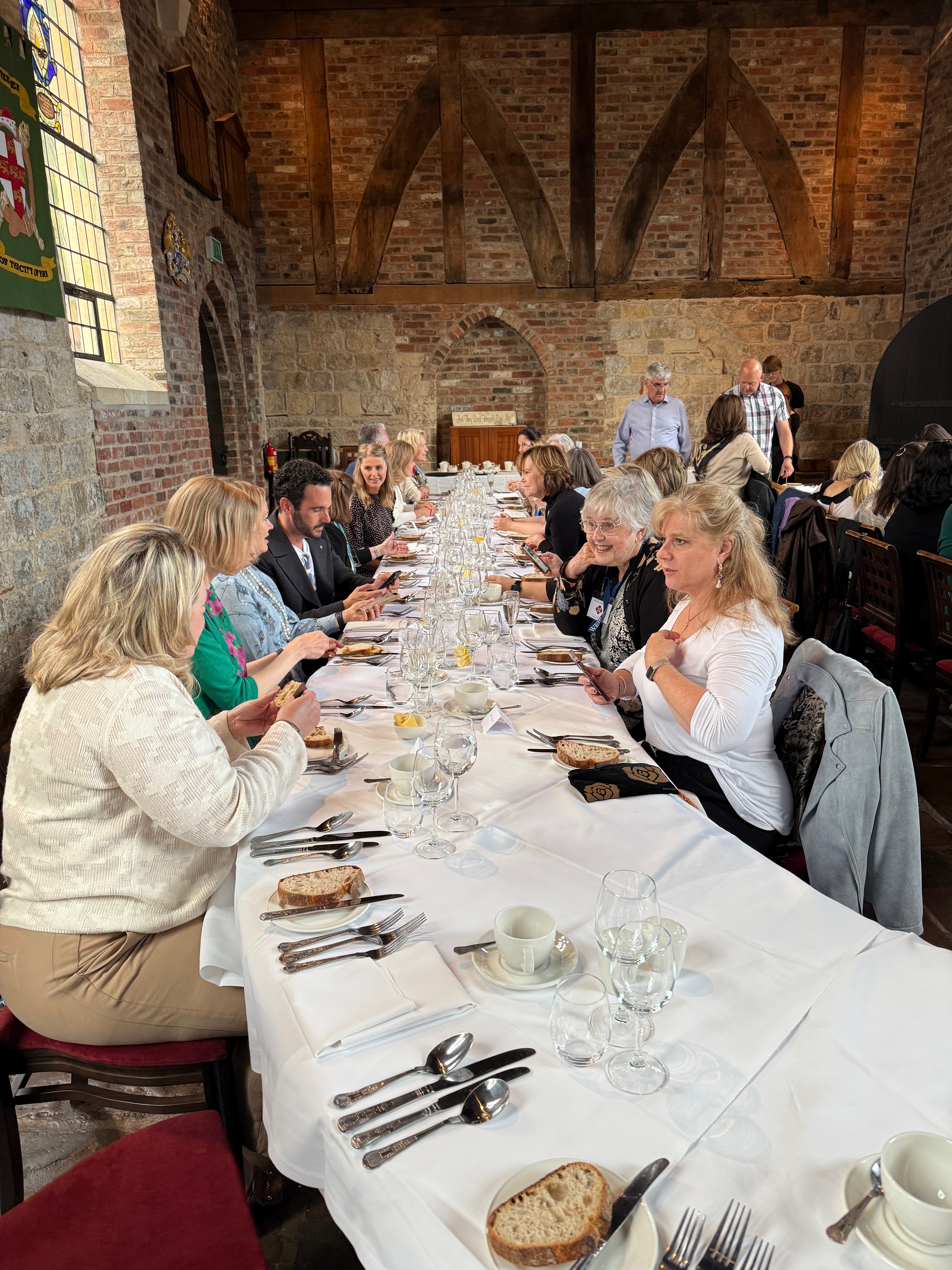
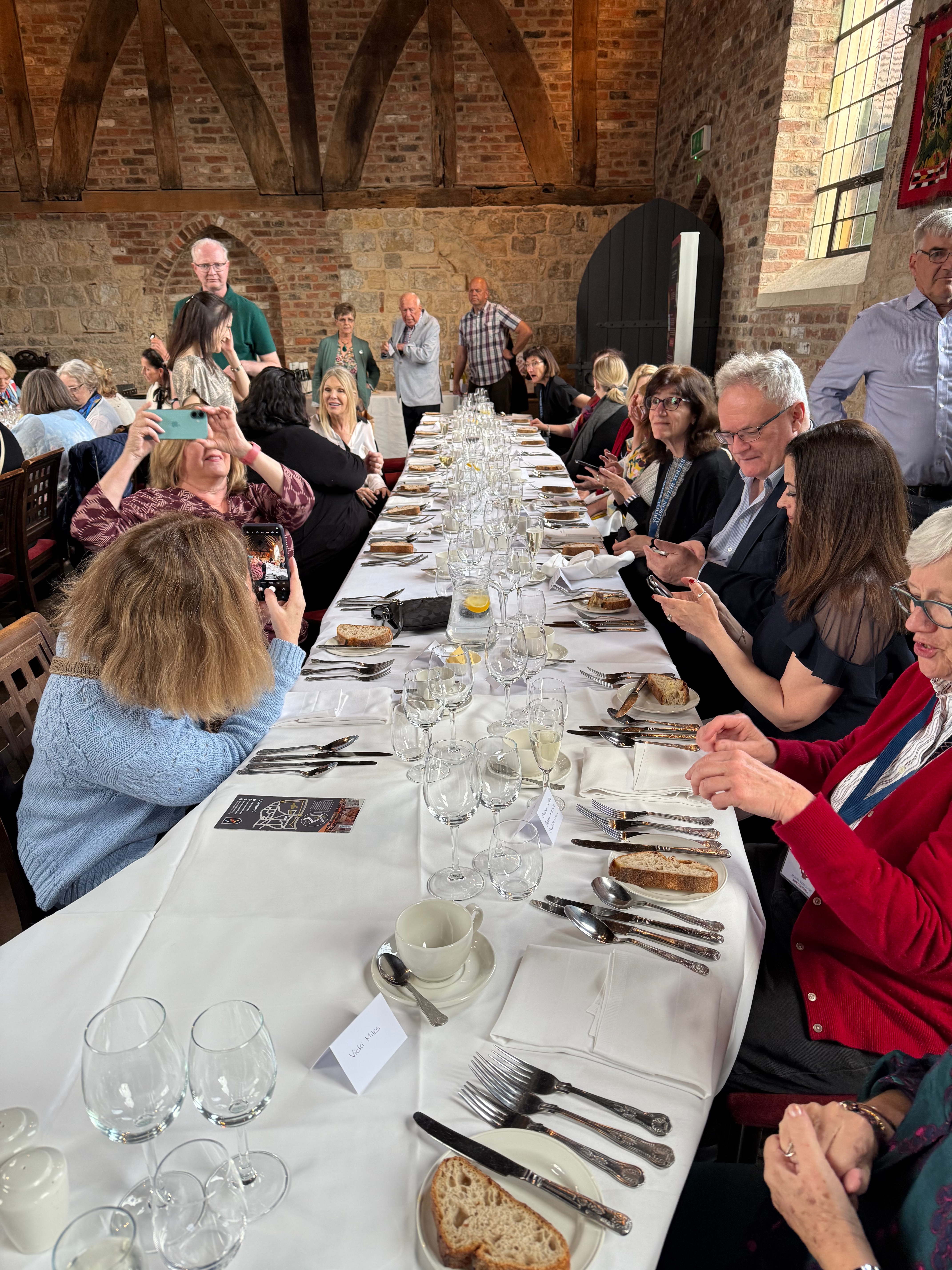
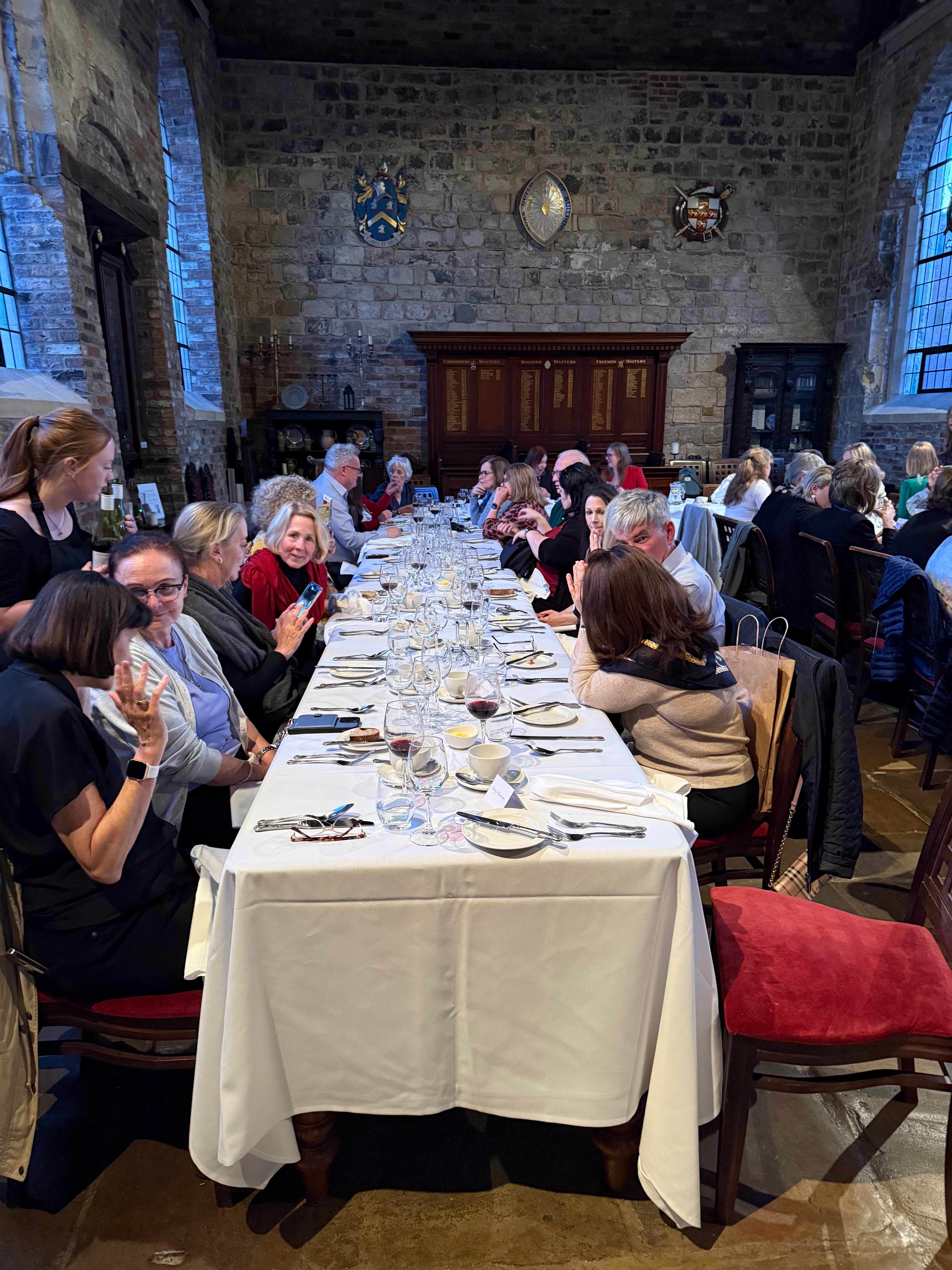
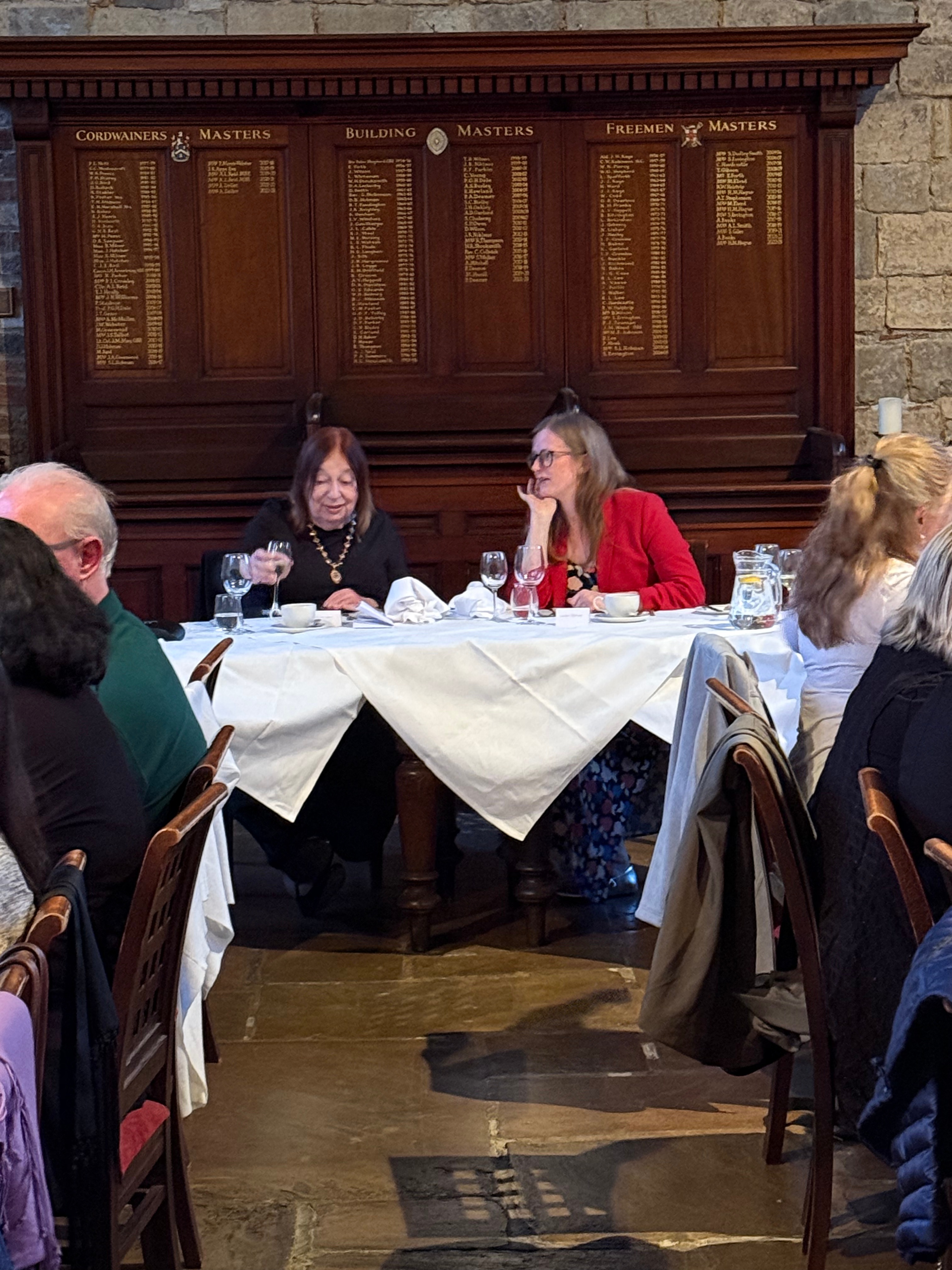
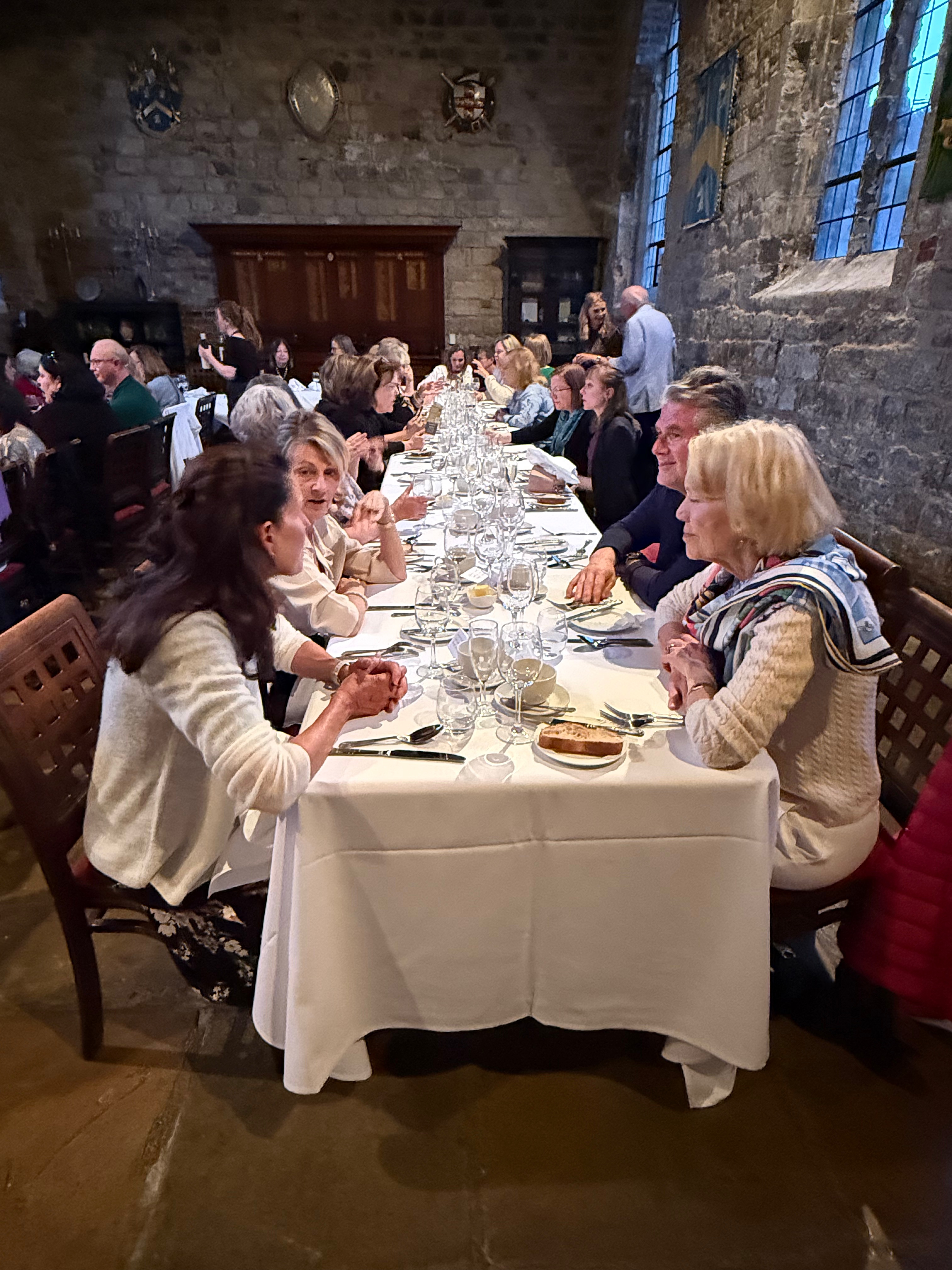
Bedern Hall was a very good place for a group like ours to settle in for drinks and dinner. We were the last to leave, Alison wanted to know if we needed help getting back to the hotel! With Lynn’s assistance we managed admirably, even having a nightcap at the hotel before bed.
Day 4: Saturday, 3rd May
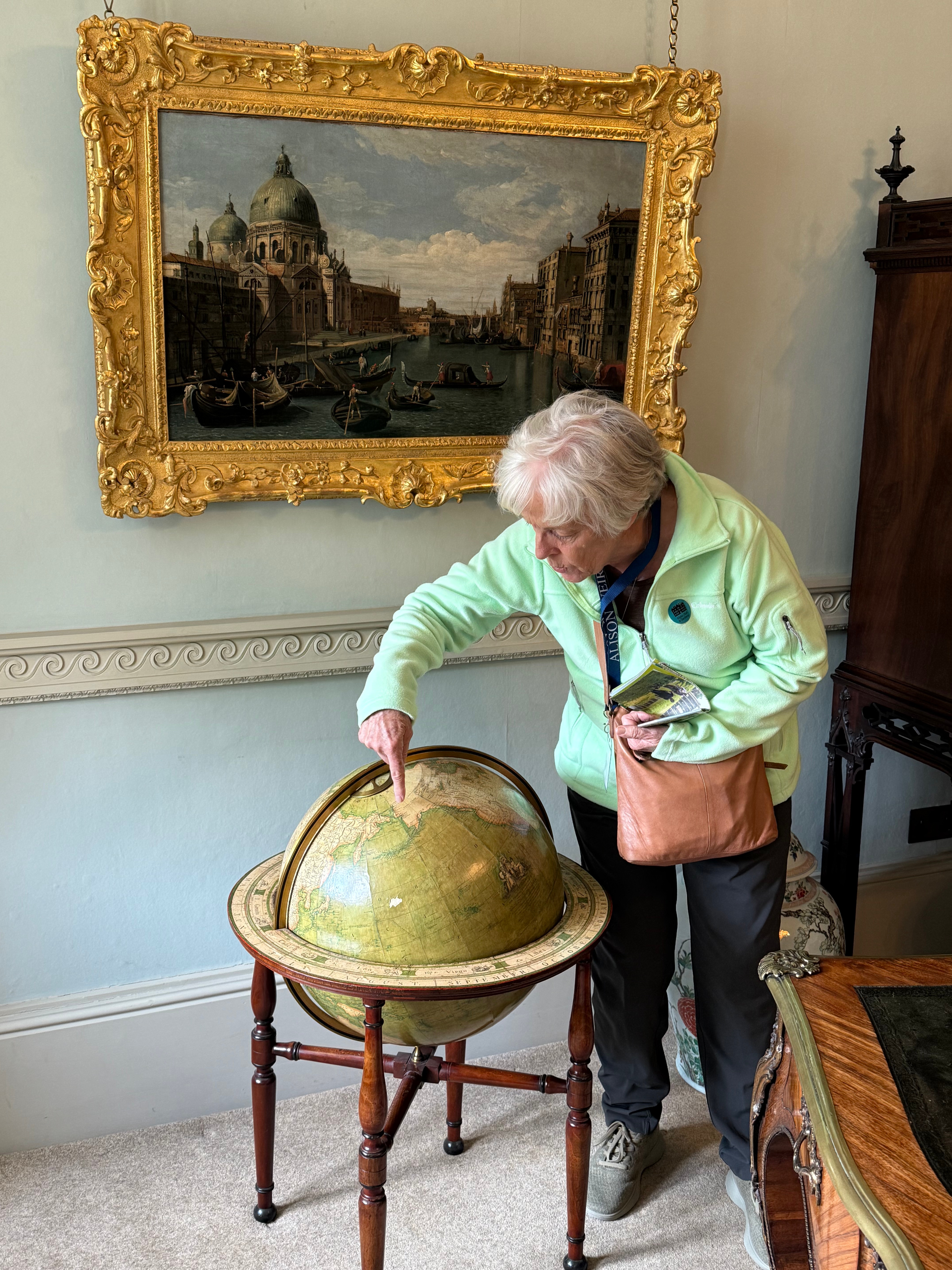
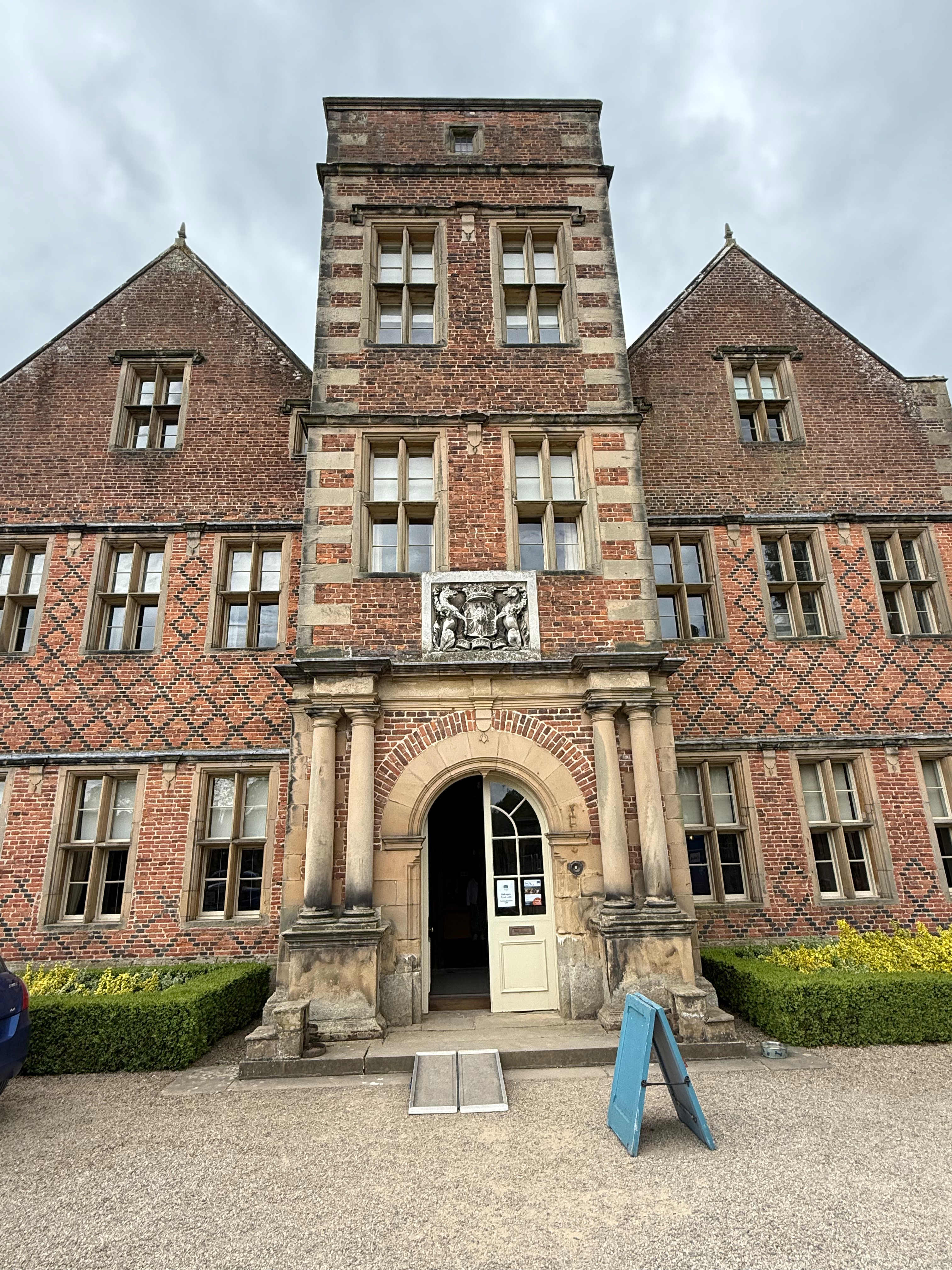
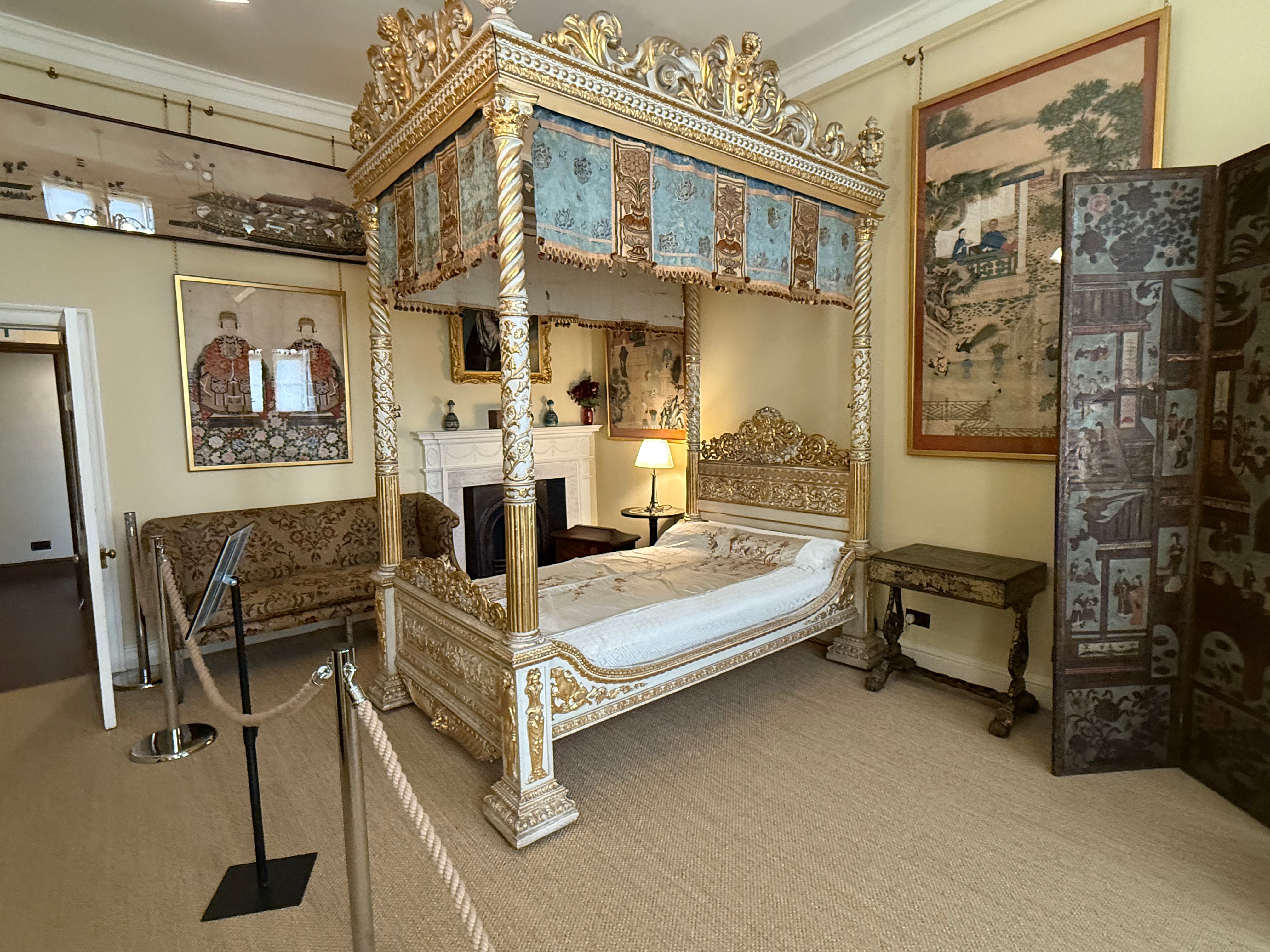
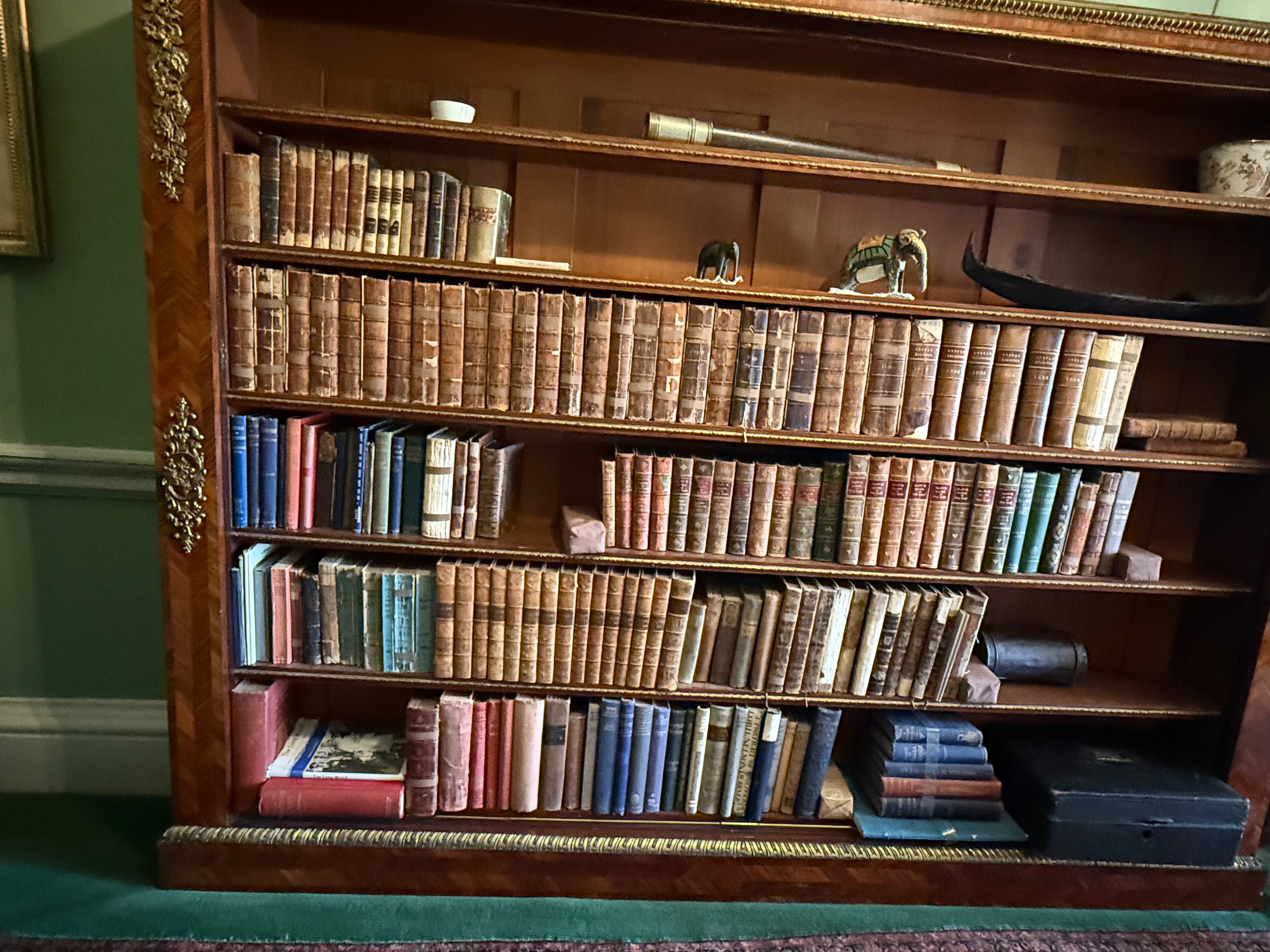
A day of contrast today; first stop was at a rather quaint property, Kiplin Hall, not overly lavish like many “Great Halls”, but still with a fascinating history of four families; the Calverts, the Crowes, the Carpenters and the Talbots.
The talks on the way to this North Yorkshire property were quite varied. Tracy opened with “The Rise and Fall of Thomas Cromwell”; Sarah tackled “St Cuthbert and the Early Saints”; and Alison gave us “Kiplin Hall”.
From the Kiplin Hall website: Built by George Calvert, Secretary of State to James 1 and Founder of Maryland USA, in the early 1620s as a hunting lodge, Kiplin Hall is a unique Jacobean house filled with the furniture, portraits, paintings, and the personal belongings of the four families who have owned the Hall the past 400 years. The Hall has undergone many changes over the four centuries and now plays host to no end of fascinating stories revealing a rich history with an international flavour. Visit Kiplin Hall and wander from room to room, enjoying the treasures on display, and the fascinating stories that await you in a home that feels as though one is following its Victorian owners, and WWII tenants, through the rooms. Take in the far-reaching views across the lake to the folly; savour the sights and scents in the formal gardens, stroll the pathways through the parkland, or simply take a seat, and soak up the views.
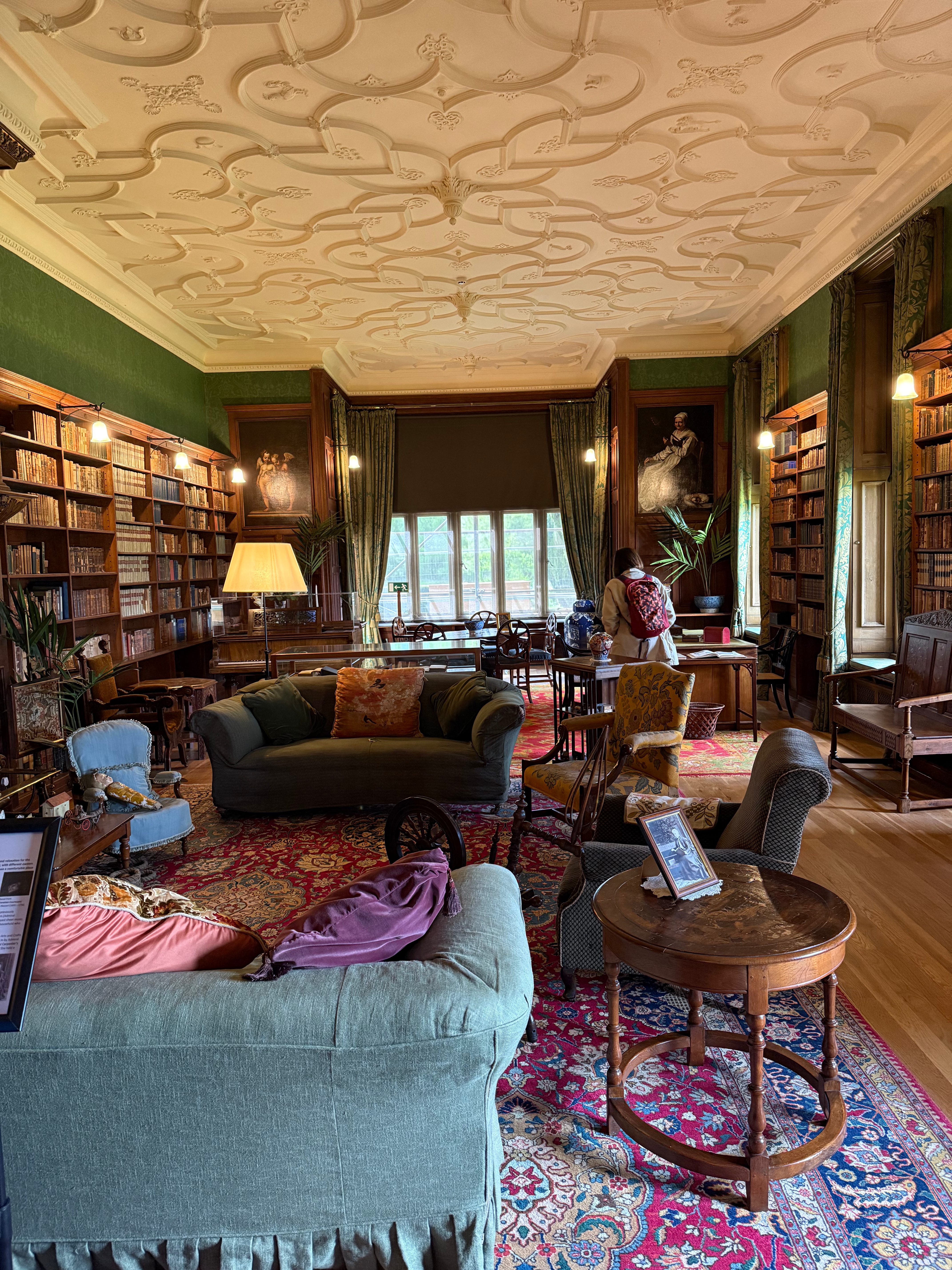
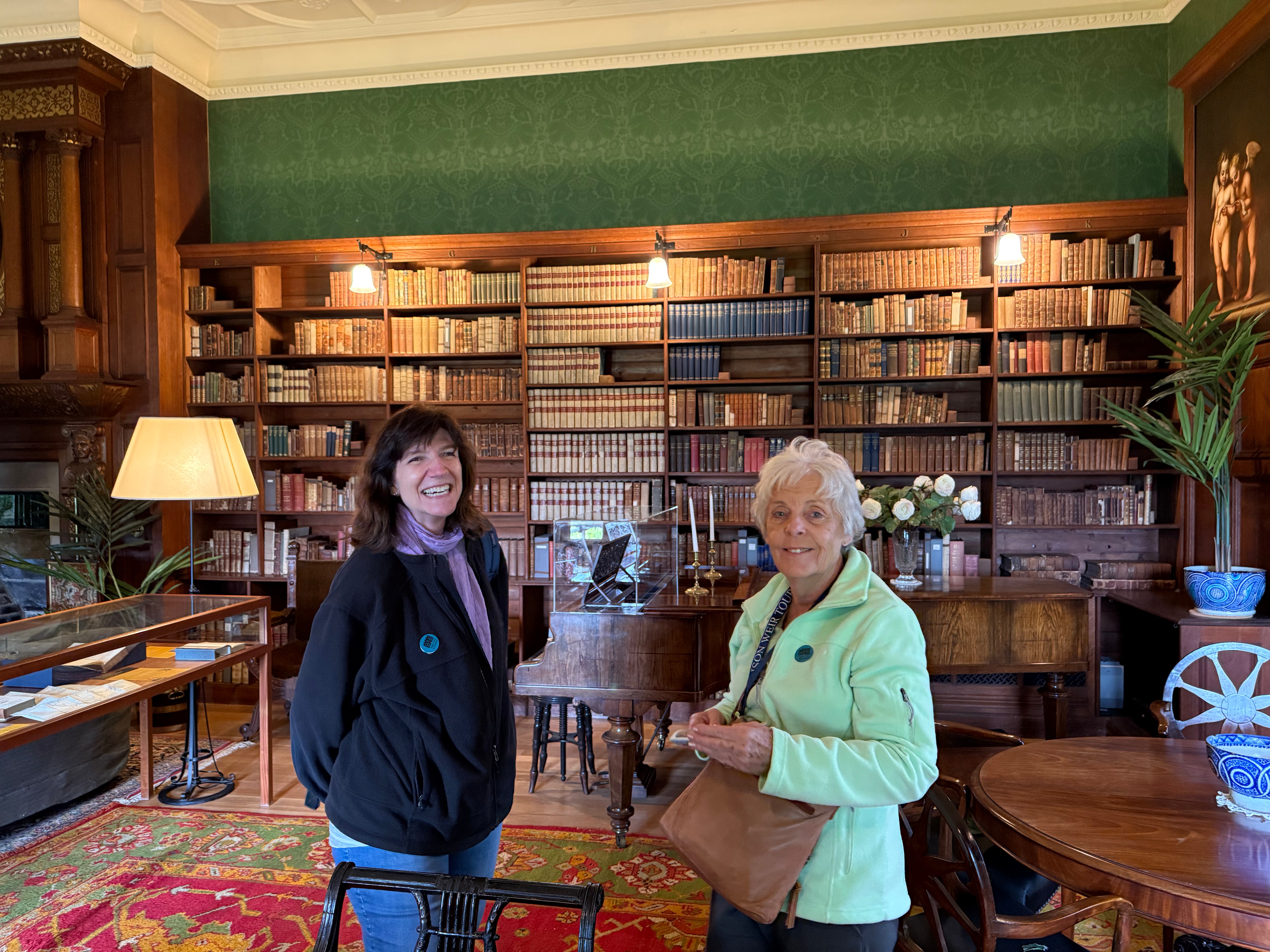
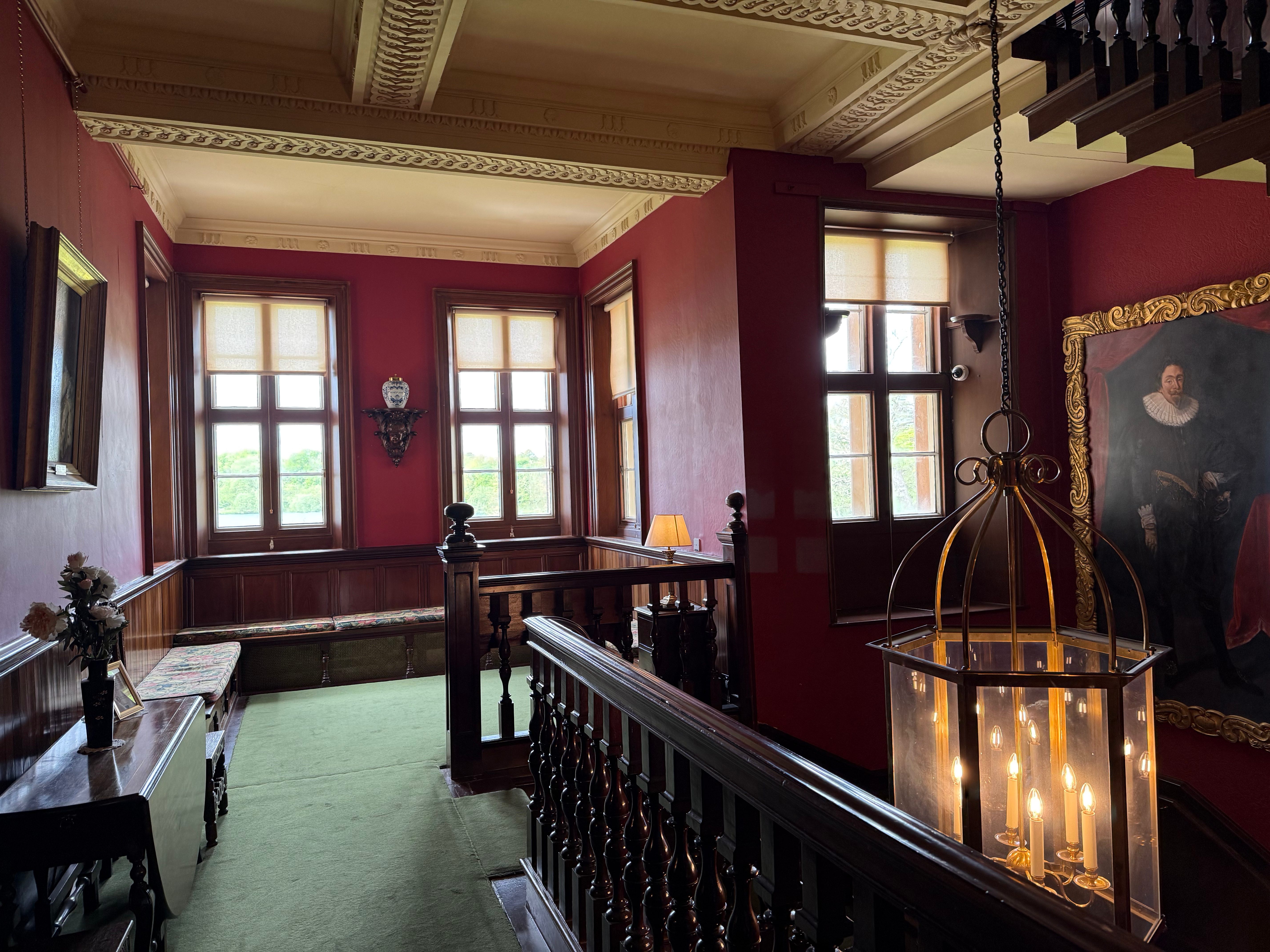

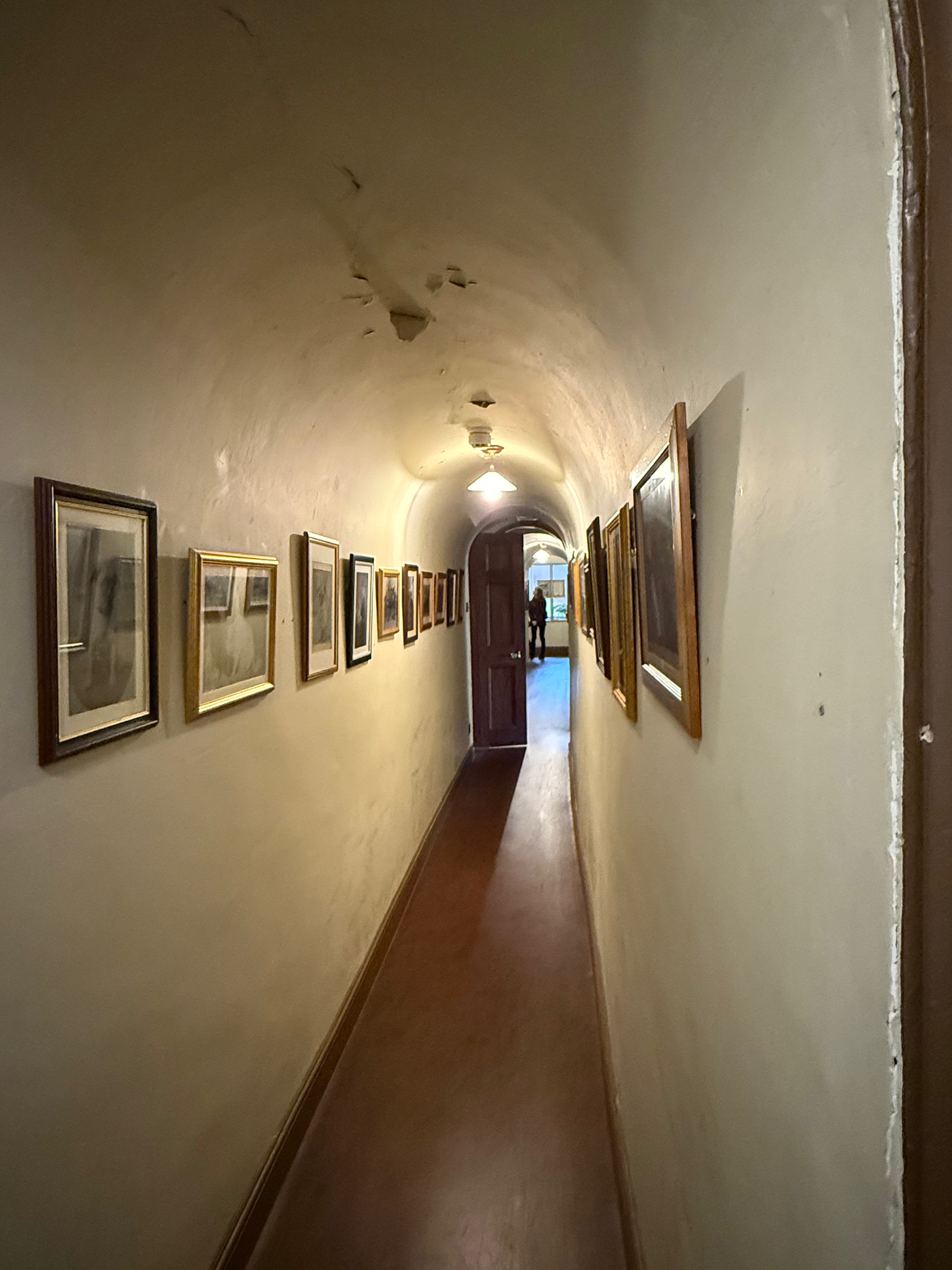
After leaving Kiplin Hall we enjoyed a double act with Sarah and Mike for our talk (“Introduction to Raby Castle; Cecily Neville – Rose of Raby and Matriarch of the House of York”) on the way to one of my favourites – Raby Castle. The historians as a group were not overly impressed with the version of history presented in the recent book “Cecily”.
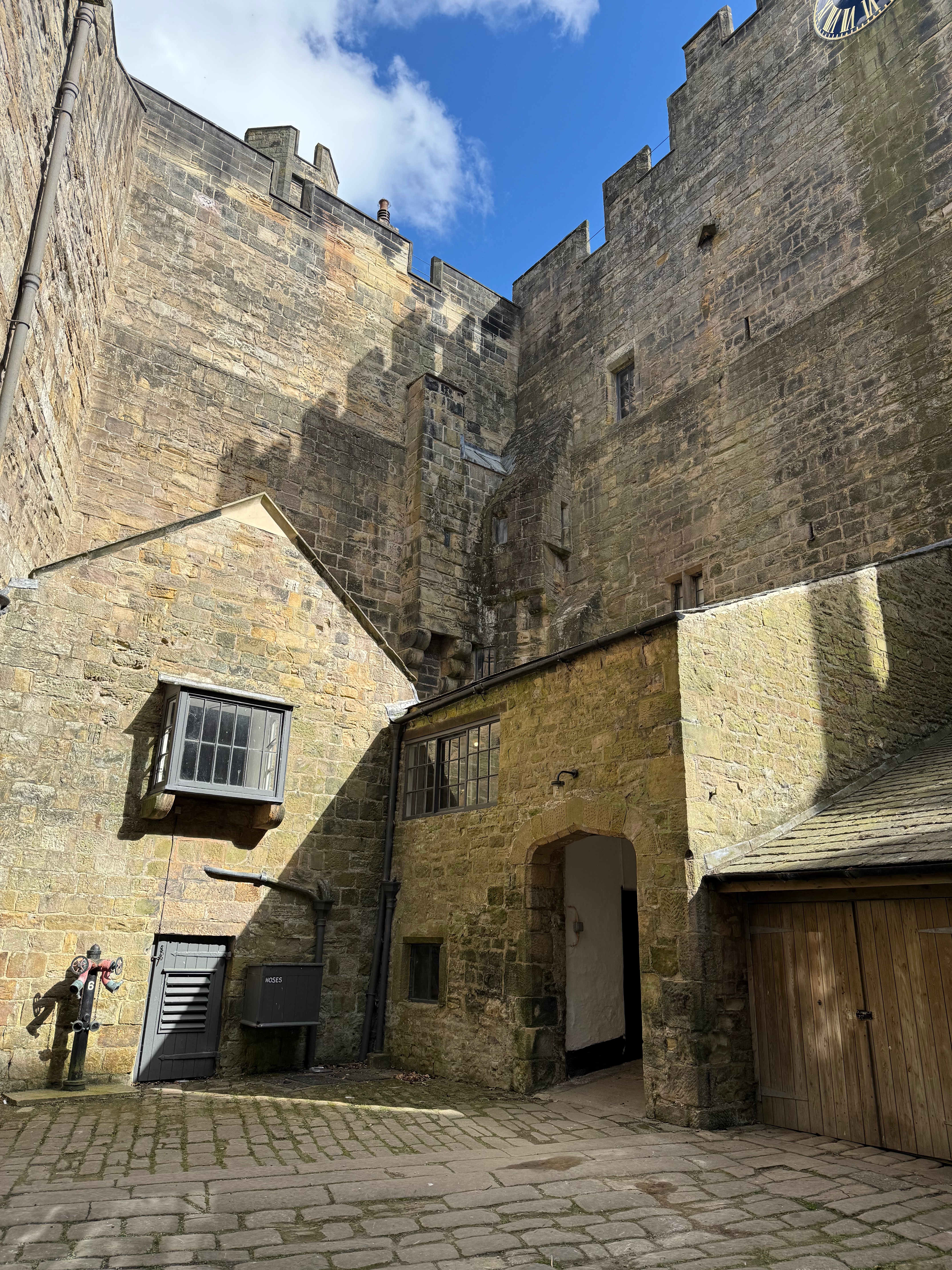
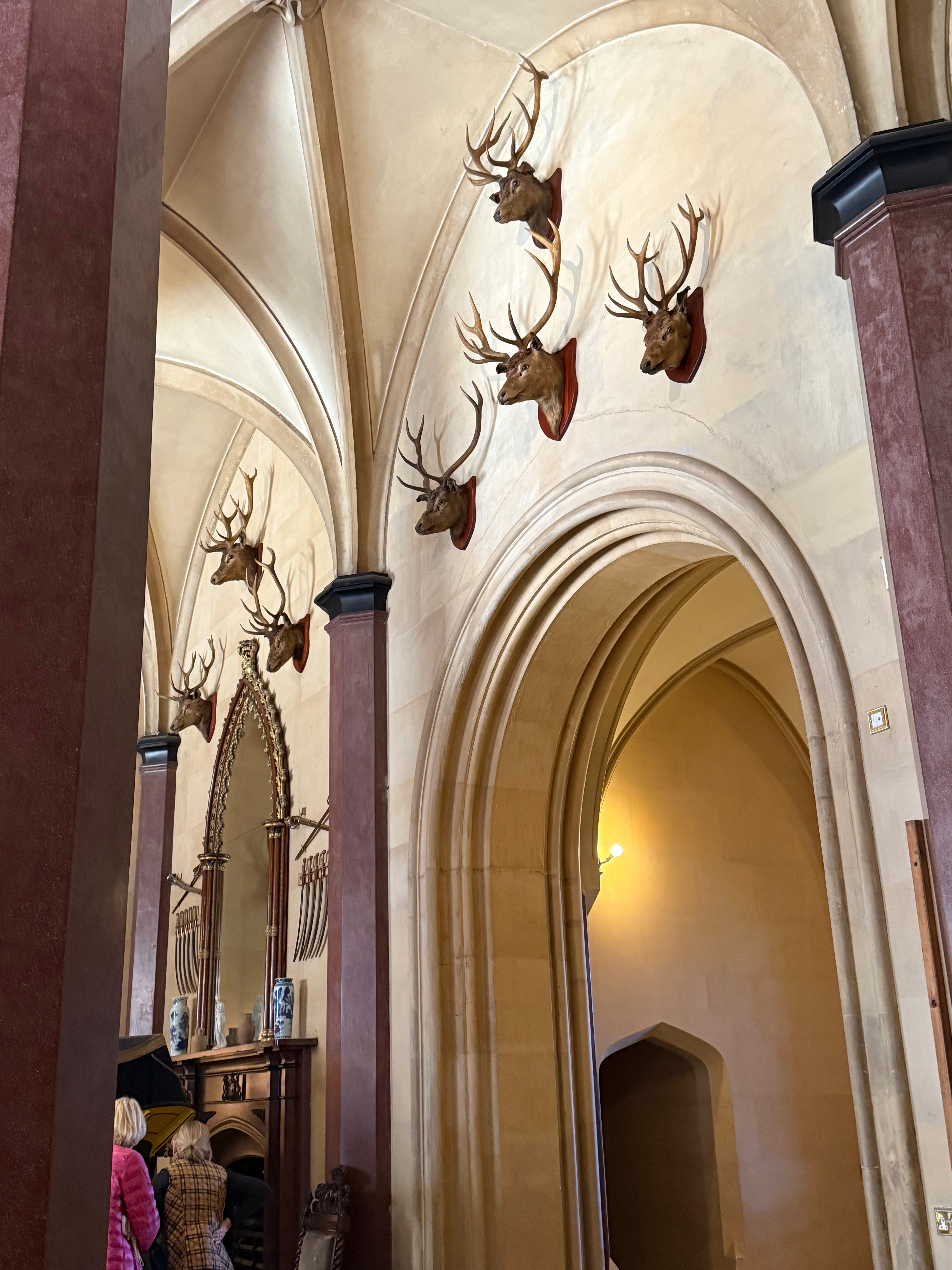
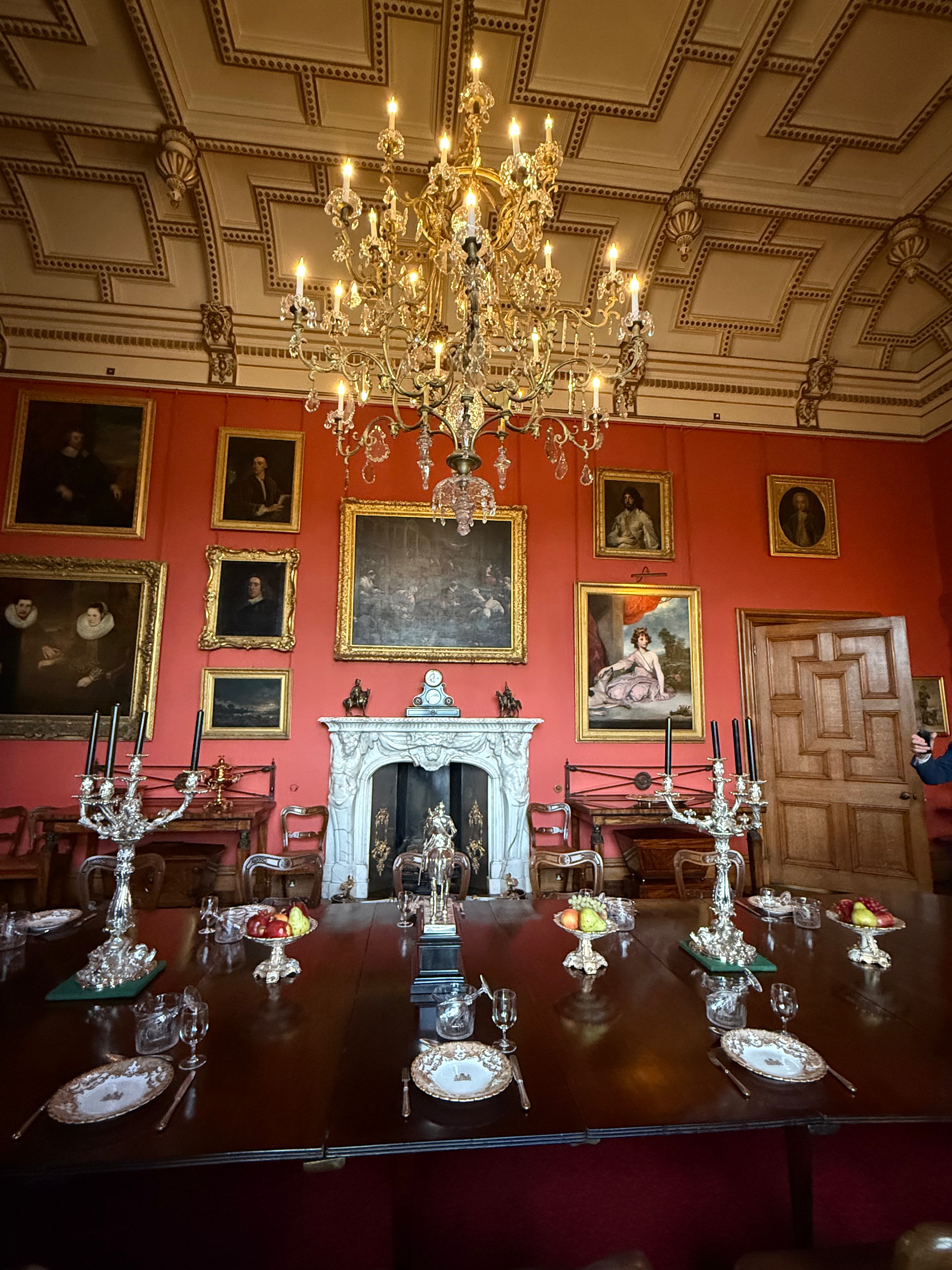
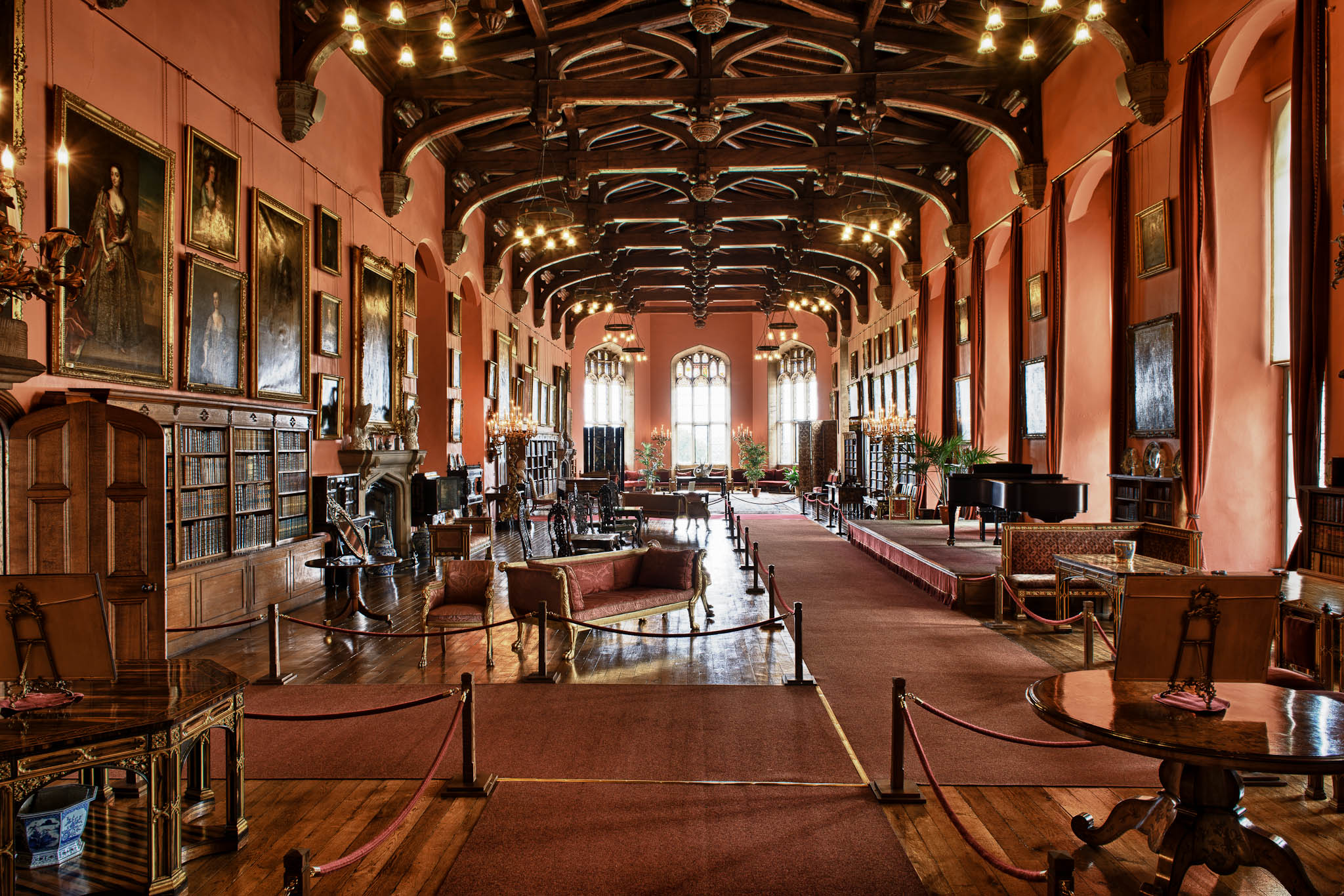
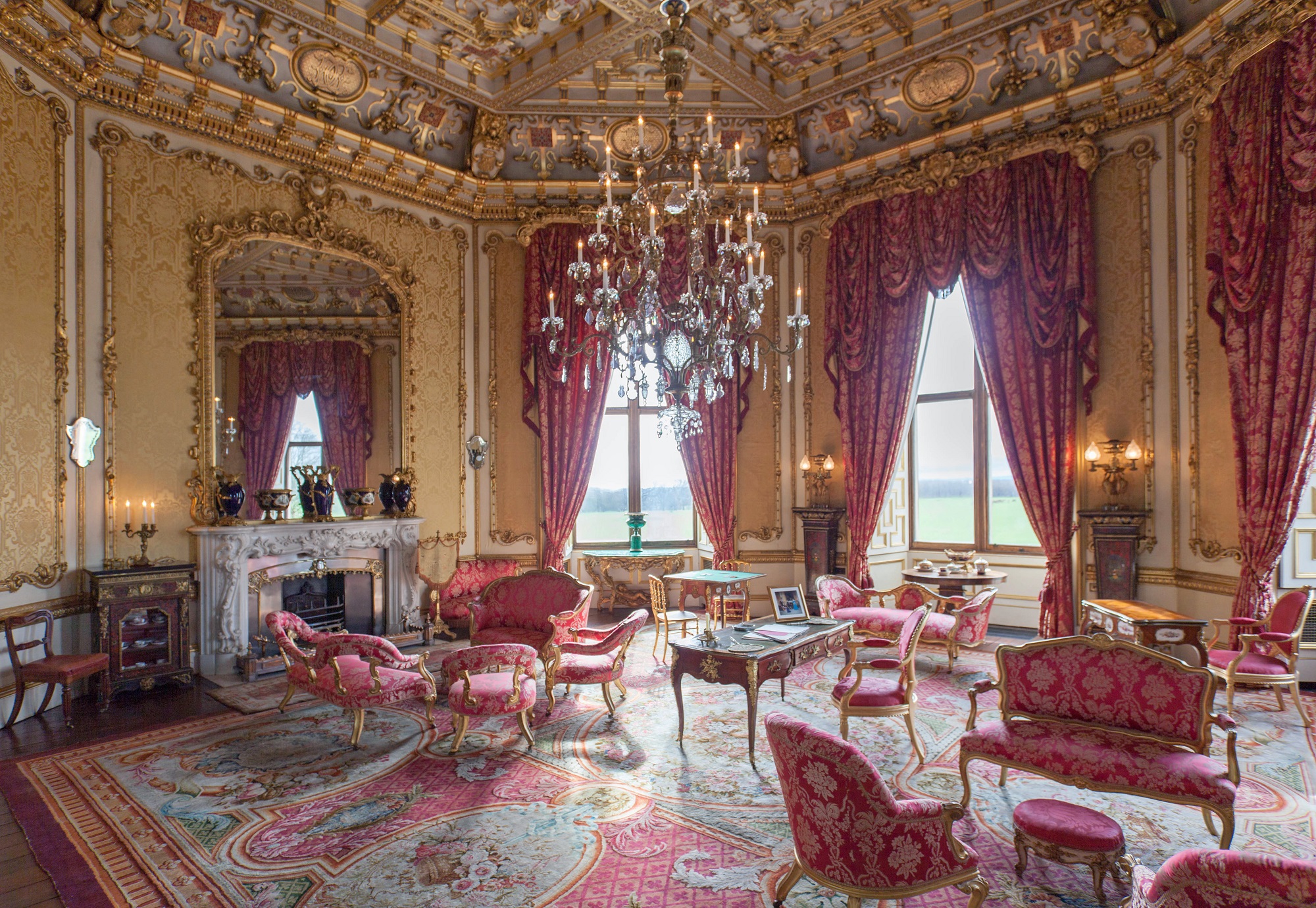
The Tour notes on Raby Castle: Raby is without doubt one of the most impressive intact castles in the north of England. Built in the fourteenth century by the powerful Neville family, it has a long history. Birthplace of Cecily Neville, mother of Edward IV and Richard III, it was also the scene of the plotting of the Rising of the North, and a Parliamentary stronghold during the Civil War. The castle has superb collections, forbidding towers, tall crenelated walls. It’s an incredible medieval fortress, set within picturesque parkland where both red and fallow deer roam. With a cafe, shop, and new adventure woodland playground, it’s the perfect place for a day out.
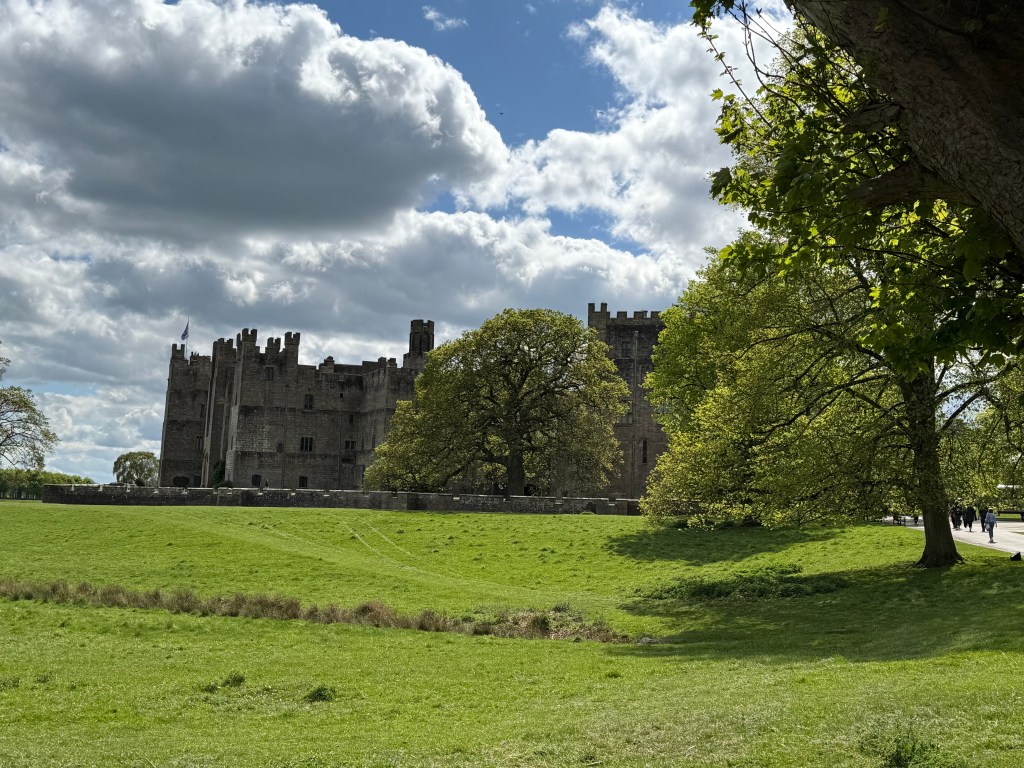
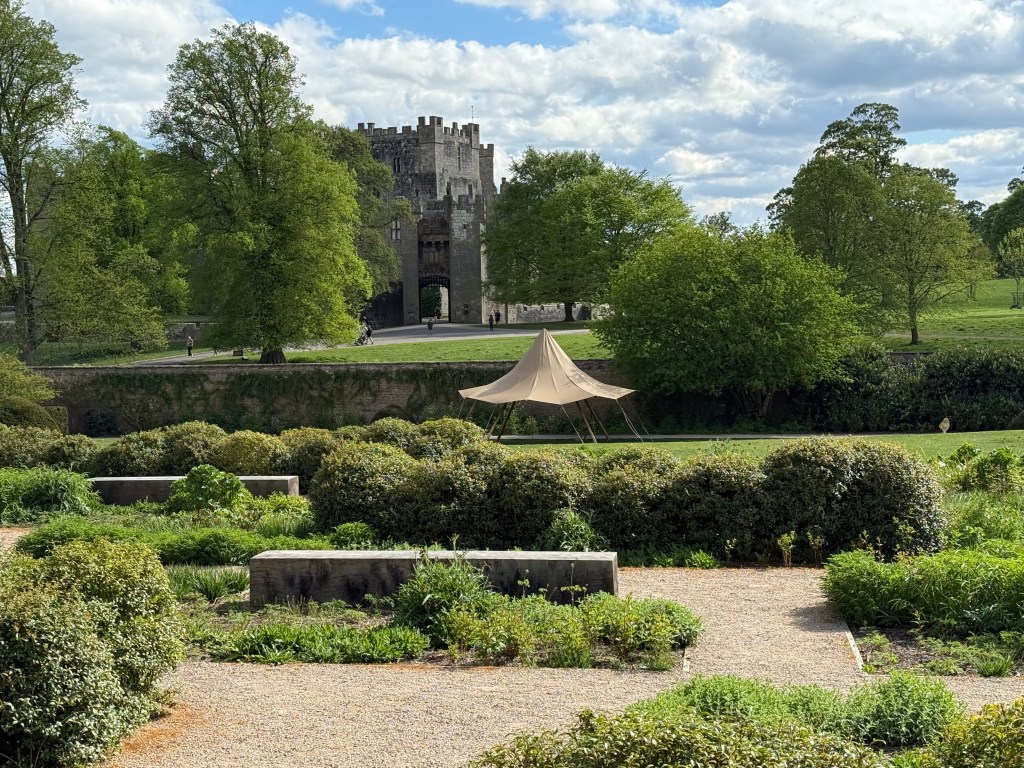

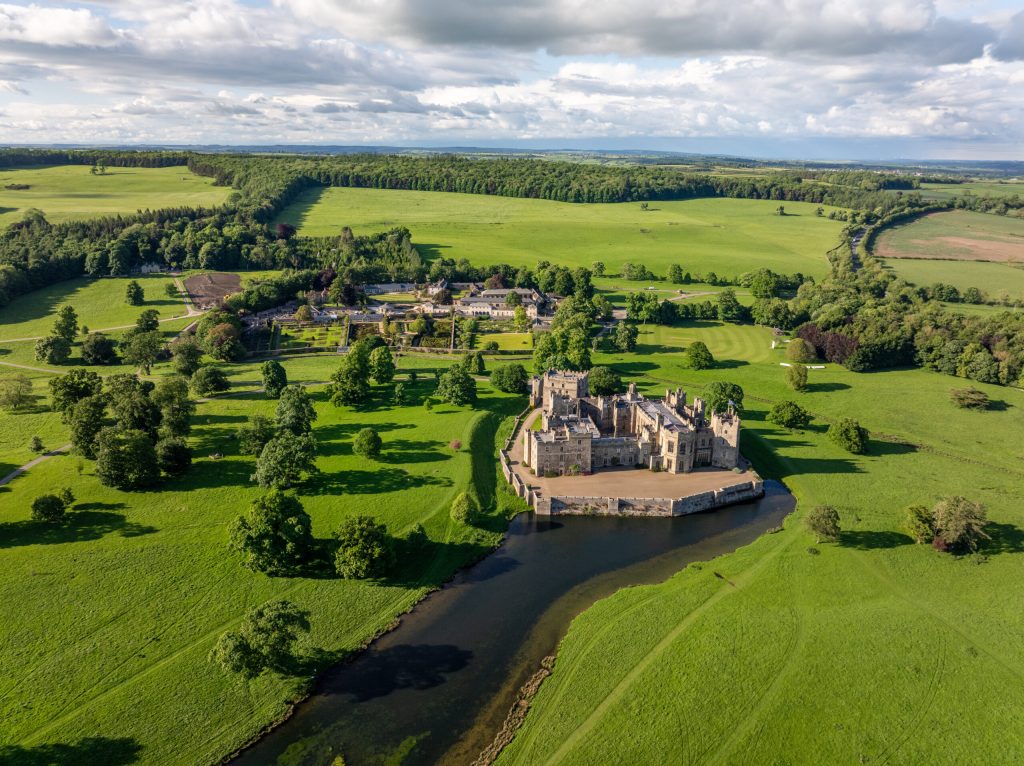
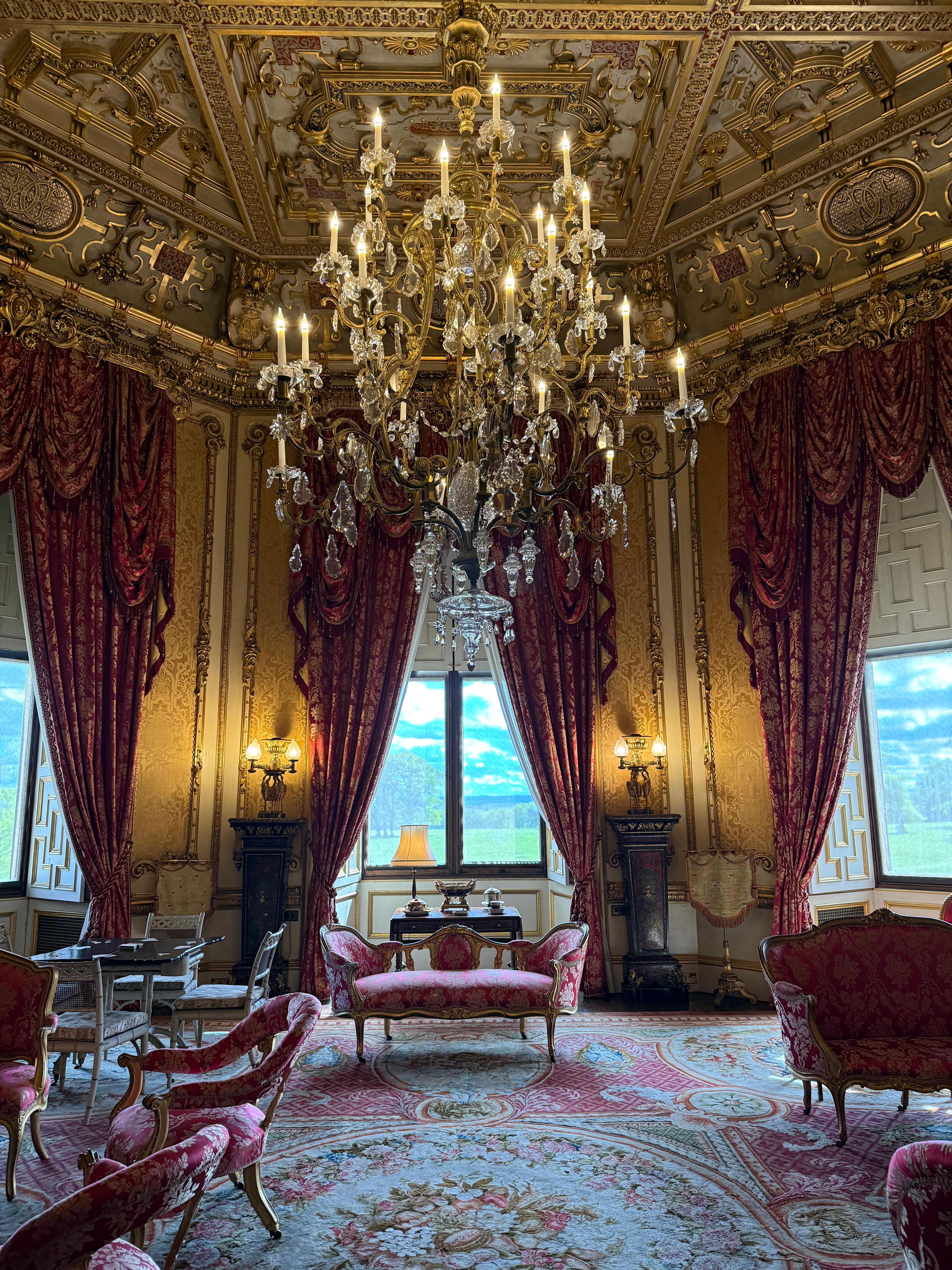
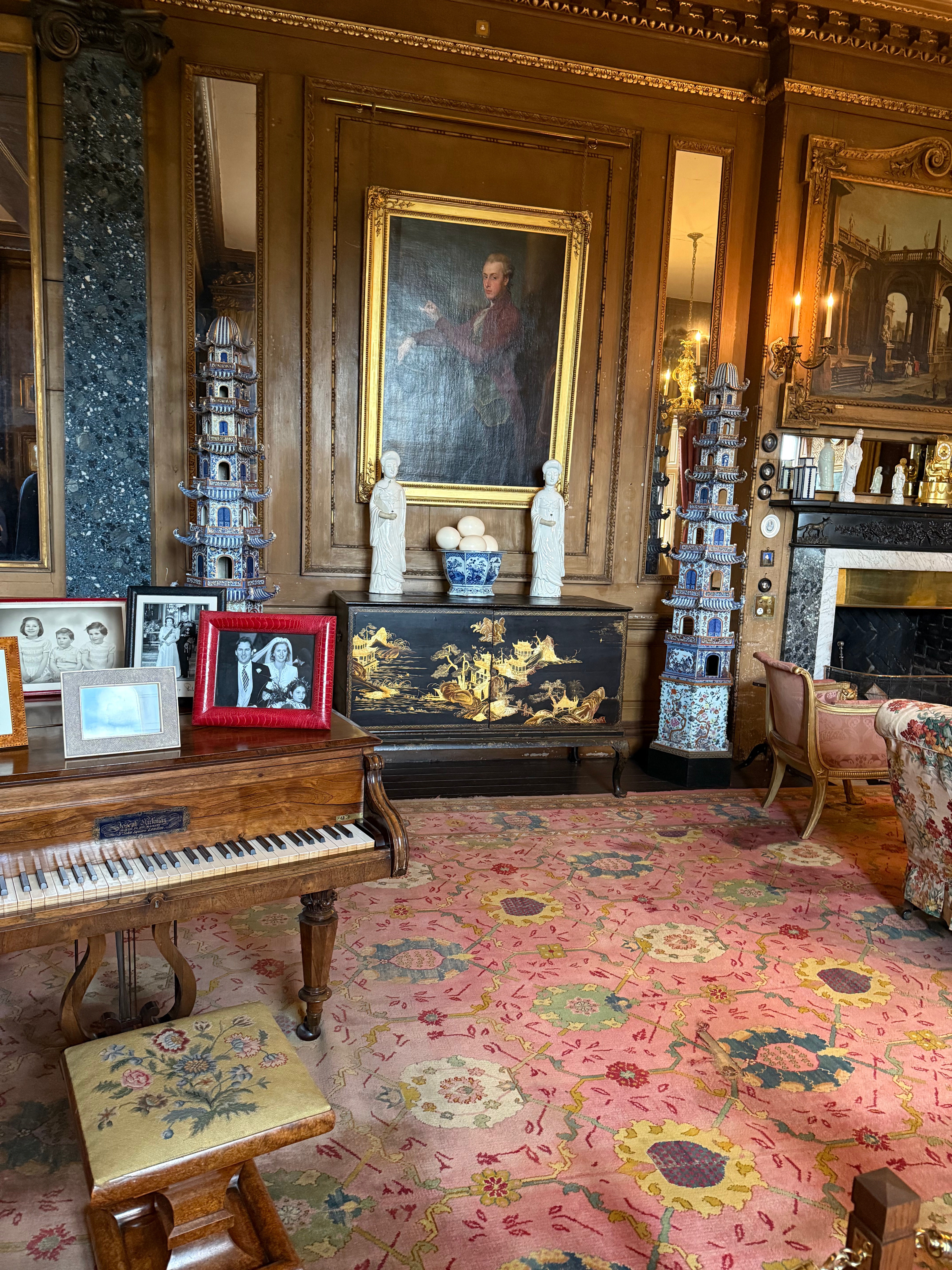
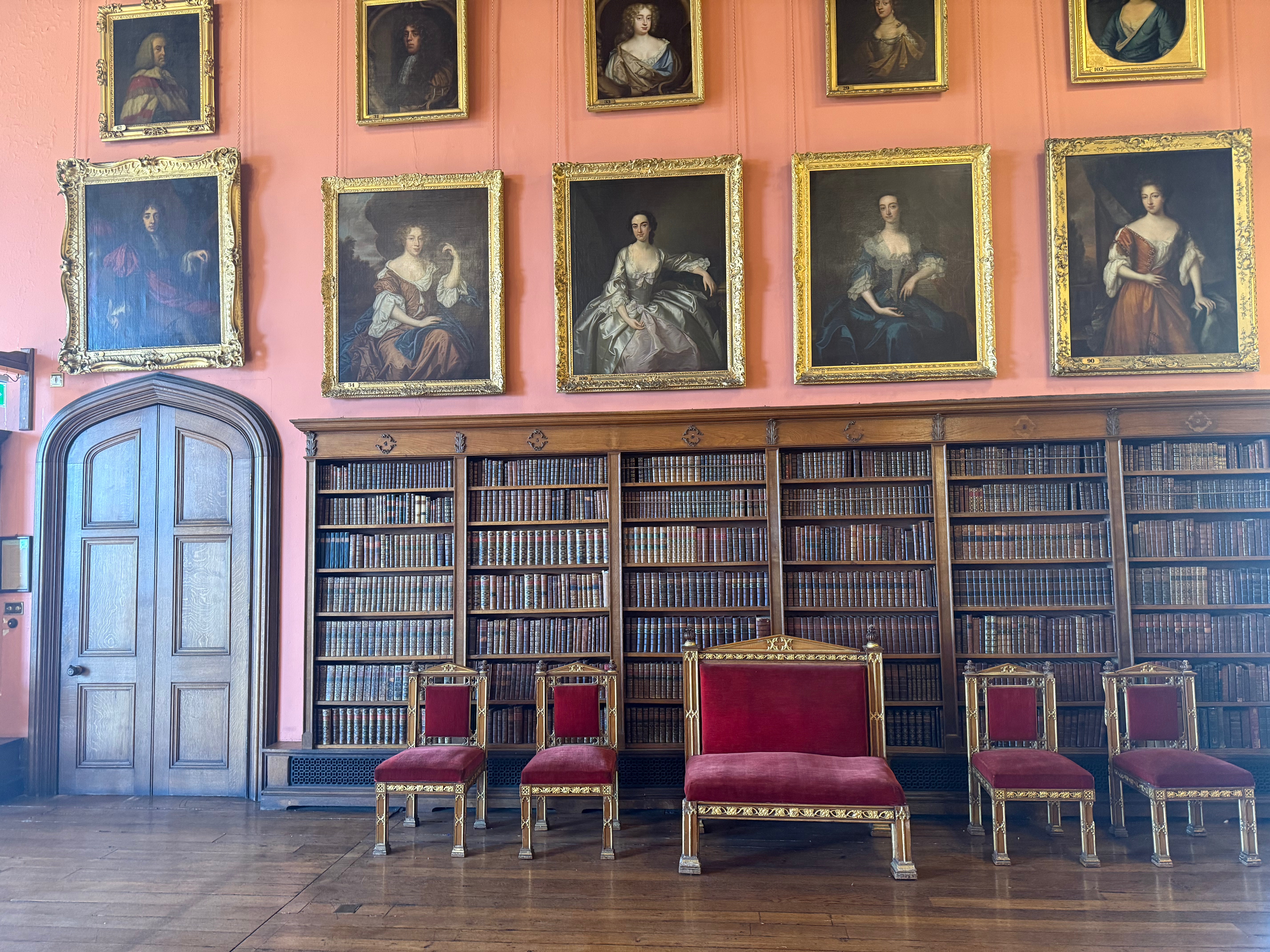
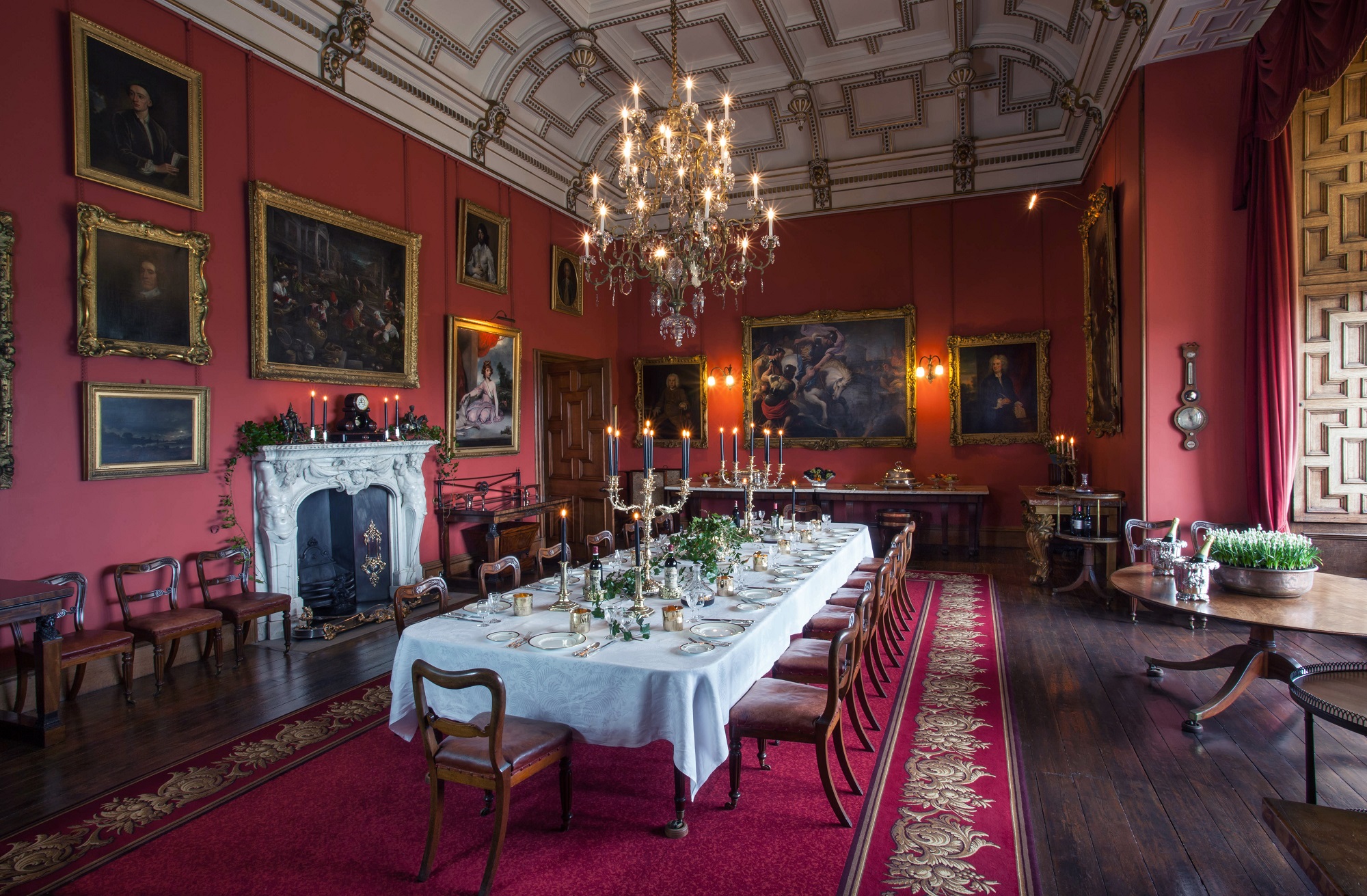
The castle is just over the top: check out some of the photographs, this is not the rough and tumble castle of the rough as guts Northerners at the height of the medieval period. The Nevilles, responsible for fortifying the 14th century castle, were an influential family in the North who owned Raby until 1569 when Charles Neville, 6th Earl of Westmorland, participated in the failed Rising of the North plot to dethrone Queen Elizabeth. The castle and its lands were forfeited to the crown, and Charles later died in exile in Holland.
In 1626, Sir Henry Vane the Elder, Member of Parliament and important member of Charles I’s household, purchased Raby from the Crown. The present owner being the 12th Lord Barnard, who through his mother’s lineage also holds links to the original Nevilles of Raby. The castle is lavish, opulent and gorgeous in its decoration and presentation. When we arrived a cricket match was underway with a very small group of spectators. The chap who conducted the tour for our group was a consummate professional; assured, comfortable and affable. He was gracious enough to point out the barred windows of Cecily’s room as well as her long drop.
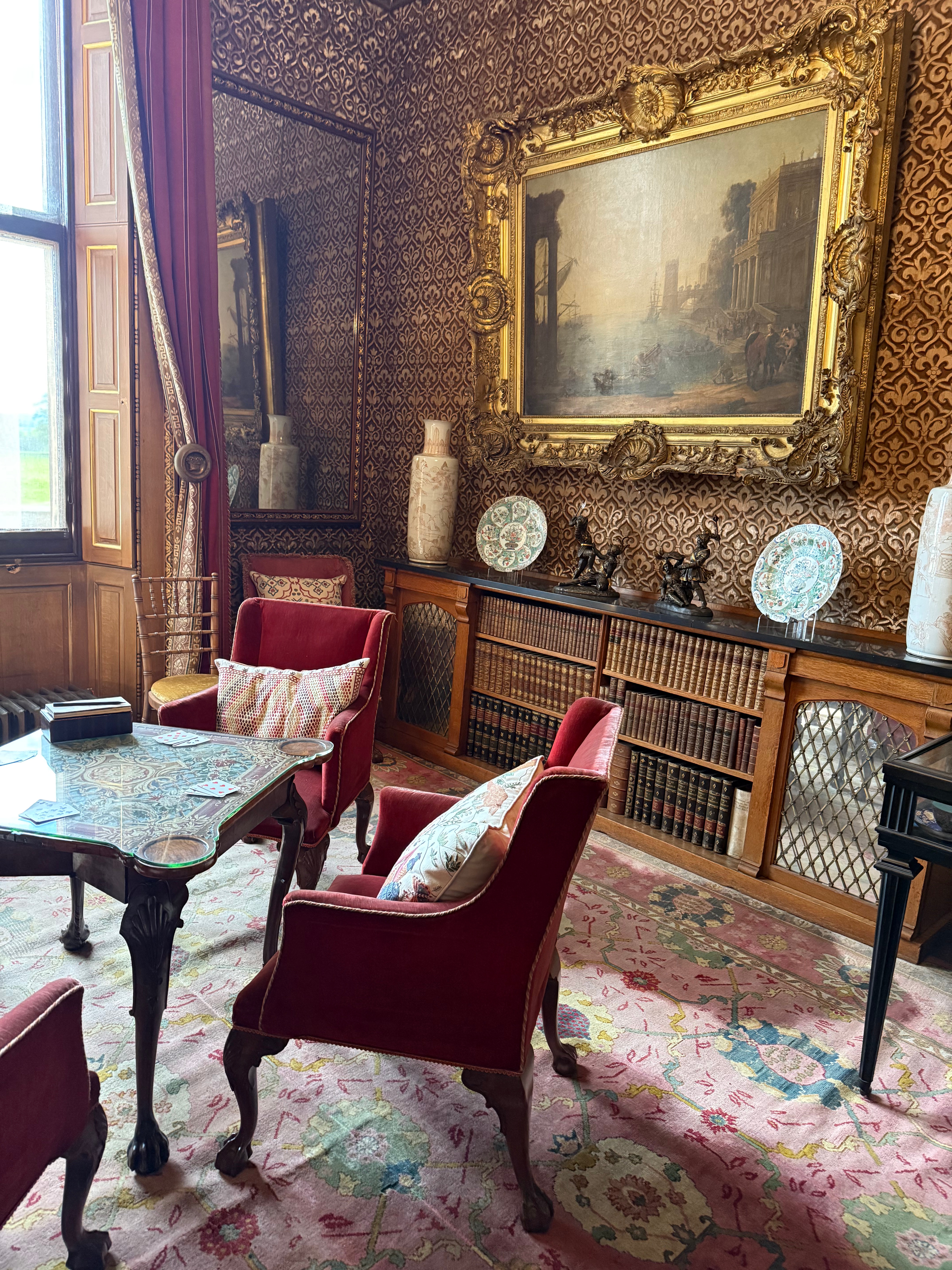
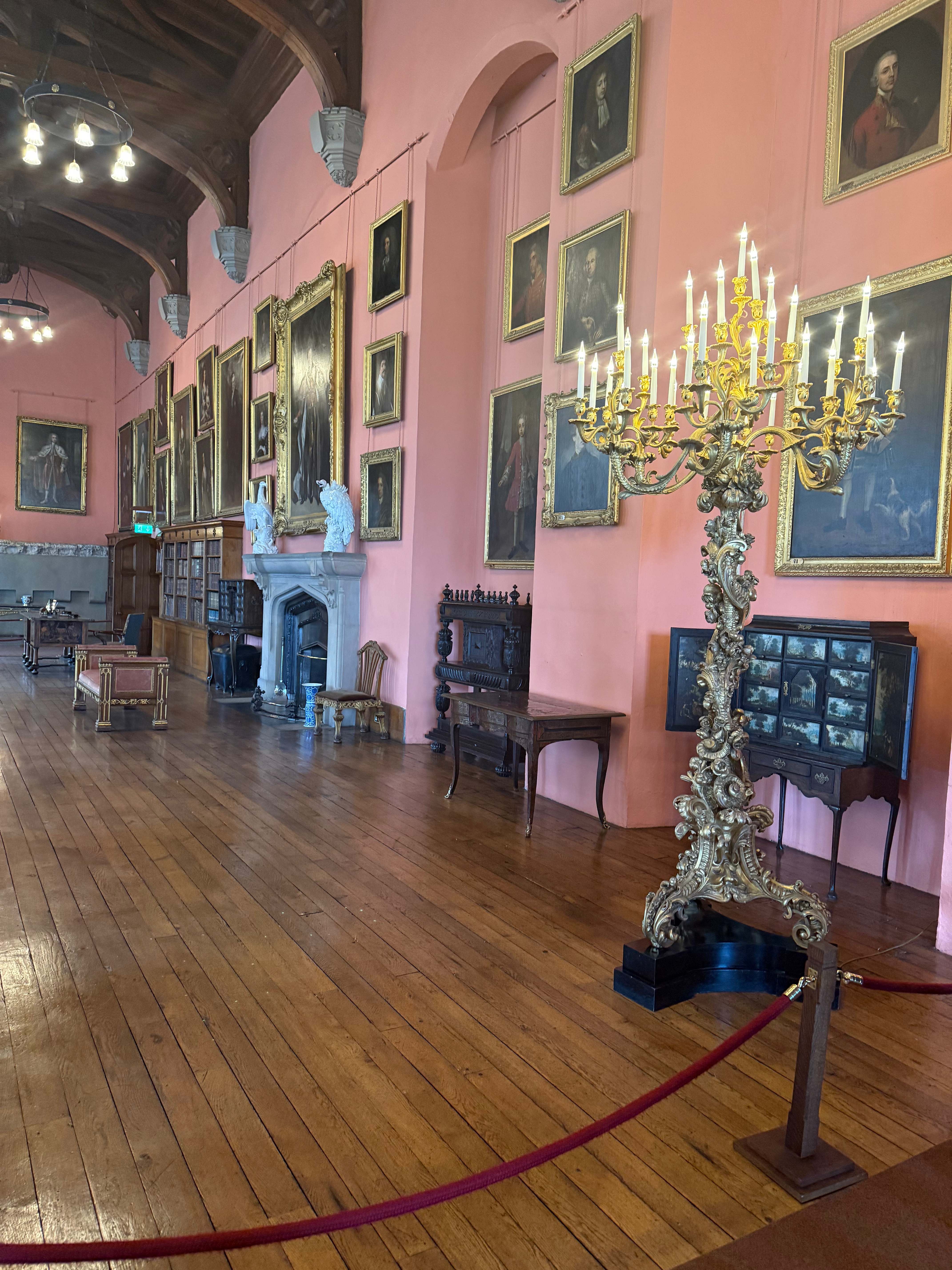
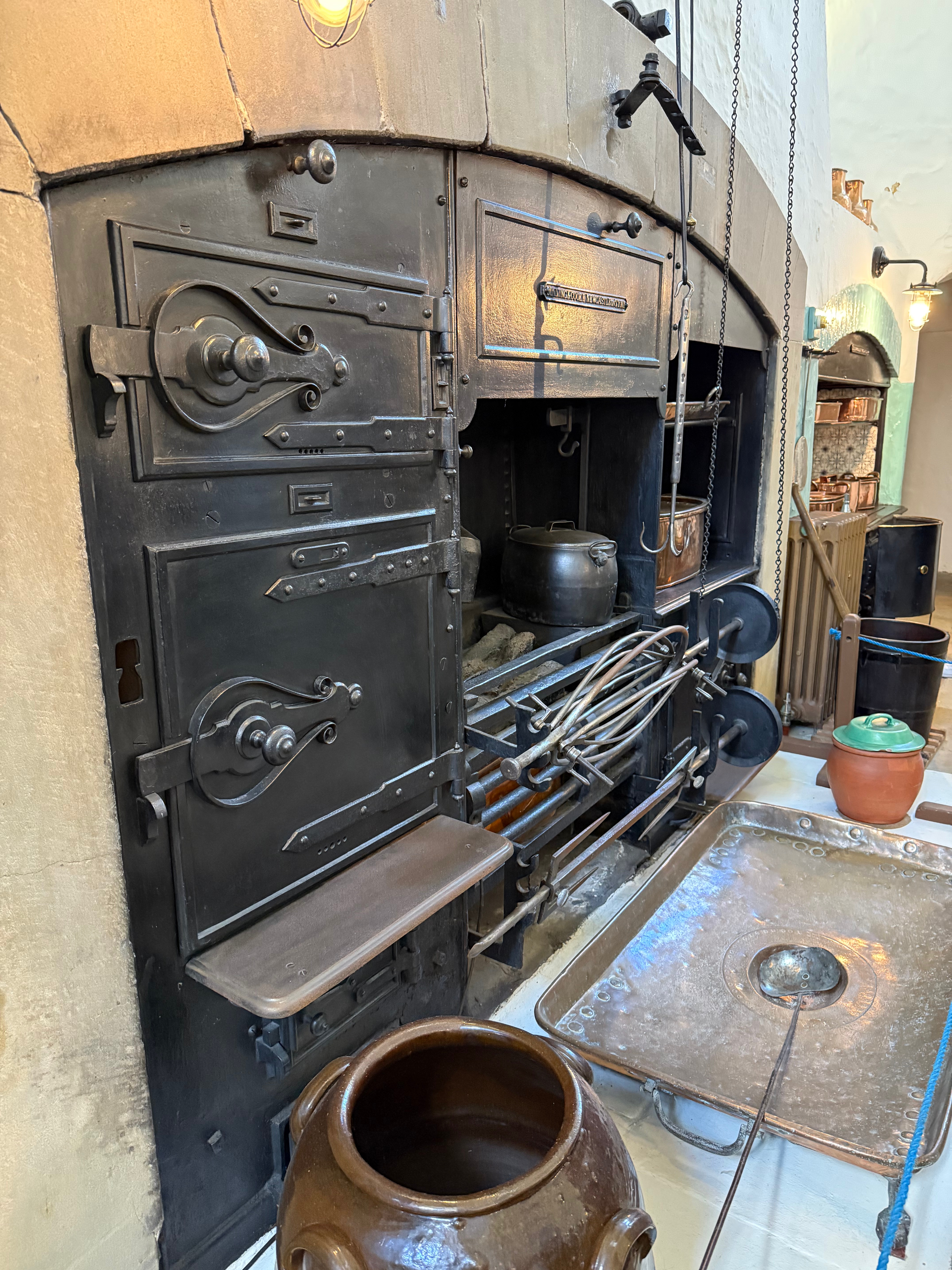
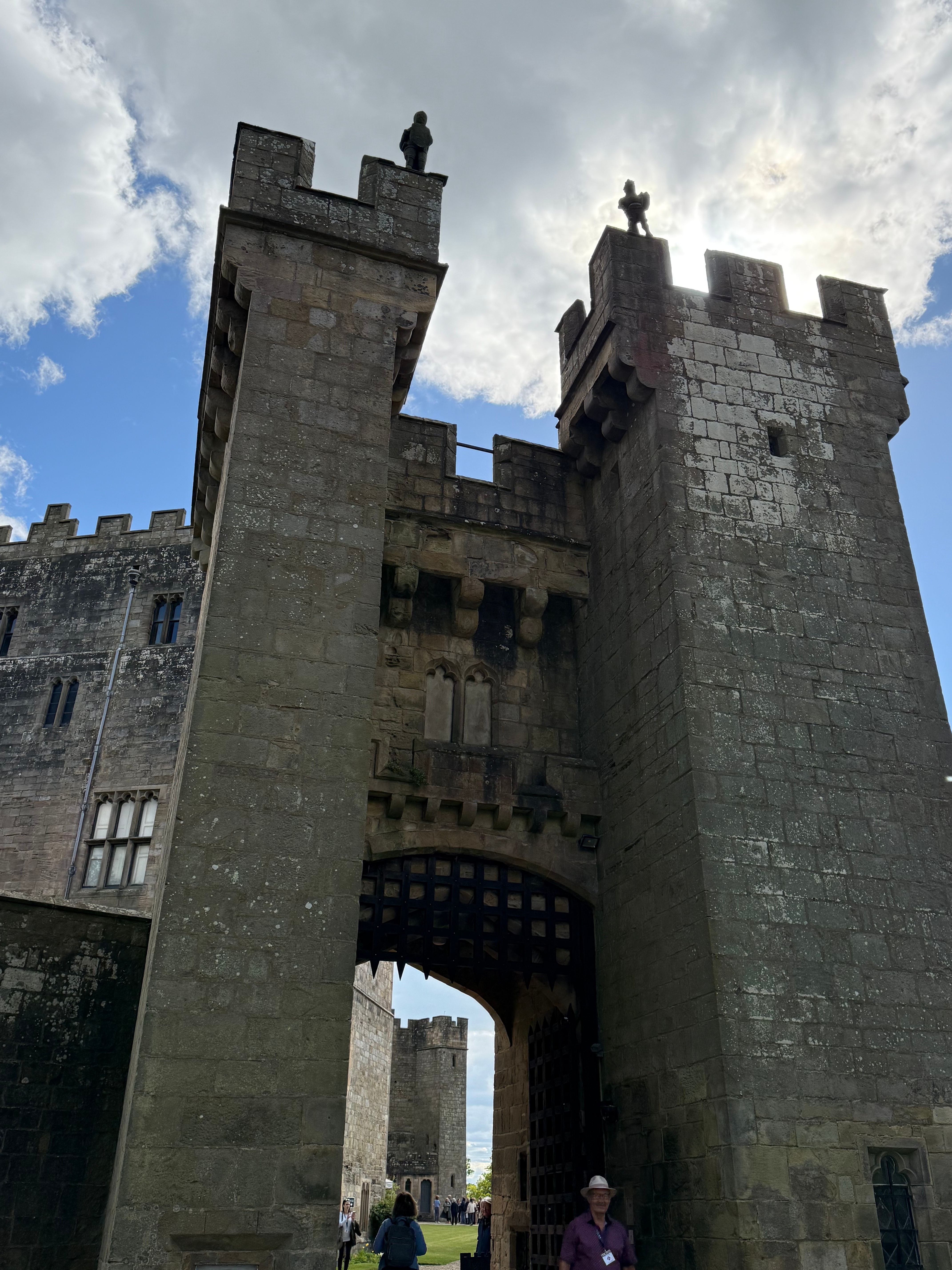
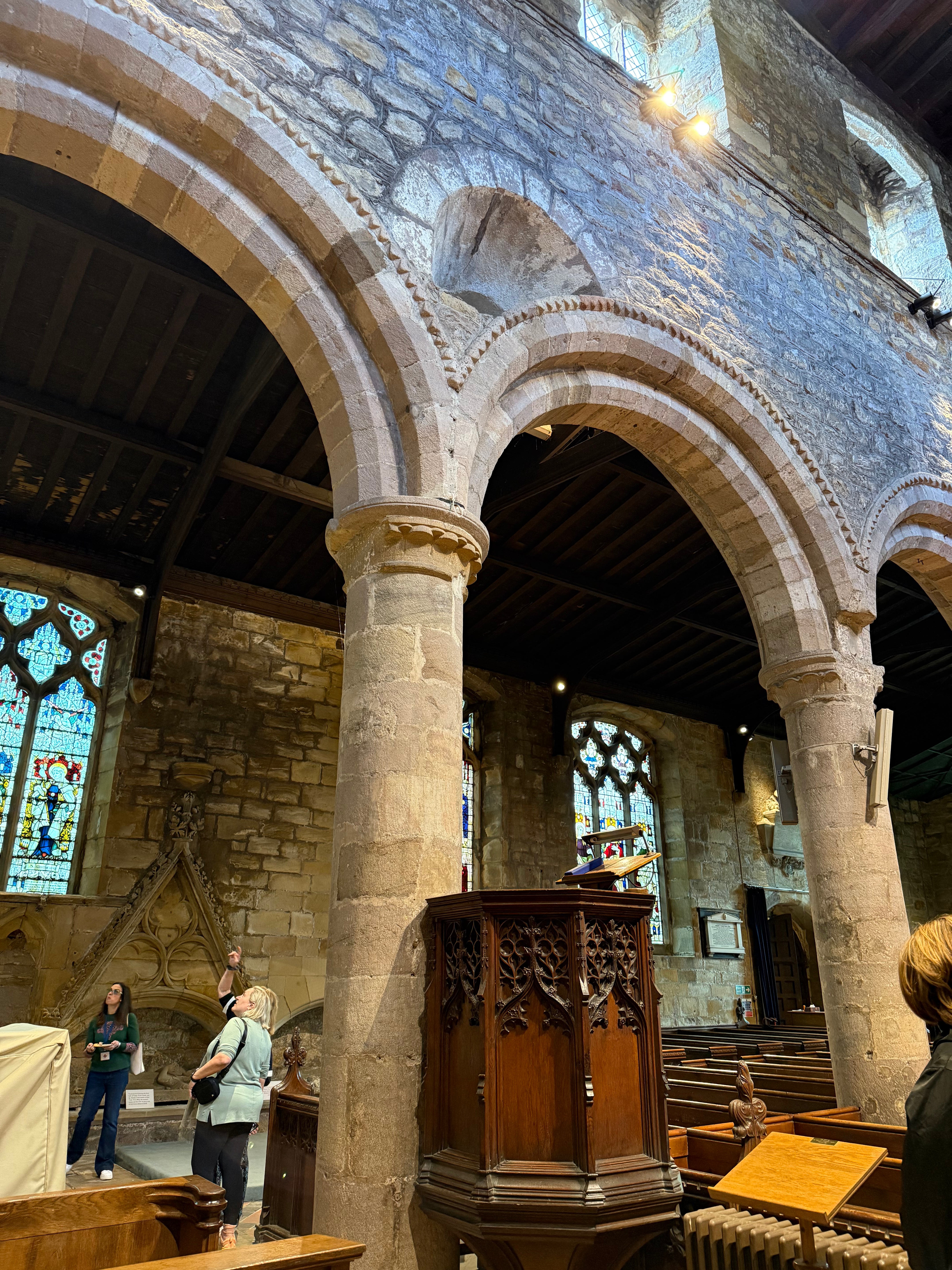
Alison gave a short talk “Joan Beaufort” on our short journey to the local church: St Mary’s Church, Staindrop, which is a mere mile as the crow flies from Raby Castle
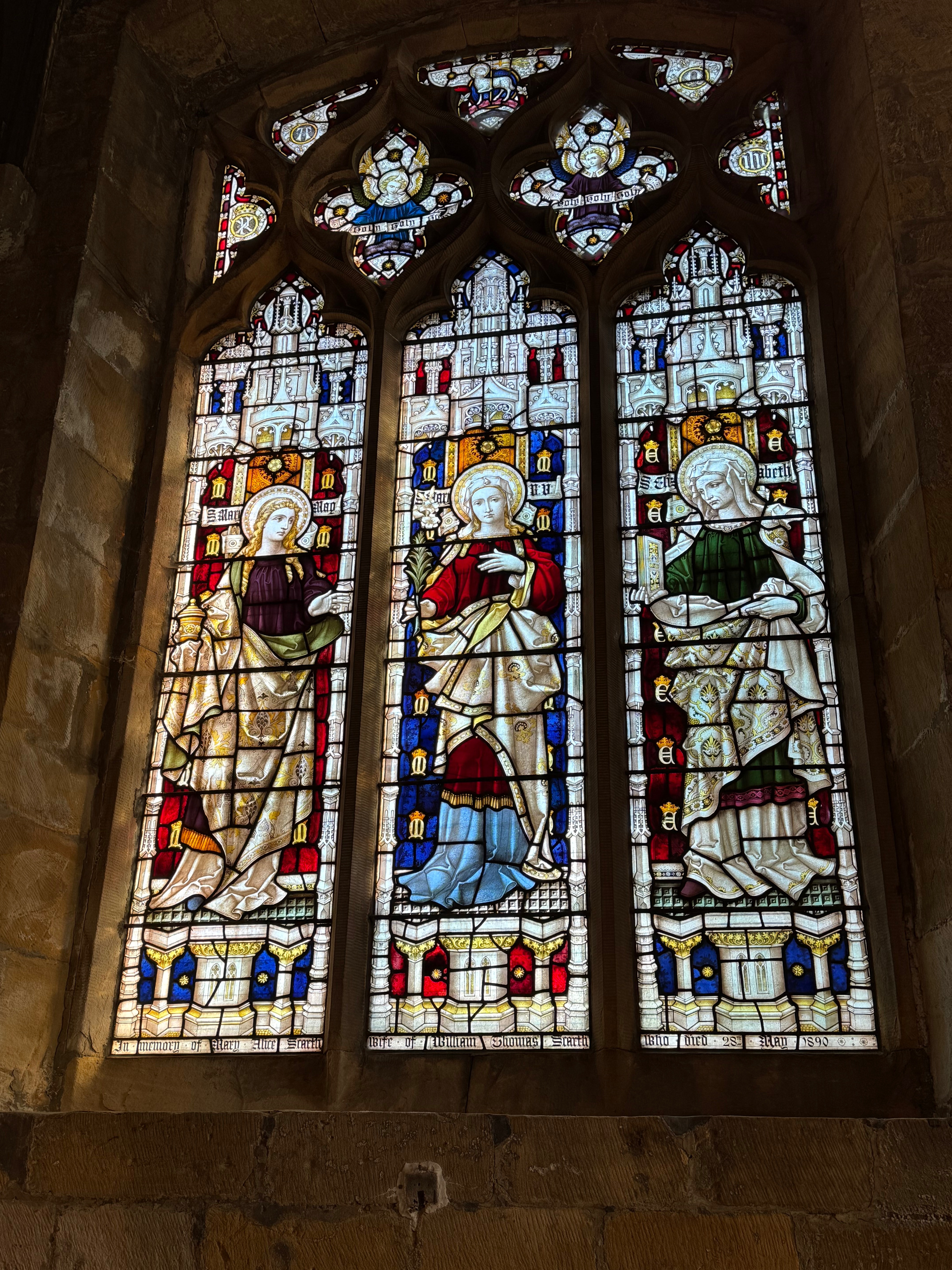
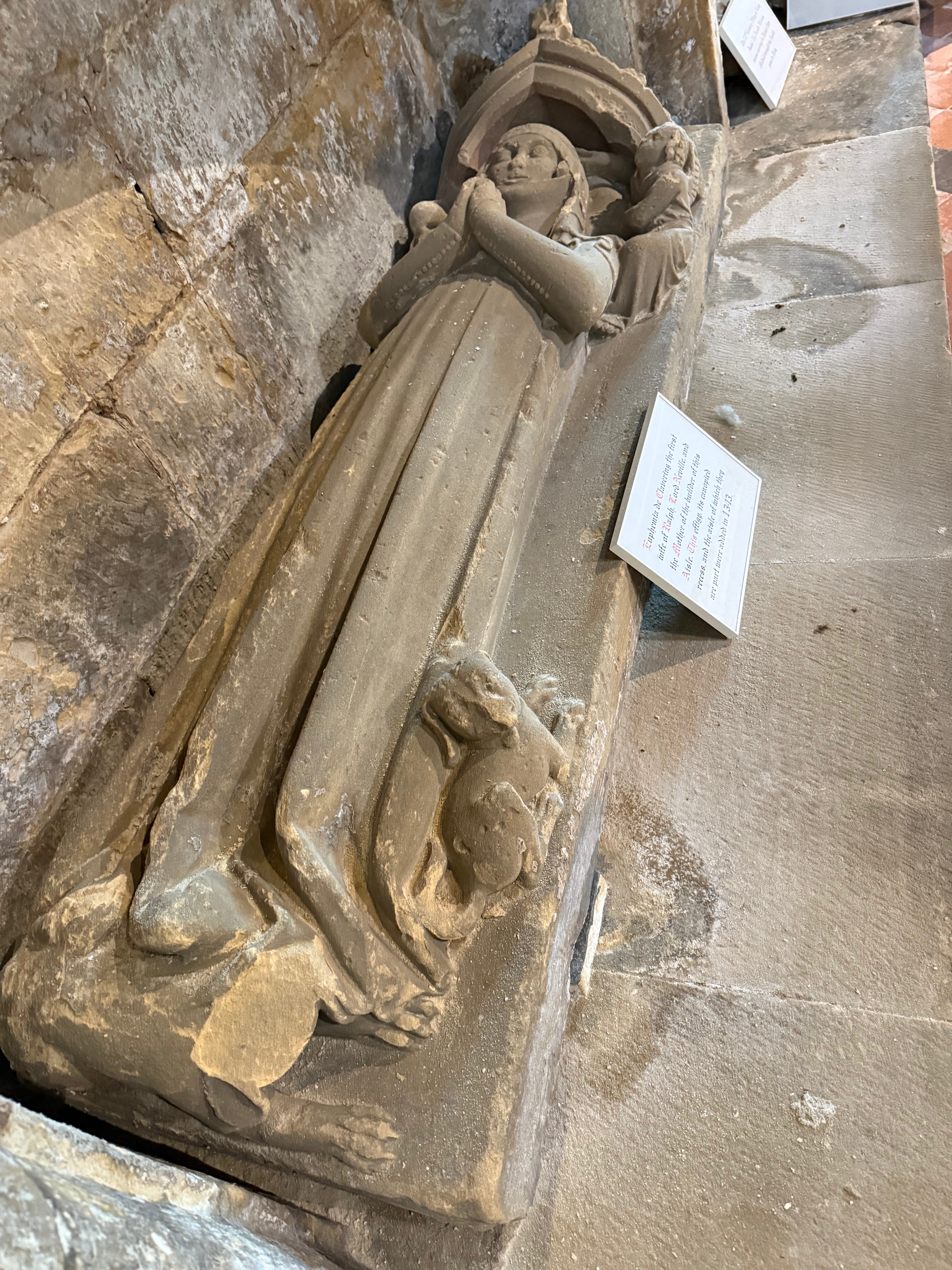
Tour notes: St Mary’s Church in Staindrop, County Durham, dates to around A.D. 771 and retains Saxon windows and stonework. Historical highlights include a 14th-century screen, late-medieval choir stalls, and tombs of the powerful Neville family of nearby Raby Castle, one of which bears the effigy of Joan Beaufort, daughter of John of Gaunt and Katherine Swynford.
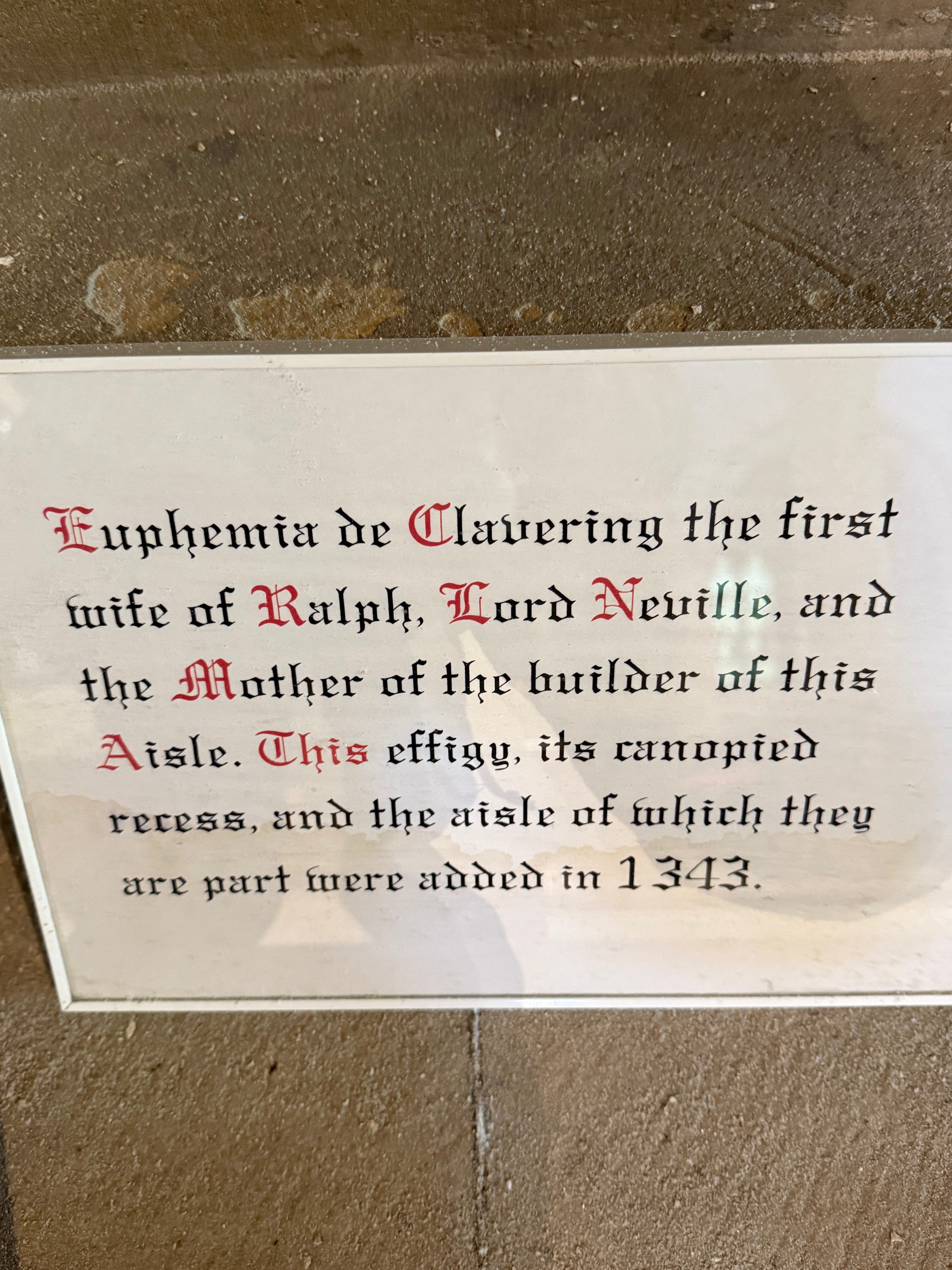
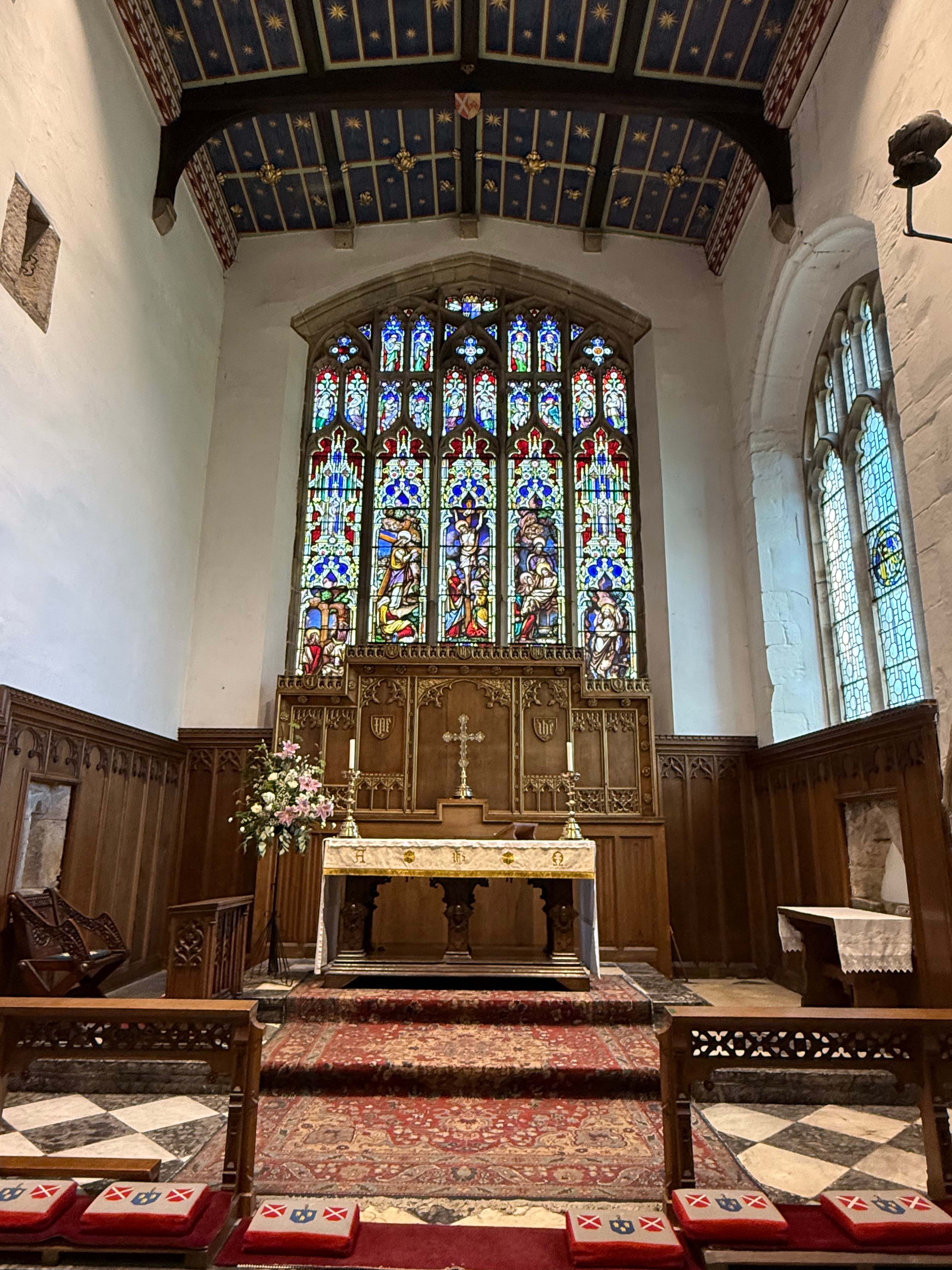

It was a longish drive back to York and Alison gave a great talk on “The Nevilles”; with recently arrived historian Julian Humphries giving much colour and understanding to “The Revolt of the Northern Earls”.
DAY 5: Sunday, 4th May
A big day, beginning with a 50-mile drive to the northeast coast, through the spectacular and stark moors before arriving at the magnificent Whitby Abbey.
Tour notes: Whitby Abbey is spectacular cliff-top landmark. Generations have been drawn to these famous ruins, which have been a site of literary inspiration, religious devotion and pilgrimage. It is also one of the most atmospheric visitor attractions along the Yorkshire coastline. Whitby Abbey was founded in 657 A.D. by Oswy, the Saxon King of Northumbria. He appointed Lady Hilda, niece of Edwin, the first Christian King of Northumbria, as Abbess. The double monastery of Benedictine monks and nuns was also home to the great Saxon poet Caedmon. In 664, the abbey was the site of the Synod of Whitby, at which the Northumbrian Celtic church was reconciled to Rome. In 867, Whitby Abbey fell to a Viking attack and was abandoned until 1078, when it was re-founded by Regenfrith, a soldier monk, under the orders of his protector, the Norman, William de Percy. The second monastery lasted until it was dissolved by Henry VIII in 1540. In 1890, Bram Stoker was inspired by the Abbey’s Gothic splendour to create the world-famous novel Dracula. The Interactive Visitor Centre has displays and digital reconstructions of the lives of the monastic community who lived here. You can also listen to an audio tour when wandering around the ancient ruins and taking in the stunning views all around.
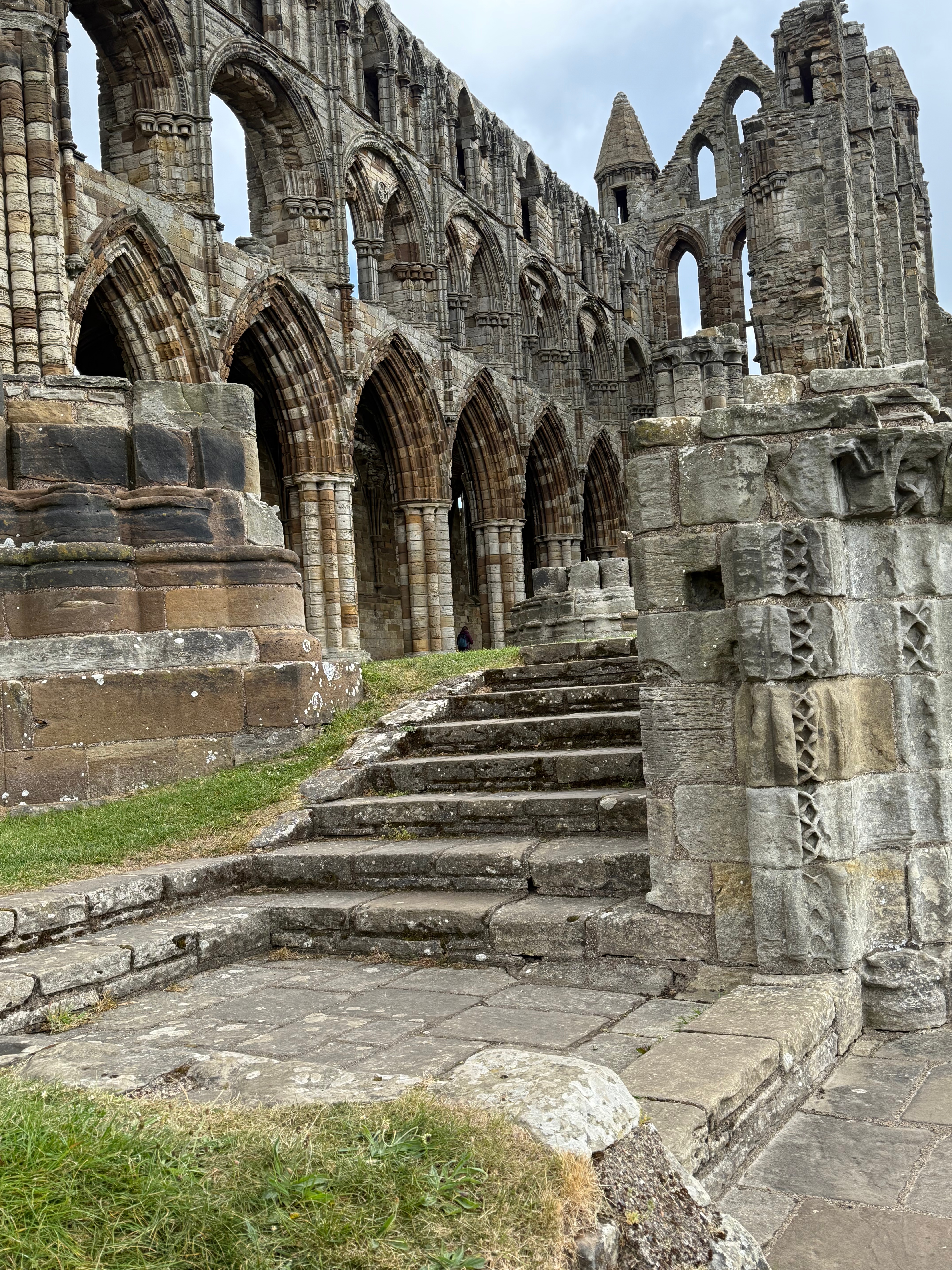
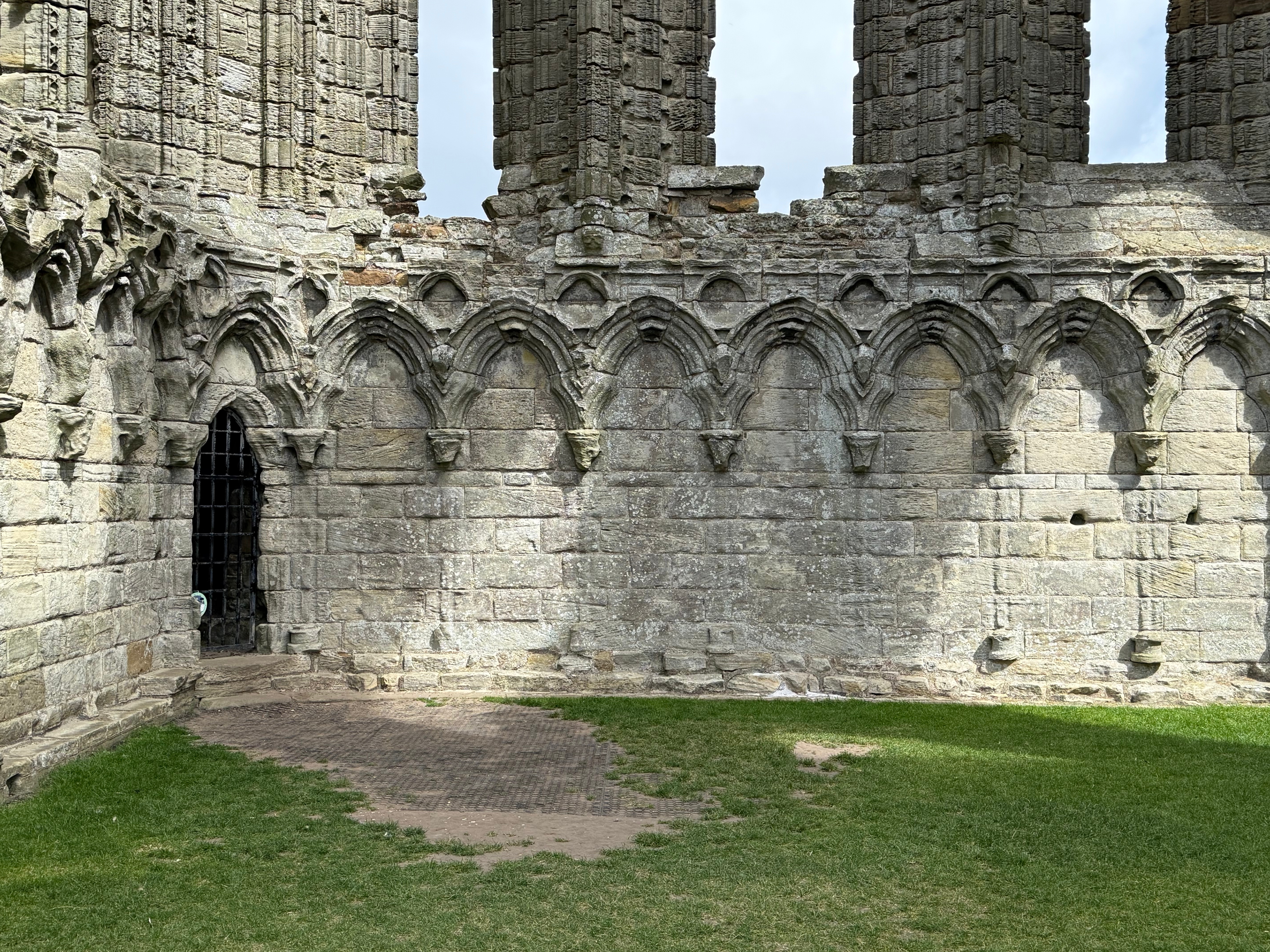
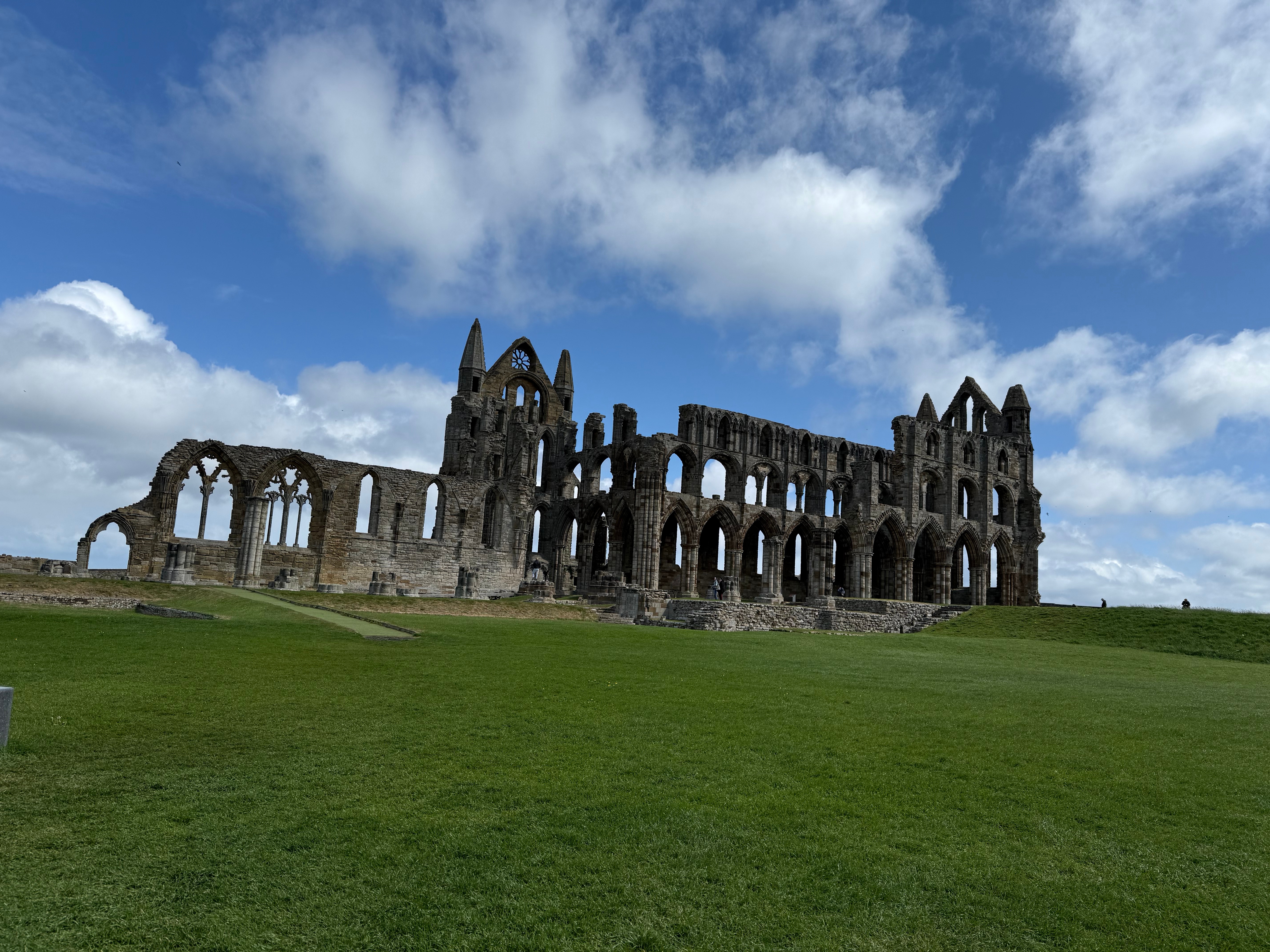
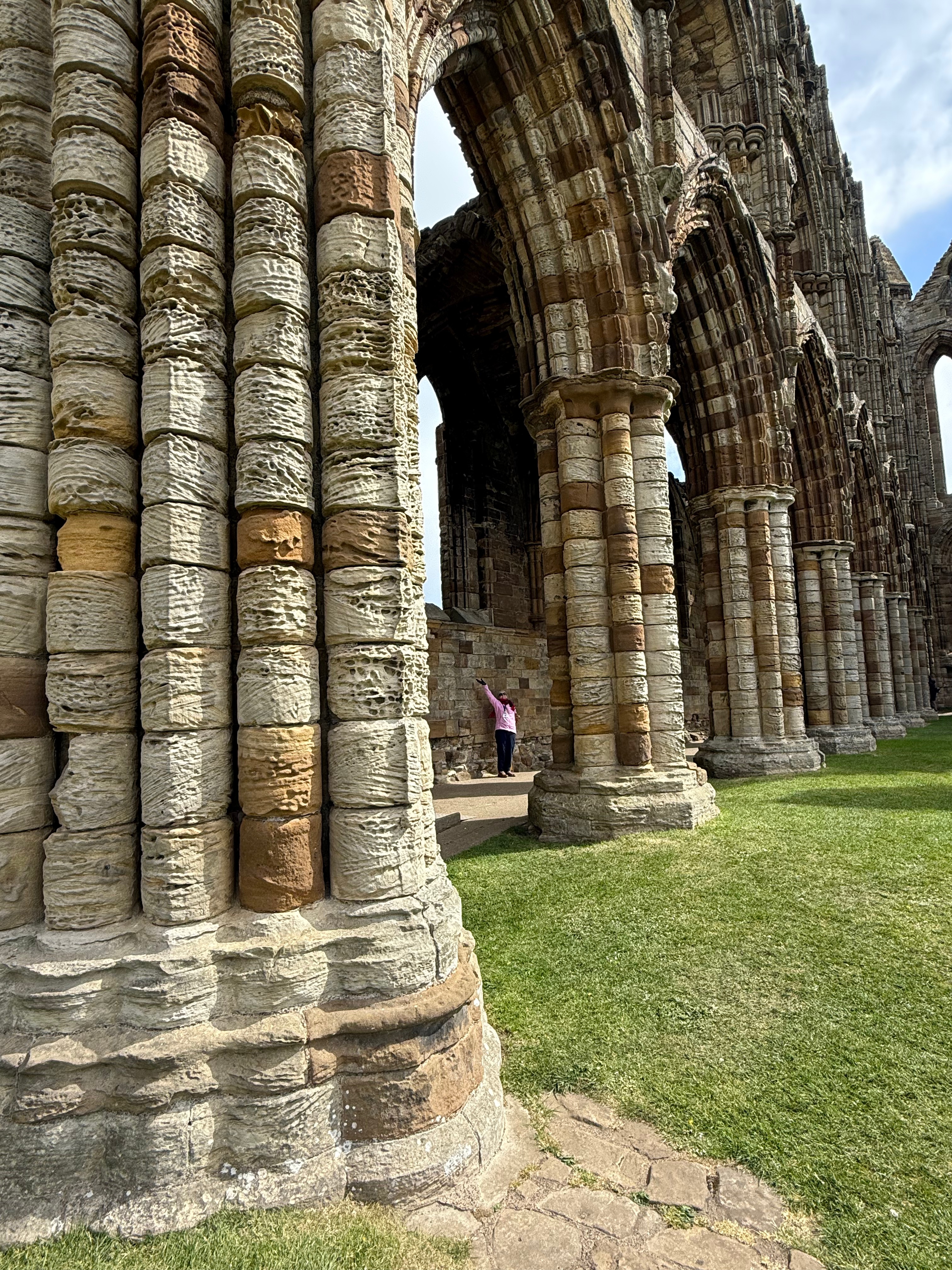
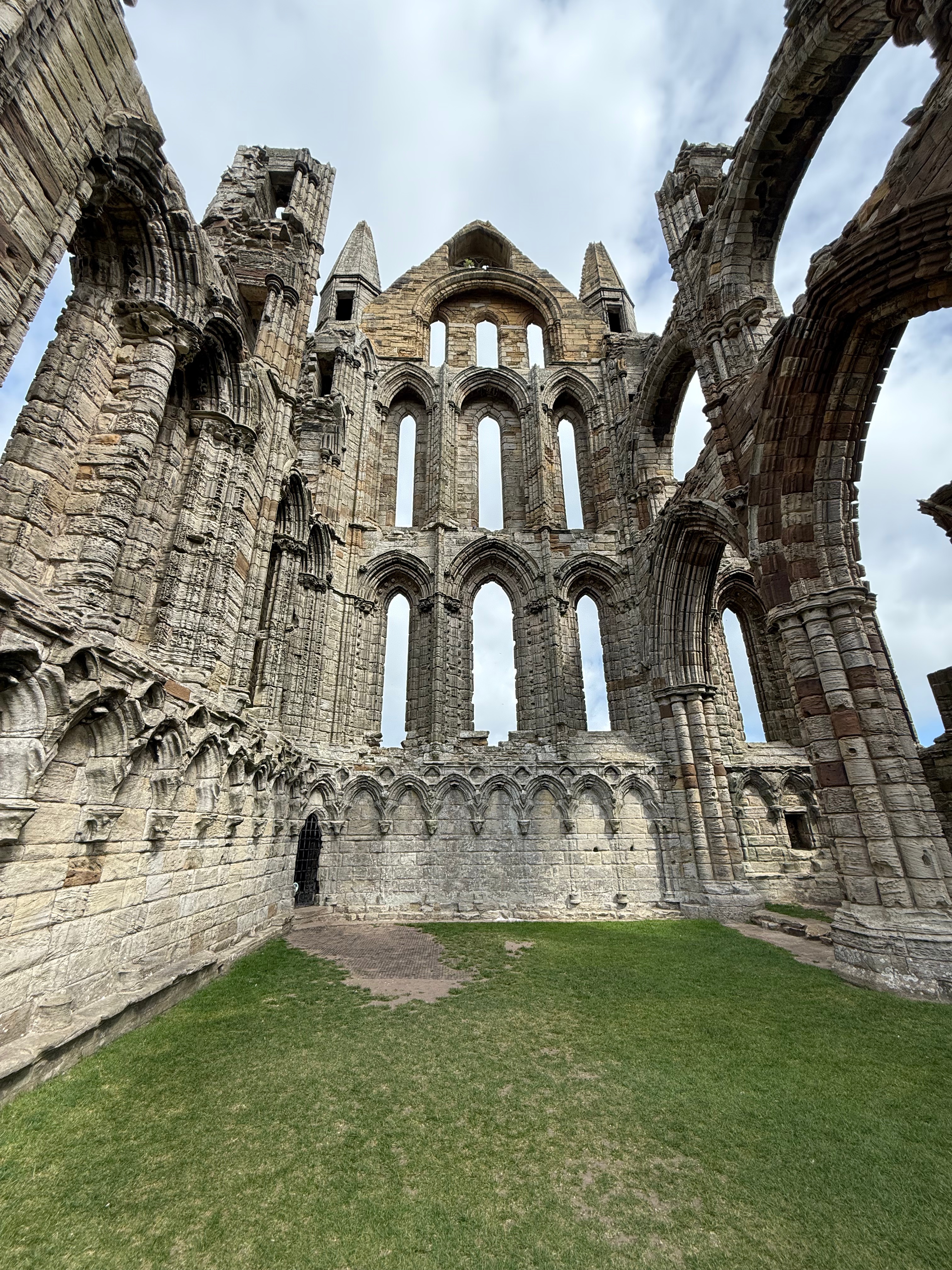
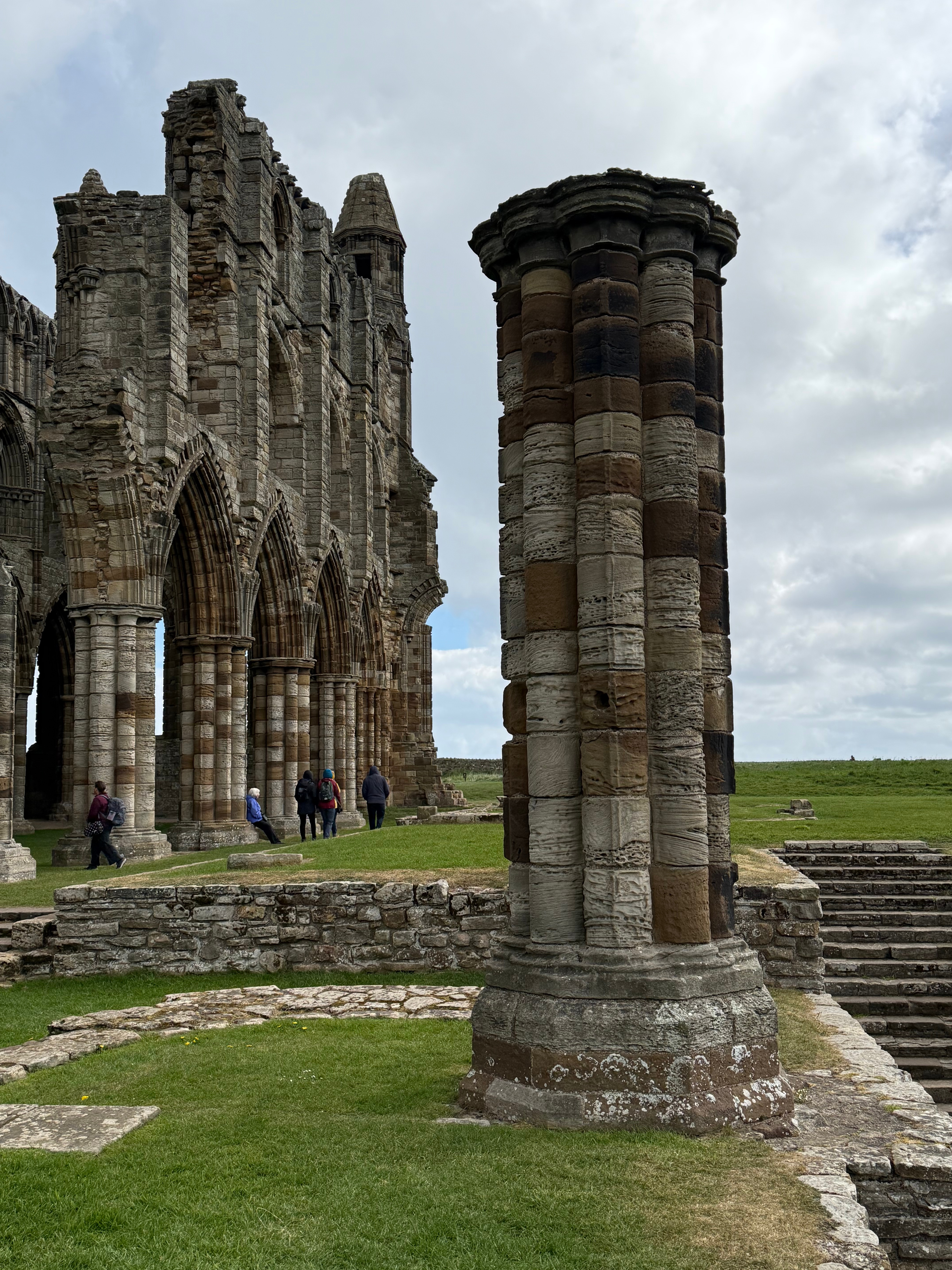
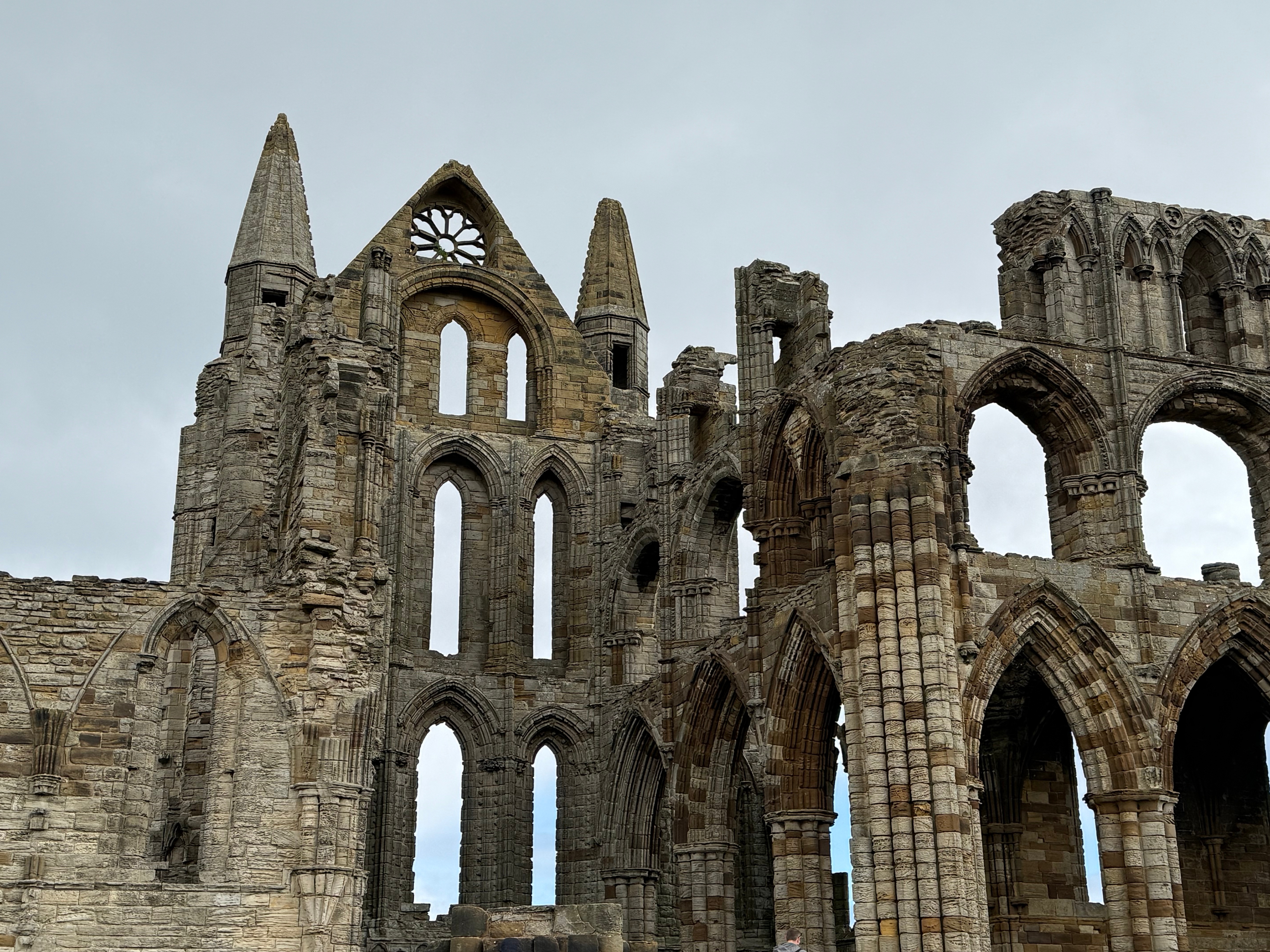
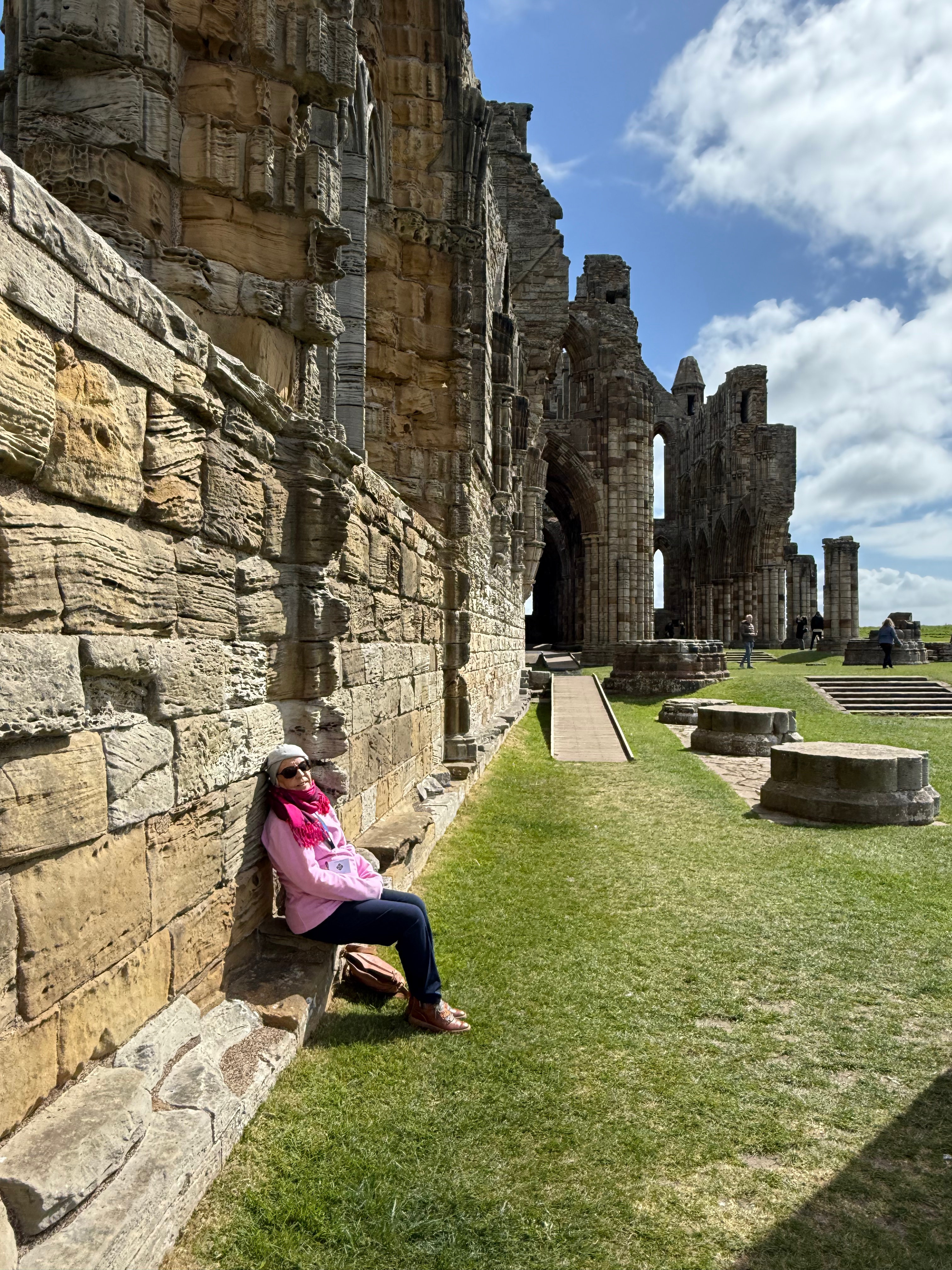
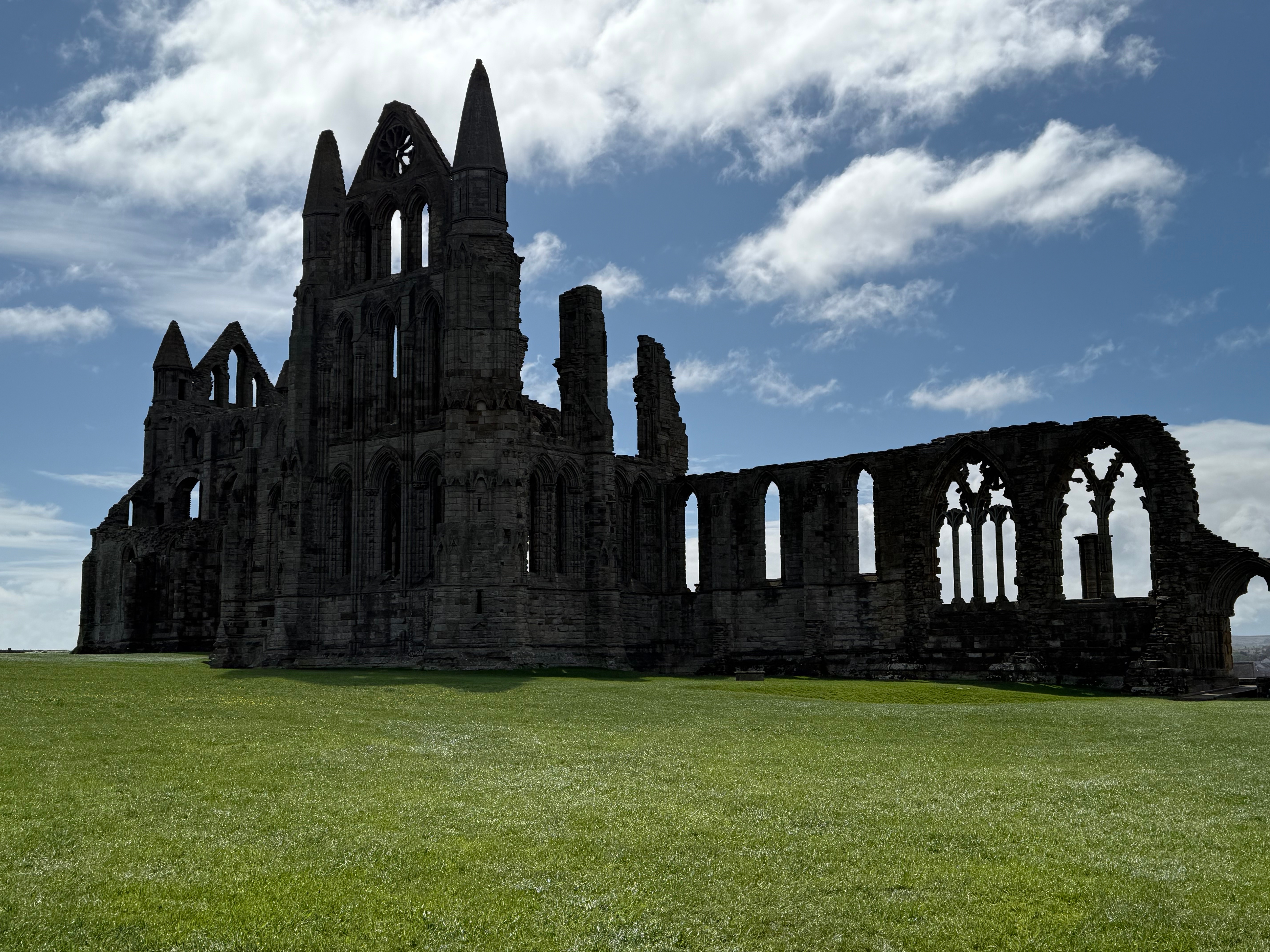
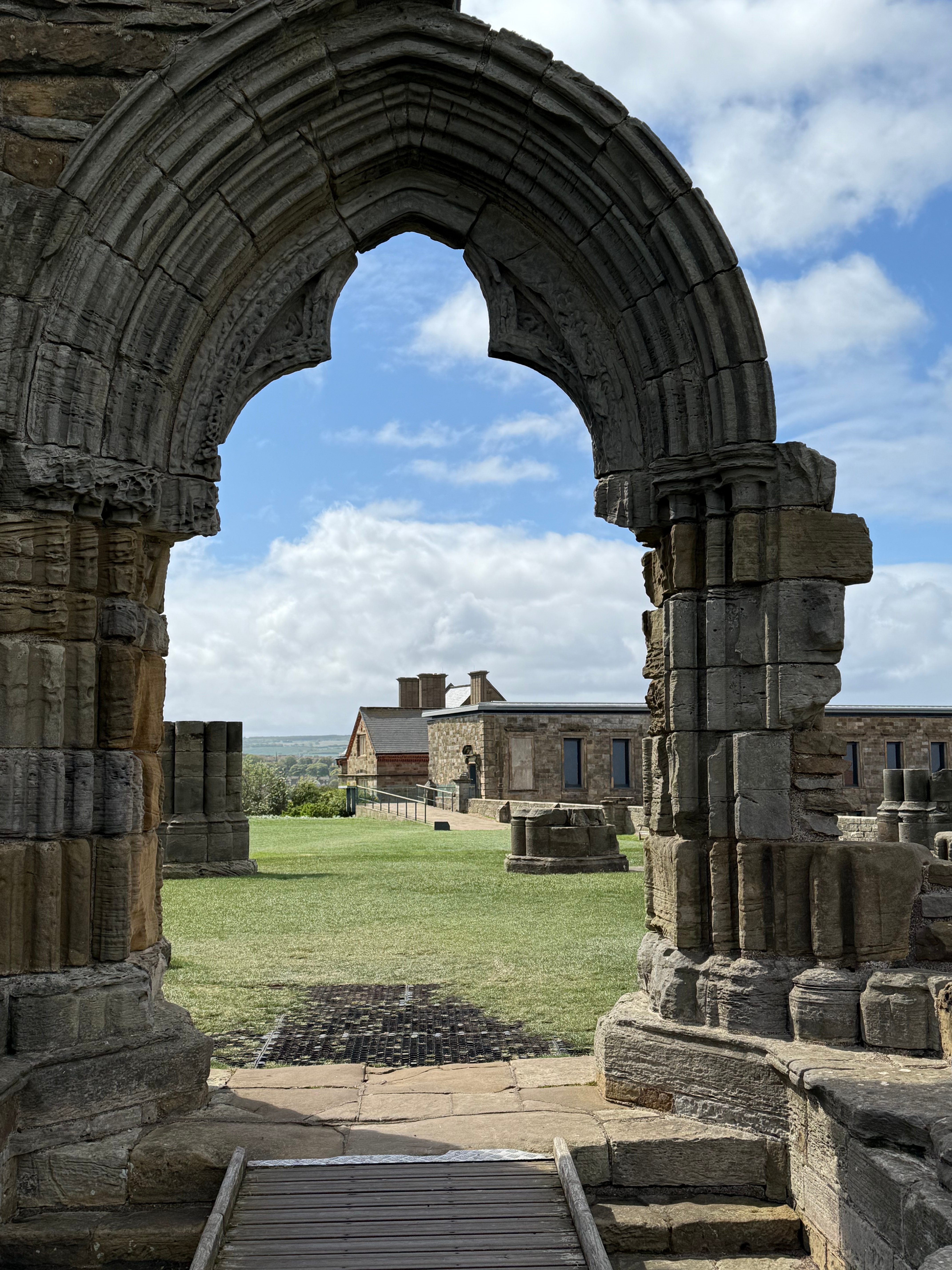
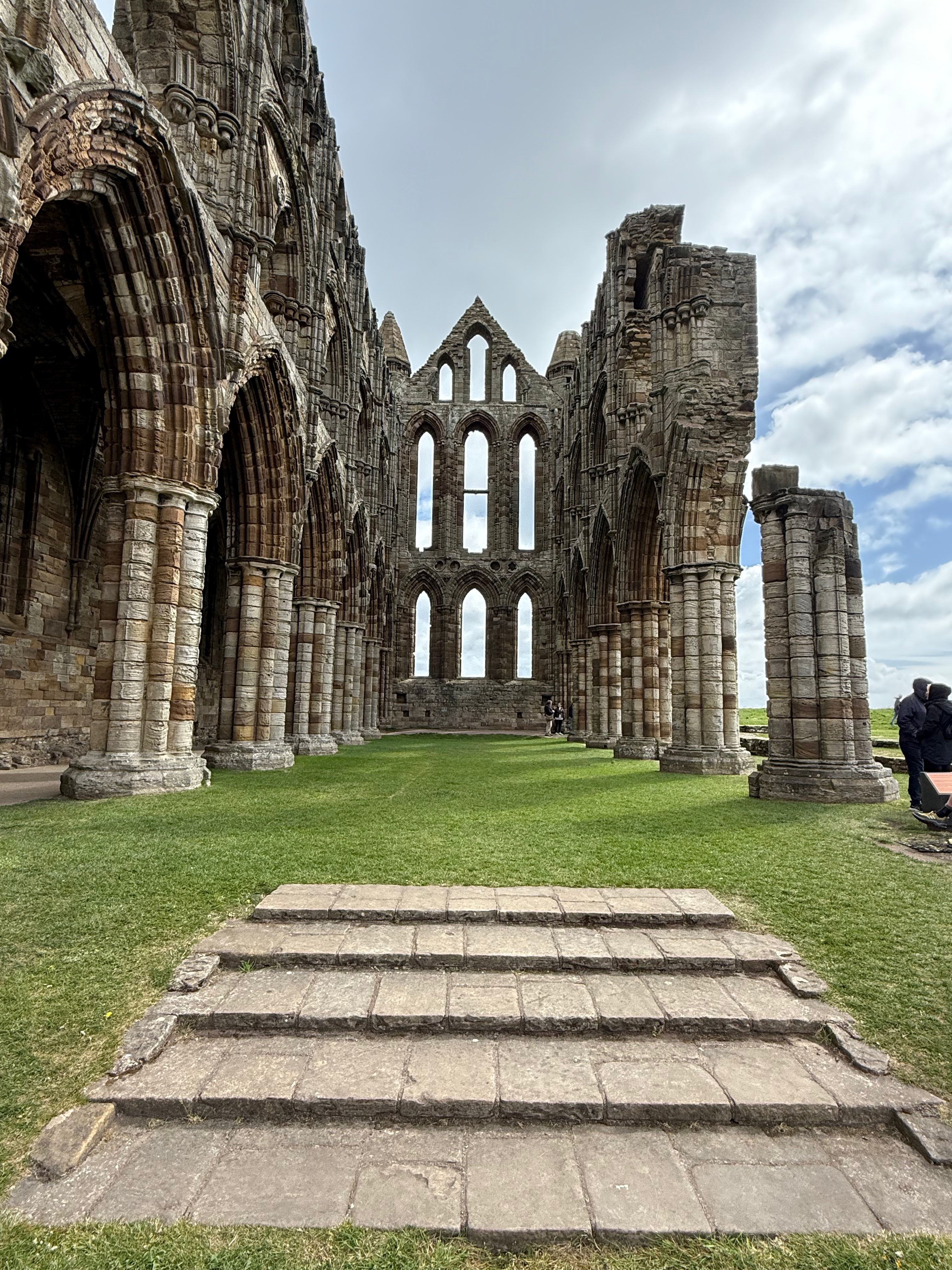
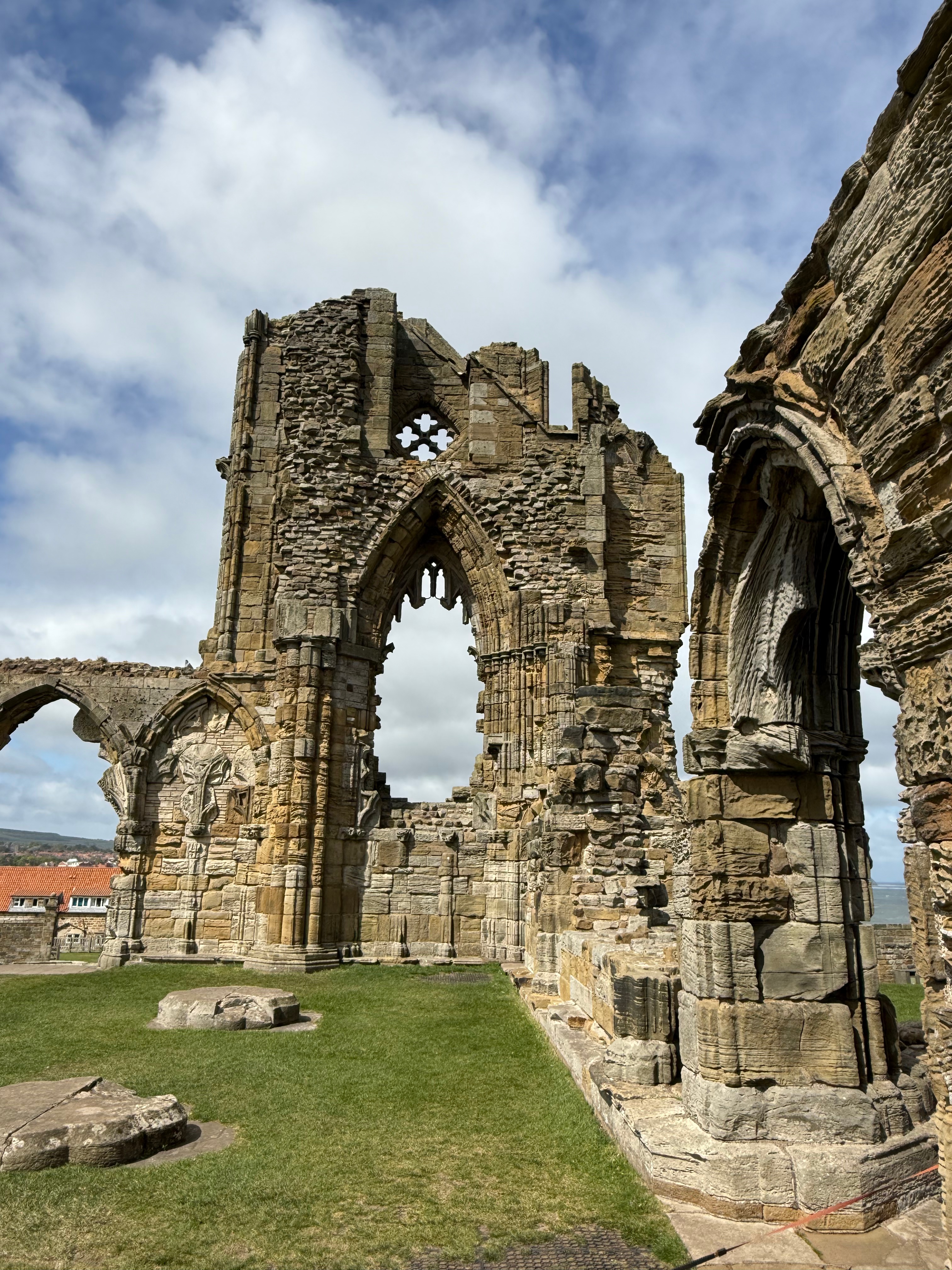
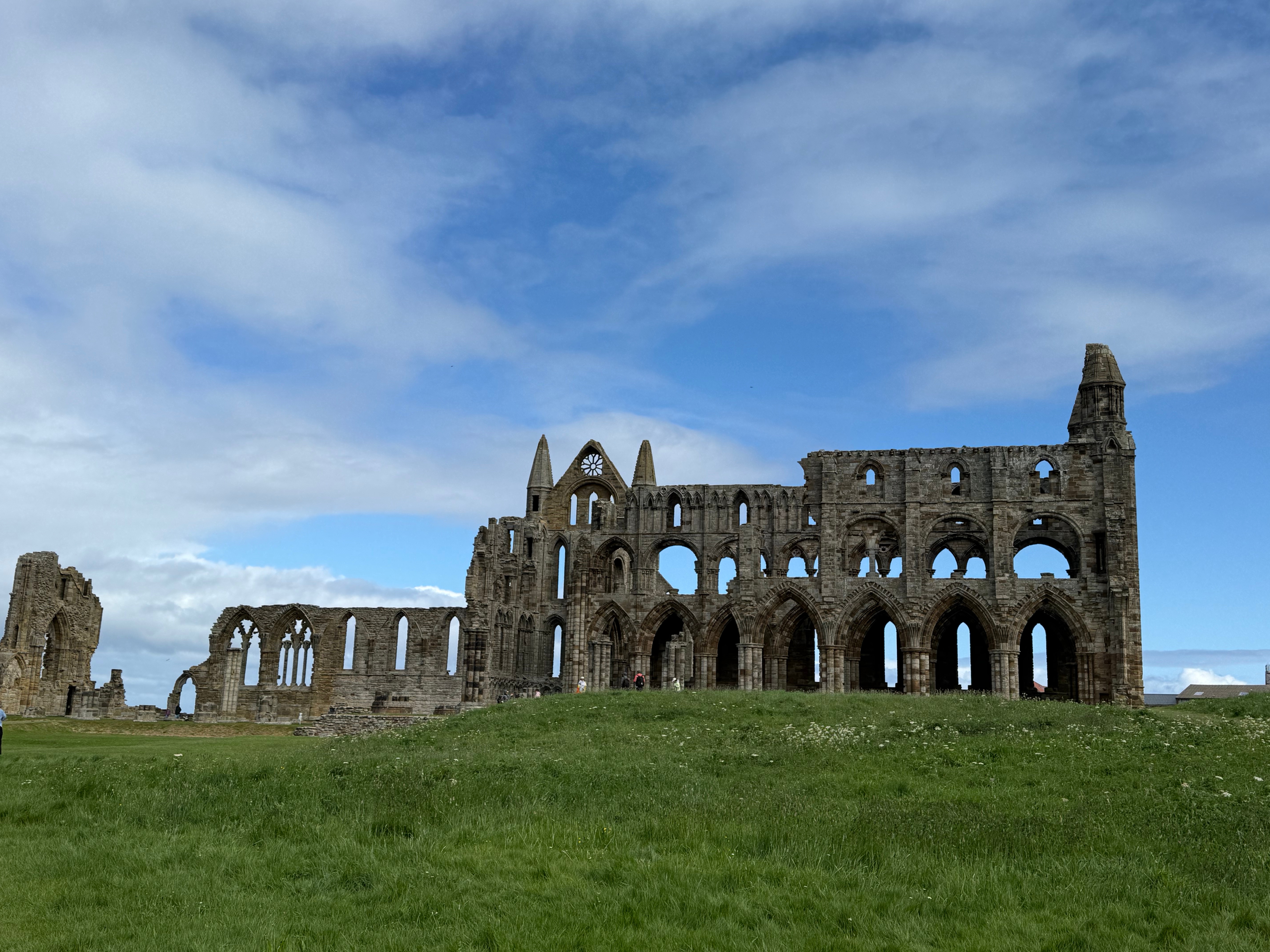
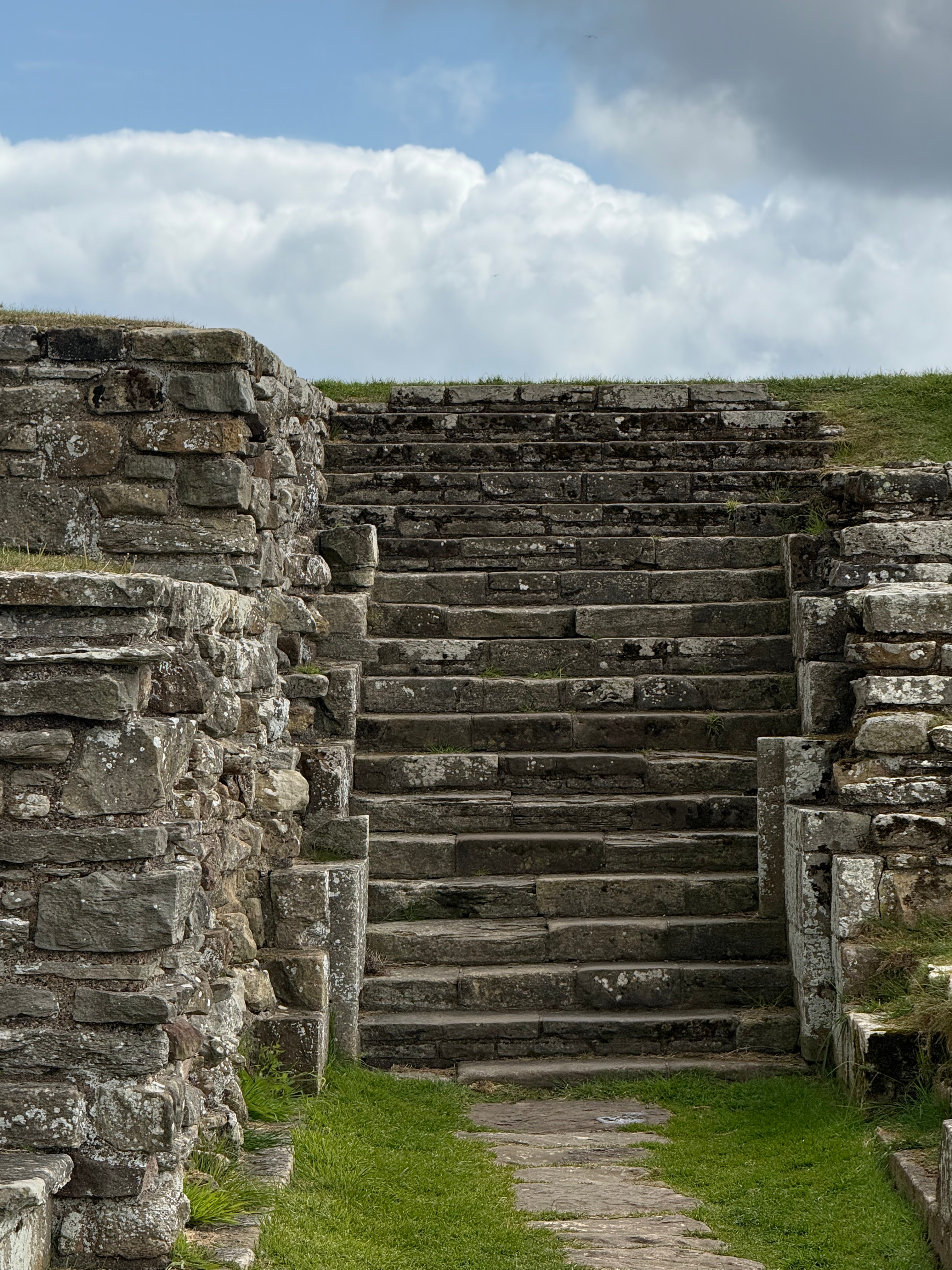
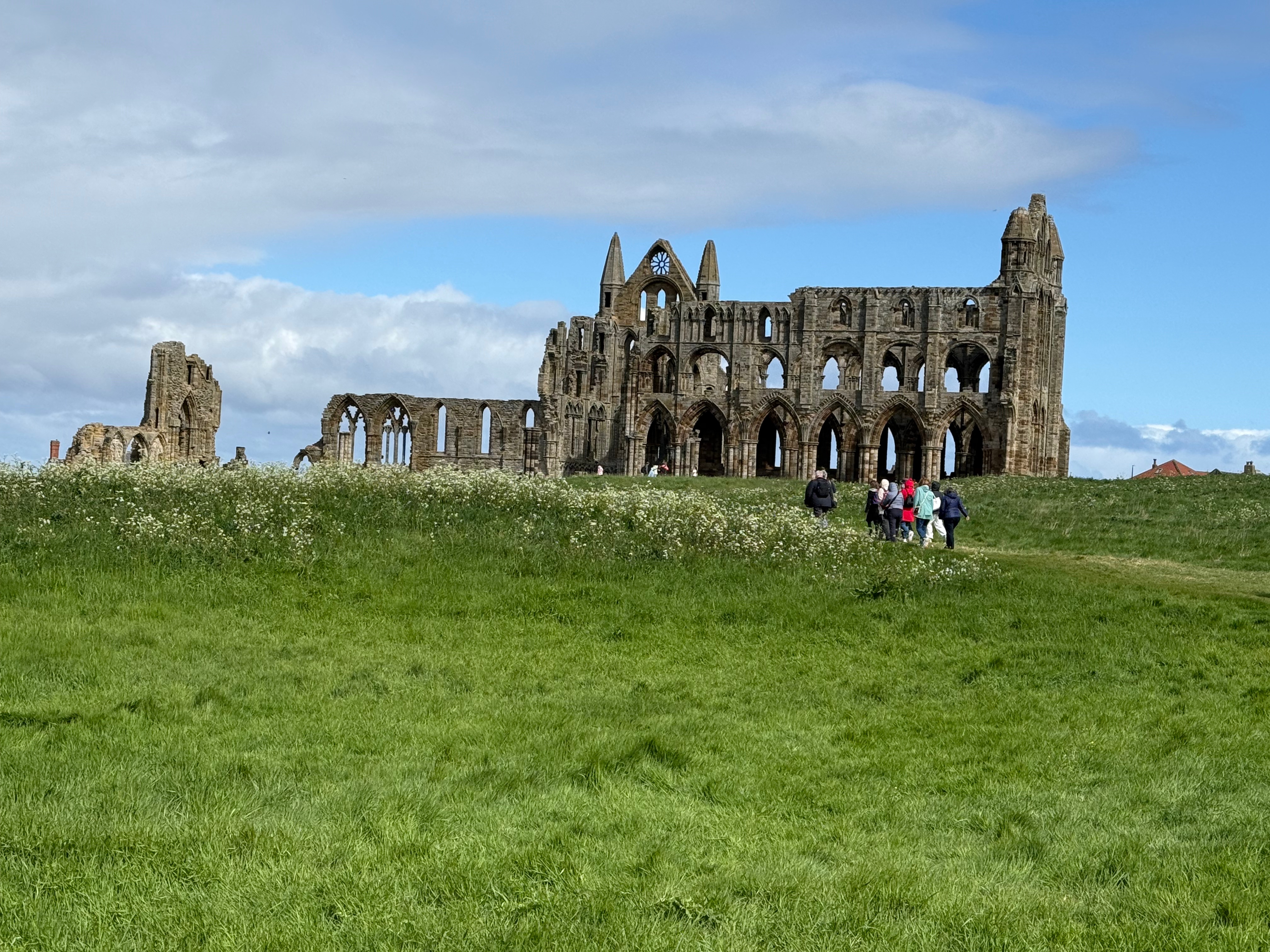
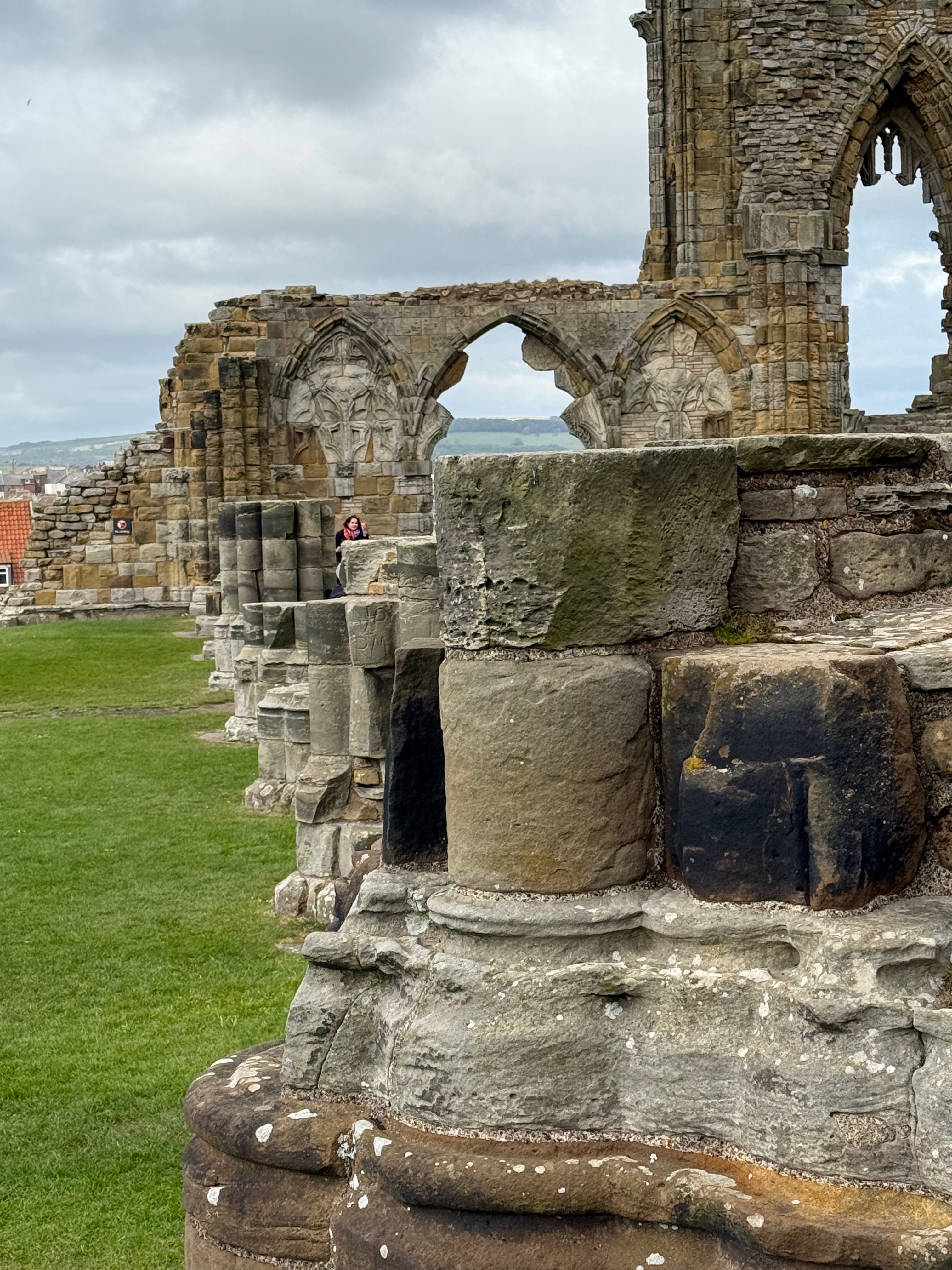
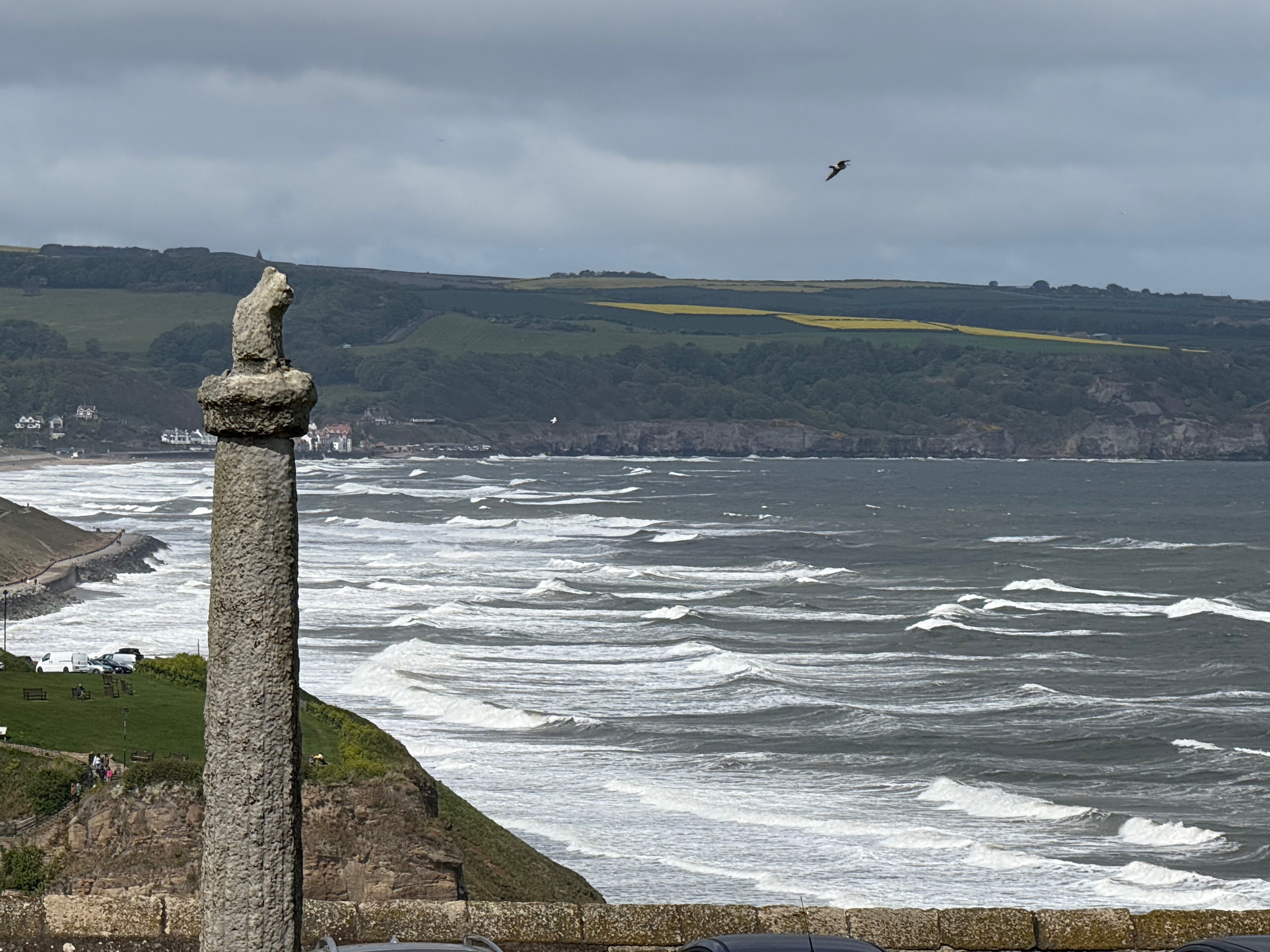
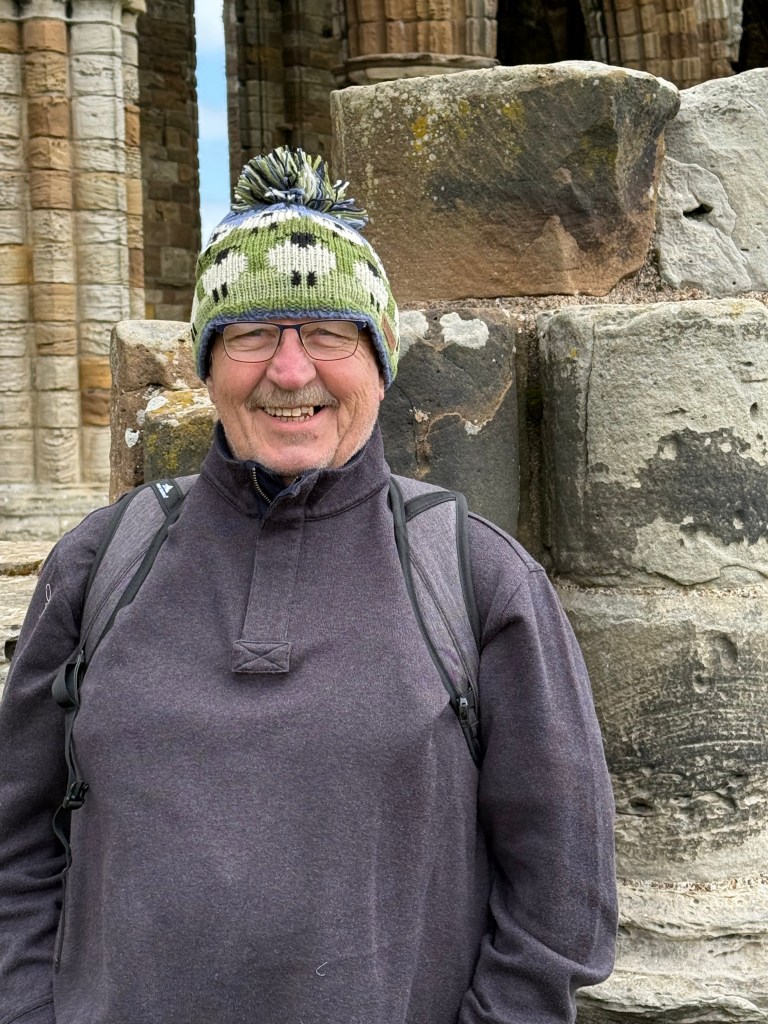
When we arrived at these glorious Gothic ruins, high above the seaside town of Whitby, the wind was in full force and every item of warm clothing was put to immediate use. The ruined Abbey situated high on the east cliff overlooks the North Sea which was heavily pounding the coast while we were trying to find shelter from the wind. Whitby, which is split by the River Esk, is of some historic note to Australians as it is the location of the Captain Cook Memorial Museum, found in the house where Cook once lived. All memorabilia in the very modern English Heritage Centre seems to strongly favour Dracula, although a woollen “sheep” beanie was discovered which did keep Roger’s head and ears delightfully warm.
Everyone seemed glad to be back on the well heated bus as we now travelled 40-miles south, along the coast past Robin Hood’s Bay, Ravenscar and Scarborough on our way to Burton Agnes Hall. Alison gave an exceptional overview of the much-maligned son of Cecily Neville “Richard III in the North”. Then Tracy explored the legitimacy of England’s first Norman King with “Matilda of Flanders and the Birth of a King”. Alison outlined our next stop “Burton Agnes Hall”.
Tour notes: Burton Agnes Hall is a house of immense charm and character. It has many unusual features and is fortunate in having suffered so little from alterations or additions over the centuries. The family stress that it is a ‘lived-in’ home and this welcome quality is perhaps its most appealing asset. Since the adjacent Manor House was built by Roger de Stuteville in 1173, the property has never changed hands by sale, though it has at times passed from family to family. The beautiful proportions of the Hall and its adherence to the principles of Tudor Renaissance architecture (‘Commodity, firmness and delight’) reveal the professional hand of the architect Robert Smythson, Master Mason to Queen Elizabeth I and builder of other glorious houses such as Longleat, Wollaton and Hardwick. It is the only Smythson house where the plan still exists, in the RIBA collection. In his definitive book on the Smythsons, Mark Girouard called Burton Agnes a ‘splendid and glittering composition’. Here, you will learn about the ghost of Anne Griffith and her screaming skull.
The Norman Manor House is a rare survival from the period, but was encased in brick during the seventeenth century, when it was used as a laundry block. The lower chamber still survives in all its gloomy Norman splendour, with massive piers supporting a groined and vaulted roof, reinforced with heavy chamfered ribs. The upper room is thought to have been the Great Hall of Sir Walter Griffith, constructed in the mid-fifteenth century (the timber roof put up then is still in place). Behind the building is a rare example of an old water wheel worked by a donkey, which drew up water from the well.
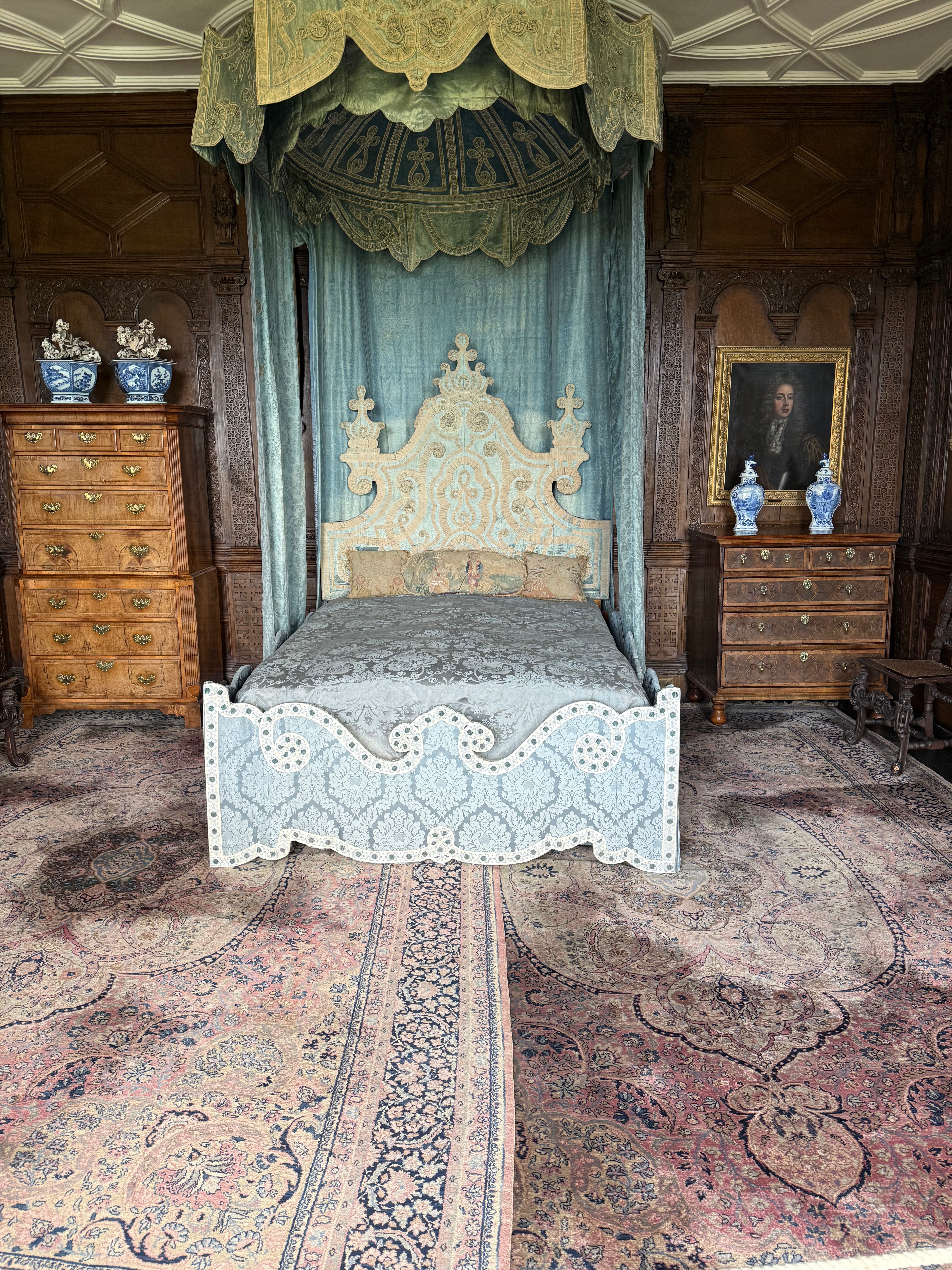
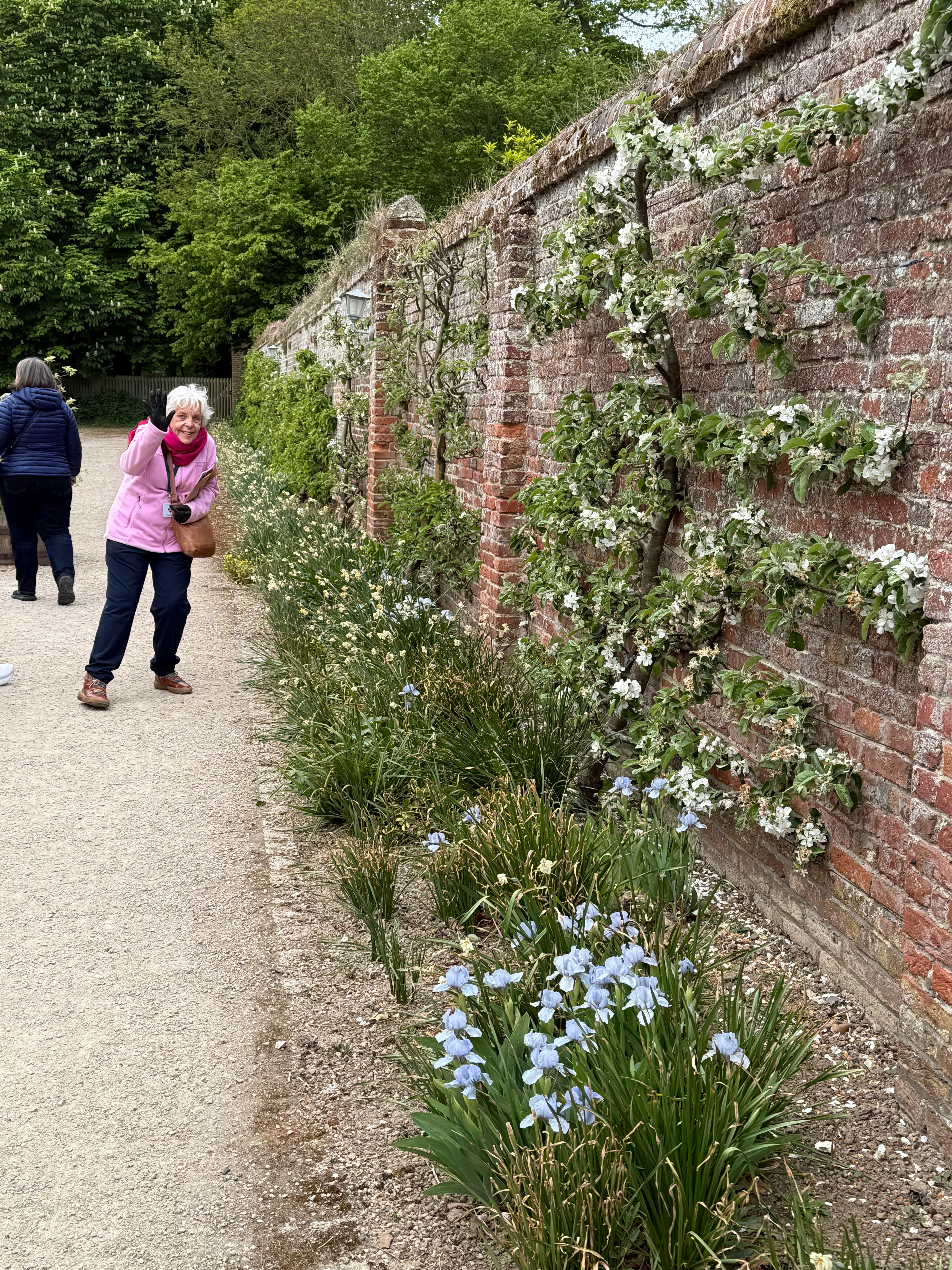
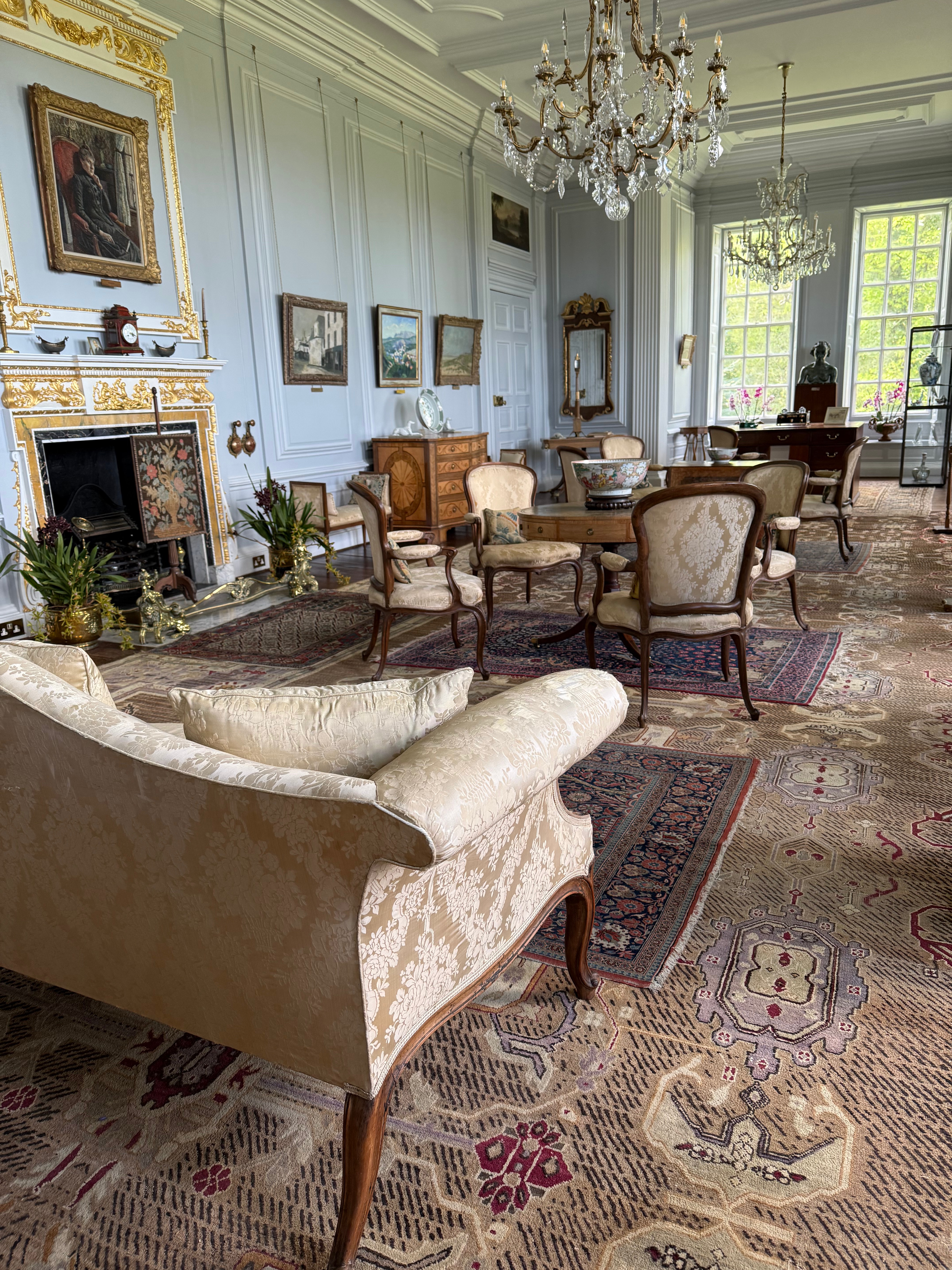
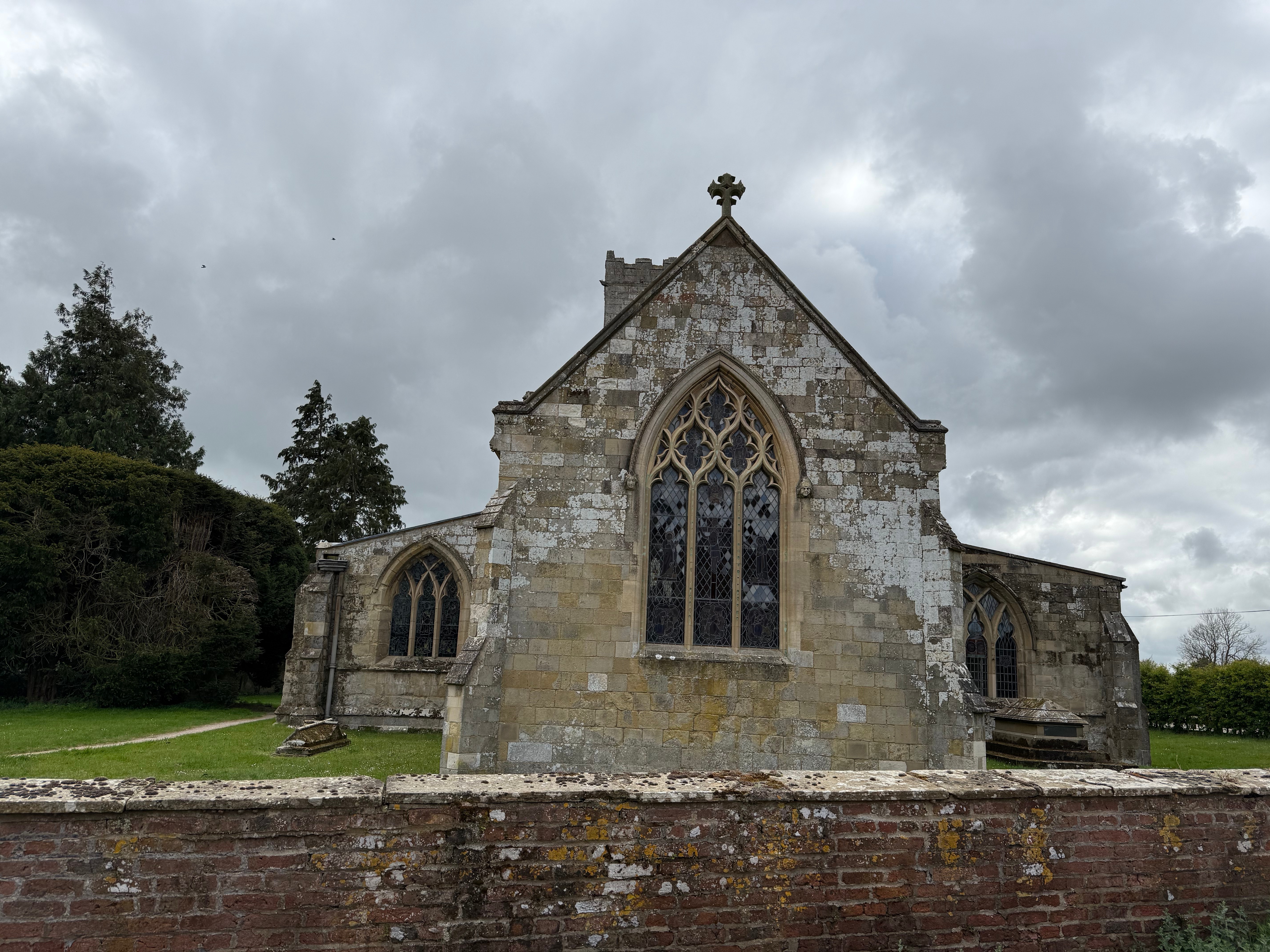
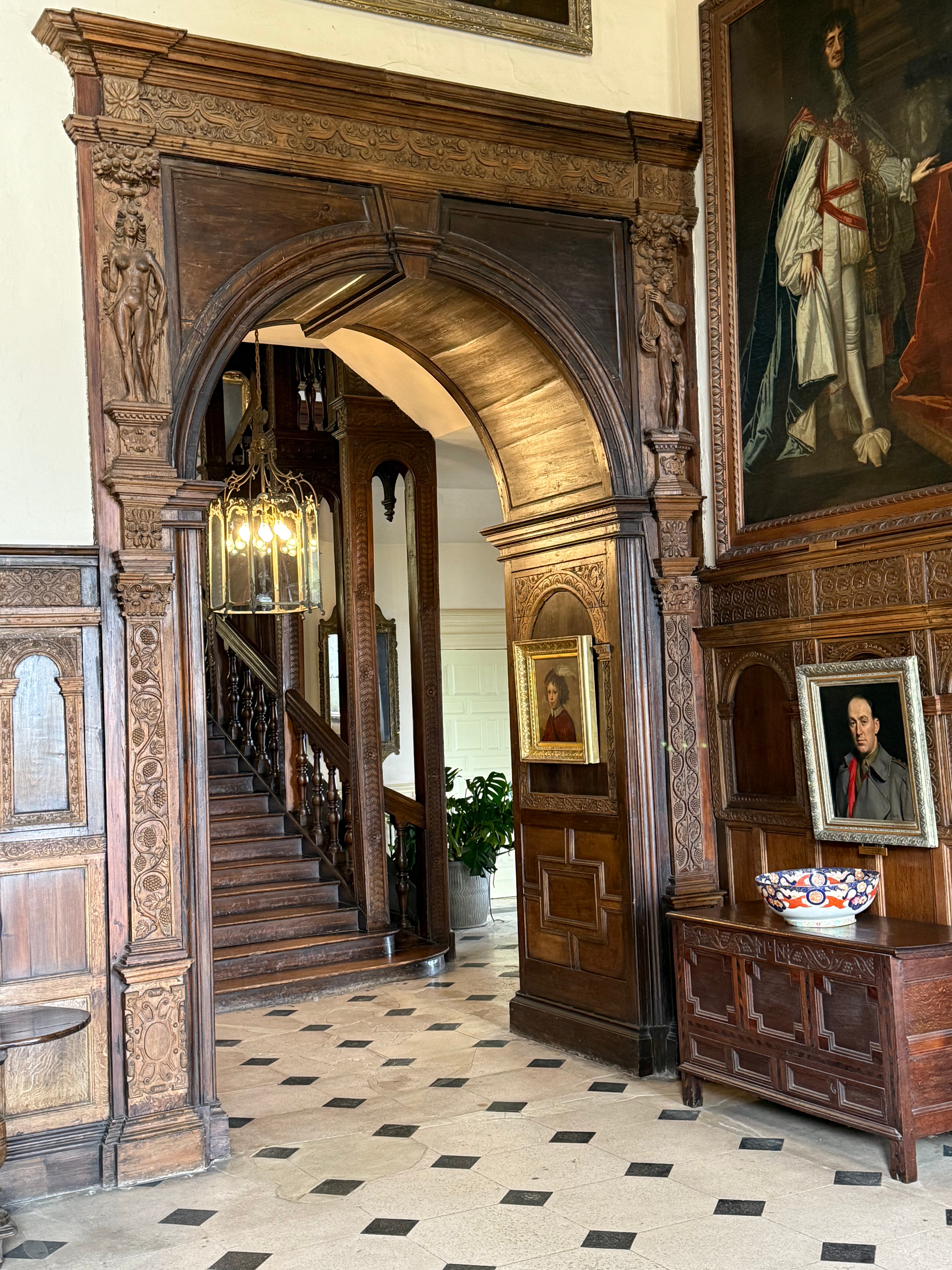
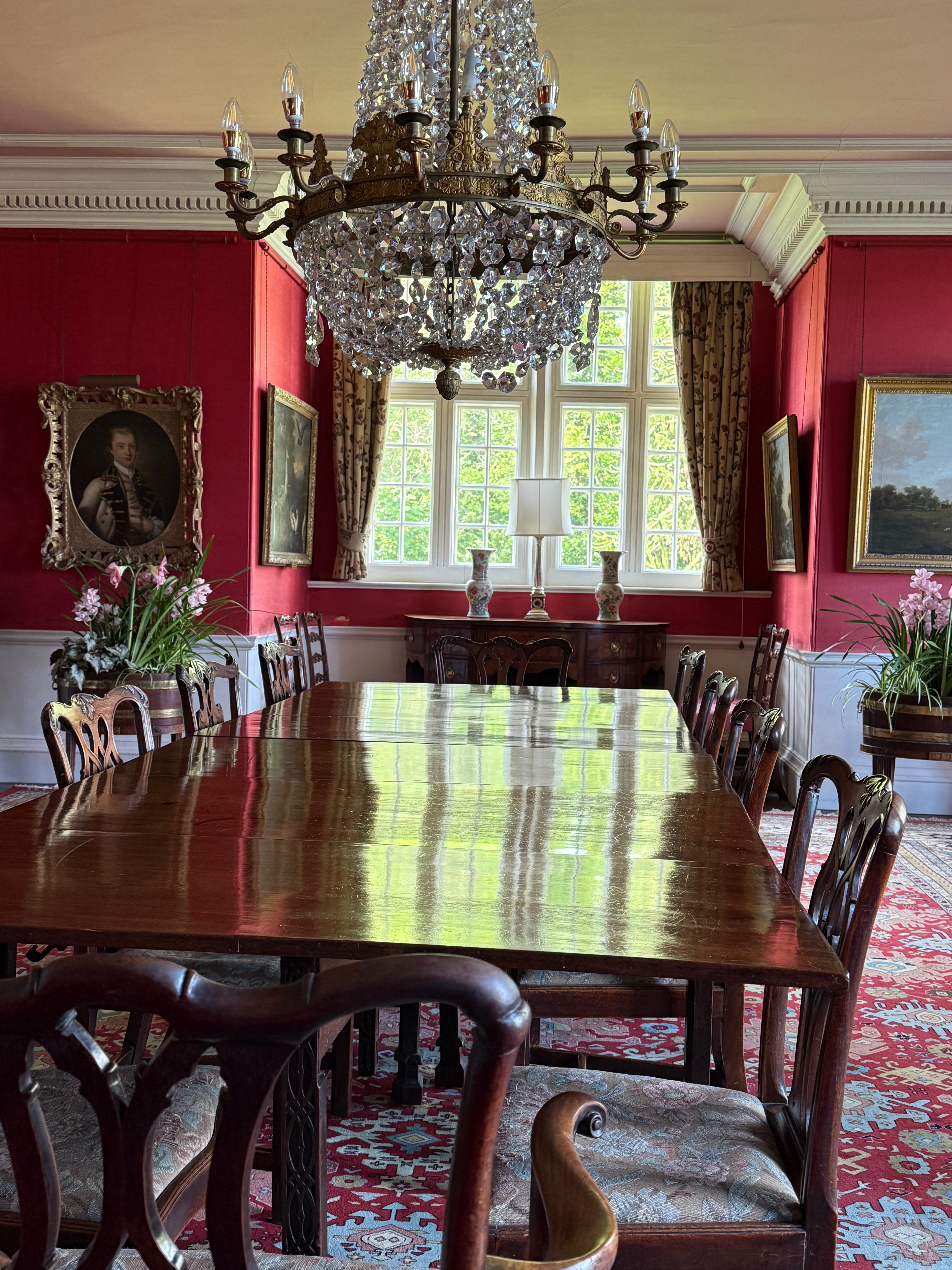
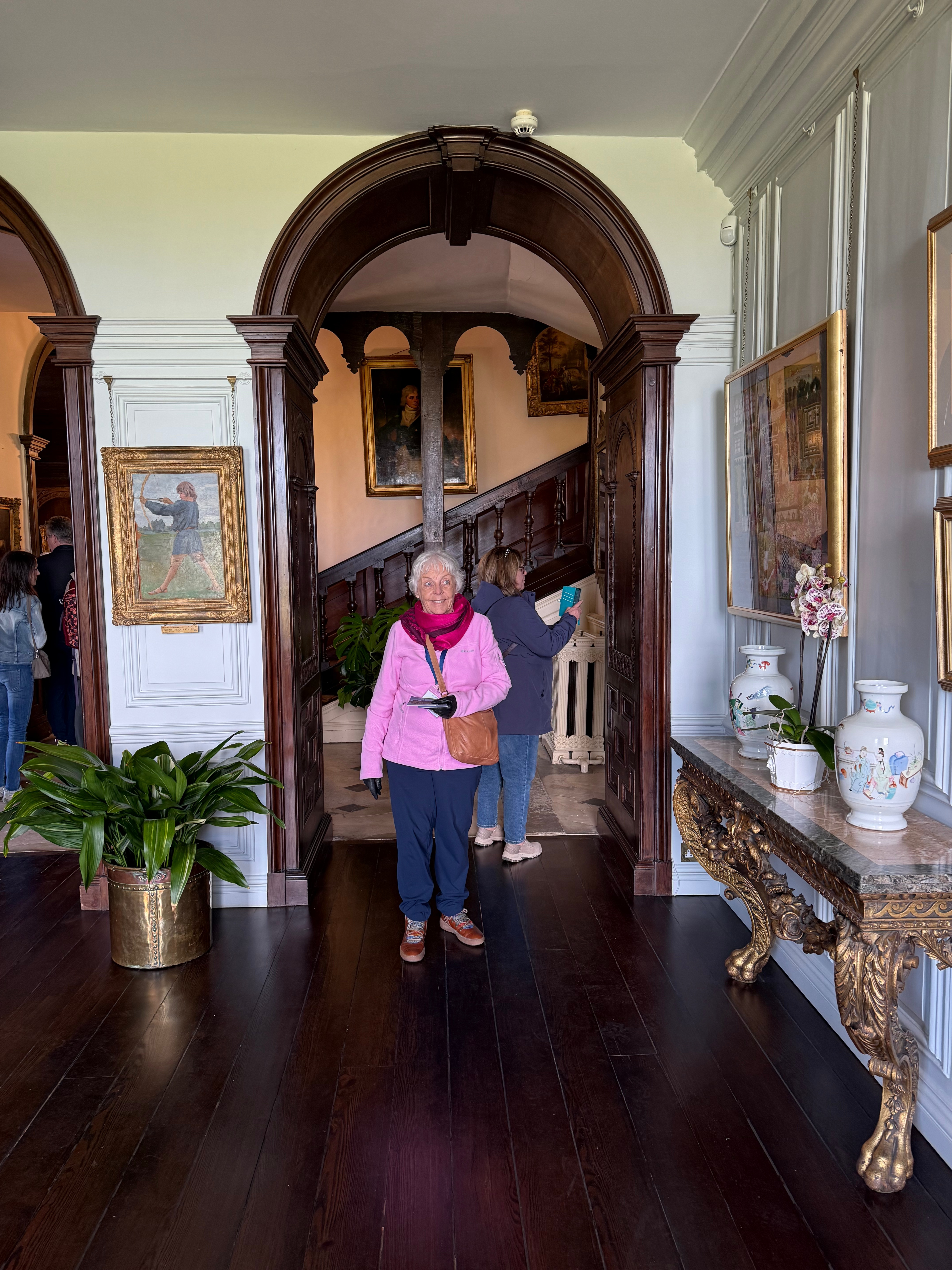
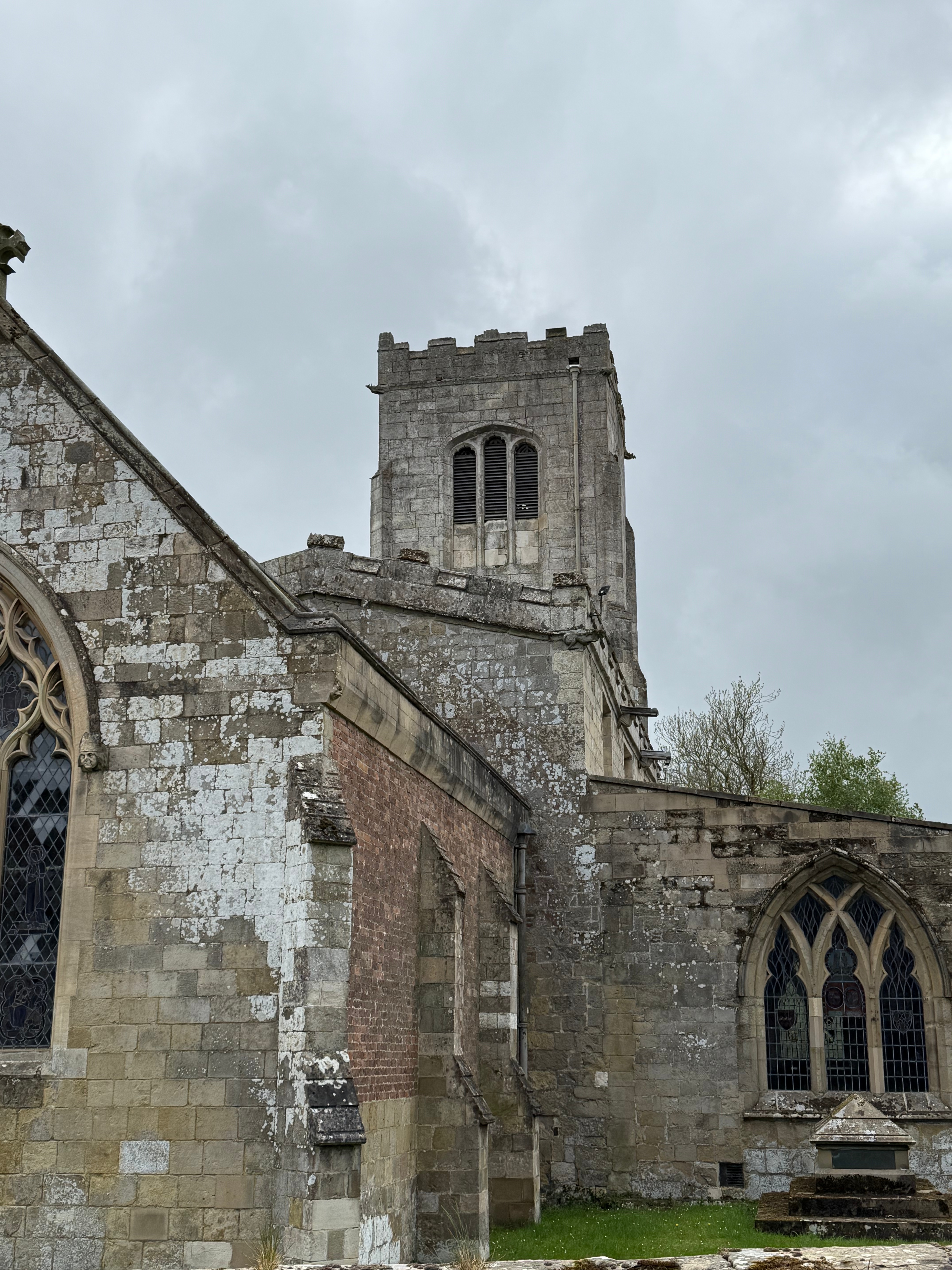
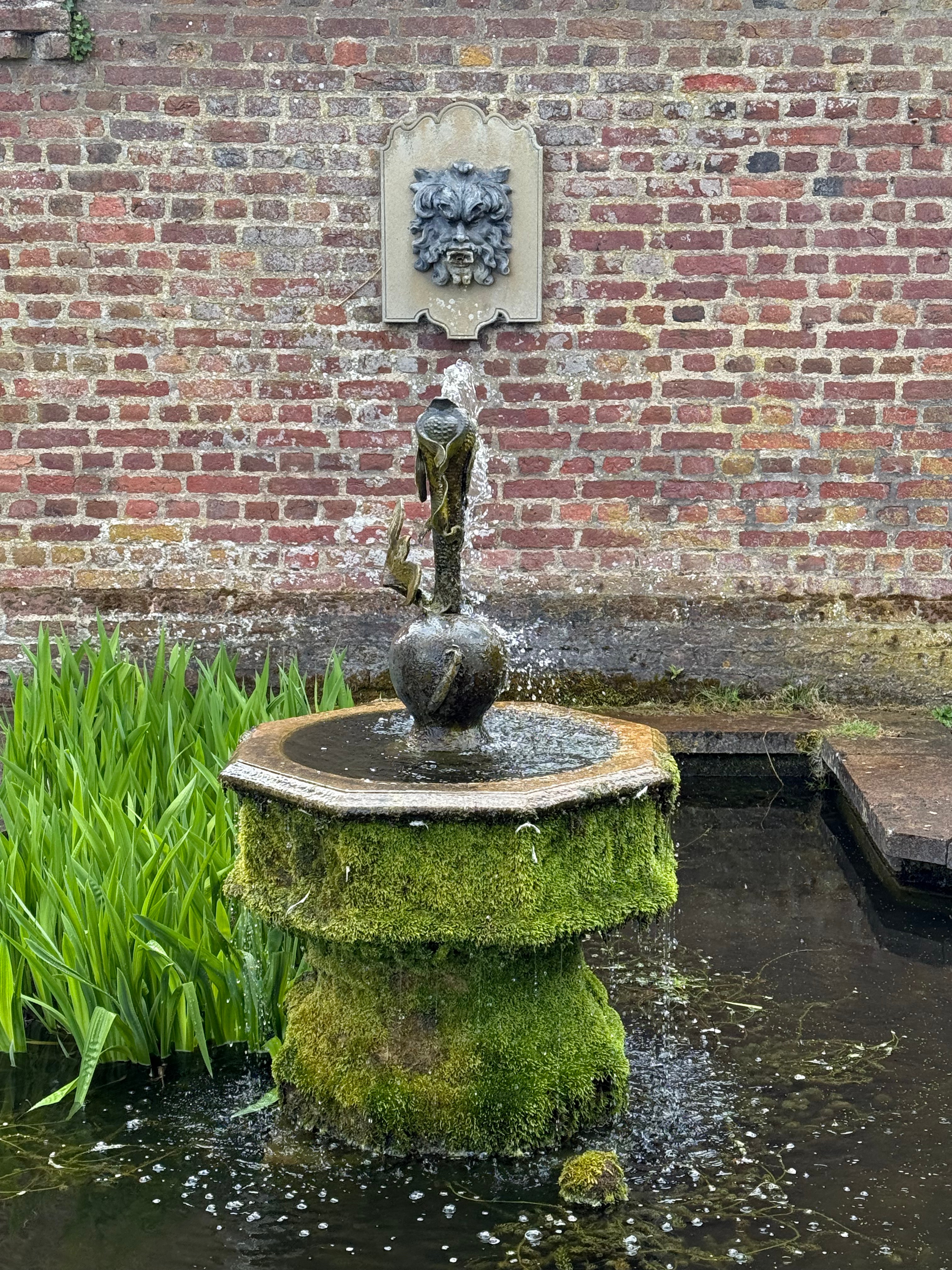
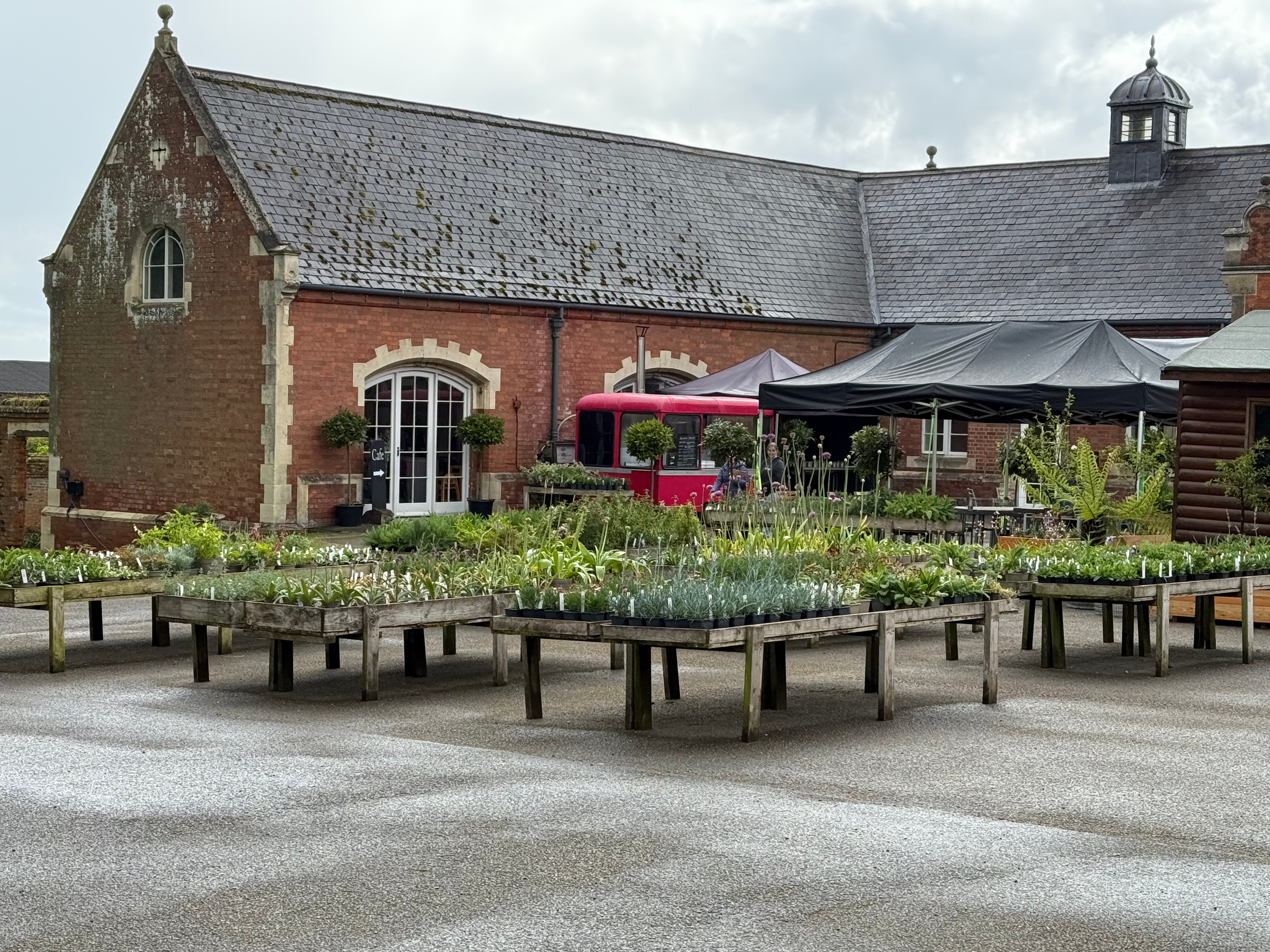
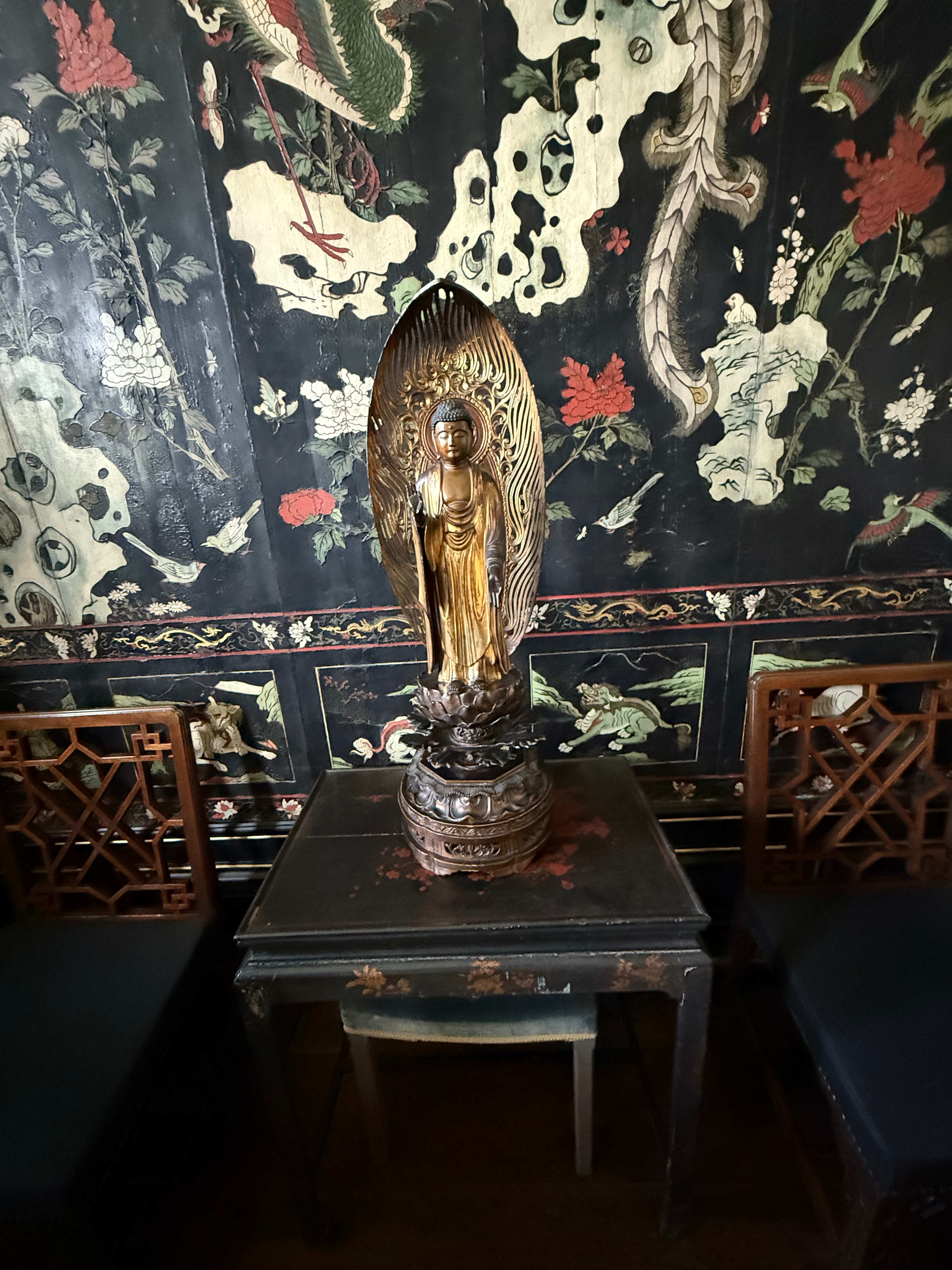
Burton Agnes Hall is an Elizabethan Manor House built in the early 1600’s that has been owned by the one family for nine hundred years. The original Norman Manor House is still standing, one of only 20 still surviving in England. The walled garden is exceptional, complete with a maze and access to a deer park. The Hall has rooms always ready should an English King or Queen to drop in for an evening or two! Like all the Halls we have visited, there is an opulence and size that screams grandeur on a large scale.
Tracy displayed her speaking skills with “Henry VIII, Catherine Howard and the Scandalous Northern Progress of 1541” before Sarah prepared us for the evening with a talk entitled “Stately Homes on Screen 1: from Brideshead to Bridgerton.”
Back to the hotel, we had an hour to change and prep for one of the highlights of this Tour –
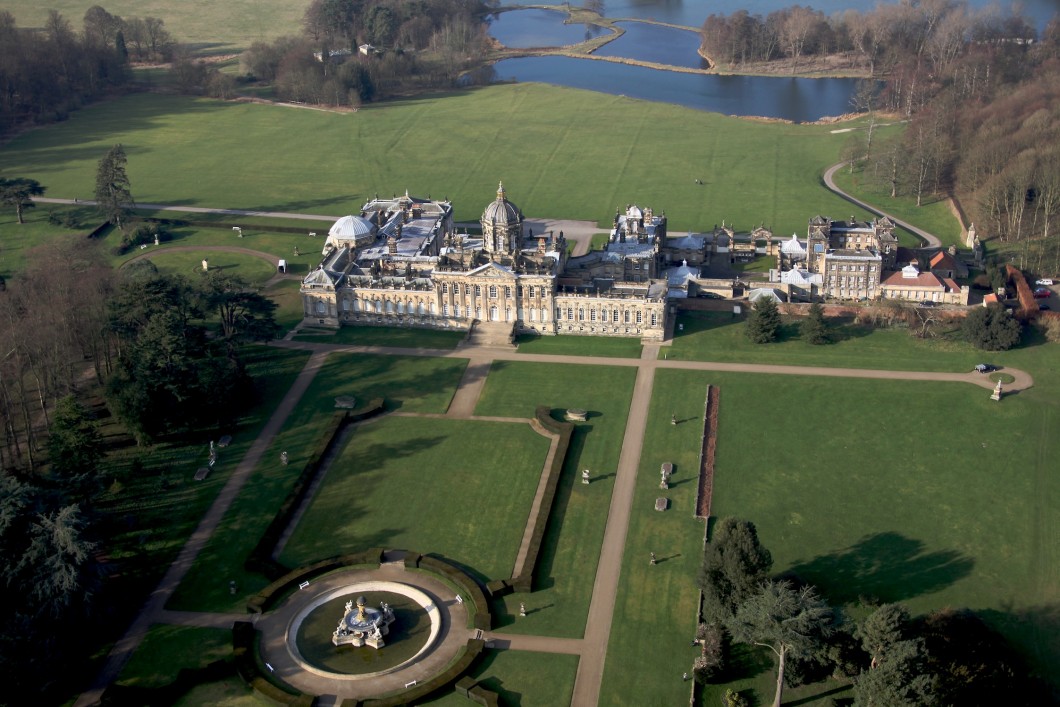
We are off to THE Castle Howard for drinks, a tour and dinner in the Great Hall. Fittingly, Alison talked all things Castle Howard on our drive to what Wikipedia says “is an English country house 15 miles from York. A private residence, it has been the home of the Carlisle branch of the Howard family for more than 300 years.”
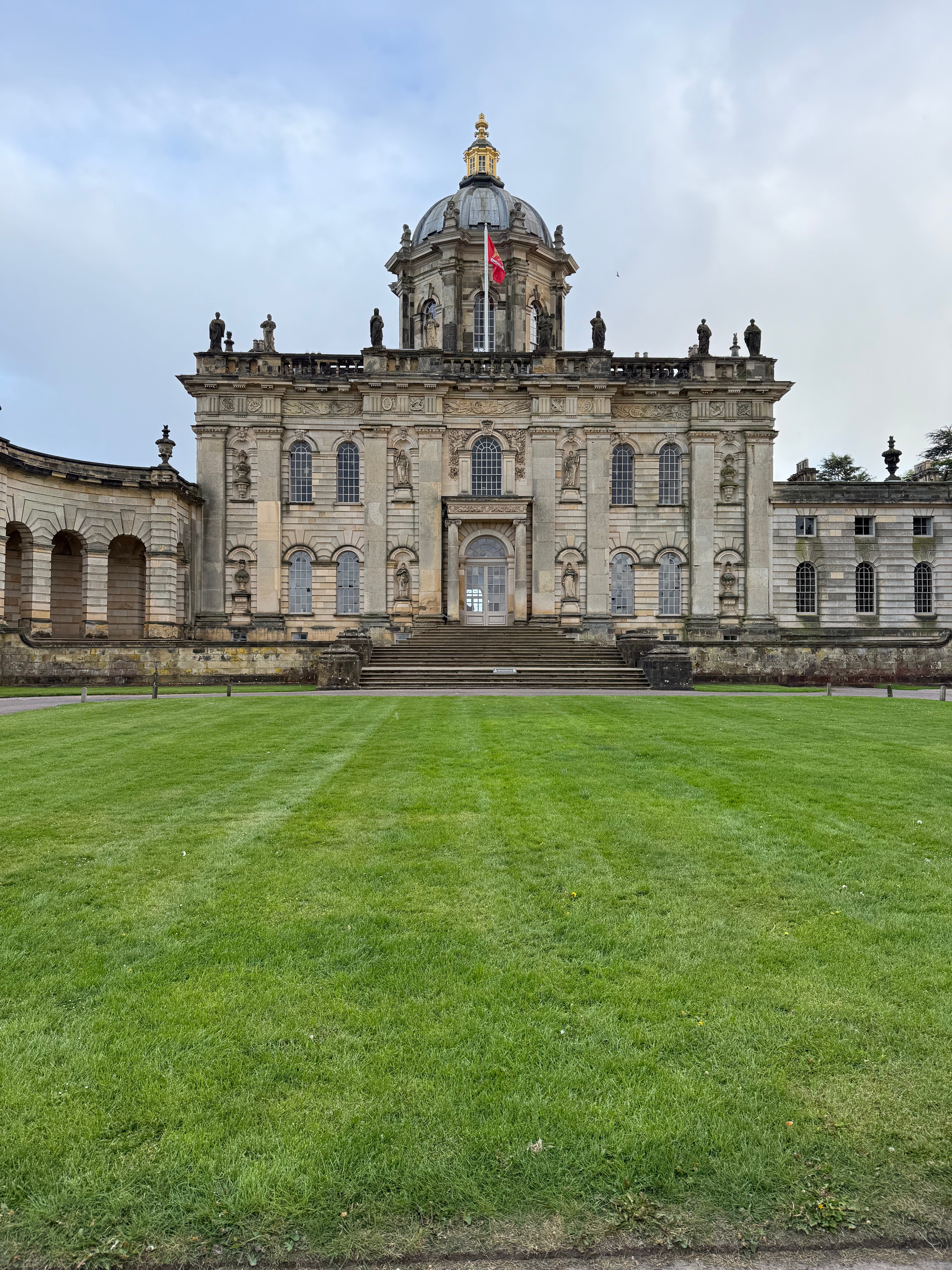
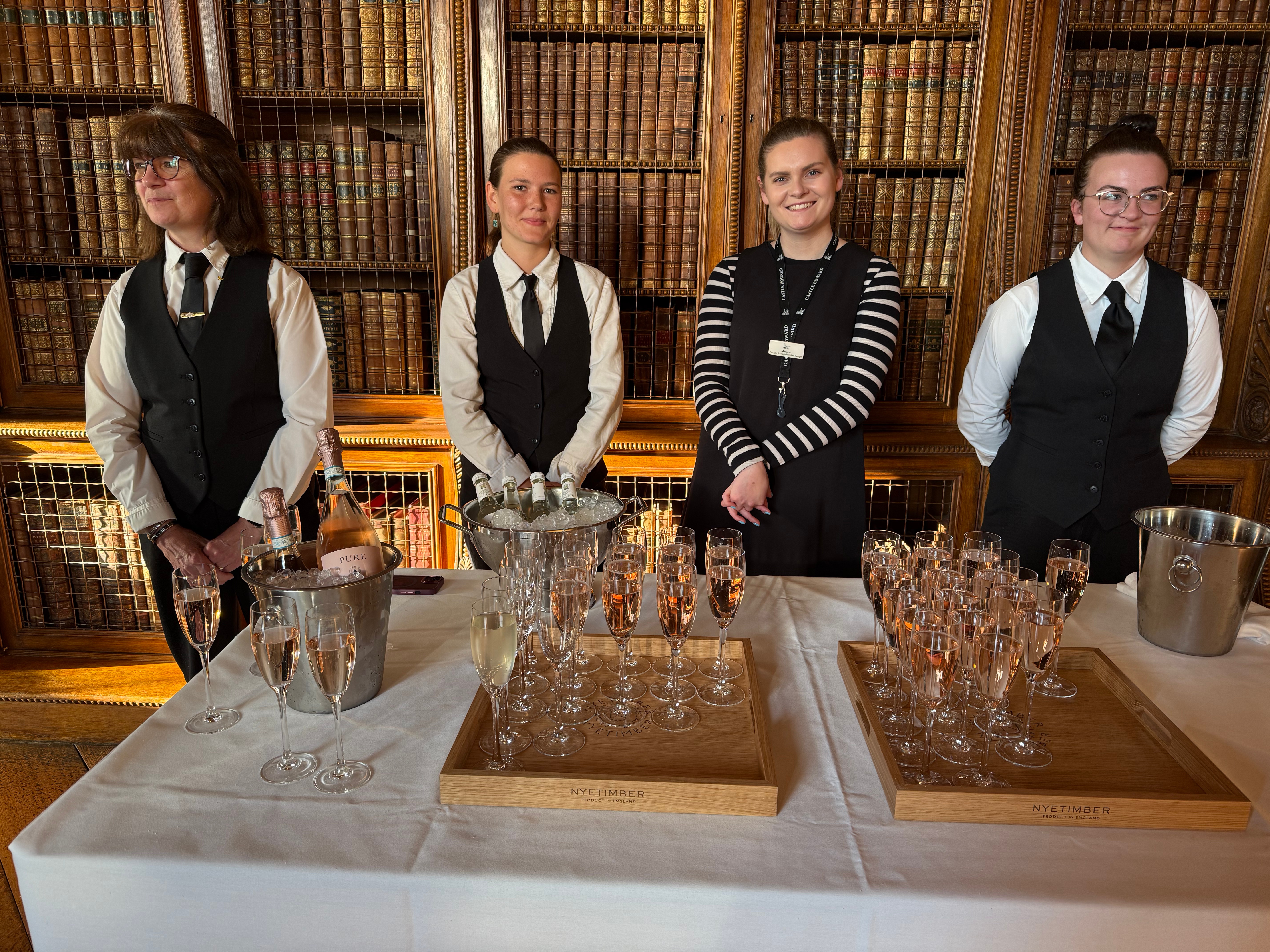
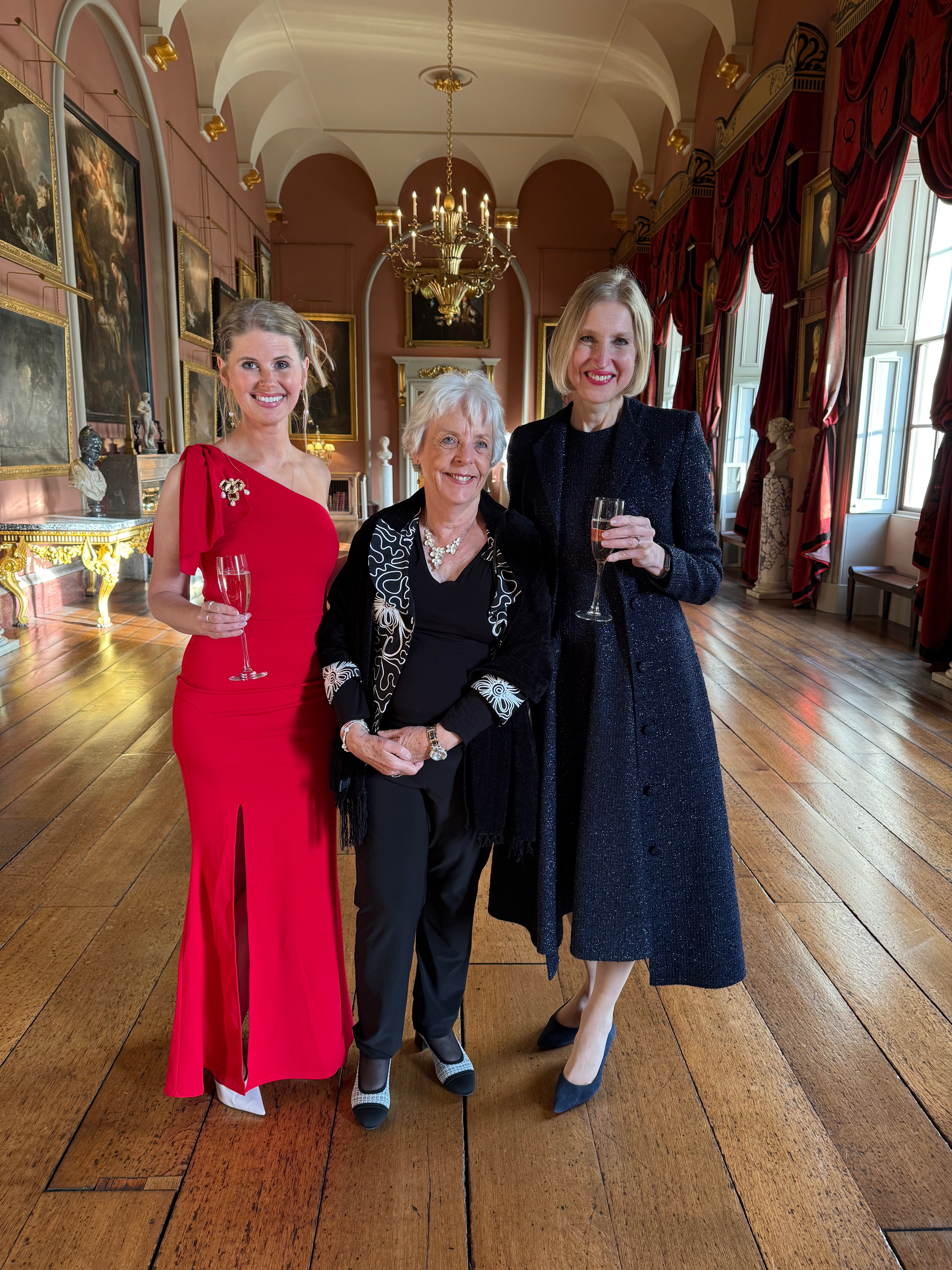
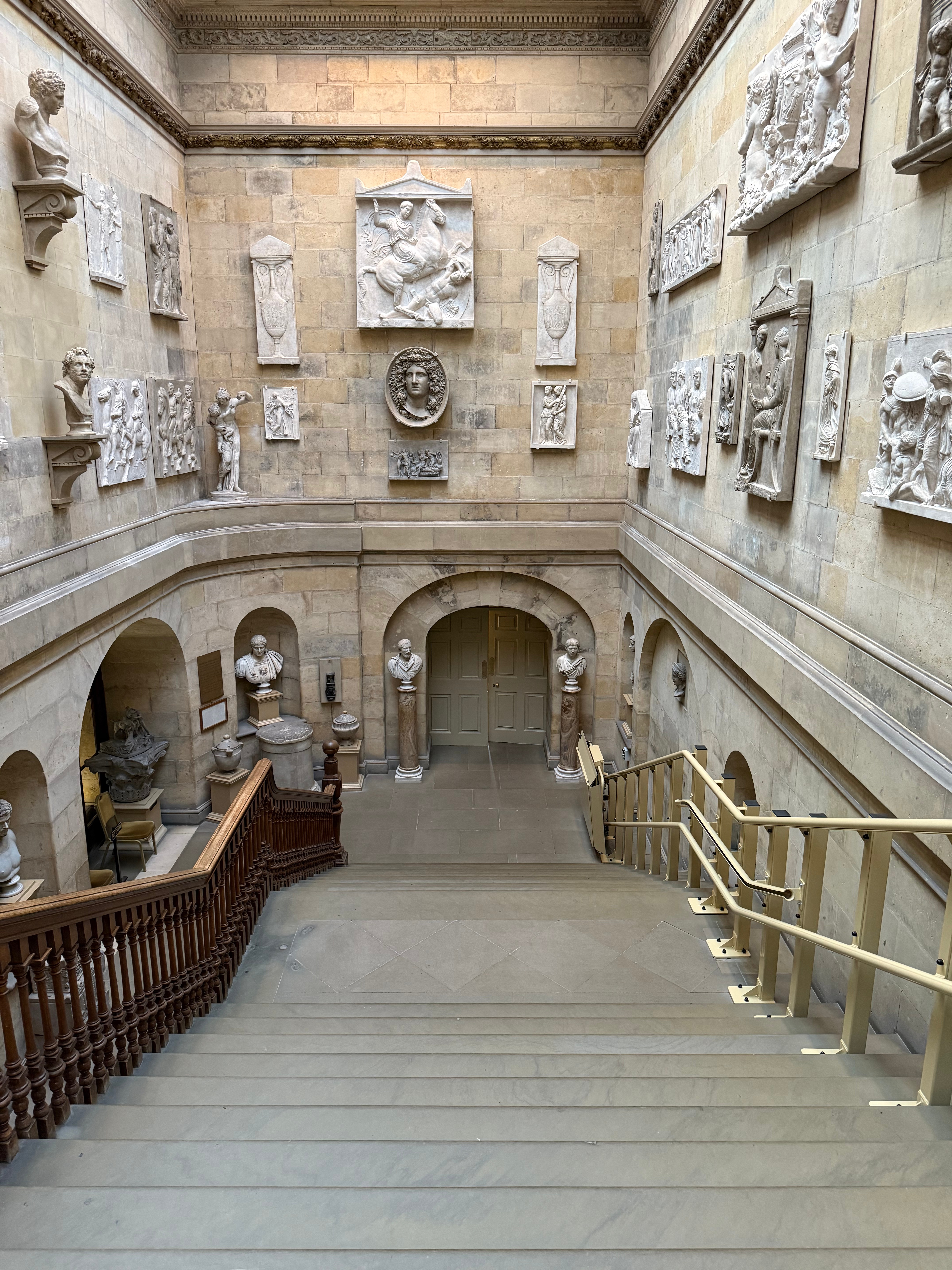
Tour notes: Castle Howard is an architectural masterpiece set within the breathtaking North Yorkshire countryside. The house stands within extensive parkland and formal gardens, where peacocks roam. The setting is idyllic, but it is the house itself that draws the eye. Castle Howard is centred on a striking dome, with two wings enclosing a courtyard. It is the family home of the Howard family, descended from Lord William Howard the youngest son of Thomas Howard, 4th Duke of Norfolk.
Although the building work for the house began in 1699, the construction of Castle Howard took over 100 years to complete, spanning the lifetimes of three Earls. It houses some fascinating exhibitions and displays giving a glimpse the rich and varied history of Castle Howard. The house with its Chapel sits in 1000 acres of gardens a parkland, with woodland walks, temples, lakes and fountains to explore.
To the north, the ground falls away to a large lake, to the south, formal gardens share space with more water features and several glorious follies. In 1982, Castle Howard was chosen as the setting for the television production of Evelyn Waugh’s novel Brideshead Revisited. A permanent exhibition relating to the filming of the television series can be seen by visitors to the house.
Yes, the house is breathtaking, we had a grand time; and yes, the meal was magnificent. For the record, Roger had Braised cheek of Howard estate-reared beef, wild mushrooms, butter-braised potato fondant, broccoli and red wine sauce; and Vicki greatly enjoyed the Fillet of butter-roast North Sea sole, Jersey Royal potatoes, poached local asparagus, samphire and caviar beurre blanc
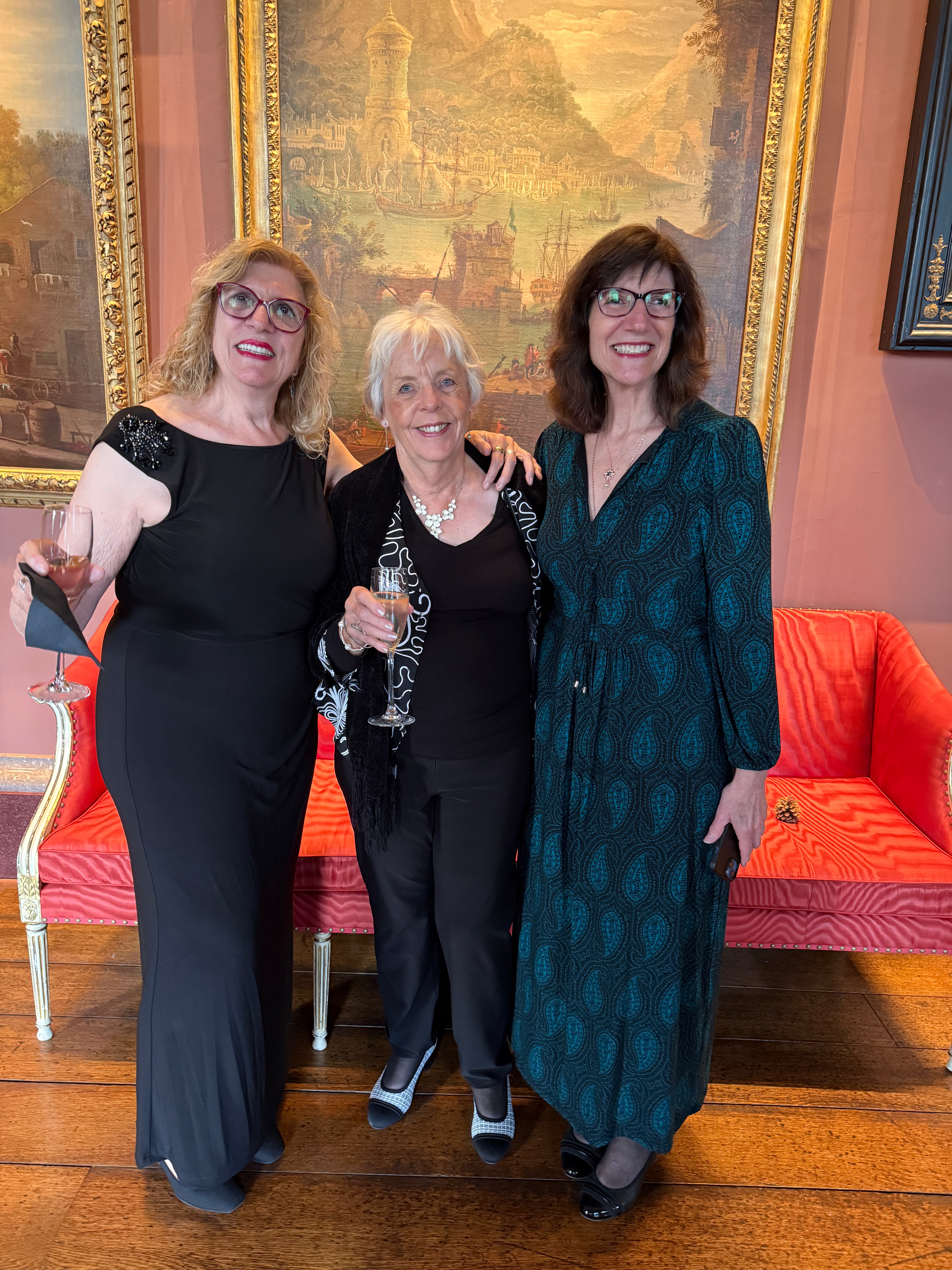
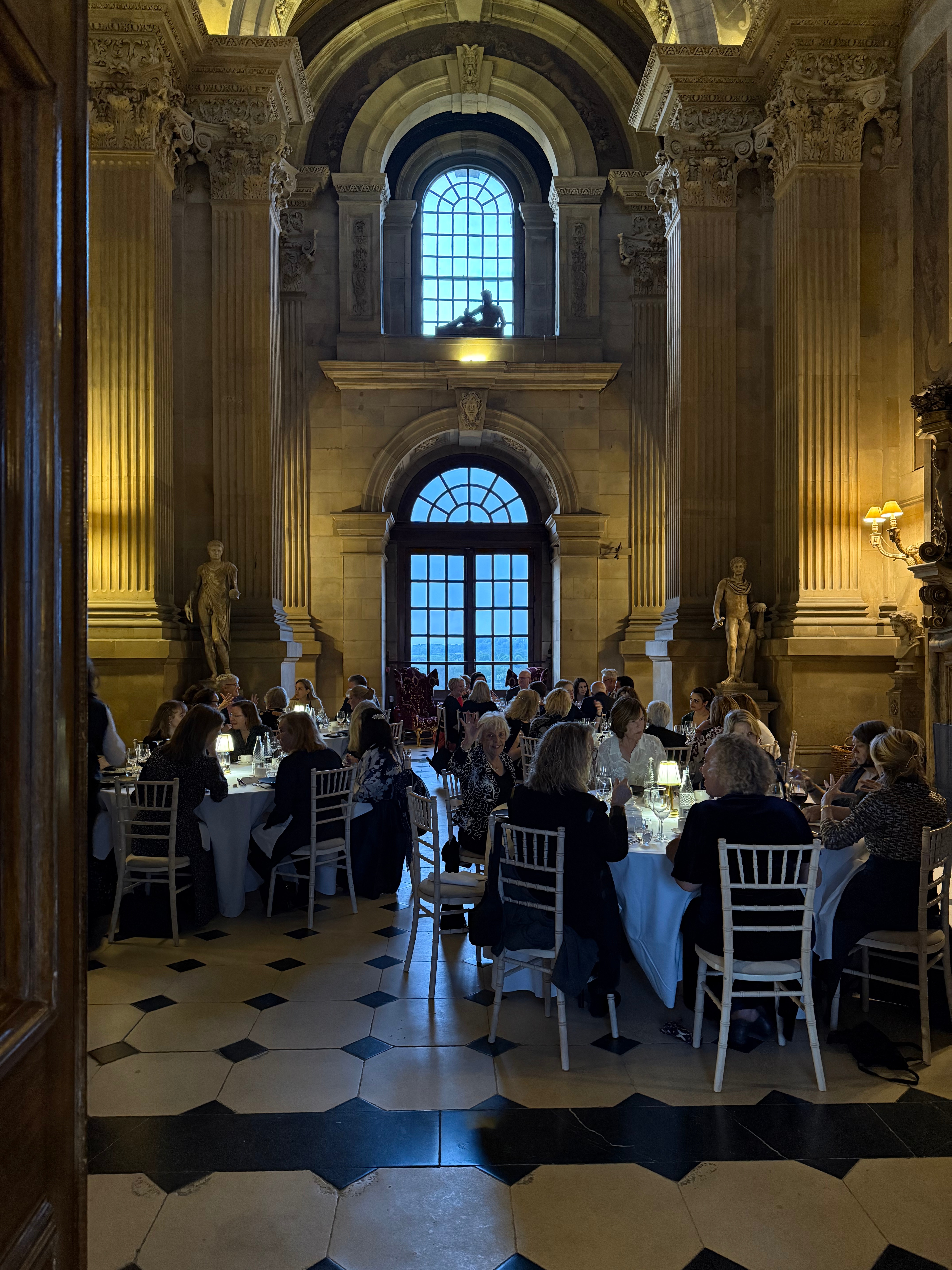
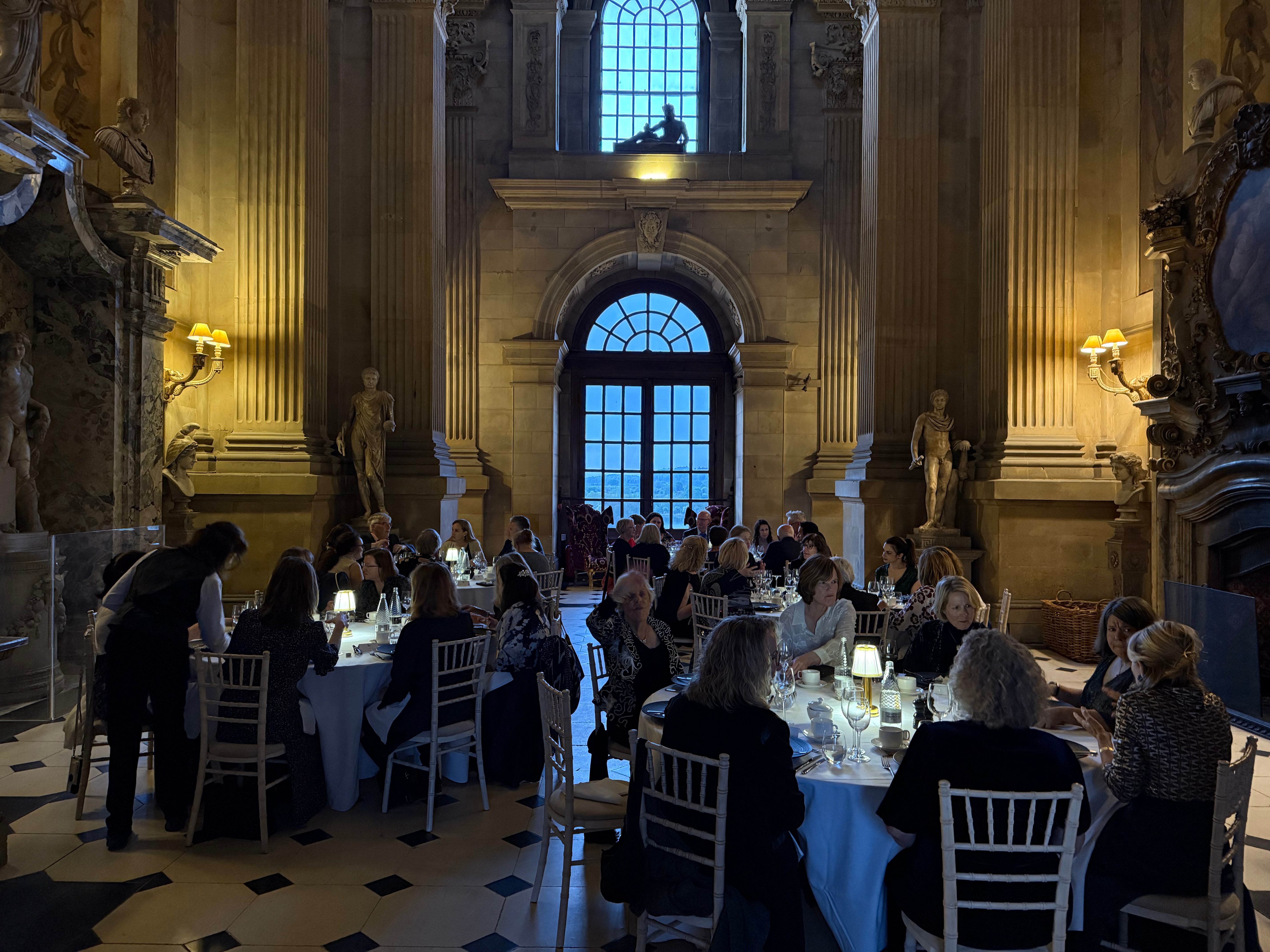
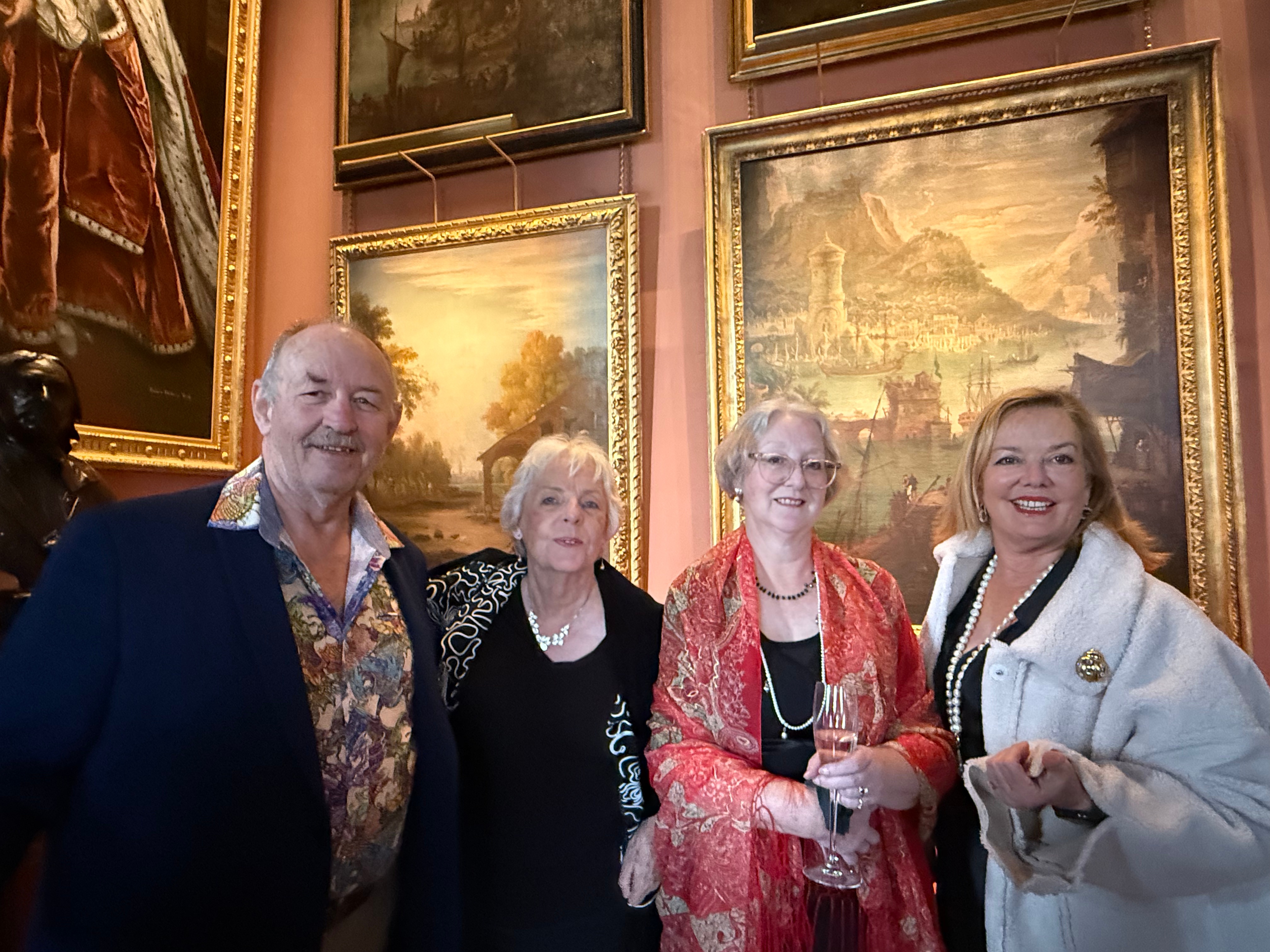
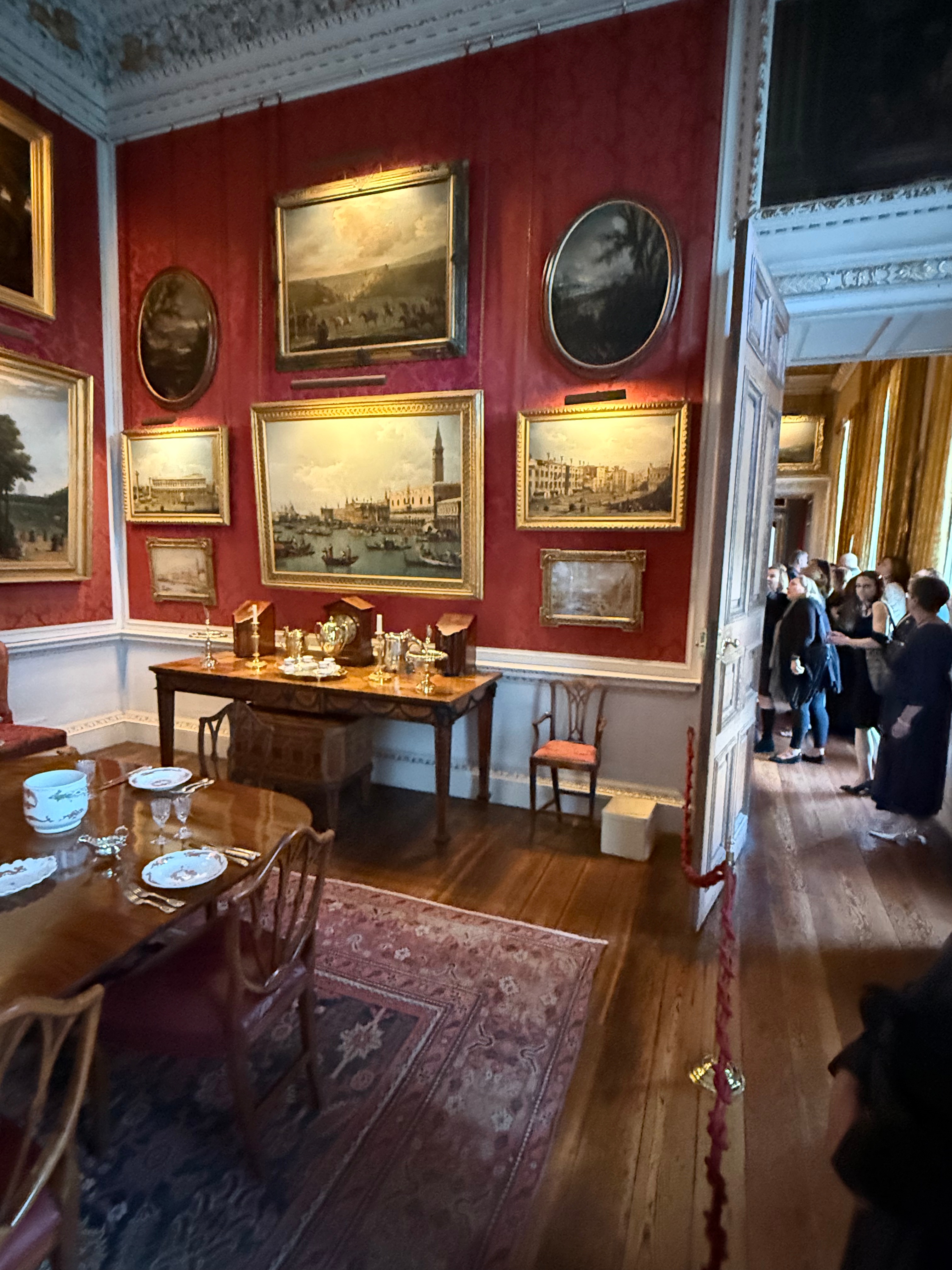
Over coffee we were given a brilliant talk by the wonderful Helen Castor – “The Eagle and the Heart: The Tragedy of Richard II and Henry IV.”
Day 6: Monday, 5th May
This morning, somewhat early, we checked out of The Grand Hotel, York, and travelled north, 110 miles towards Northumberland. Tracy gave two outstanding talks. Firstly “William the Conqueror and the Harrying of the North”, then “Richard, Duke of York and the War of the Roses”. As we neared our destination, Mike gave his talk: “Introduction to Hexham”. We are so fortunate to have historians of this calibre who so willingly give their time, expertise and point of view.
Tour notes: Hexham Abbey is one of the earliest seats of Christianity in England. Since its beginning, it has witnessed periods of immense turmoil and change, across the region and within the English Church itself. Many of these are reflected in the very fabric of the building we see today. There has been a church on the site for over 1300 years since Etheldreda, Queen of Northumbria, granted land to St Wilfrid, Bishop of York, in 674, on which he built a Benedictine Abbey. Only a crypt and apse remain of the original abbey. The current church was an Augustinian priory built between 1170 and 1250; the east end was rebuilt in 1860. St Wilfrid’s Chapel was added in 1996. After the Dissolution, the abbey became the parish church of Hexham.

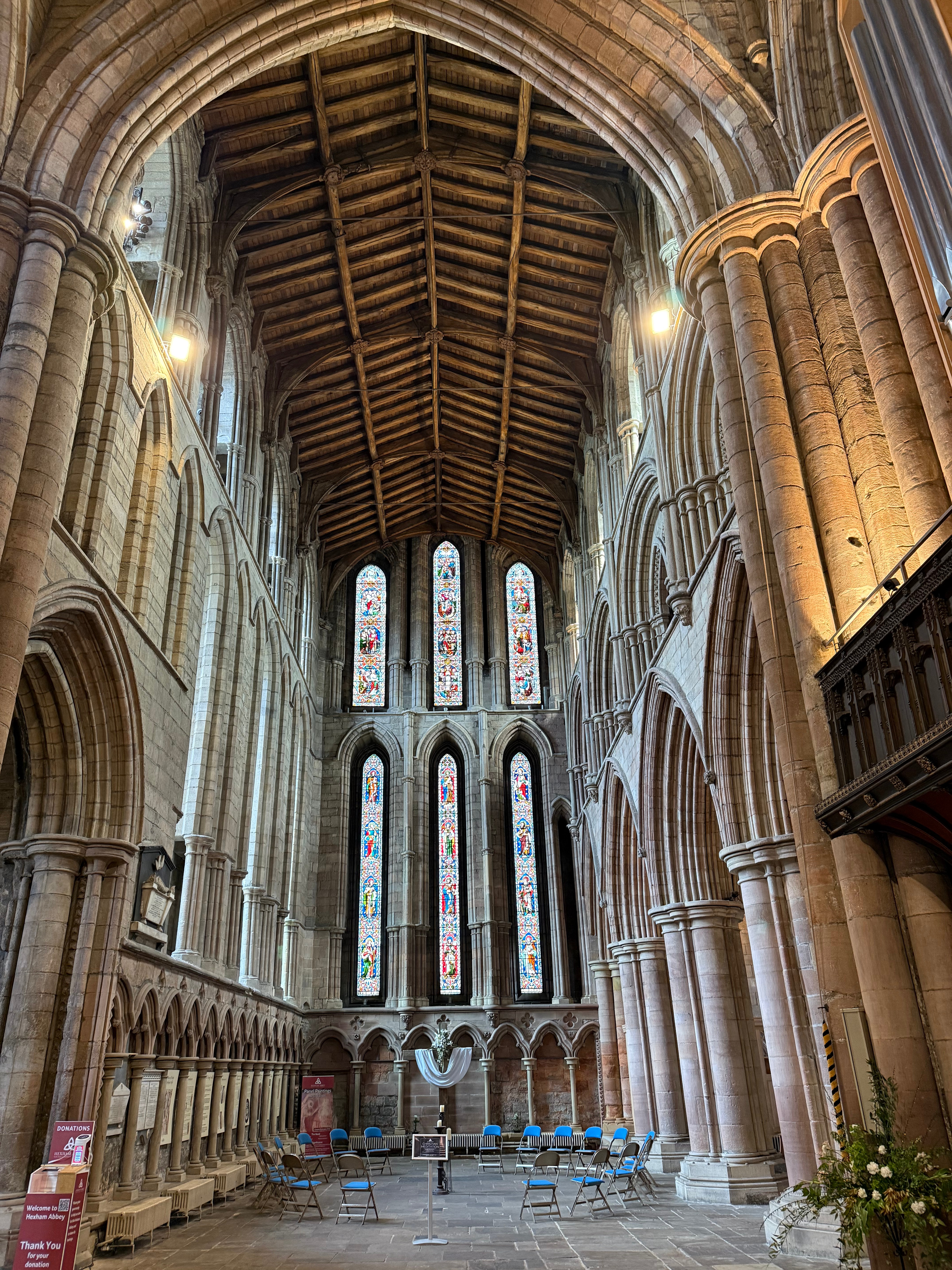
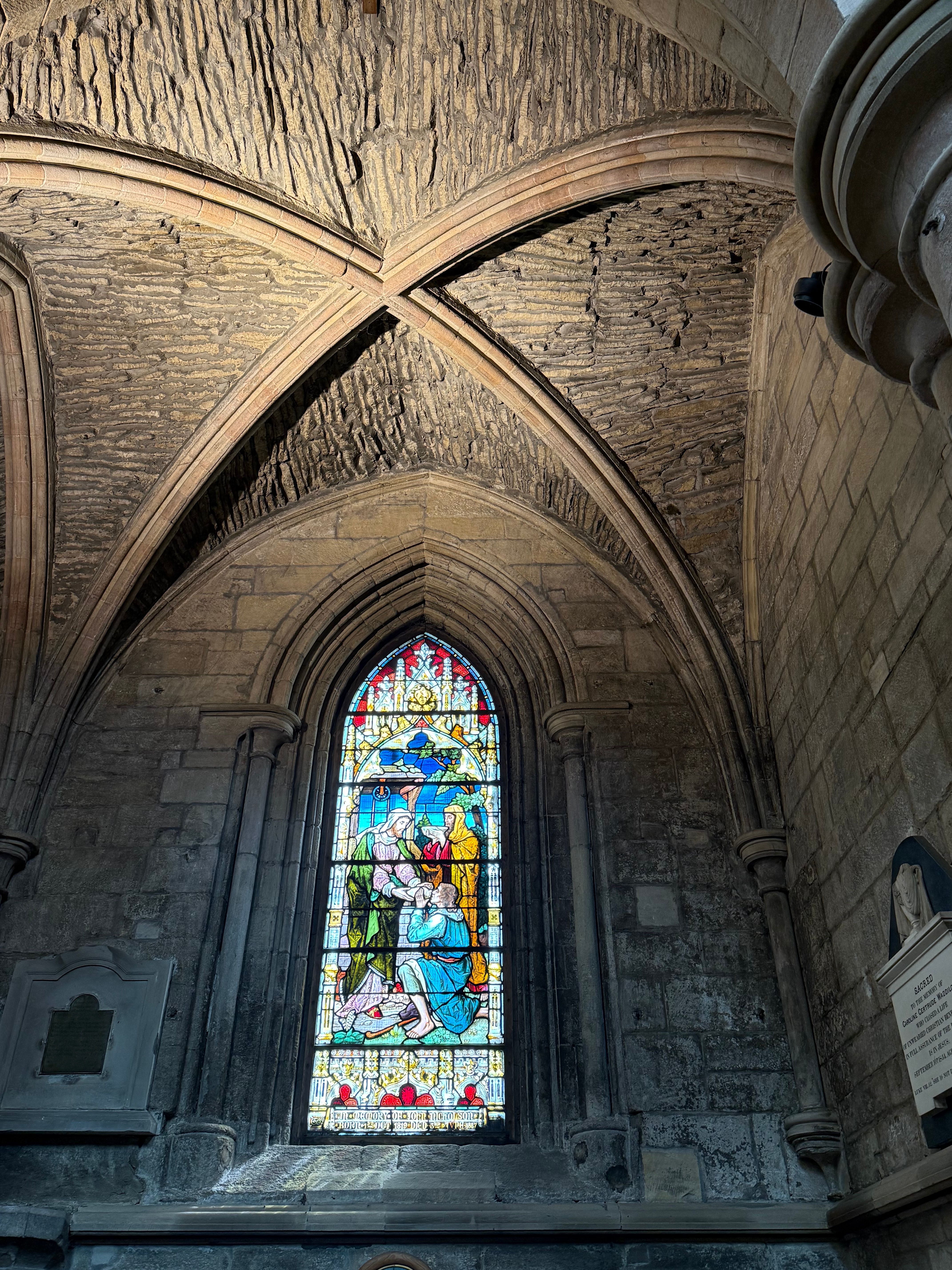
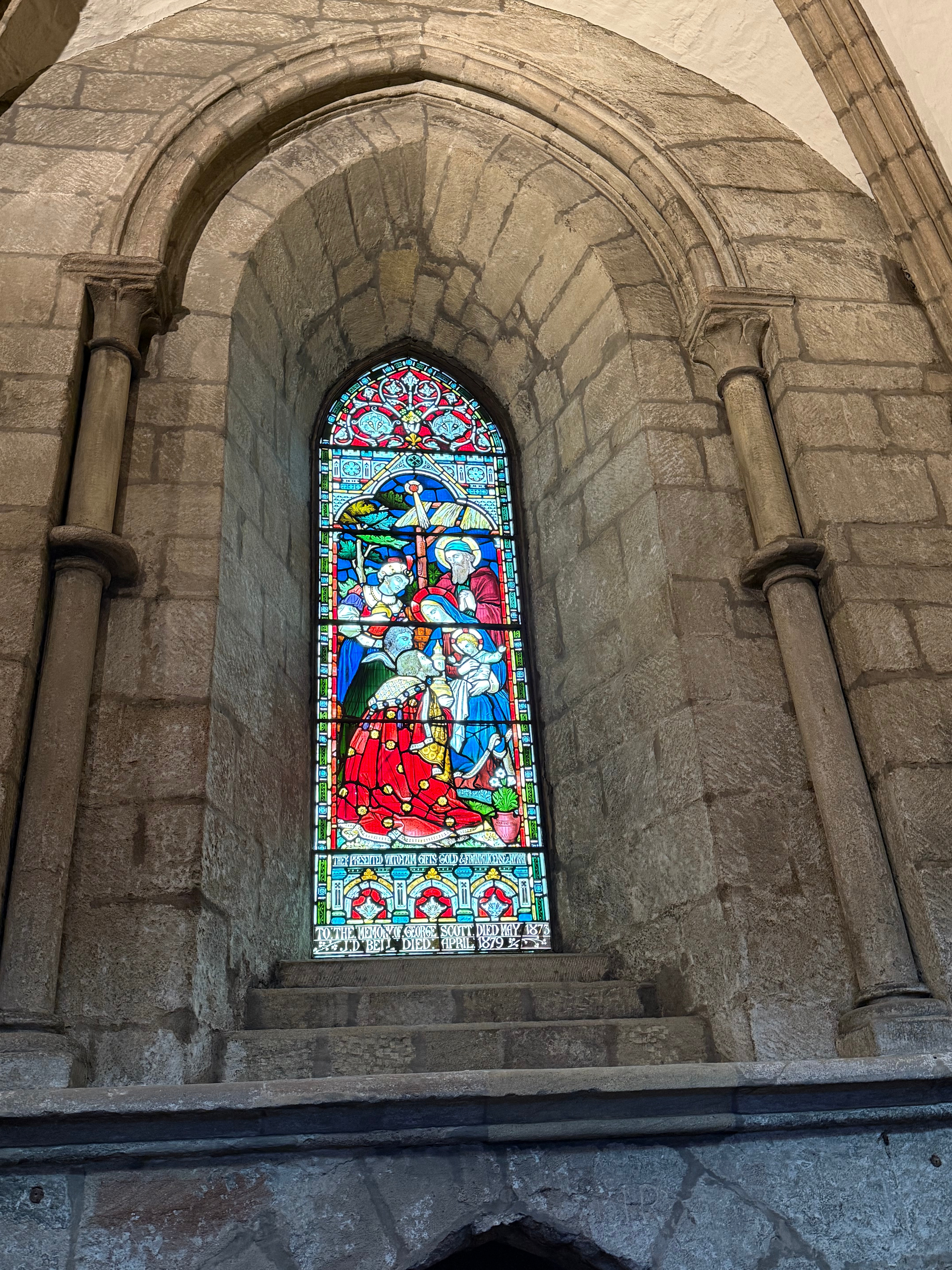
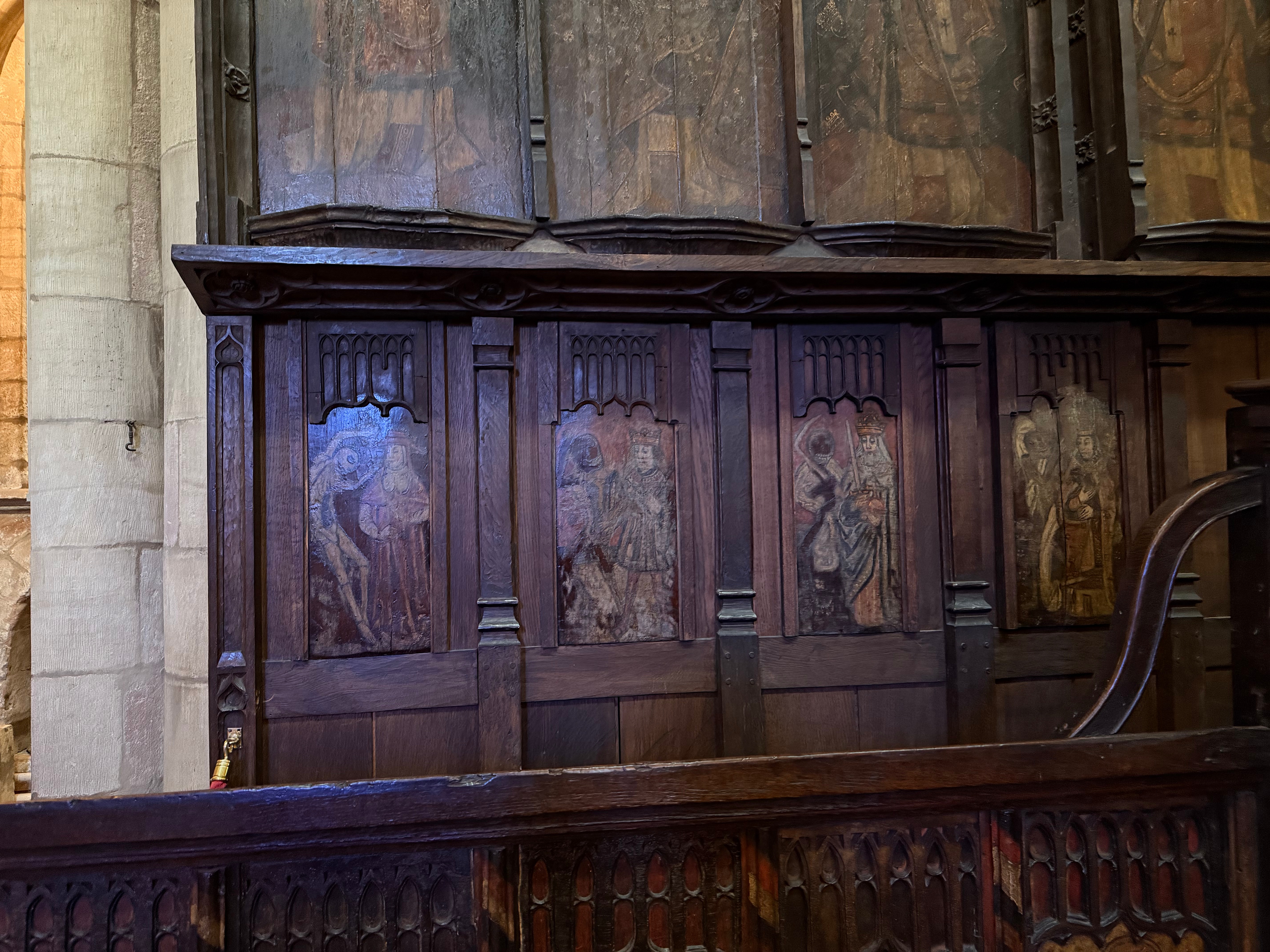
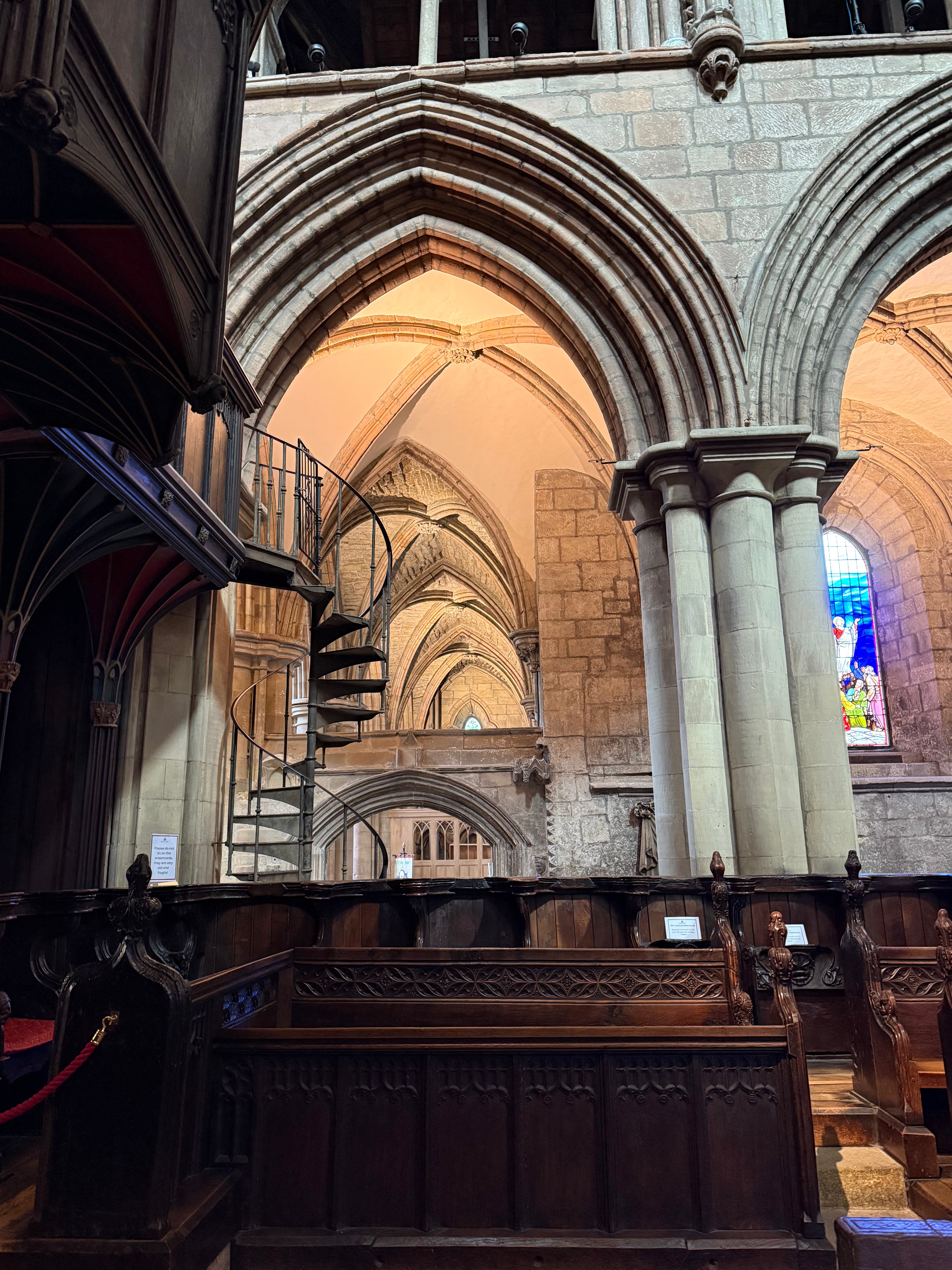
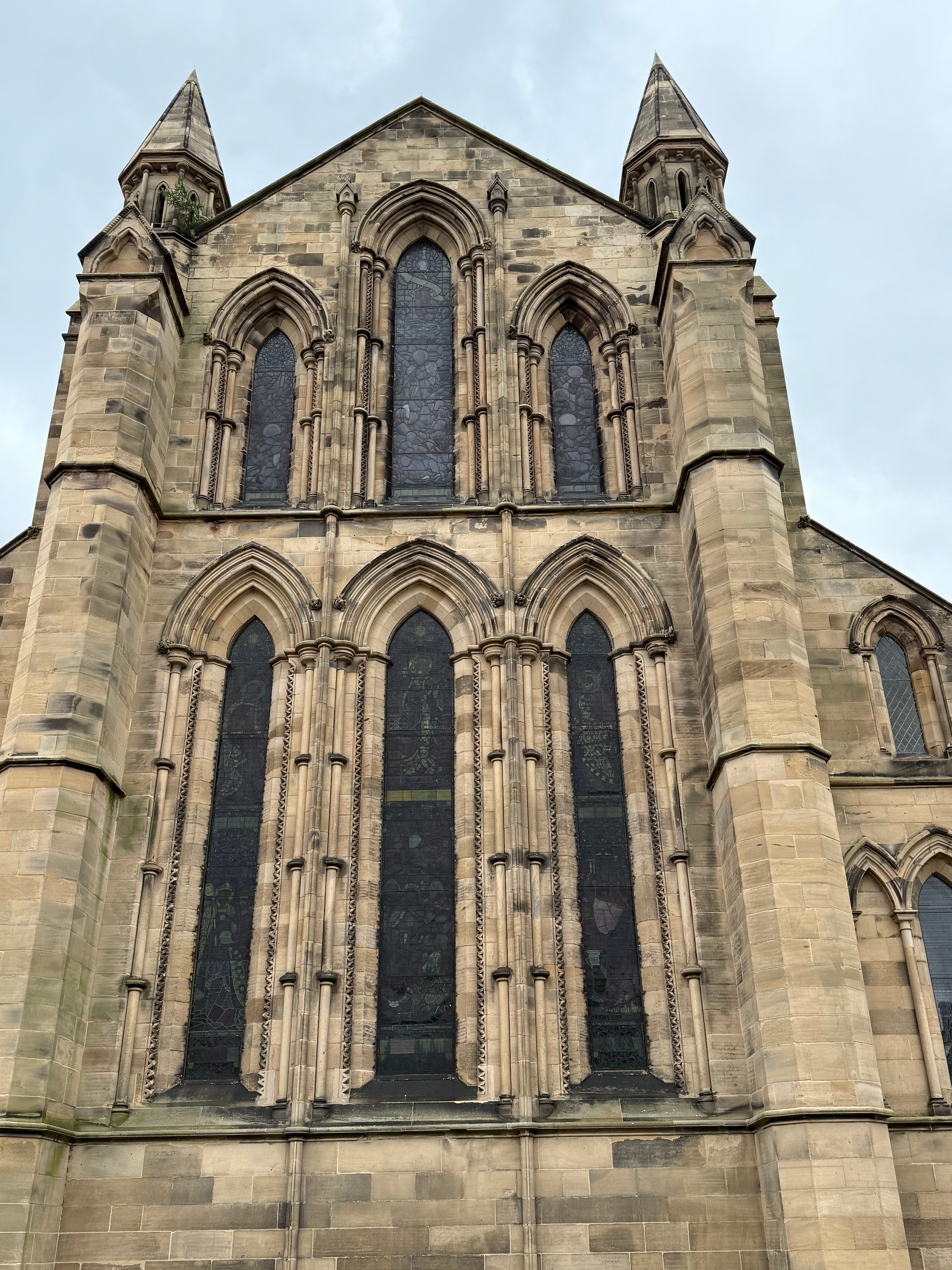
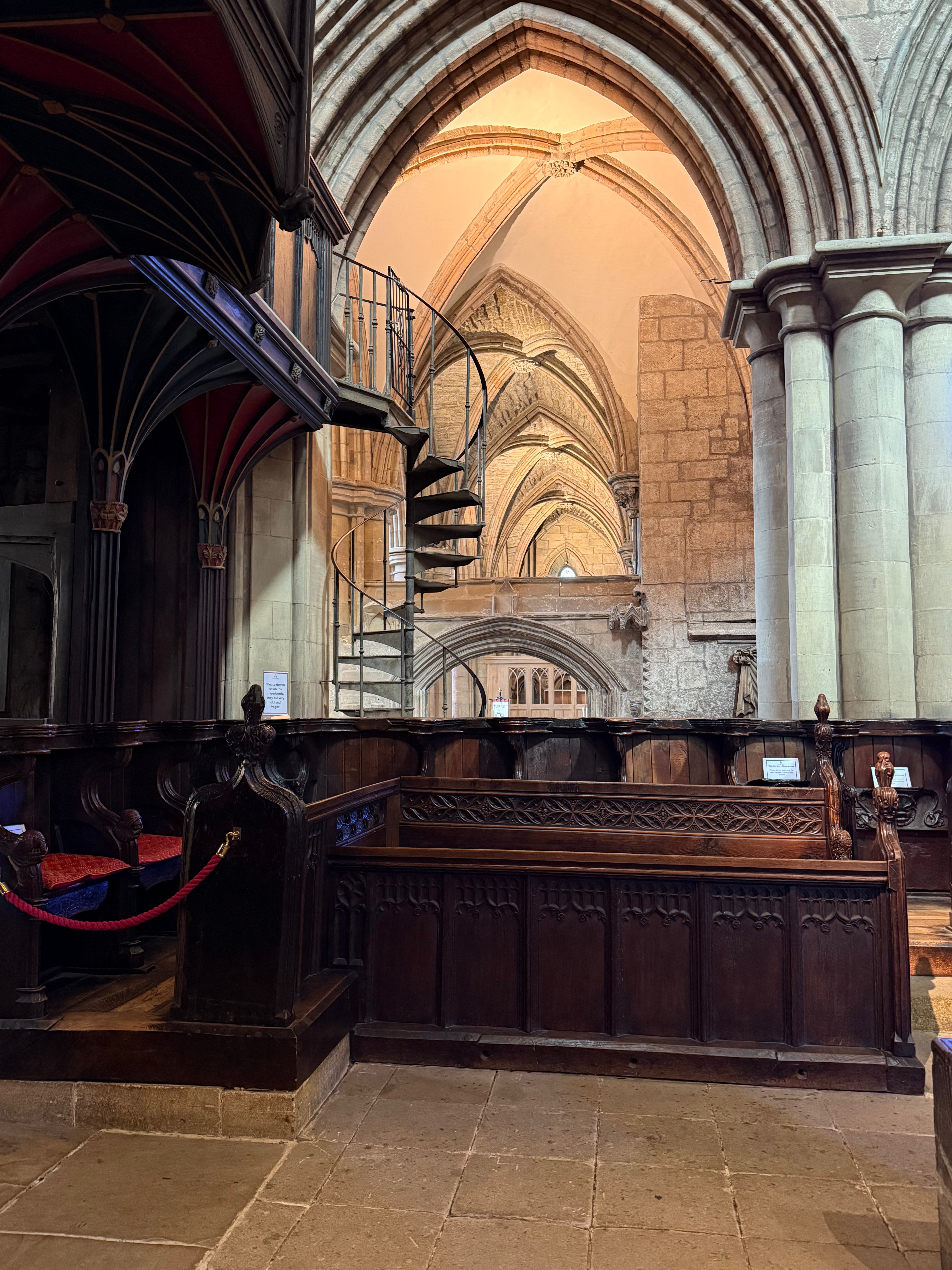
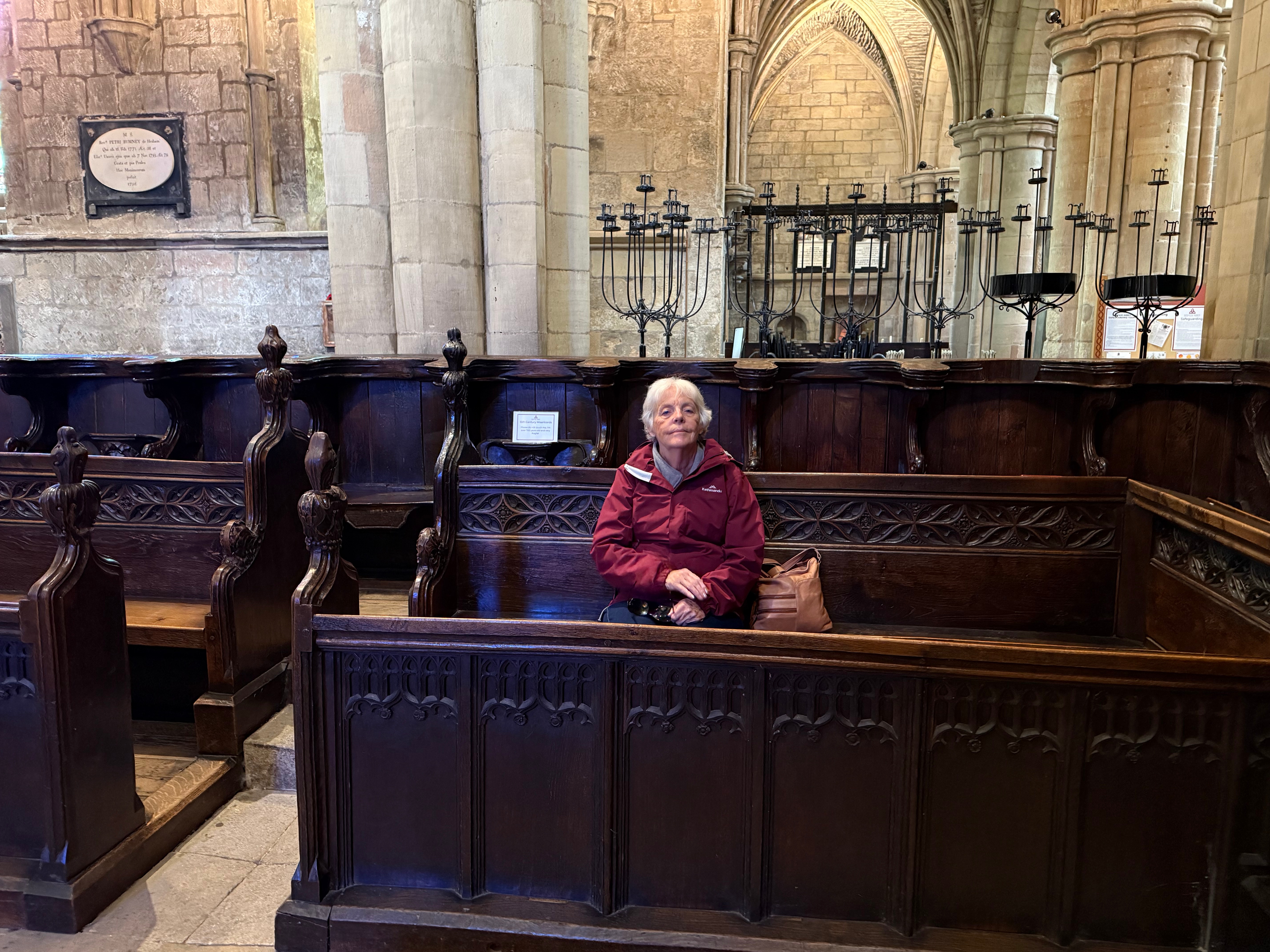
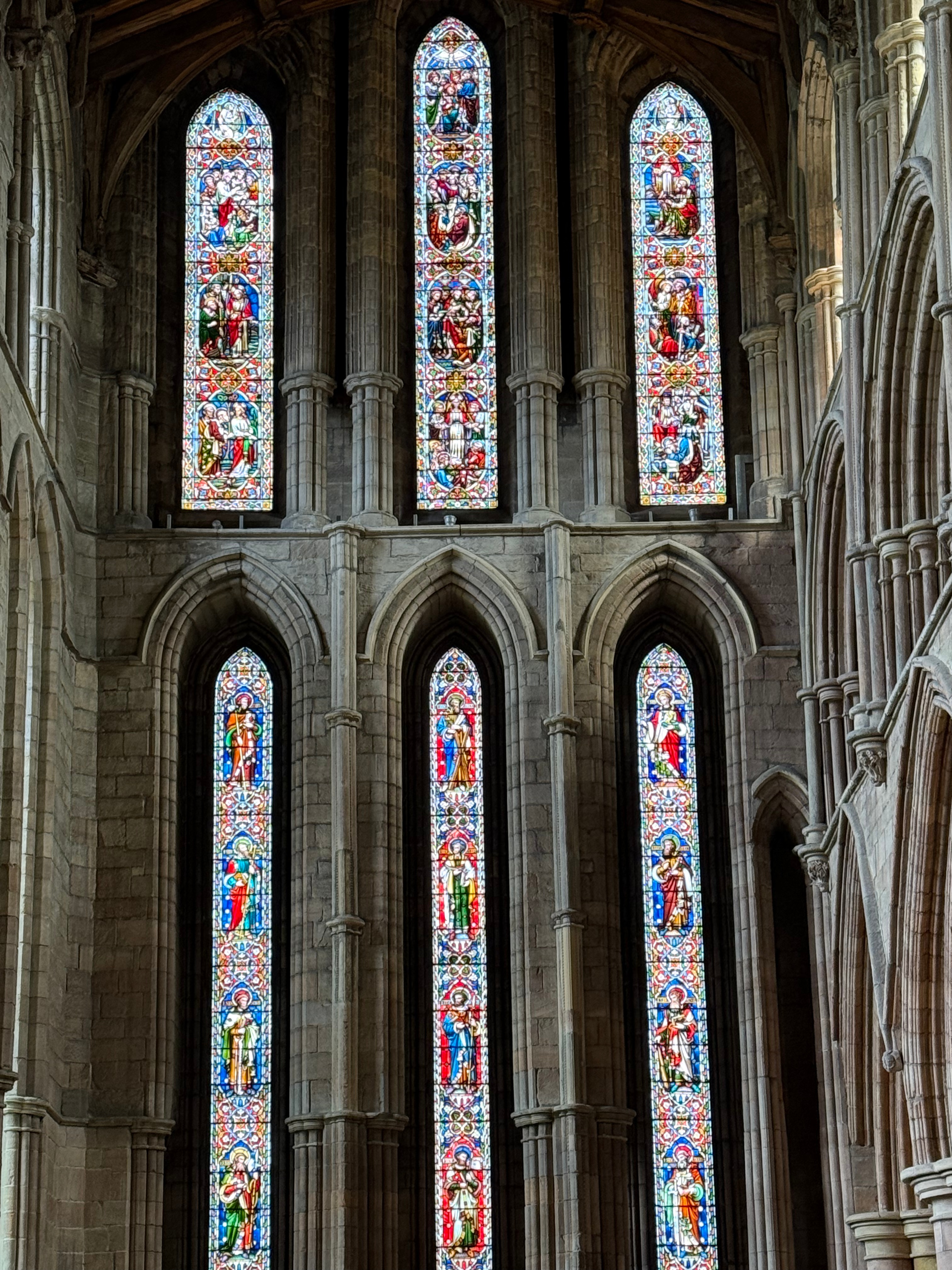

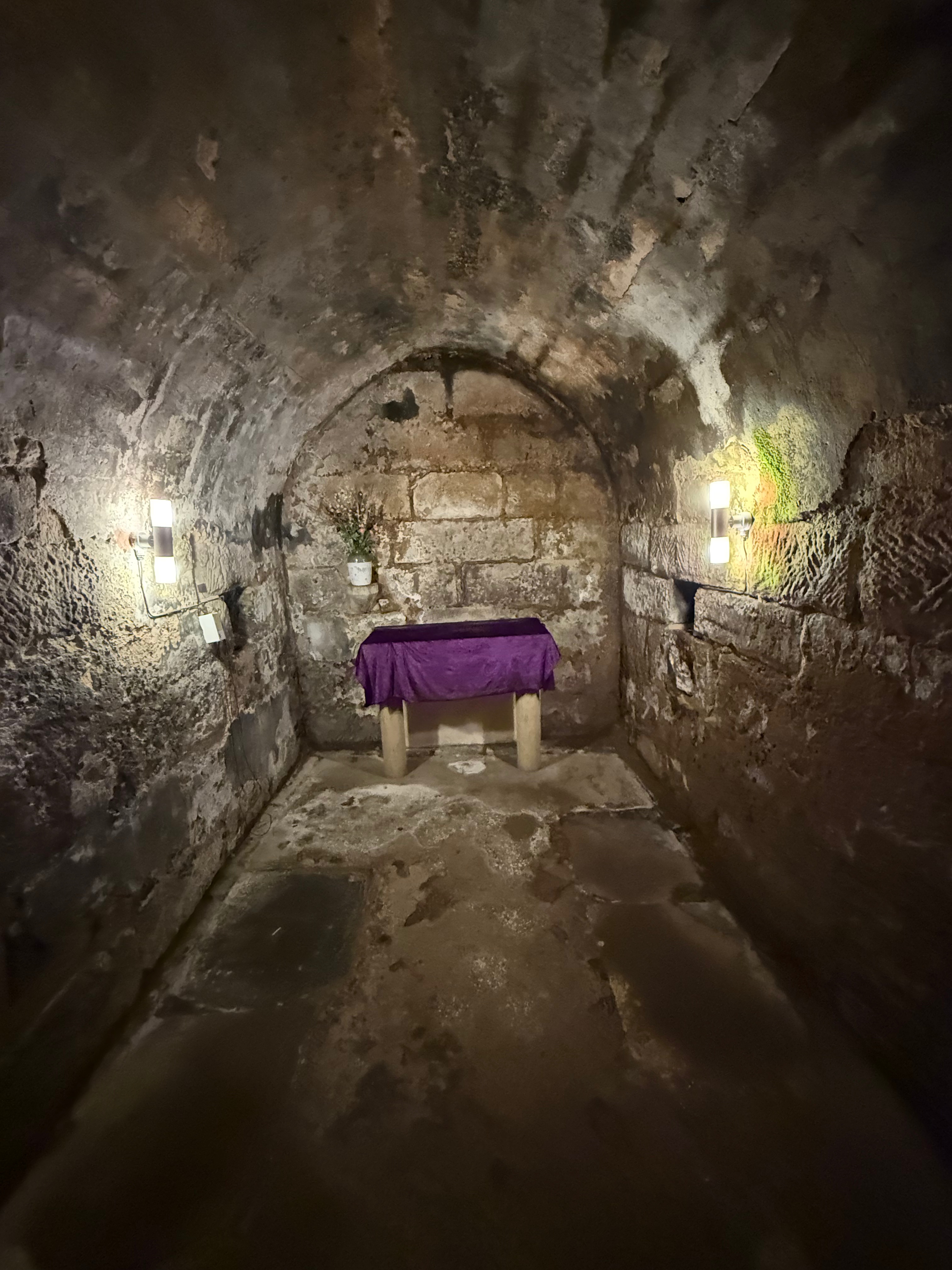
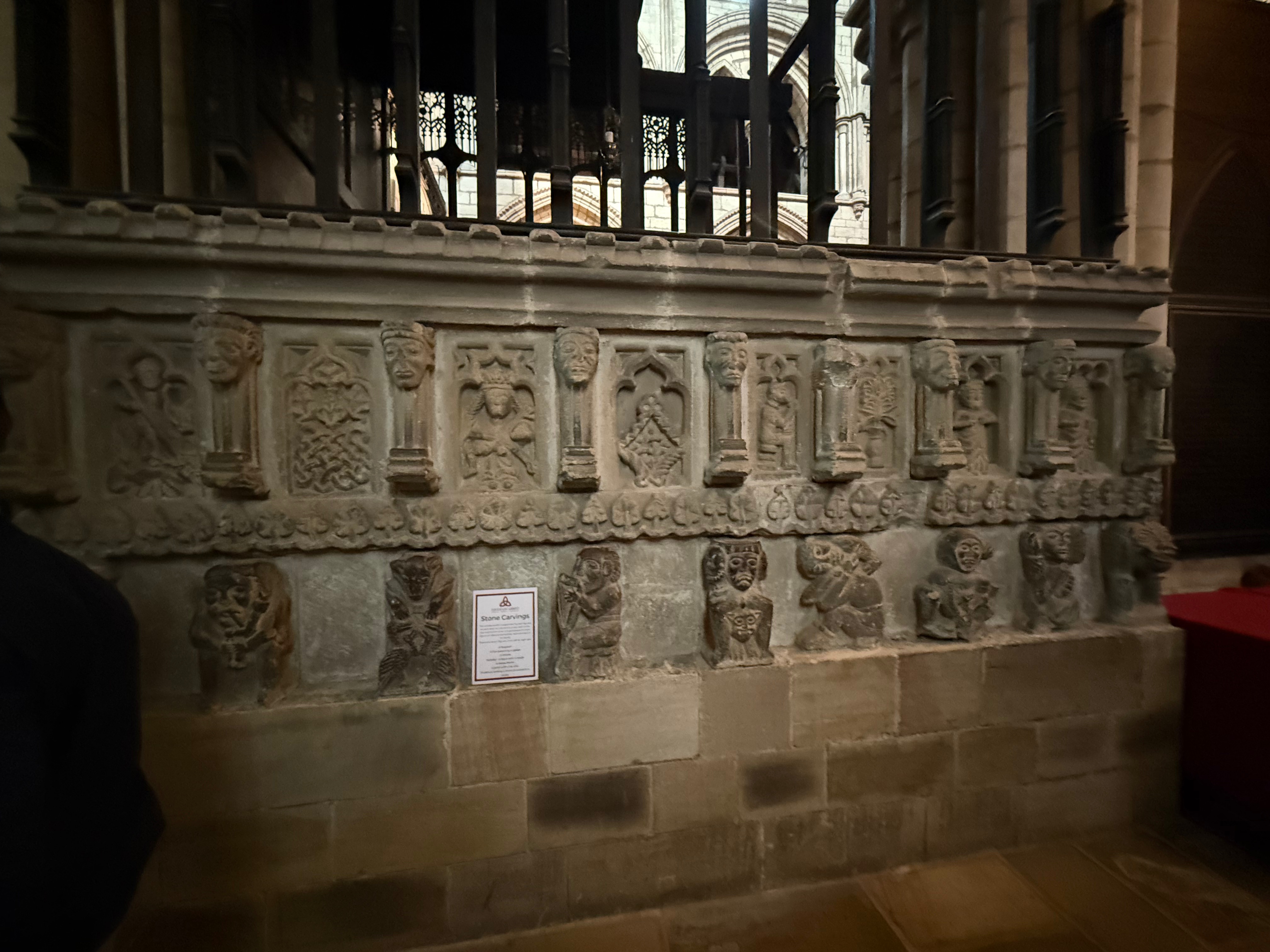
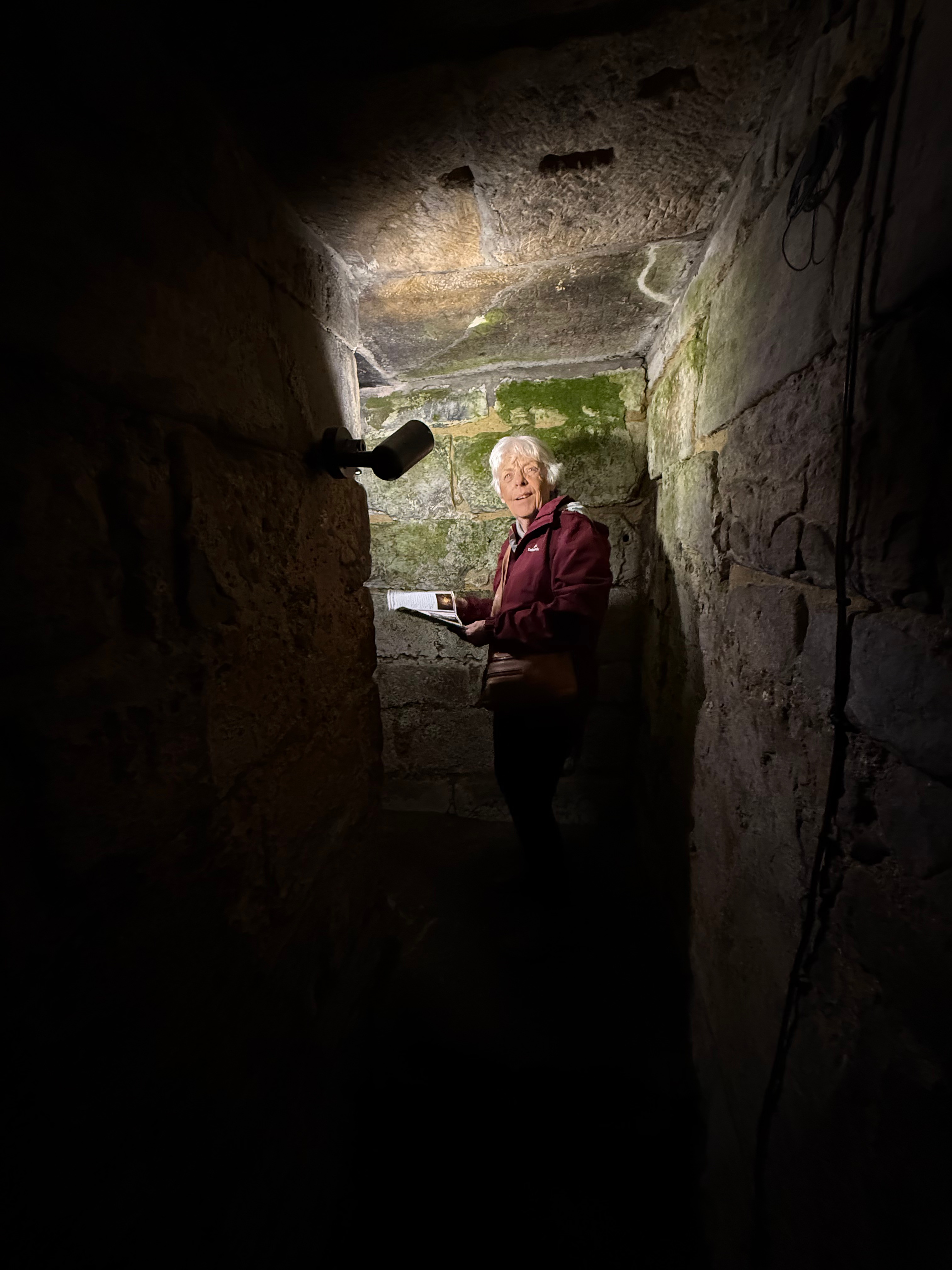
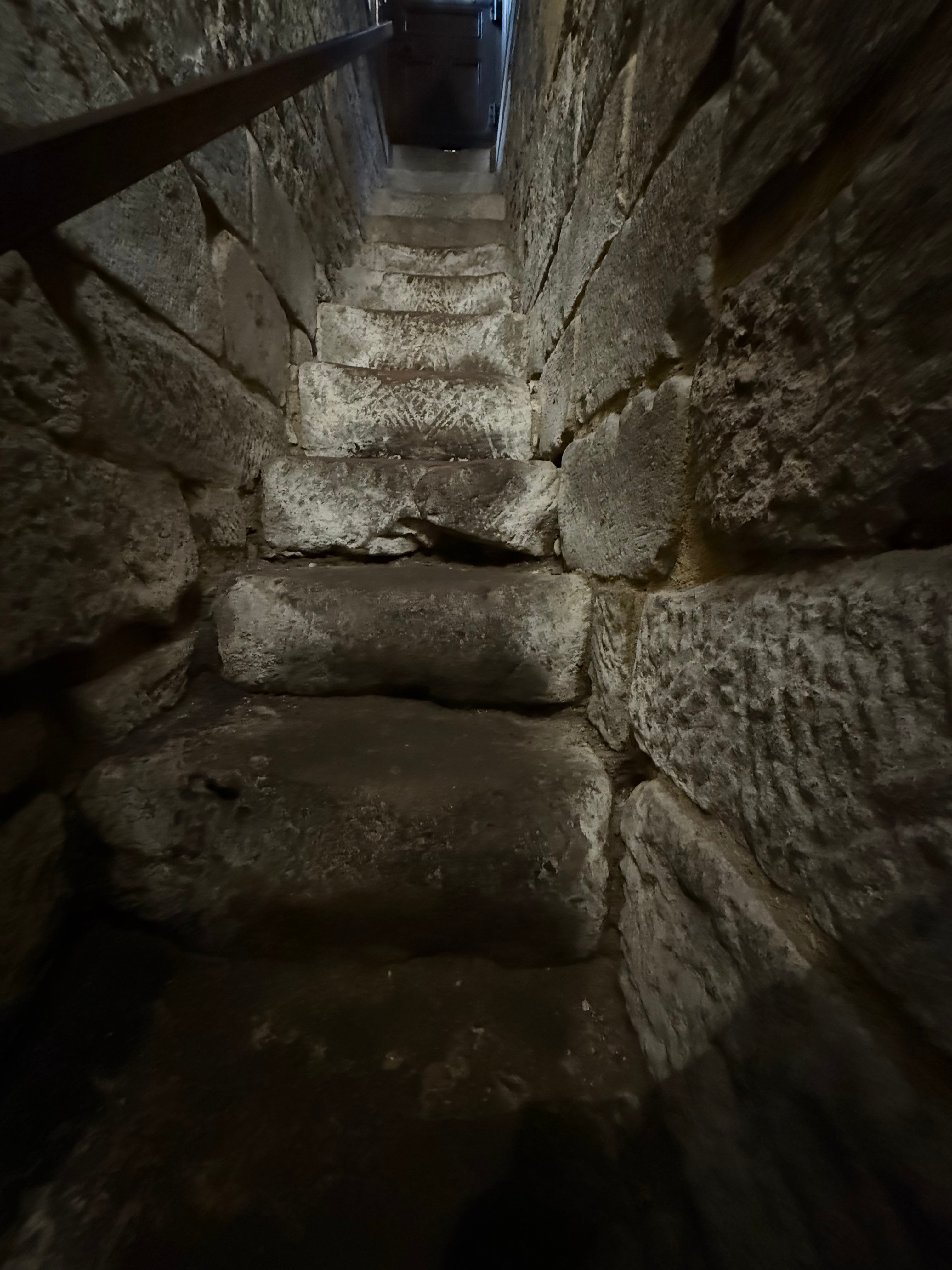
After viewing the Abbey/Church, wandering the town of Hexham and finding a bowl of soup at a nearby café we were back on the bus to see the remains of Hadrian’s Wall at Vindolanda.
Mike and Julian gave us an “Introduction to Hadrian’s Wall and Vindolanda”.
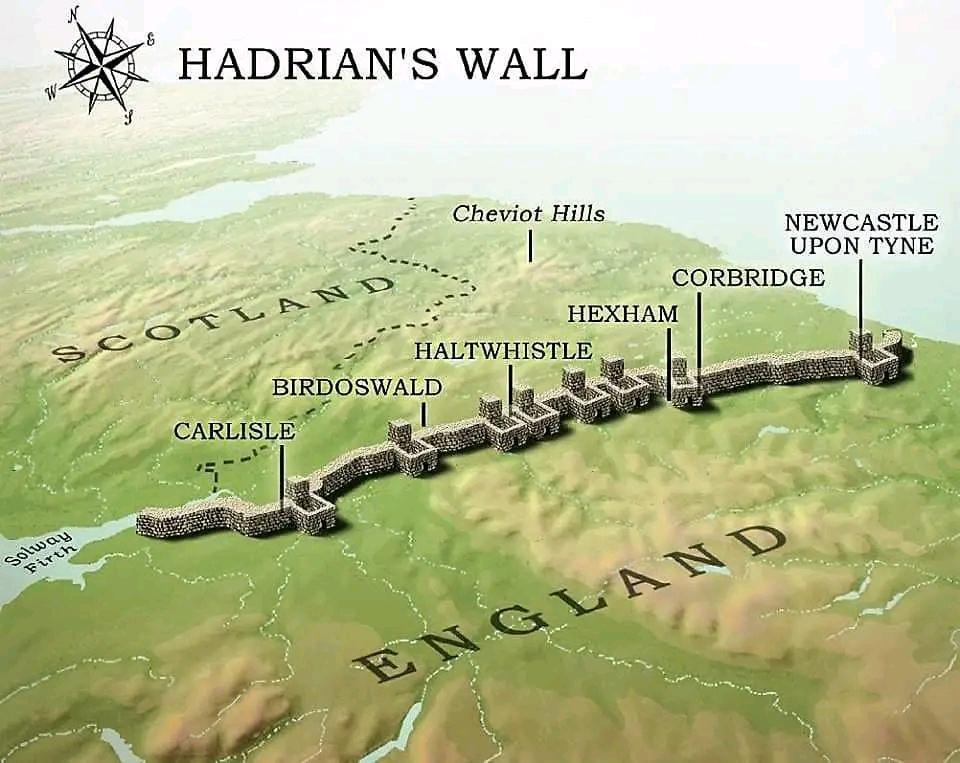
Tour notes: Hadrian’s Wall is an epic World Heritage Site, marching 73 miles from sea to sea across some of the wildest and most dramatic country in England. A World Heritage Site since 1987, it is an astounding feat of engineering, and also the best-known and best-preserved frontier of the Roman Empire. On becoming Roman Emperor in 117 A.D., Hadrian set about making the Empire more secure, separating Roman and Barbarian territories. The most spectacular example of this is the great Wall he ordered his army to build to define the north-west frontier of the Roman Empire. It was a gargantuan task which he came to inspect in A.D. 122 while work was in progress. When the Emperor Hadrian’s men set out to construct the Wall, they were faced with a relentlessly challenging and variable landscape to conquer. Nor did the fierce torrents of fast rivers, the hard rock of the Whin Sill, nor mile upon mile of rolling hills defeat them. The Wall is Britain’s most impressive and most important Roman monument. Together with the Antonine Wall and the Upper German Raetian Limes, it forms part of the UNESCO World Heritage Site ‘Frontiers of the Roman Empire.’
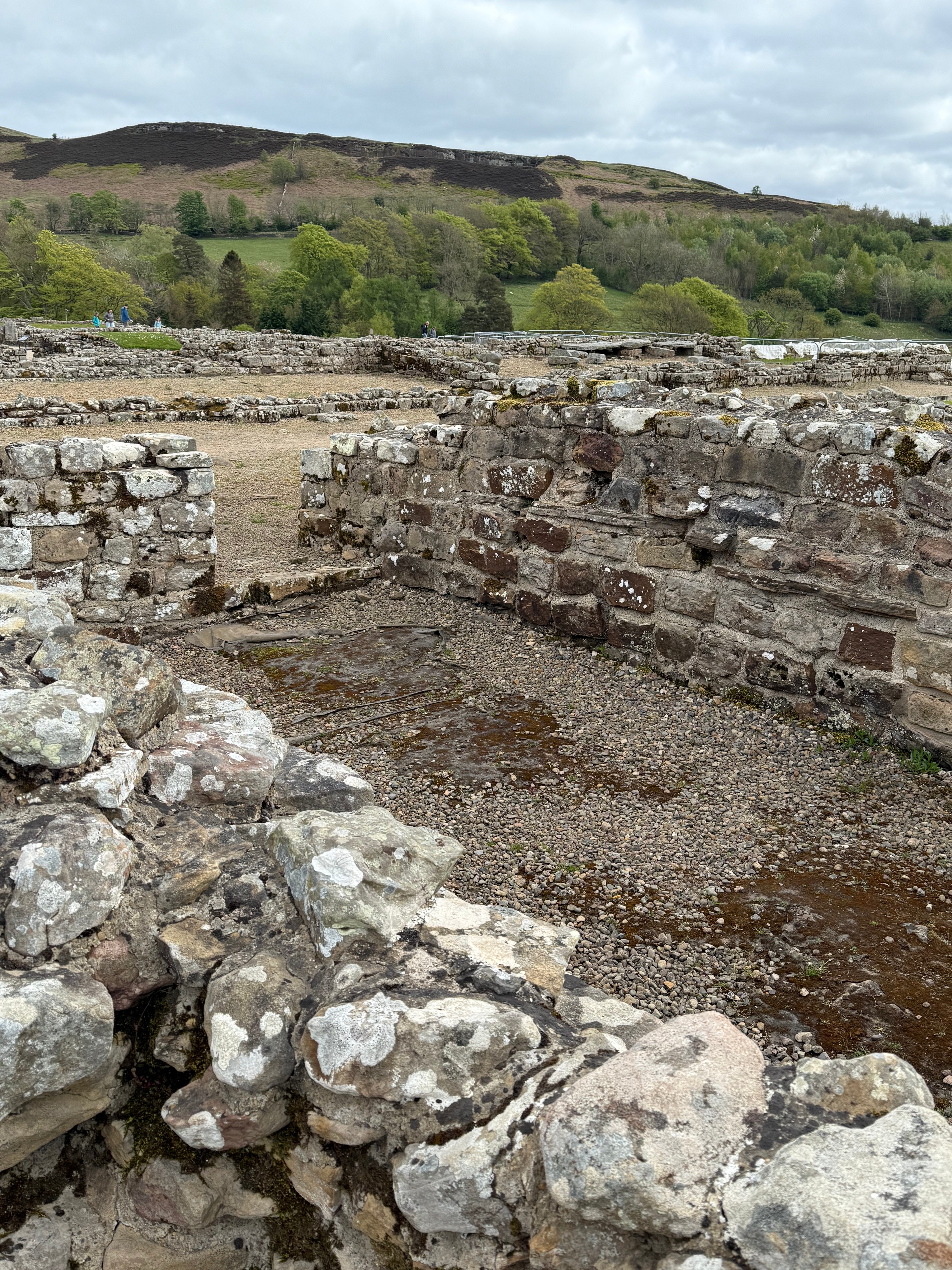
The fort of Vindolanda lies just to the south of Hadrian’s Wall, in a stunning landscape. Although first built by the Roman army before Hadrian’s Wall, Vindolanda became an important construction and garrison base for the Wall, a fort in its own right. It was demolished and completely re-built no fewer than nine times. Each re-build, each community, left their own distinctive mark on the landscape and archaeology of the site. Vindolanda’s story is ever-evolving: each summer a team of archaeologists and volunteers uncover more of the fort, discovering buried structures and artefacts that continue to enrich our knowledge of this amazing site. The most precious of all things found at Vindolanda – miraculously preserved due to the damp nature of much of the site – are the little wooden tablets with their written accounts of life on the Roman Empire’s northernmost frontier.
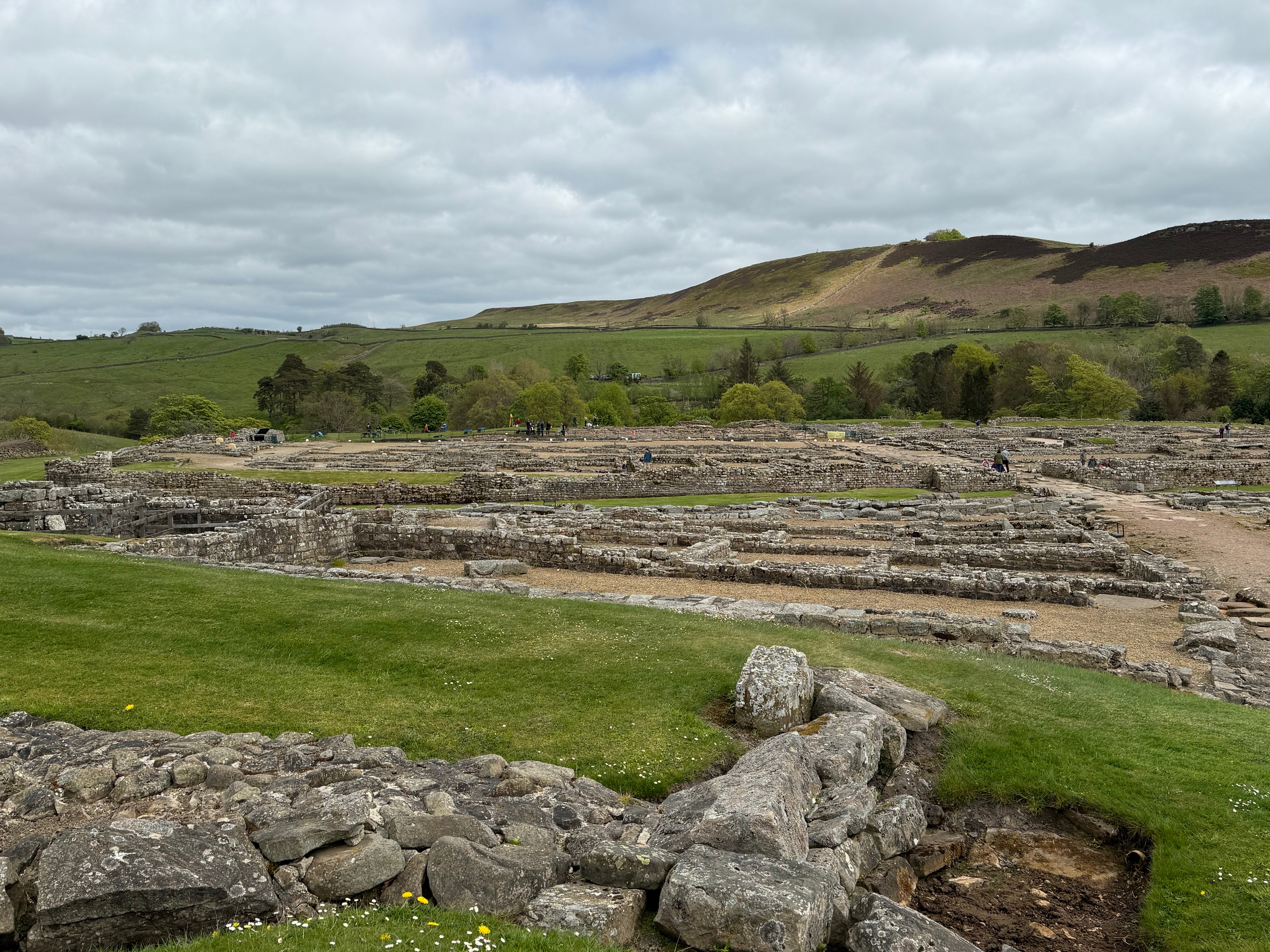
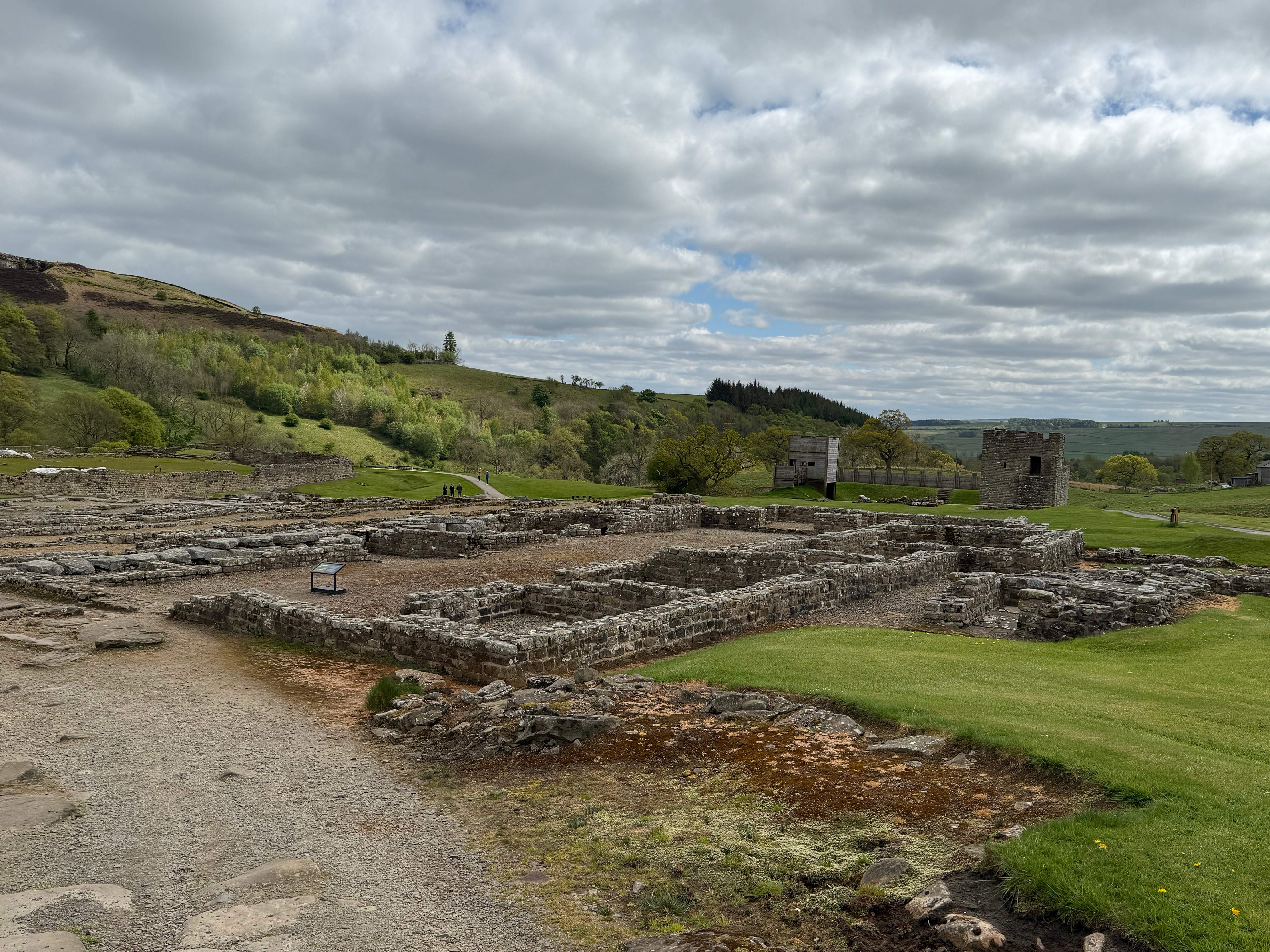
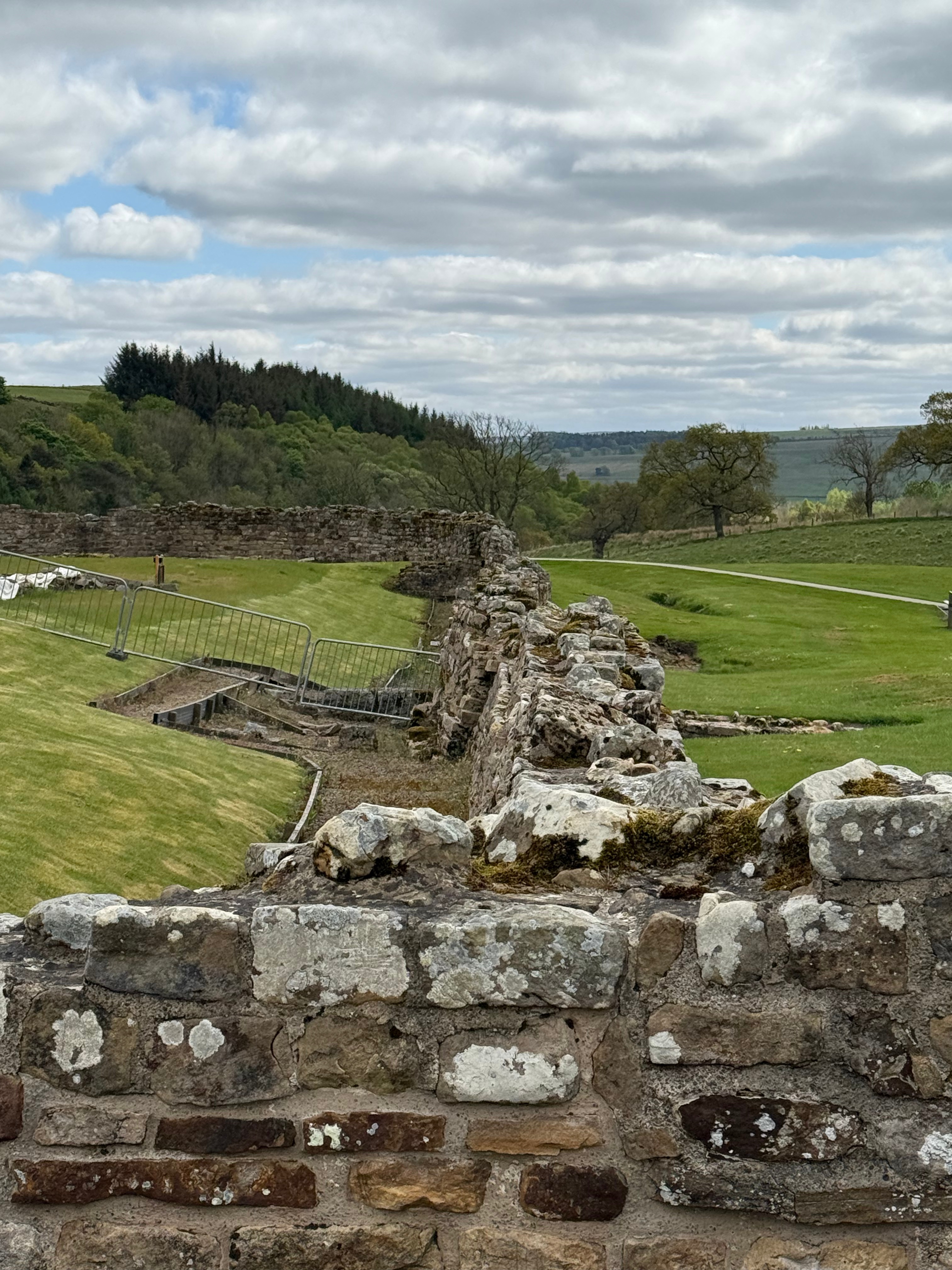
The Roman history of England is well documented; the Anglo-Saxon “gap” is not. I was slowly reading the Alice Roberts book “Buried” at this time which gave another perspective using scientific methodology only recently available.
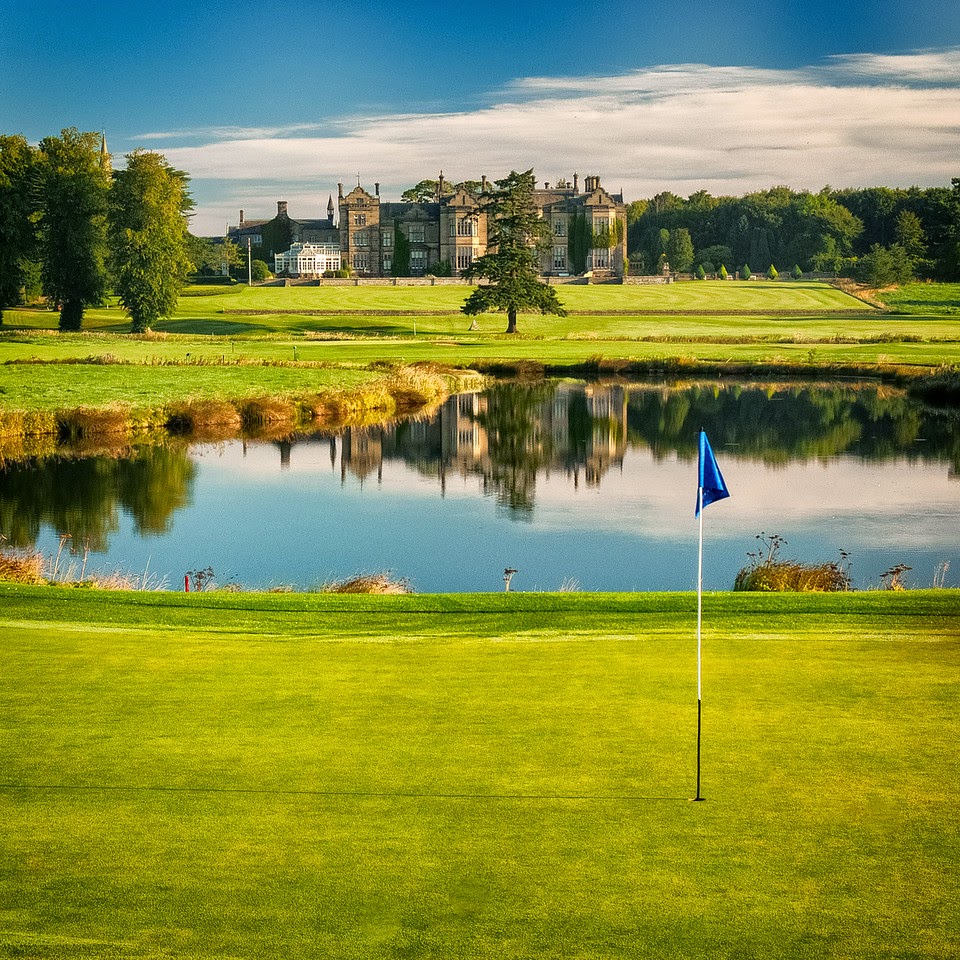
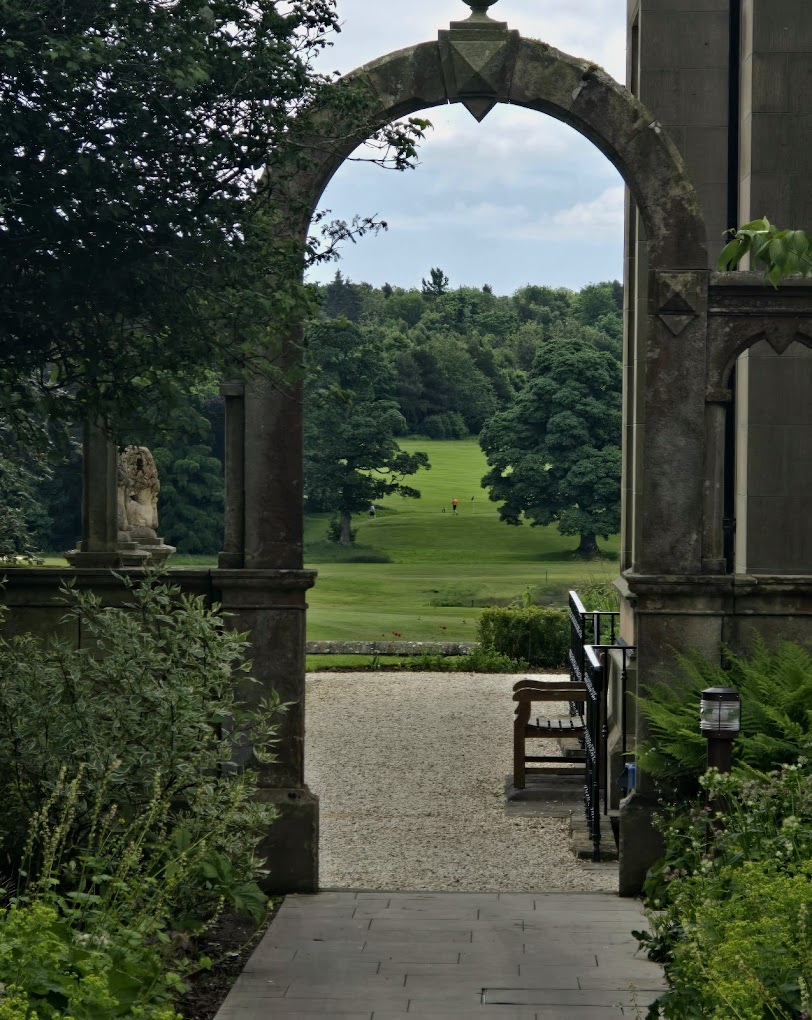
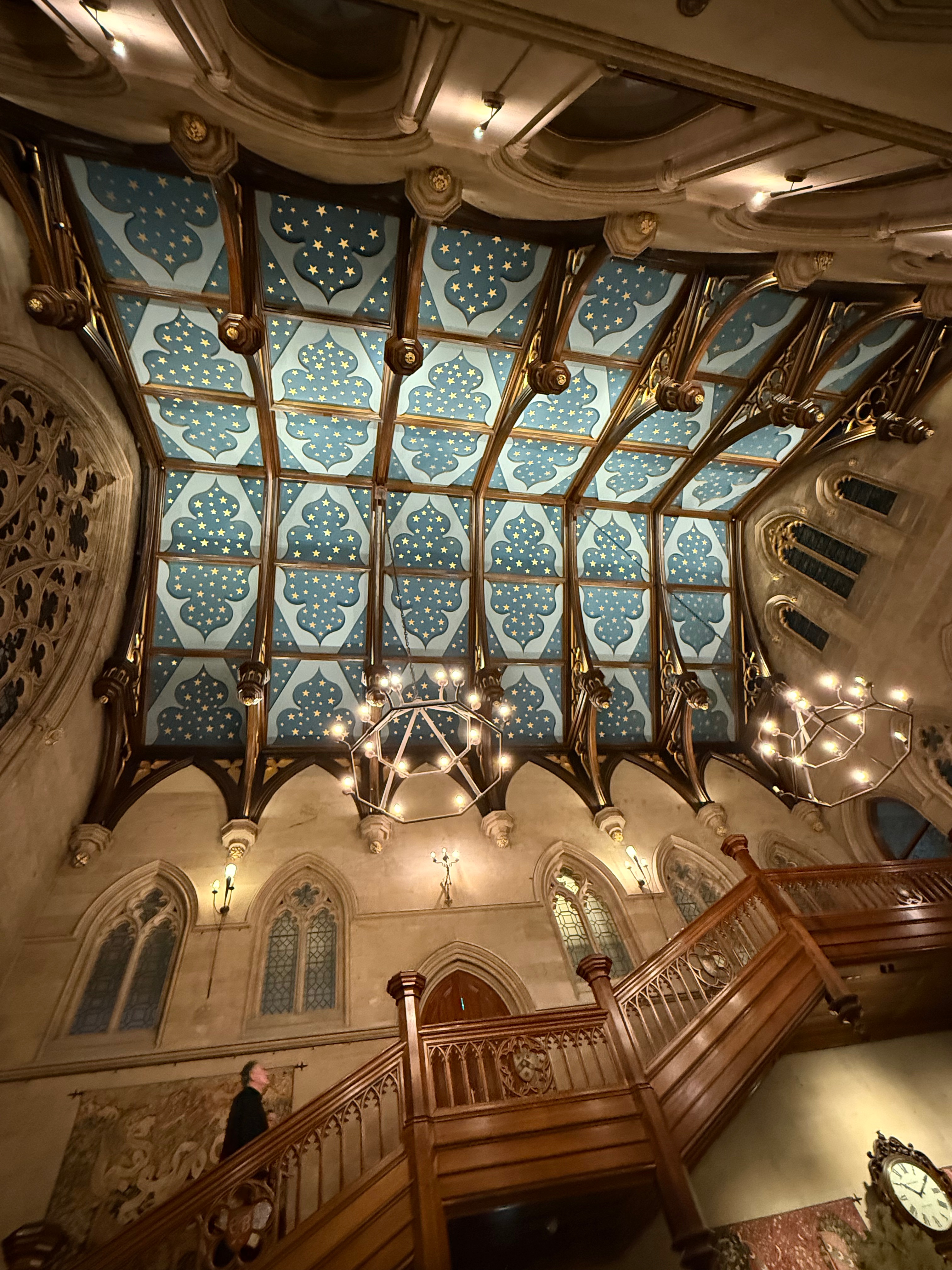
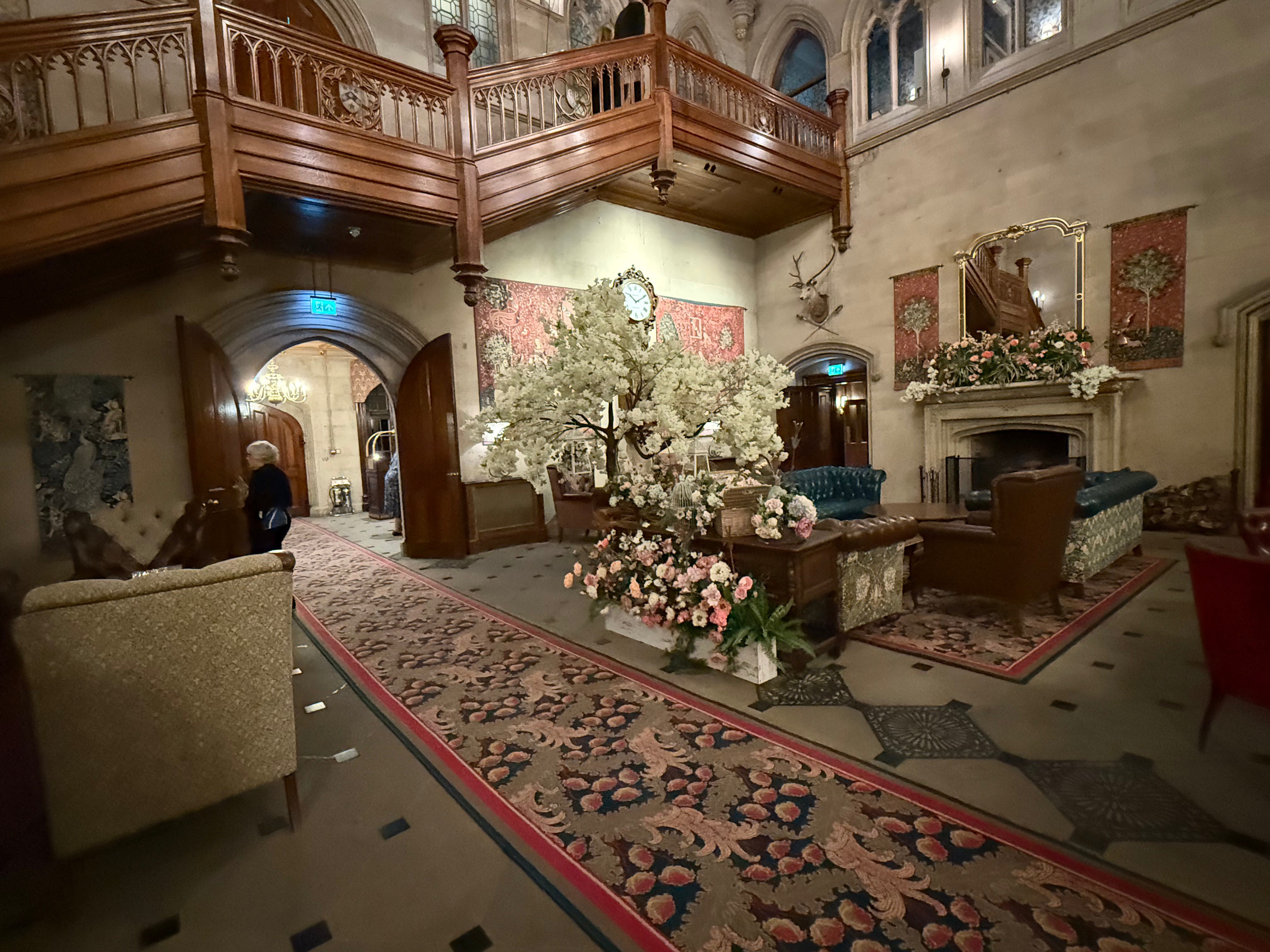
On the way to our home base for the next few days, Matfen Hall, Alison gave a talk on this stately country manor dating from the 1830s, now very much an upscale golf resort hotel.
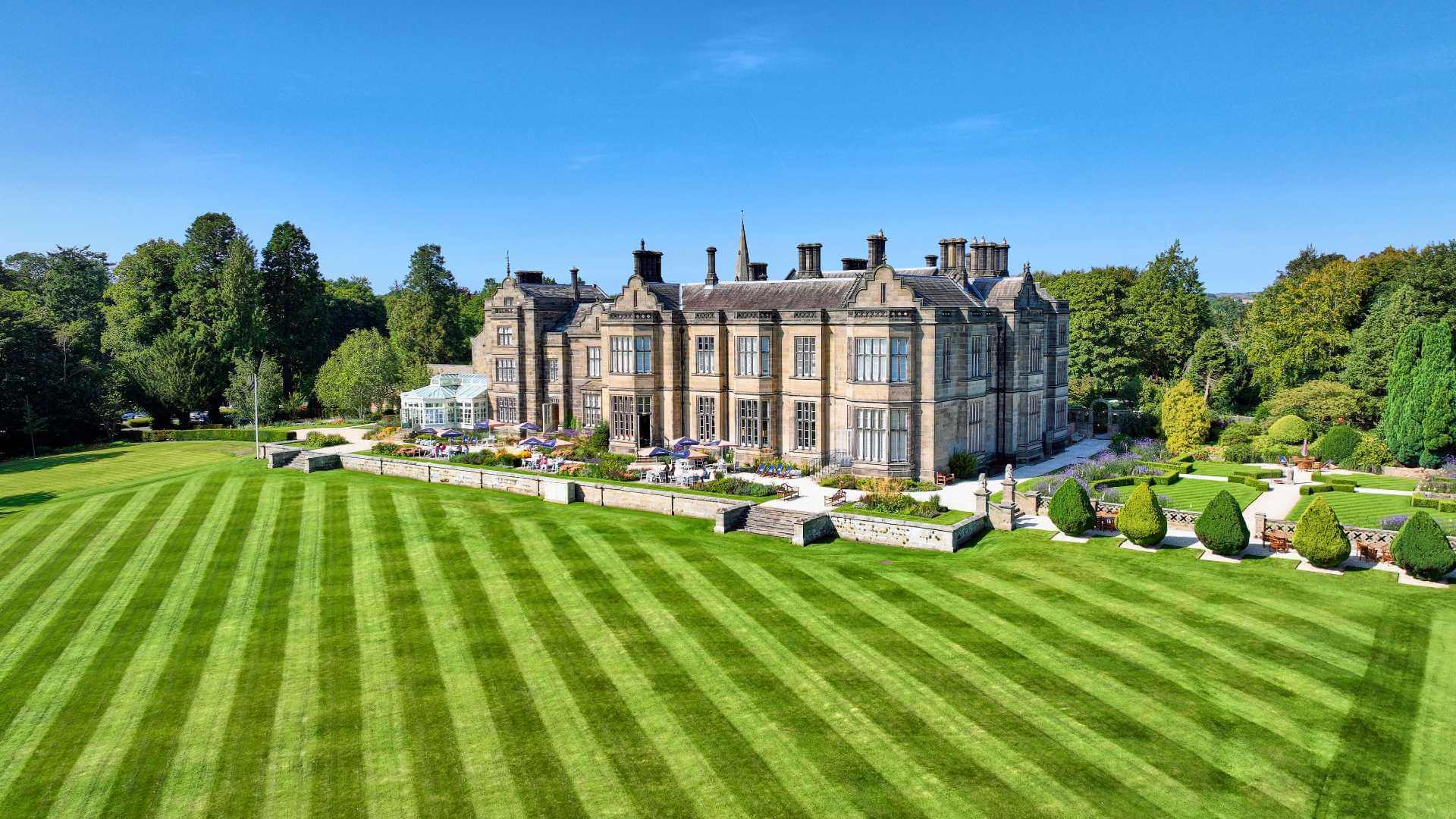
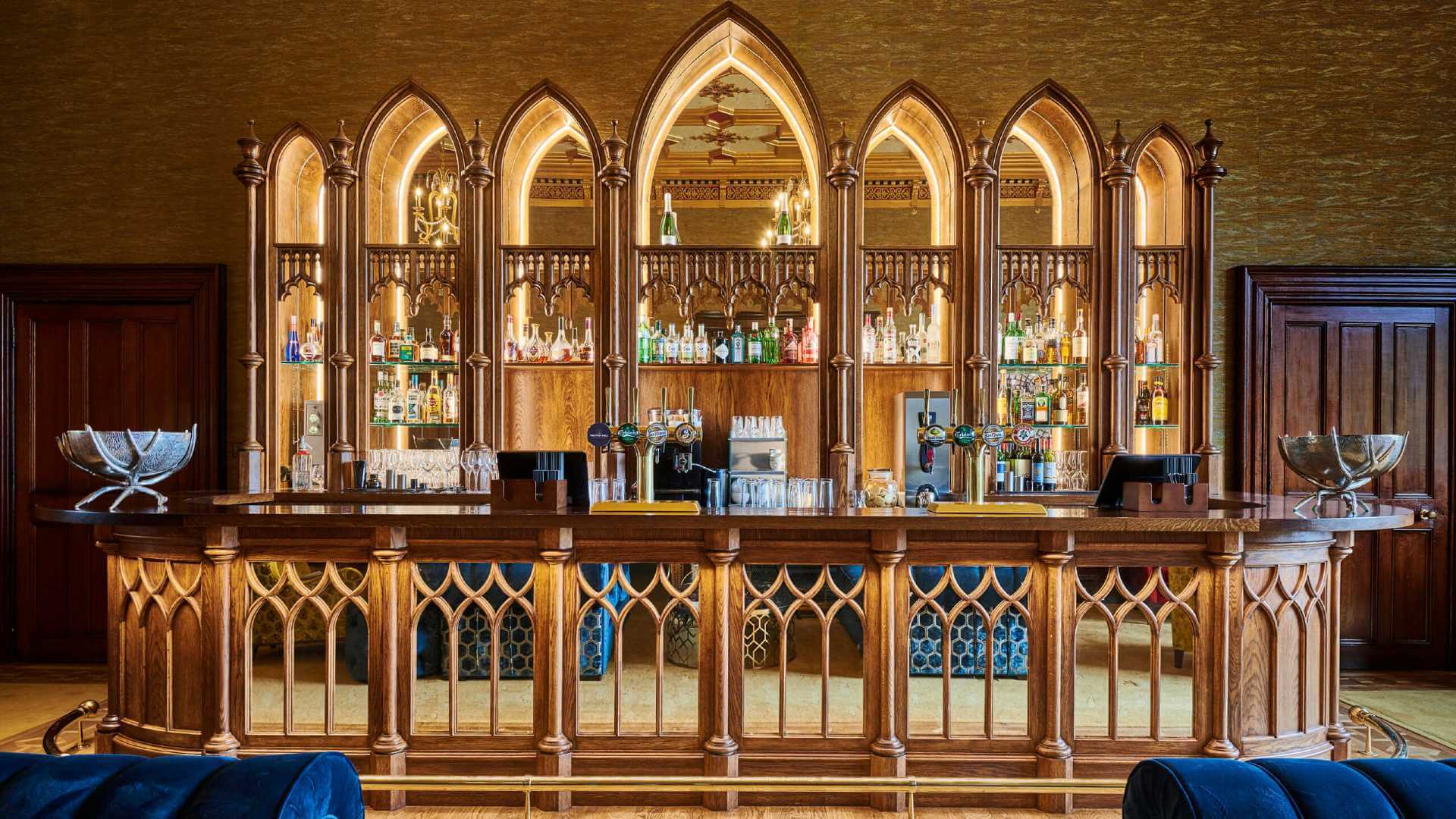
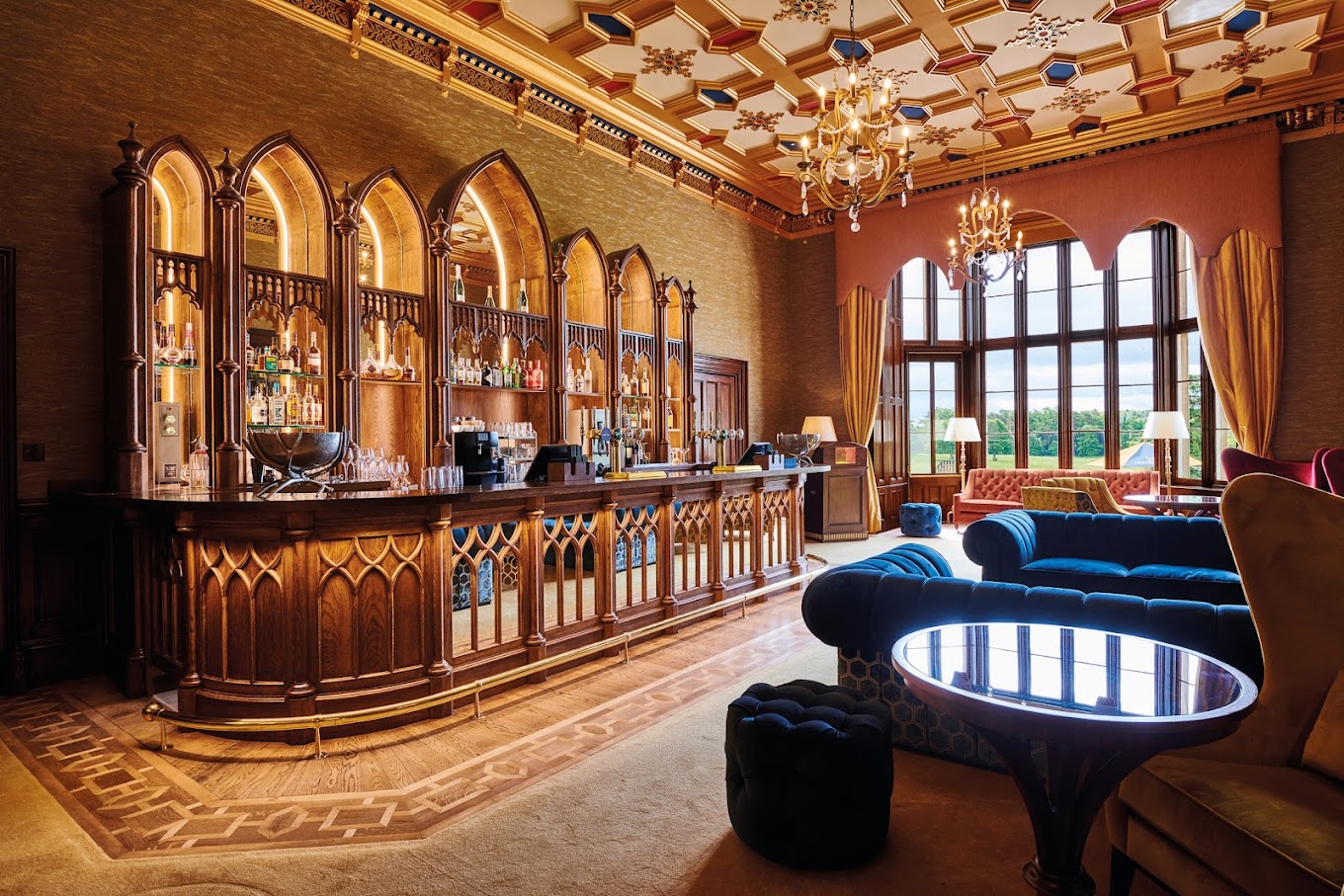
After checking in, Julian gave a comprehensive talk in the Drawing Room – “Raiders and Reivers: life and Death on the Borders.”
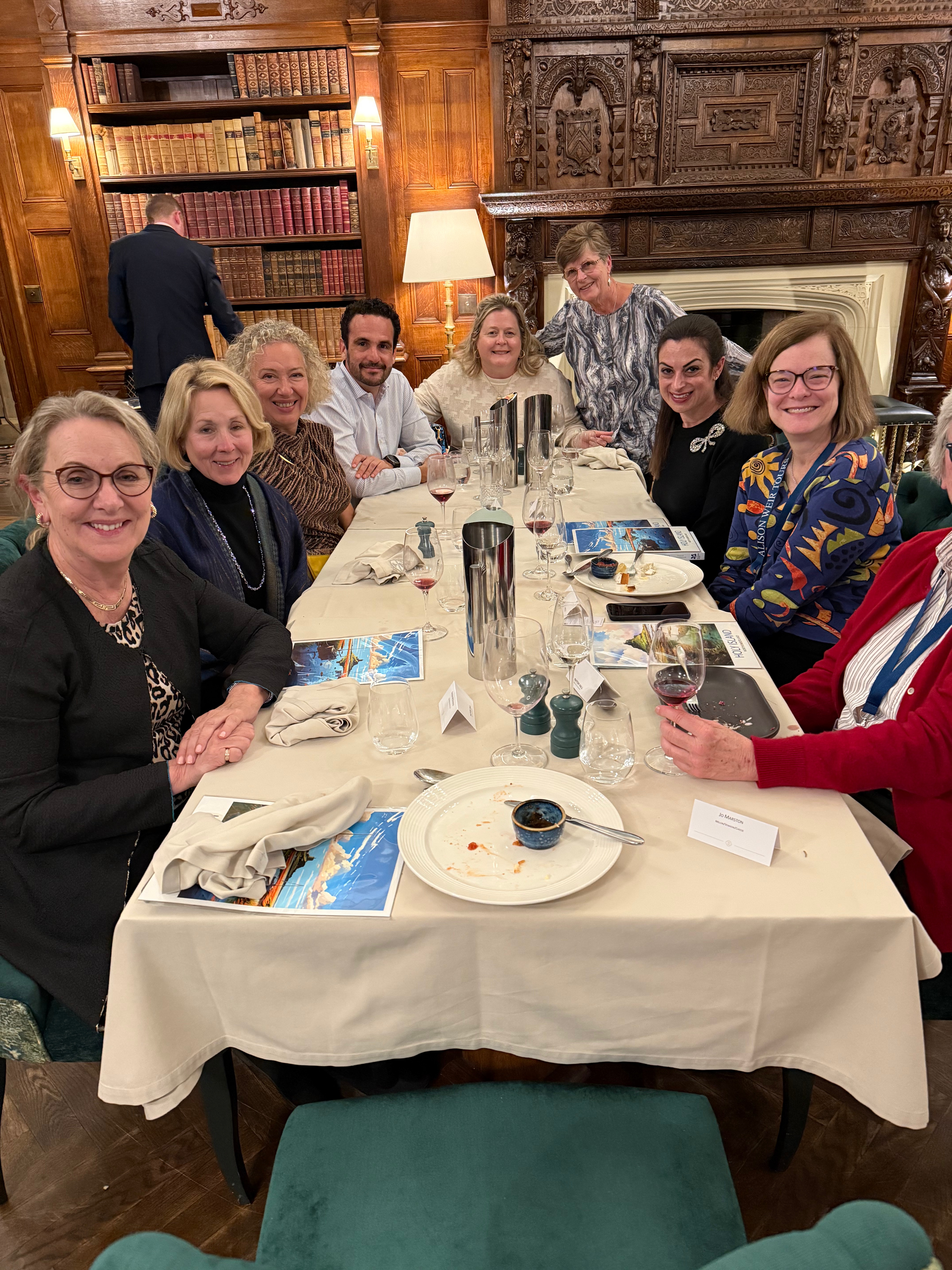
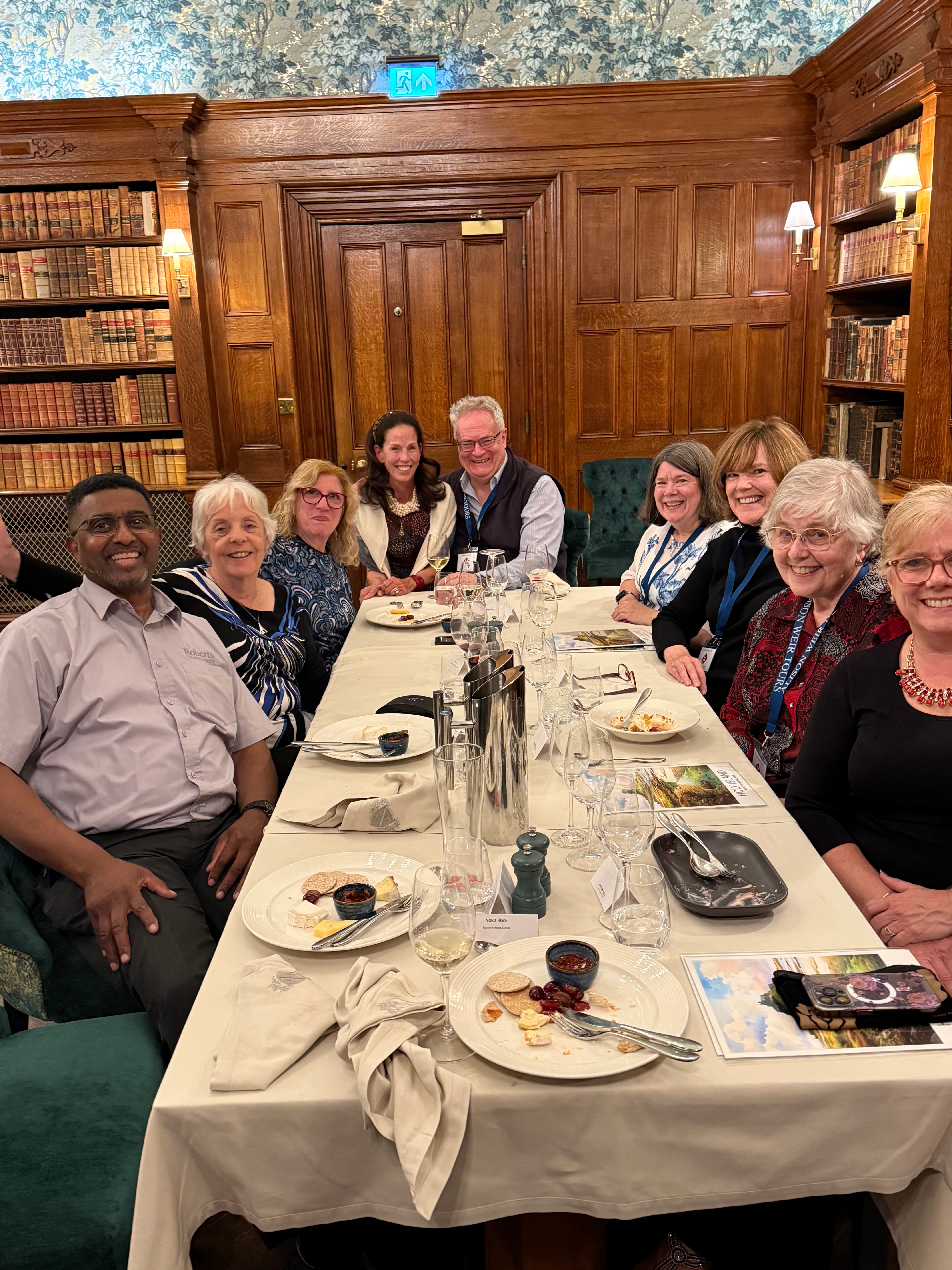
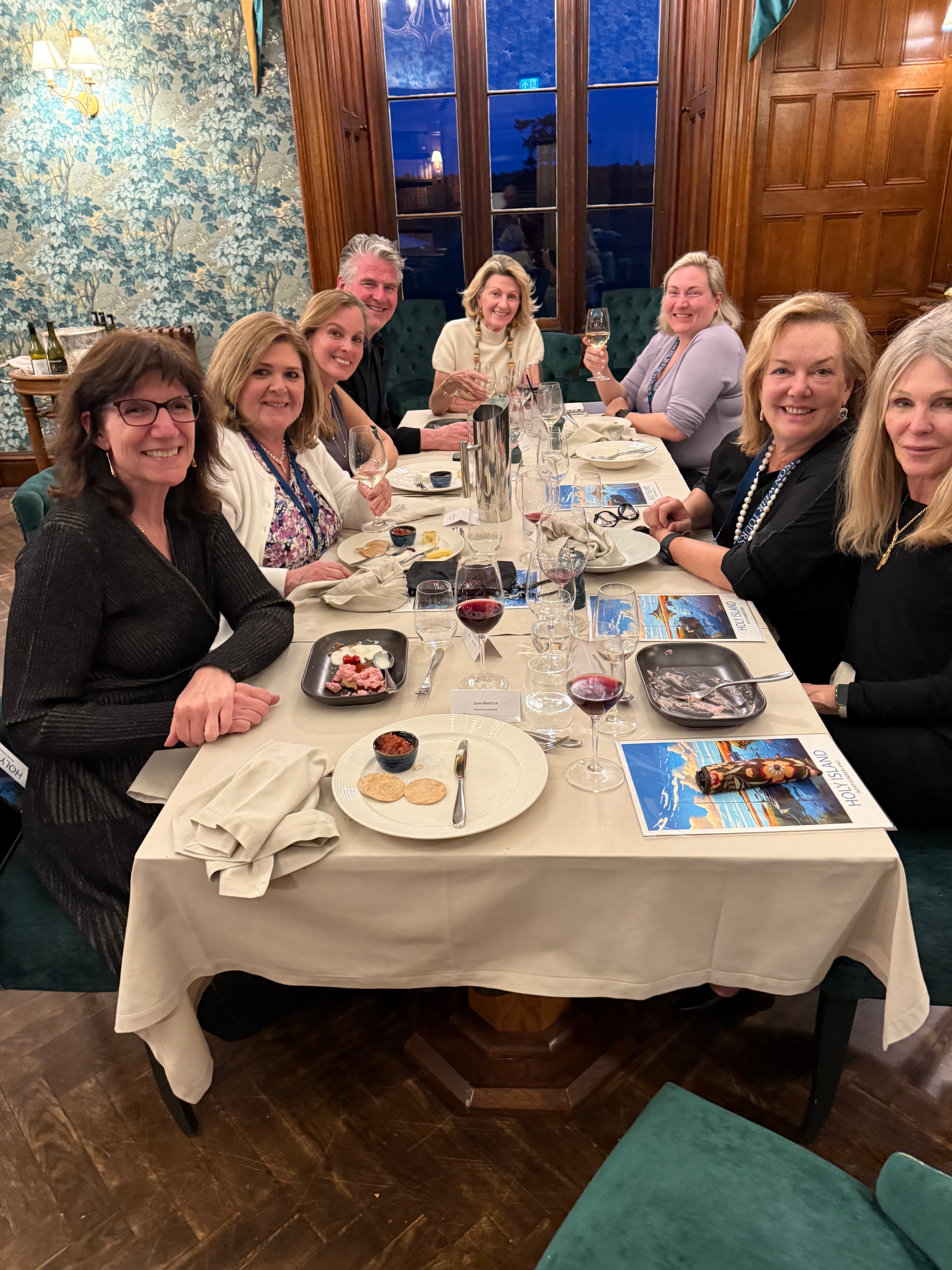
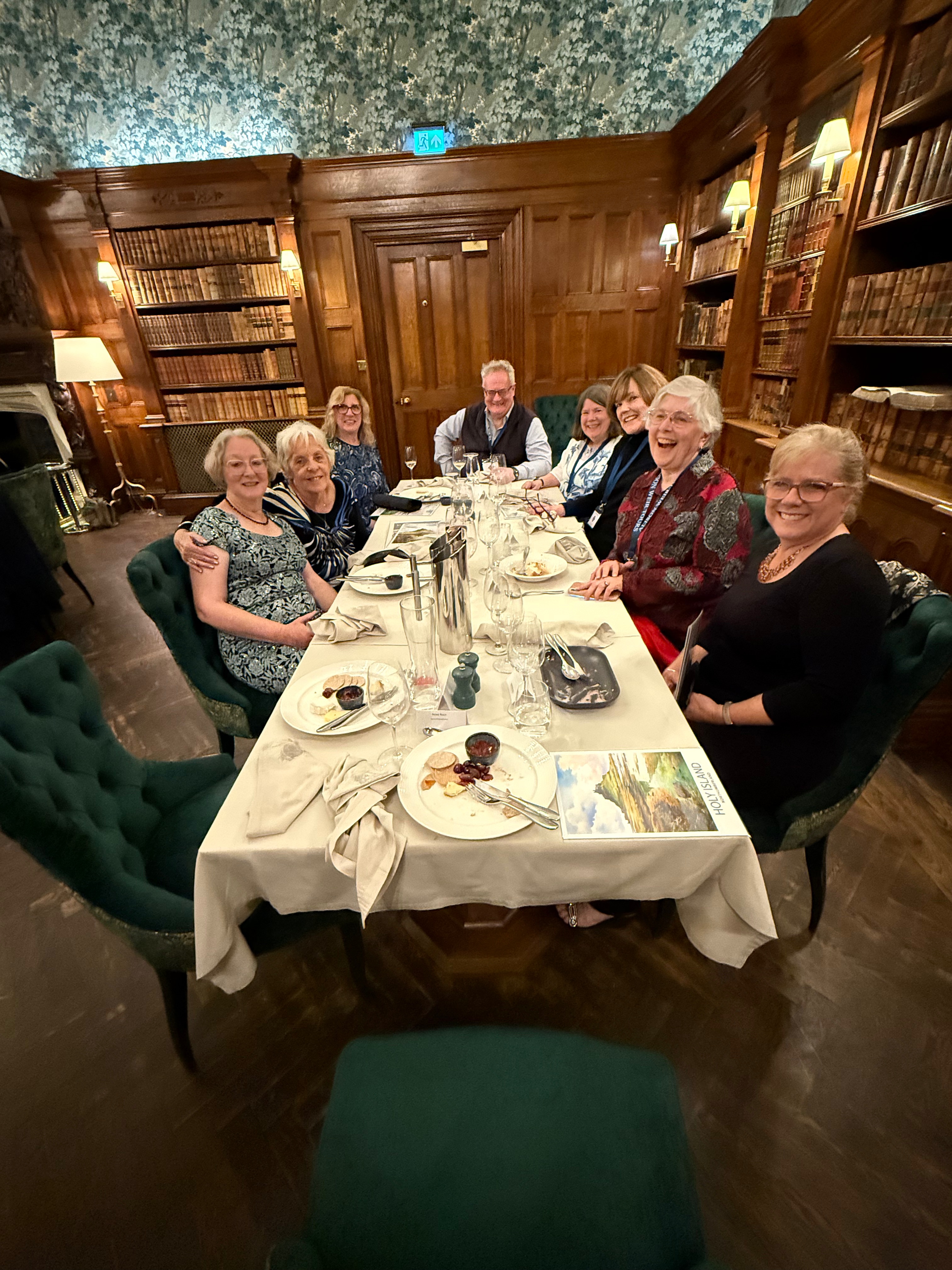
Then, drinks, followed by dinner in the Emerald Restaurant at Matfen Hall. Such a life we have!
Day 7: Tuesday, 6th May
Breakfasts at Matfen Hall were wonderful. Our tour group had a private dining room, the Cloisters, with a great view out on the grounds and a most stylish choice of eggs in any fashion with all the trimmings.
Three great talks on the bus this morning on our way to the Flodden Battlefield. Mike “Flodden Field”; Nicola “The Howards of Flodden” and Sarah “Flodden Field: The Women’s Story”.
Tour notes: Flodden Battlefield. The farm fields near Flodden, on the border between Scotland and England, incorporate the site of one of the most fateful battles in the long history of conflict between the Scots and English in this part of Northumberland. The Battle of Flodden, also known as the Battle of Branxton Moor, took place on 9 September 1513, and saw the forces of James IV of Scotland crushed by an English army under the command of the Earl of Surrey. A large, memorial cross marks the battlefield site, and there are interpretive panels at several places around the perimeter, telling the tale of how the battle unfolded.
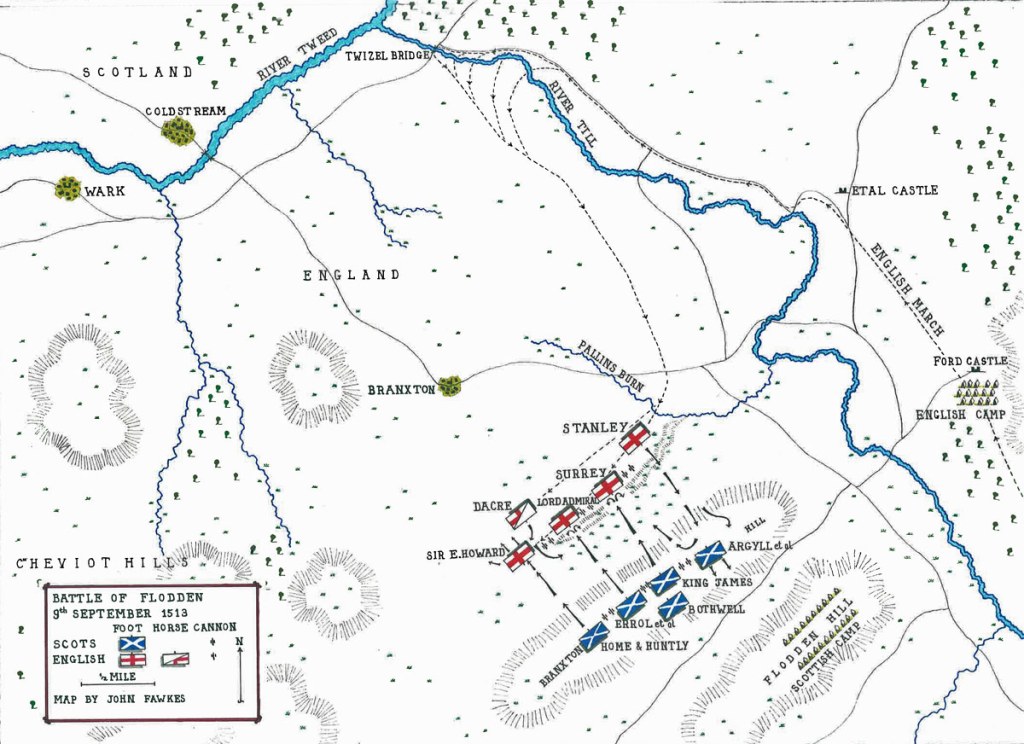
Julian and Mike walked us to a vantage point where they could describe, and we could “see” the opposing sides and how the battle unfolded. Reivers played a pivotal role in this crushing victory to the English. Vicki took a small twig of gorse from a nearby bush to commemorate the death of an ancestor of hers, James IV, on this battlefield. There may have been Reivers with the surname Reay; also Vicki’s ancestors who were either fighting against the Scots or looting the English baggage train!
Tour notes: Lady Waterford Hall. The construction of Ford Village School was commissioned in 1860 by Louisa Anne, Marchioness of Waterford, the owner of Ford Estate. To aid the village children’s religious education, Louisa spent 21 years painting a series of huge watercolour murals of Bible stories to adorn the walls, using her tenants as models. Despite being a Pre-Raphaelite artist of some repute her achievements, like those of so many other female artists, have been overlooked. Yet here in Ford she created something entirely unique; the only school in Britain to have its walls embellished with Pre-Raphaelite art. The building remained in use as a village school until 1957 and despite having as many as 134 local children in attendance in its heyday, the remarkable paintings somehow remained intact. Today, they are carefully preserved and you can marvel at Lady Waterford’s astonishing feat, study her sketches and other paintings, learn about her life and how she developed Ford as a ‘model’ village. School furniture has also been preserved, so you can experience something of day-to-day life in a Victorian schoolroom.
Bus talks this morning were from Sarah “Lady Waterford Hall and its Murals”; and Mike “Introduction to Etal Castle”.
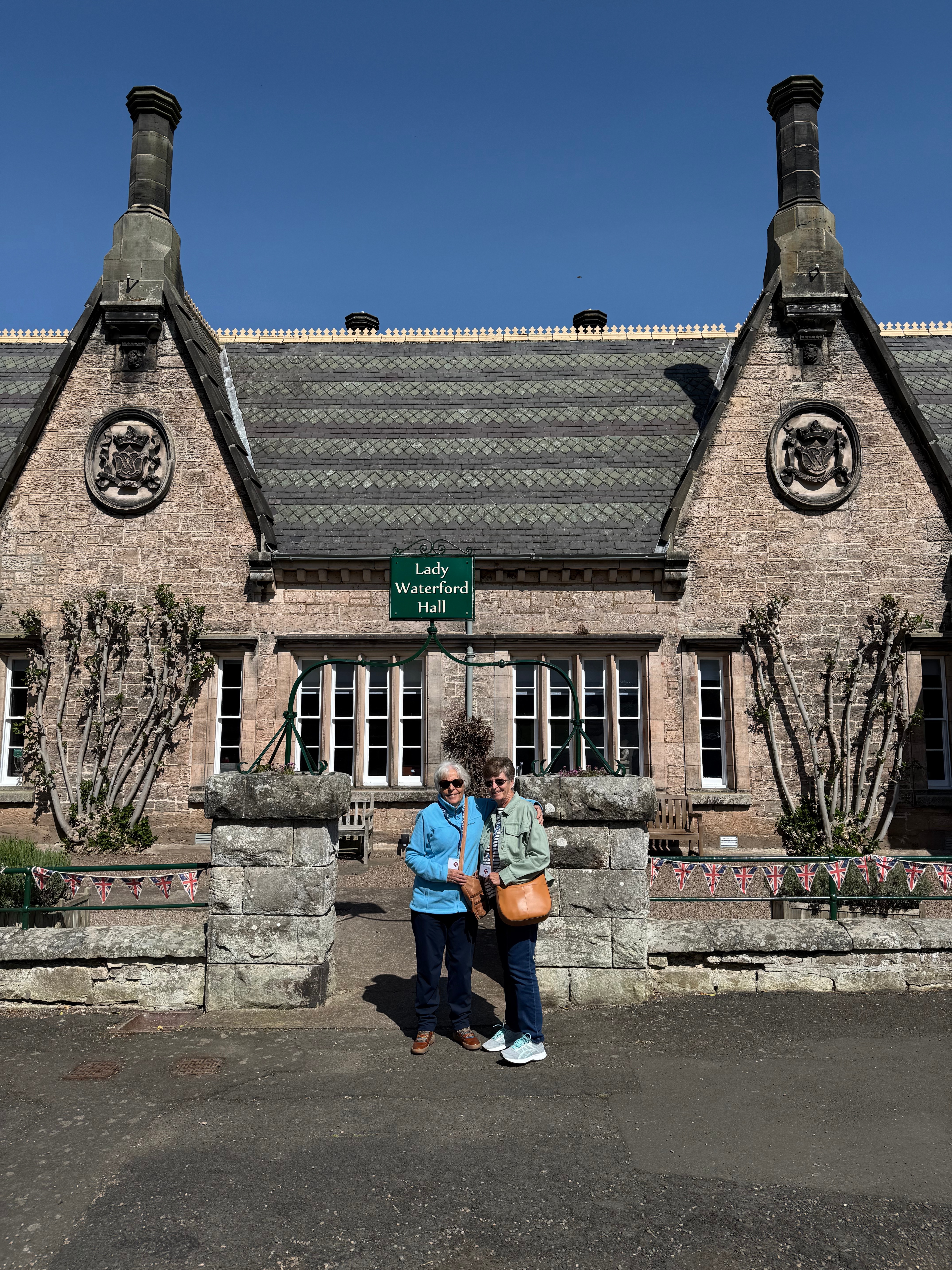
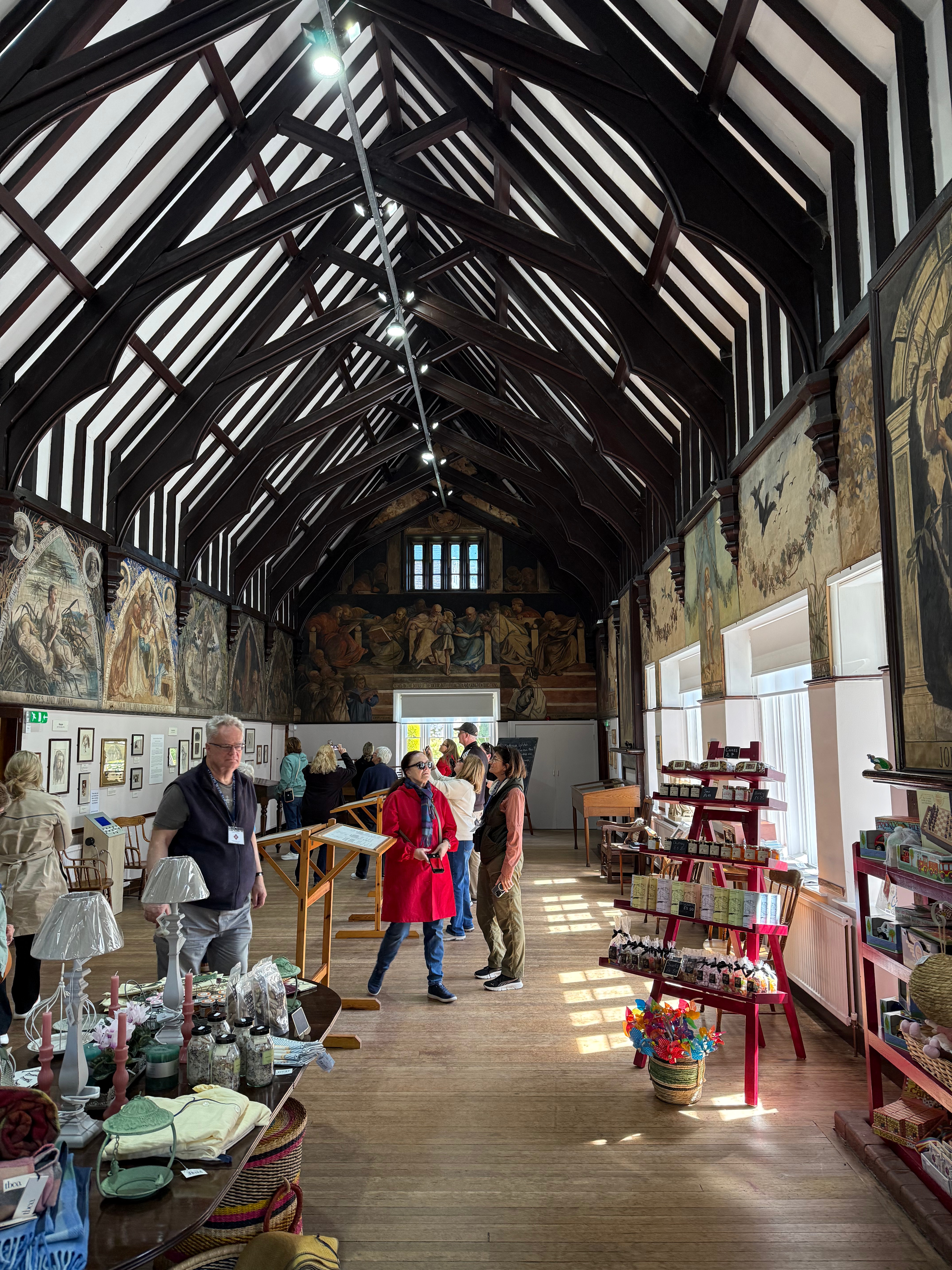
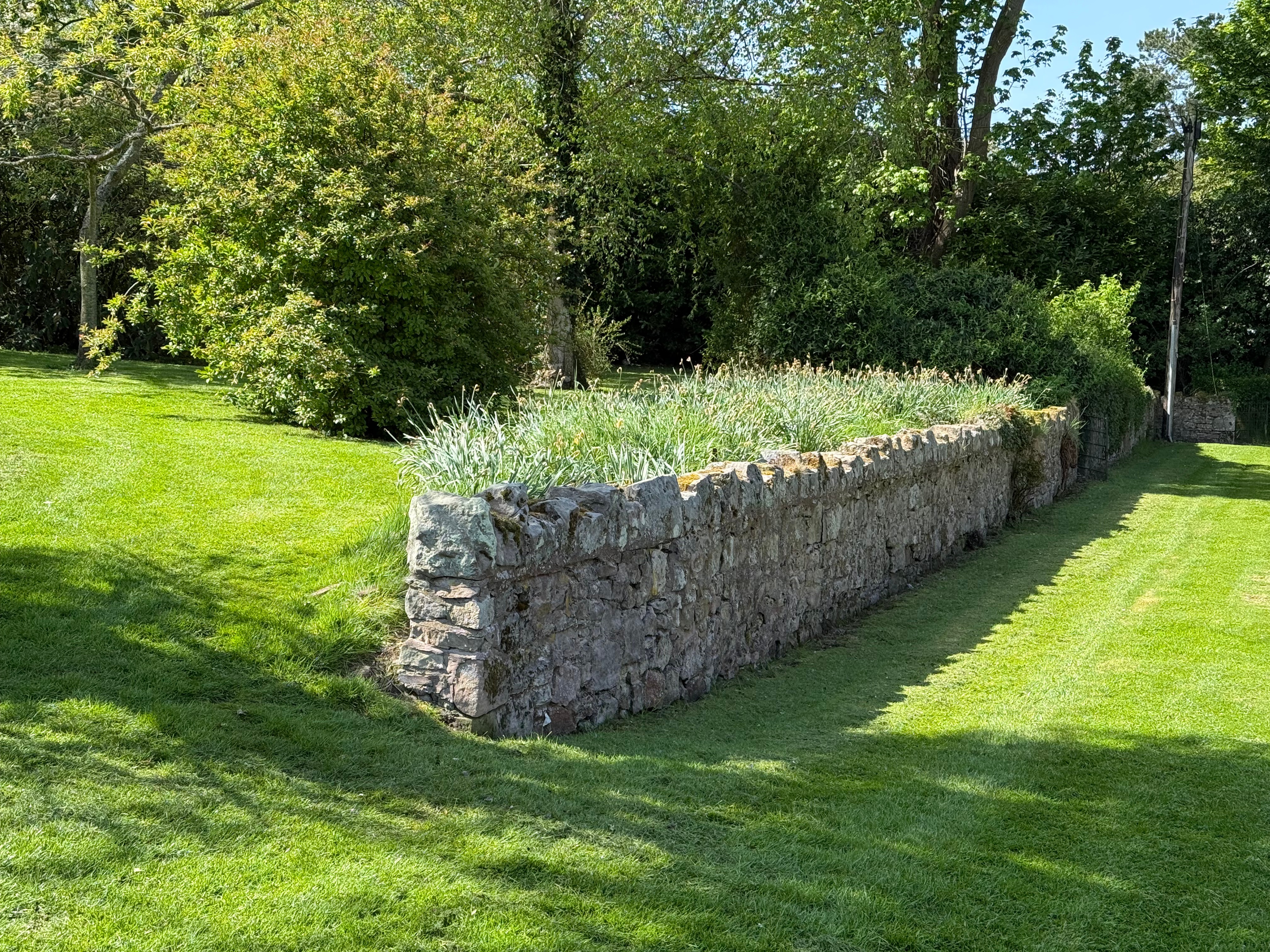
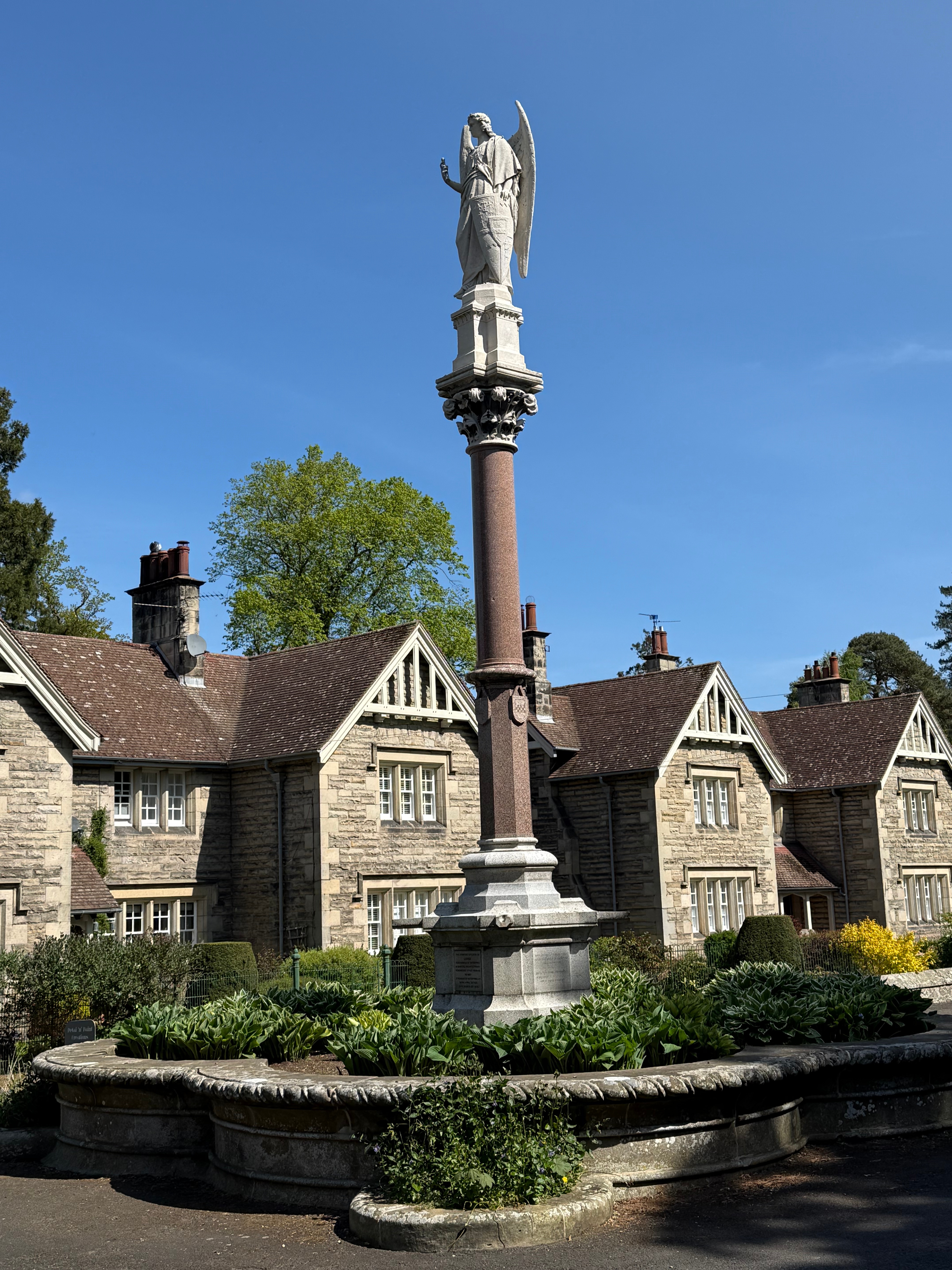
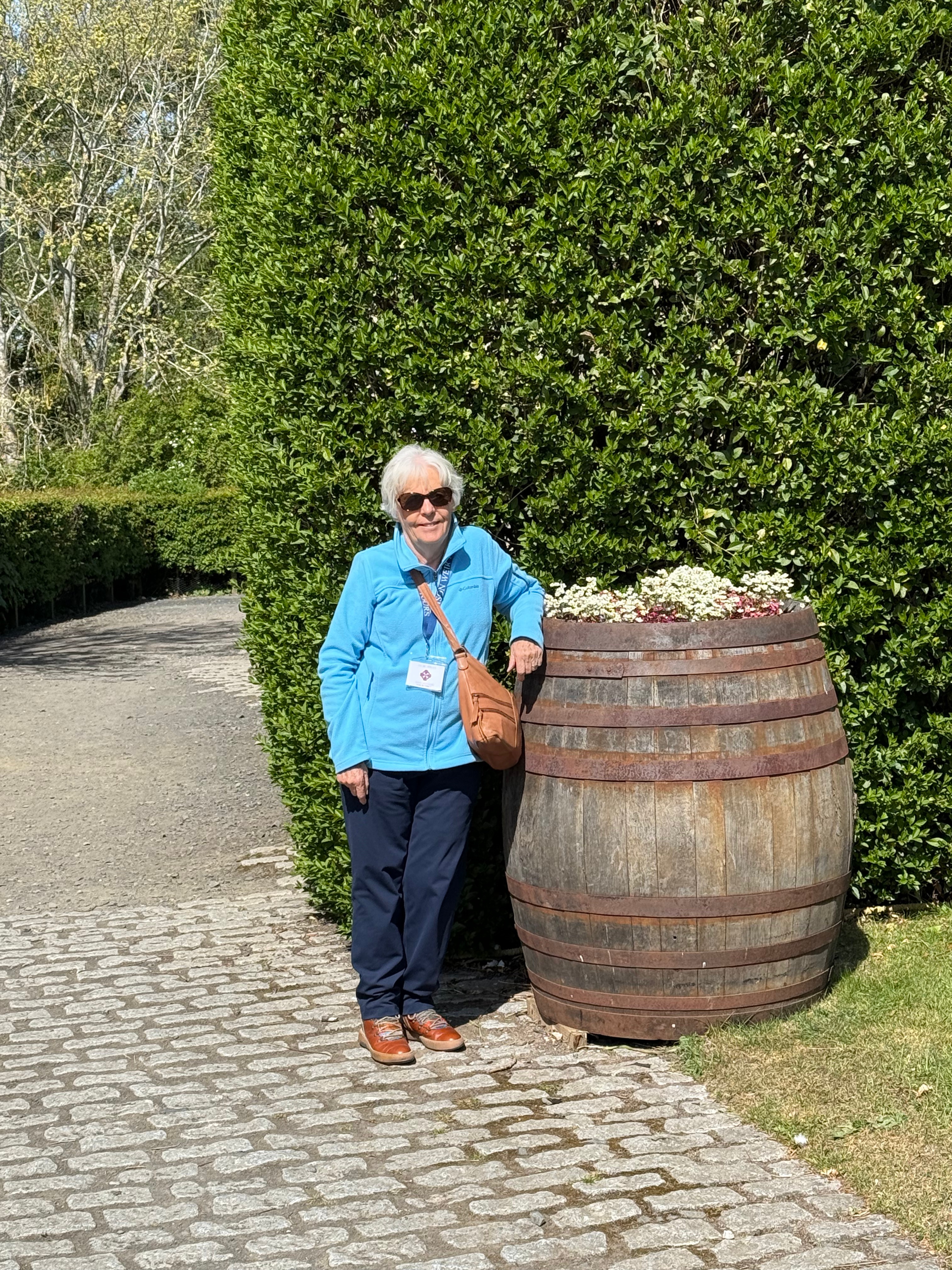
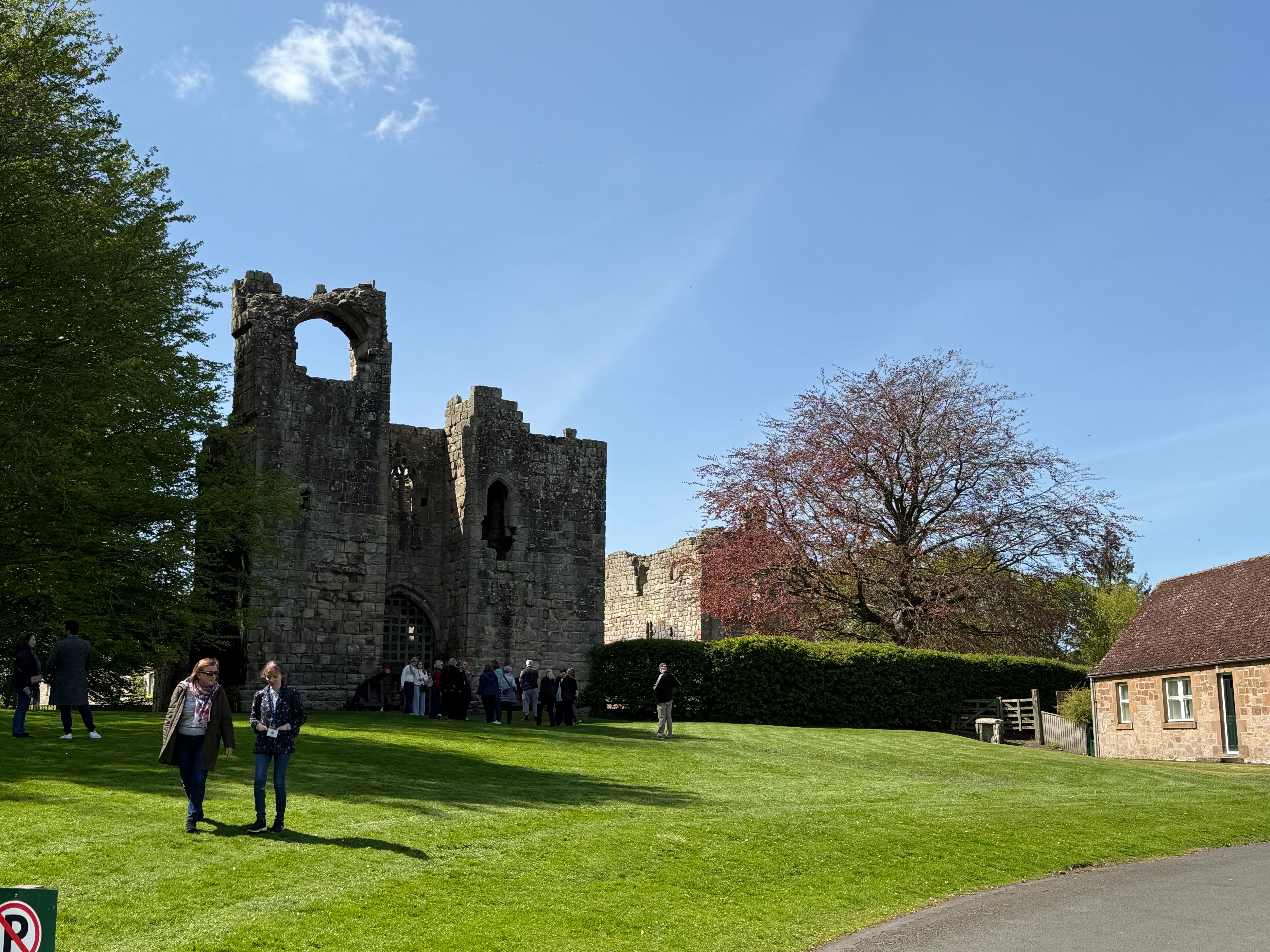
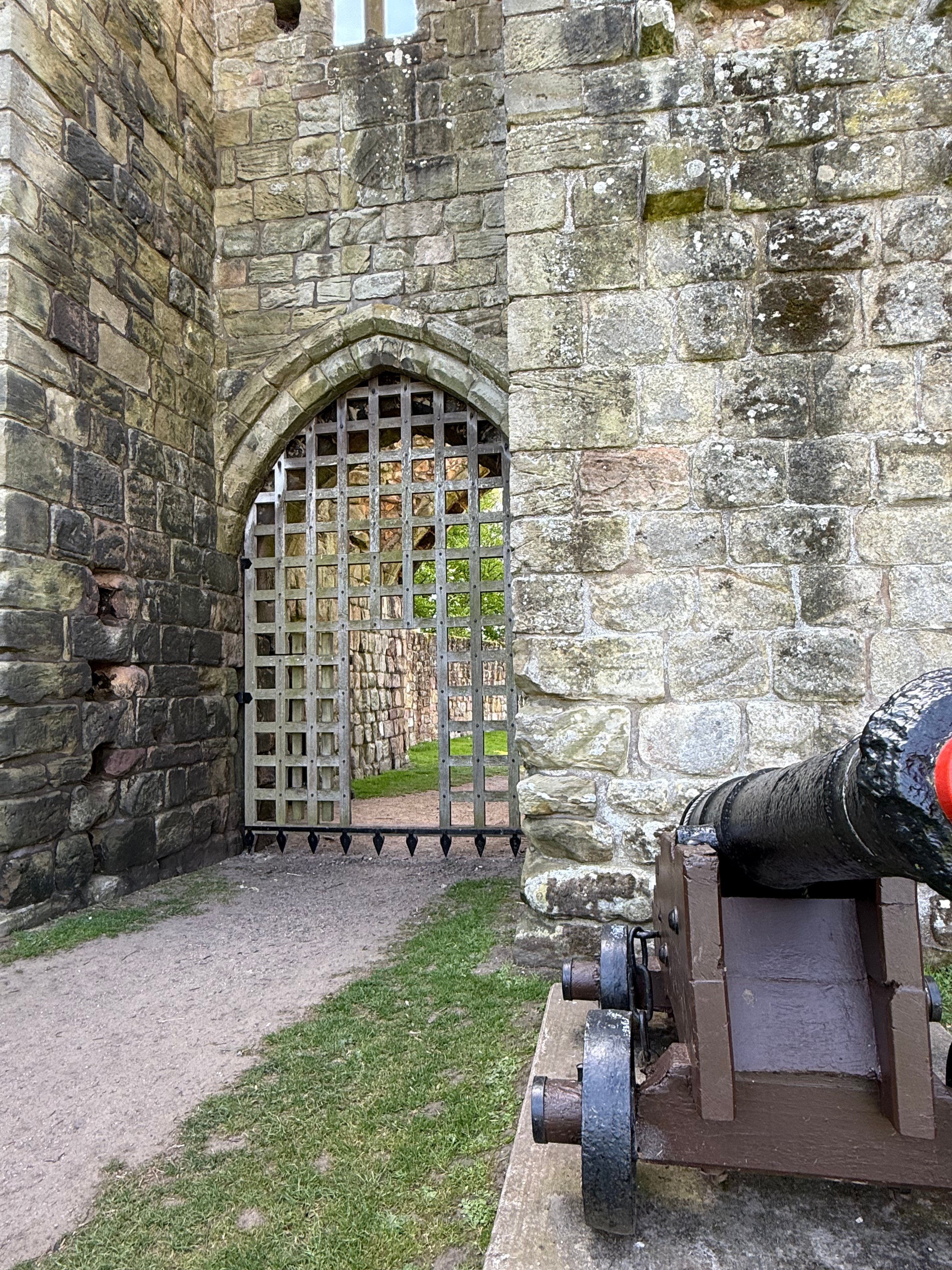
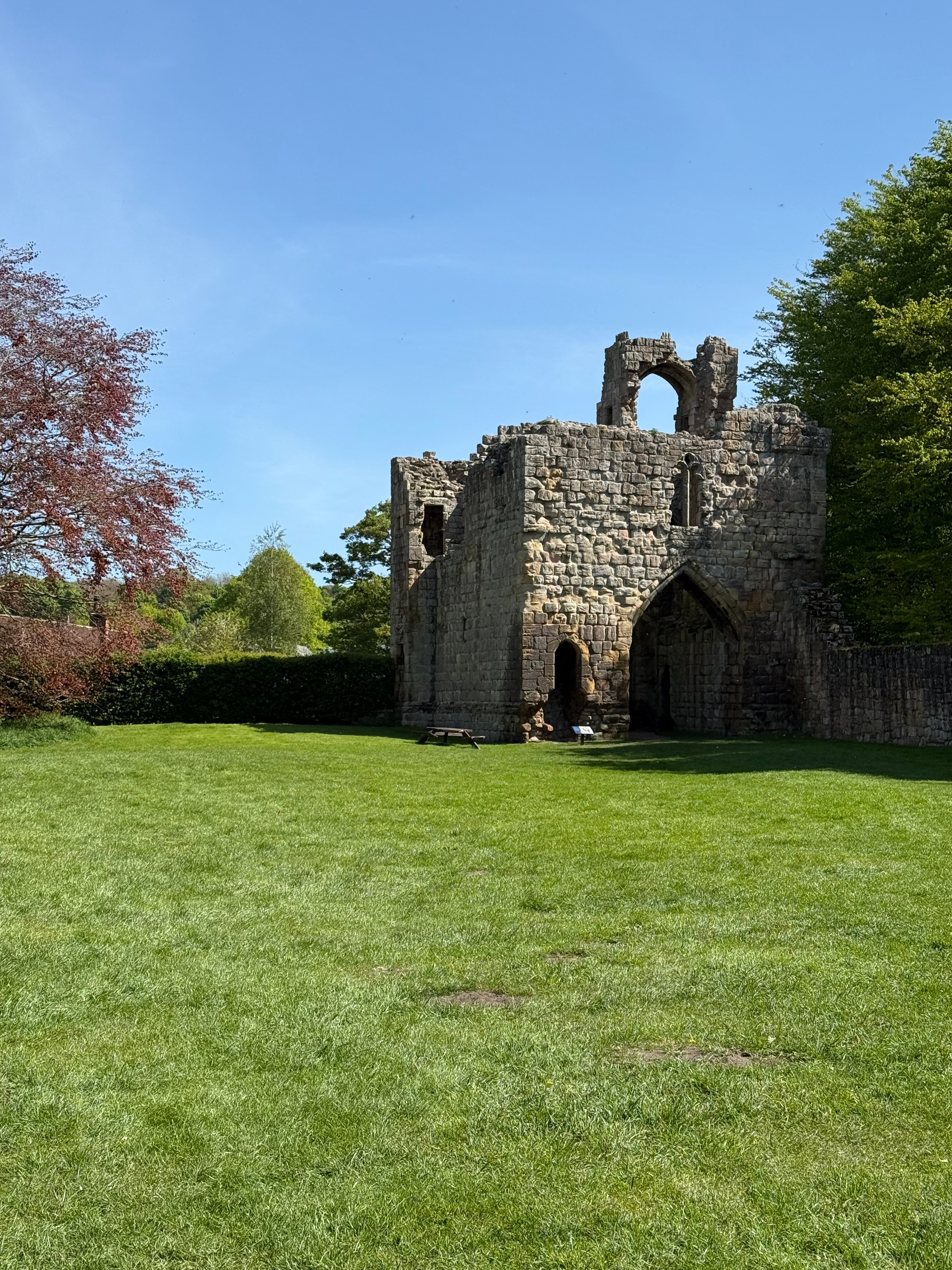
This was an impressive short visit to a “village” that the philanthropist Lady Waterford built for the local children. Her village, the Etal Castle, the Ford Estate and the Black Bull Inn are only a short walk from each other. Lunch at the Inn was a fun affair, as was taking in the varied gardens and architecture as we walked this conglomeration of old and new. The Black Bull is the only thatched pub in Northumberland.
Tour notes: Etal Castle is a ruined medieval fortification in the village of Etal, Northumberland. It was built around 1341 by Robert Manners, and comprised a residential tower, a gatehouse and a corner tower, protected by a curtain wall. The castle was involved both in local feuding and the border wars between England and Scotland. There was a battle between the rival Manners and Heron families outside the walls in 1428, and in 1513 it was briefly captured by King James IV of Scotland during his invasion of England. The castle passed into the hands of the Crown in 1547 and was garrisoned as part of the border defences but fell into disrepair and was abandoned as a military fortification after 1603. In the 18th century it ceased to be used as a domestic dwelling and became ruinous. In the 21st century, the castle is owned by the Joicey family but managed by English Heritage.
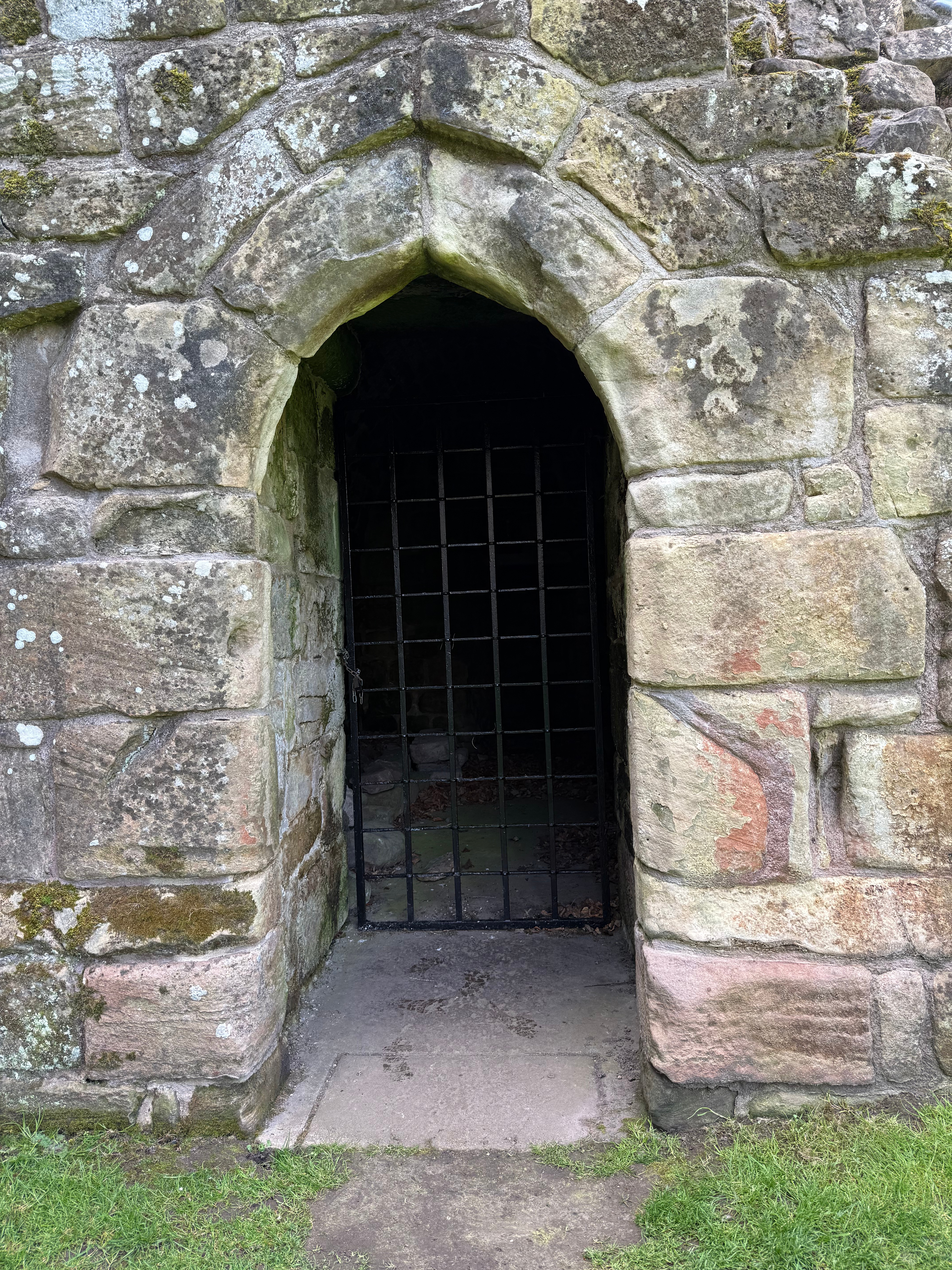
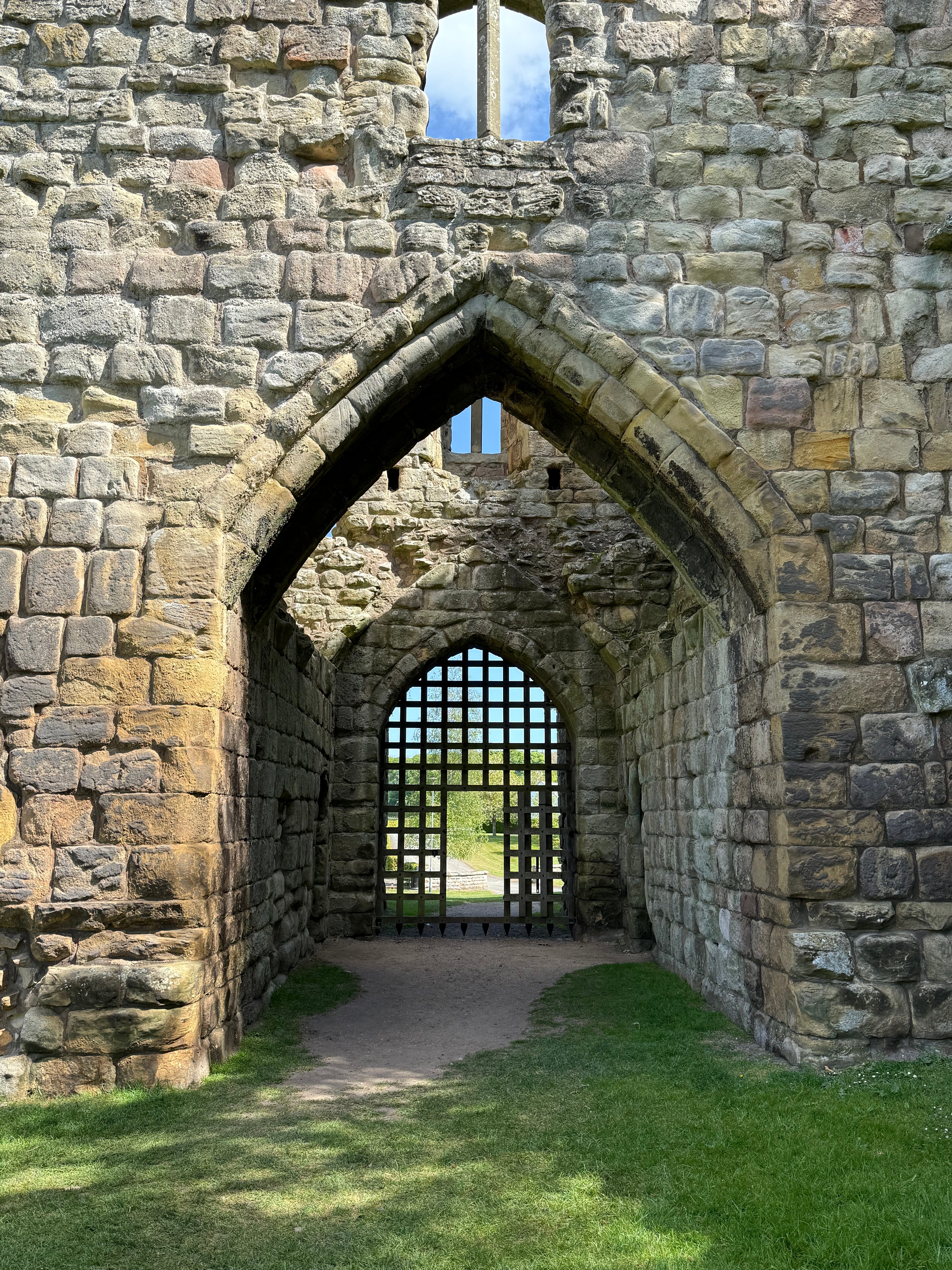
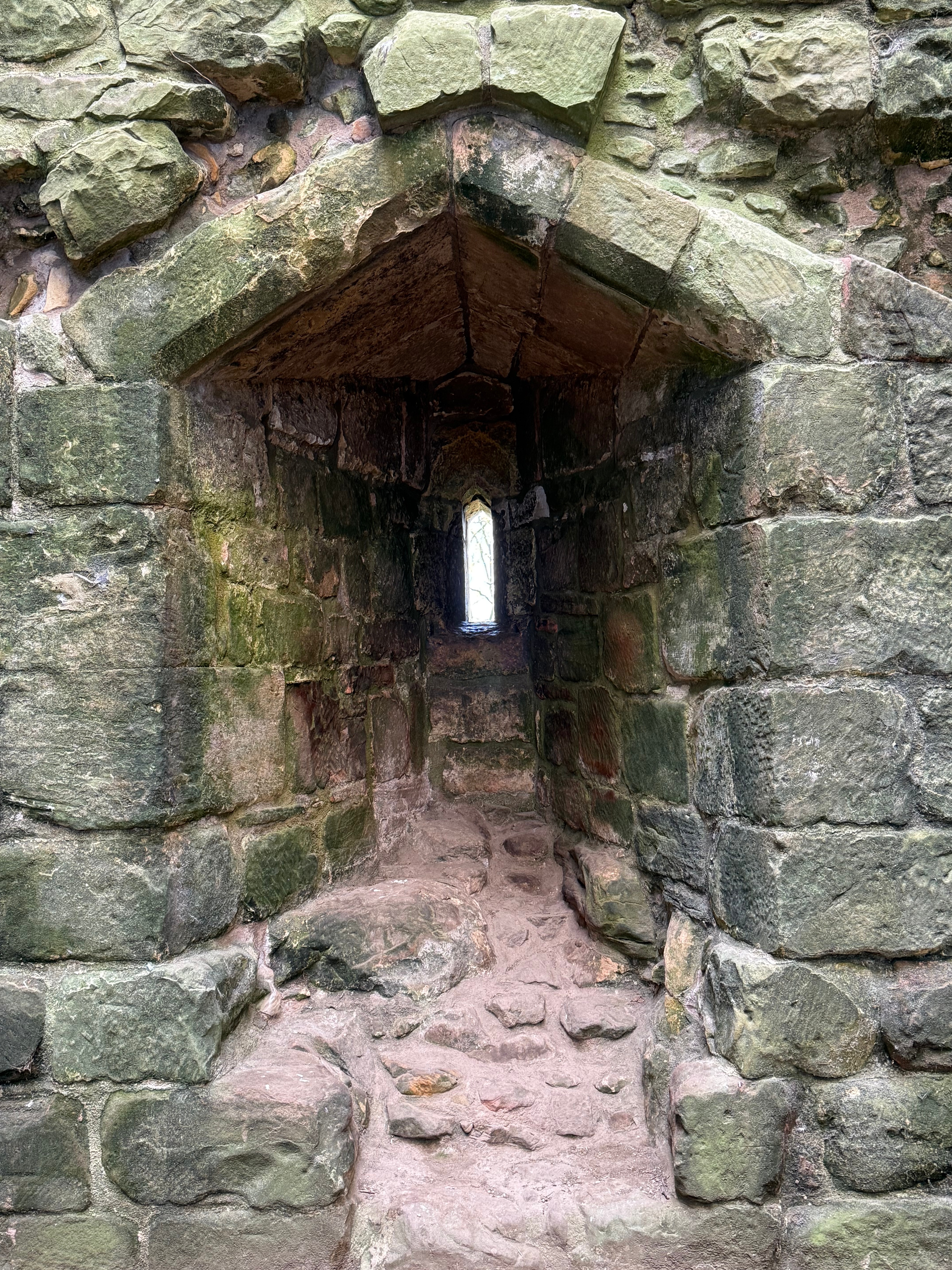
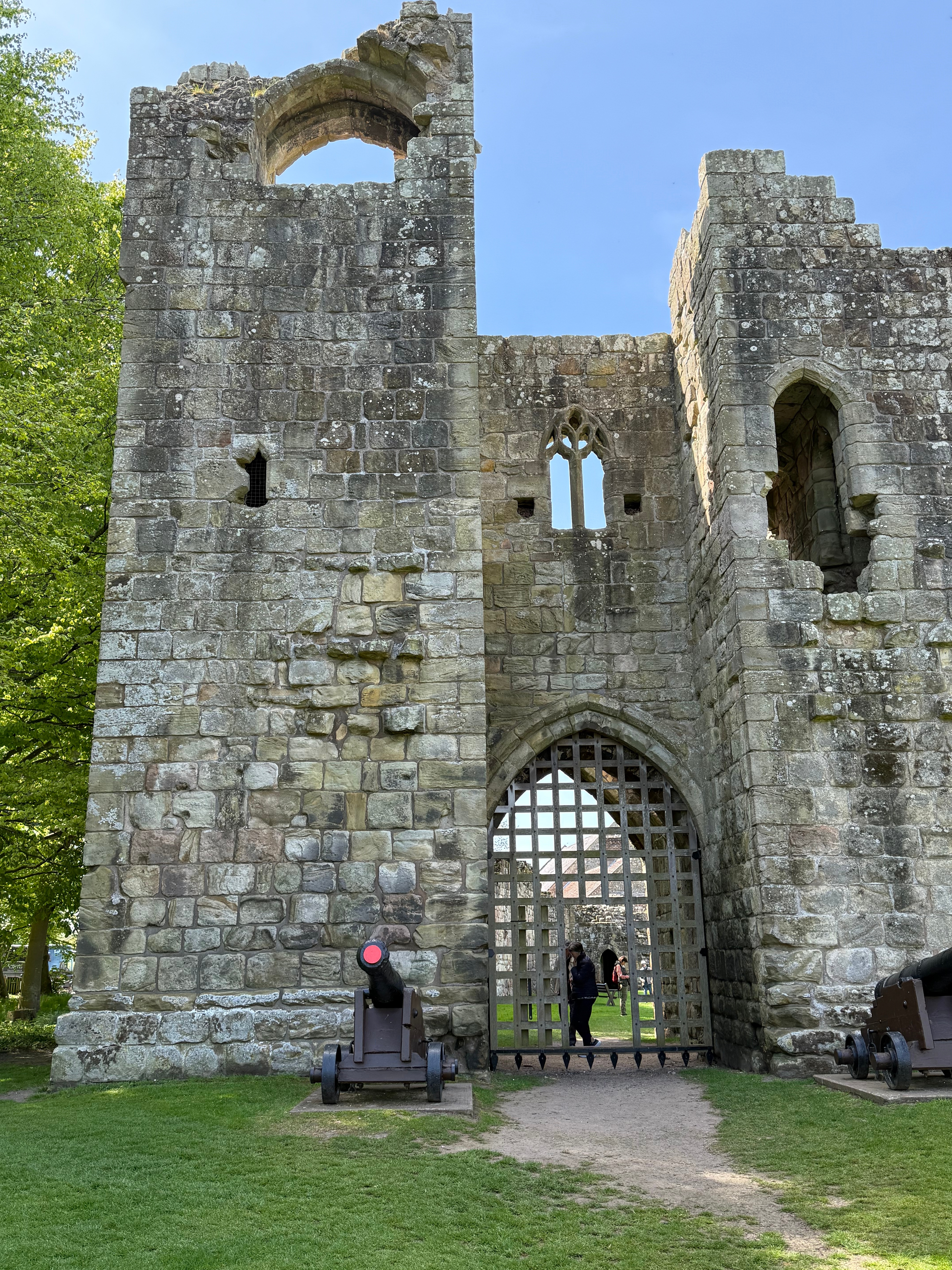
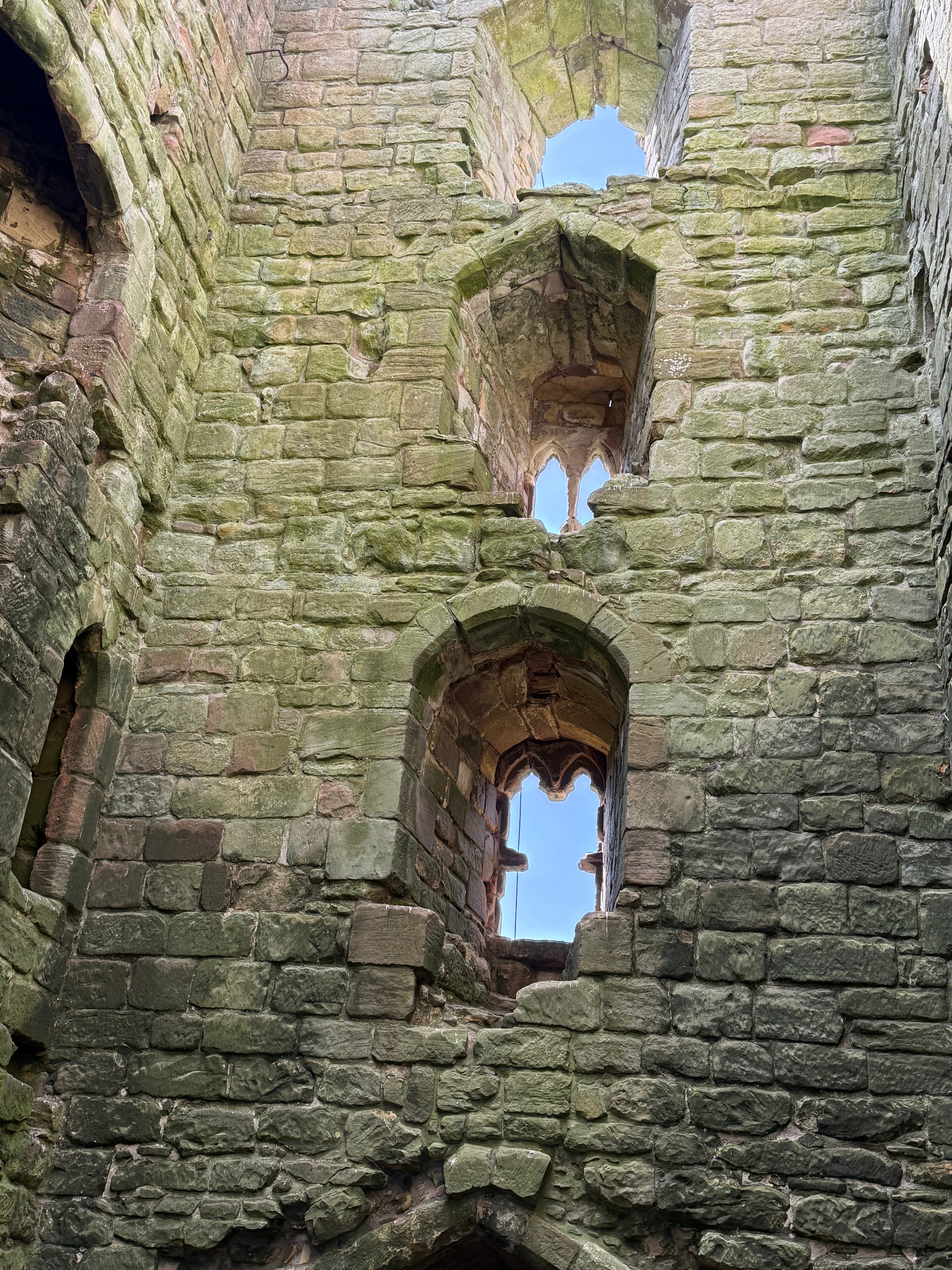
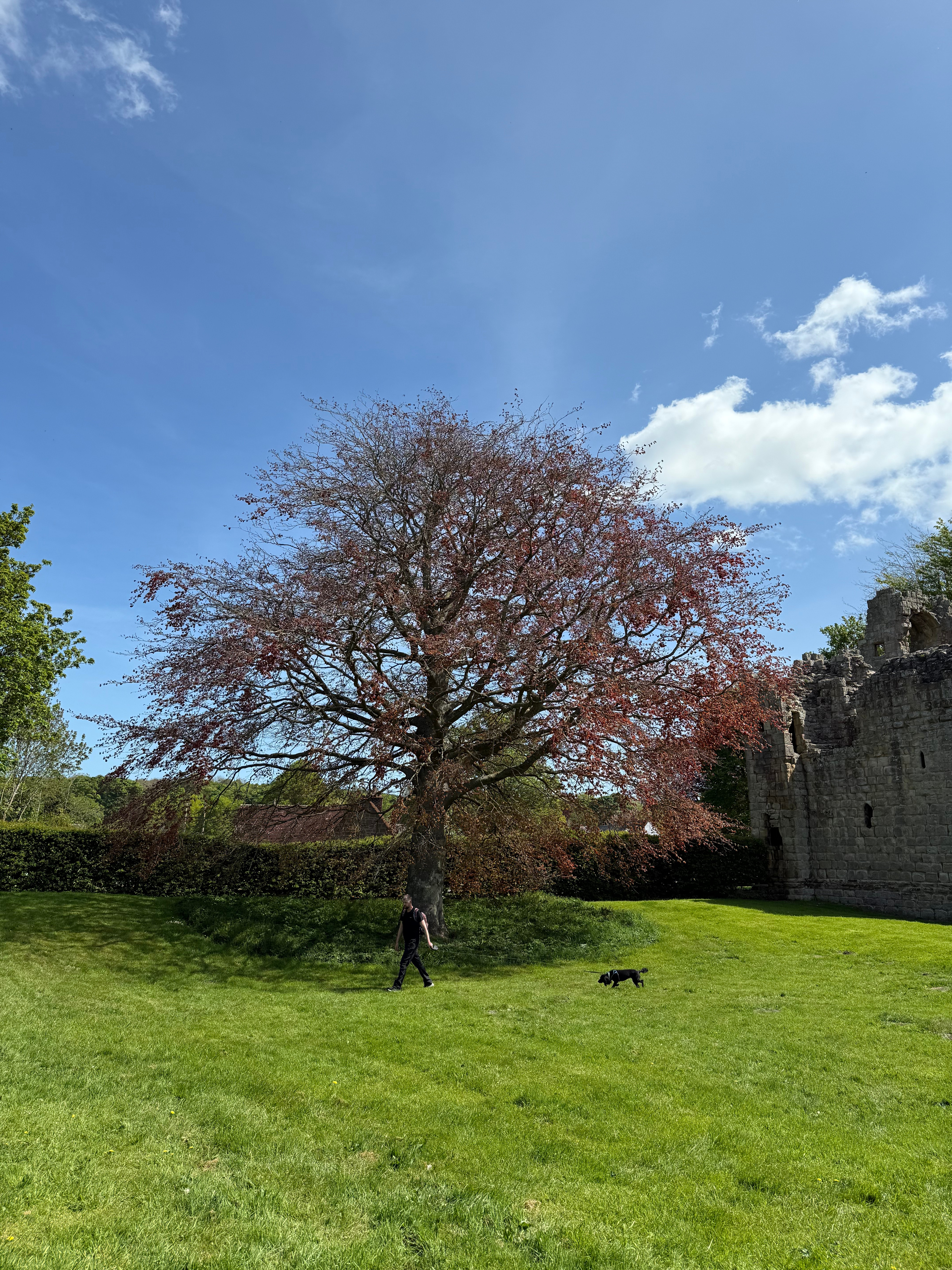
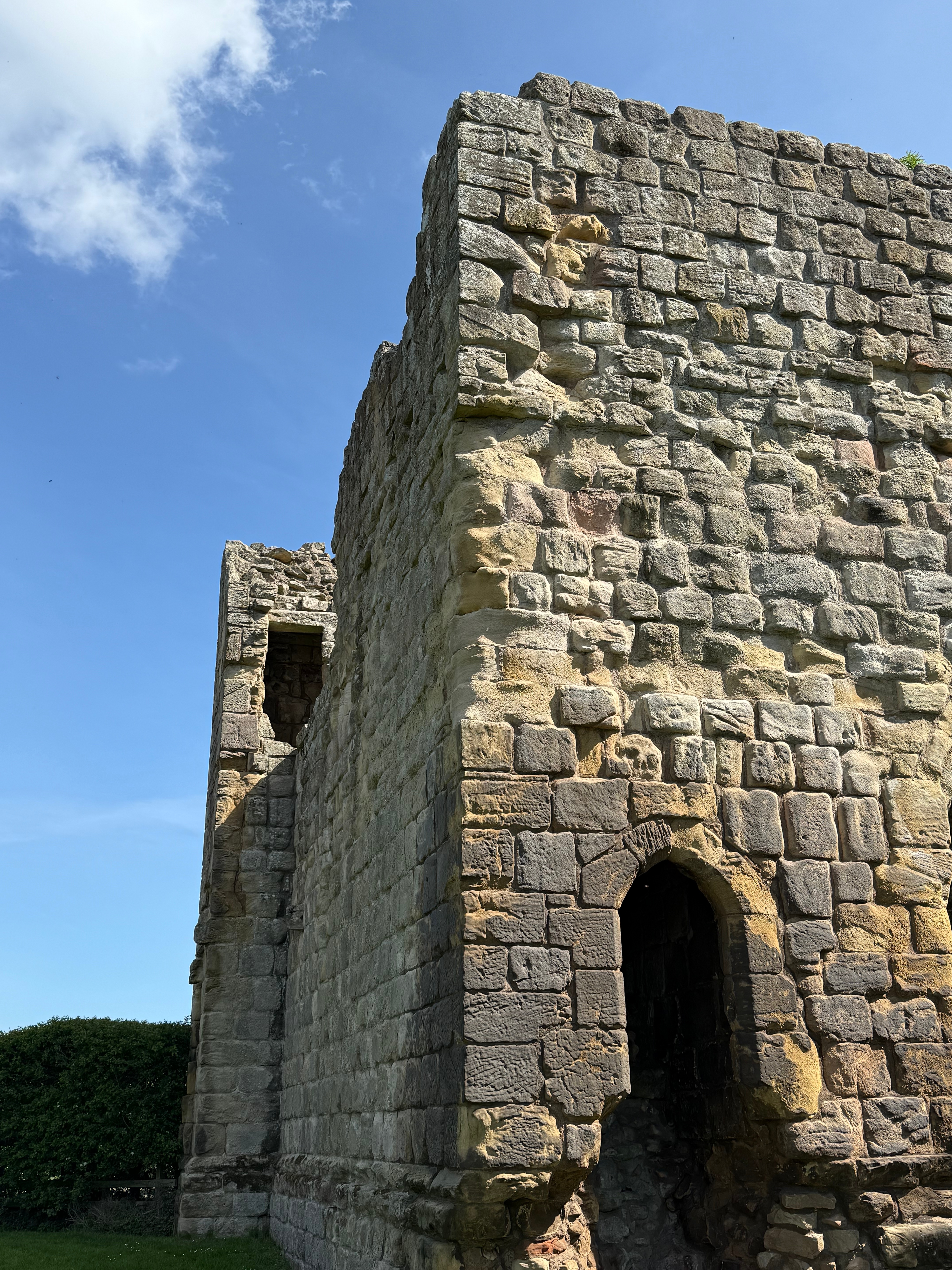
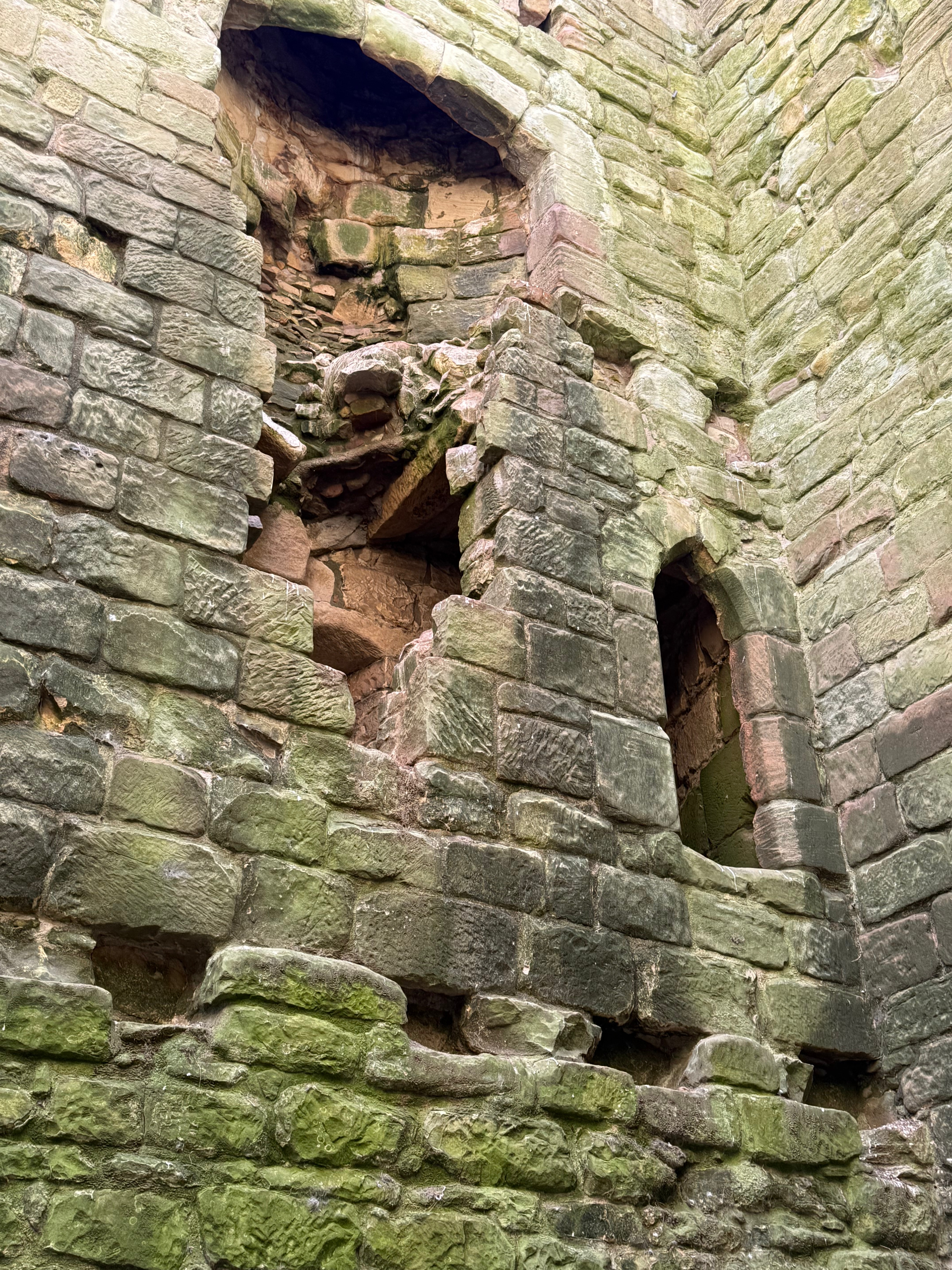
Back on the bus we now departed for another visit that was high on most folks list – the Holy Island of Lindisfarne and Lindisfarne Priory. Julian gave us “Introduction to Lindisfarne” and Mike “The Sack of Lindisfarne in AD 793”.
Tour notes: The Holy Island of Lindisfarne lies just off the extreme Northeast corner of England near Berwick-upon-Tweed. The small population of just over 160 persons is swelled by the well over 650,000 visitors coming from all over the world every year.
Lindisfarne is a tidal island reachable via a paved causeway only when the North Sea tides permit. Locally the island is rarely referred to by its Anglo-Saxon name of Lindisfarne. Its local name of ‘Holy Island’ is probably derived from the ensuing observations of Durham monks: ‘Lindisfarne: truly a Holy Island, baptised in the blood of so many good men… after the murderous and bloodthirsty Viking attack on the monastery in 793 A.D.’ Lindisfarne is internationally famous both for its medieval religious heritage and also its more recent picturesque 16th-century castle. many visitors are also attracted by the peace and tranquillity that pervade the Island, which boasts quiet beaches and unique natural history.
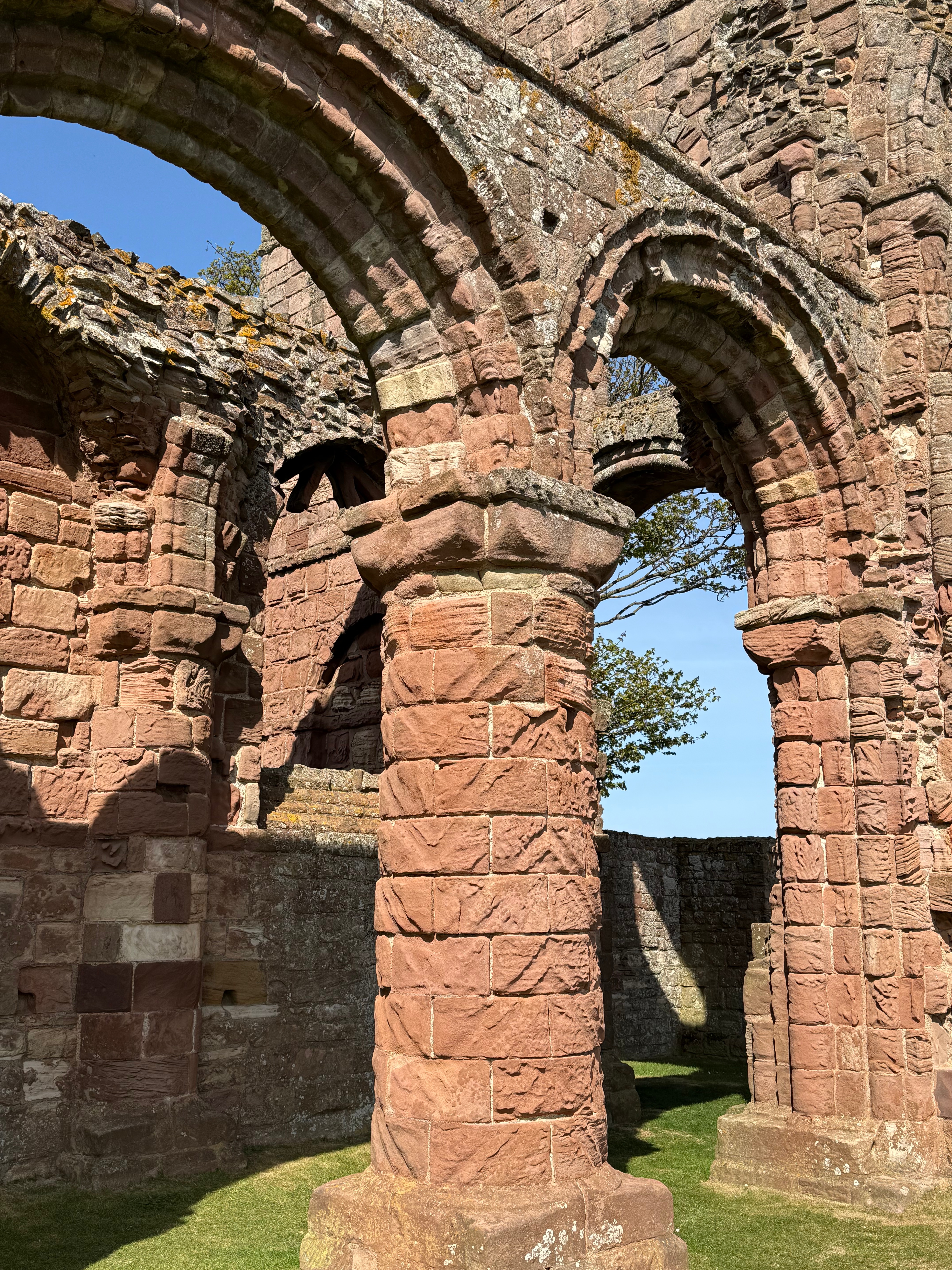
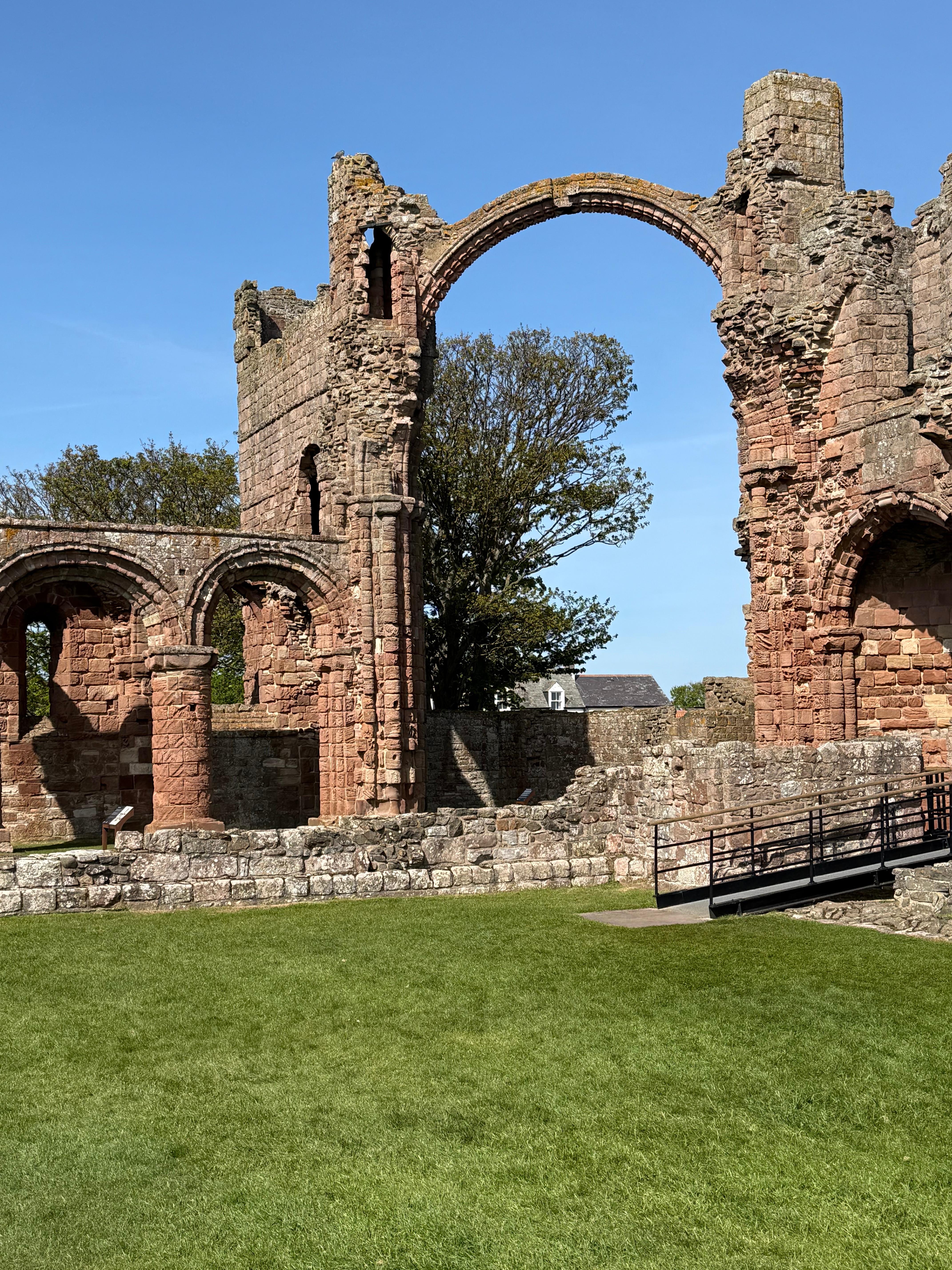
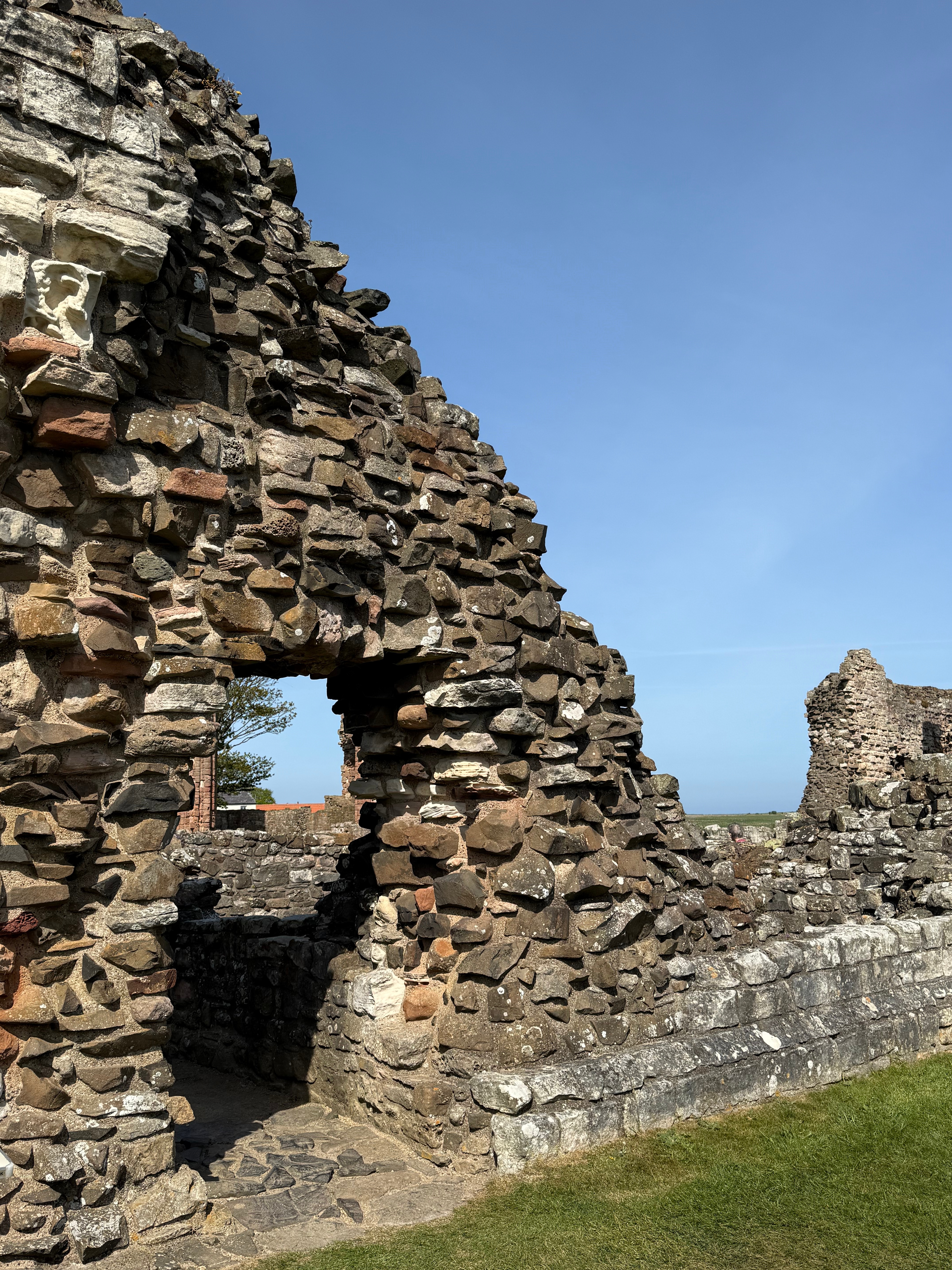
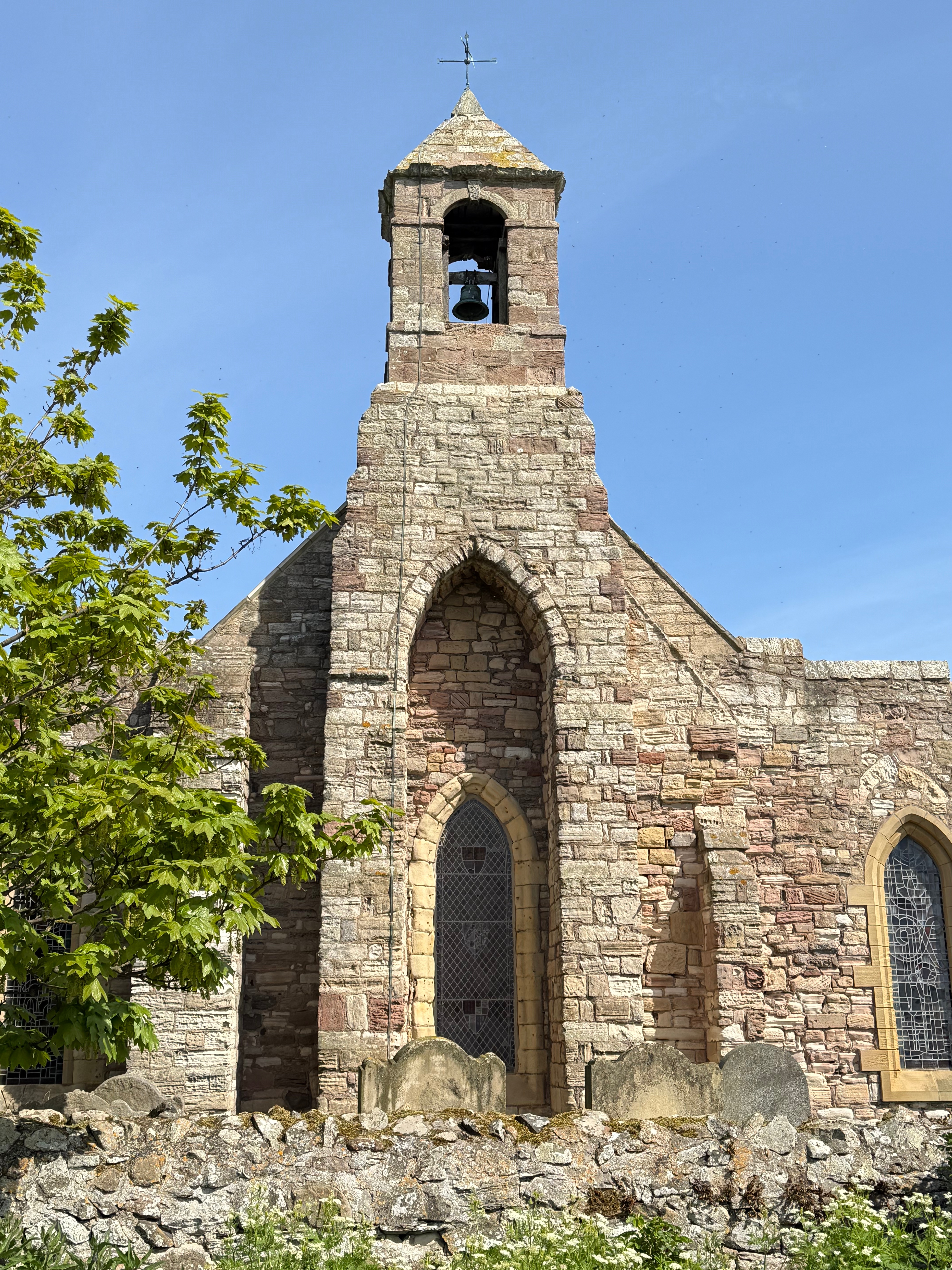
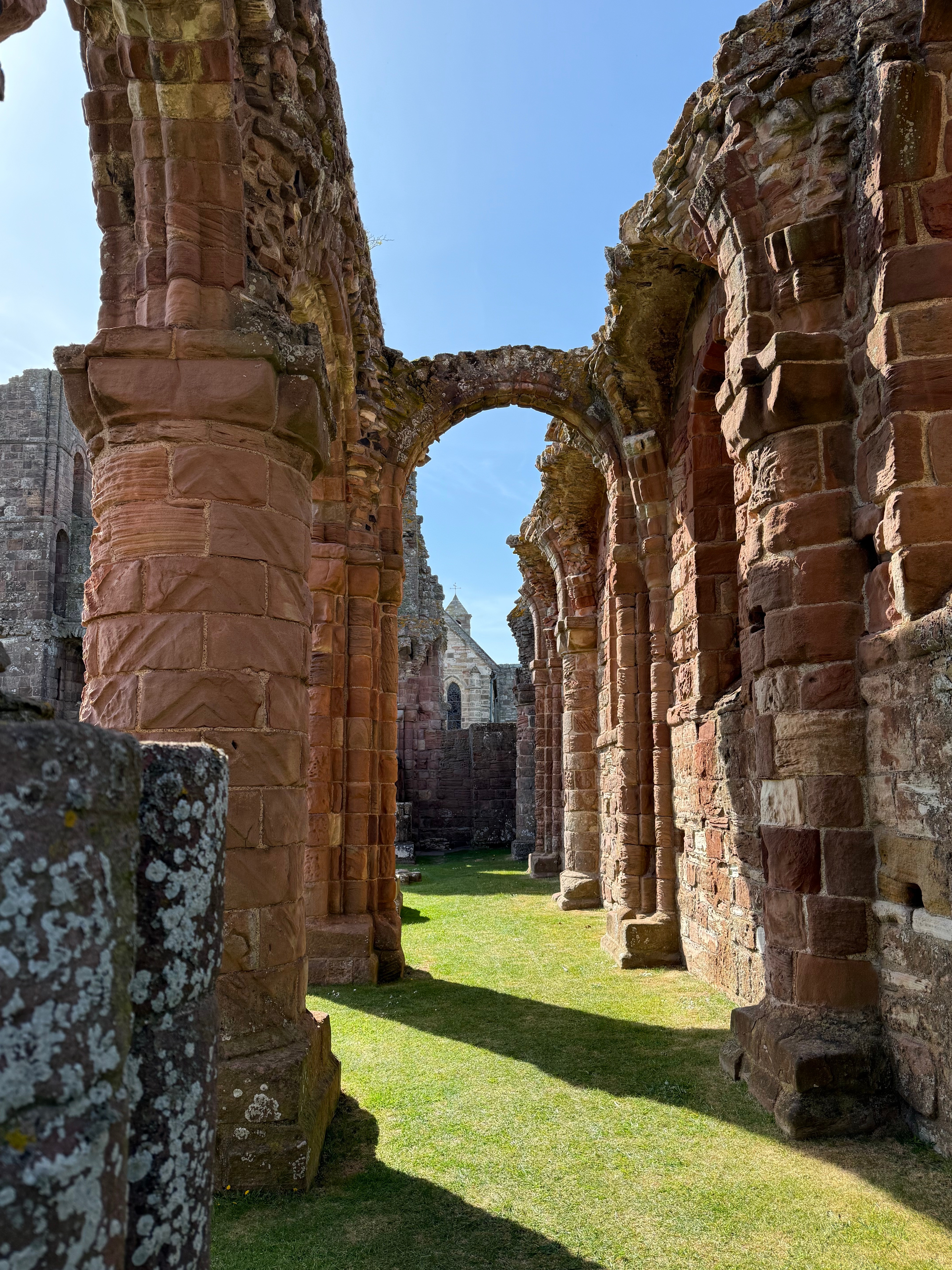
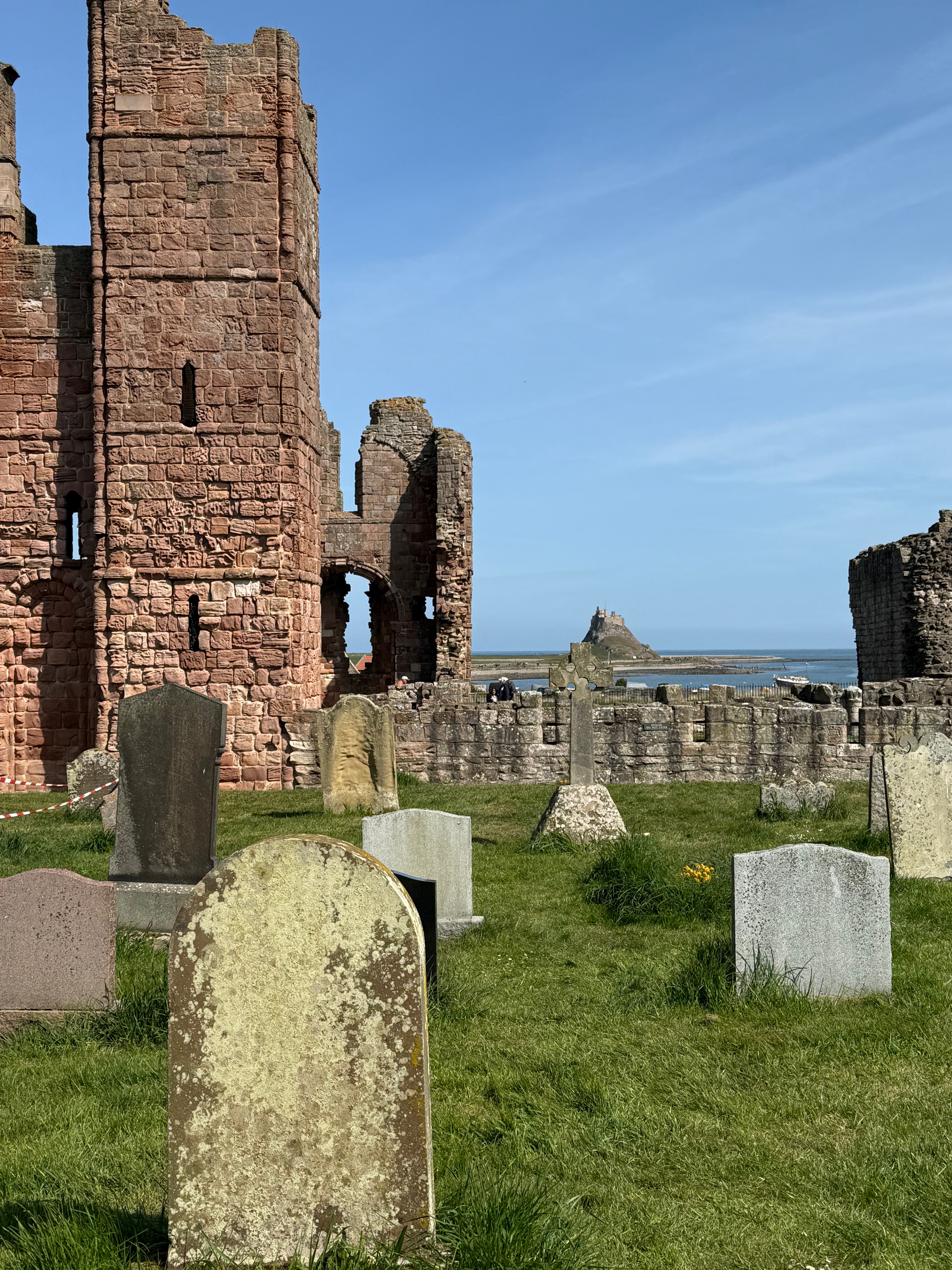
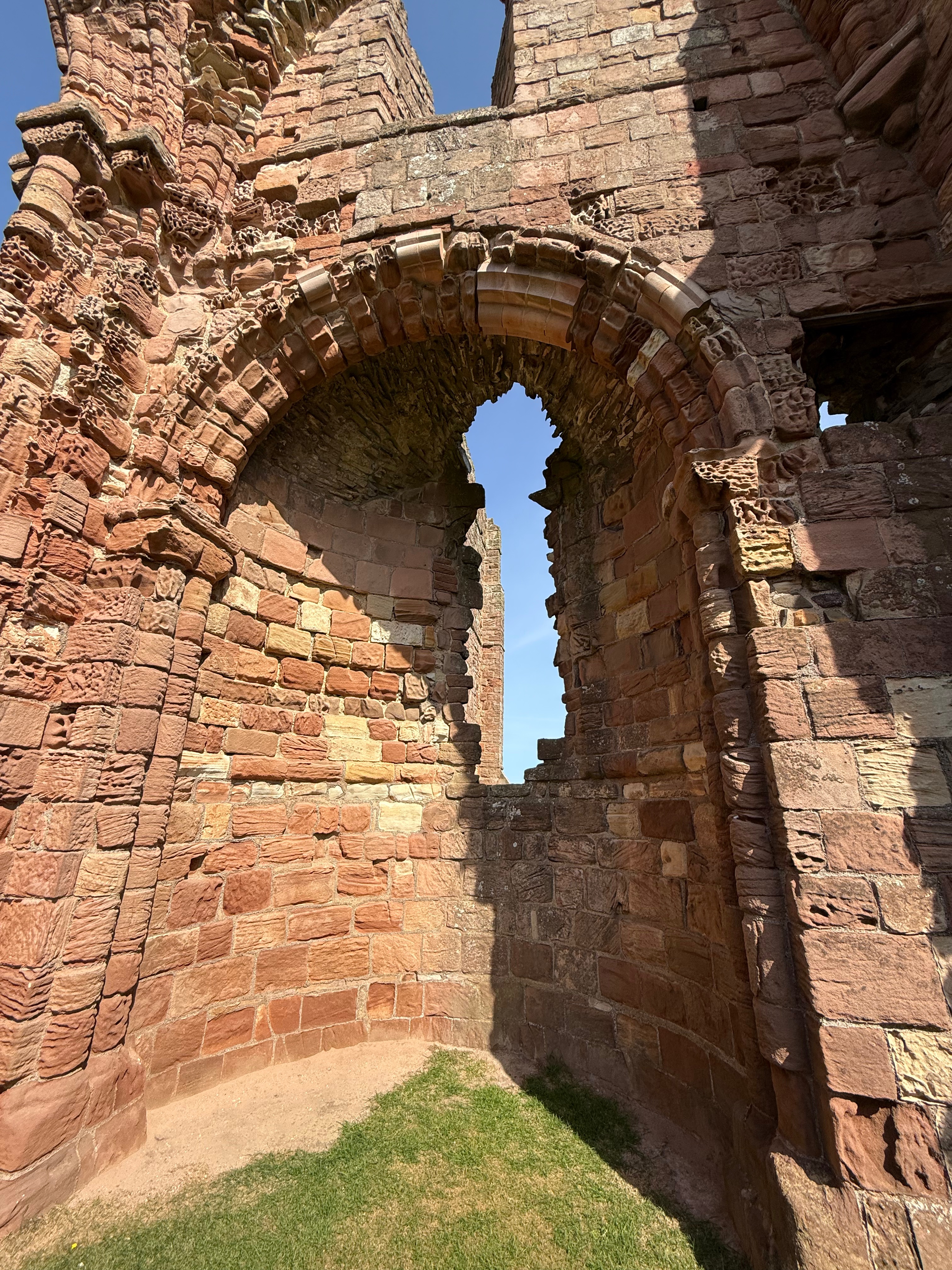
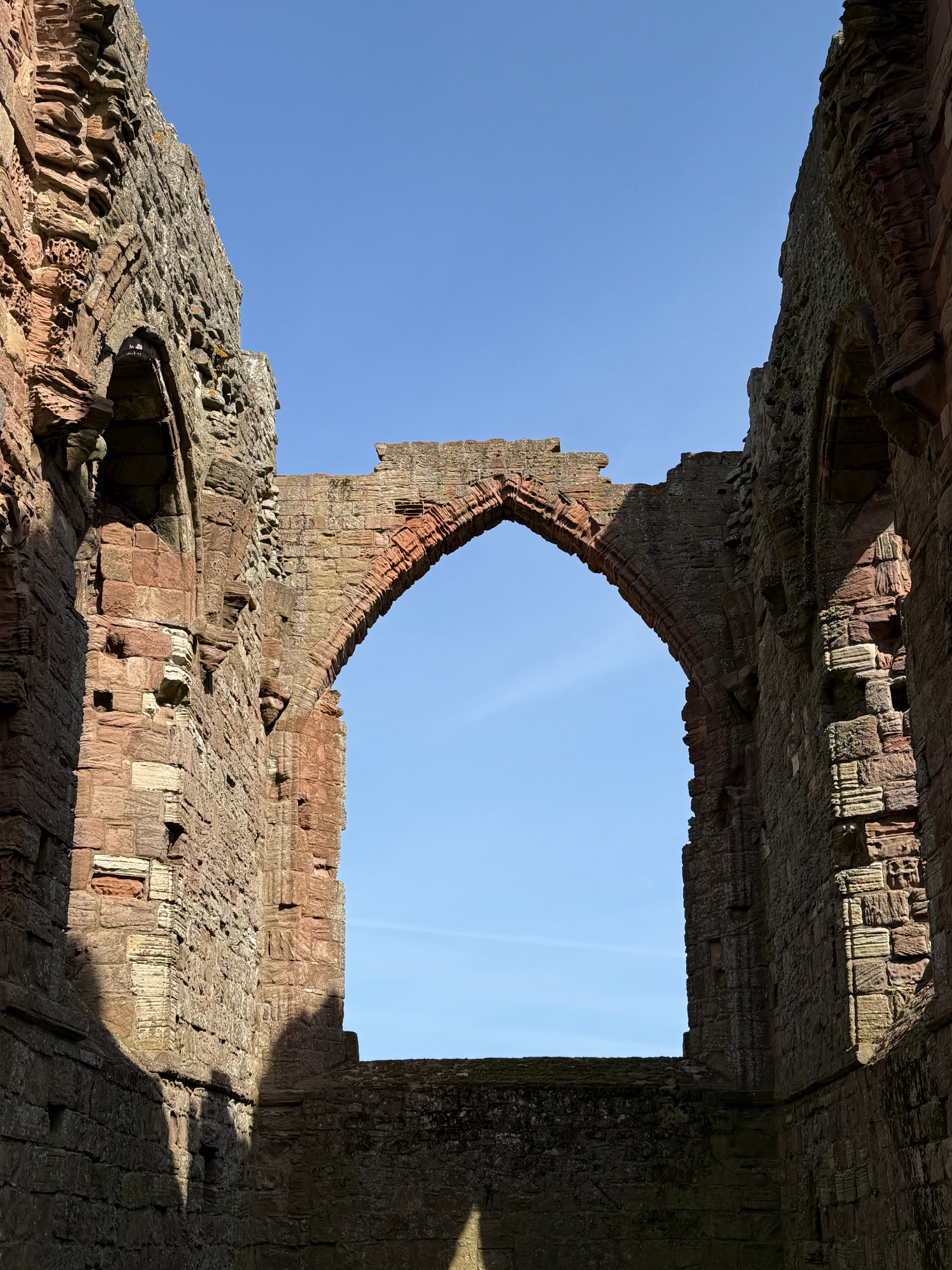
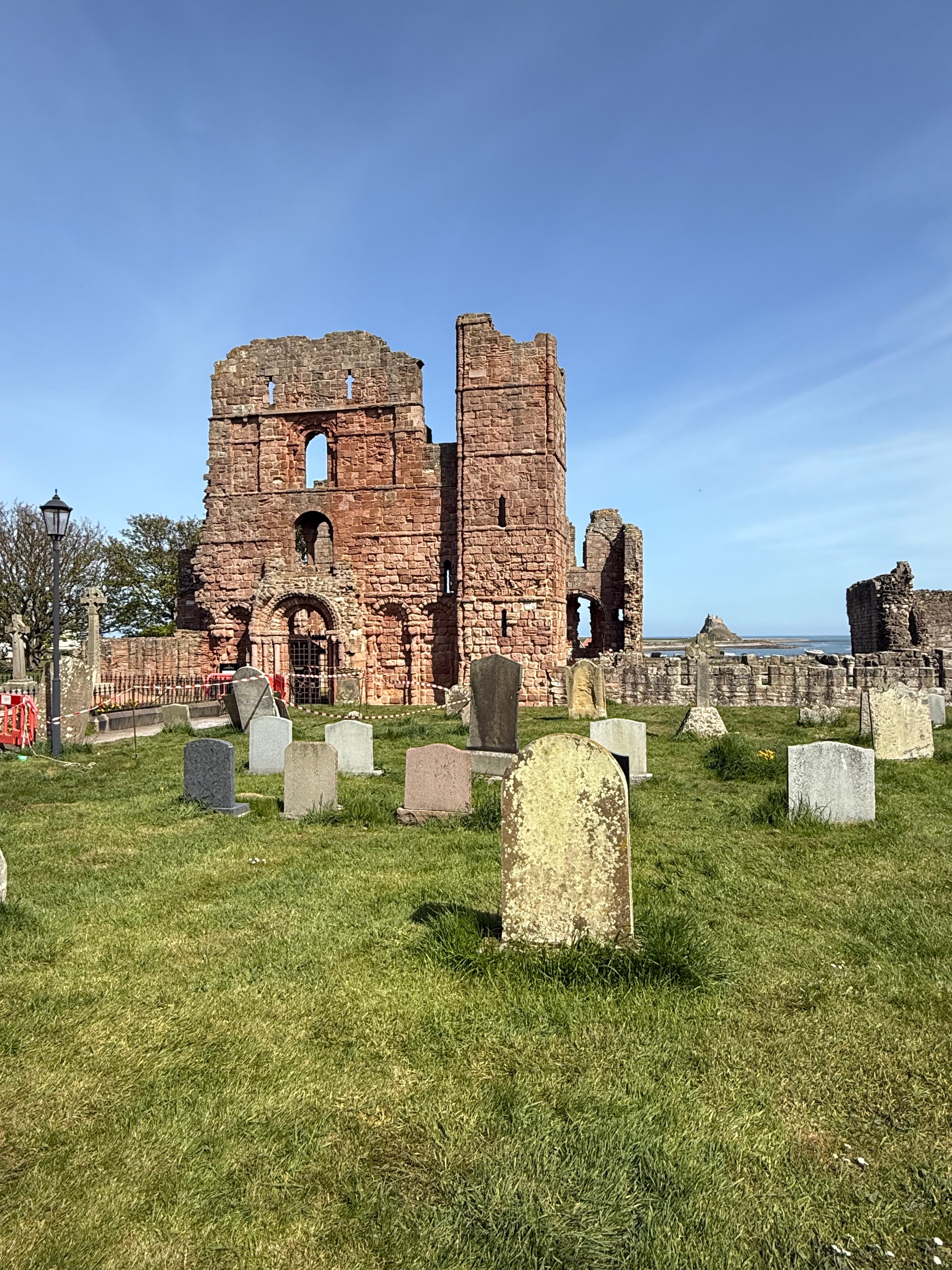

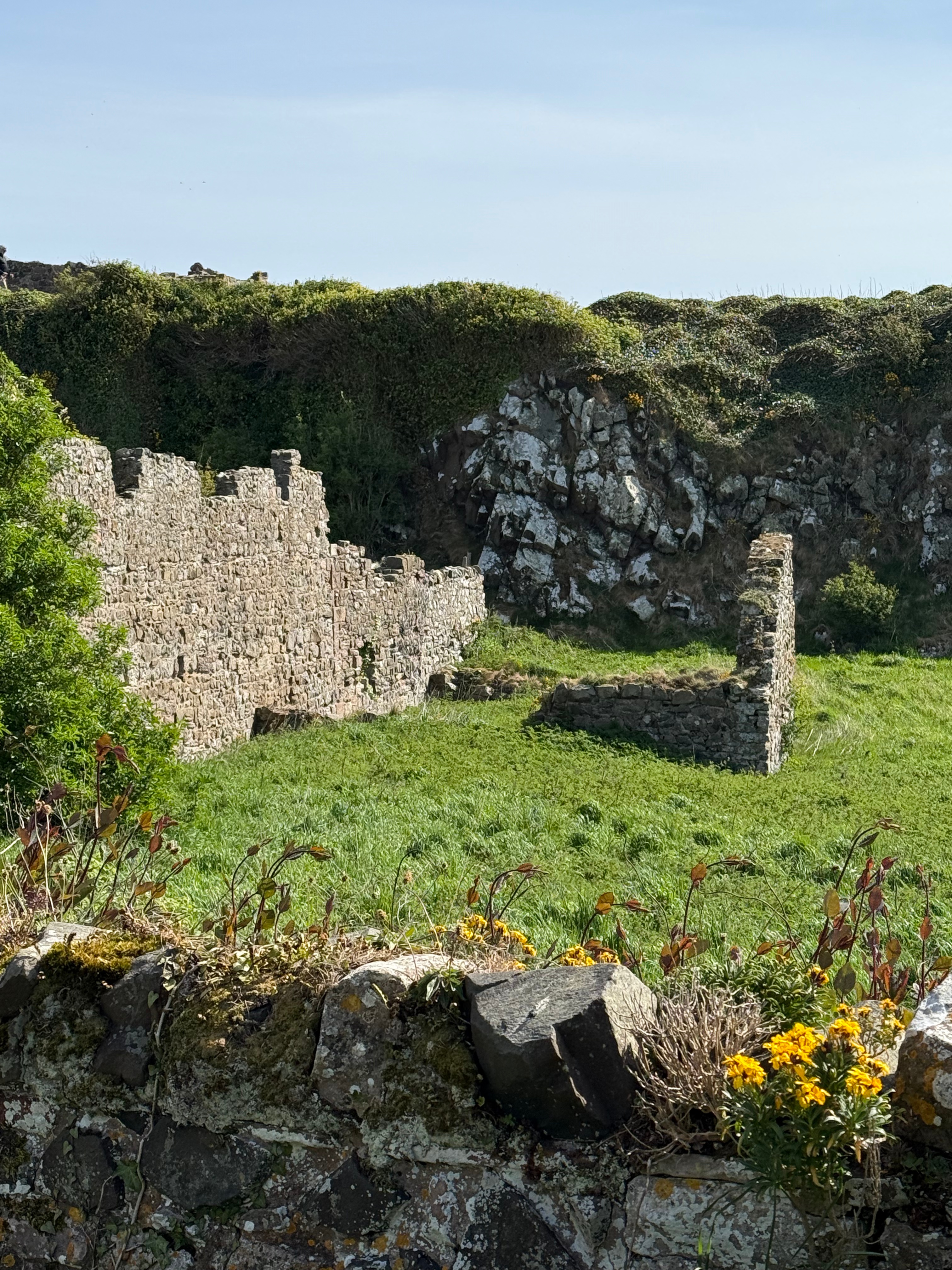
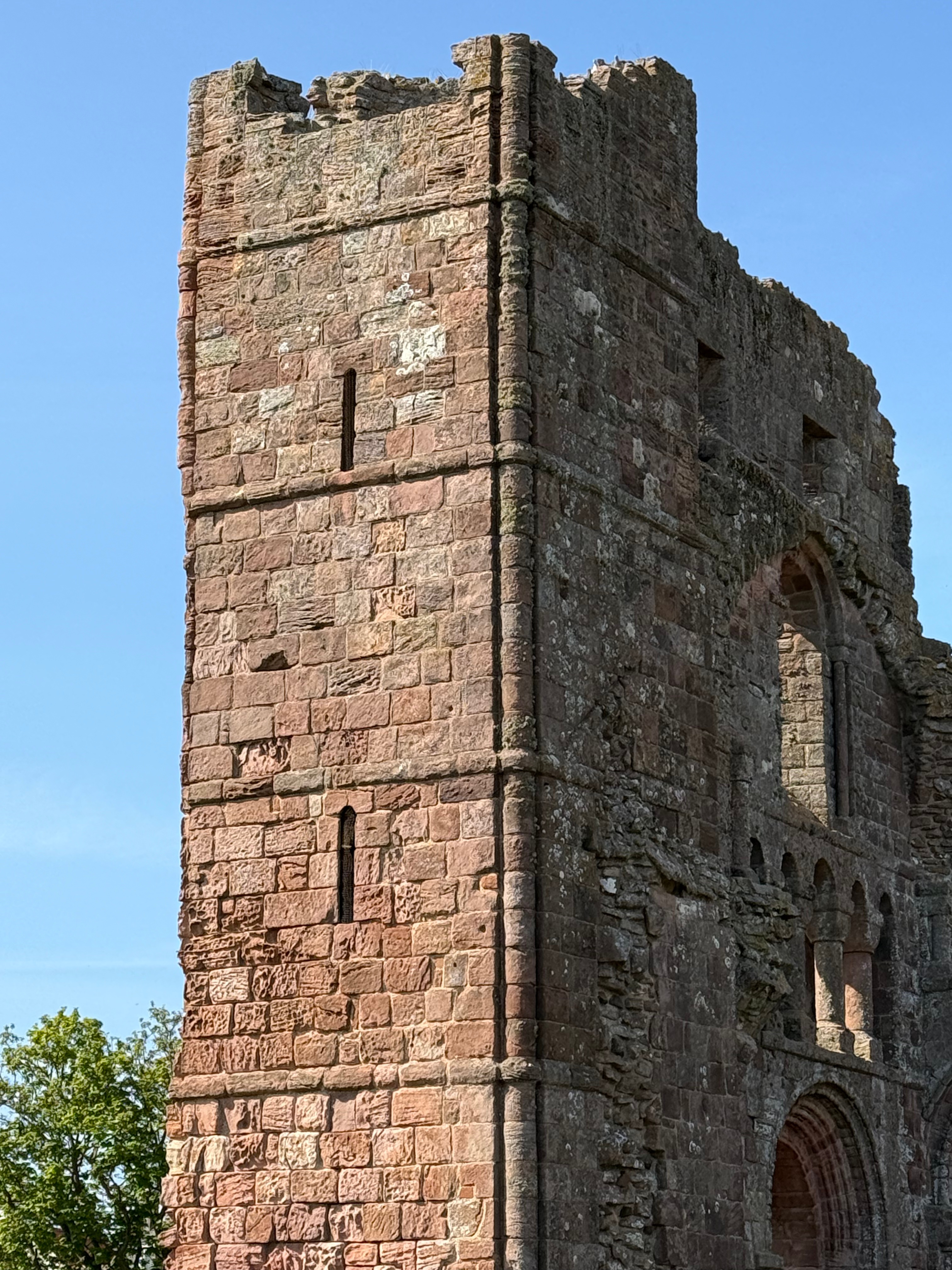
Lindisfarne Priory on Holy Island was one of the most important centres of early Christianity in Anglo-Saxon England. It is still a place of pilgrimage today, the dramatic approach across the causeway adding to the fascination of the site.
St Aidan founded the monastery in A.D. 635, but St Cuthbert, Prior of Lindisfarne, is the most celebrated of the priory’s holy men. Buried in the priory, his remains were transferred to a pilgrim shrine there after 11 years, and found still undecayed – a sure sign of sanctity. From the end of the 8th century, the isolated island with its rich monastery was easy prey for Viking raiders. In 875, the monks left, carrying Cuthbert’s remains, which after long wanderings were enshrined in Durham Cathedral in 1104, where they still rest. Only after that time did Durham monks re-establish a priory on Lindisfarne. The evocative ruins of the richly decorated priory church they built c.1150 still stand, with their famous ‘rainbow arch’ – a vault-rib of the now vanished crossing tower. The small community lived quietly on Holy Island until the suppression of the monastery in 1537. The museum offers visitors clear and lively interpretation of the story of St Cuthbert and the development of Lindisfarne Priory.
The Castle was built in the 1550s using stones from the demolished priory. In 1901, Edward Hudson (founder of Country Life magazine) negotiated its purchase from the Crown, and in 1902, Sir Edwin Lutyens, the well-known architect, began to create the Edwardian country house you see today. The Walled Garden (originally the Fort’s vegetable garden but re-designed by Gertrude Jekyll in 1911 as part of the conversion) lies to the north of the castle, some 500m away. Her plans were recreated by the National Trust.
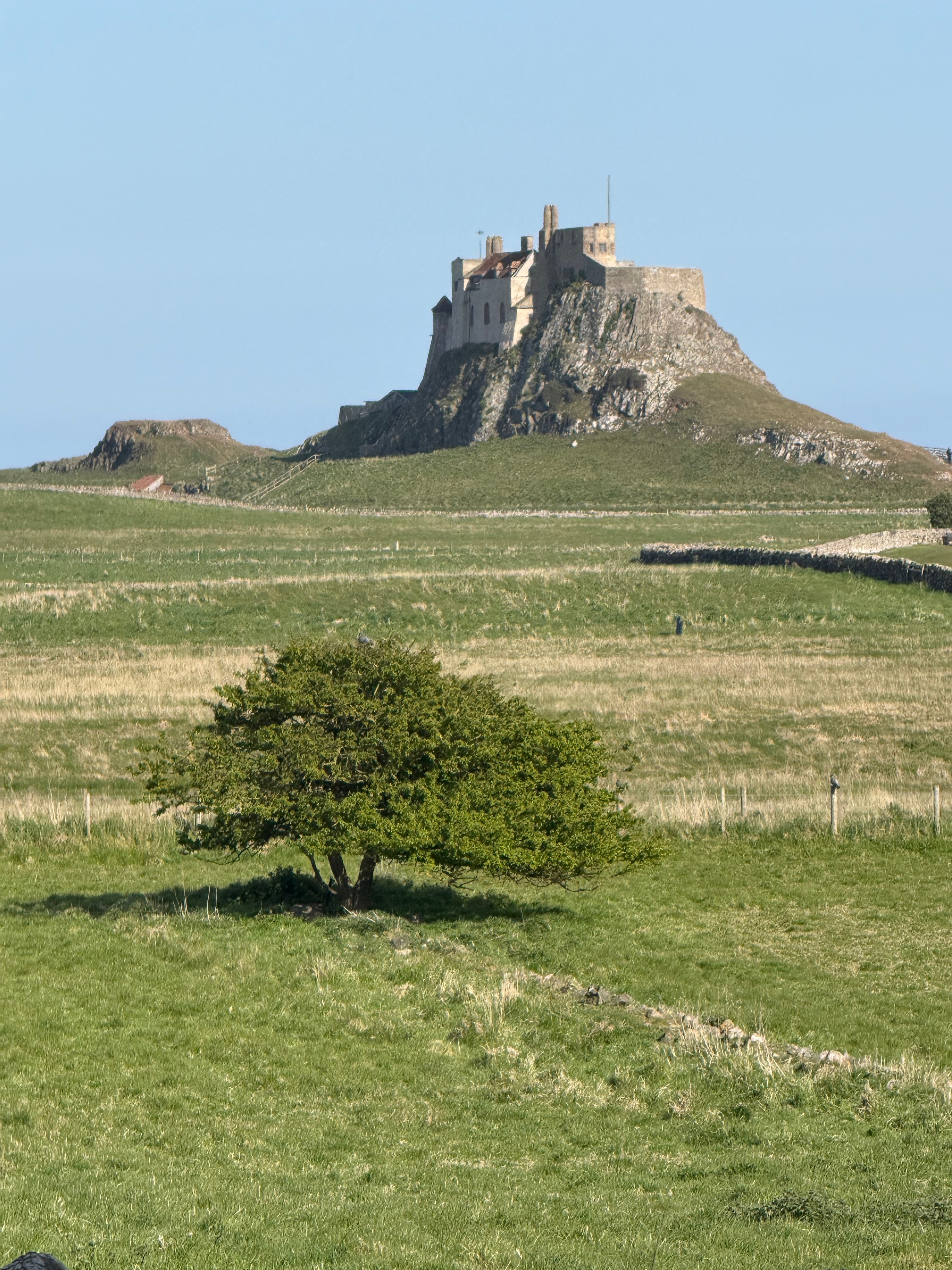
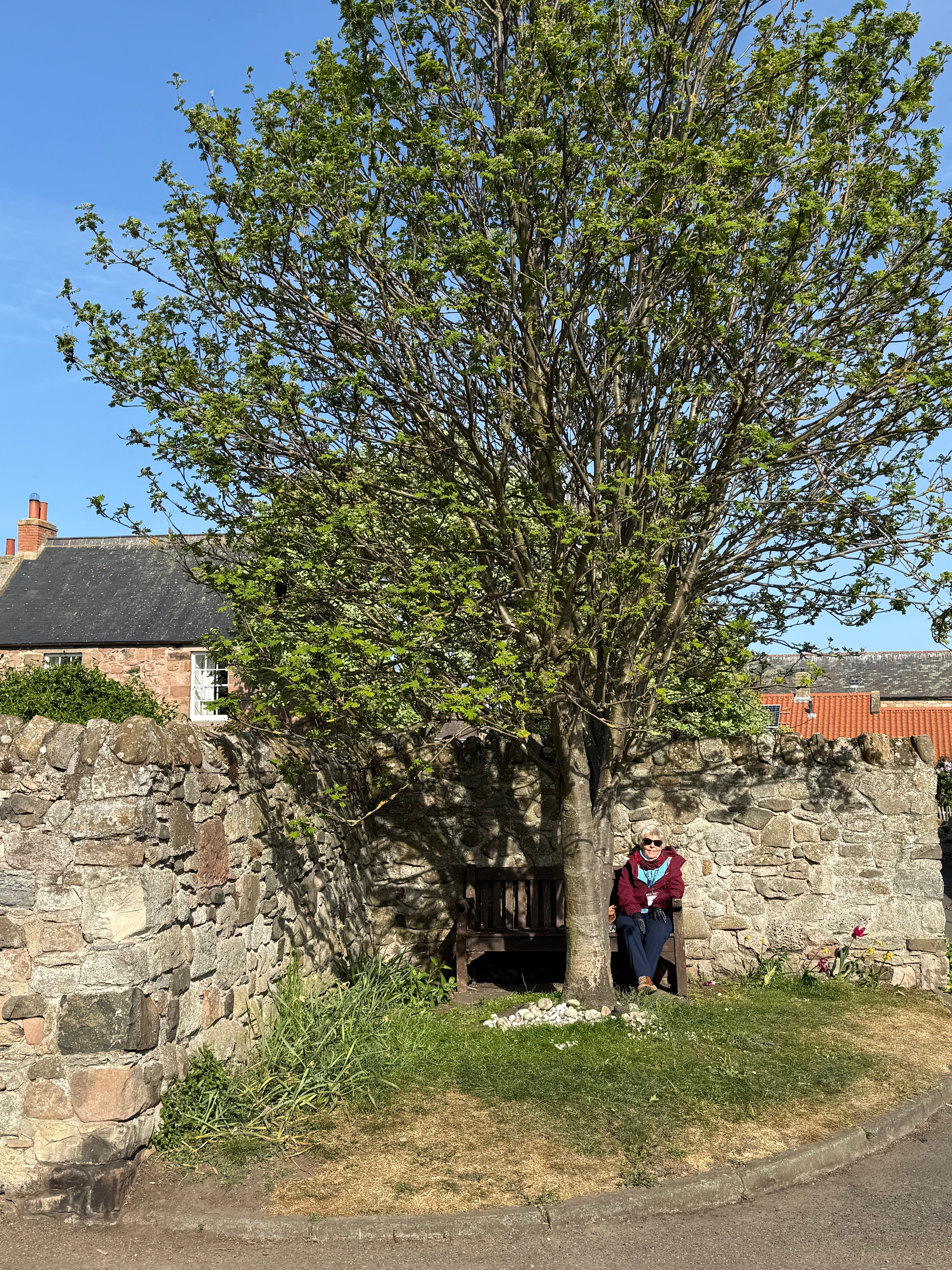
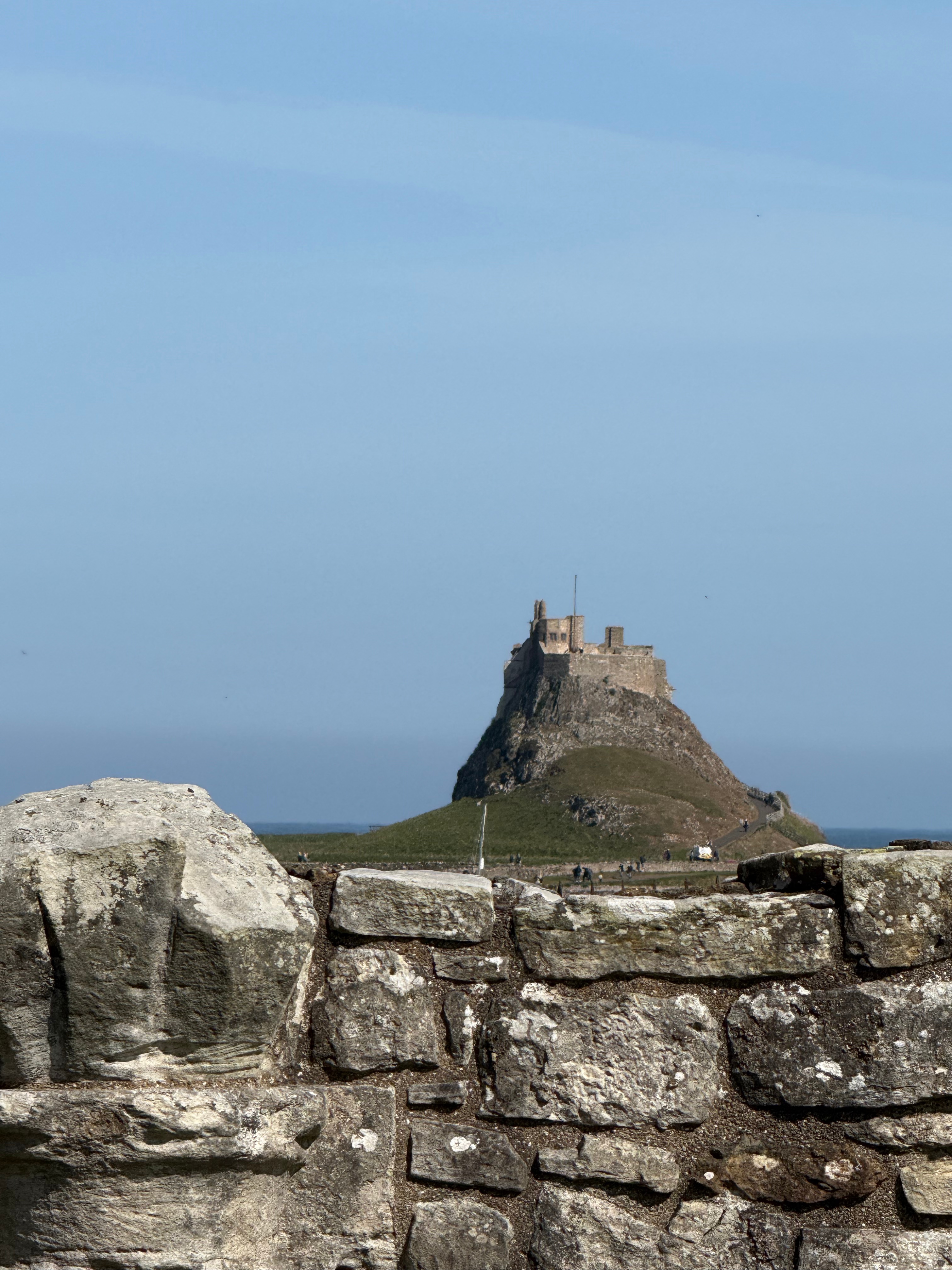
We enjoyed and appreciated a comprehensive tour of the ruins of the Priory and the history of the Monastery, the Castle and the Walled Garden by Julian and Mike – all in beautiful sunshine! A few brave souls made the one-mile trek out to the Castle; others found solace in either ice-cream or wine.
The group gathered at the coach on time, and we departed at 5:30, bound for Matfen Hall. Our talks on the bus were from Nicola “Margaret Tudor” and Alison “Mary I: Queen of Sorrows.”
Day 8: Wednesday, 7th May
Our bus was on time, departing Matfen Hall at 9:00am on our way to a remarkable estate simply named “Cragside”. We had talks on the way, Julian gave us “Introduction to Cragside”; and “Emily Davison”; then Sarah really brought us into the 19th century with “The Armstrongs: Late Victorian Visionaries”.
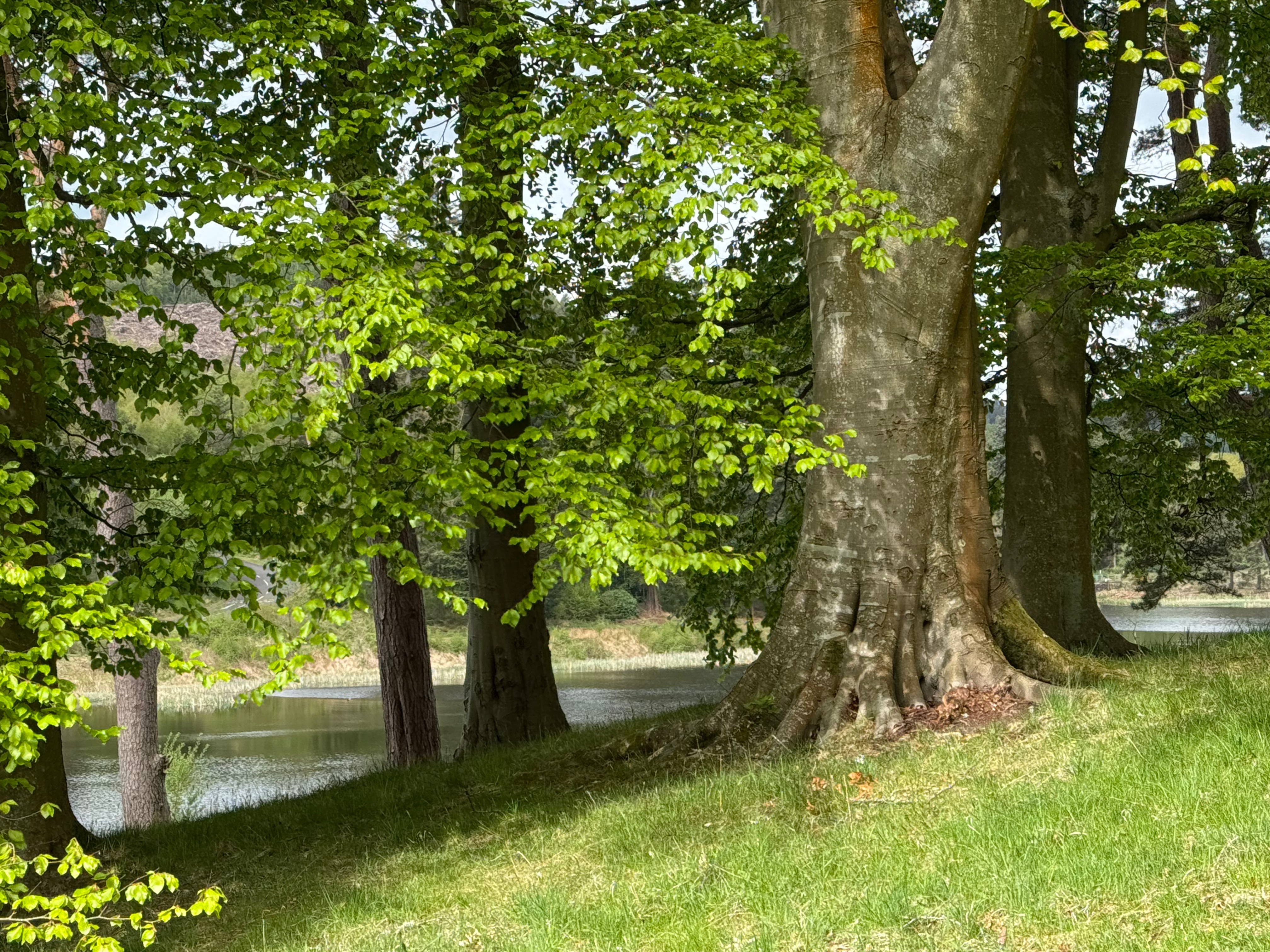
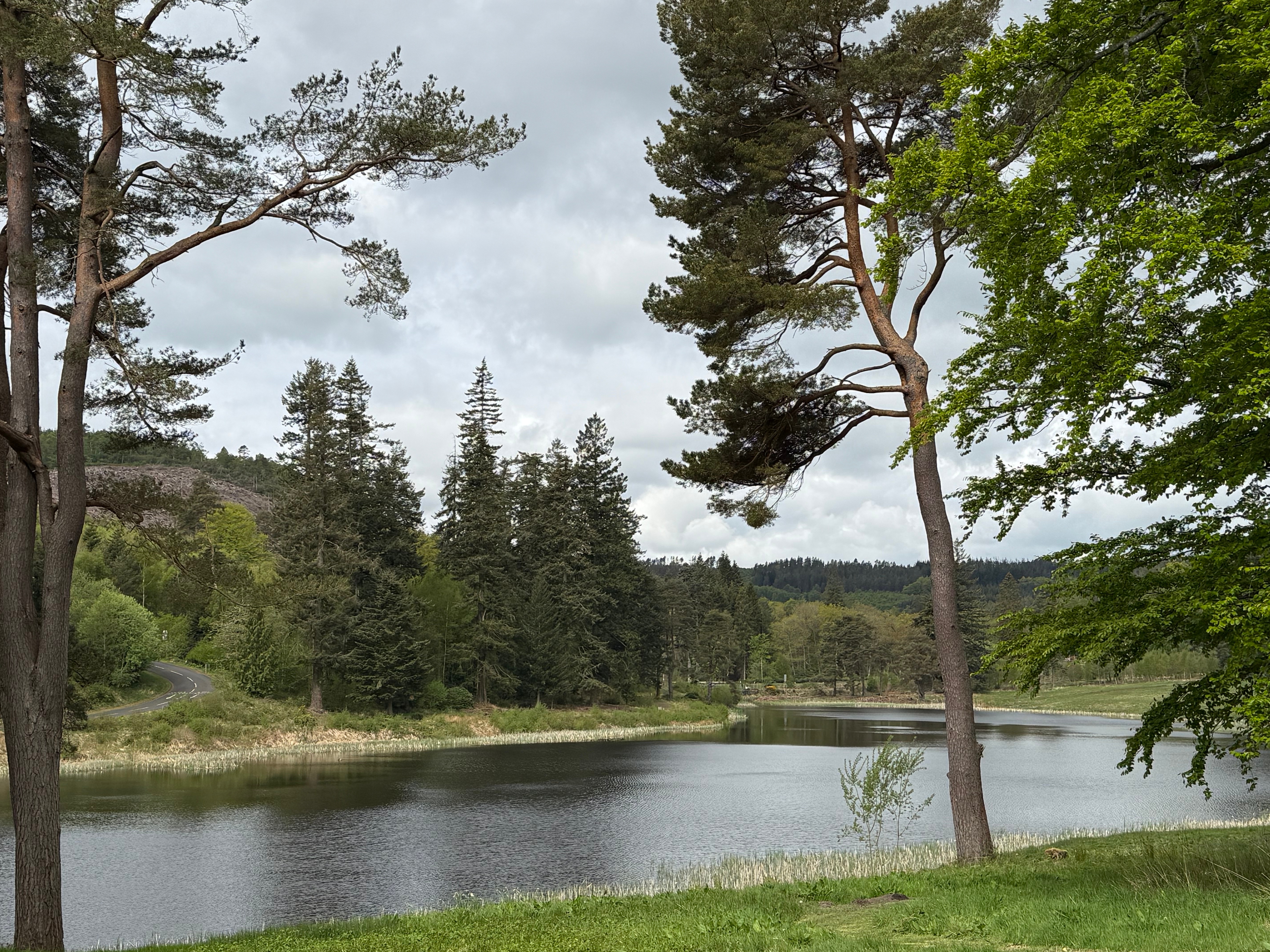
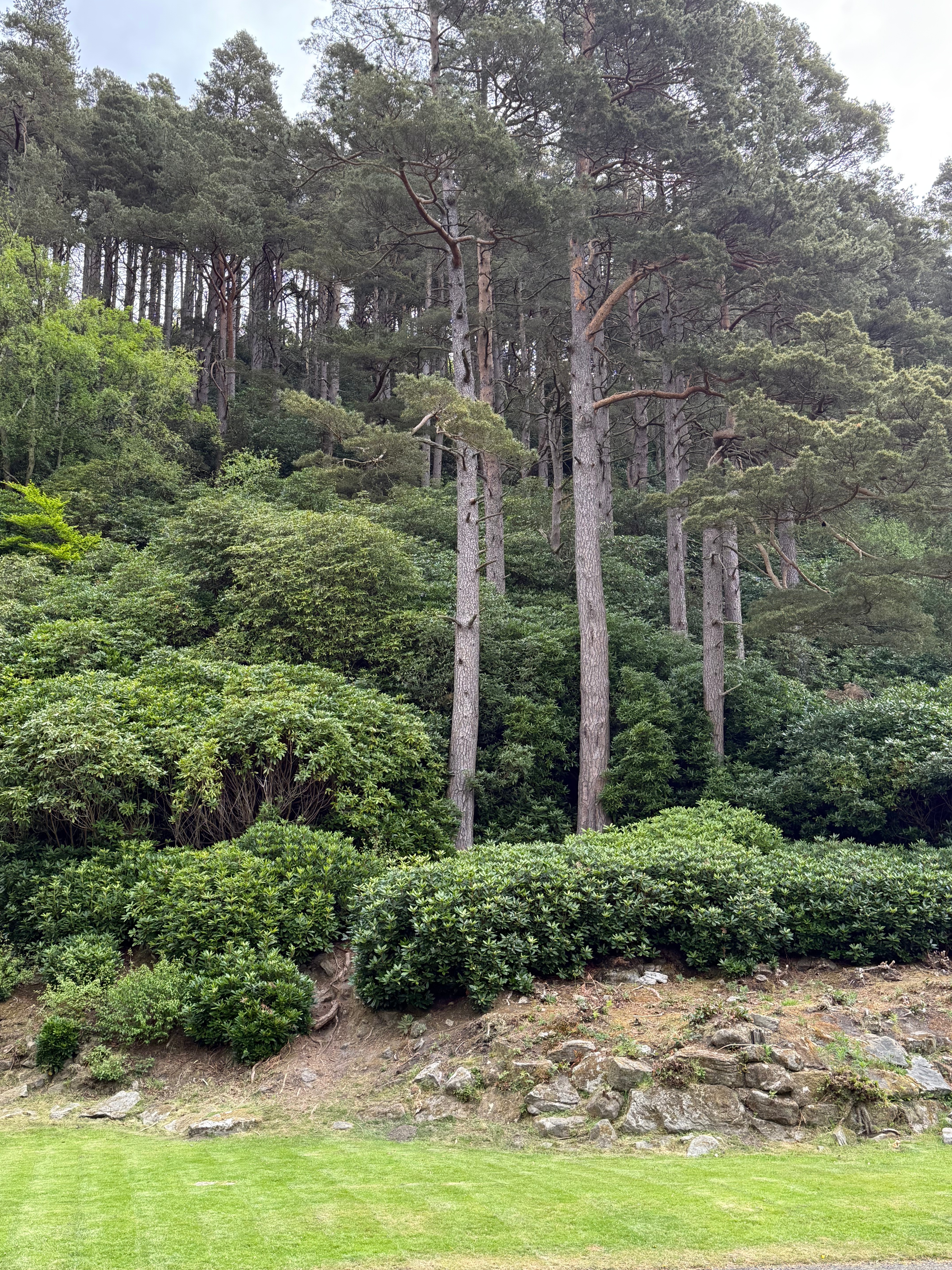
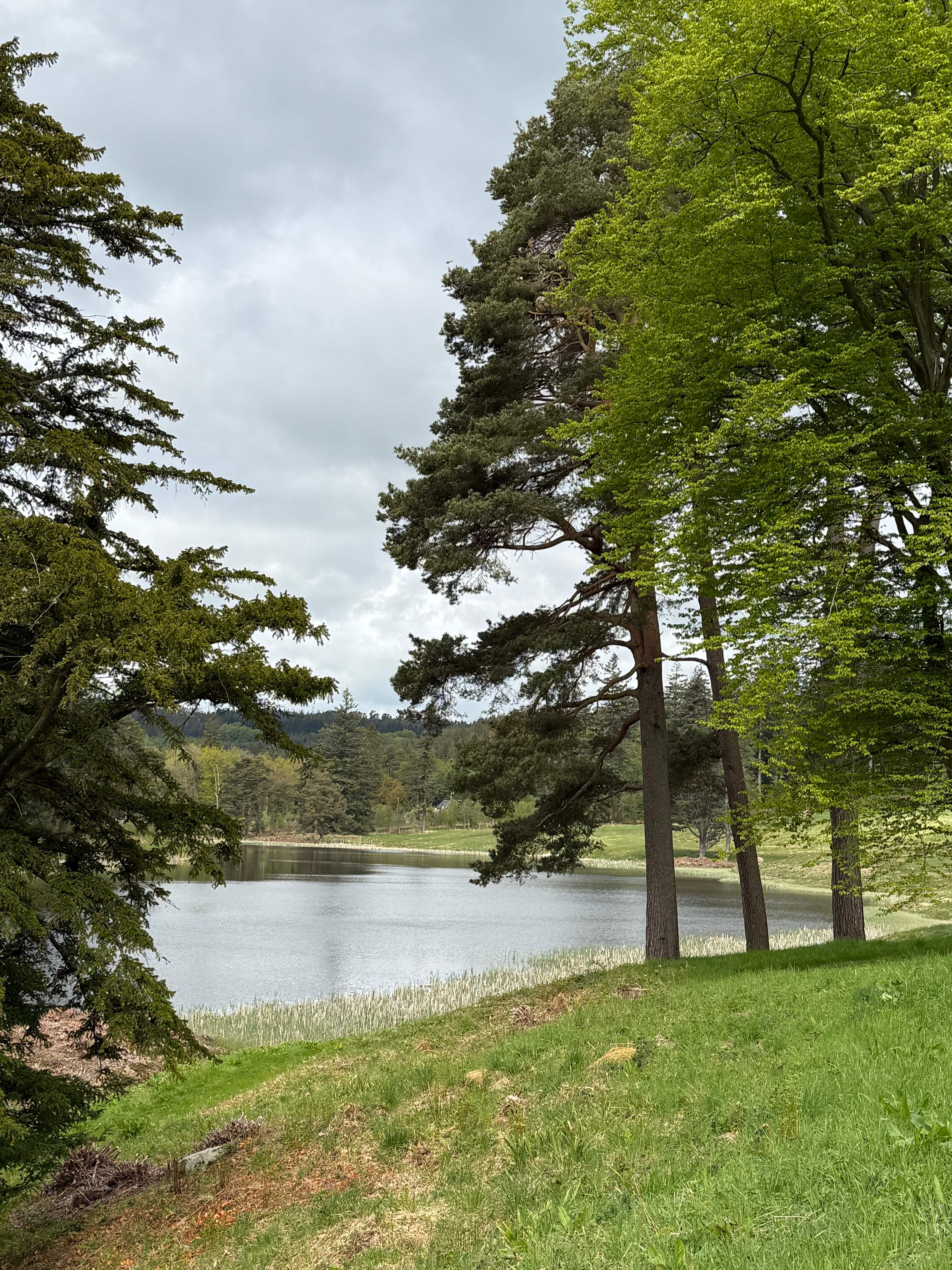
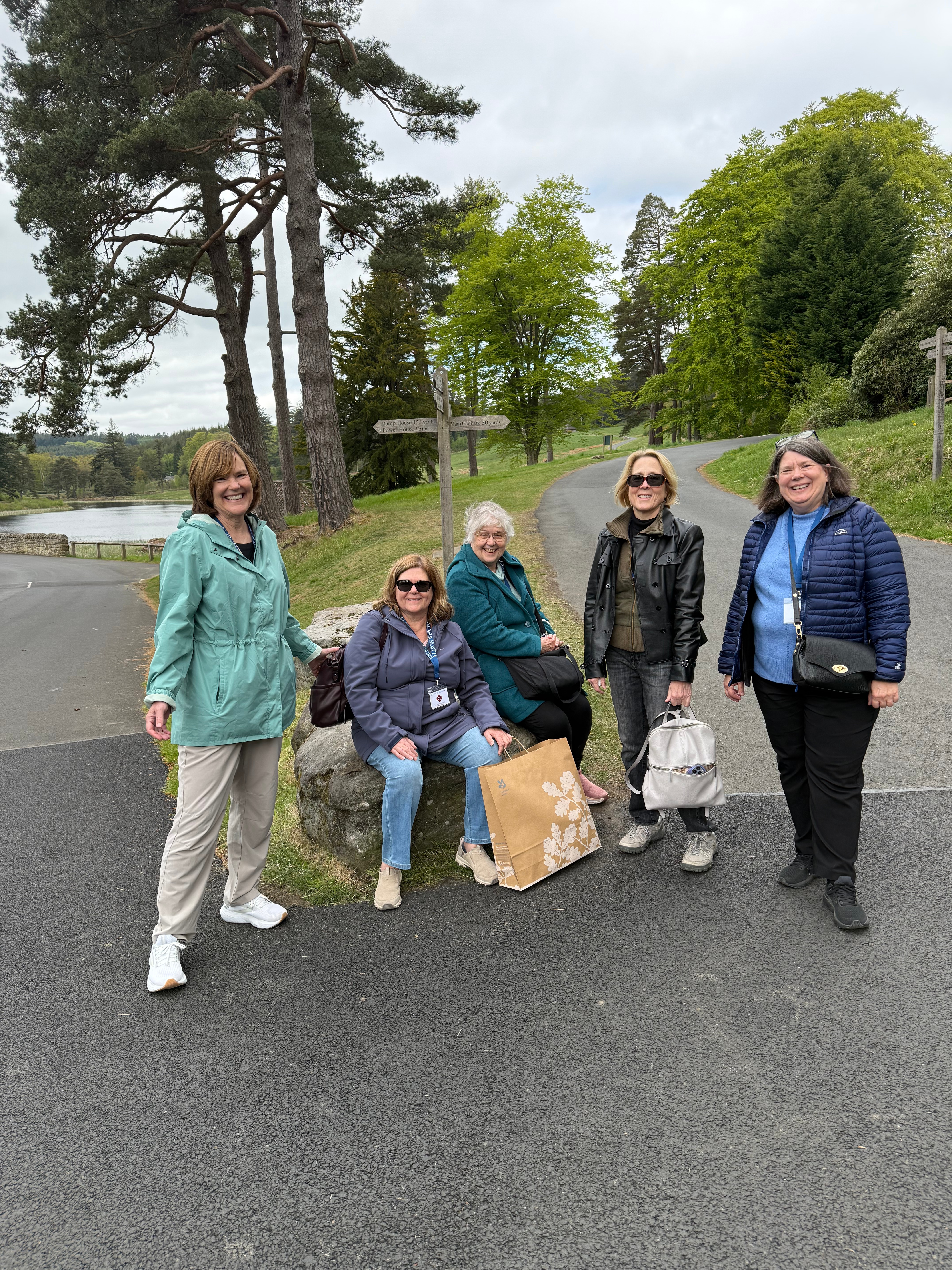
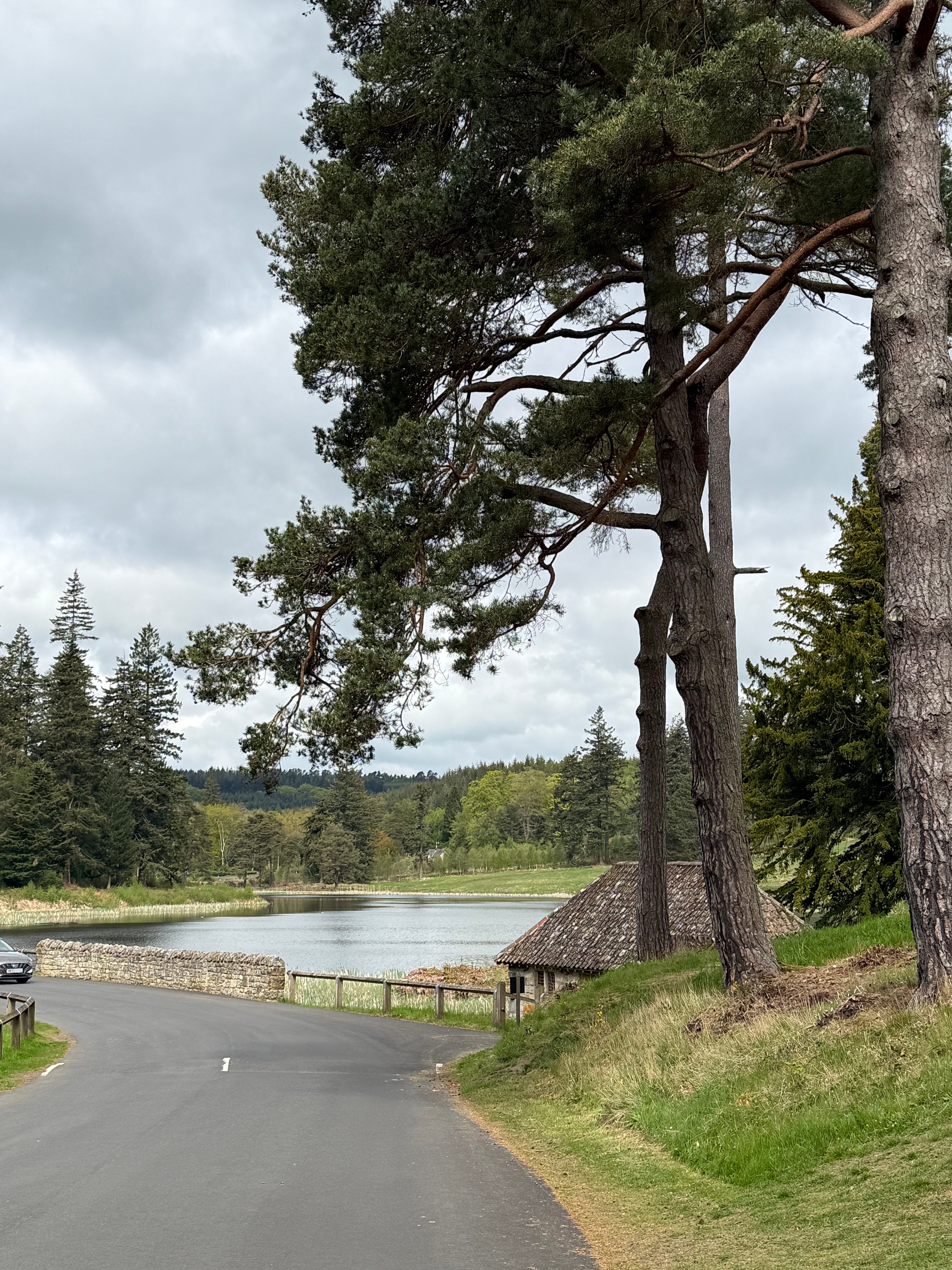
Tour notes: Cragside is the revolutionary home of Lord Armstrong, Victorian inventor and landscape genius. The first house in the world to be lit using hydroelectric power, it was a wonder of the Victorian age, the place ‘a magician of the north’ created as a crucible of invention, and it has been called Britain’s original smart home. Located on a rocky hillside near Rothbury, Cragside was initially built in 1863 as a two-storey country lodge. It was later extended into a lavish mansion designed by Richard Norman Shaw in the ‘Free Tudor’ style. The estate has extensive forest gardens, artificial lakes and rock gardens. Cragside is a Grade I listed building, and the estate has been in the care of the National Trust since 1977.
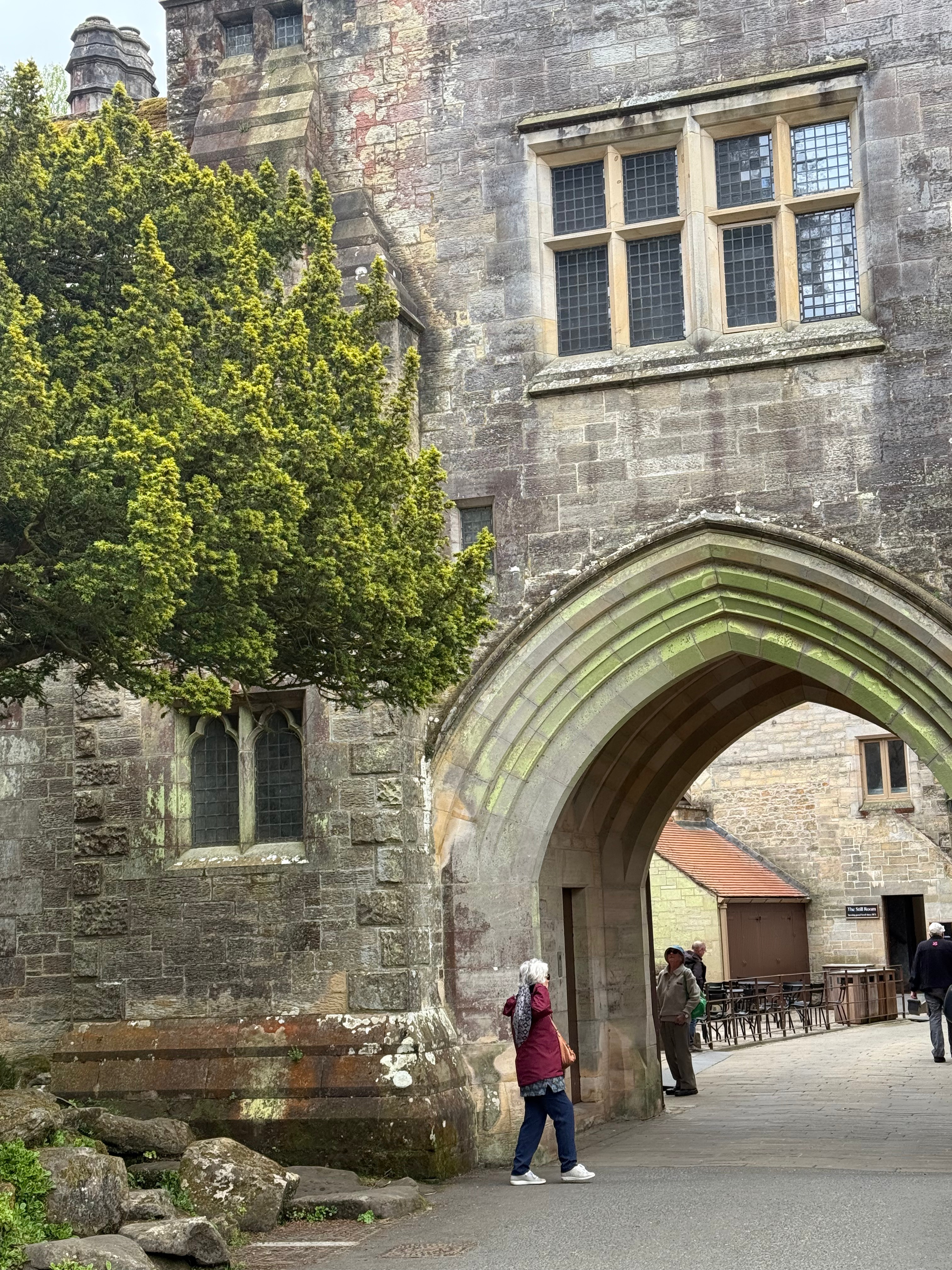
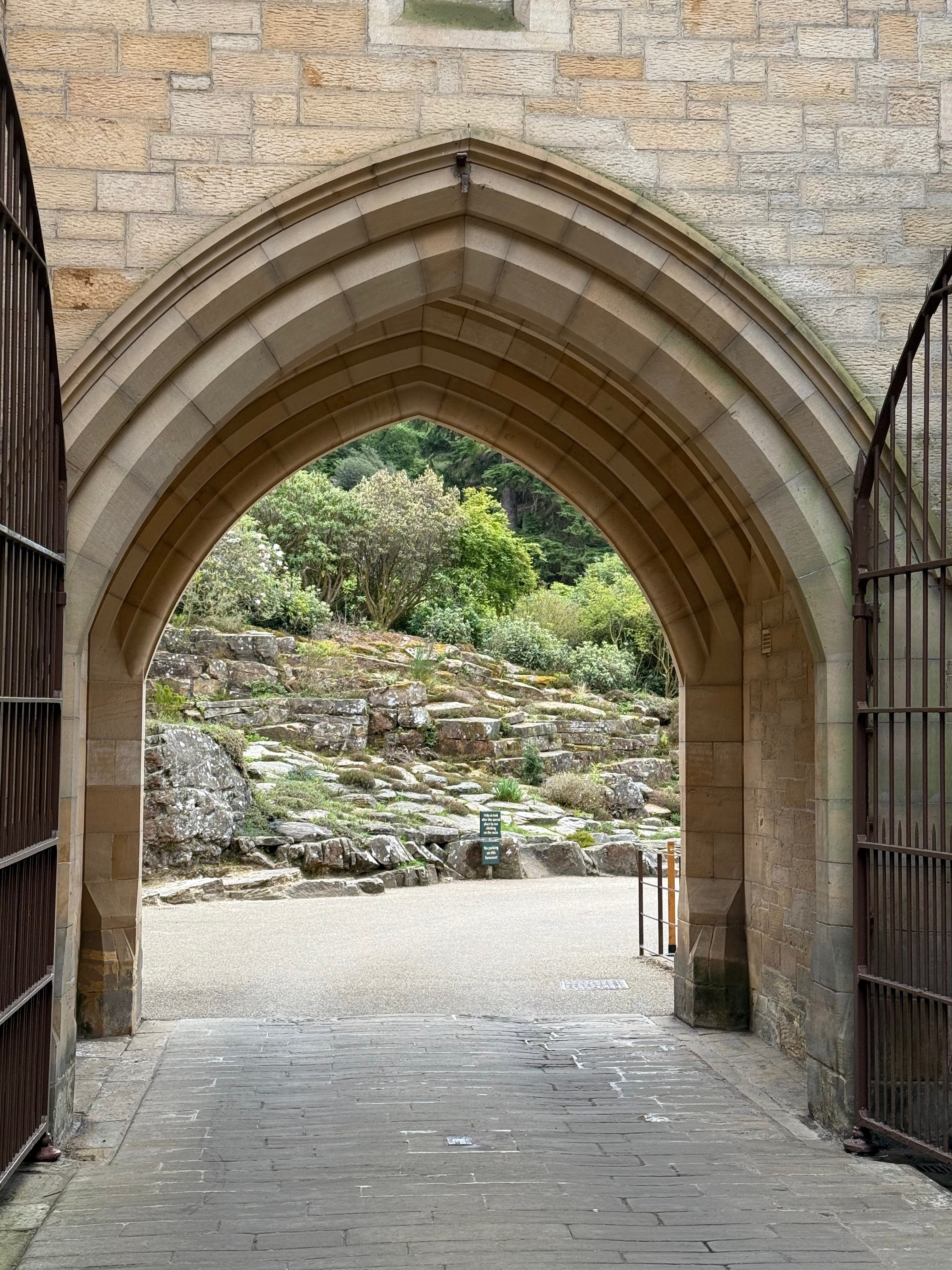

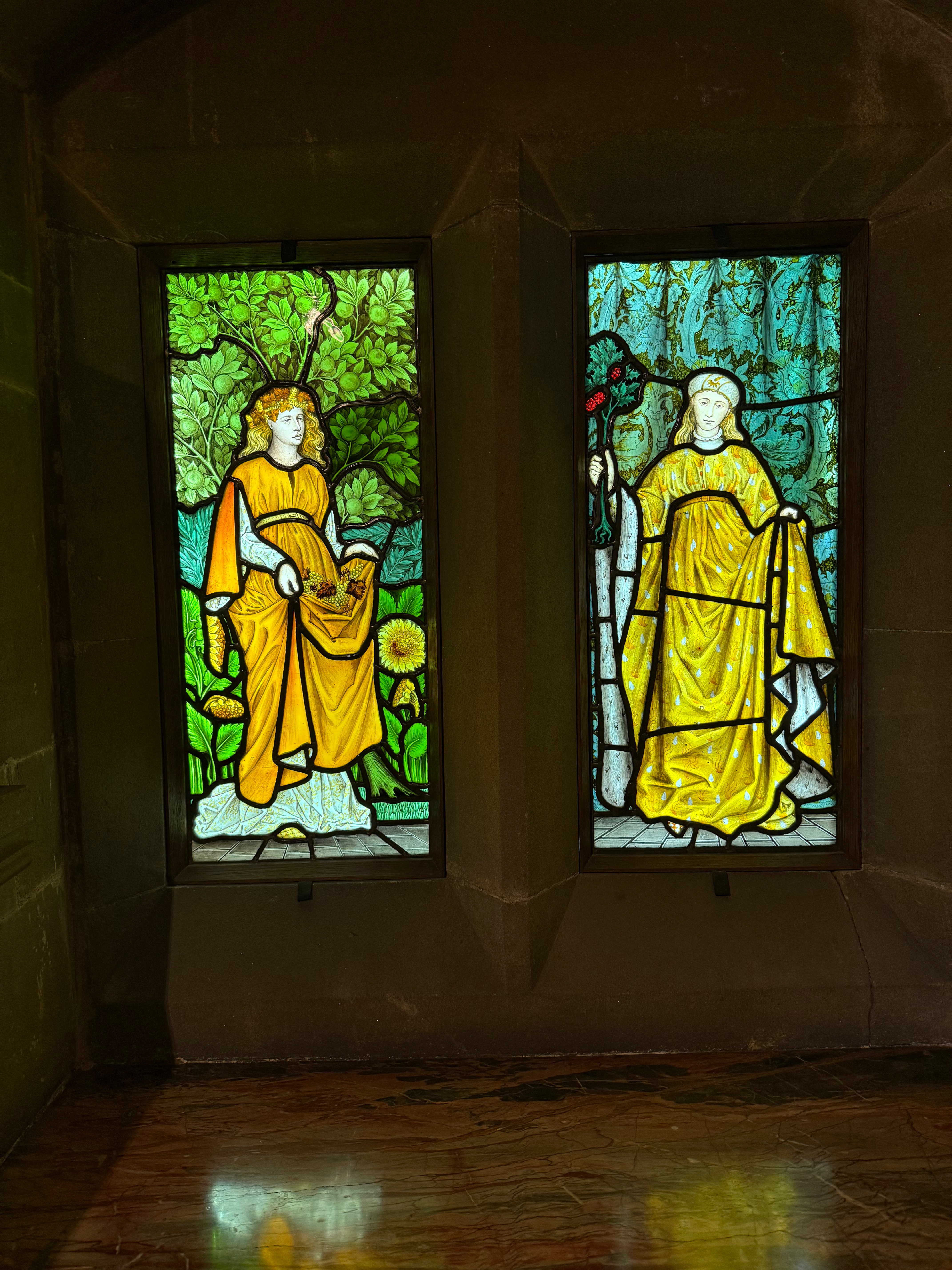
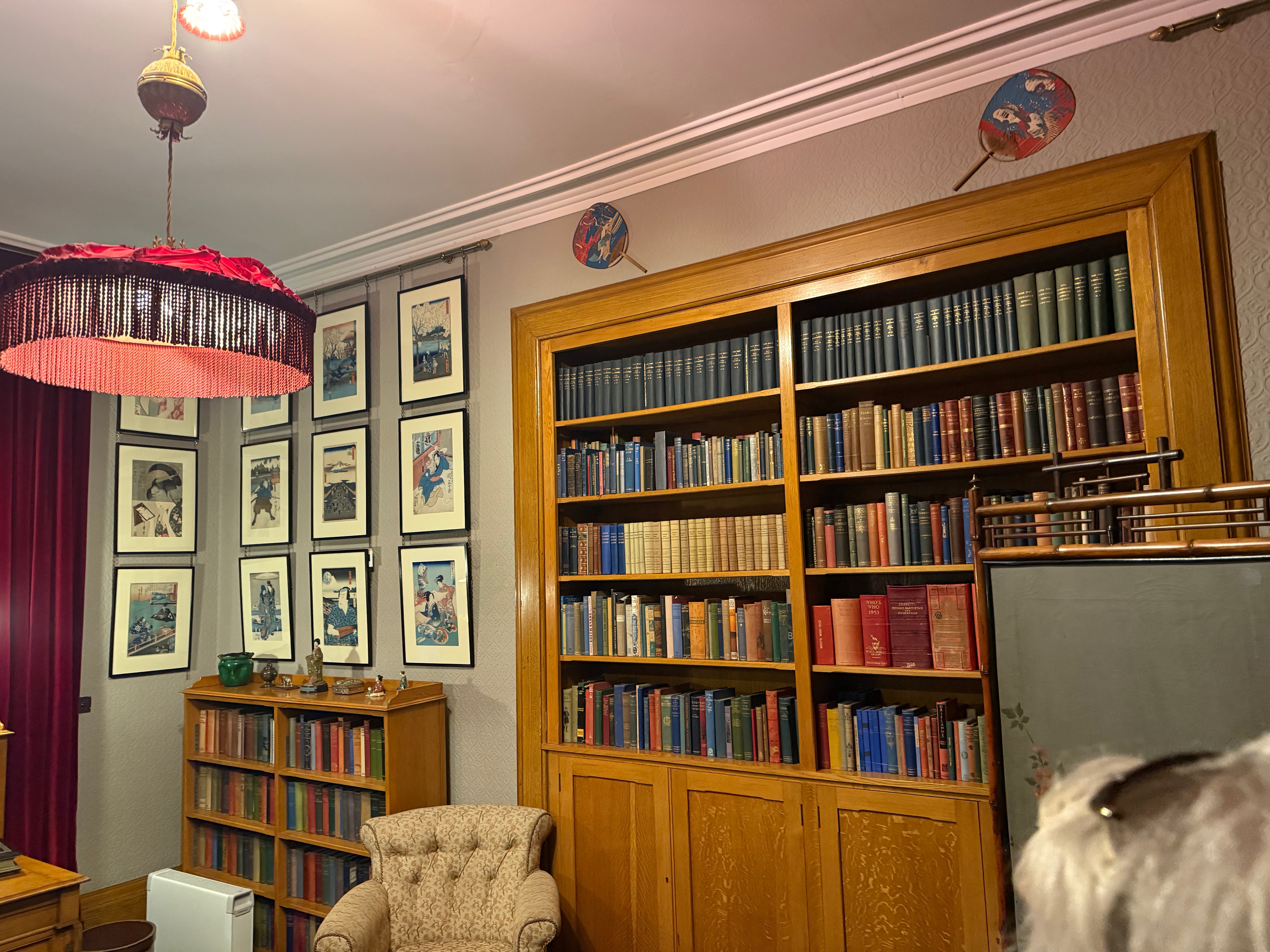
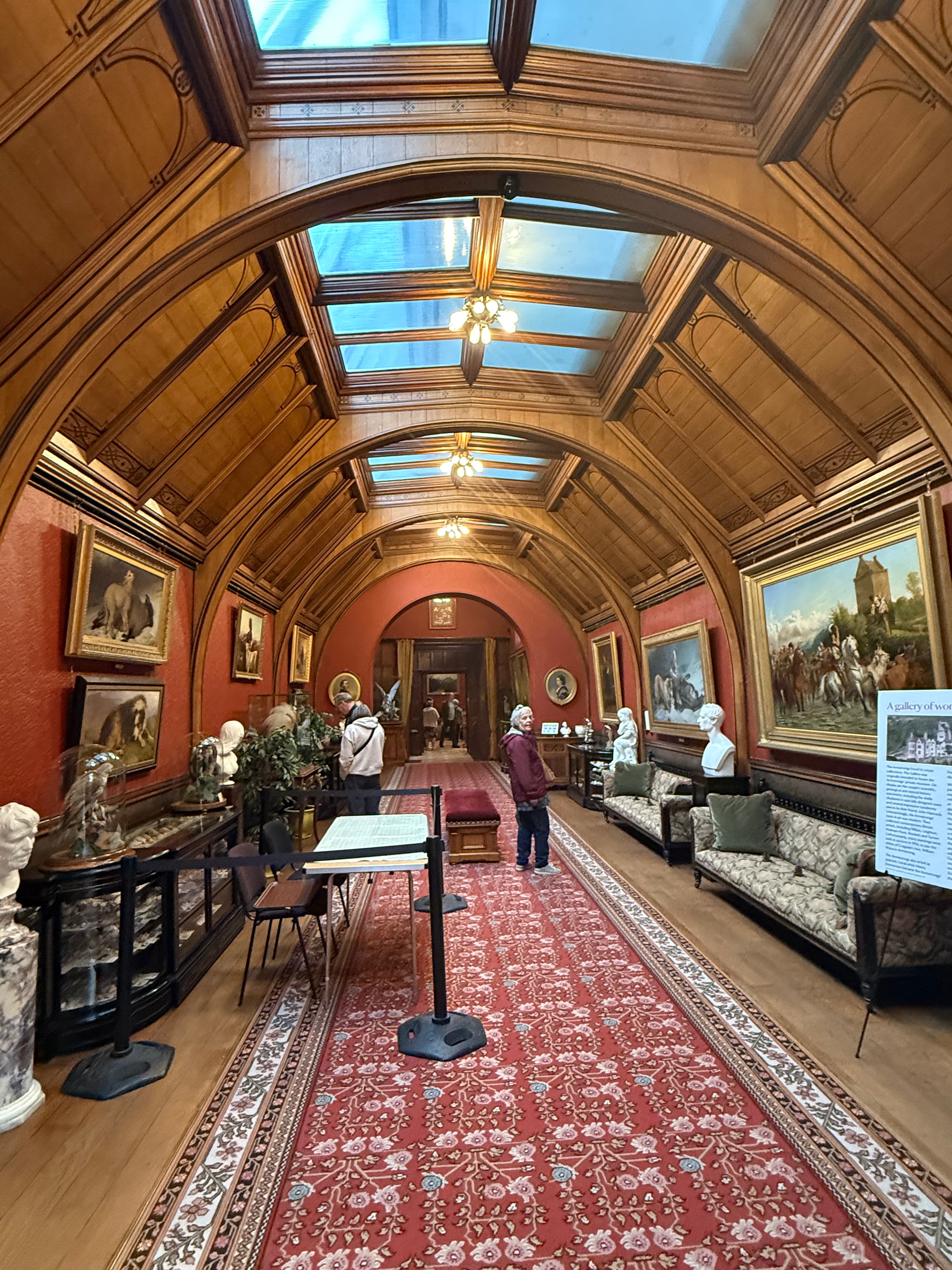
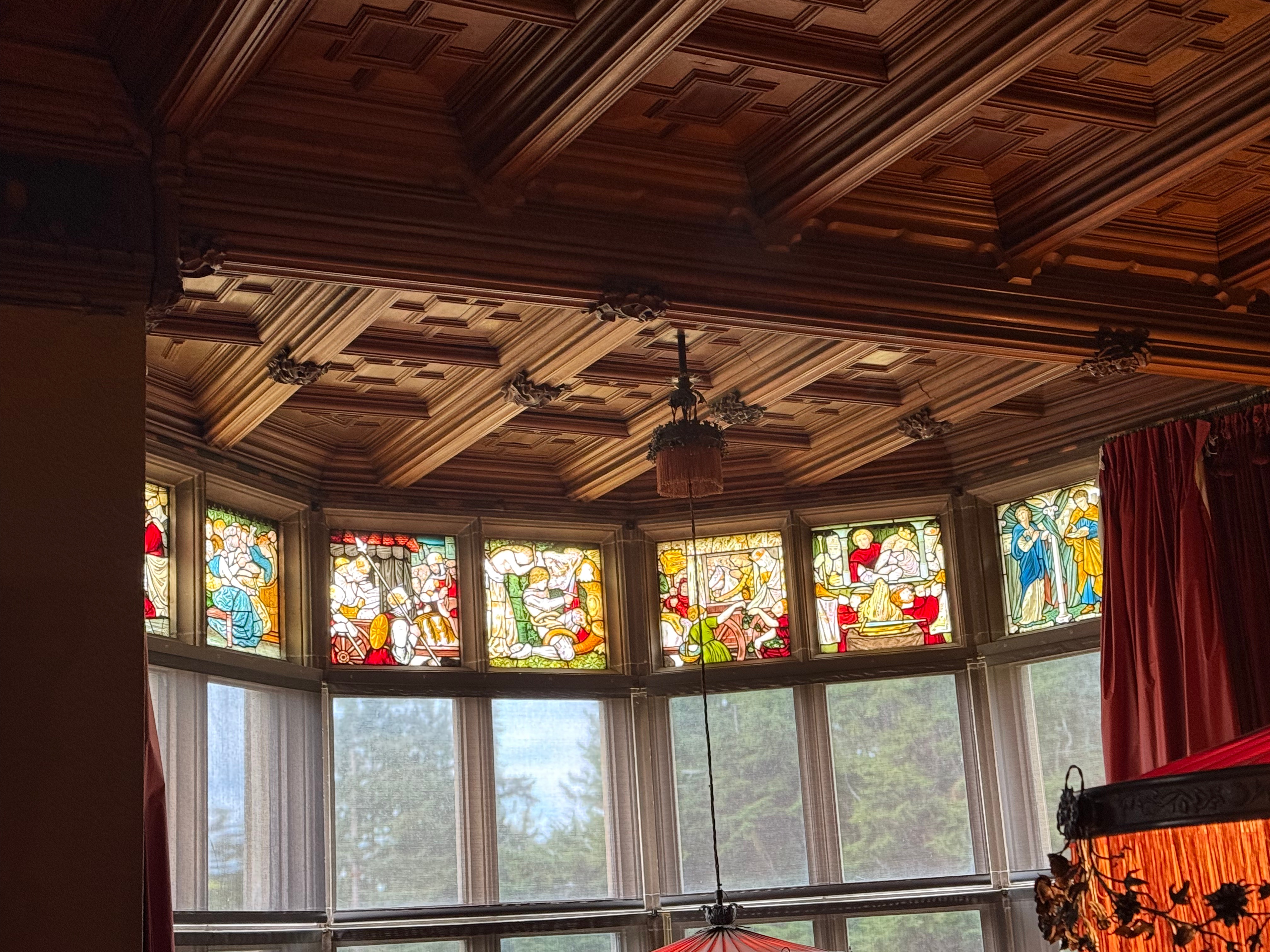
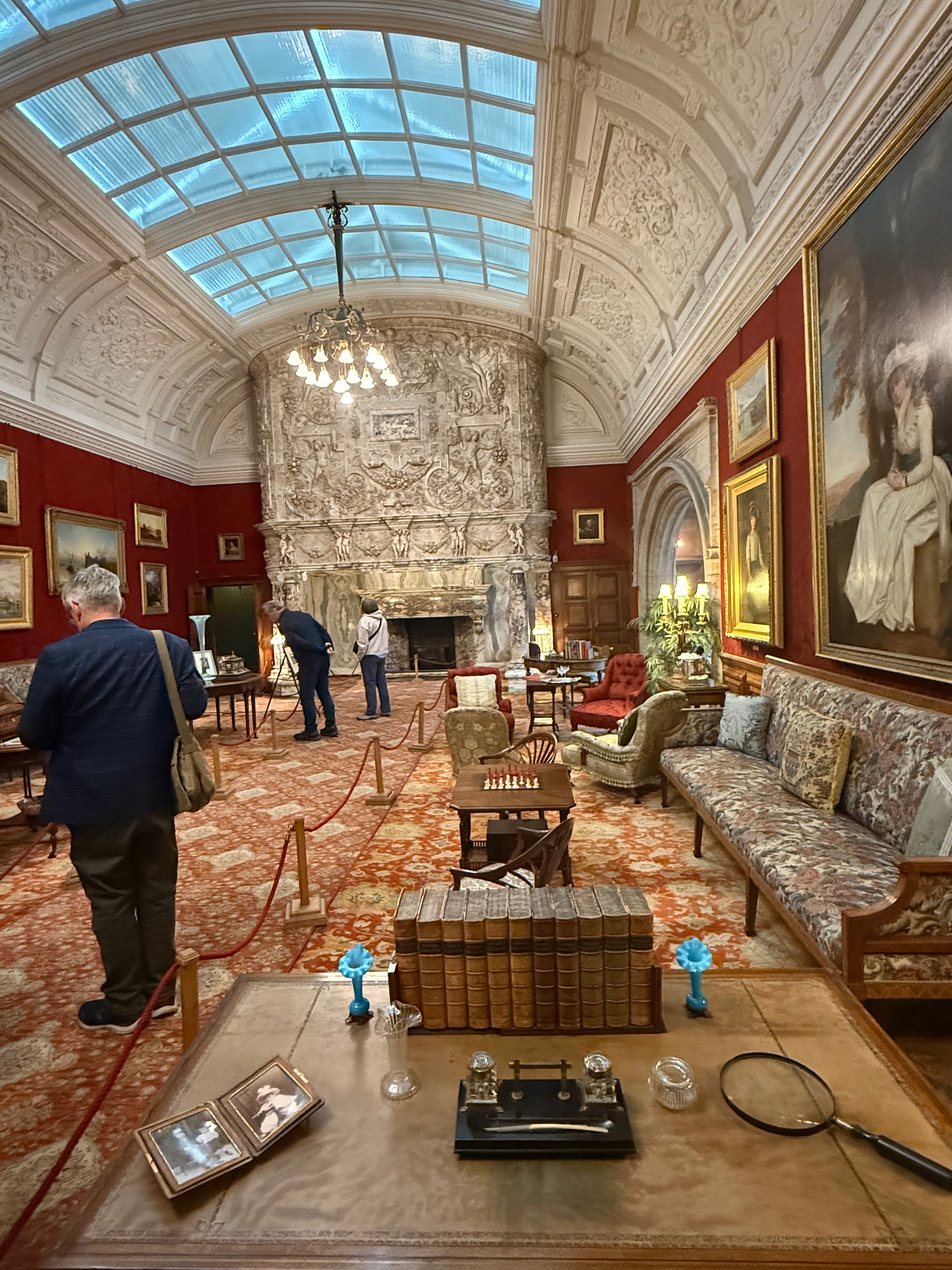
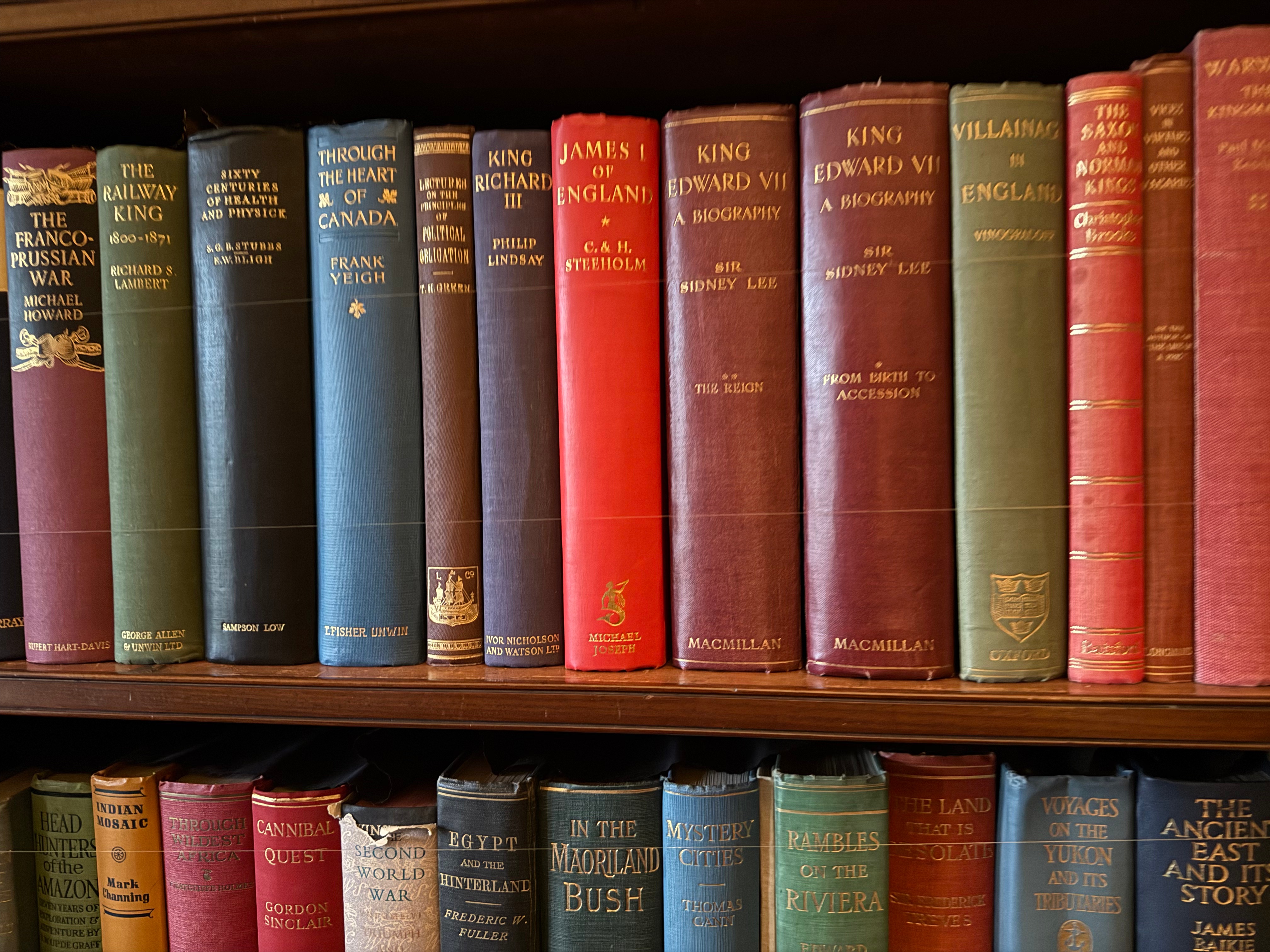
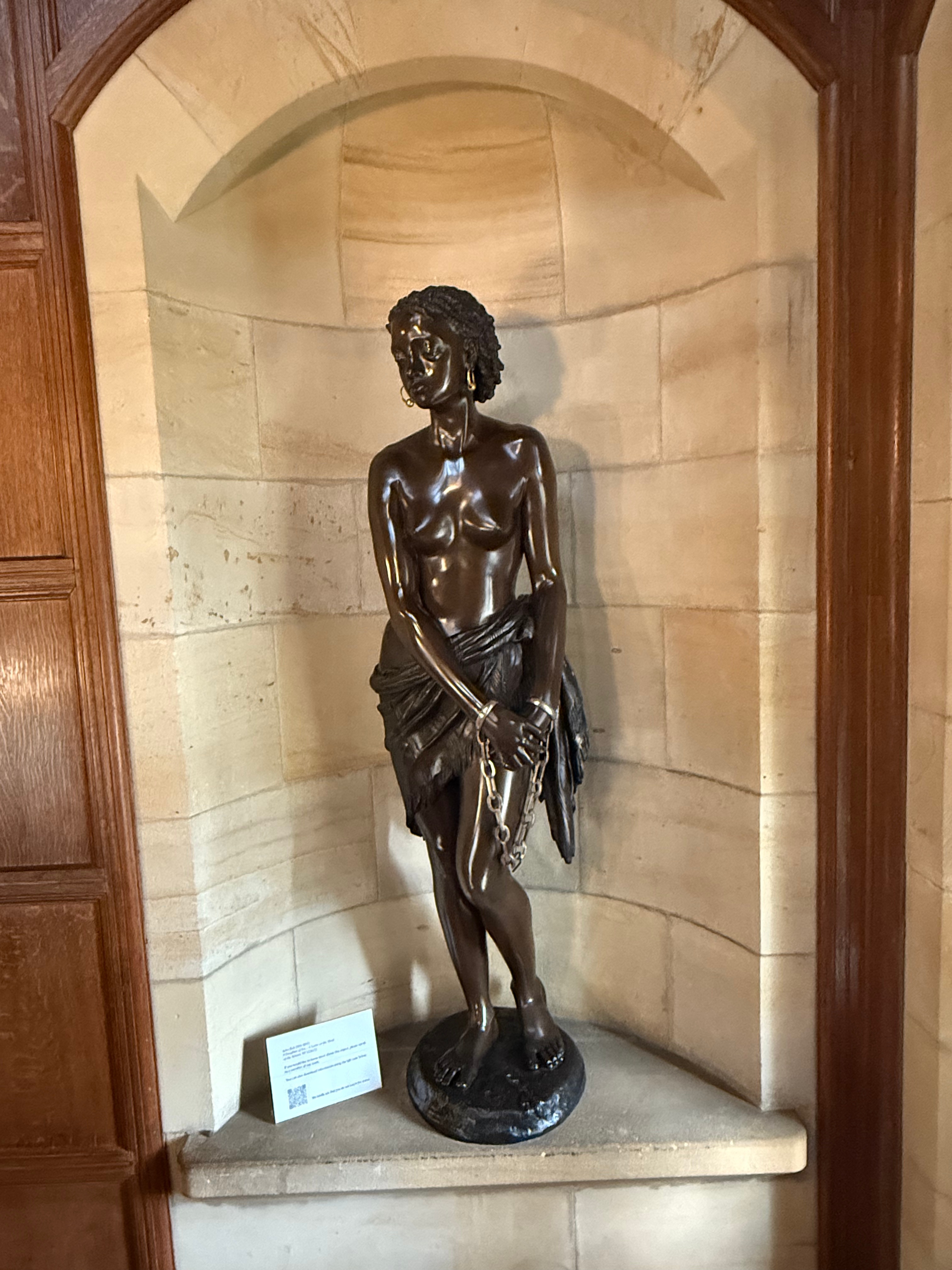
William George Armstrong (1810-1900) and his wife, Margaret Ramshaw (1807-1893) were one of the most celebrated power couples of the Victorian era. The house that they designed, Cragside, was built and powered by many of William’s new fangled hydroelectricity and hydraulics inventions. An estimated seven million trees and shrubs were planted in the grounds of Cragside where their guests included the Shah of Persia, the King of Siam, the Chinese statesman Li Hung Chang and the future Edward VII and Queen Alexandra. A visionary inventor, engineer and businessman, Armstrong’s Elswick Works on the north bank of the Tyne River at Newcastle employed more than 25,000 people in the manufacture of hydraulic cranes, ships and armaments. He was knighted in 1859 and made the 1st Baron Armstrong of Cragside in 1887. The Armstrong’s philanthropy included public parks, the founding of Newcastle University, and the endowment of seven hospitals & the Museum of Natural History. And in their spare time they restored Bamburgh Castle at a cost of £85 million (in today’s money).
At noon we departed Cragside for the town of Alnwick and the world-famous Alnwick Castle, home to the Percy family since 1309 when Henry, 1st Baron Percy purchased it from Antony Bek, Bishop of Durham. Recently it has been utilised by the Harry Potter franchise!
Tour notes: Alnwick is a beautiful, historic town in the heart of Northumberland, with lots to do on the bustling doorstep yet close to the surrounding countryside. In the middle of the town centre is its attractive marketplace complete with an old Market Cross.
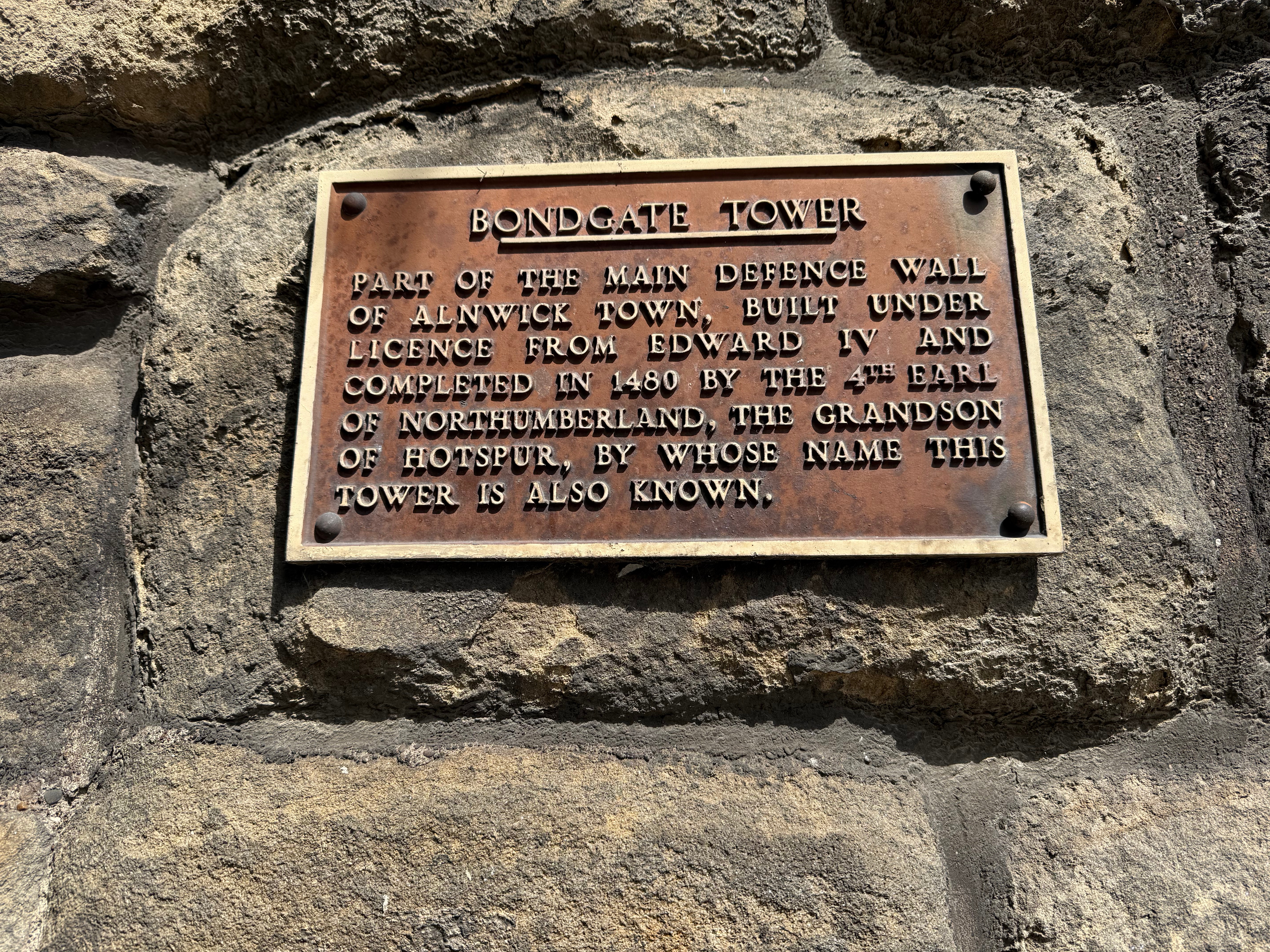
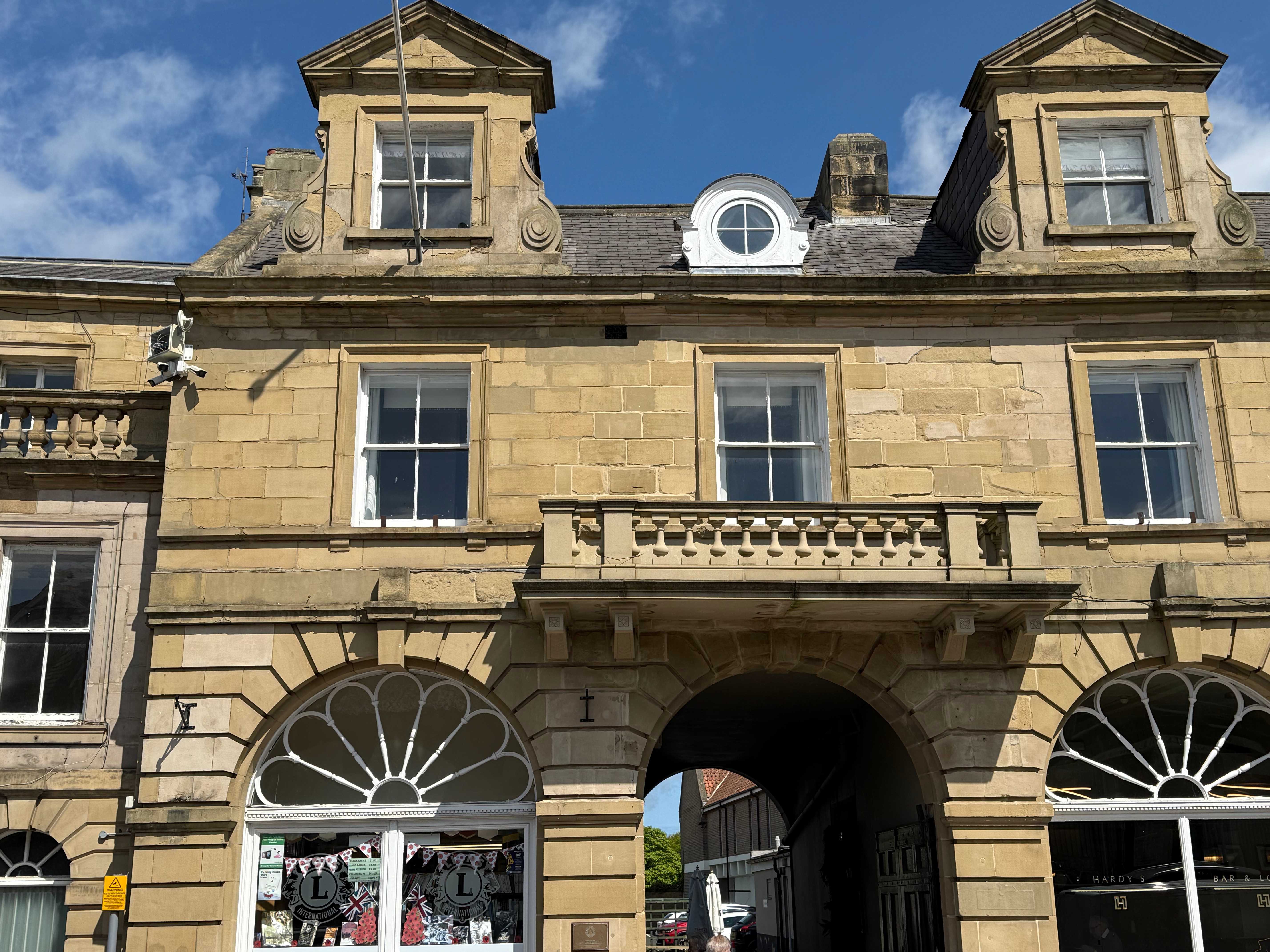
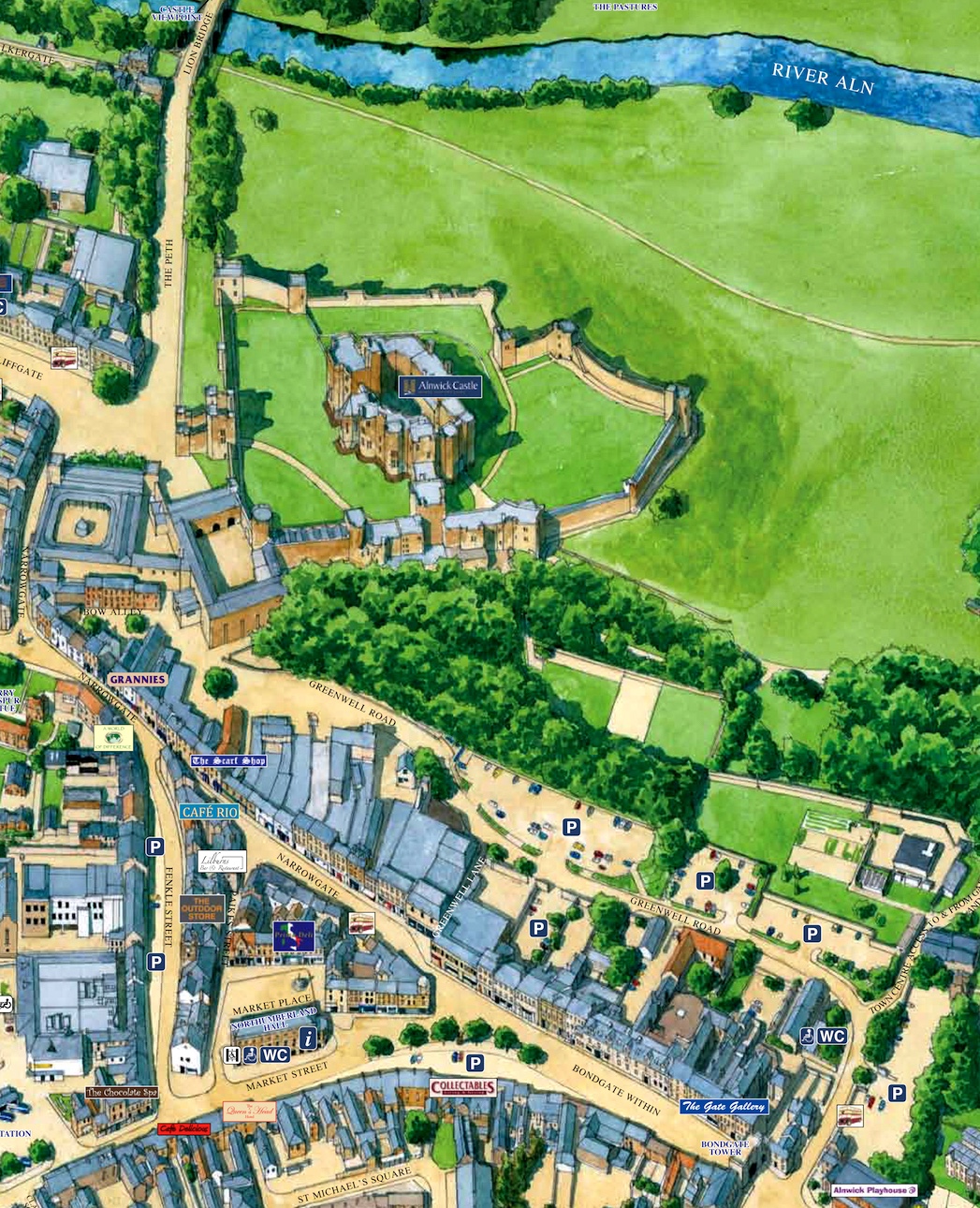
After a quick wander up the “narrowgate” and washing down a sticky bun with a pot of tea, we next spent a few hours roaming through Alnwick Castle. It is an extremely well-kept piece of real estate, with shops, expansive grounds, activities (including broom riding), museums, heritage displays and a Poison Garden, all presented to busloads of tourists daily. The castle caters for much, much more than history buffs – try the Dragon Quest, Have-a-go Archery, Falconry, Cannon Firing, Medieval Minstrels and meet-and-greet sessions with Australia’s favourite pups – Bluey and Bingo!
Tour notes: Alnwick Castle is the second largest inhabited castle in the UK (after Windsor), Alnwick has been home to the Percy family for 700 years, and is now the seat of the 12th Duke of Northumberland. The Percies played a significant role in English history and were closely involved in many notable events, including the Wars of the Roses. The castle has been renovated and expanded over the centuries, resulting in an impressive blend of architectural styles, from medieval fortifications to luxurious Georgian interiors. One of the castle’s most notable owners was Harry Hotspur, a medieval knight who famously fought alongside King Henry IV against the Scots. The present Duchess has created The Alnwick Garden, where you’ll have the chance to experience the Cherry Orchard, Bamboo Labyrinth and even the Poison Garden, home to some of the deadliest plants in the world. For film fanatics, Alnwick Castle made its stamp on the silver screen, starring as Brancaster Castle in multiple episodes of Downton Abbey, and as Hogwarts School of Witchcraft and Wizardry in the first two Harry Potter films.
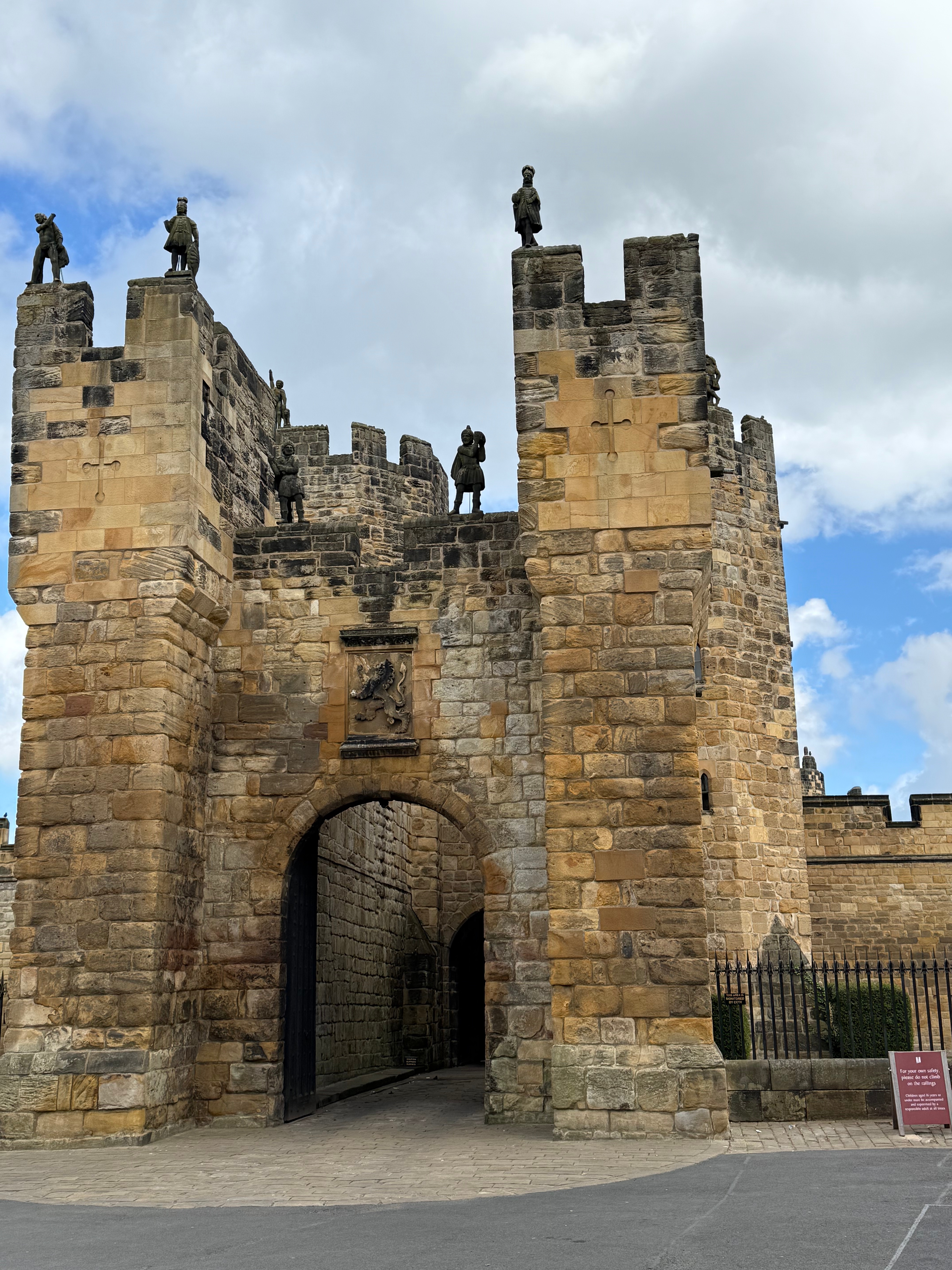
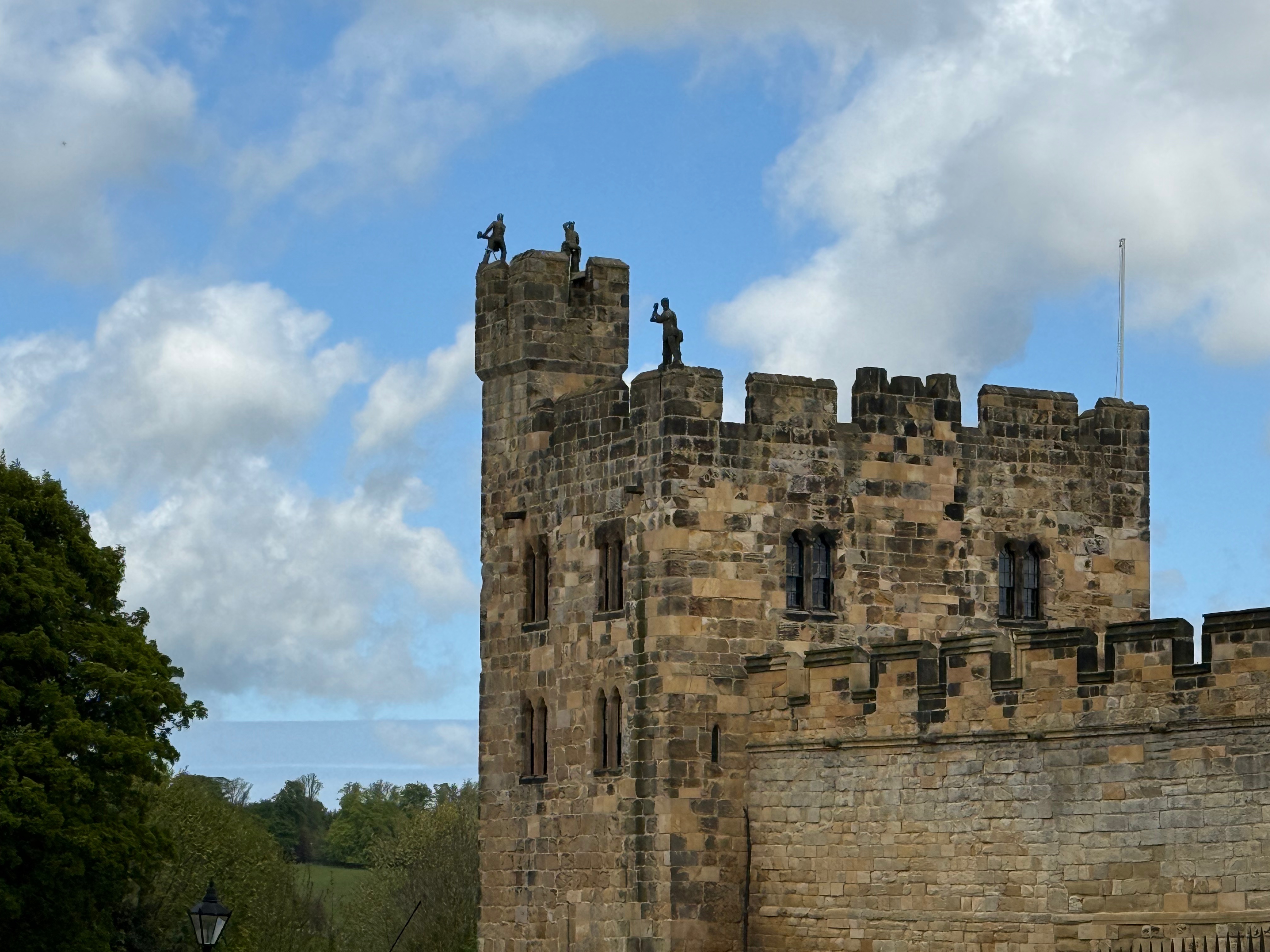
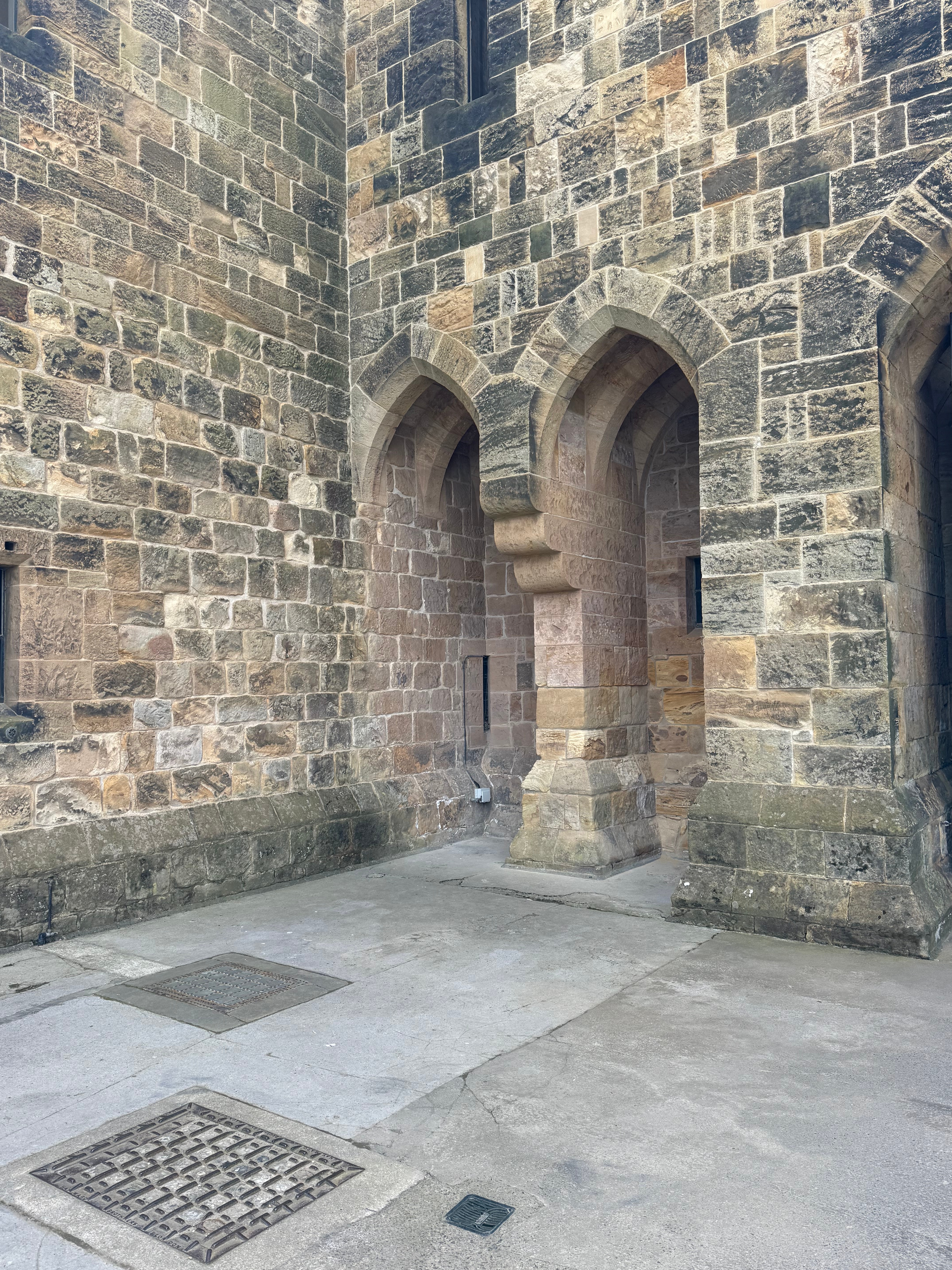
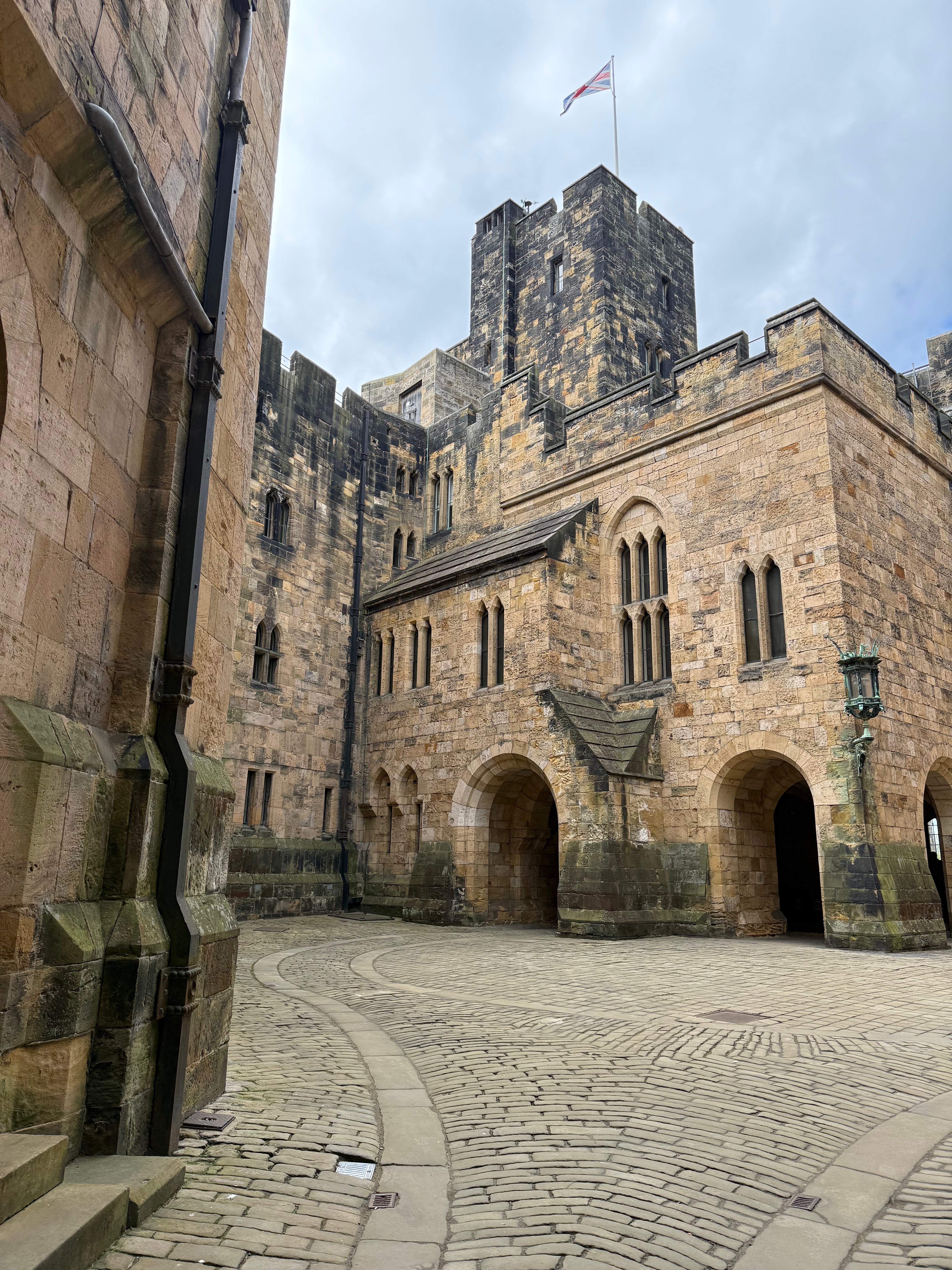
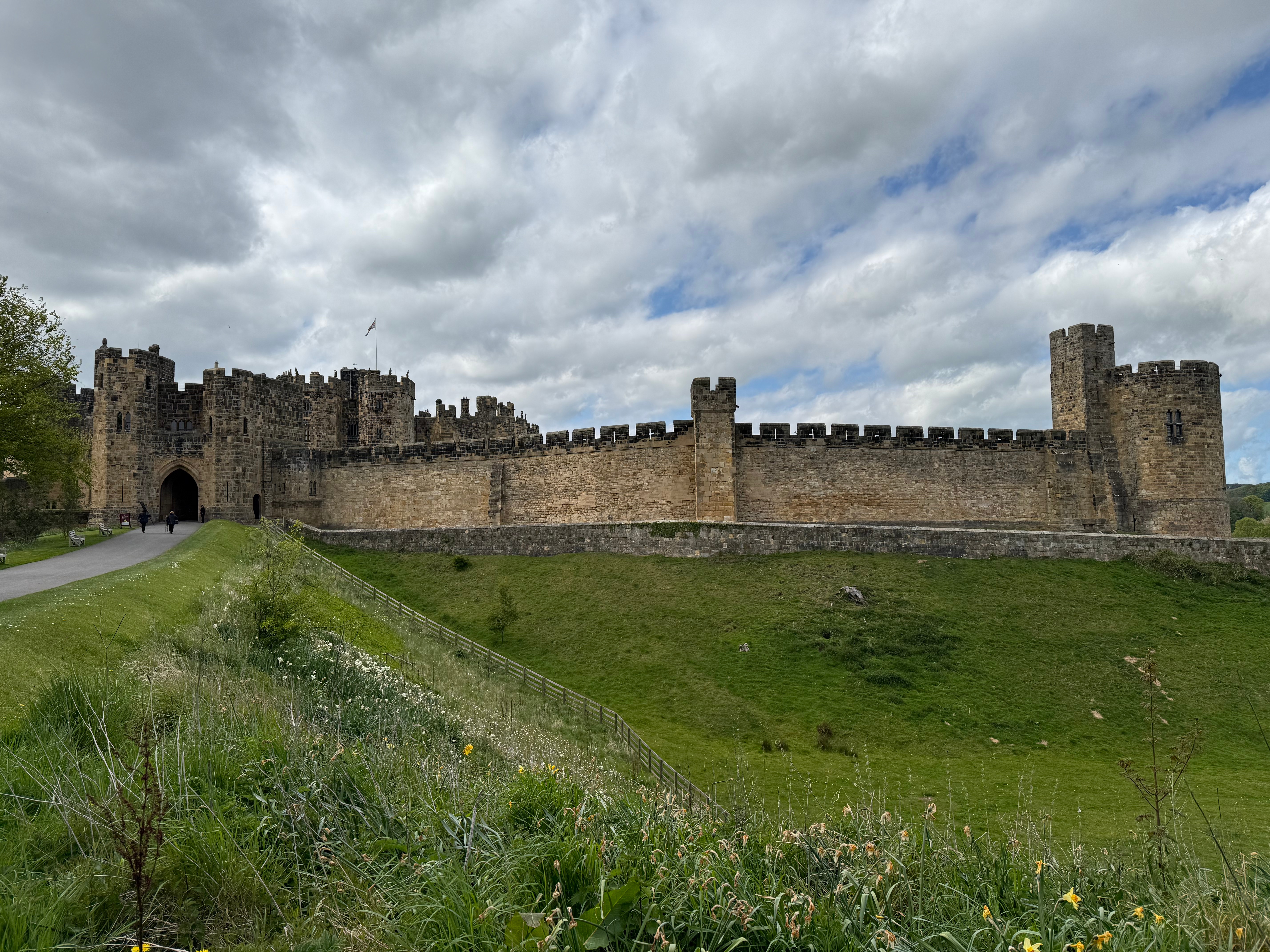
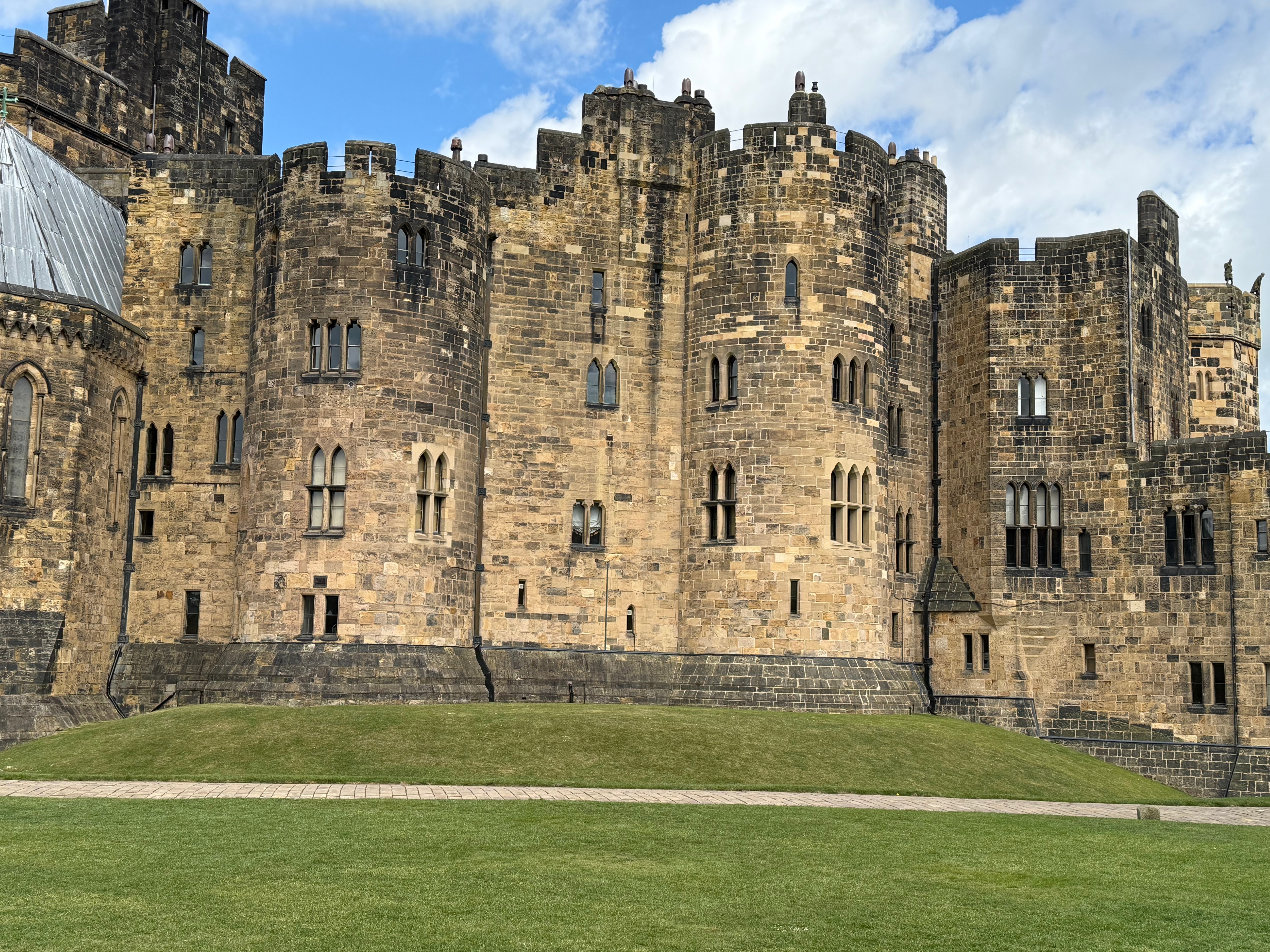
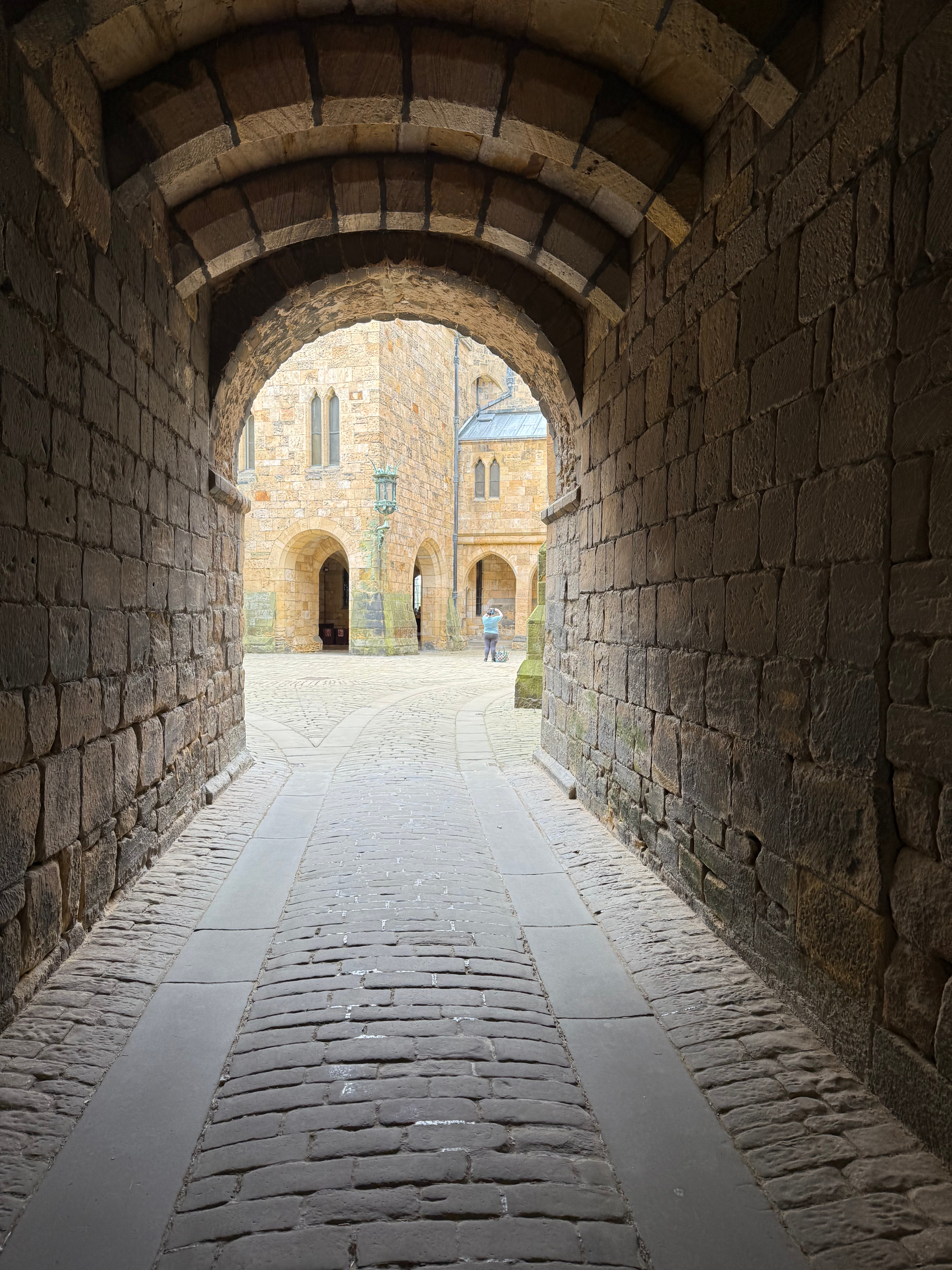
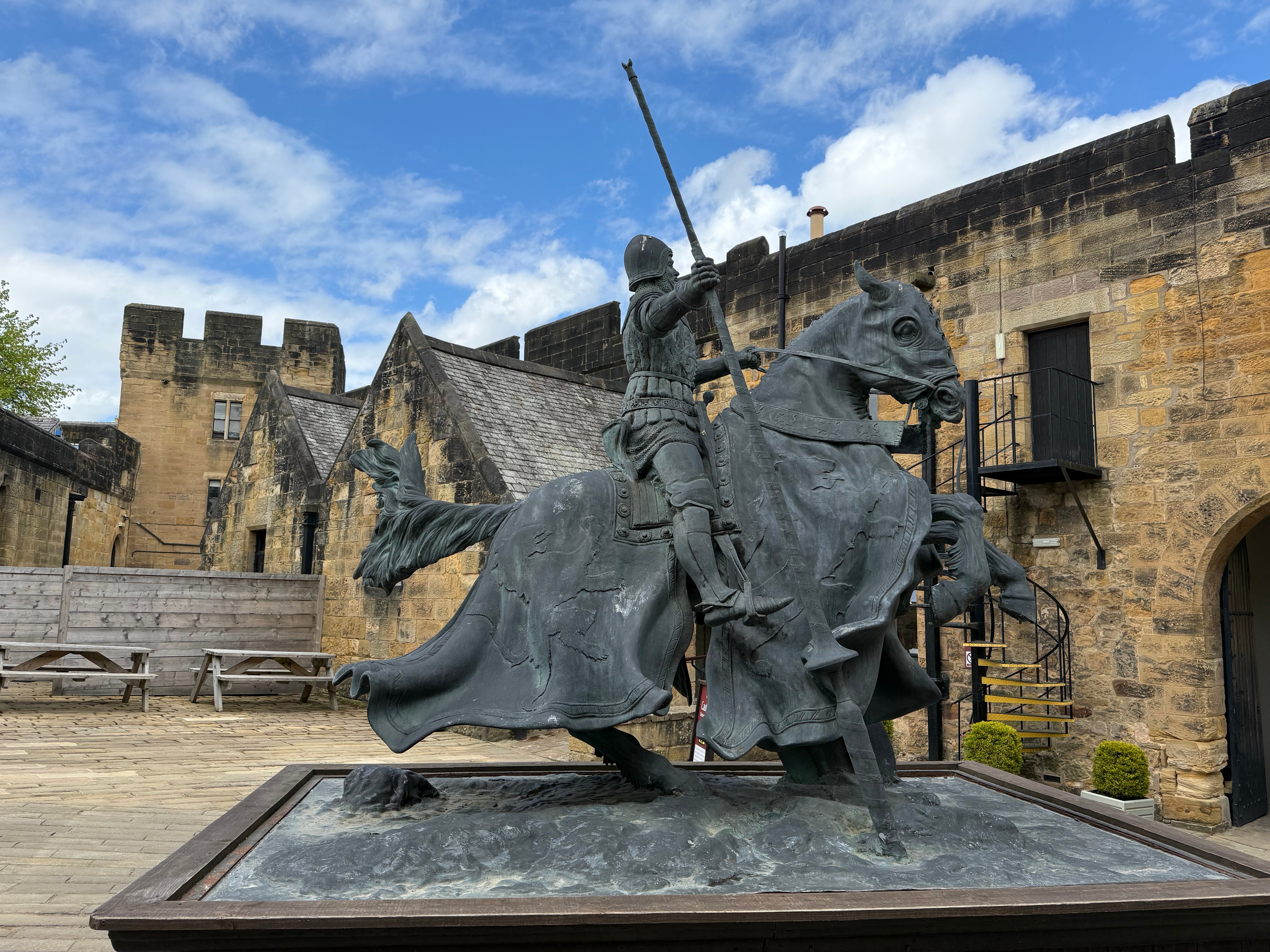

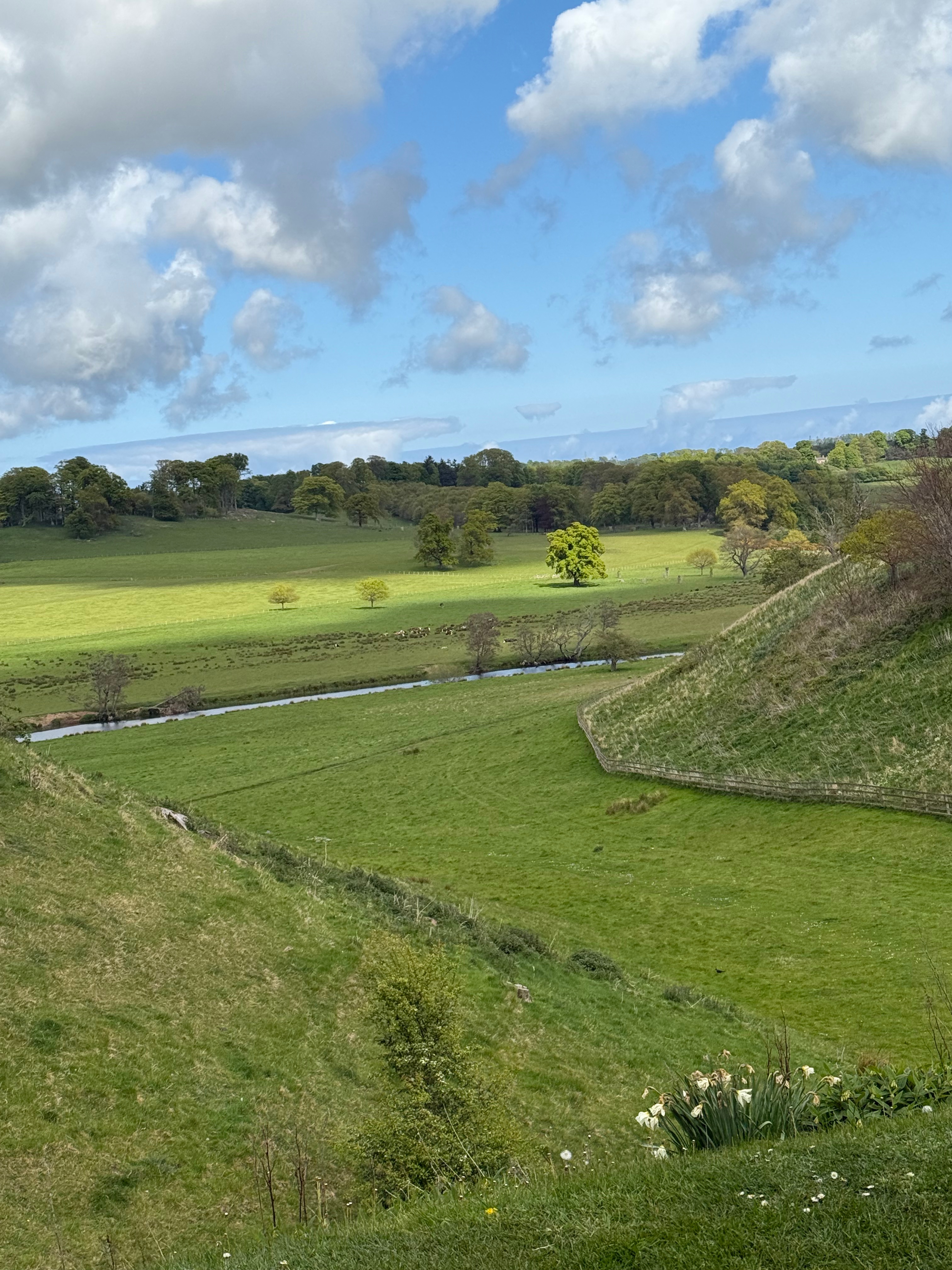
Exhausted and intimidated by Harry Hotspur’s immaculate edifice, we clambered onto the bus headed for Chillingham Castle for Dinner in the Minstrels’ Hall followed by a Ghost Tour. On the bus, Alison gave a most spirited talk on “Ghosts of Northumbria.”
Tour notes on Chillingham Castle: This remarkable and very private castle has been continuously owned by just one family line since the 1200s. A visit from Edward I in 1298 was followed by many other royal visits down the centuries. There are alarming dungeons as well as active restoration in the Great Halls and State Rooms which are gradually brought back to life with tapestries, arms and armour. They even have a very real torture chamber.
The 12th-century stronghold became a fortified castle in 1344. Chillingham occupied a strategic position during Northumberland’s bloody border feuds. The Tudor period saw additions but the underlying medievalism remains. The castle is also home to a number of ghosts, the most famous being the ‘Blue Boy’.
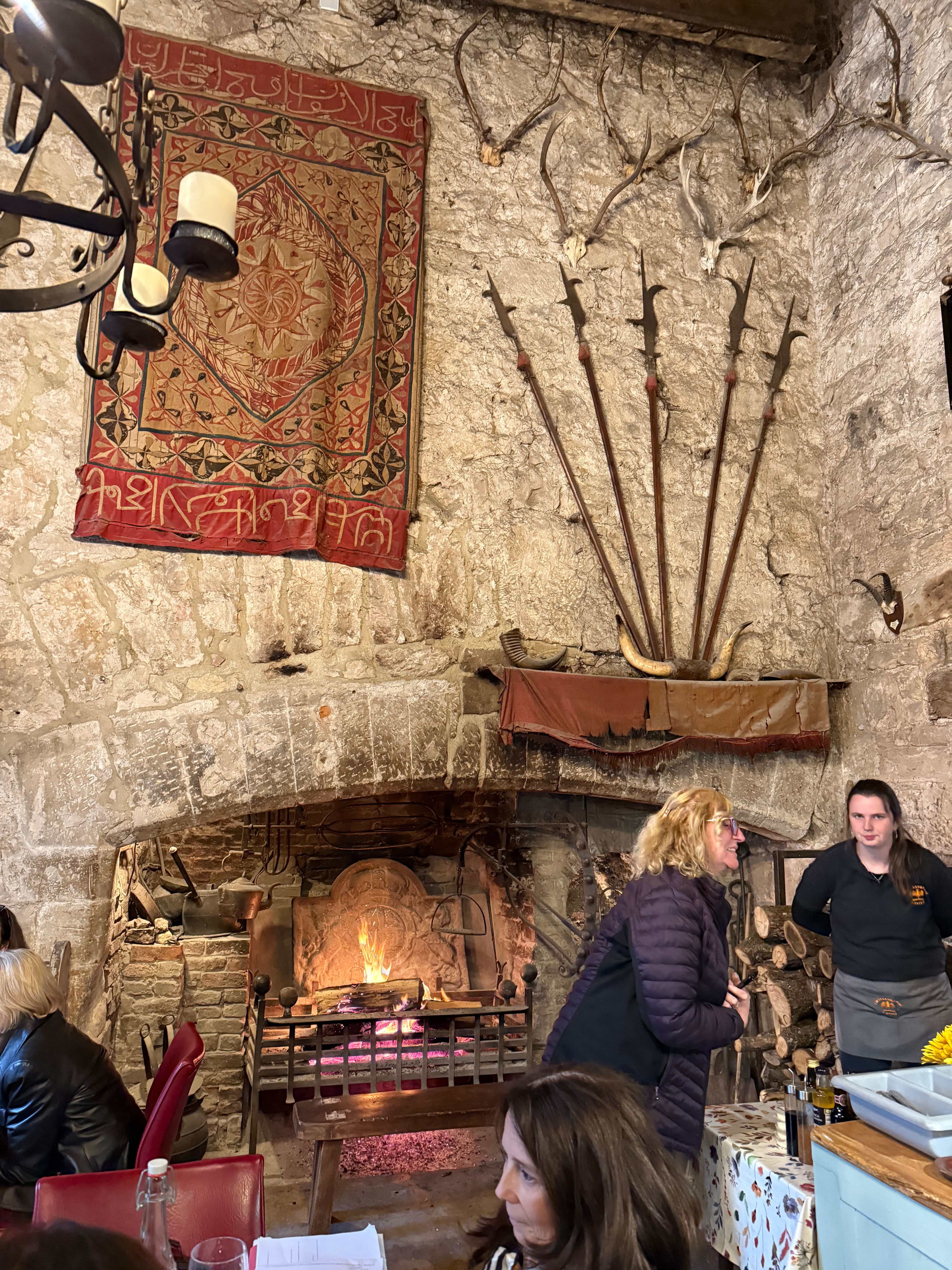

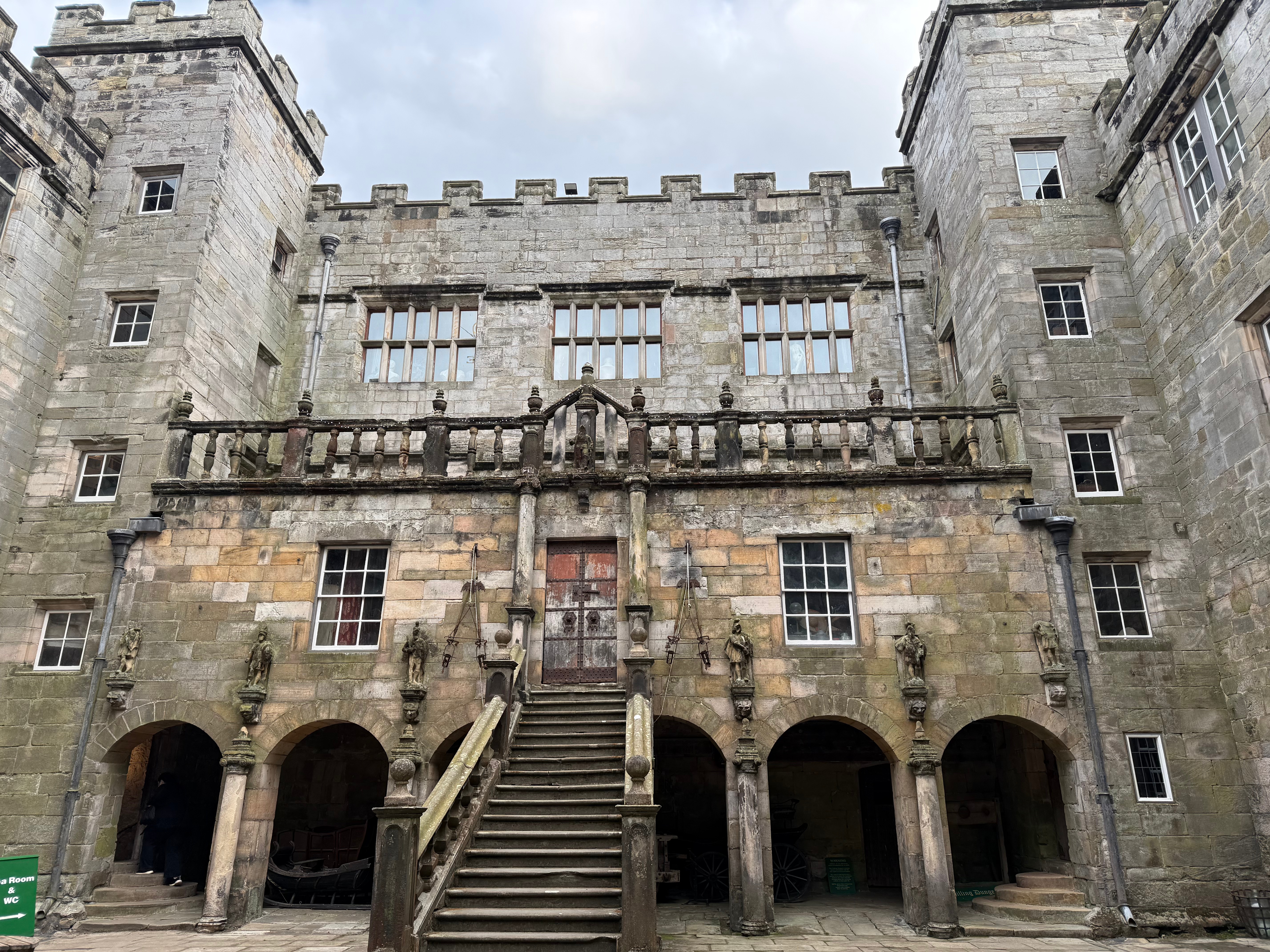
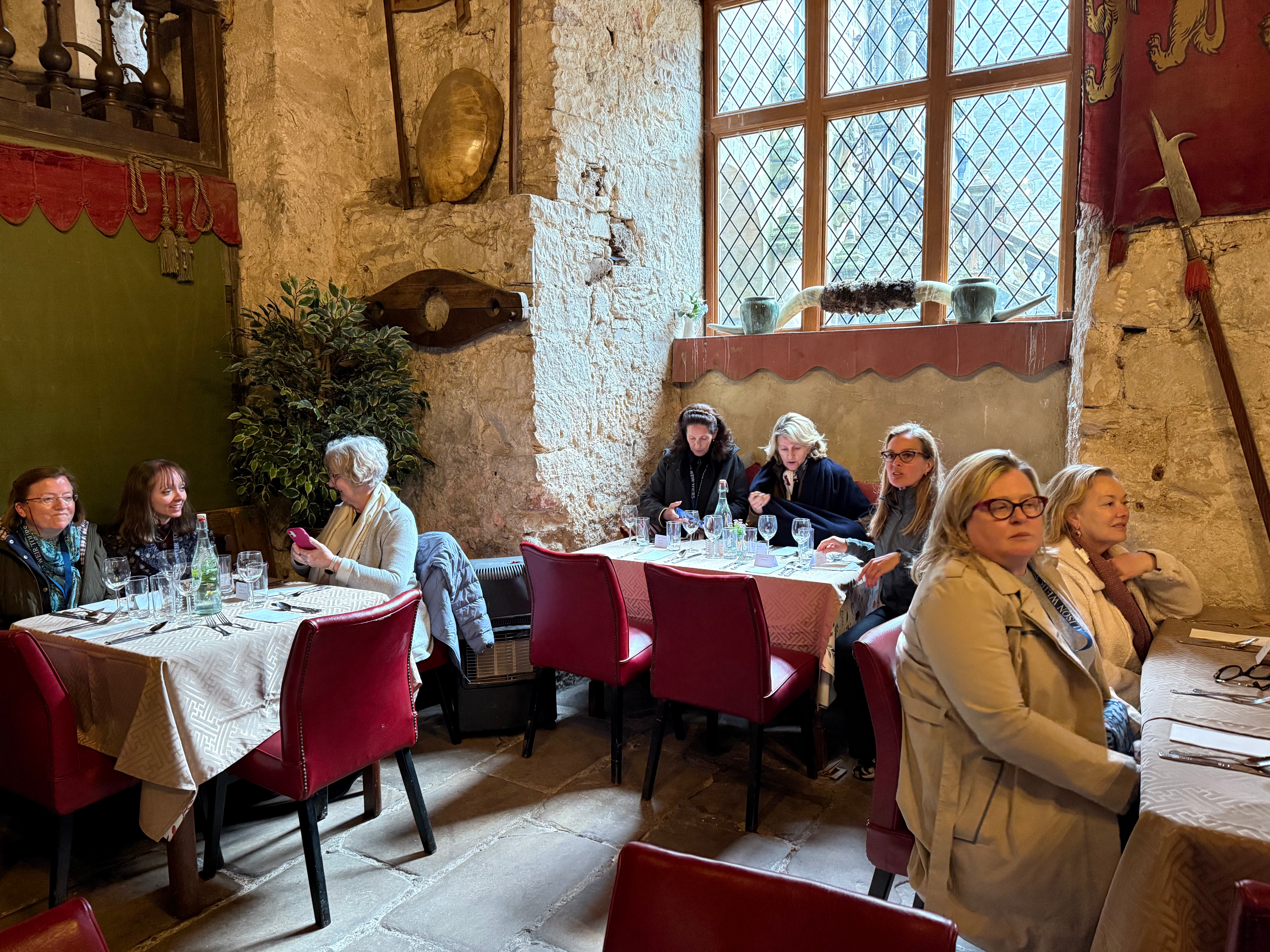
Some of us (me included), took an early bus back to Matfen after dinner. The others, some very cold, found no ghosts although Lady Edith did make an appearance for Mike: Vicki claimed that Mike had actually sat upon her Ladyship!
Day 9: Thursday, 8th May
This was a day of three Castles: Bamburgh Castle, renovated by Sir William Armstrong and captured by Cornwall’s Uhtred; Warkworth Castle, the fighting home of the Percies; and Langley Castle where our last supper and associated tour quiz were to be held.
On the longish drive north, we were illuminated by these talks: Nicola “Introduction to Bamburgh Castle”; Julian “Dorothy Forster and Grace Darling”; then two from Sarah “Warwick the Kingmaker” and “The Real Joyeuse Garde”.
Tour notes: Bamburgh, Northumberland’s most dramatic castle stands on a site that has been occupied since ancient times. The oldest surviving aboveground parts of the castle date from the 12th century. Situated on a high crag above the Northumbrian coast, with commanding views of Lindisfarne and the Farne Islands, this castle was in legend the stronghold of Sir Lancelot, paladin of the Round Table and the greatest of Arthur’s champions. However, the real Bamburgh was the first English castle to fall to cannon fire, the nemesis of medieval chivalry, when it was attacked by Edward IV in 1464 during the War of the Roses. The castle was occupied and fortified before the ancient Romans arrived. The invading Angles took it from the Celtic Britons, and it became the stronghold of Ida, King of Bernicia, in the 6th century, and then passed into the hands of his grandson Aethelfrith. The castle was then a royal palace where many of the Northumbrian kings were crowned, but it was sacked by the Vikings in 993, taken by the Normans and rebuilt, and successfully withstood a siege by William II in 1095. The oldest parts of it above the ground date from the time of Henry II, who became king of England in 1154, and the principal part that has survived is the keep that was completed in 1164. In the 16th and 17th centuries Bamburgh Castle was left largely abandoned until it was bought in 1704 by the bishop of Durham, Lord Crewe. In 1894, the site was sold to William Armstrong, an engineer, inventor, and armaments magnate. As part of his renovation program, Armstrong knocked some of the castle down and turned the rest into a combination of medieval fortress and Victorian mansion, where his descendants still live.
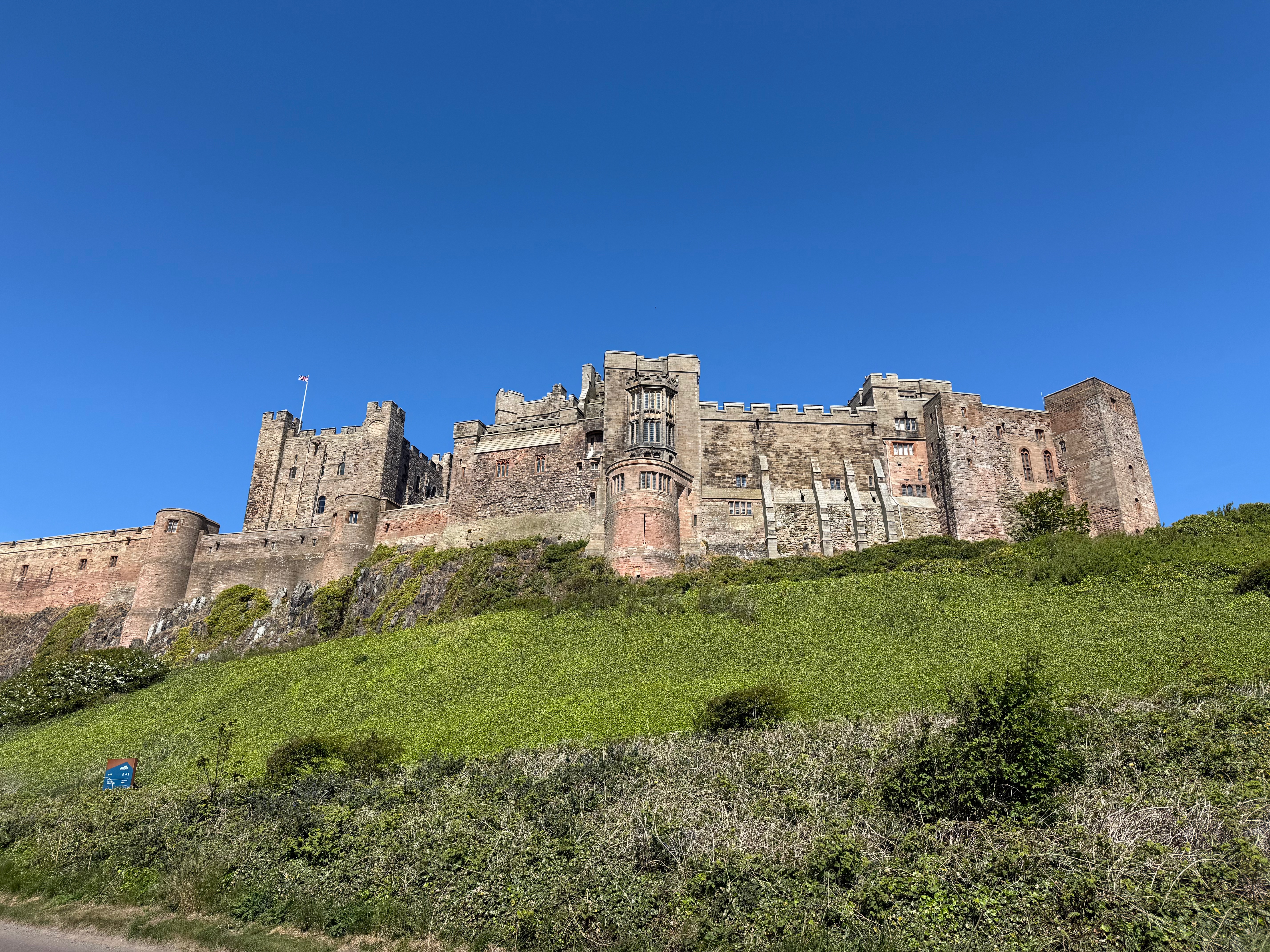
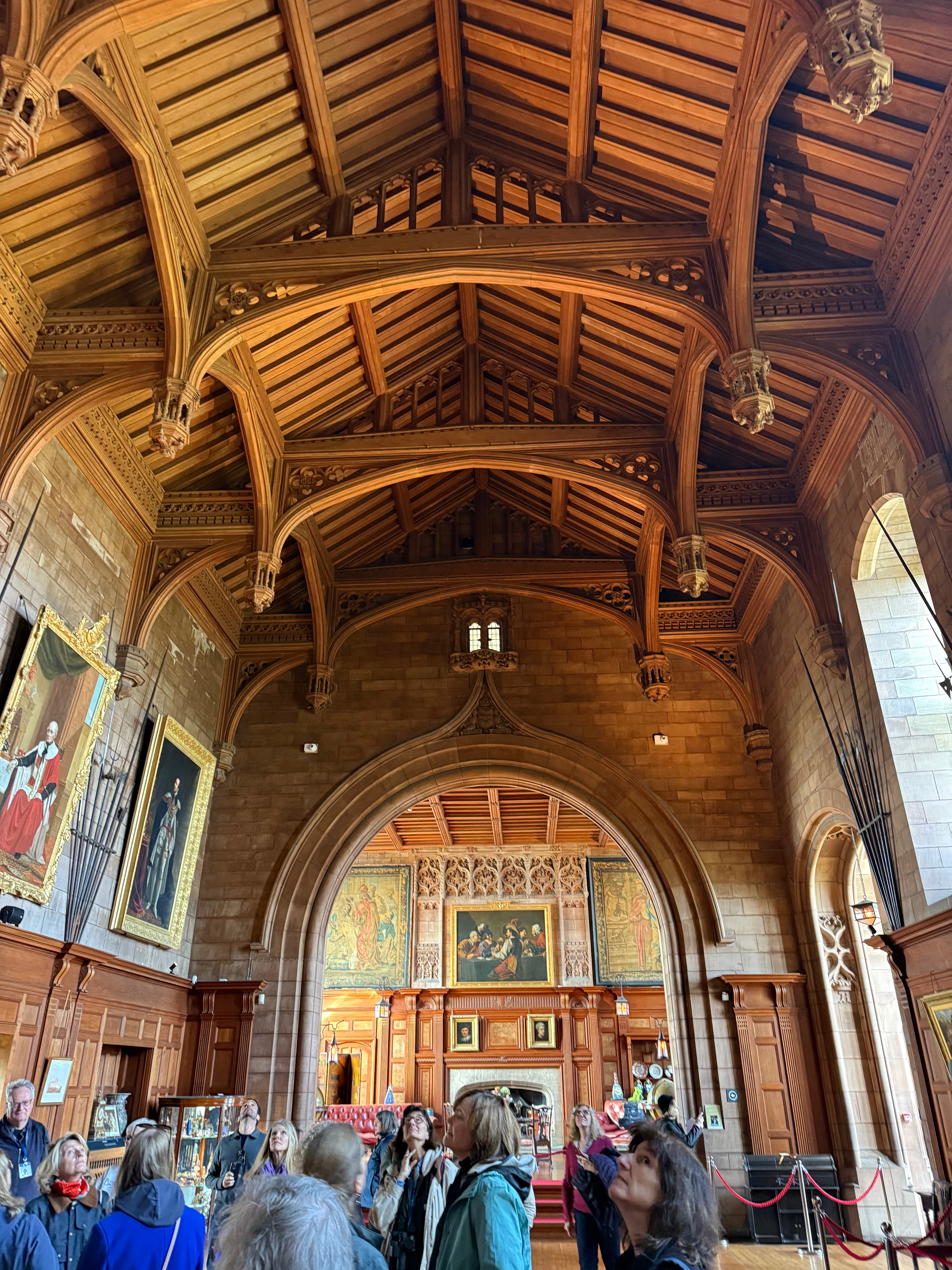
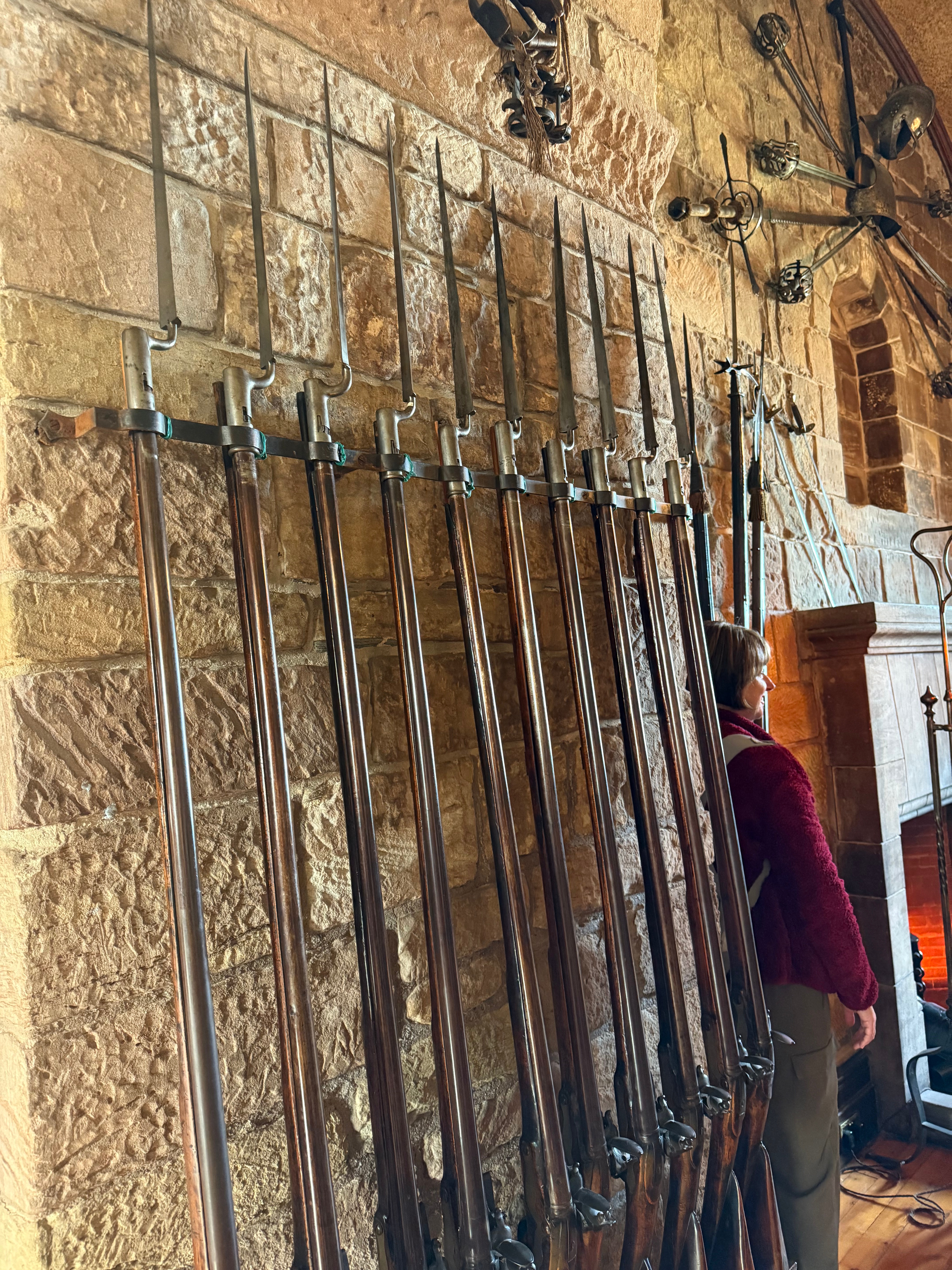
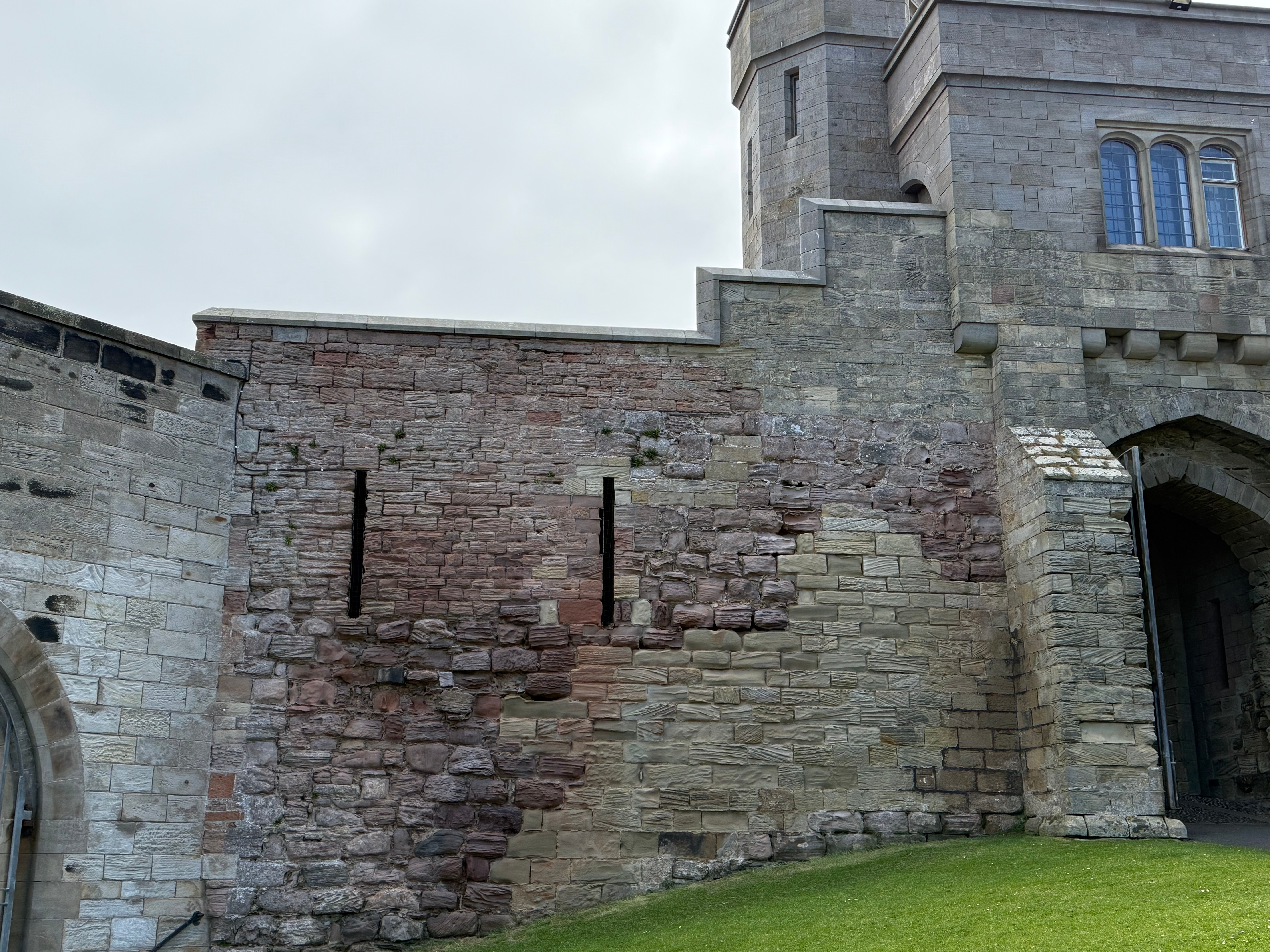
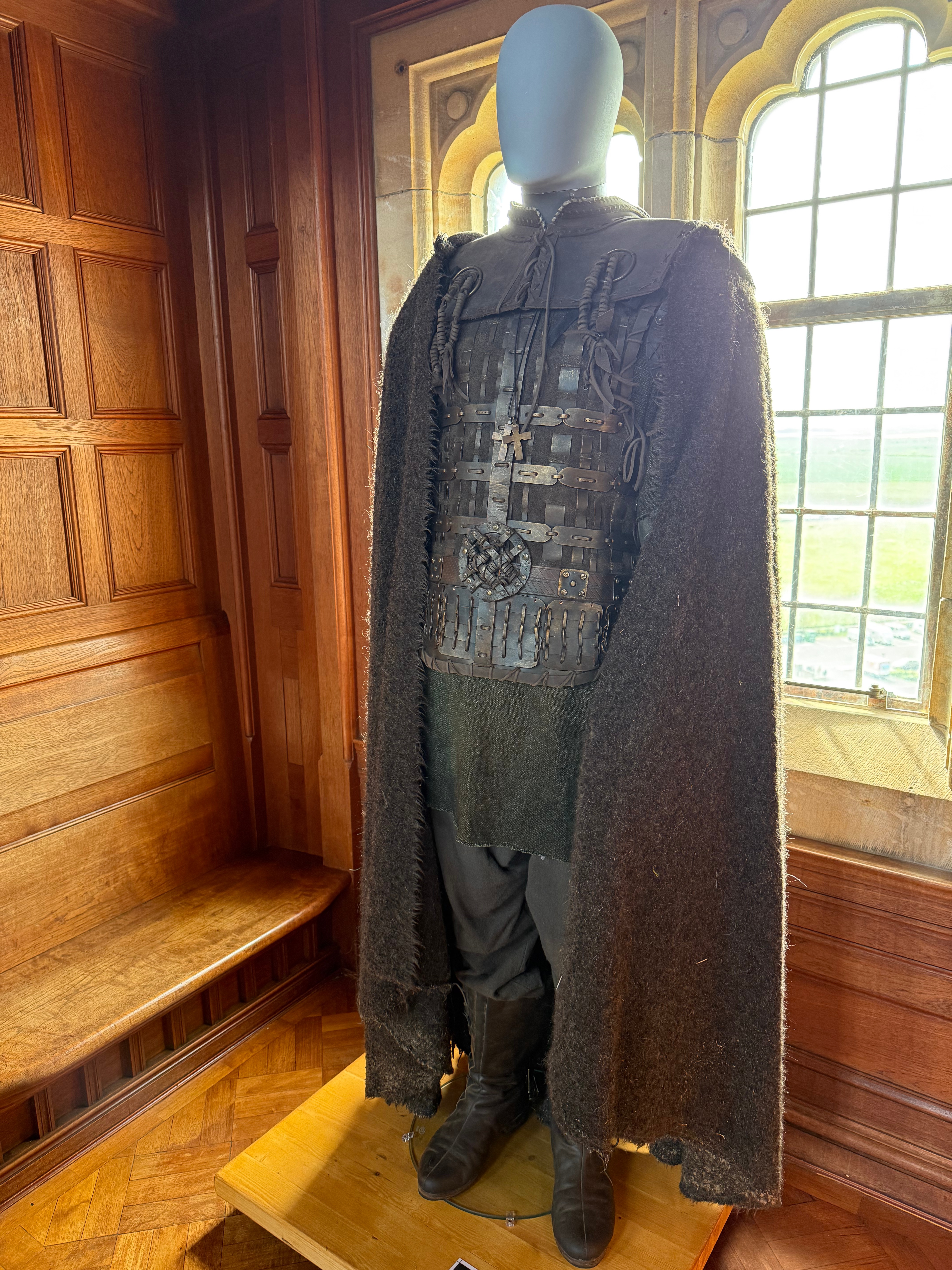
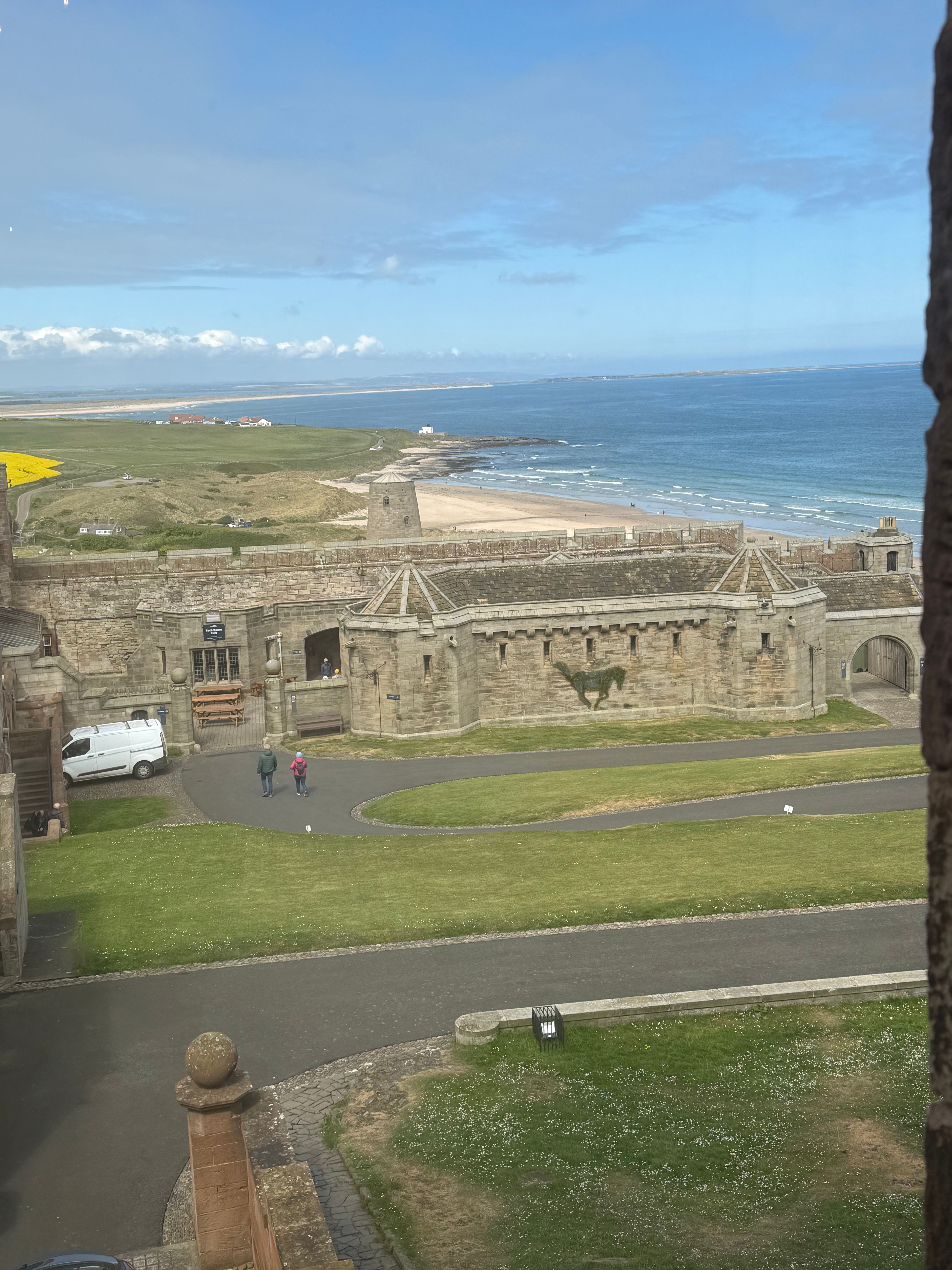
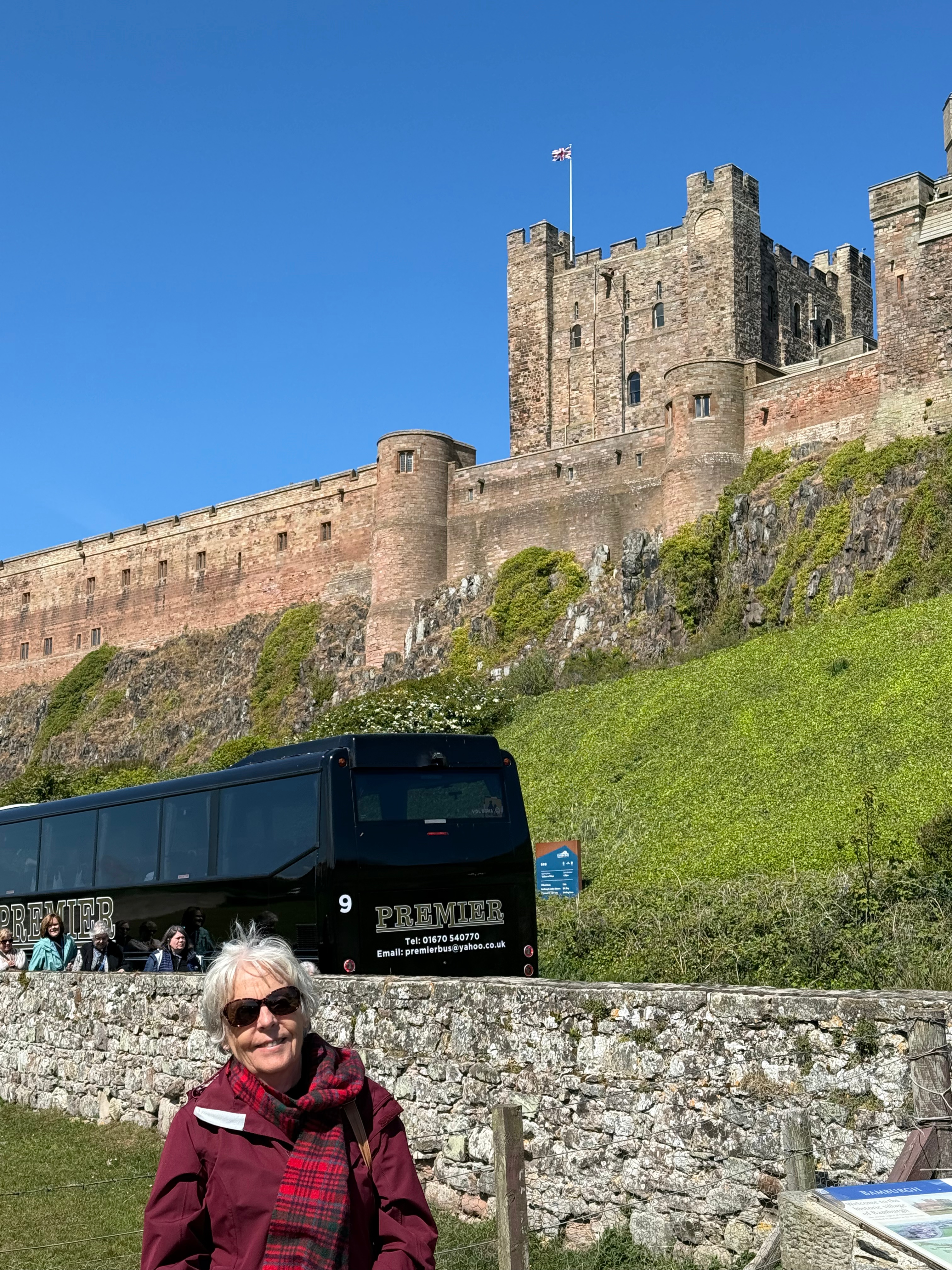
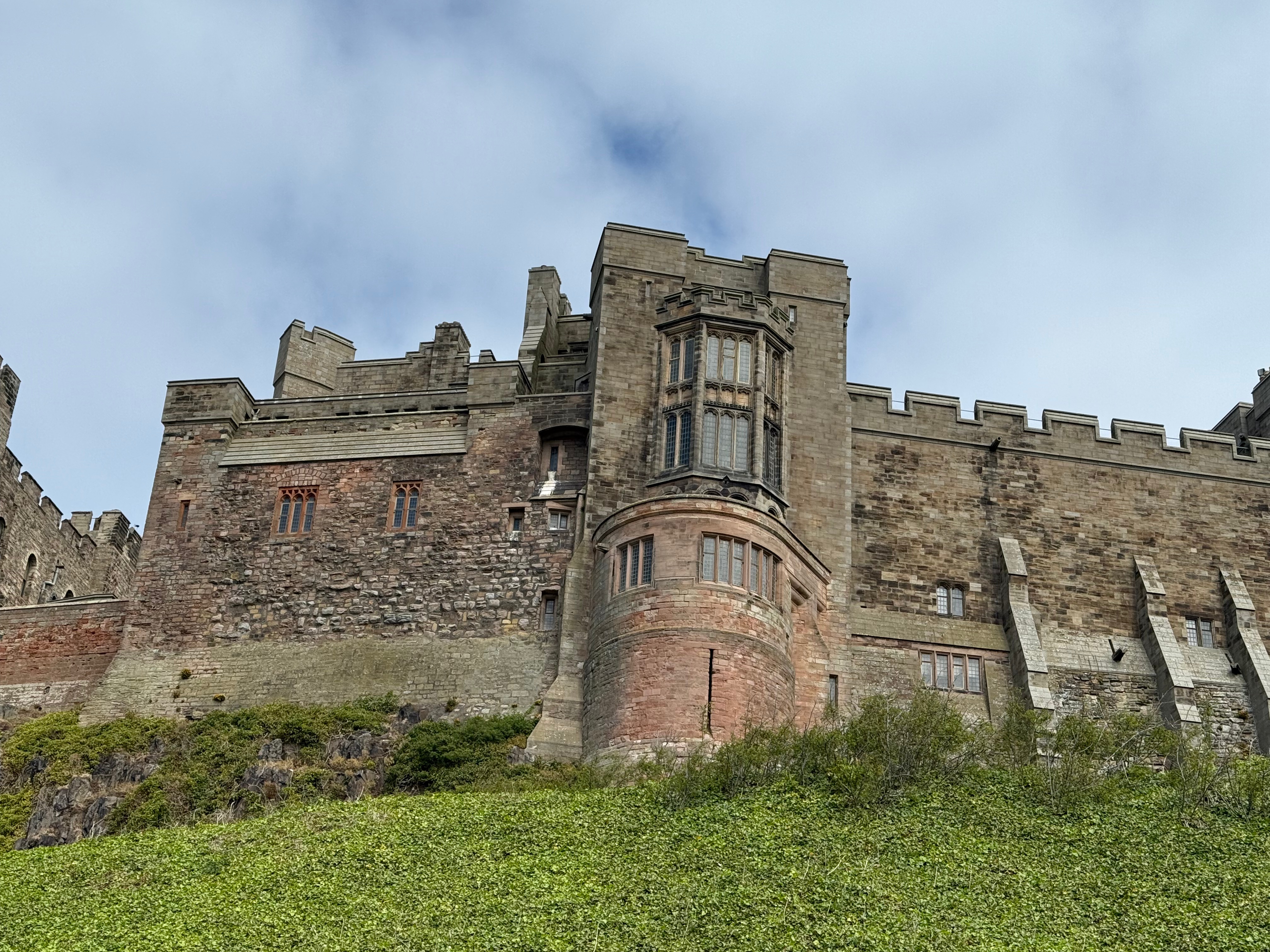
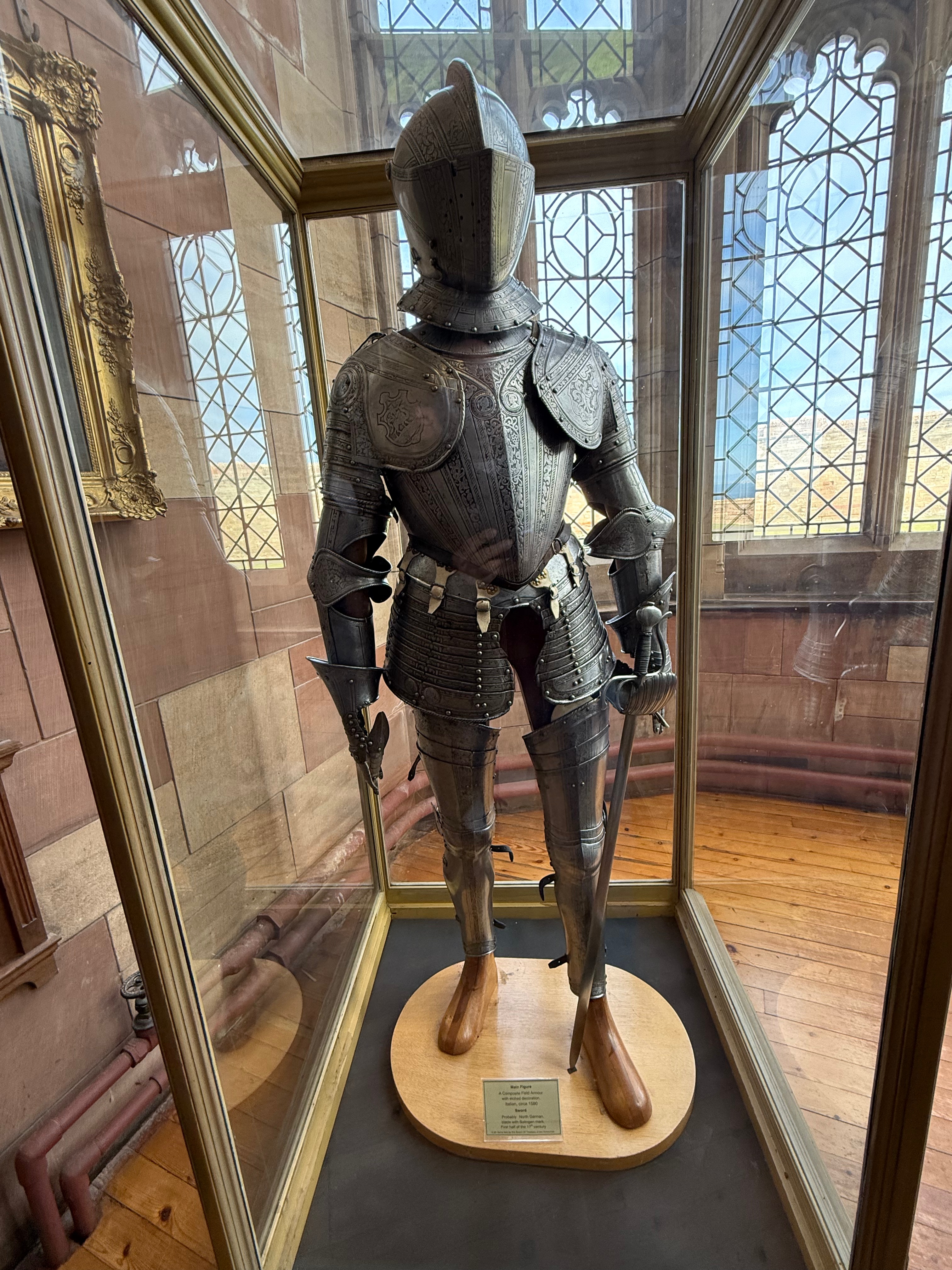

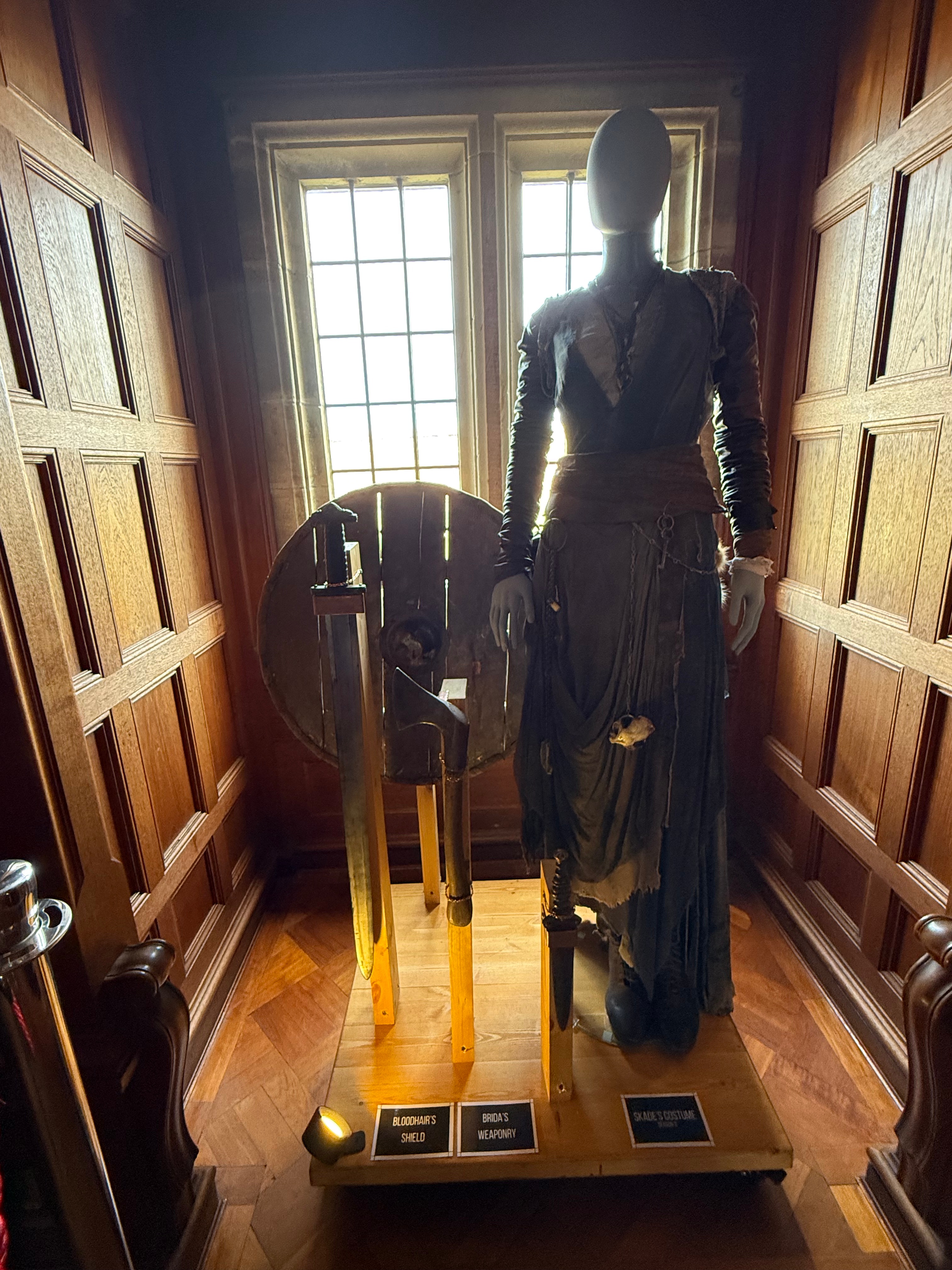
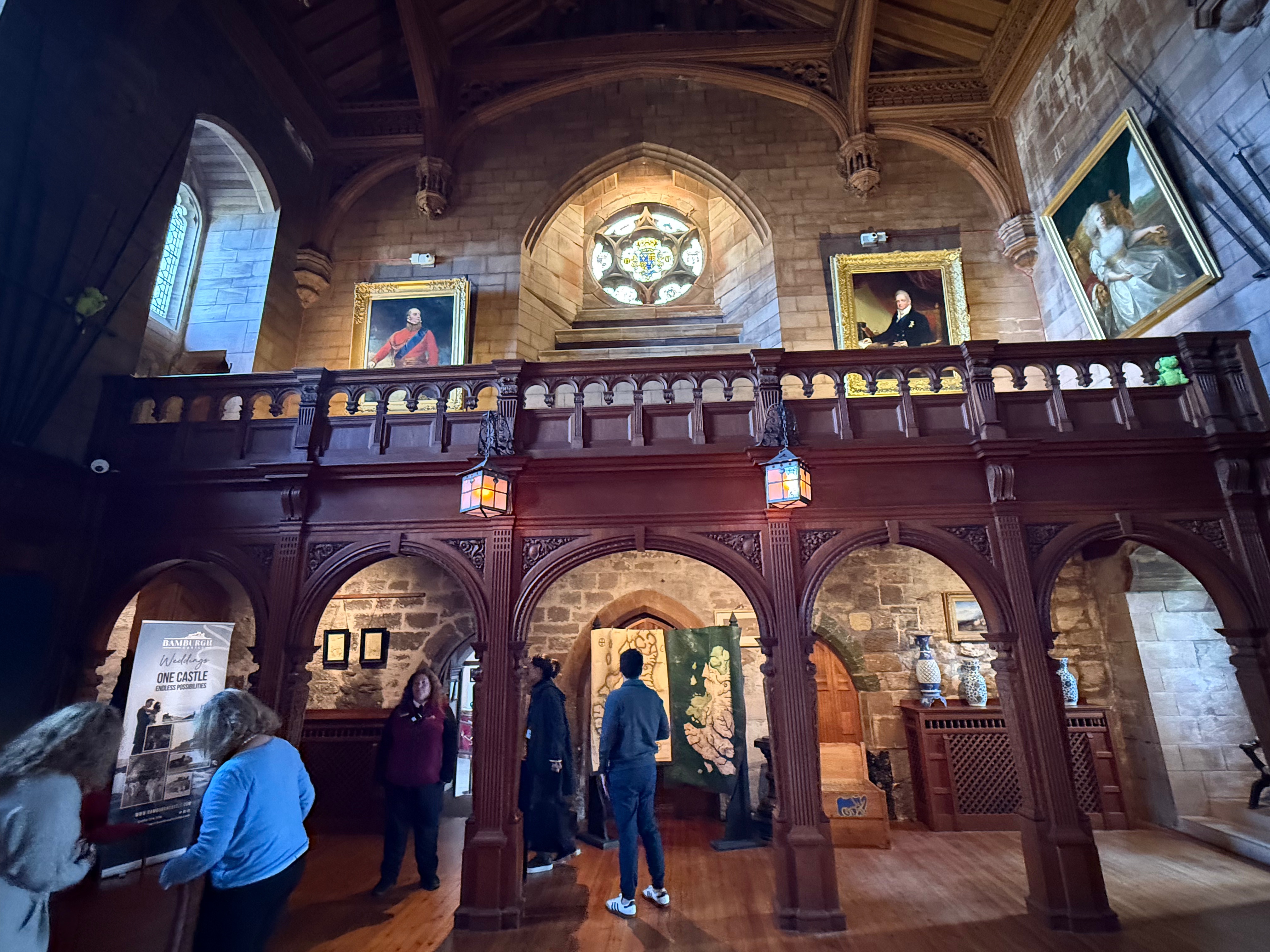
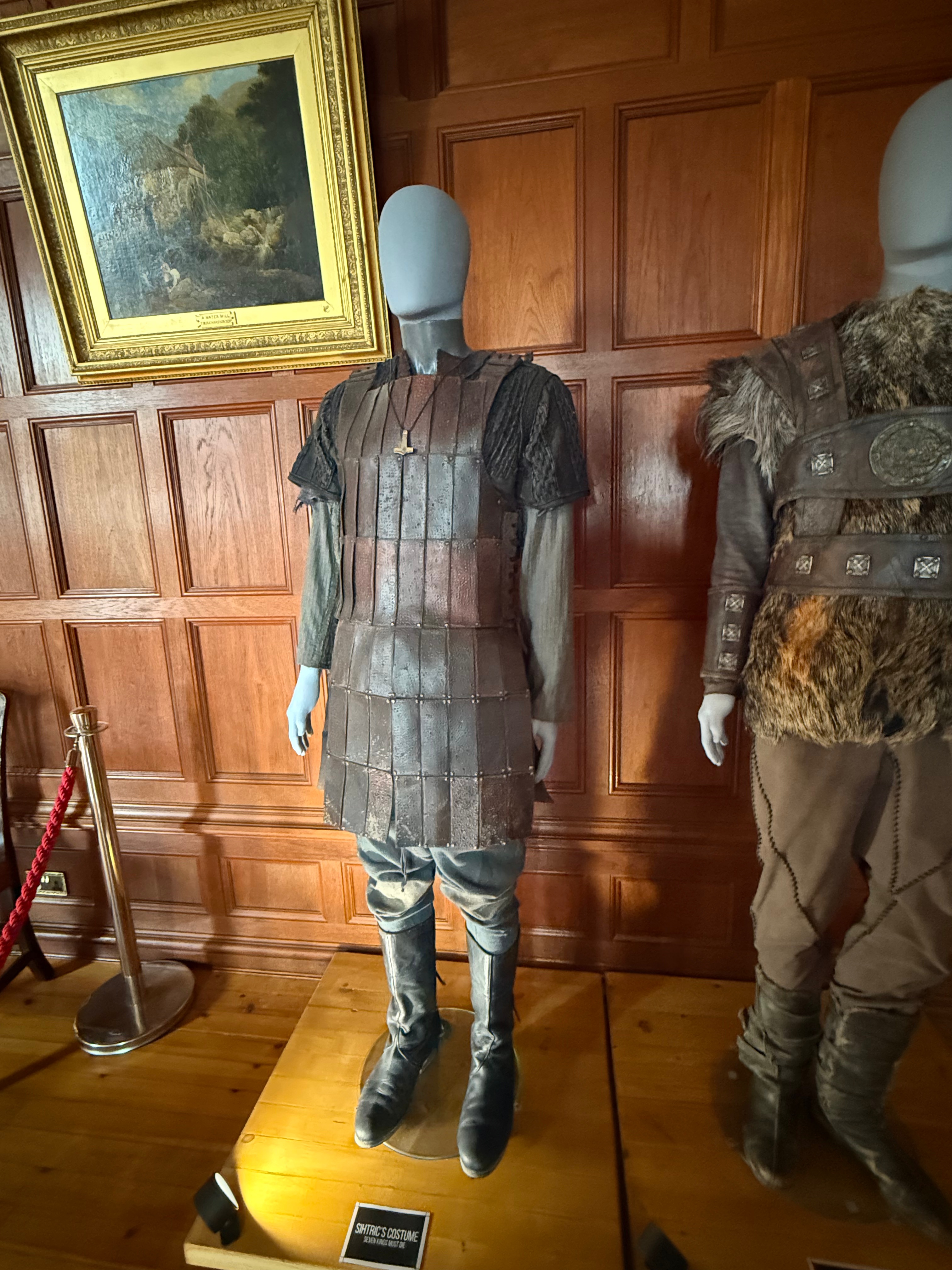
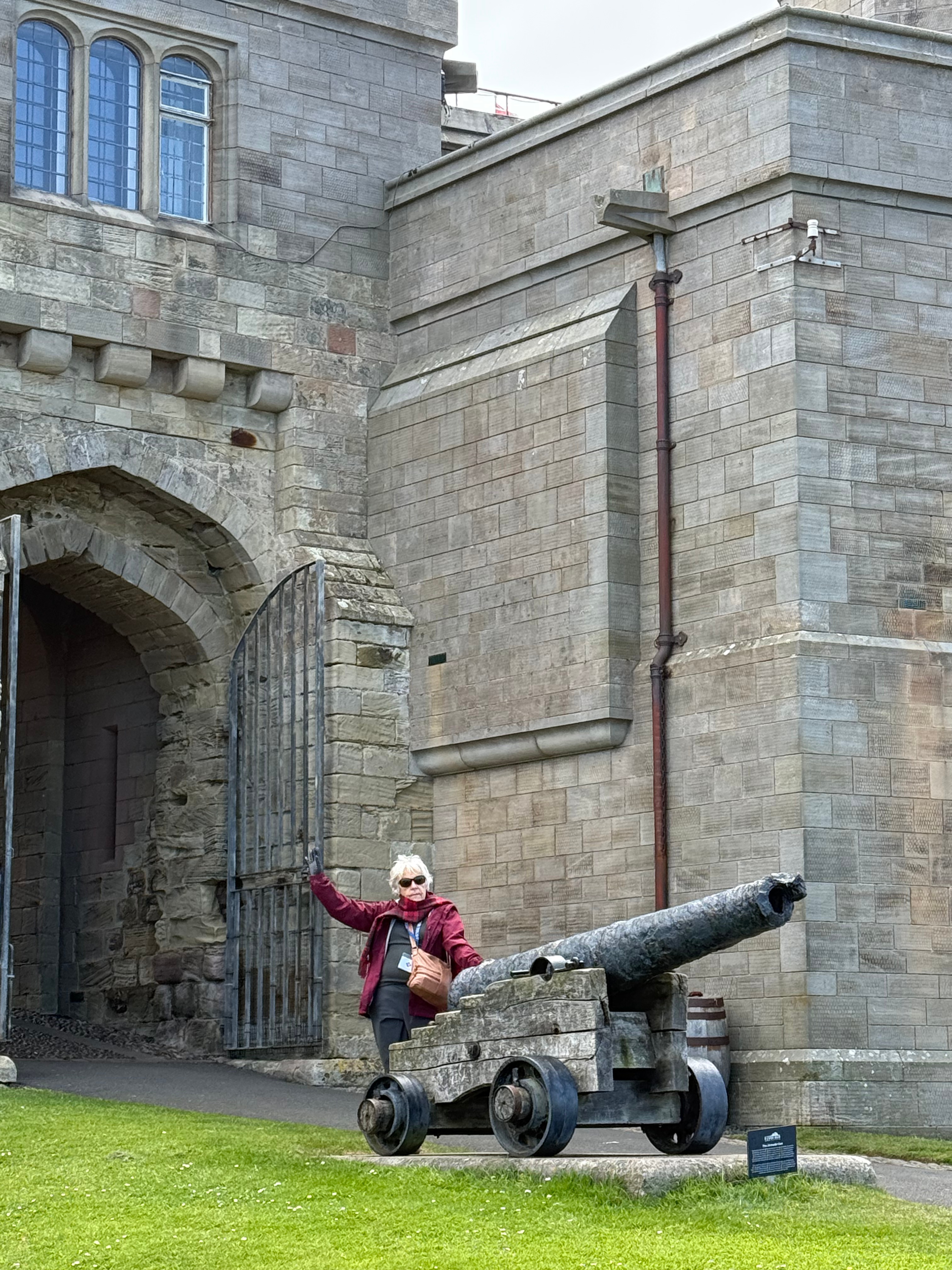
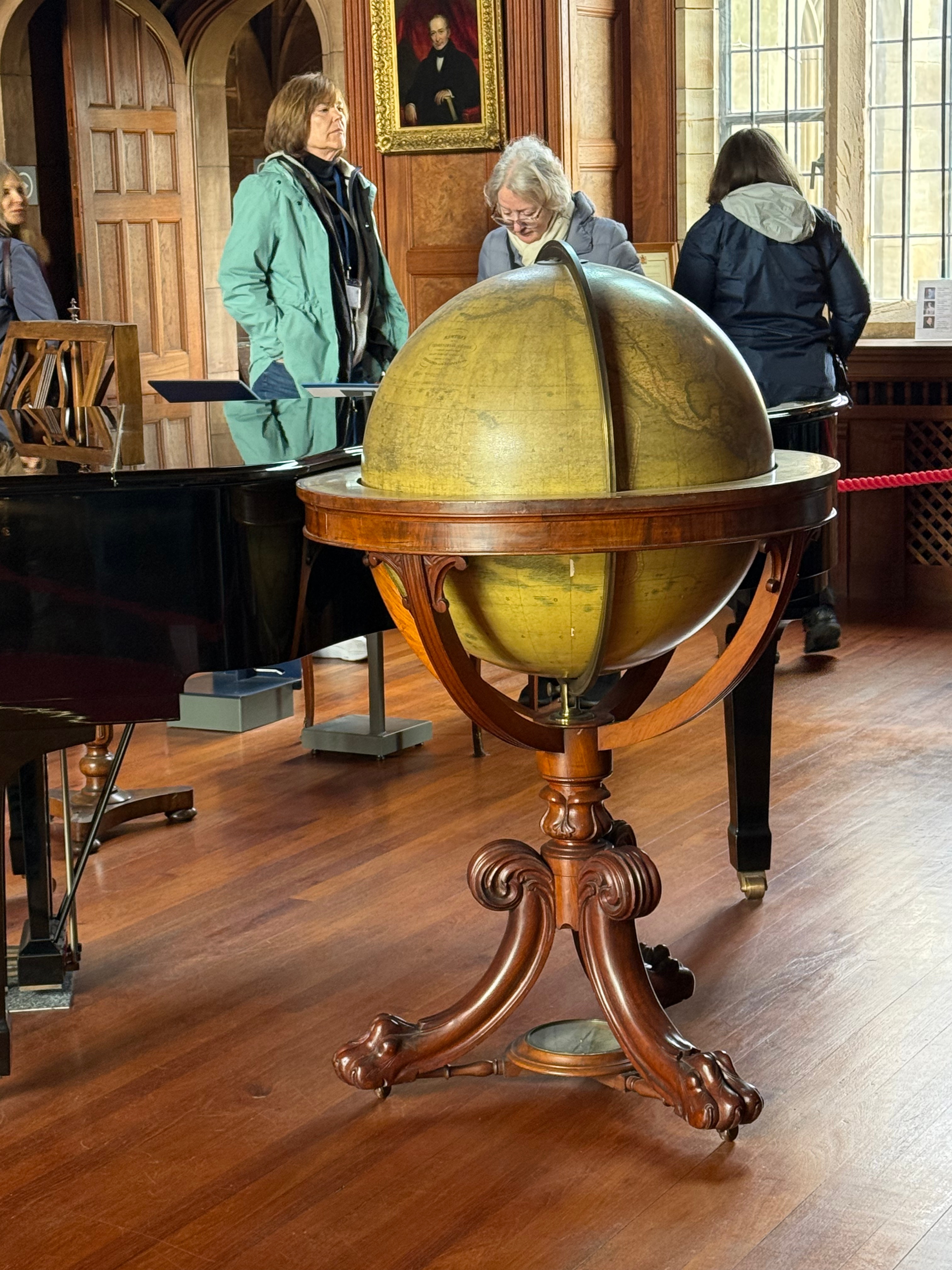

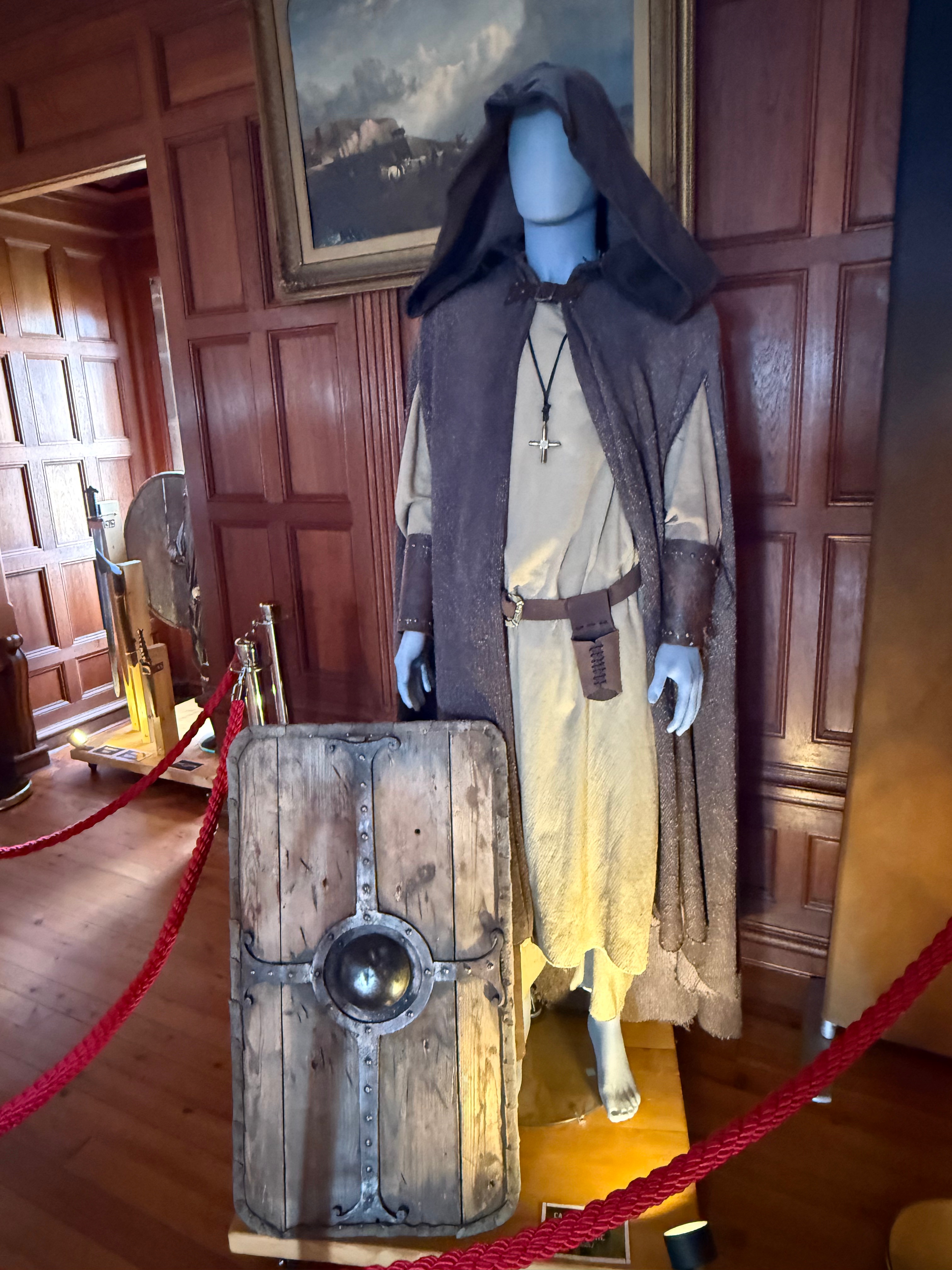
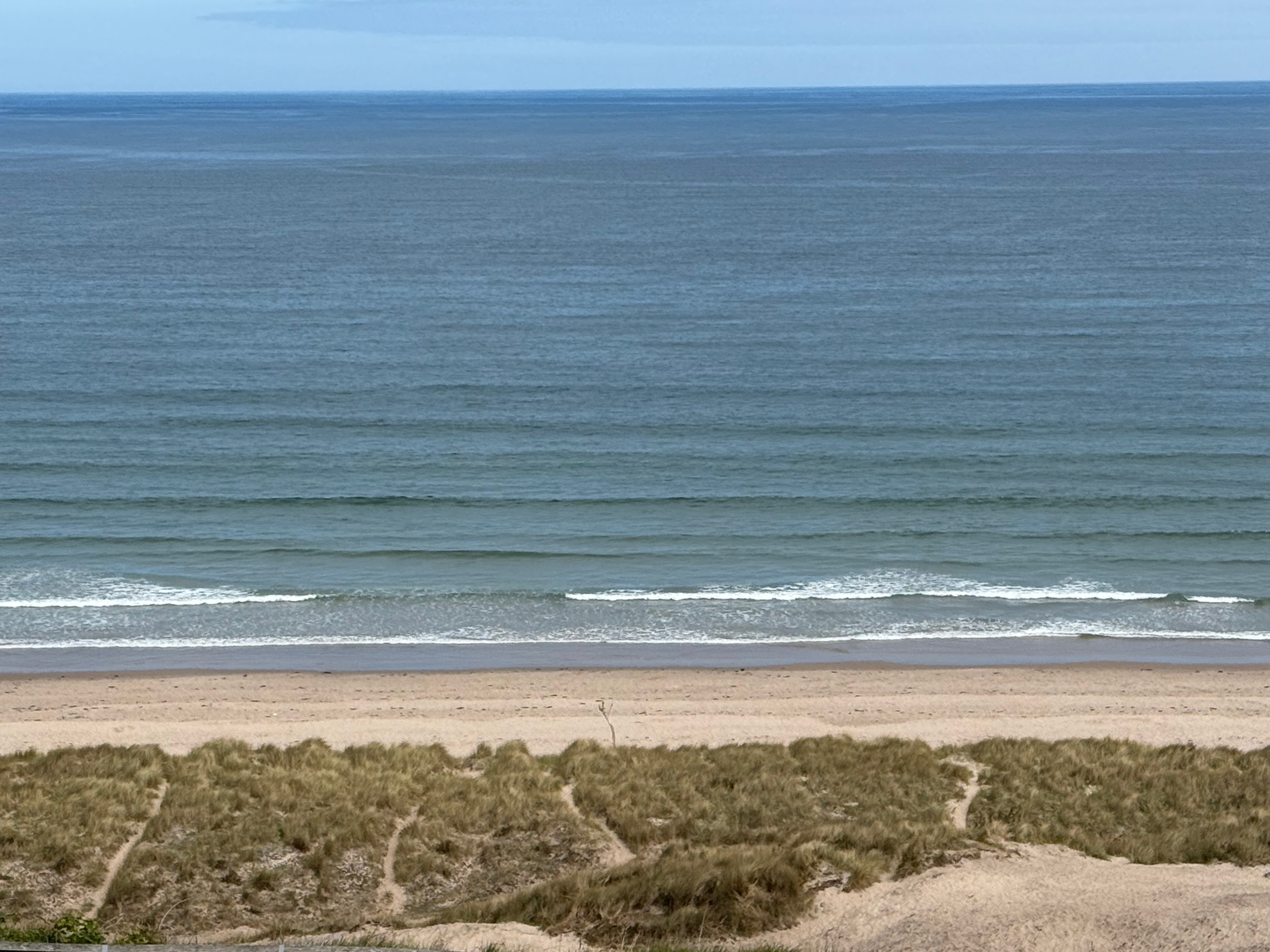
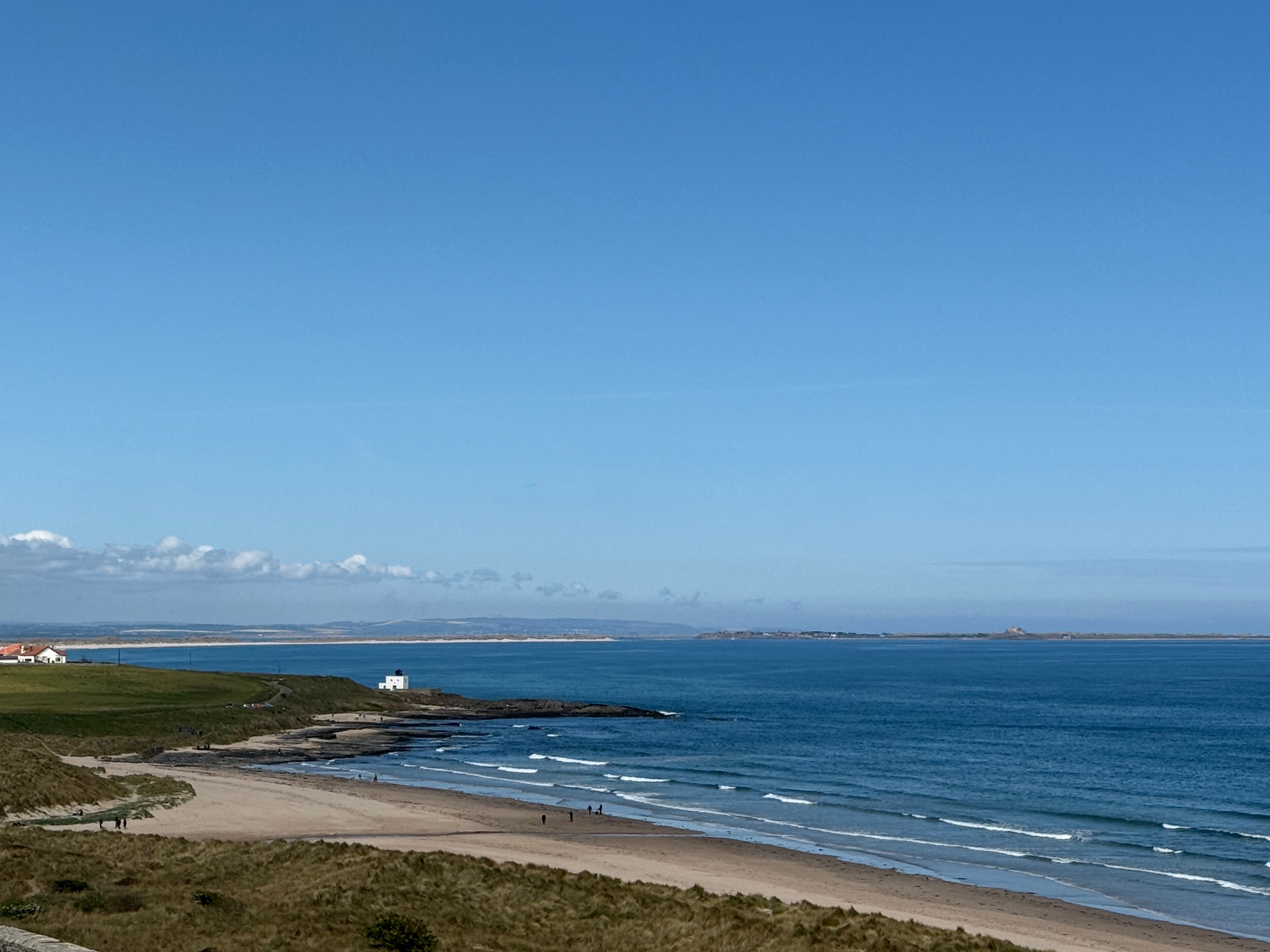
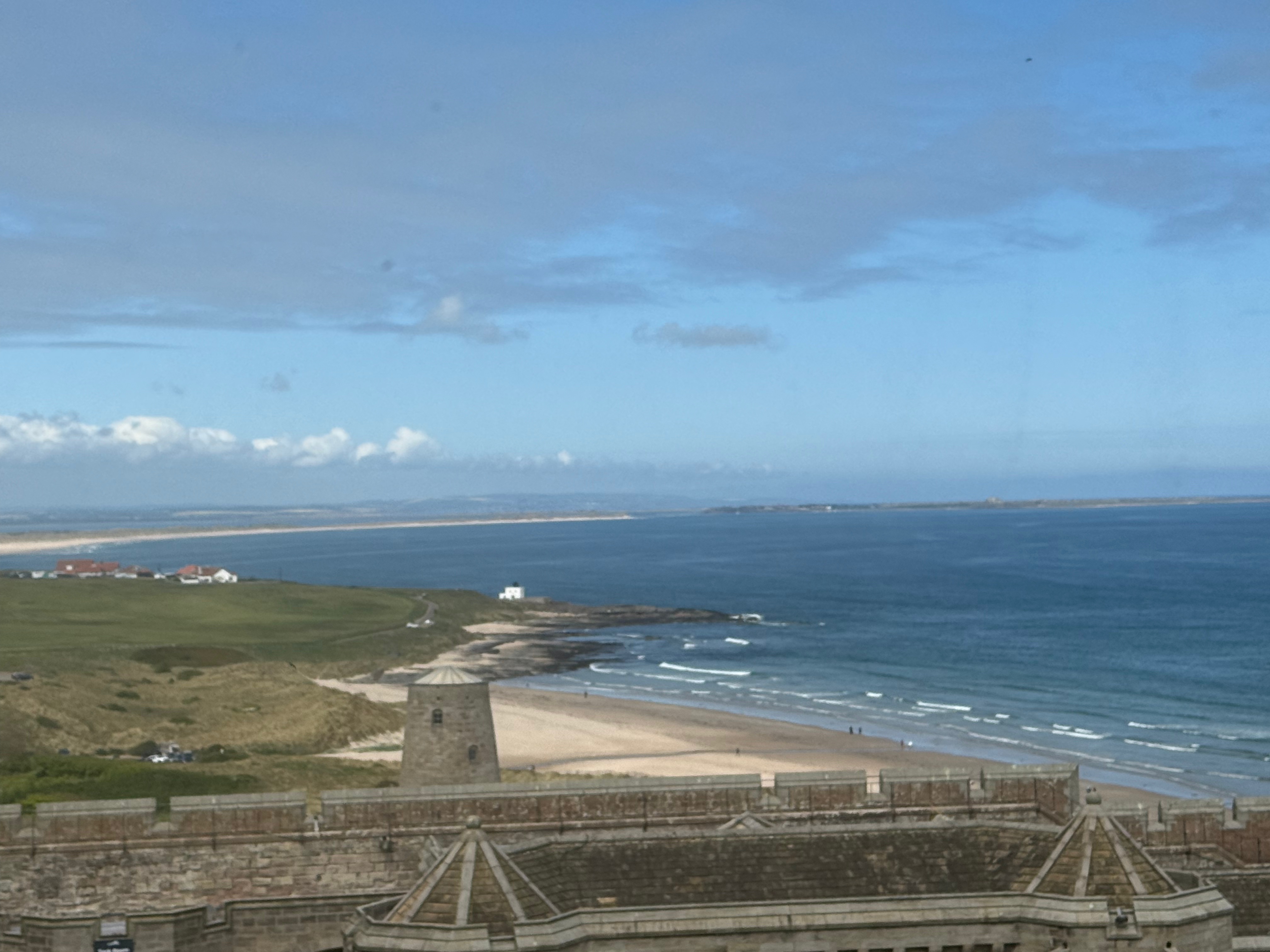
Bamburgh is a beautiful coastal town in the heart of Northumberland. It is dominated by the stunning Bamburgh Castle, high on the rocky headland and bordered on one side by the glorious Bamburgh beach which stretches for miles affording stunning coastal scenery.
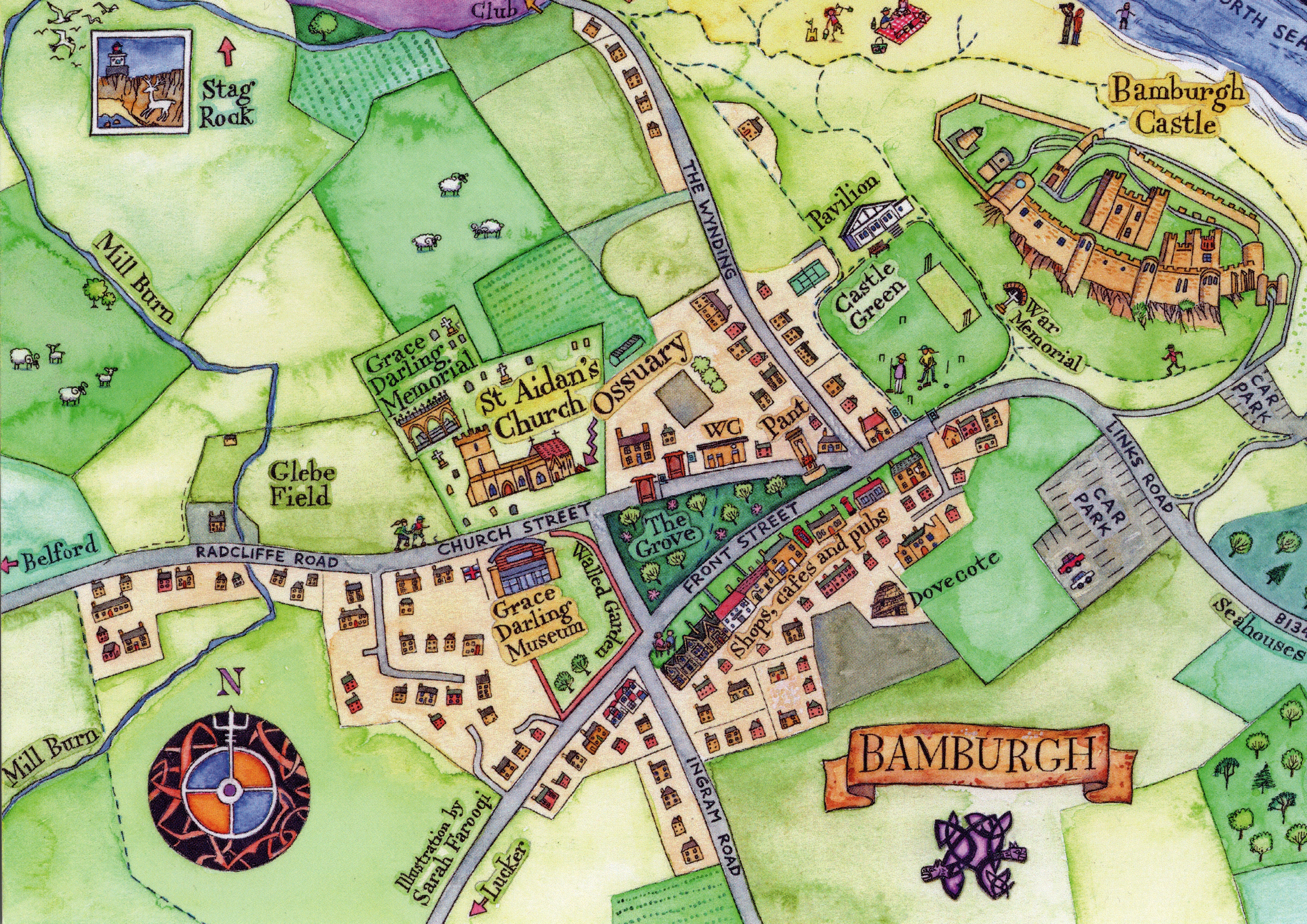
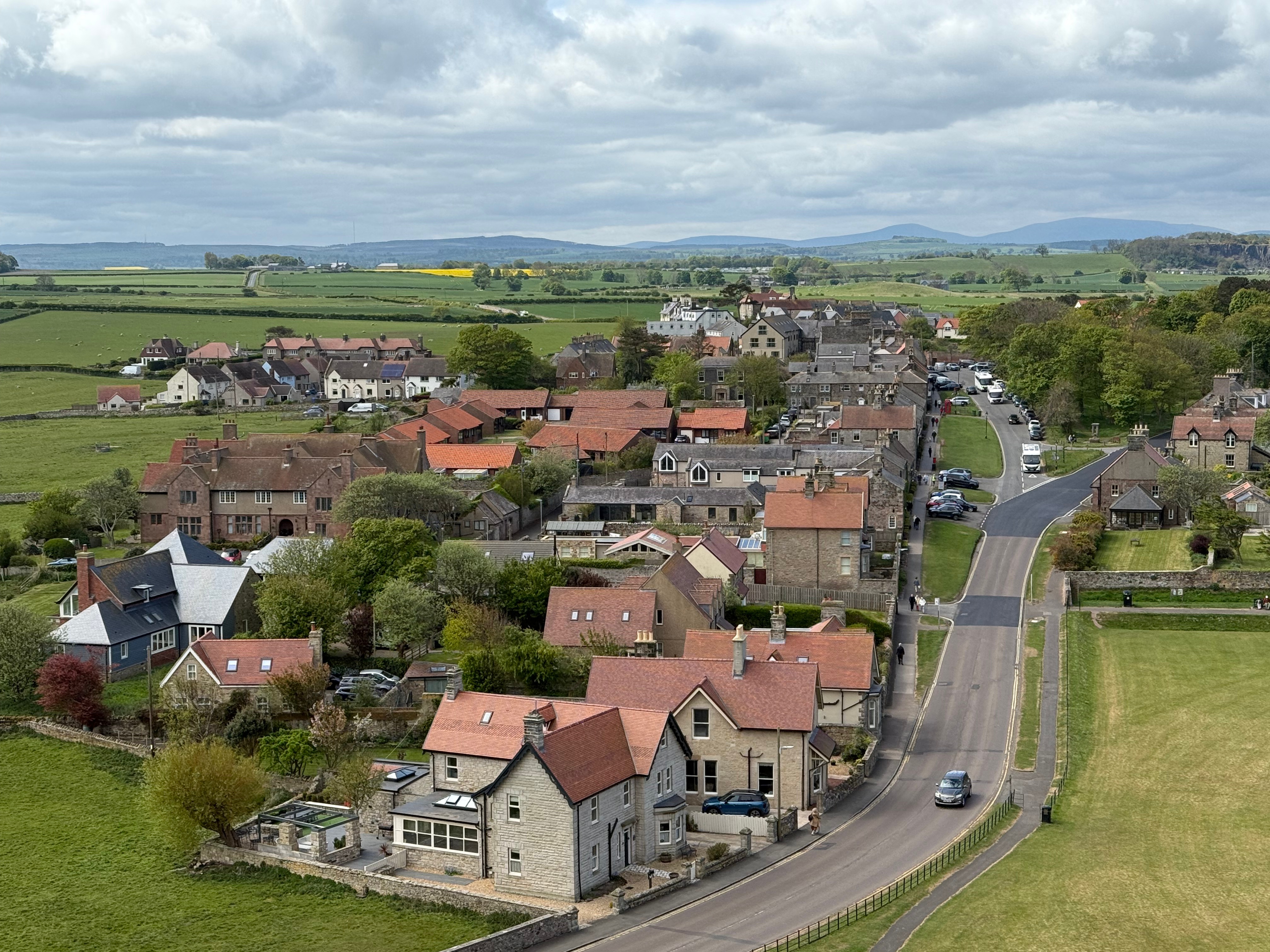
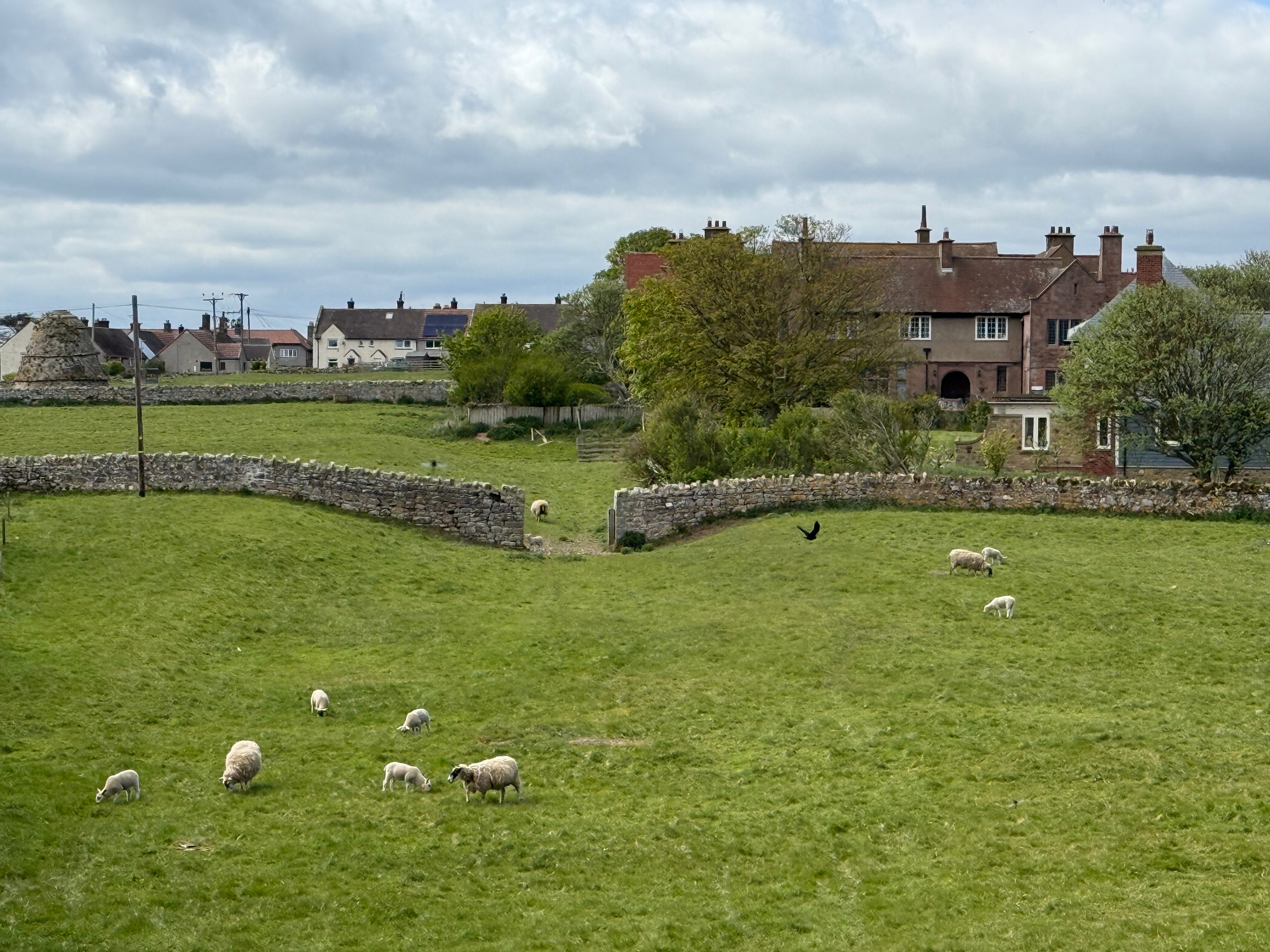
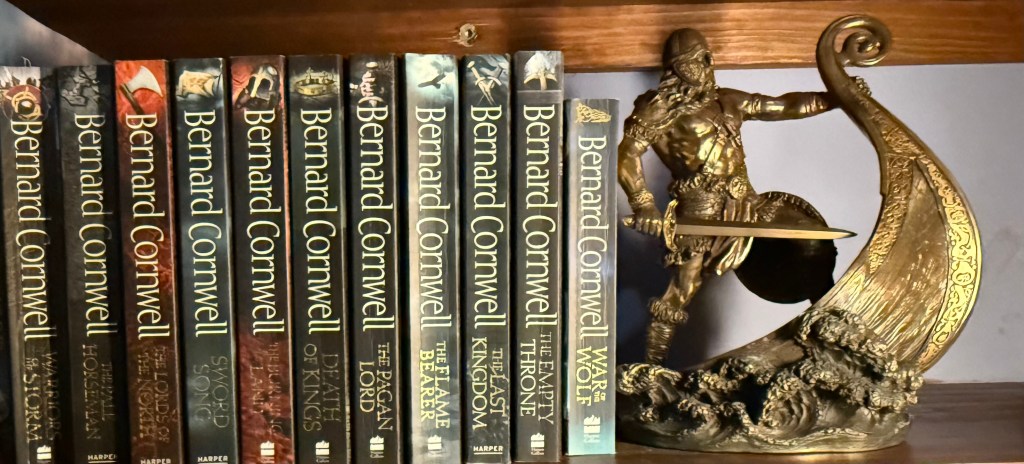
What a spectacular place this is! The town, the impressive Castle, and the amazing setting all garnished by the book series “The Last Kingdom”; the adventurous tales of Uhtred by Bernard Cornwall. Yes, this was a real highlight for me!
This afternoon’s talks gave us all some insight into the Percy family, Alnwick Castle and Warkworth Castle. Mike gave a brilliant “Introduction to Warkworth Castle – and the Rise of the Percy Family”; followed by Sarah with “The Percies: A Family on the Wrong Side of History”.
Tour notes: Warkworth Castle’s importance lies in its role as chief residence of the powerful Percy family. Its spectacular 14th-century keep is a masterpiece of medieval architecture and a symbol of the family’s wealth and status. A visit gives you the opportunity to investigate the life of a noble family in medieval and Tudor times and explore one of the biggest and most impressive fortresses in north-east England. The keep is one of the finest in the country, with an advanced design that would have provided impressive accommodation as well as a status symbol worthy of such a powerful family. The Percies’ power struggles brought them into frequent conflict with the monarchy, with the castle returned to royal control on several occasions, but with their influence so great, a Percy was normally soon reinstated. When Henry Percy, 6th Earl of Northumberland, died childless in 1537, he left the castle to Henry VIII. Subsequent attempts to reinstate a Percy brought misfortune as the Catholic Percies came into conflict with the Protestant Queen Elizabeth I. A failed uprising of the Northern Earls against the Queen led to the execution of the 7th Earl in 1572, and to the pillaging of the castle by the Queen’s servants. The castle was subsequently allowed to fall into decay.
Over a few centuries the Percy family is full of men called Henry, Harry, Ralph, Rafe, Thomas and Algernon which can cause some confusion. The Percy family managed Alnwick and Warkworth castles by strategically acquiring and maintaining land holdings, particularly during the late Middle Ages and early Renaissance. Alnwick Castle was the family’s chief holding and source of prestige, while Warkworth Castle was their preferred residence. The Percies also used these castles for their own purposes, such as fortifying their position in the north of England and participating in courtly life, and even for military purposes.
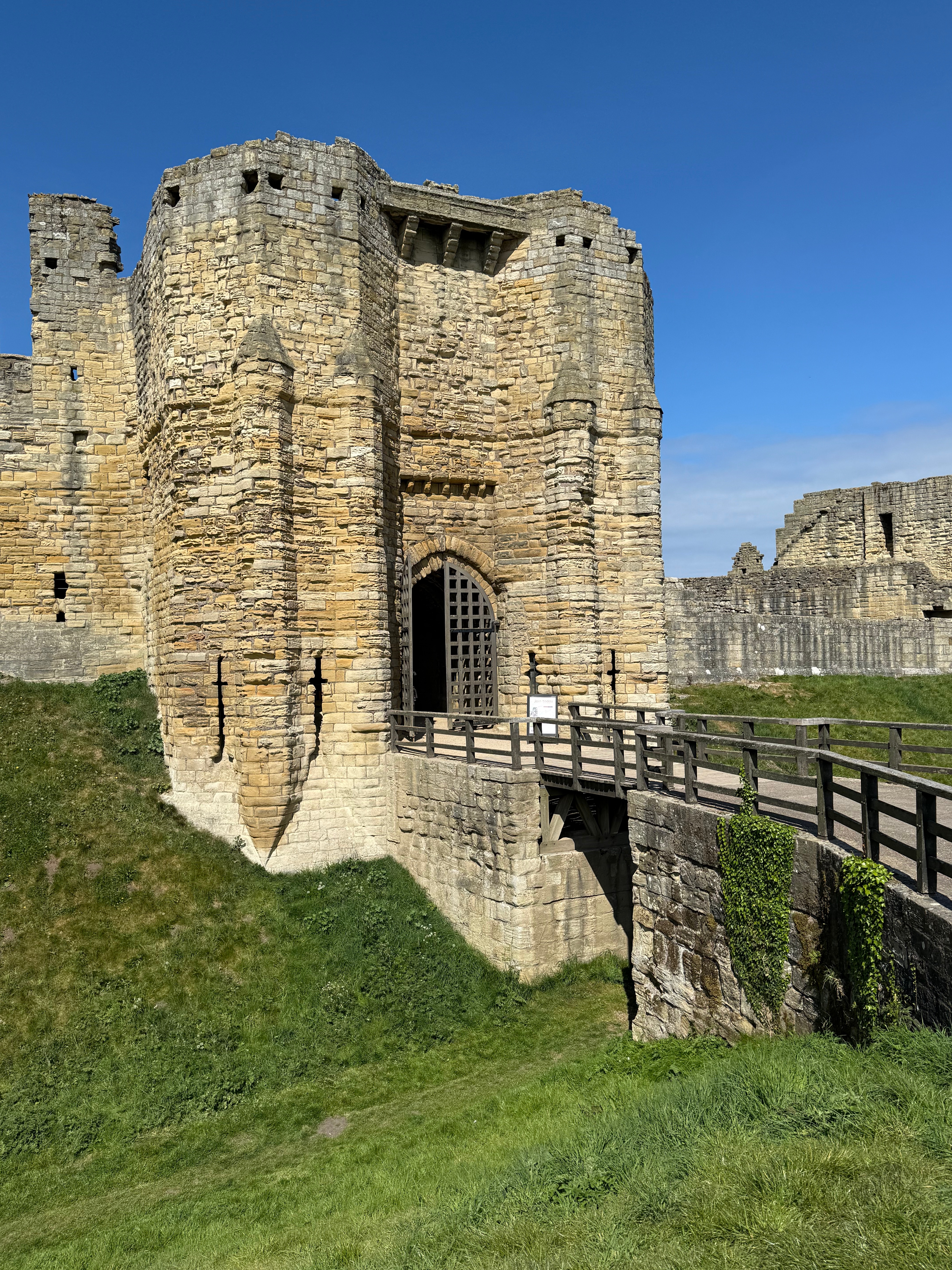
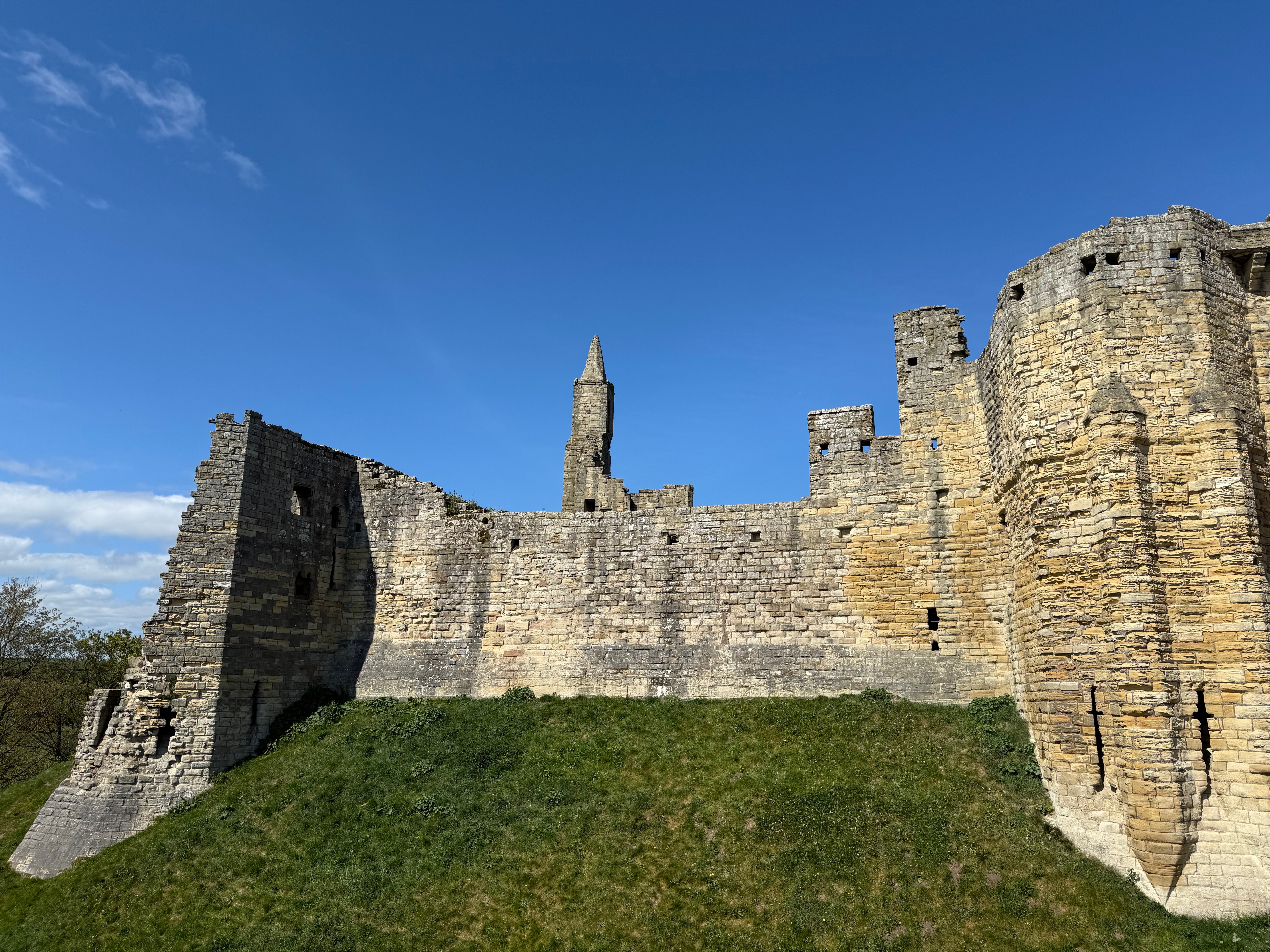
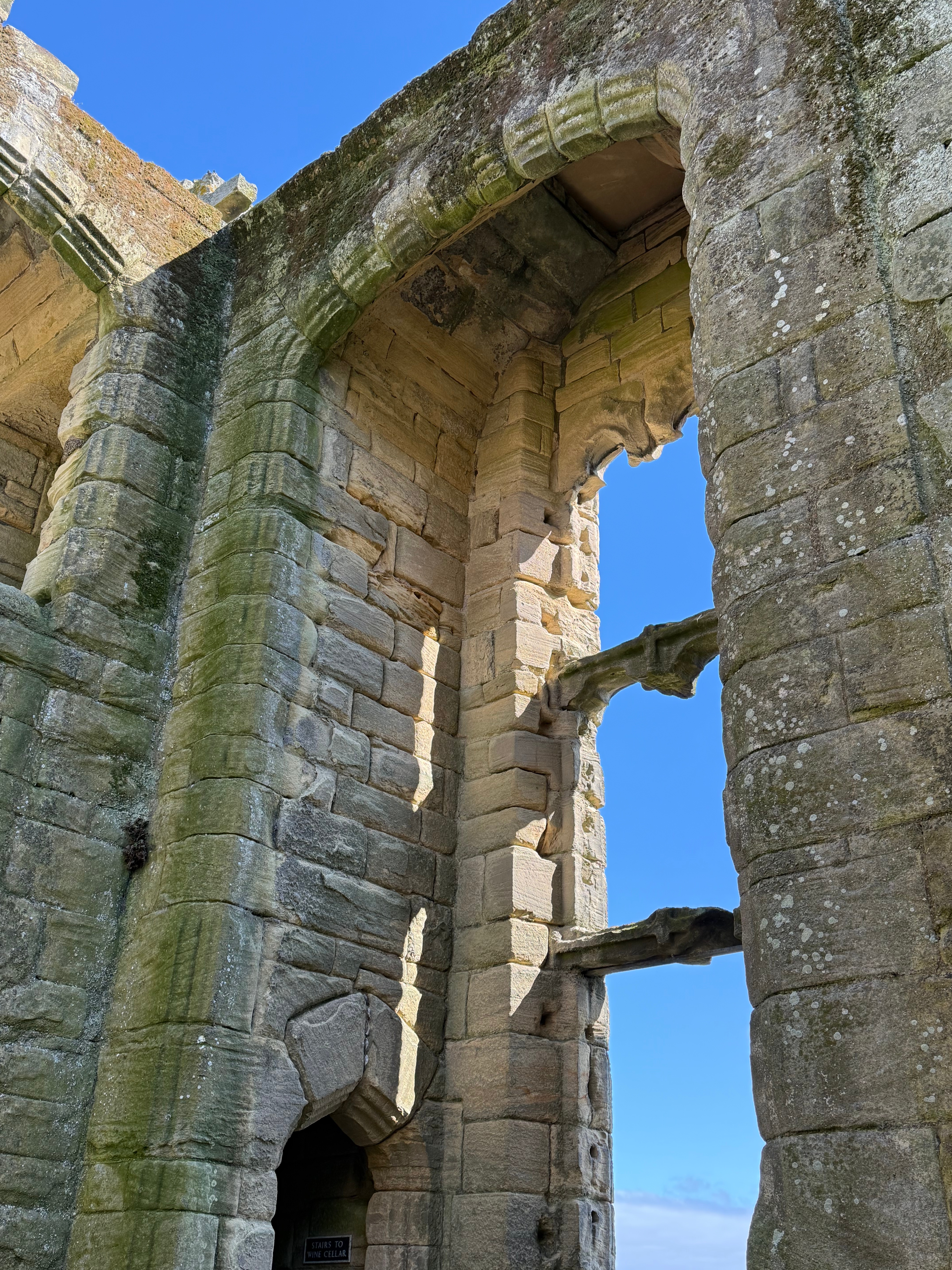
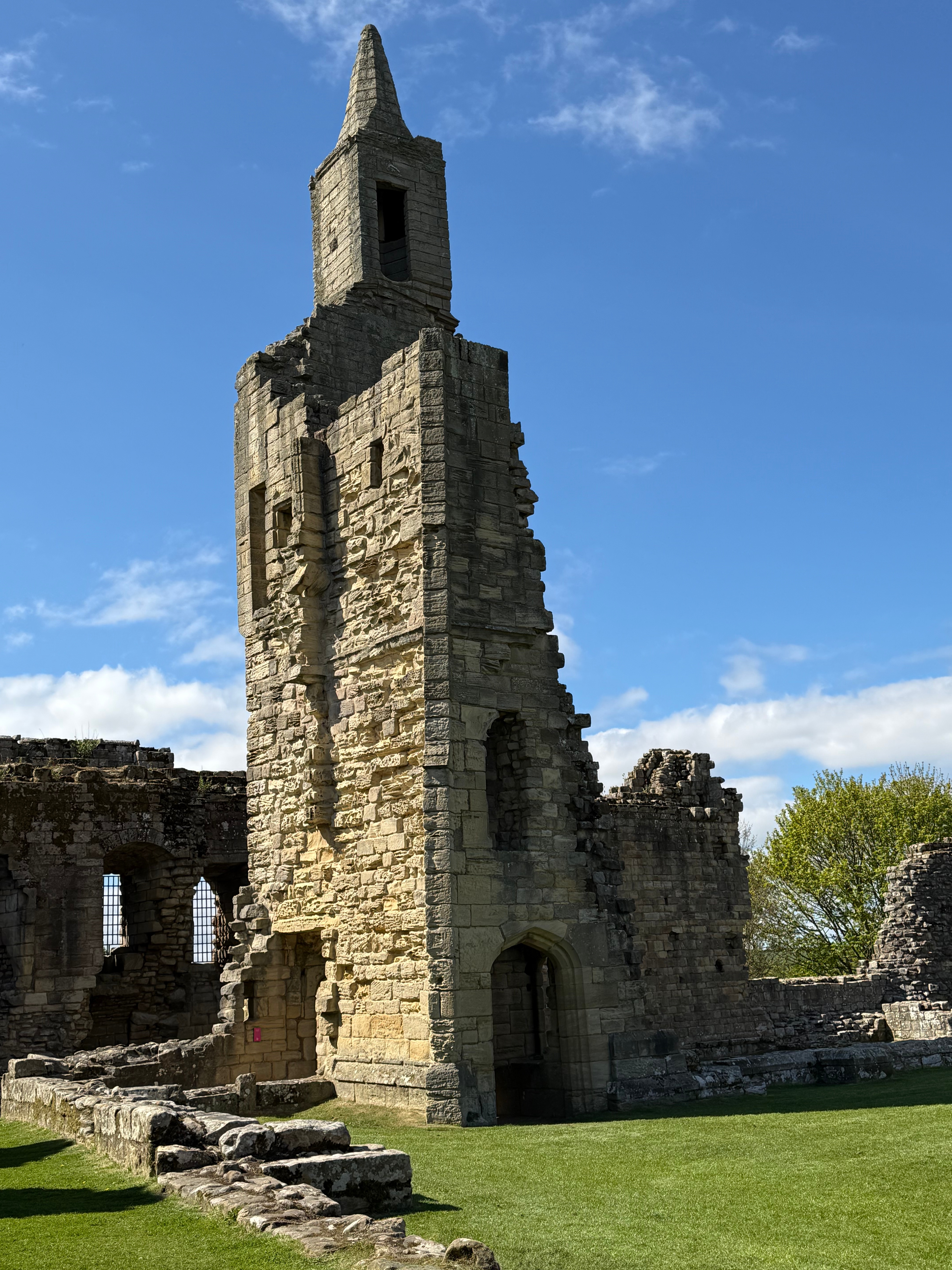
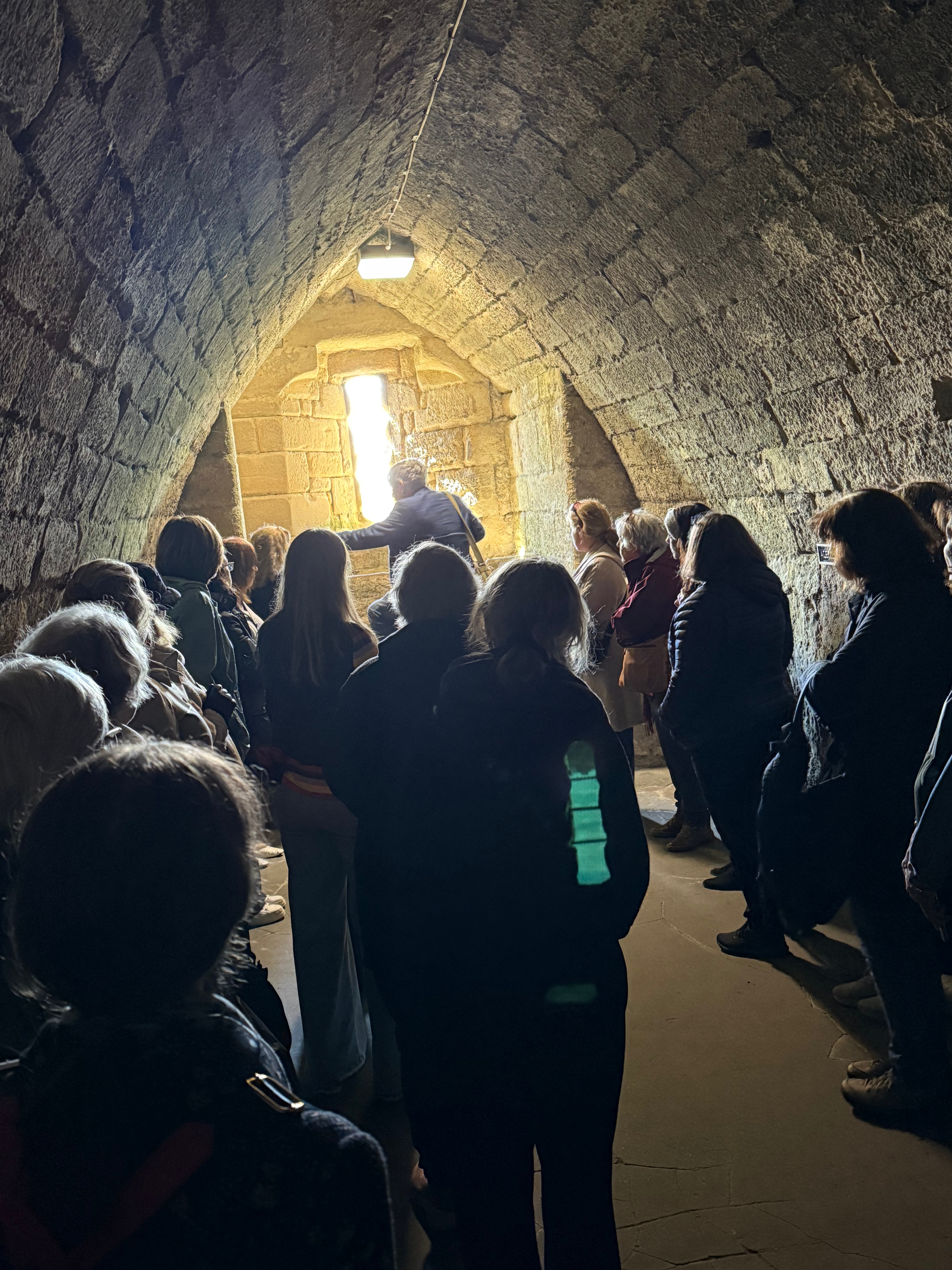
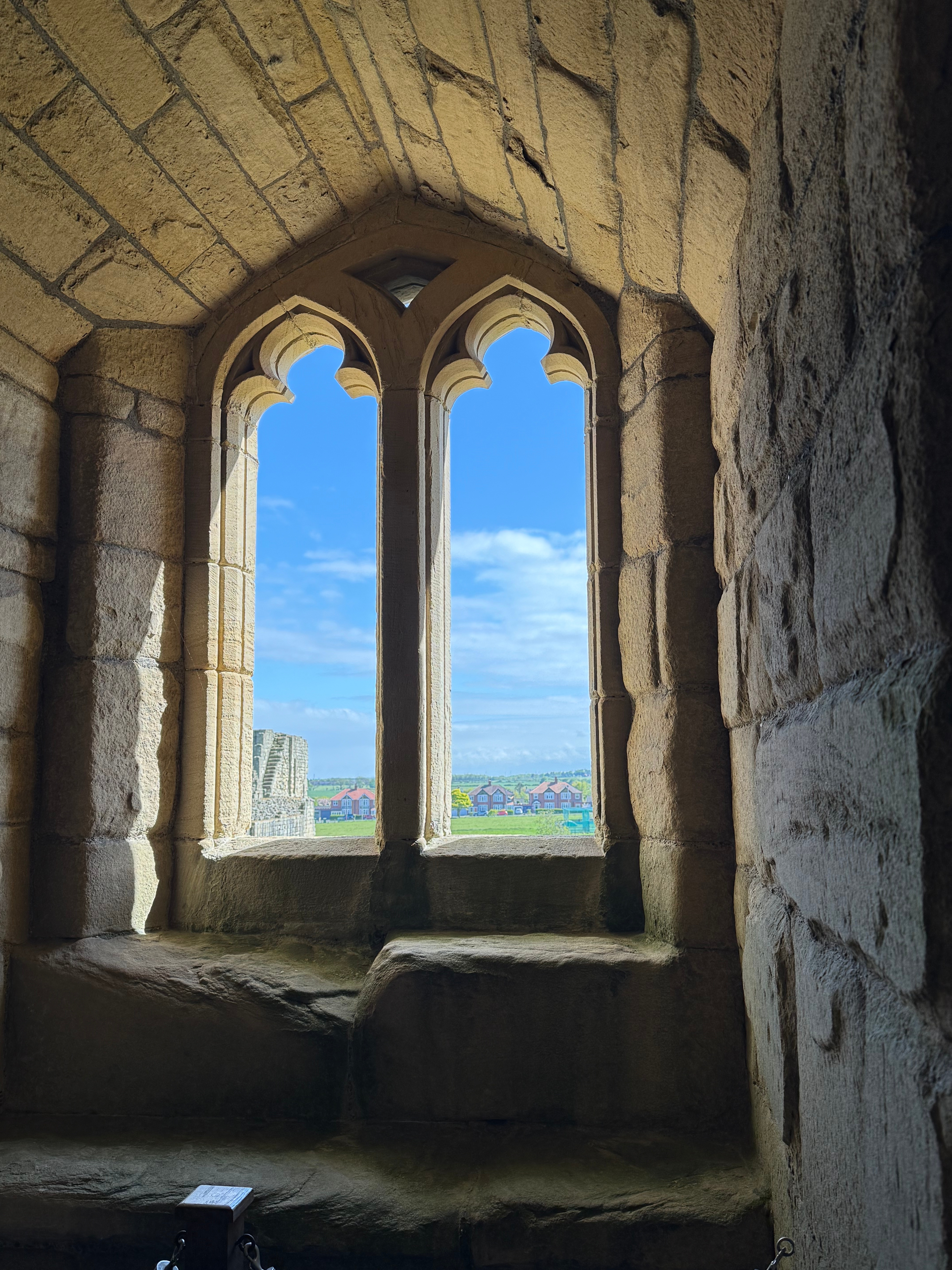
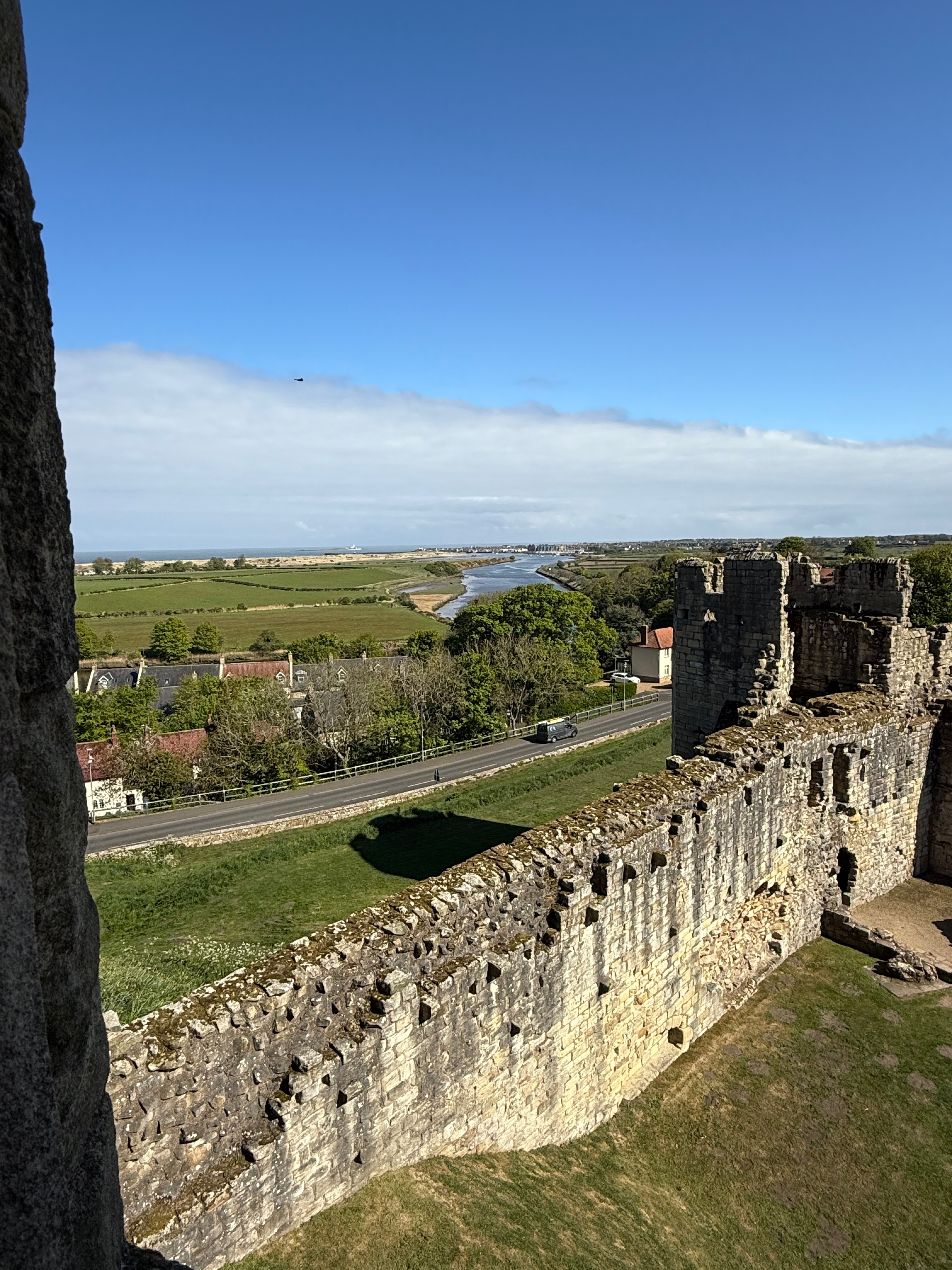
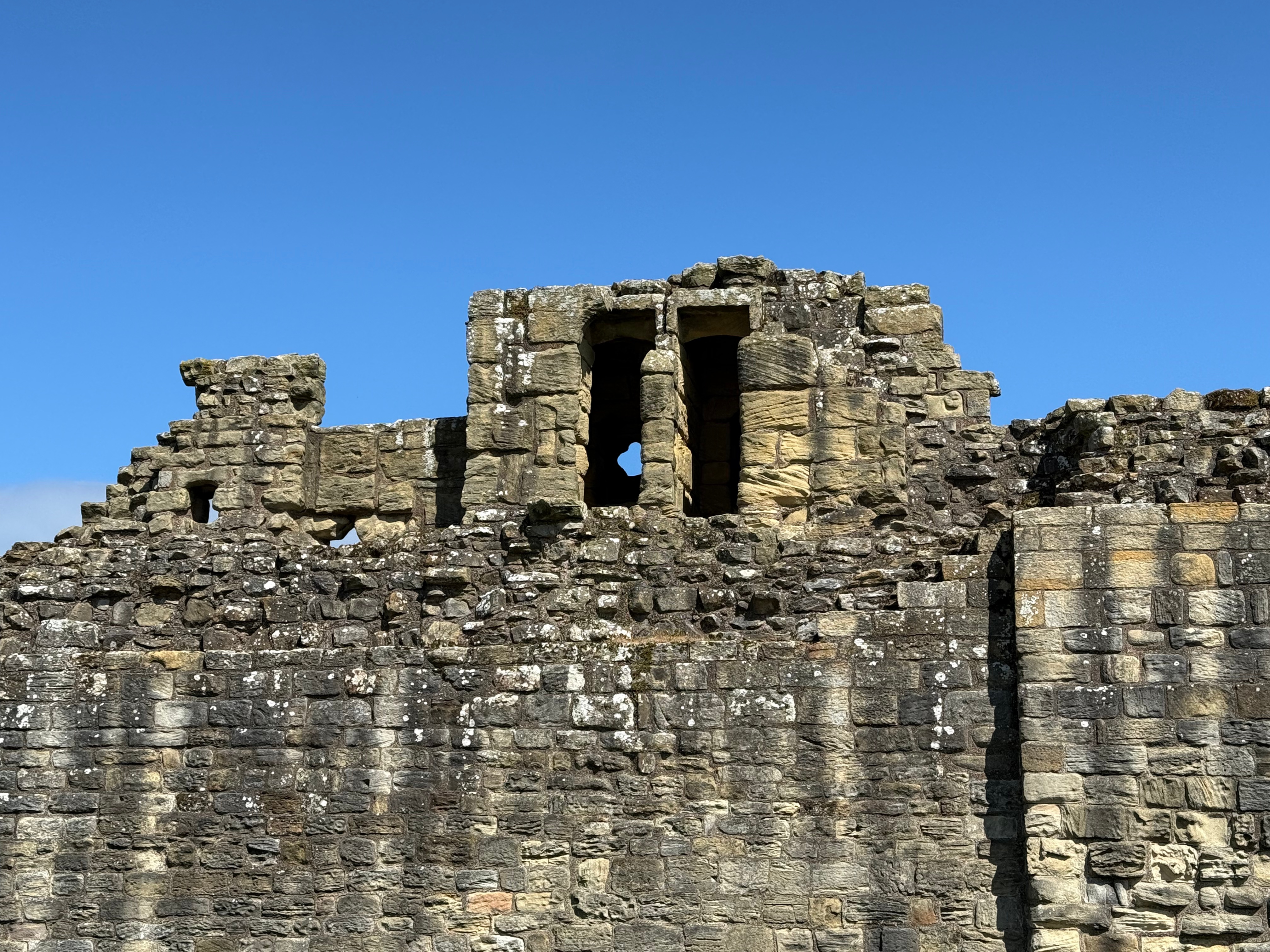
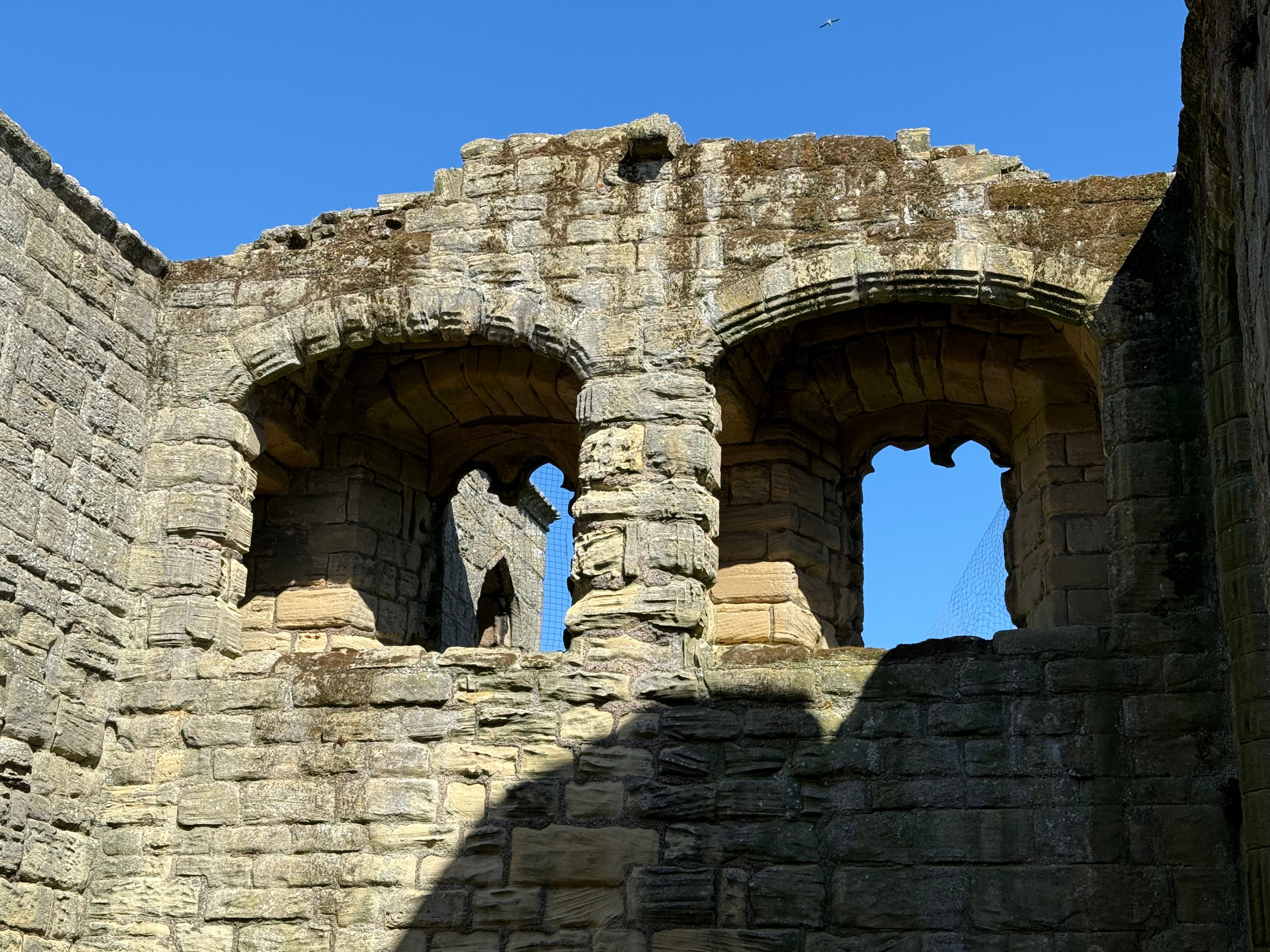
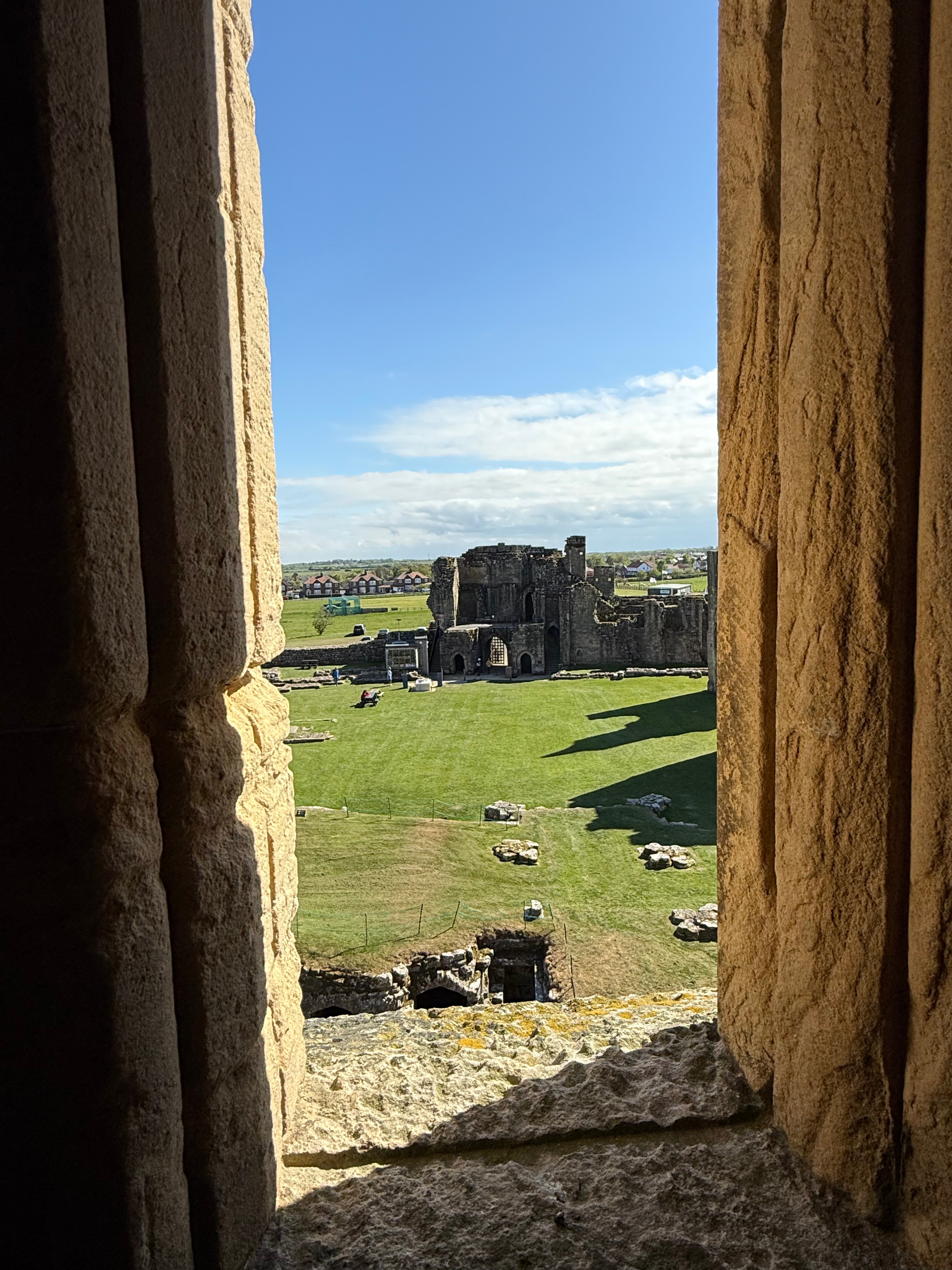
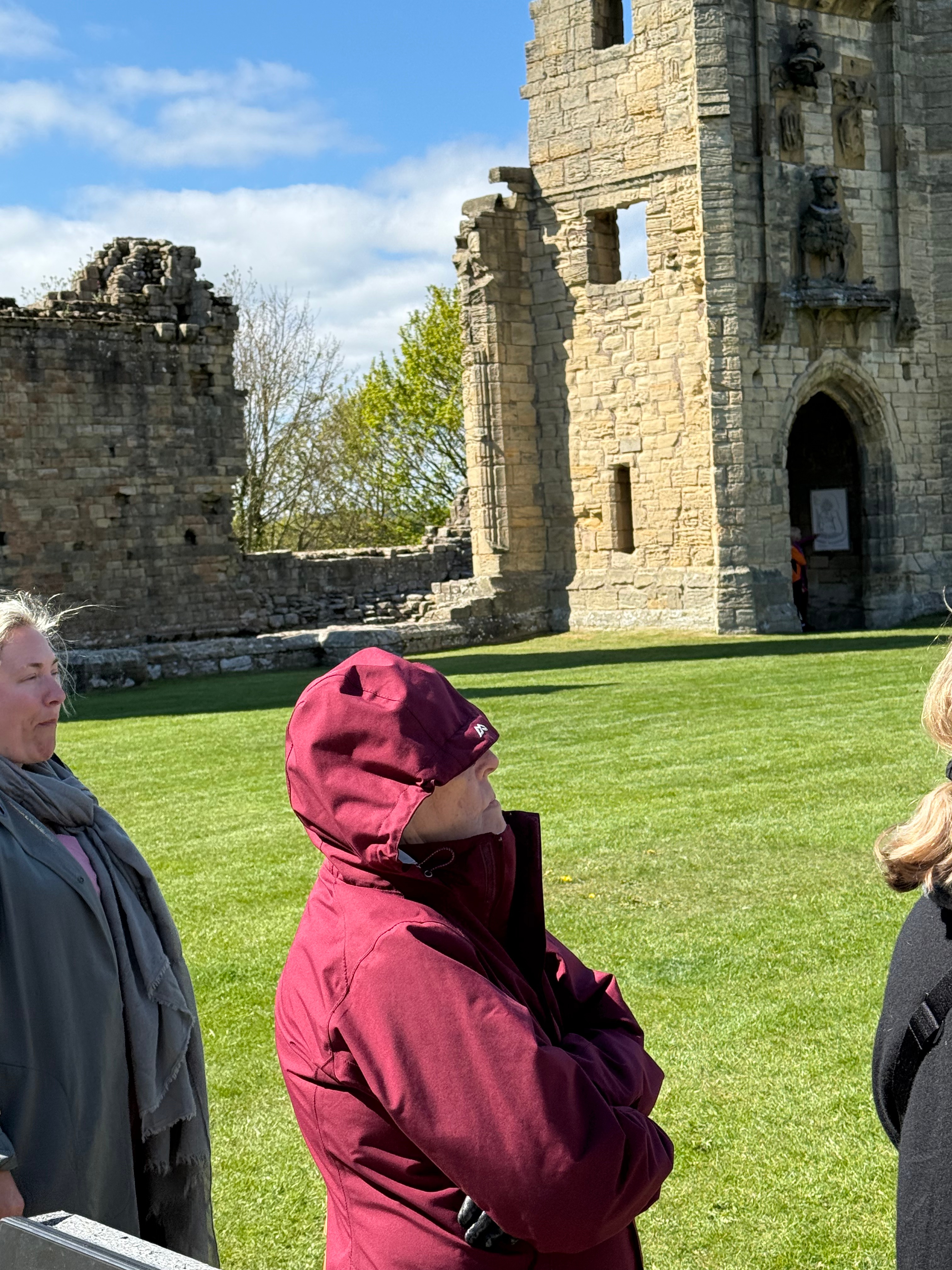
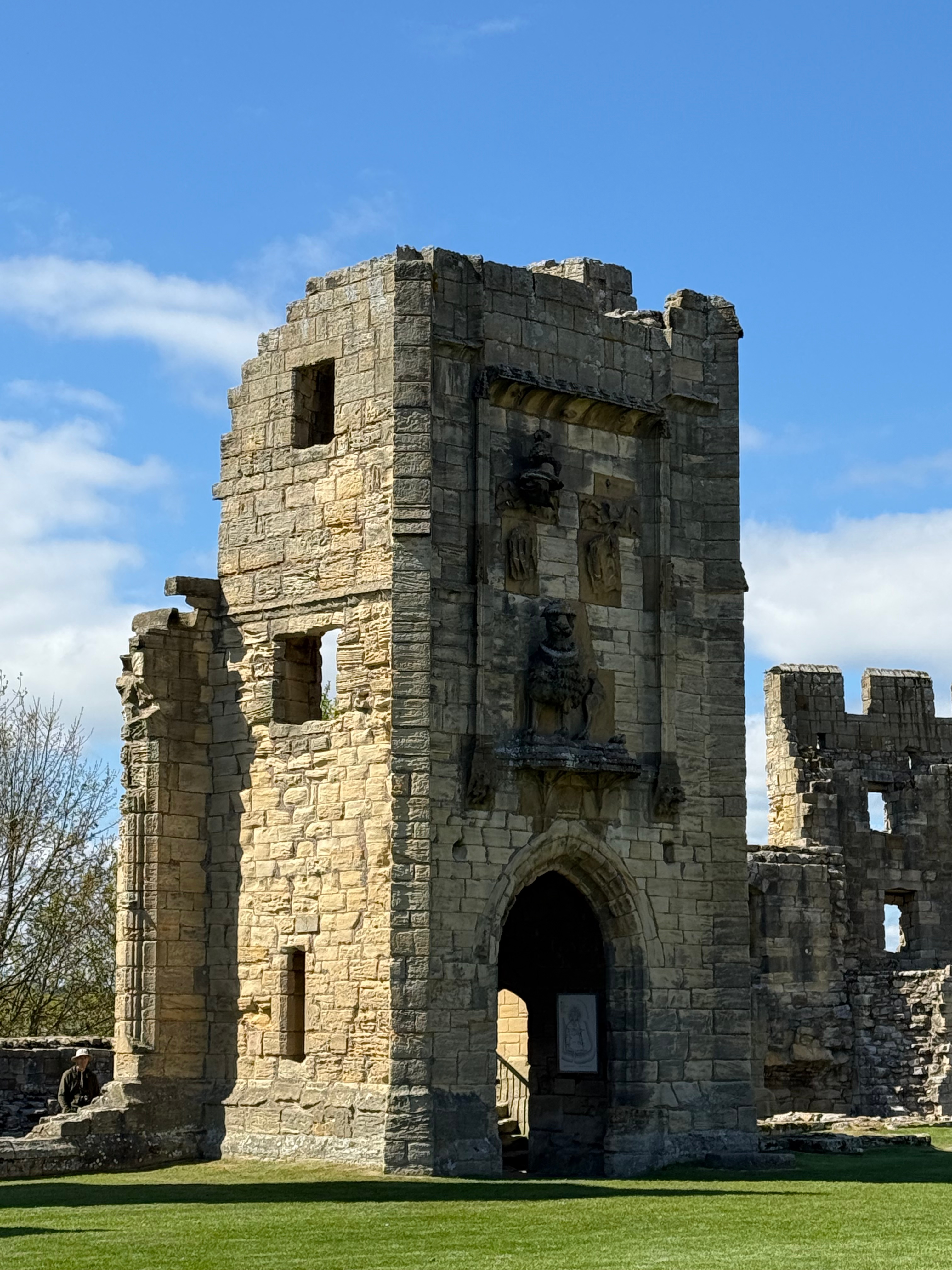
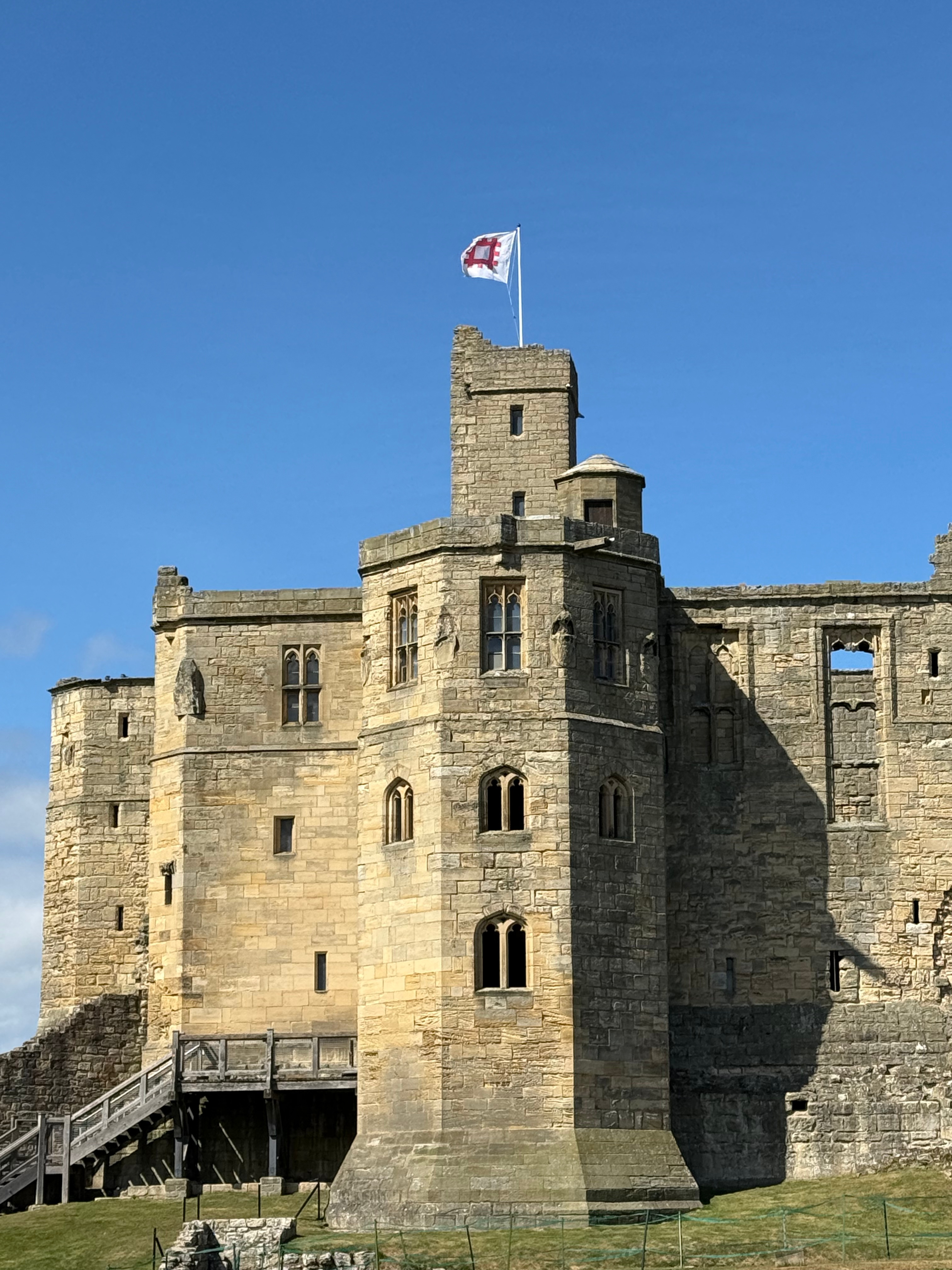
This is a more detailed look:
The Percies acquired Alnwick Castle in 1309, and Warkworth Castle was granted to Henry Percy, 2nd Lord Percy, by Edward III in 1332. Both castles were strategically located, with Alnwick boasting large estates and Warkworth serving as a favoured residence. While Alnwick was the chief holding, Warkworth was the Percies’ preferred residence, especially for the 1st Earl of Northumberland, Henry Percy, and his family. The castles also played a role in the Percies’ military endeavours, as they were a powerful family in the border area with Scotland. The Percies’ involvement in courtly life, including court conspiracies and rebellions, also influenced their use of the castles. Over time, the Percies’ influence declined, and Alnwick Castle became the primary residence and focus of the family’s attention. Warkworth Castle is now a designated scheduled monument and is managed by English Heritage.
We left Warkworth Castle late afternoon, everyone eager to get back to Matfen Hall to freshen up and dress up for the Last Dinner. On the drive back we heard from Nicola on two topics: “Henry Percy and Anne Boleyn” and “The Wizard Earl of Northumberland”.
A short bus ride to Langley Castle was perfect for Alison’s talk – “Langley Castle”.
Tour notes: Langley Castle Hotel is a 14th-century fortified castle nestling in the Northumbrian valley of the South Tyne and is known for its romantic atmosphere and exceptional dining. Built in 1350, during the reign of Edward III, the castle has retained its architectural integrity and is one of the few medieval fortified castle hotels in England. Set in its own ten-acre woodland estate, the castle’s seven-foot-thick walls provide a peaceful and tranquil refuge in which to escape from today’s hustle and bustle to a bygone age.
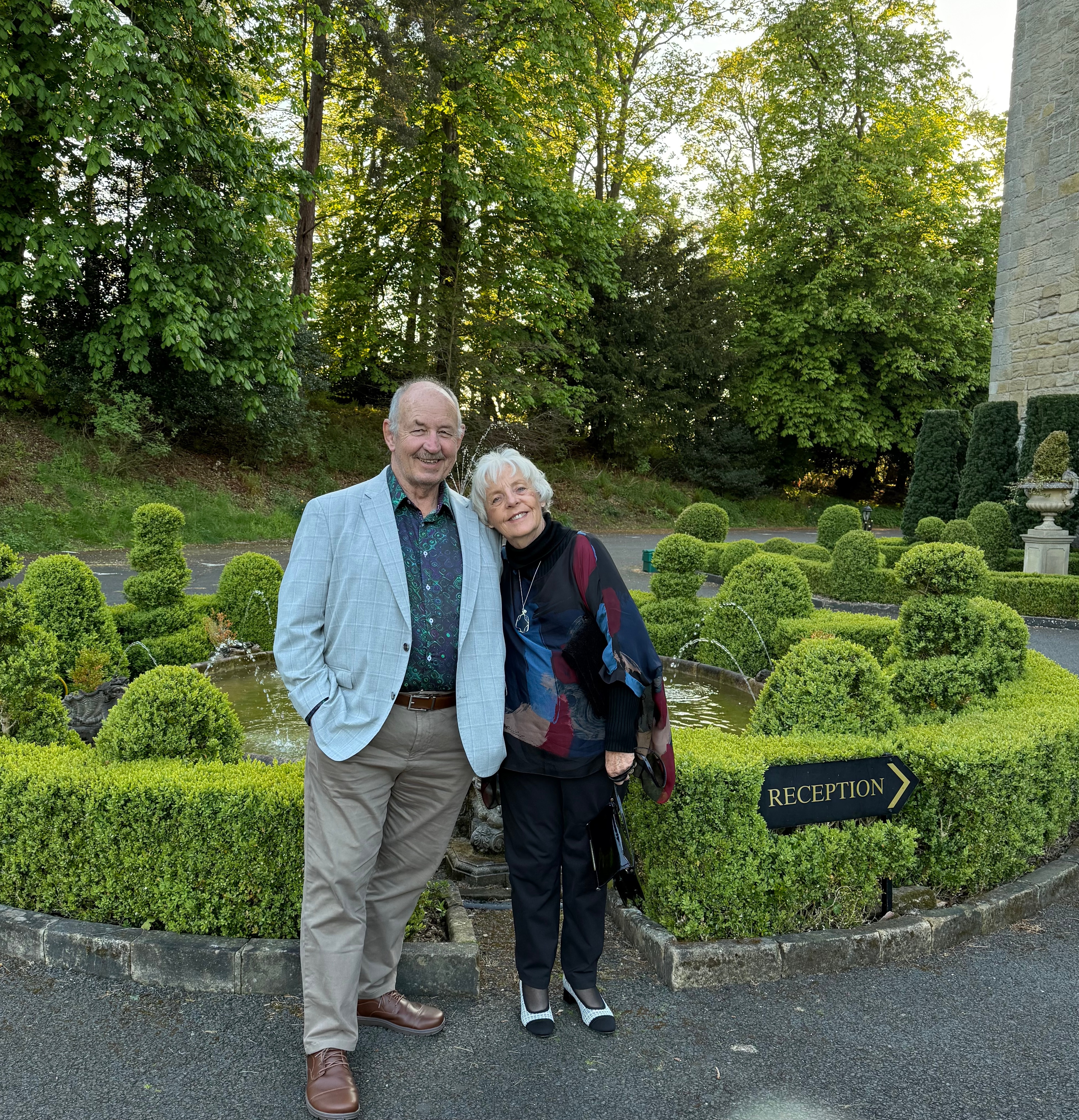
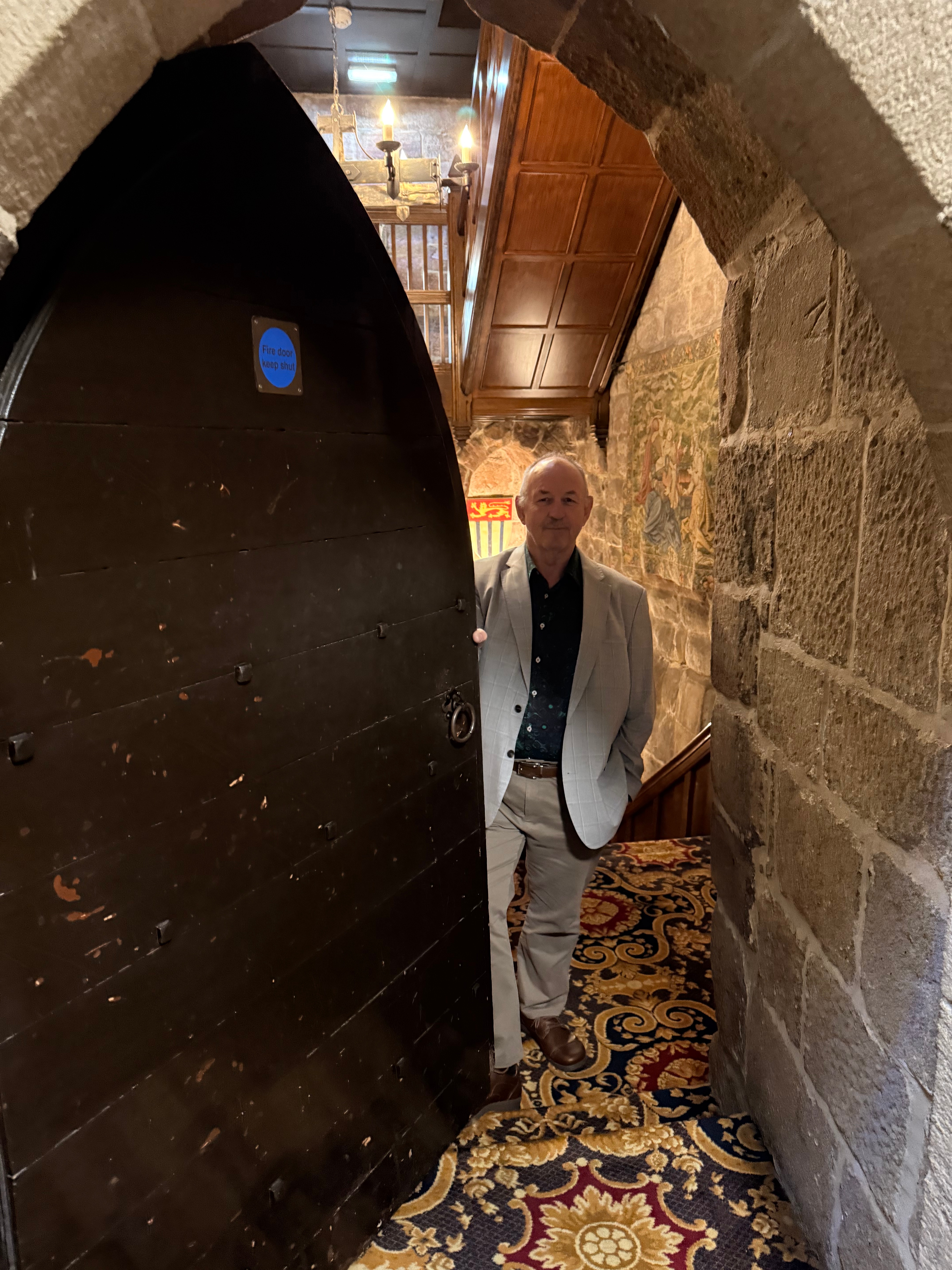
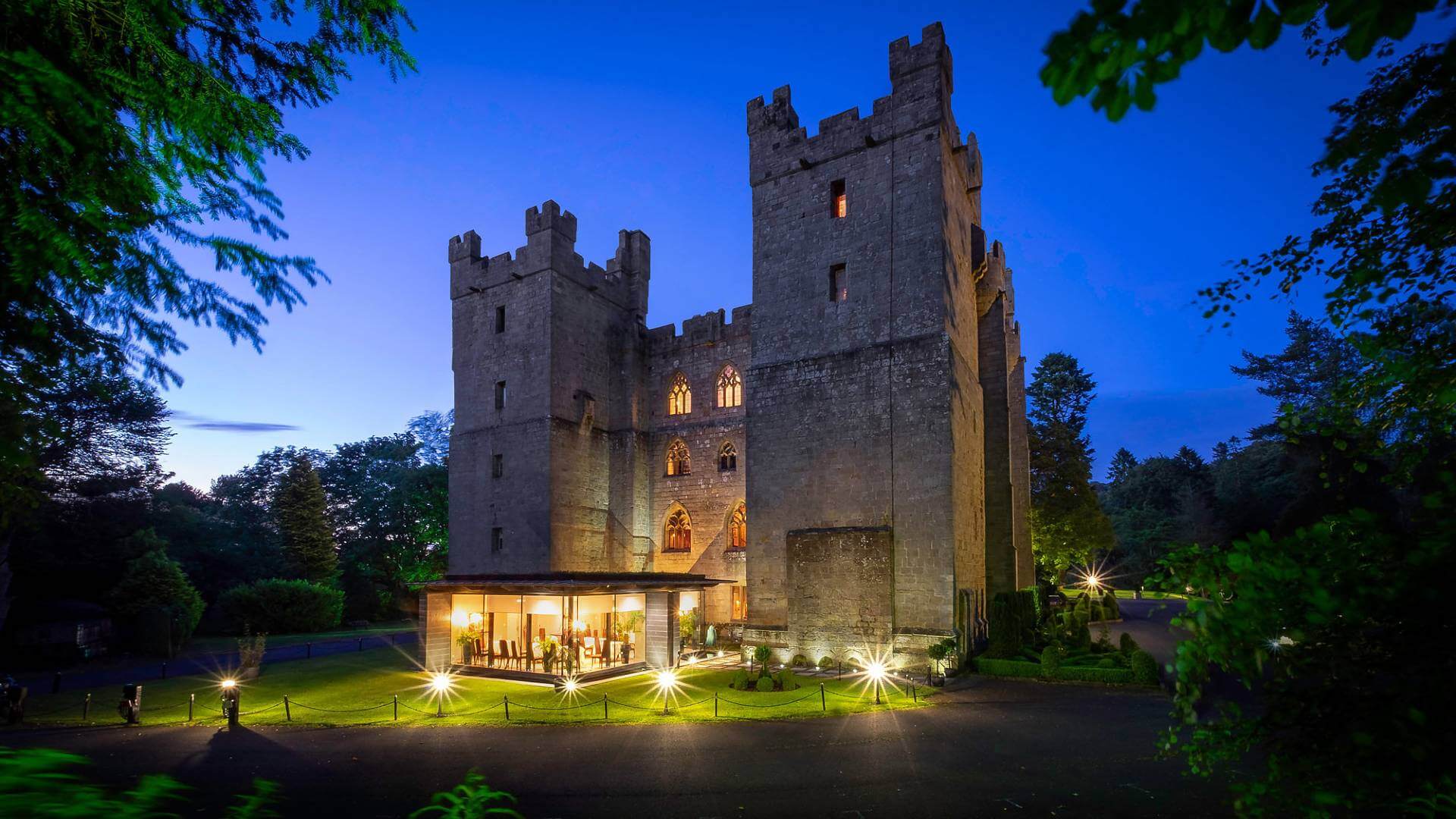
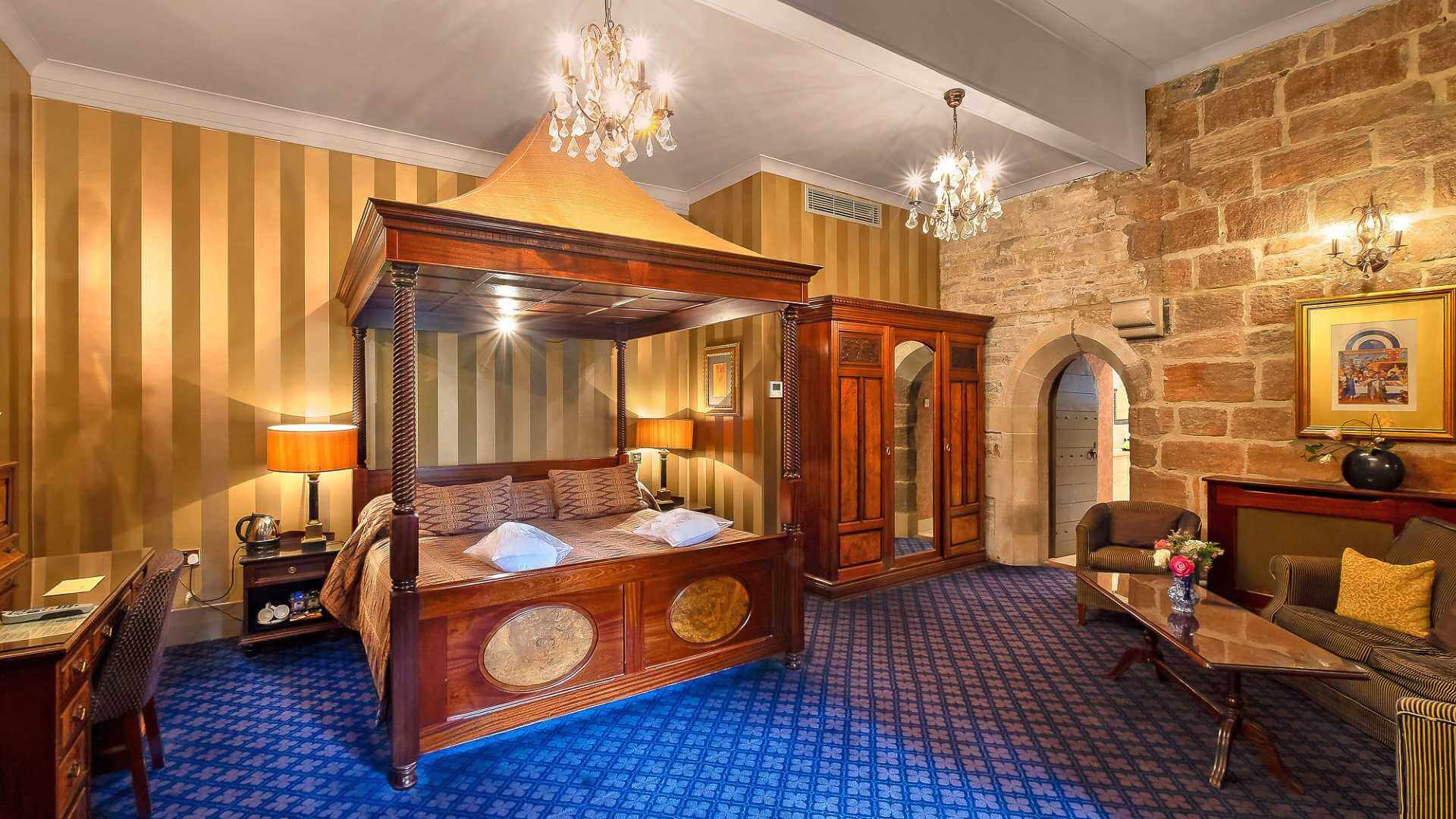
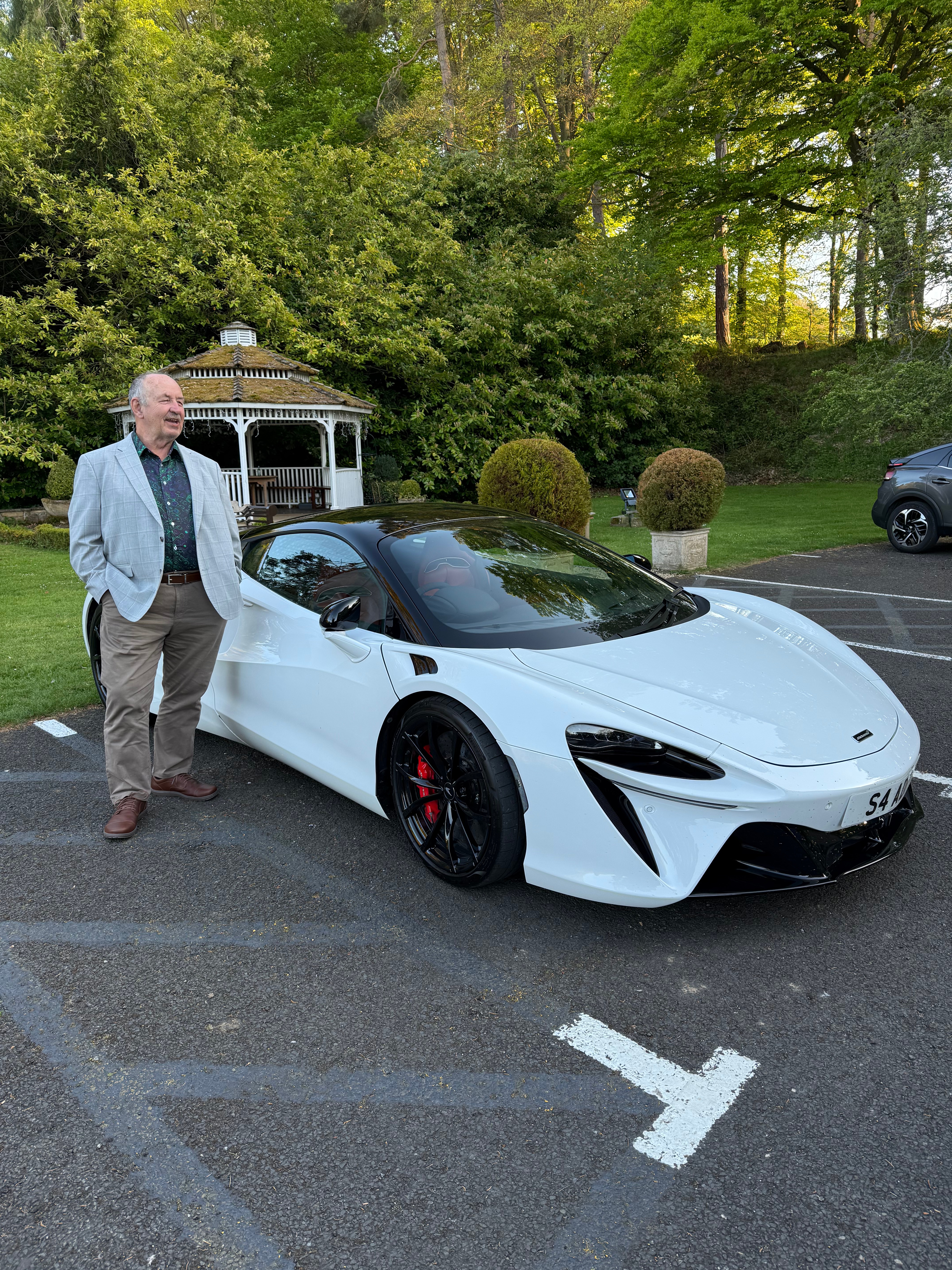
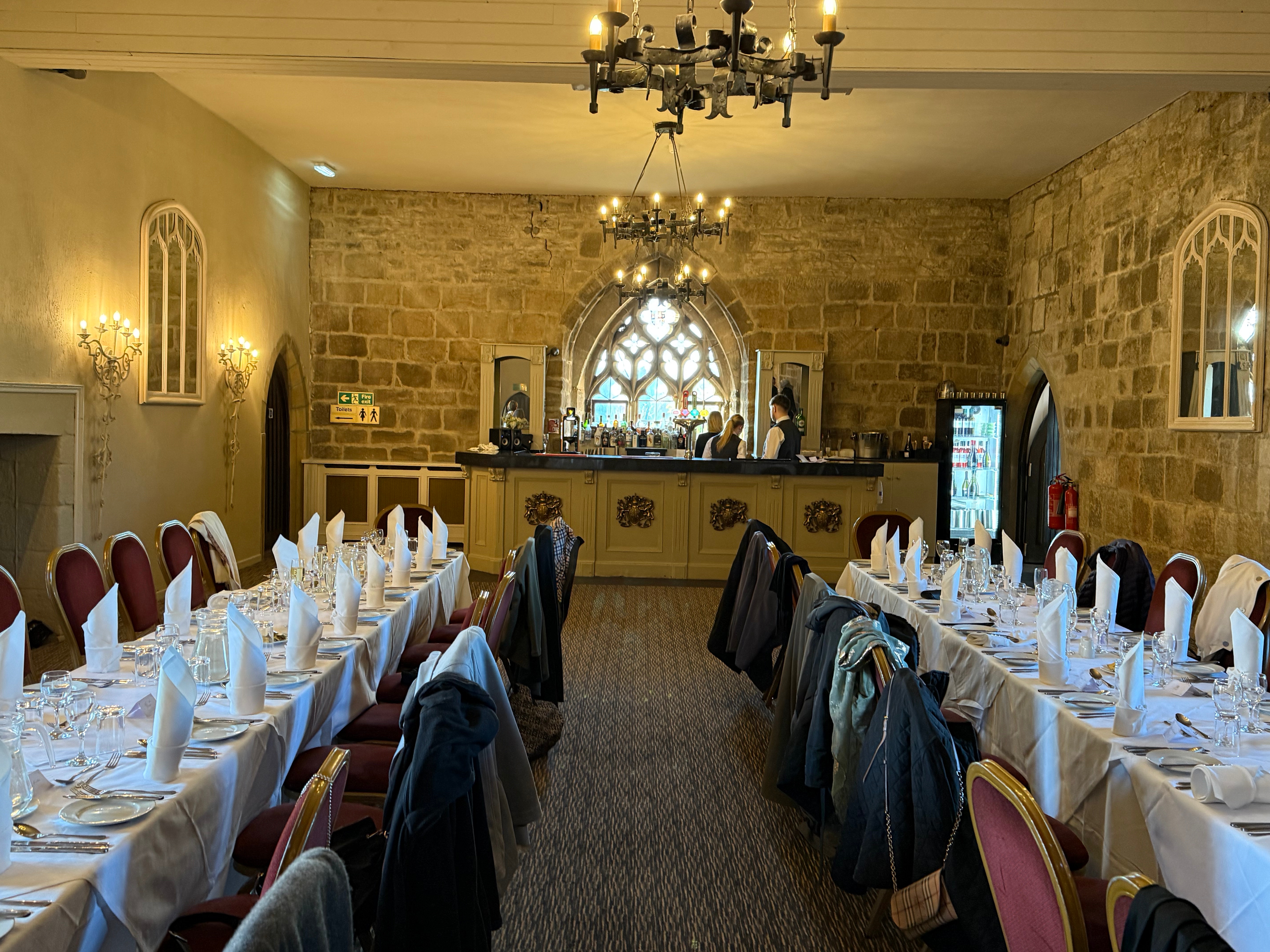
Wow! Great place: unique and exquisitely renovated medieval archways, raised window seats, dramatic staircases (there is no lift!) and real battlements. This castle was bought in 1986 by Dr Stuart Madnick, a professor at the Massachusetts Institute of Technology, who converted it into a hotel. In 2022 he bought a seal that belonged to the first Baron of Langley, Adam de Tindal.
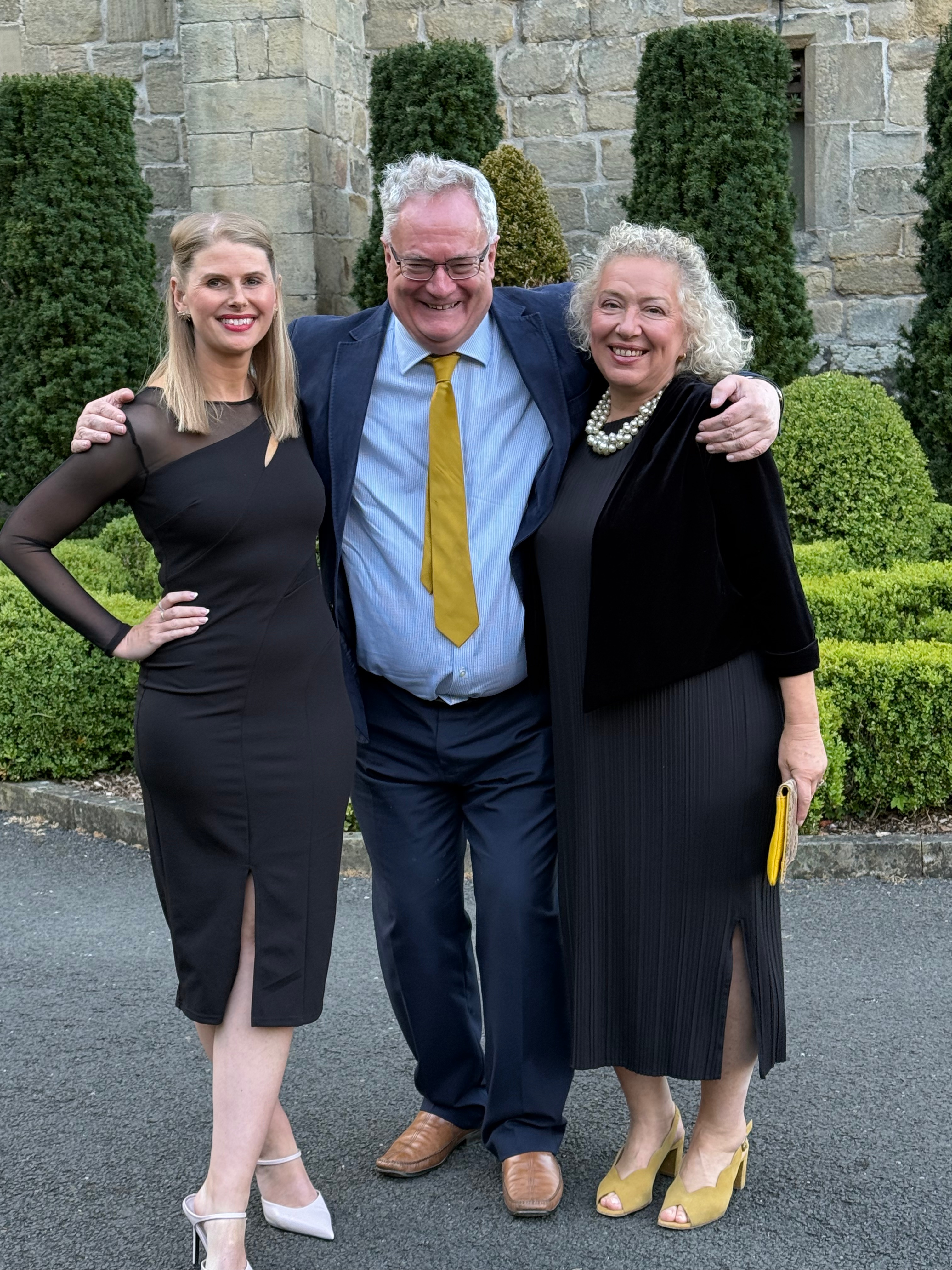
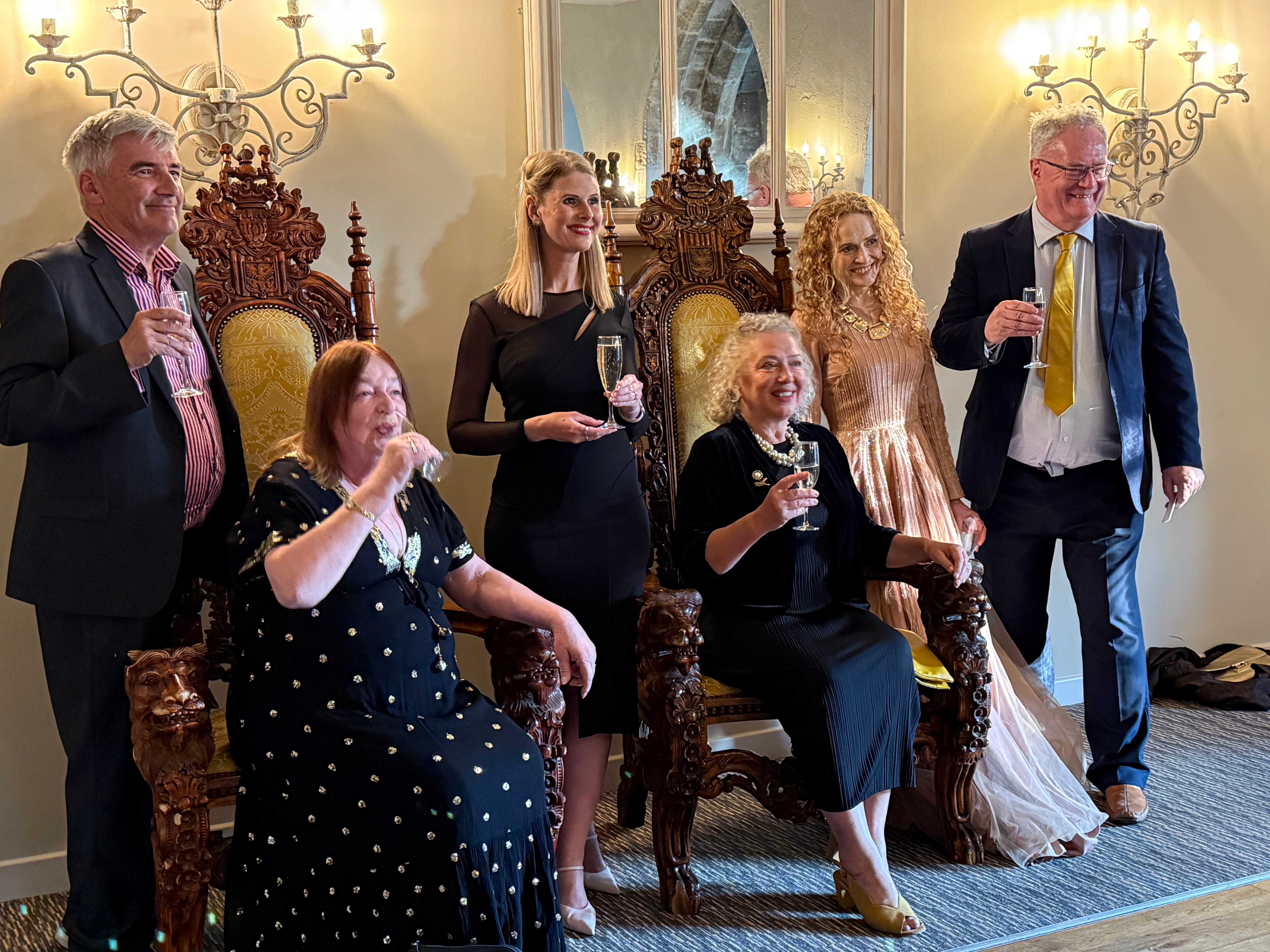
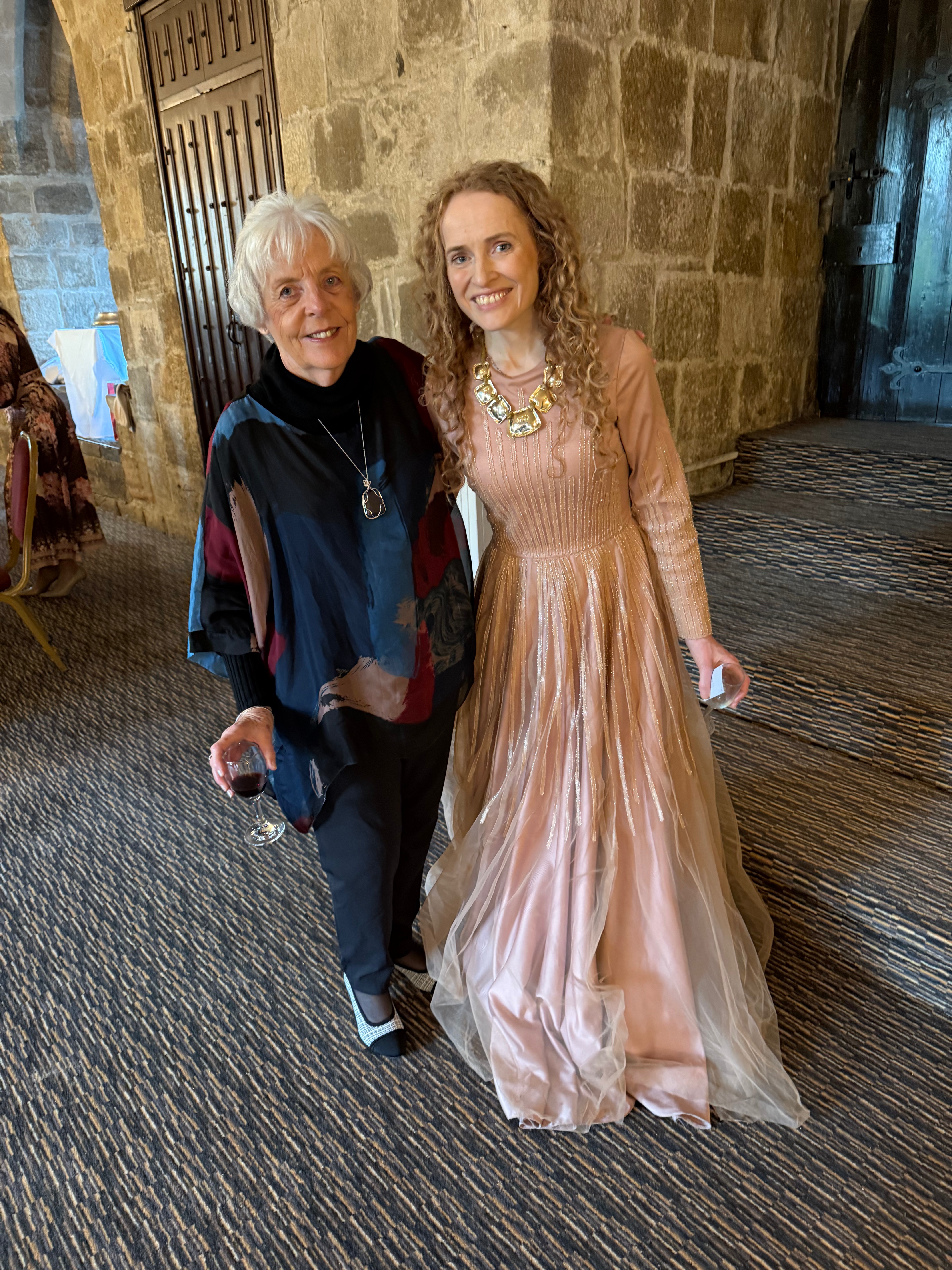
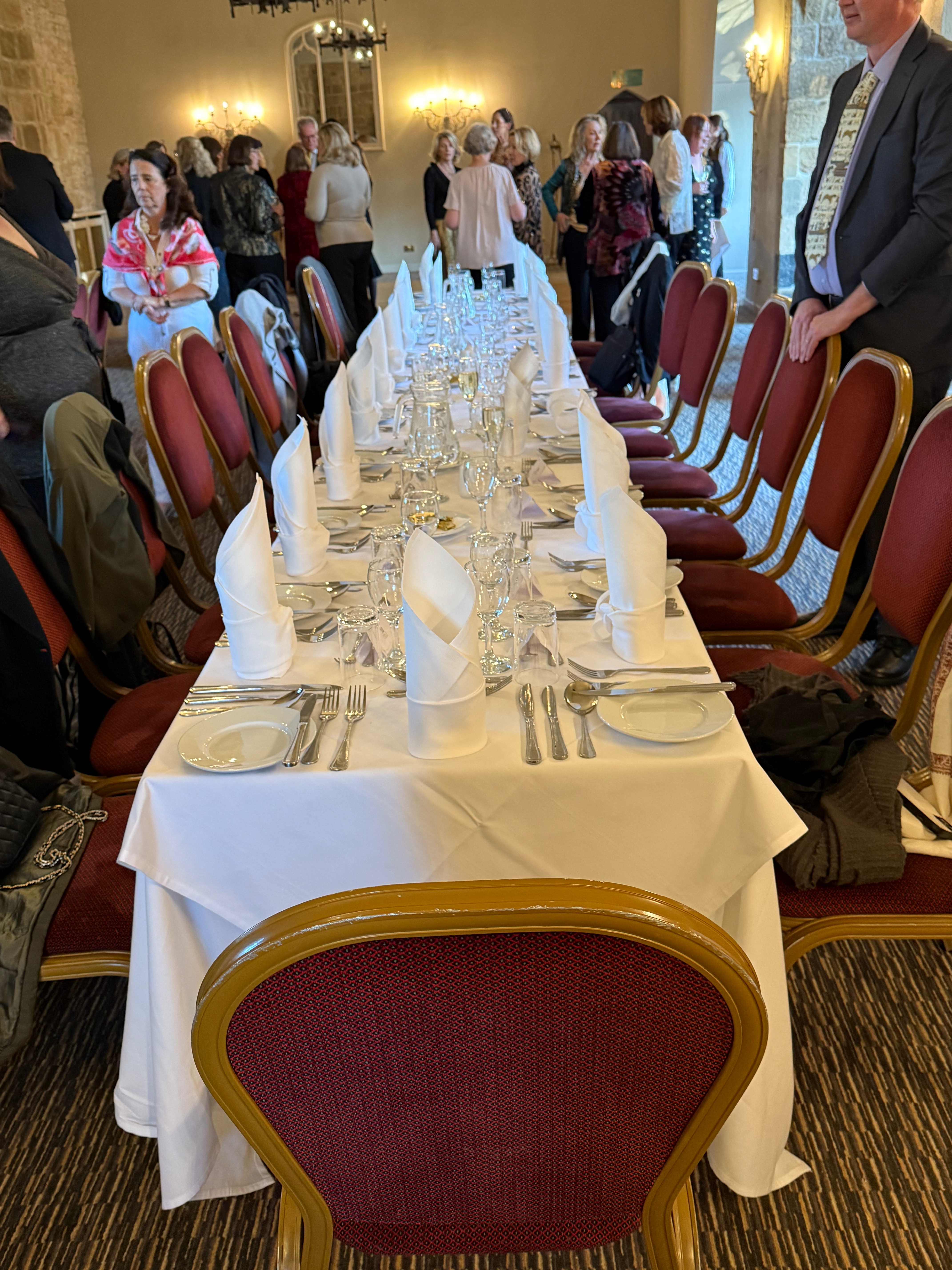
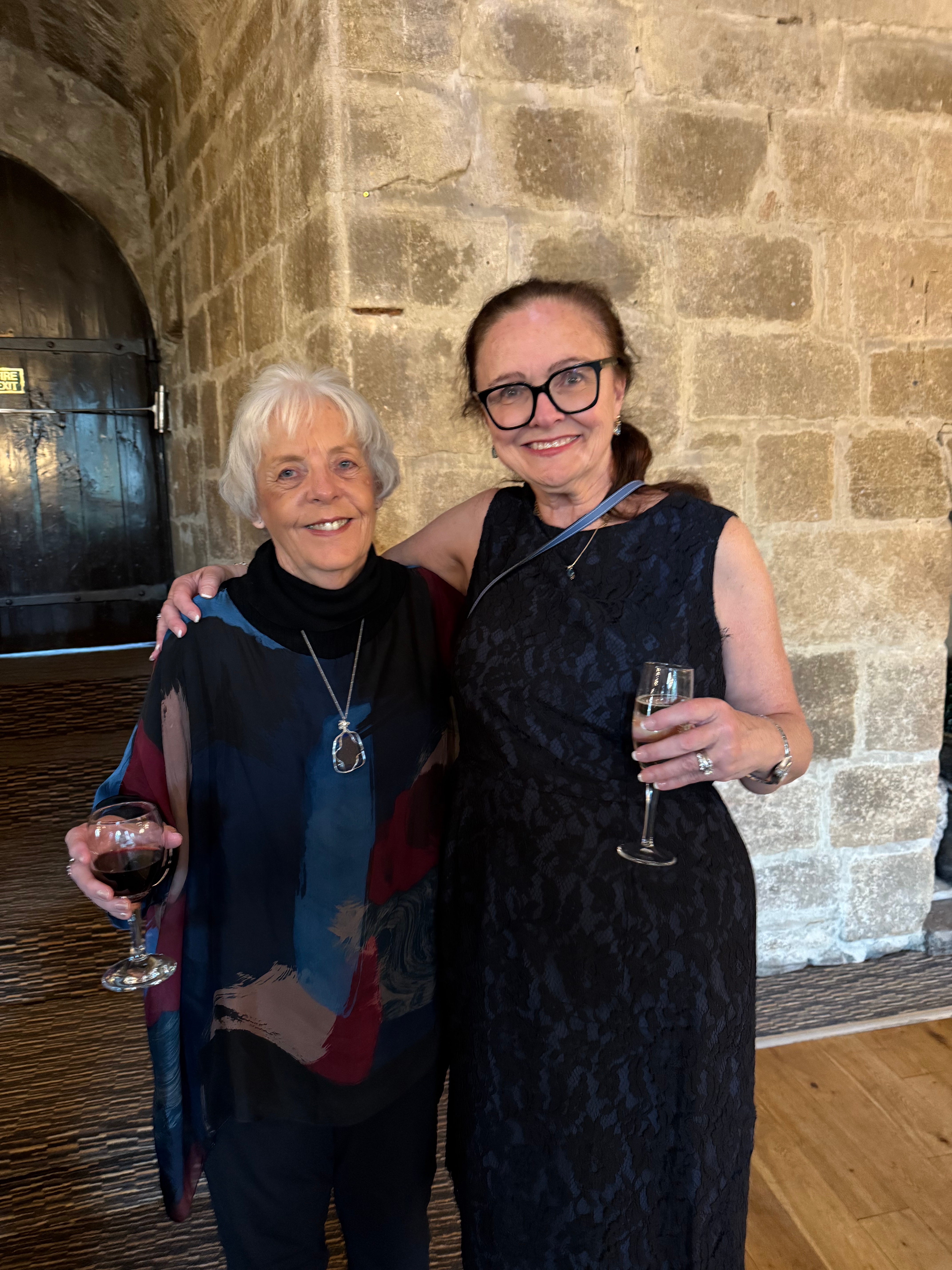
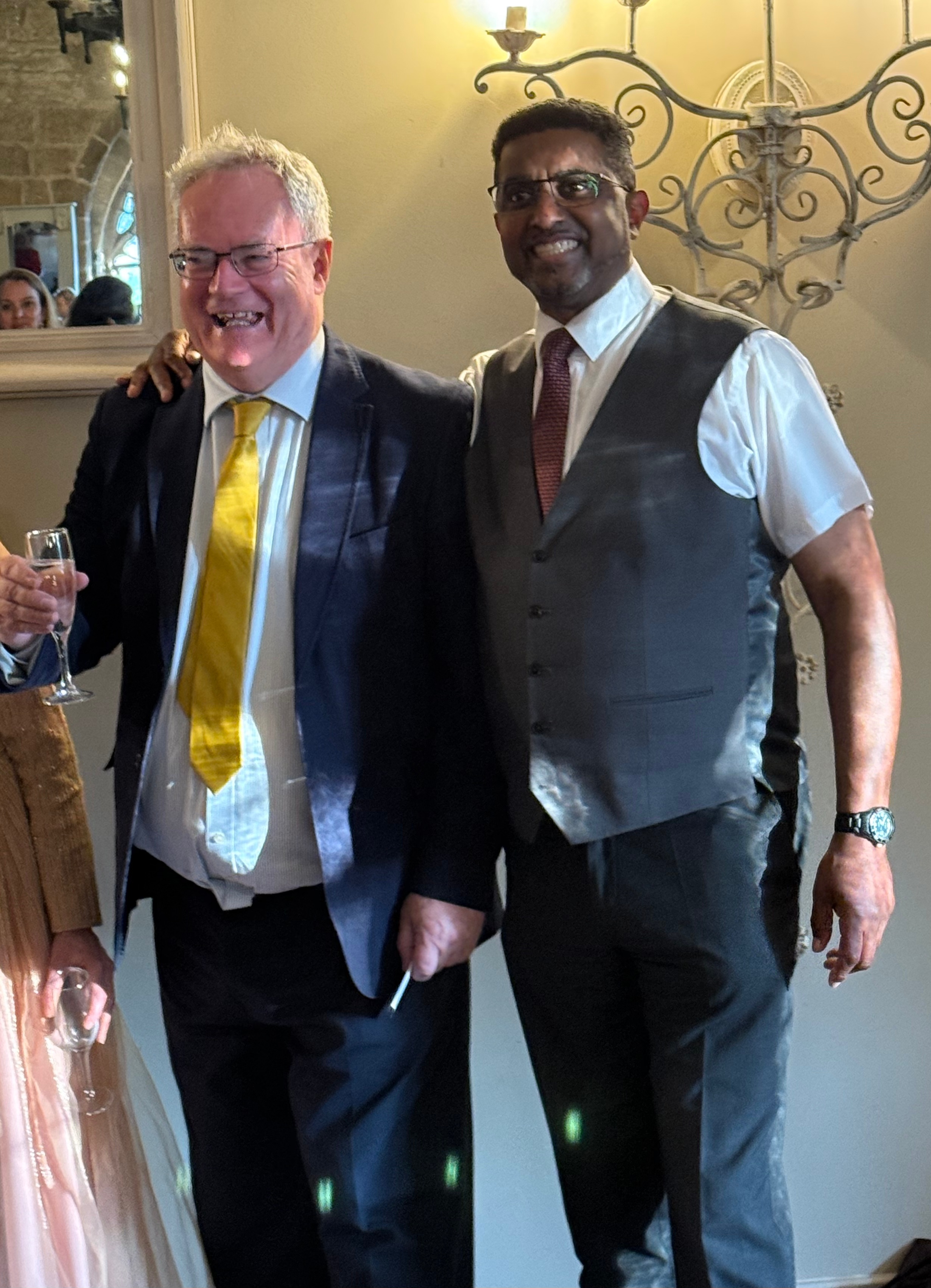
The dinner was excellent, drinks more than ample and the quiz, all about the Tour, was expertly hosted by Julian. A very reflective (and noisy!) group of folks had no need for historians talks on the way back to Matfen Hall.
Day 10: Friday, 9th May
This is it – the final day which began with checking out of Matfen Hall and driving south to the Cathedral city of Durham. A guest historian, Kate Williams opened the mornings bus talks with “Mary, Queen of Scots and the North”; Mike gave us an “Introduction to Durham”; and Sarah finished with “St Cuthbert and the Early Saints”.
Tour notes: Founded by William the Conqueror, Durham City, with its magnificent Cathedral, has been a place of pilgrimage over a millennium. And with its superb artisan food and drink scene, first-class galleries and award-winning museums, it’s not hard to see why visitors continue to flock to this is captivating historic city. Durham’s scenic skyline is one of the most stunning city panoramas in Europe, and includes Durham Castle and iconic Durham Cathedral, recently named the UK’s number one landmark. Together they form Durham’s incredible UNESCO World Heritage Site.
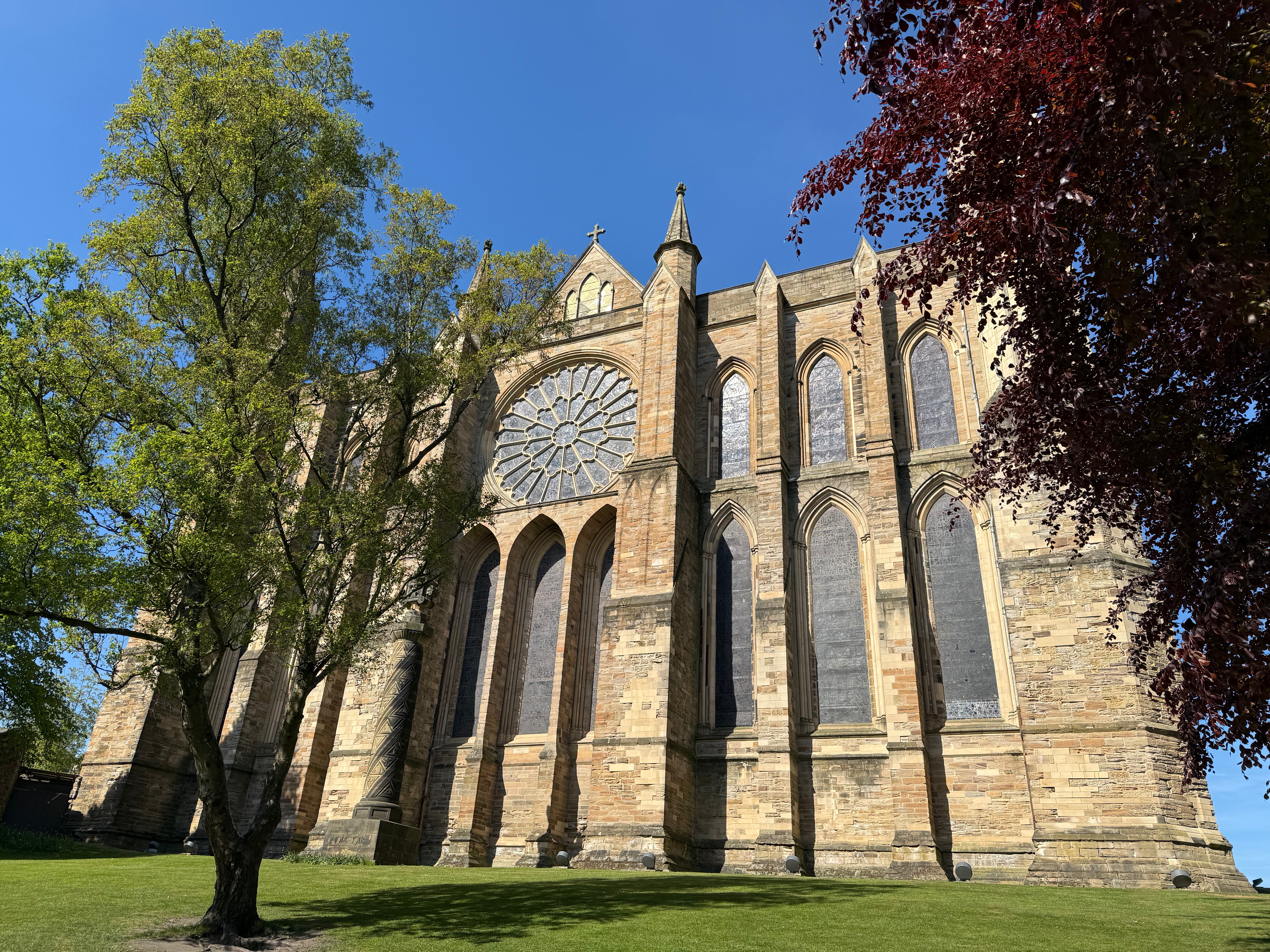
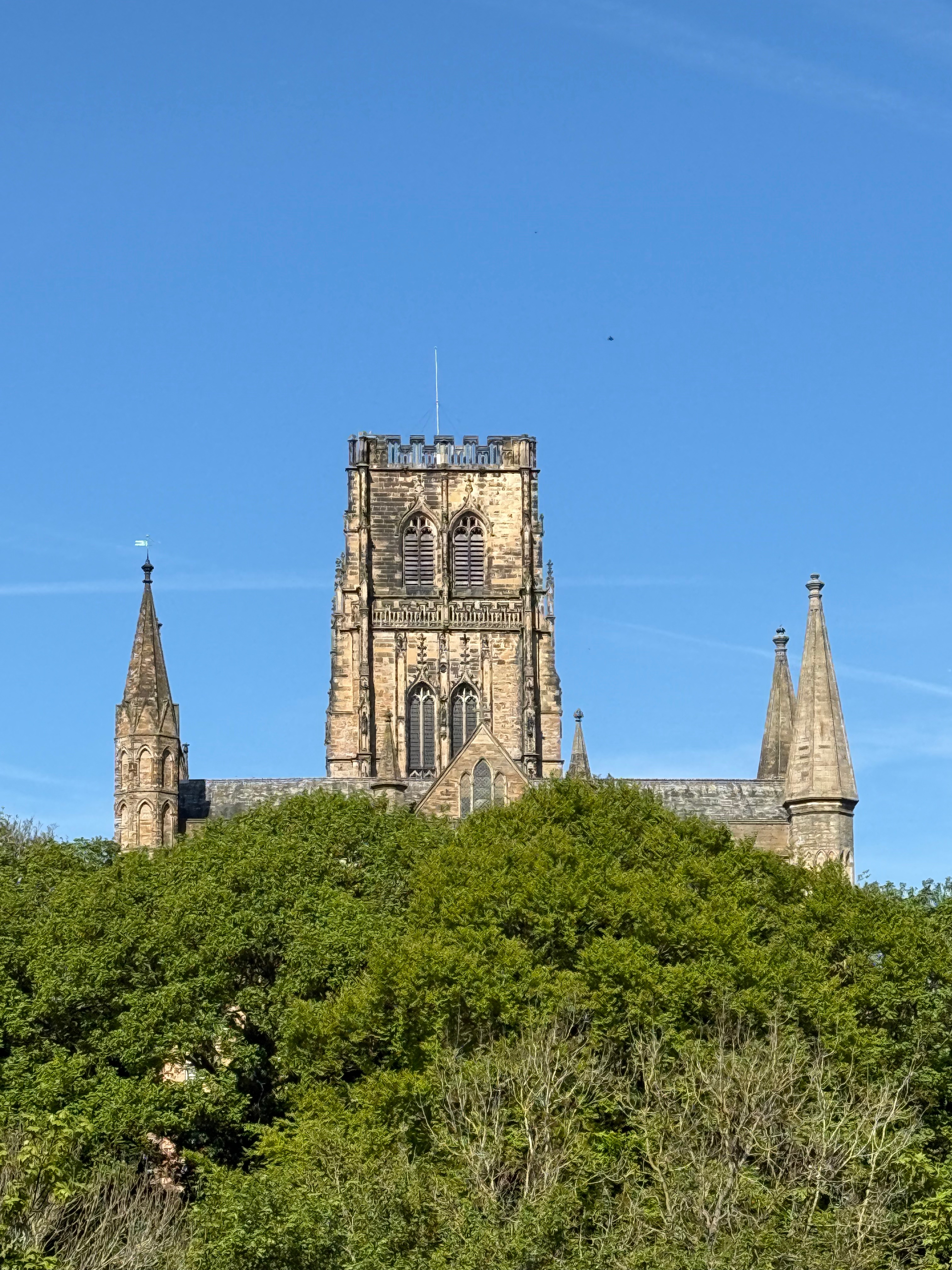
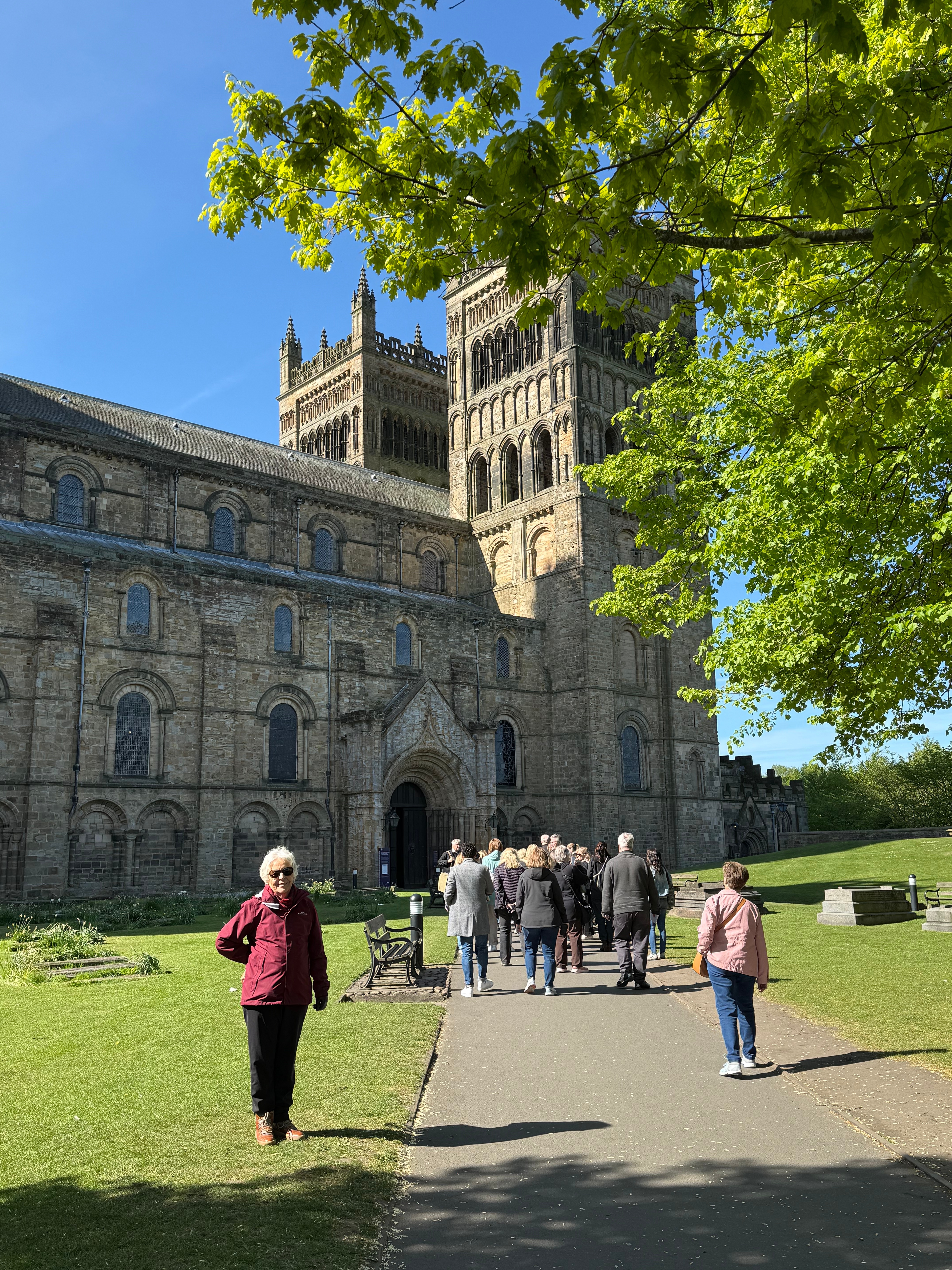
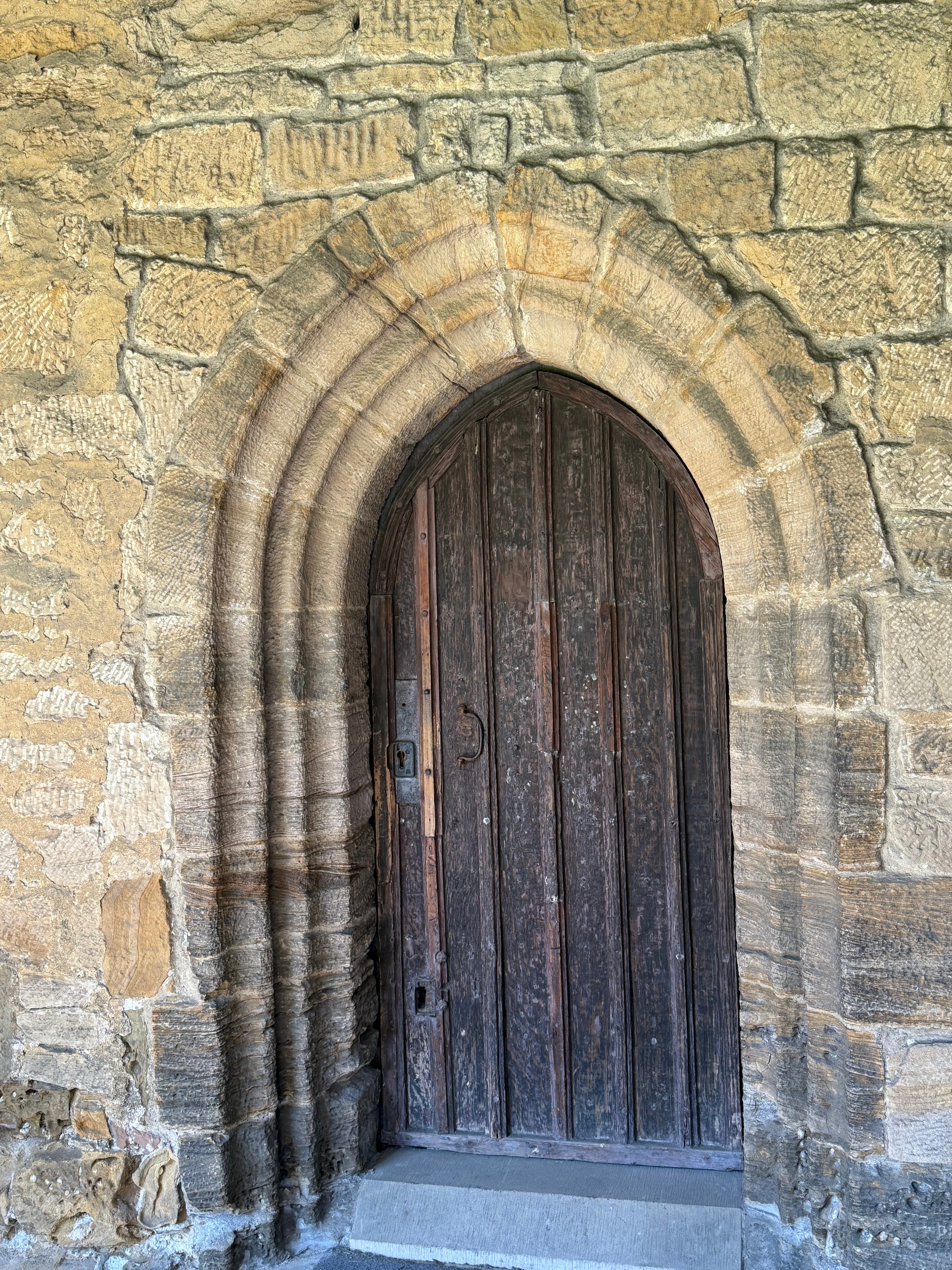
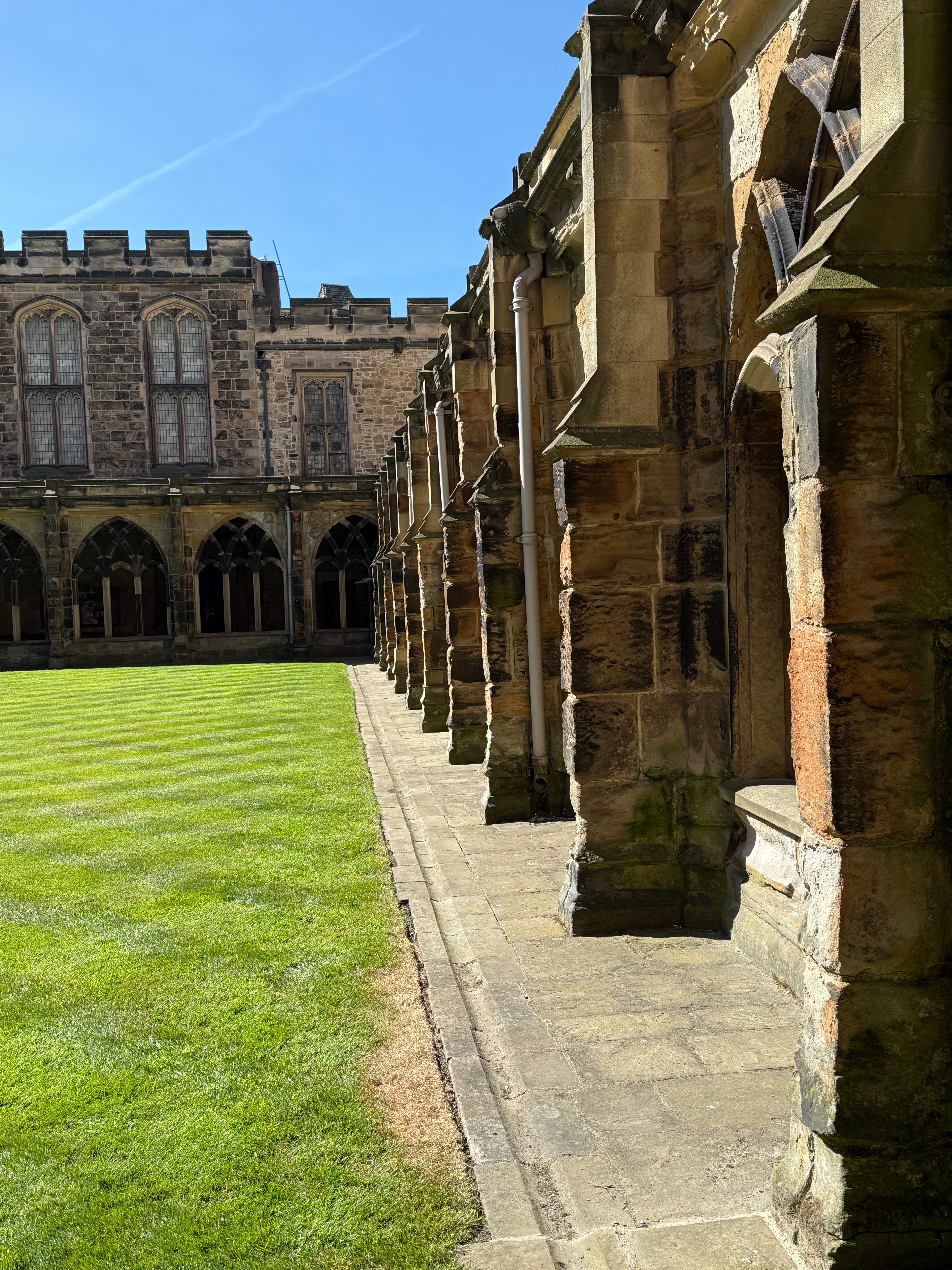
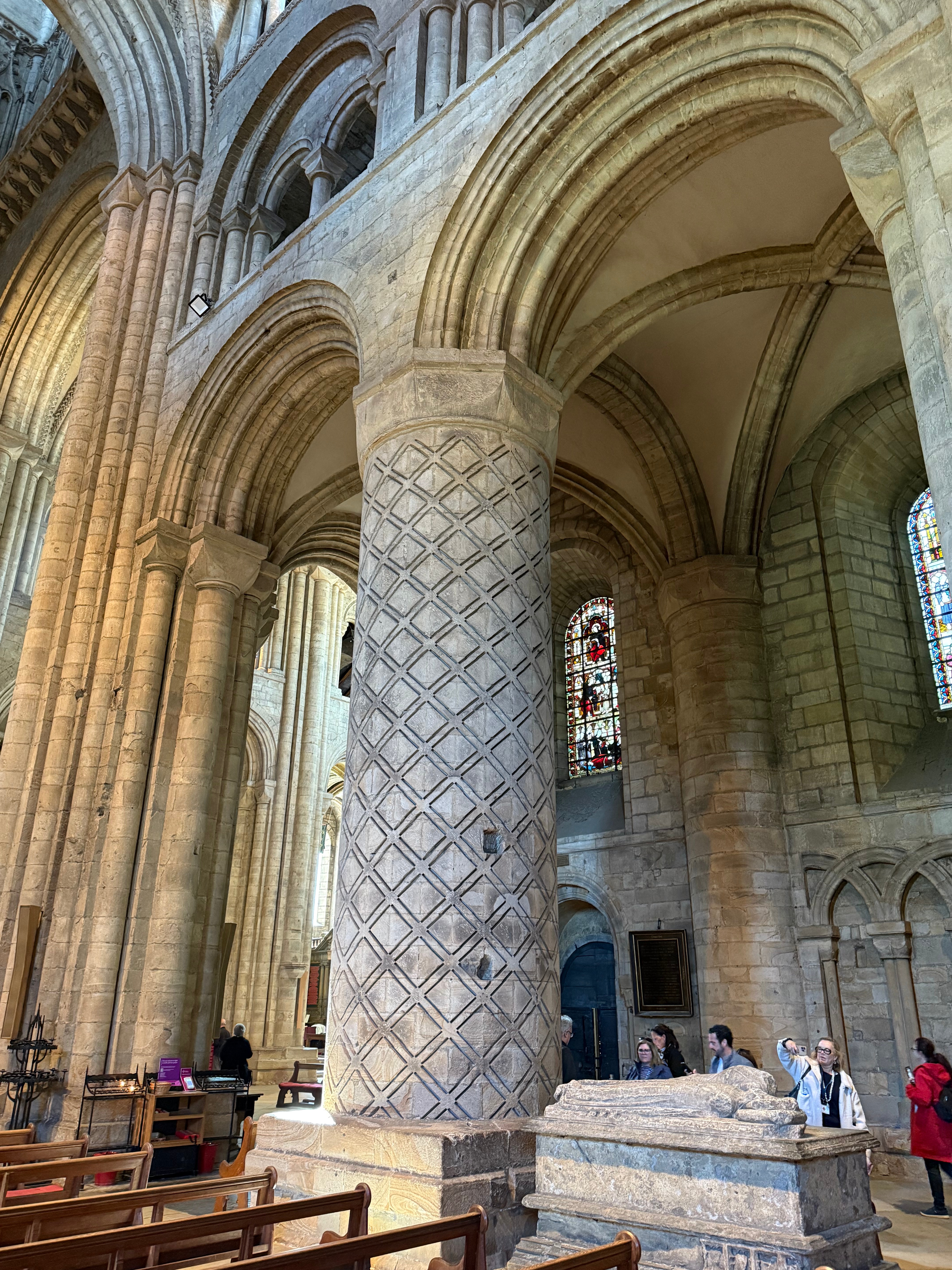
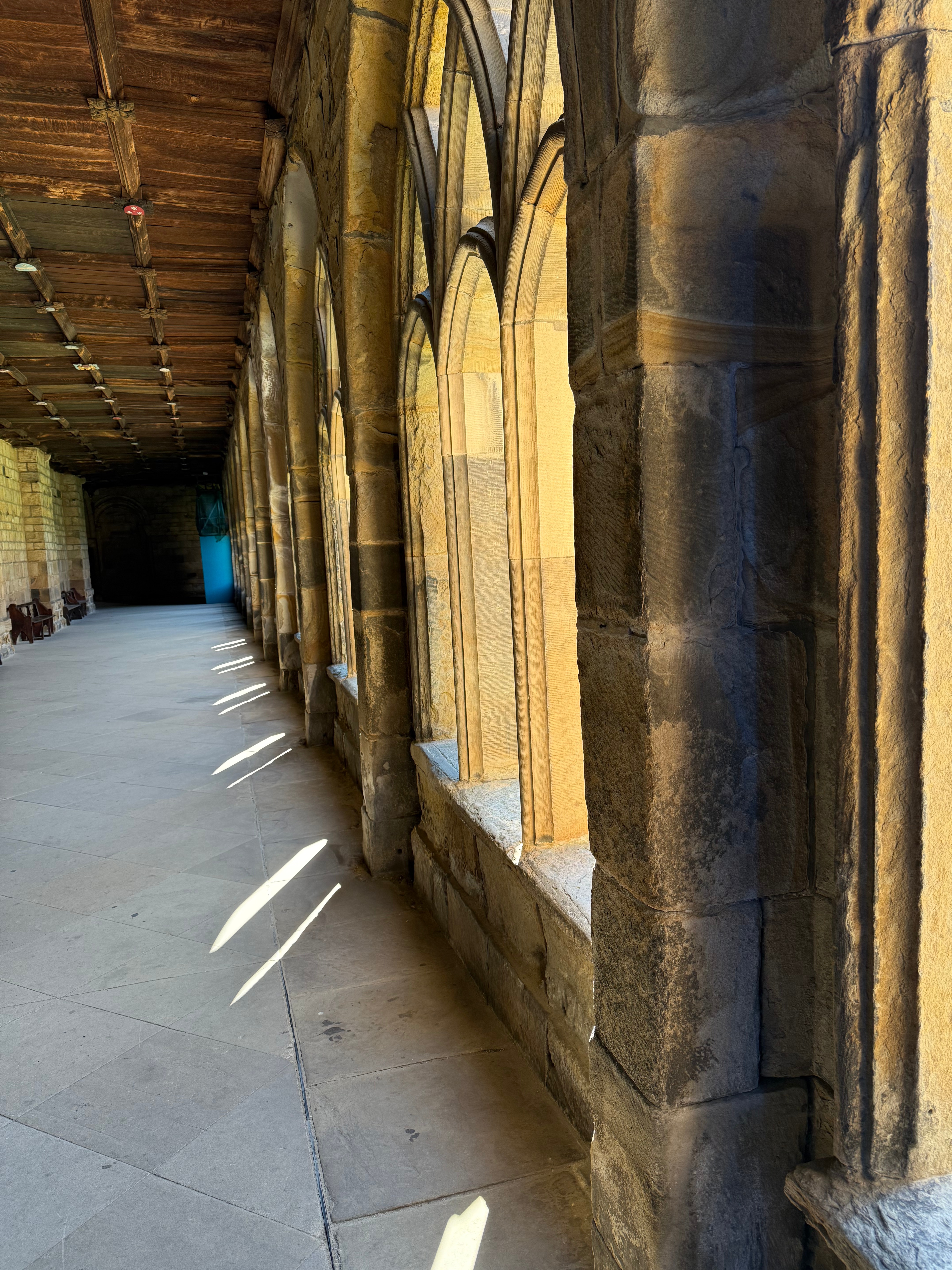
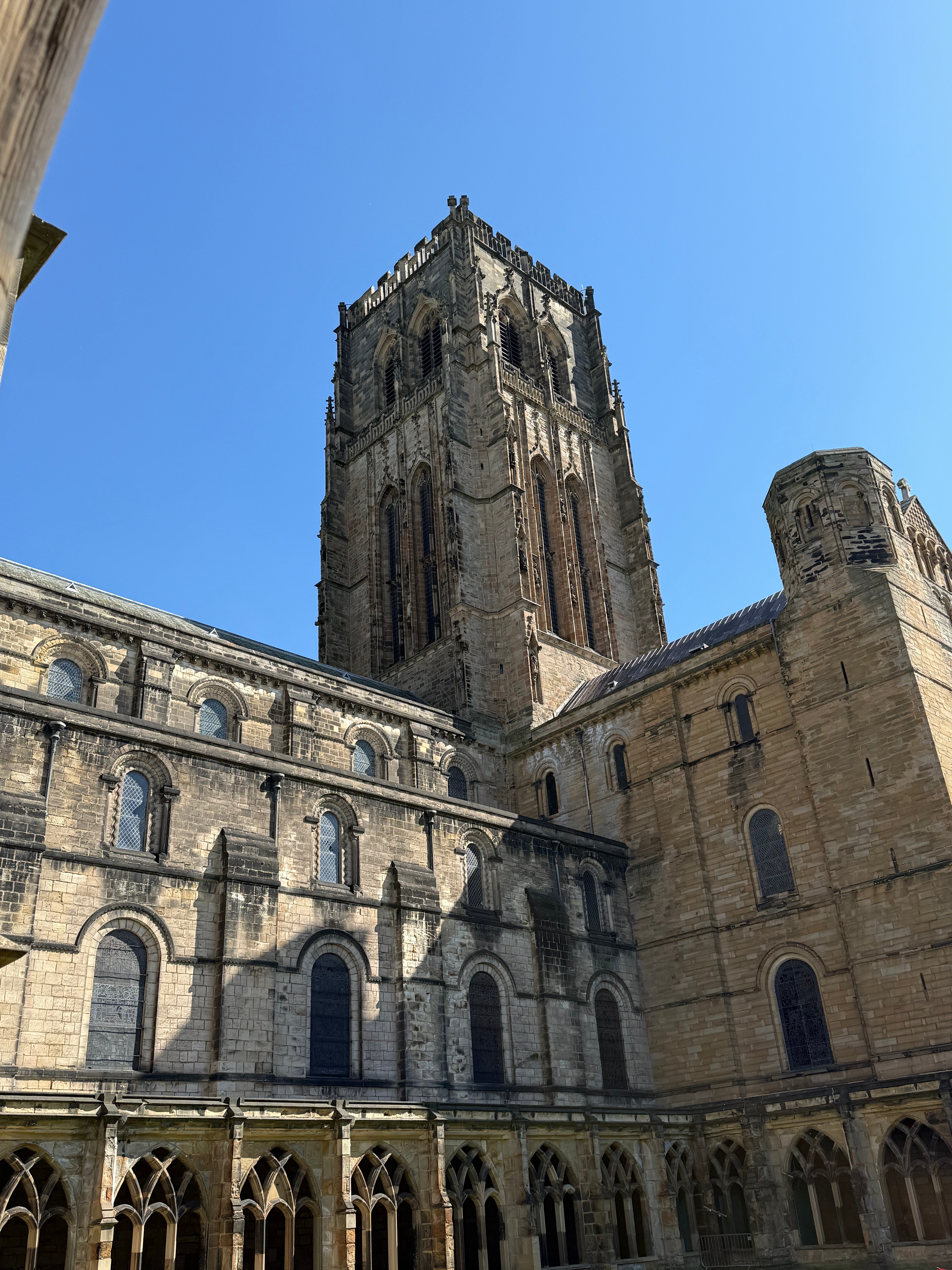
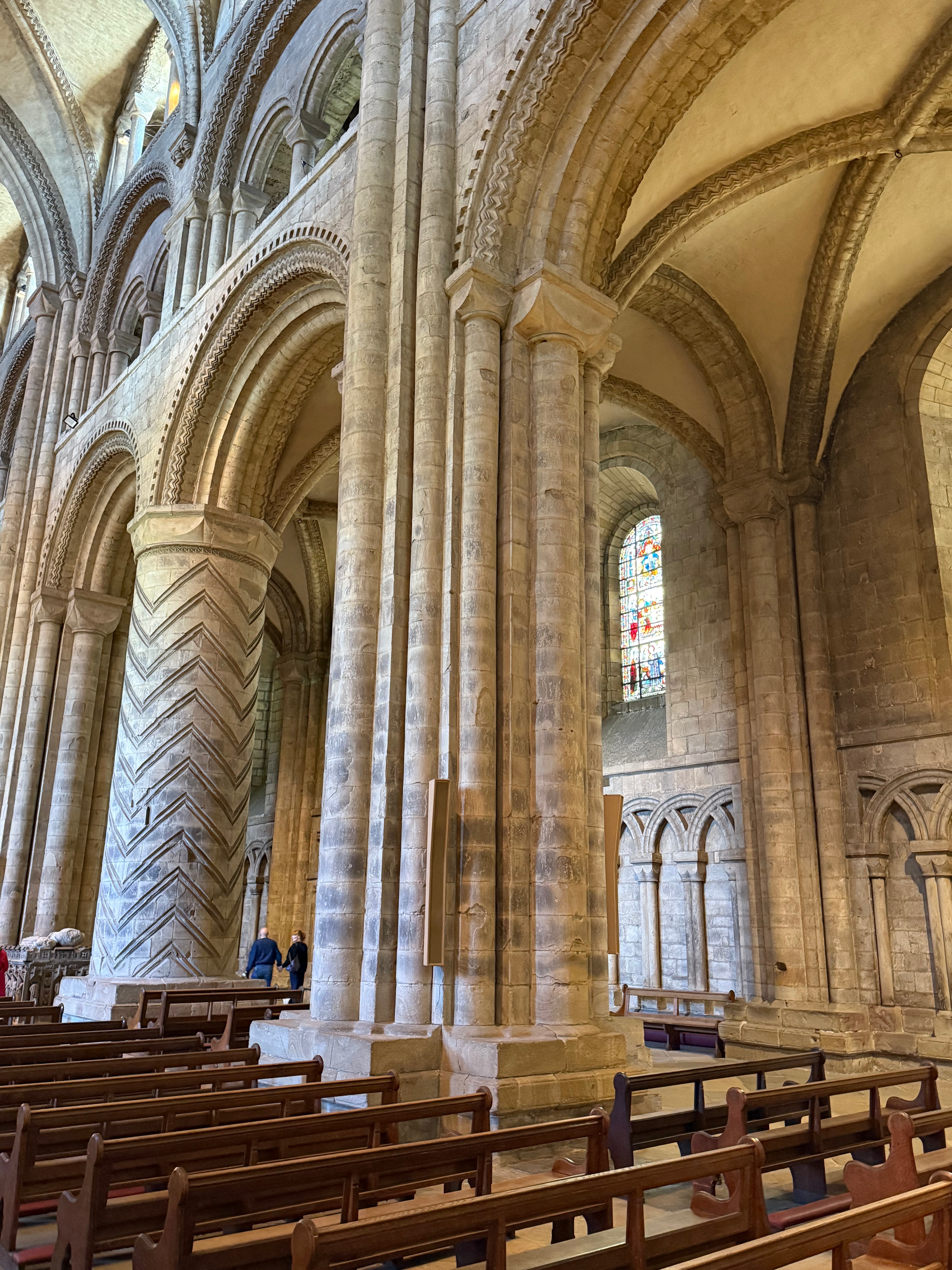
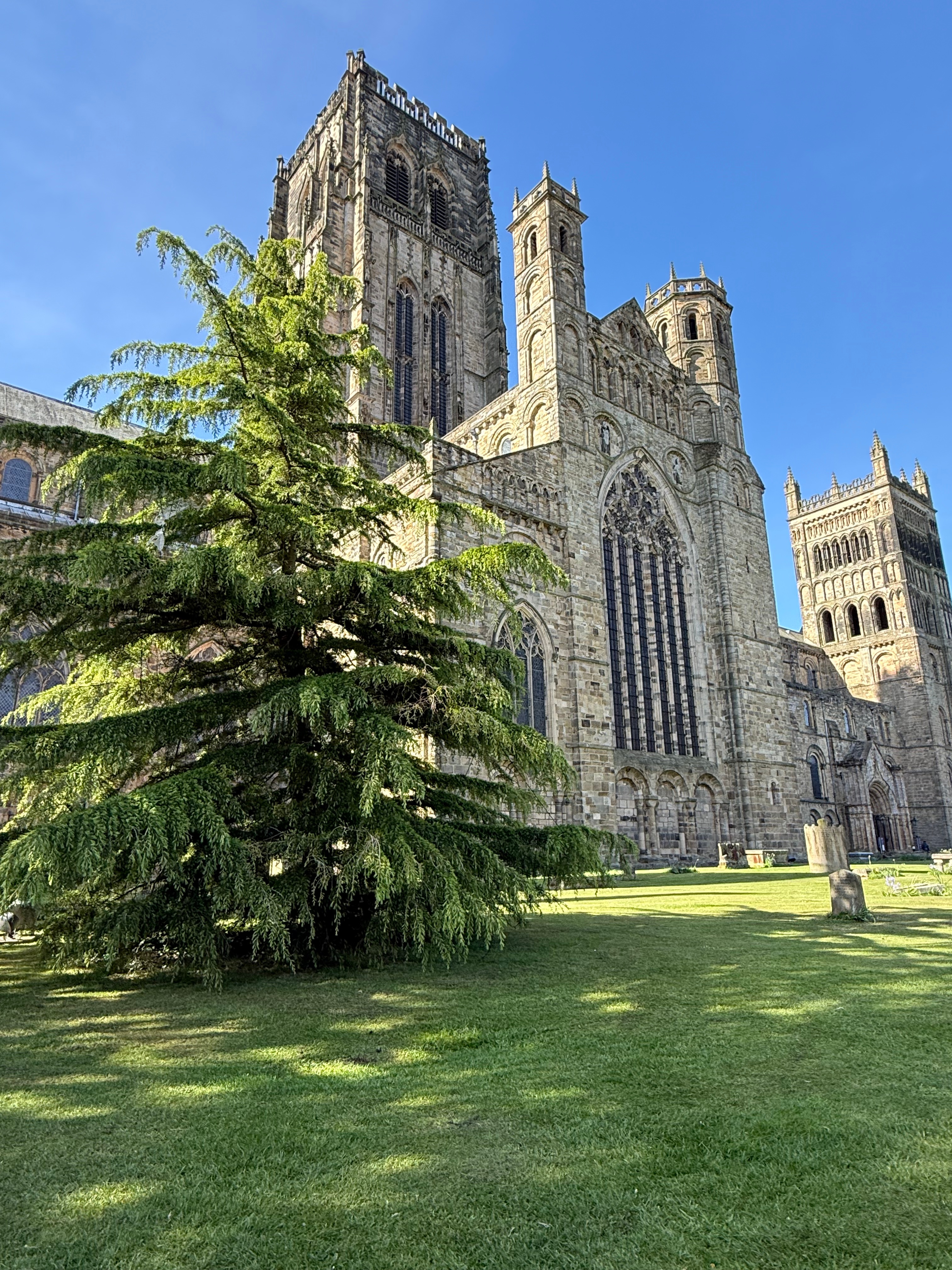
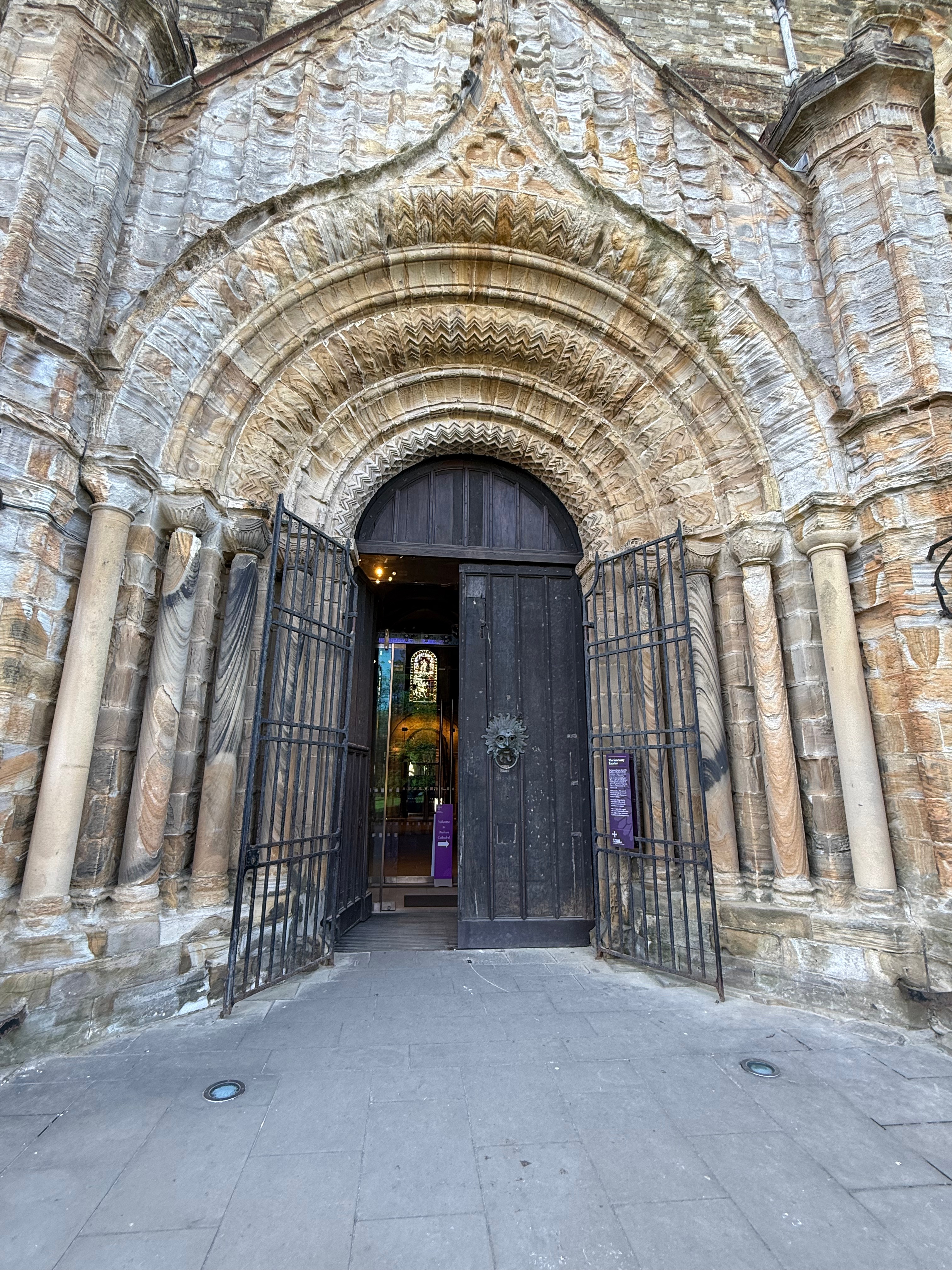
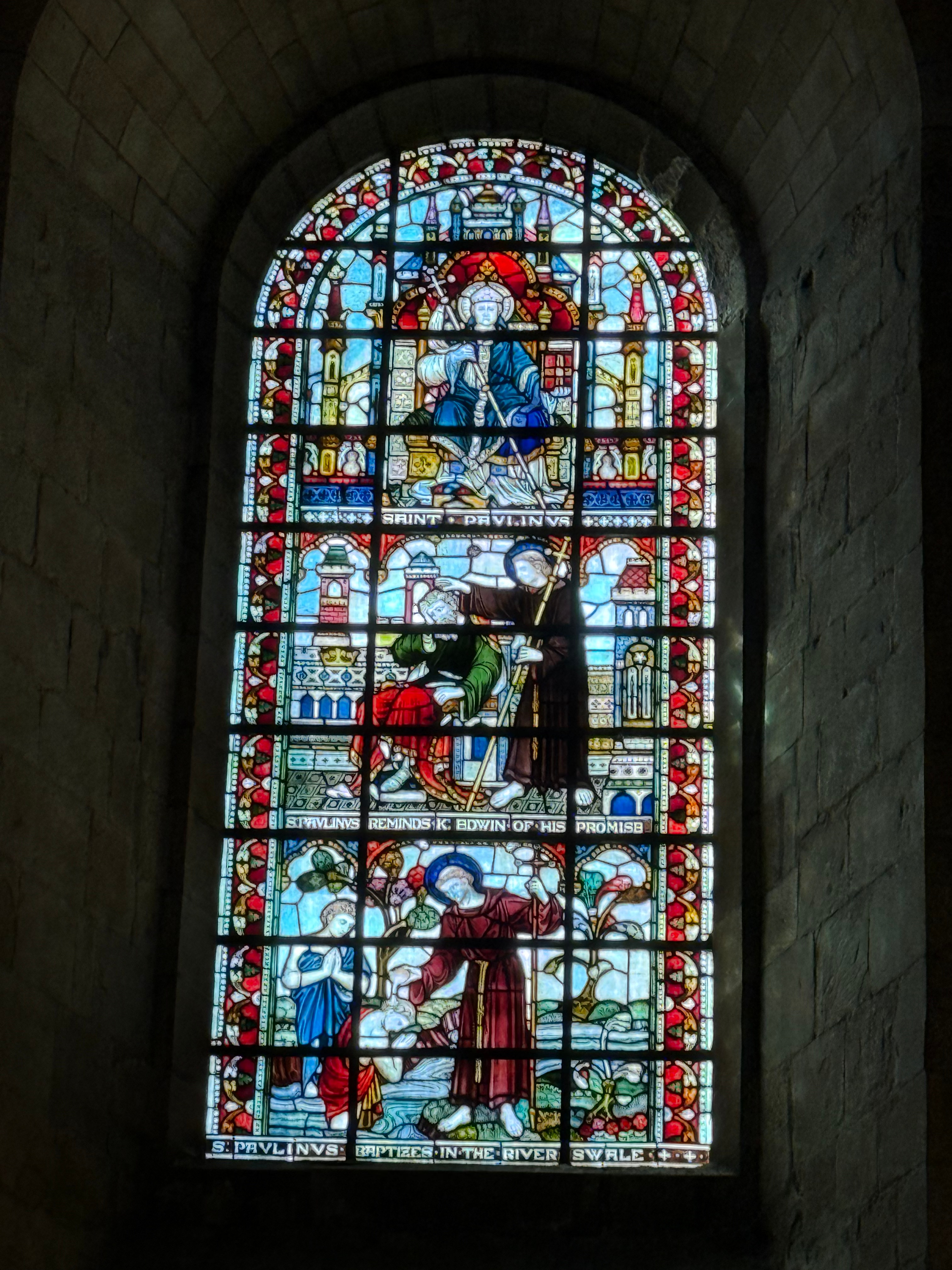
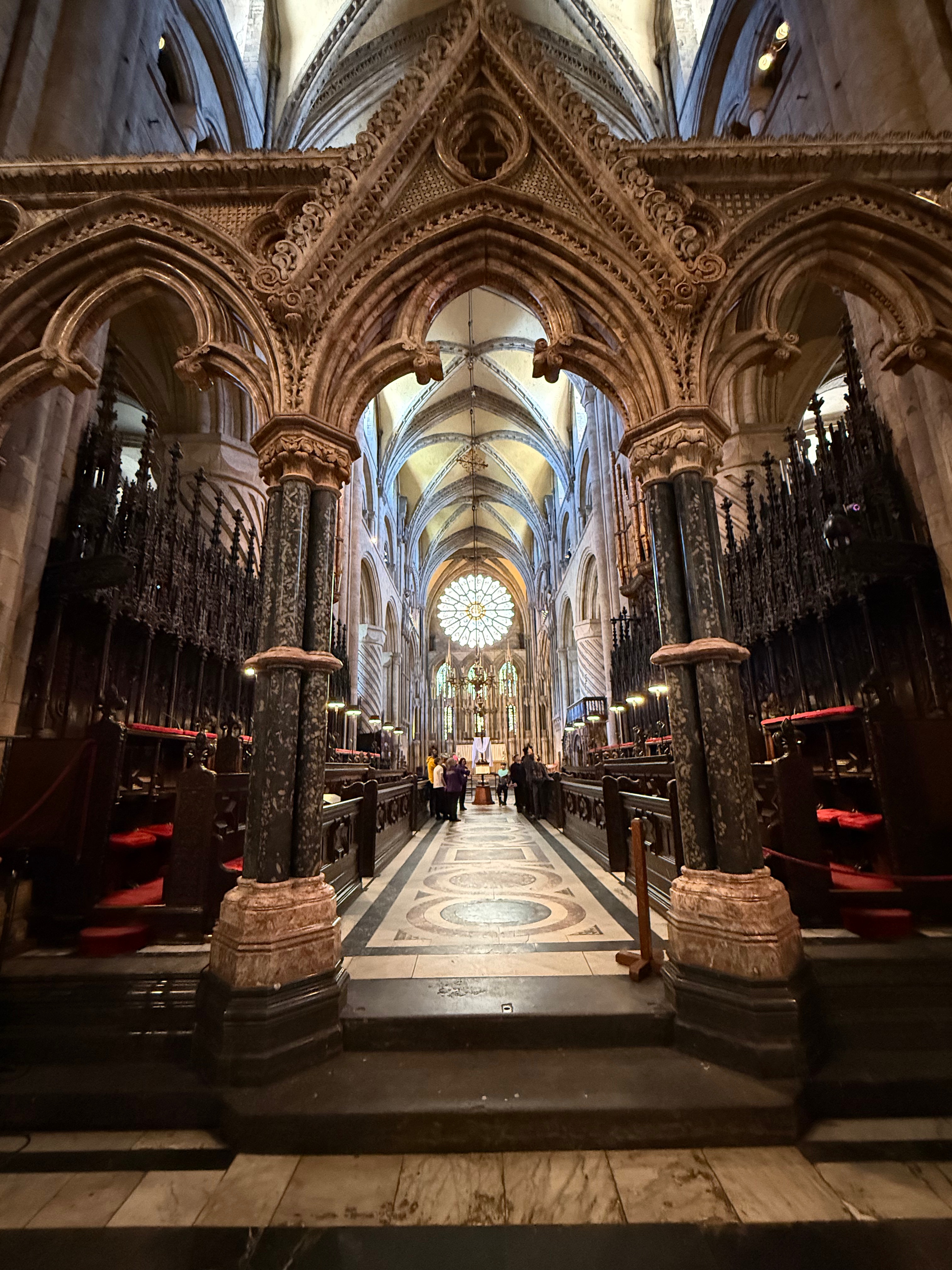
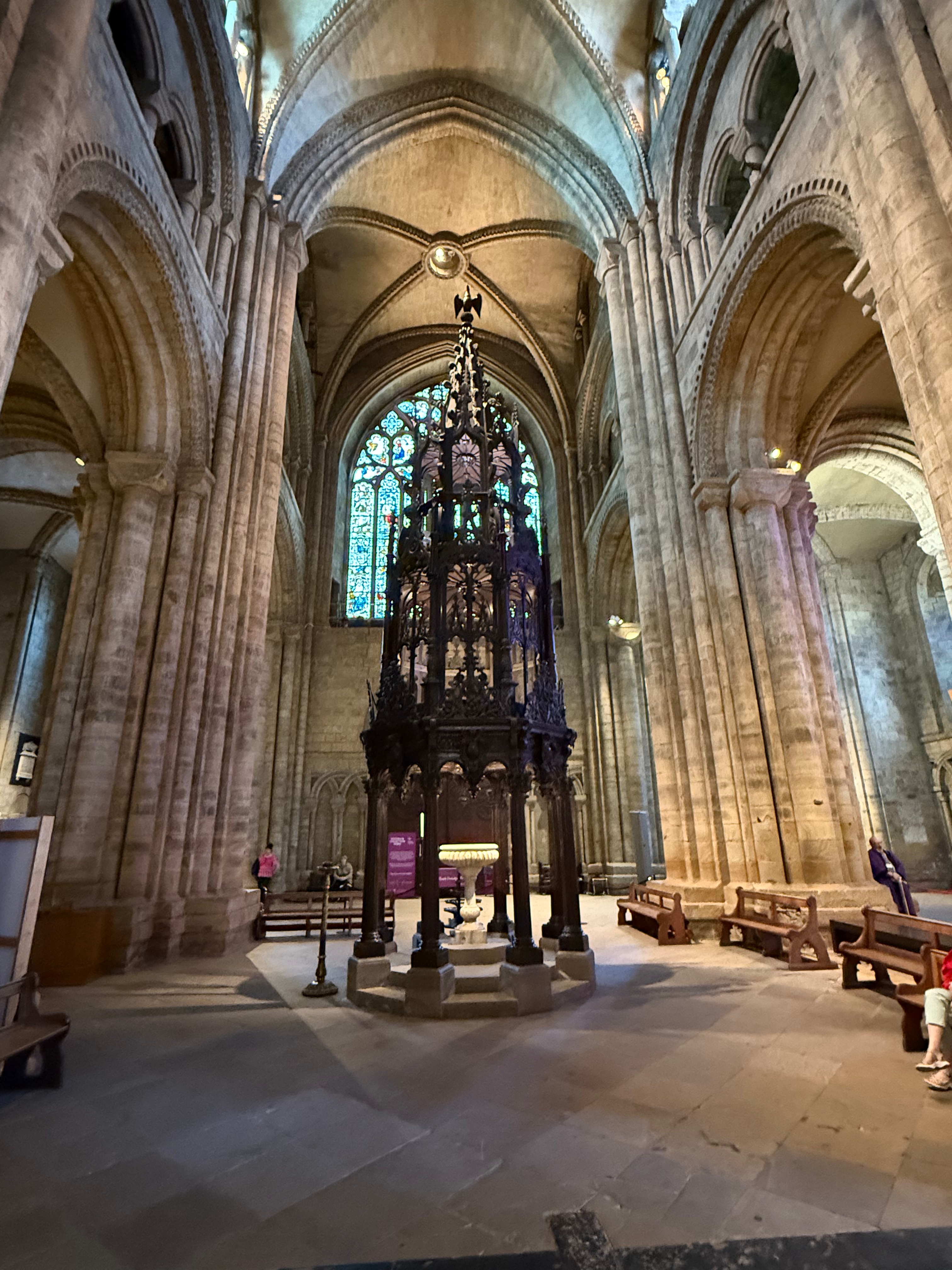
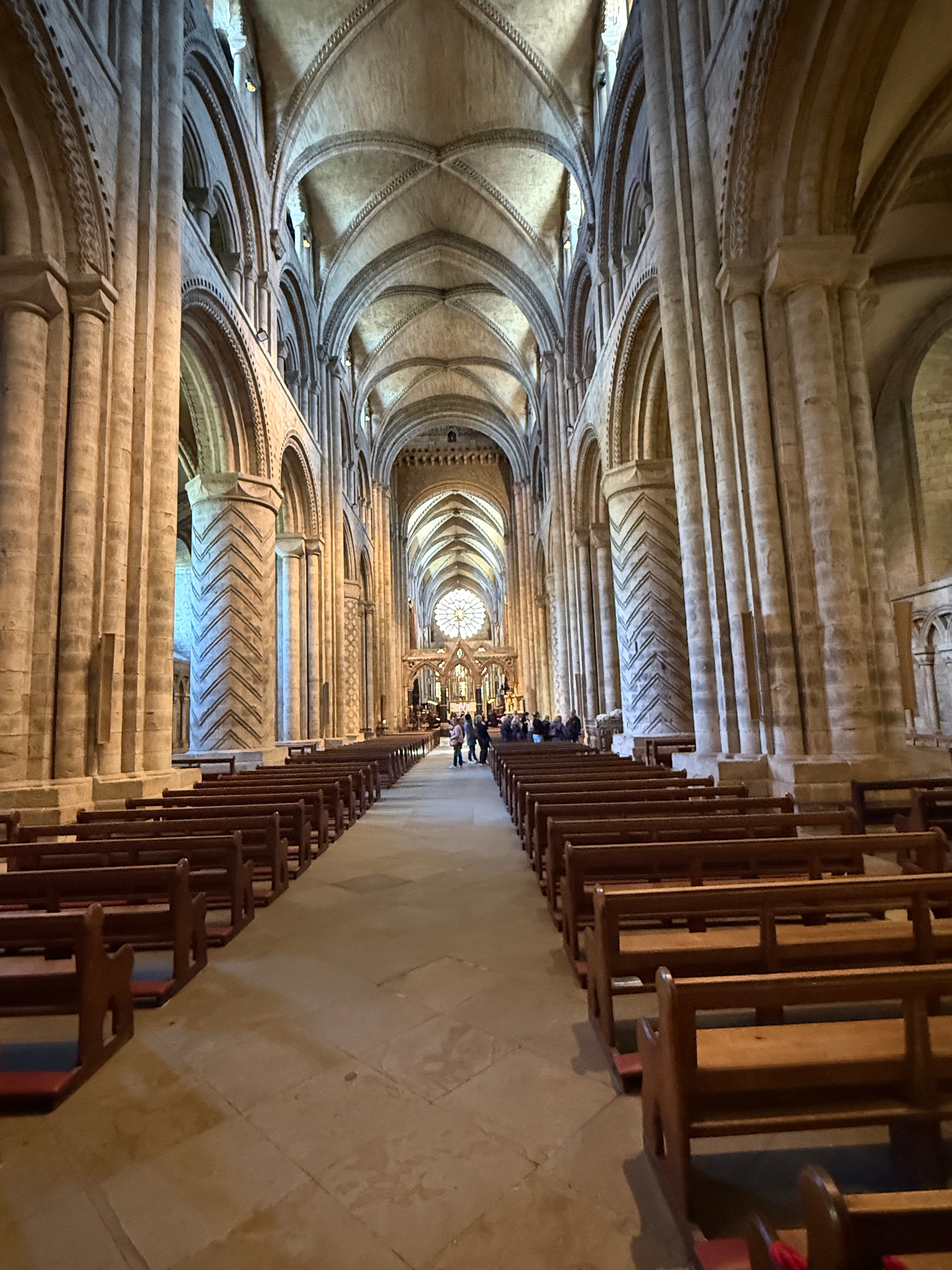
Considered to be one of the largest and finest examples of Norman architecture in England, and one of Europe’s greatest medieval buildings, Durham Cathedral, built in 1093 to house the relics of St Cuthbert, sits proudly overlooking the River Wear at the heart of Durham’s World Heritage Site. It offers a world-class visitor experience in which you can discover over 2,000 years of history and some of the most intact surviving medieval monastic architecture in England.
Another longish drive as we continued south towards York saw a trio of talks on Royalty. Kate opened with “The Royal Palaces: Secrets and Scandals”; Nicola followed with “Margaret Beaufort and the Stanleys”; and Sarah outlined “Mary, the Princess Royal and Harewood House”.
We had a very nice lunch to ourselves (upstairs), before being given a very comprehensive tour of Harewood House by a lady who had spent some time in her role. She knew the history and obviously was also well versed on the courtship and marriage of Henry Lascelles, 6th Earl of Harewood (1882-1947) to Mary, Princess Royal (1897-1965) the only daughter of King George V and Queen Mary. Their marriage, in 1922 was the first royal wedding to be covered in fashion magazines, including Vogue. Of great interest was a series of paintings and notes by JMW Turner and Jane Austin, an exhibition sponsored by Harewood House Trust with the University of York named “Austen & Turner A Country House Encounter”.
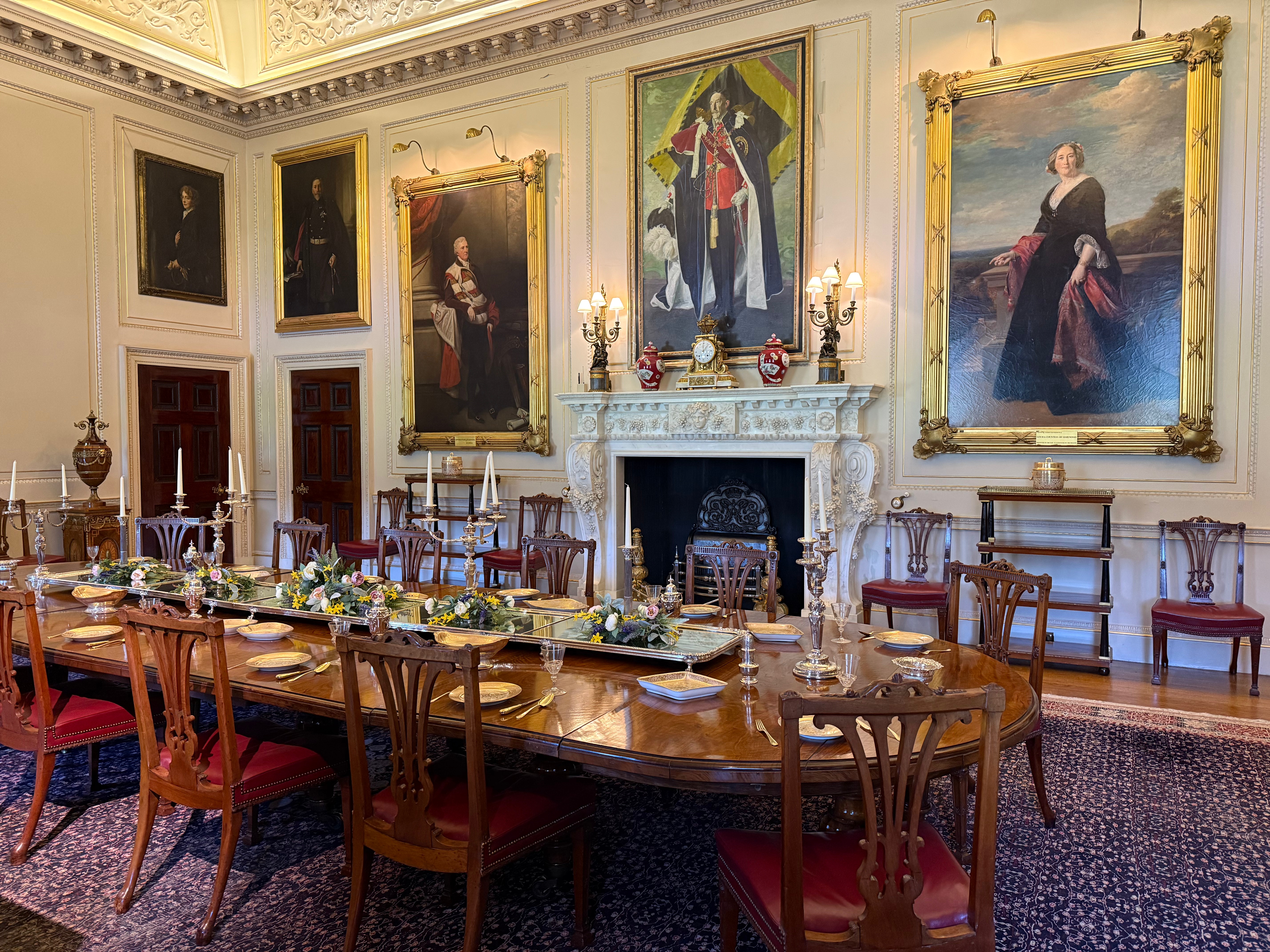
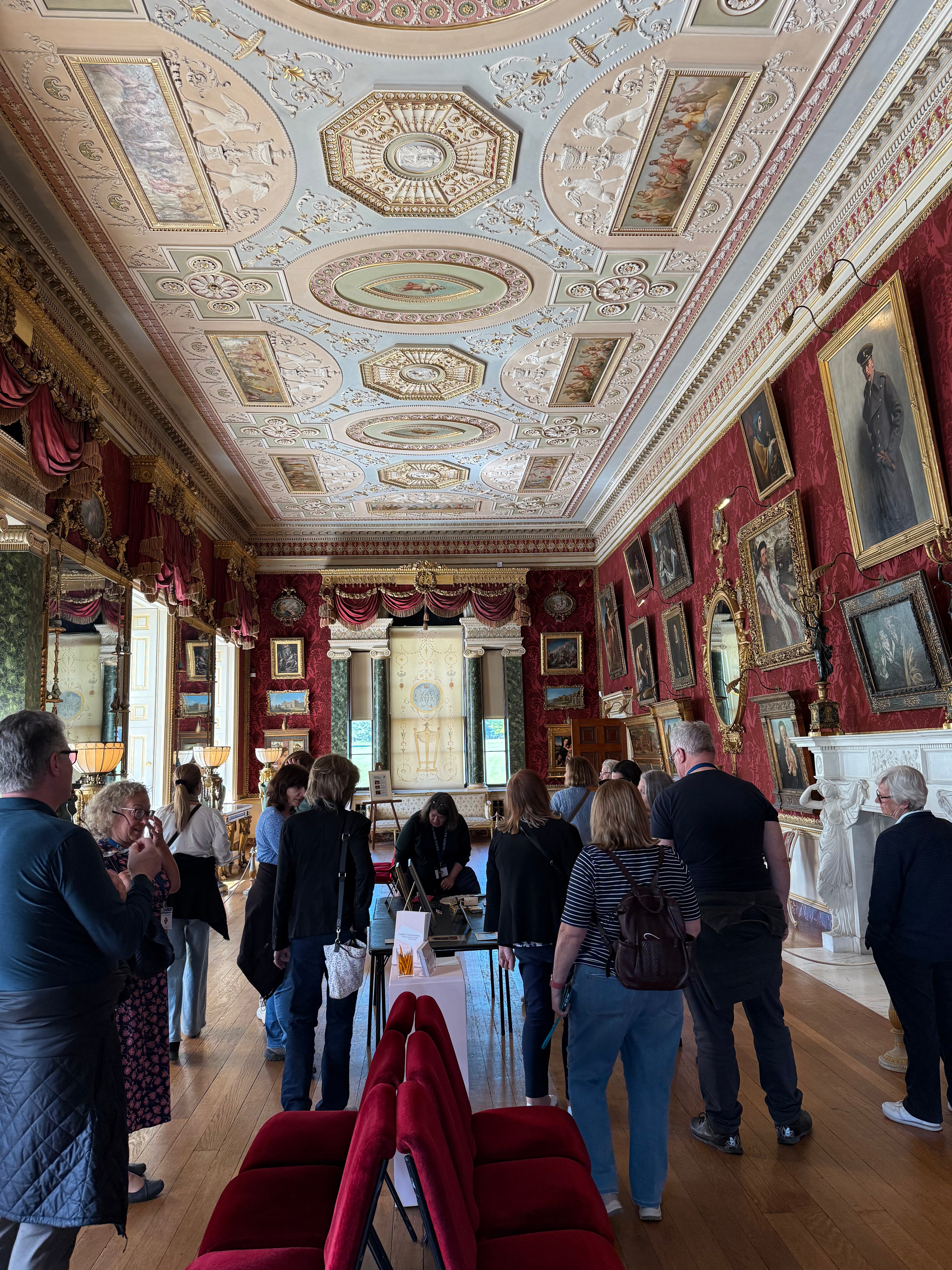
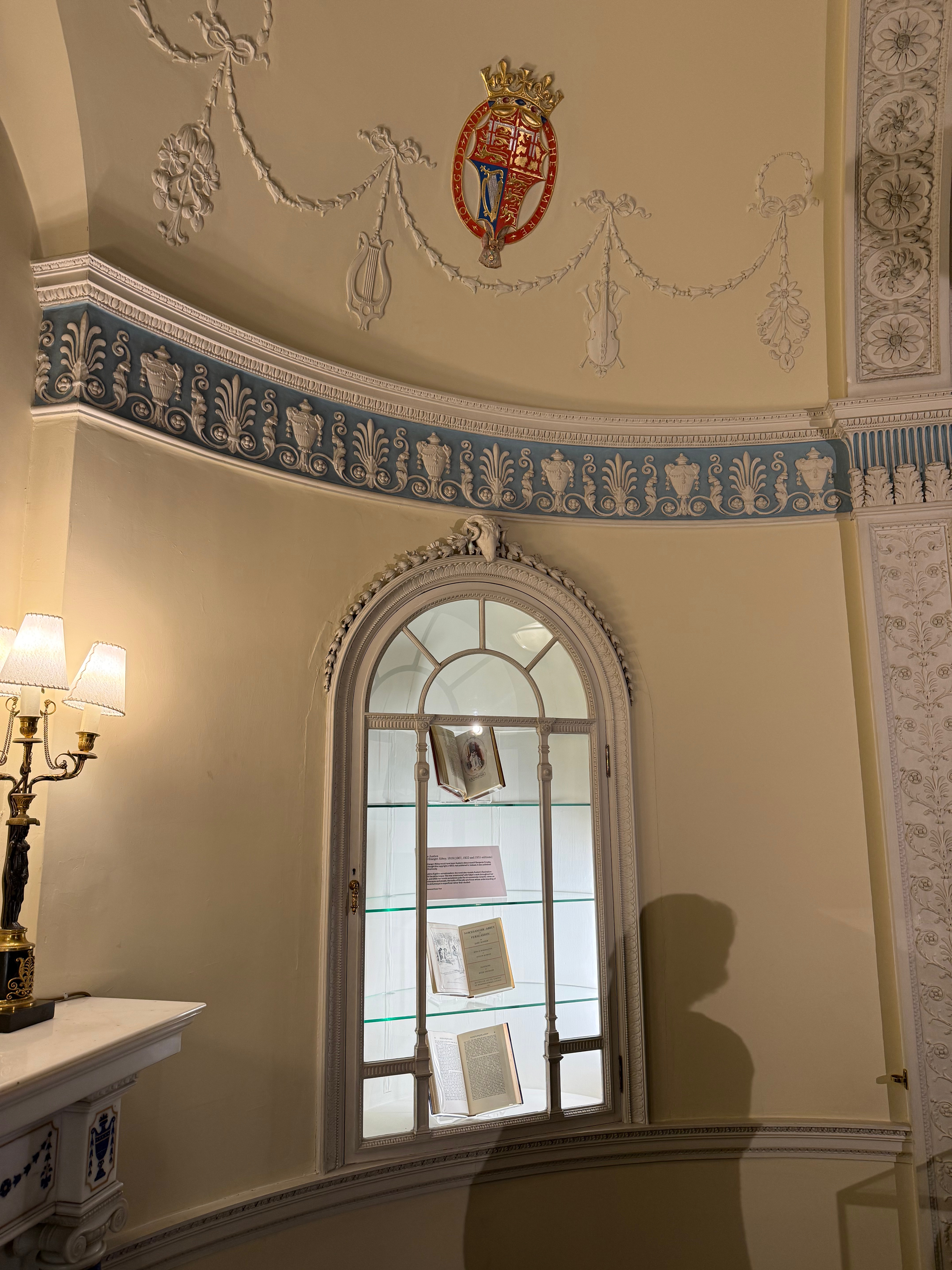
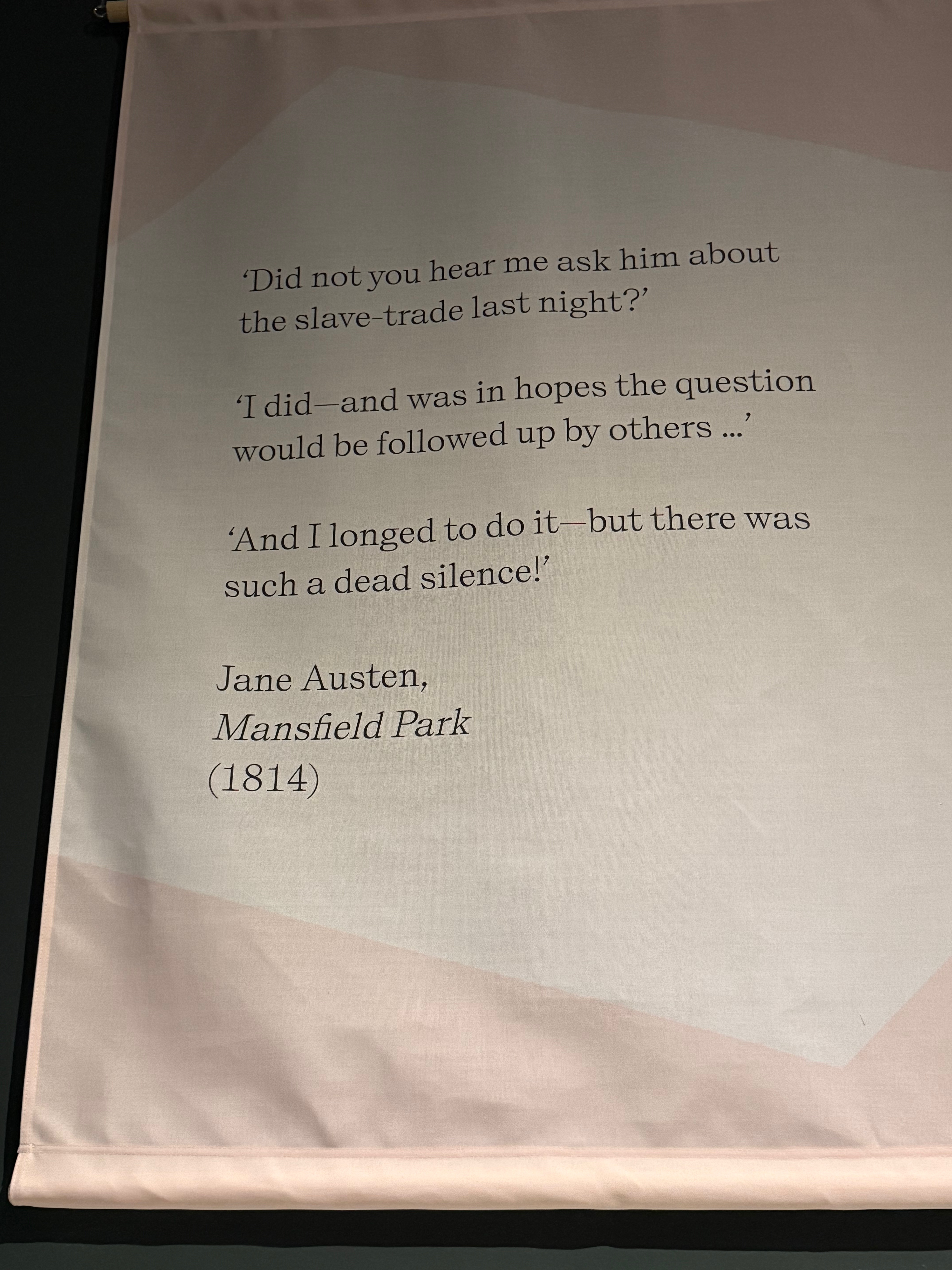
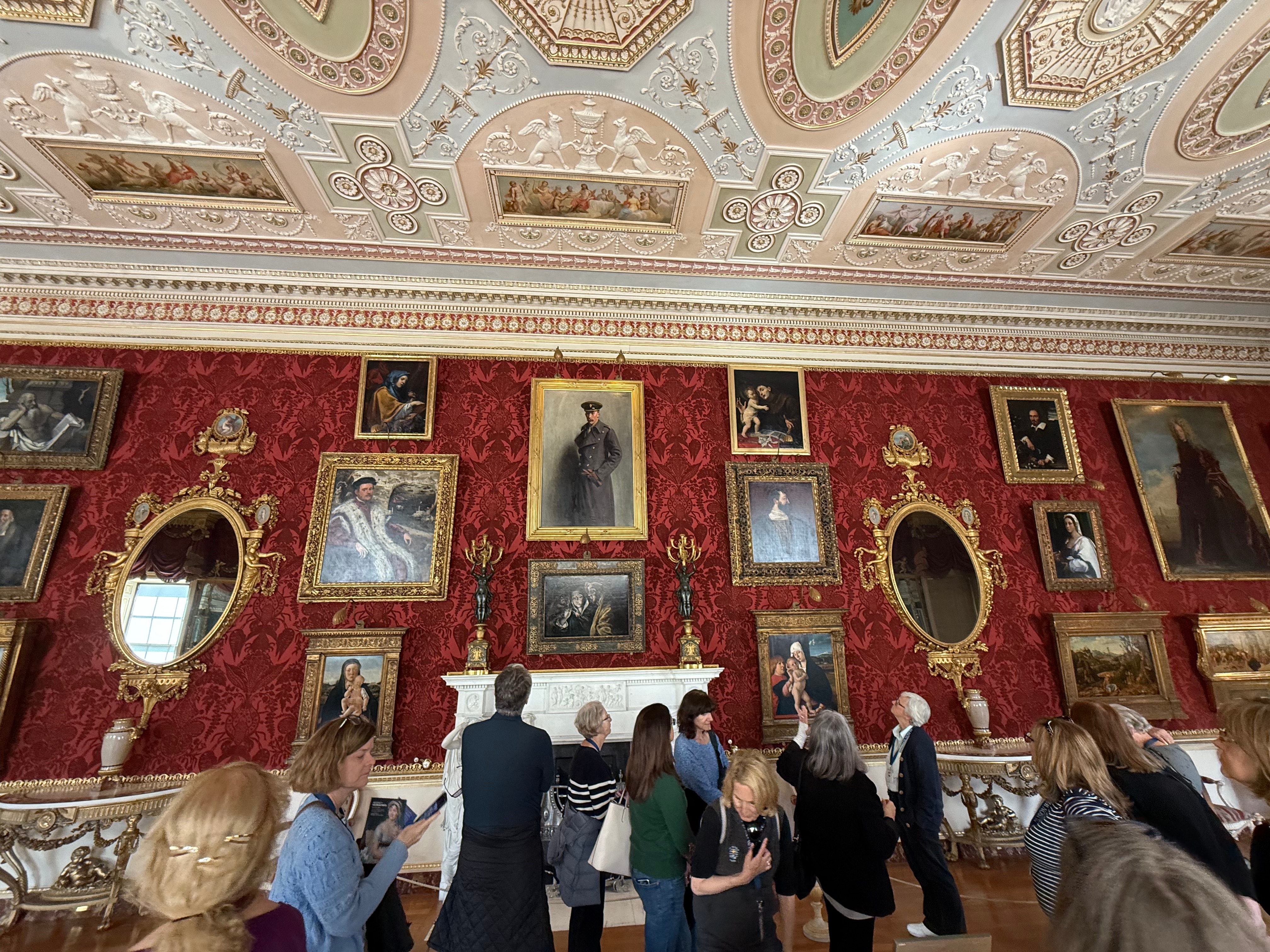
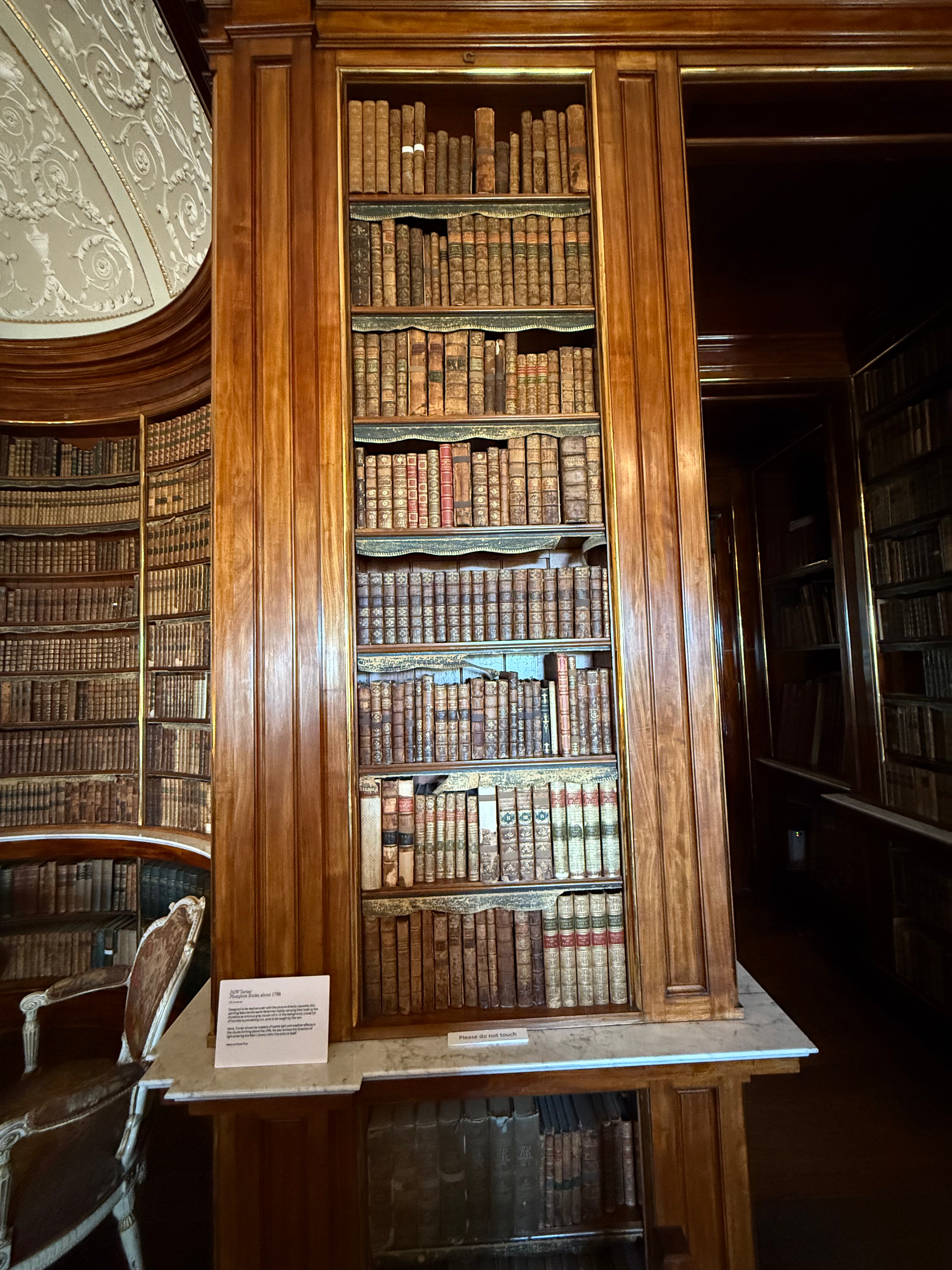
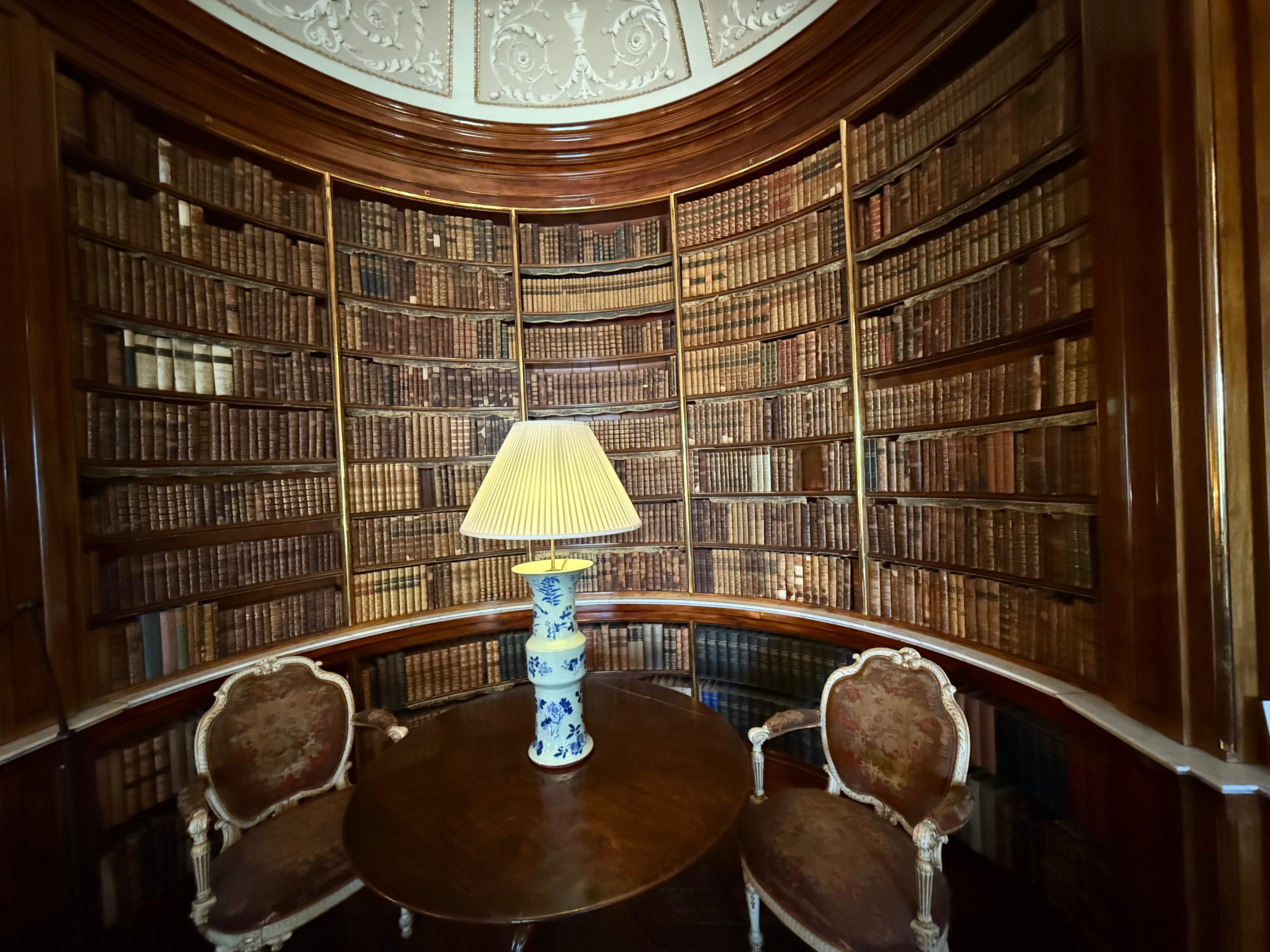
Tour notes: Harewood House is a country house in Harewood near Leeds, West Yorkshire, England. Designed by architects John Carr and Robert Adam, it was built between 1759 and 1771 for wealthy plantation owner Edwin Lascelles, 1st Baron Harewood. The landscape was designed by Lancelot “Capability” Brown and spans 1,000 acres at Harewood. It was home to the late Mary, Princess Royal, Countess of Harewood, and the Lascelles family still live there. Harewood House is a member of the Treasure Houses of England. One look at its opulent gallery, with its Chippendale furniture and Renaissance masterpieces, and it’s easy to see why it became a favourite filming location for the Downton Abbey film in 2018 and two seasons of ITV’s Victoria. Its extensive network of bridleways and paths also featured in Channel 5’s Anne Boleyn (2021).
We returned to The Grand Hotel, York for farewell drinks and canapes. The last of the bus talks was by Sarah “The Grand Old Dukes of York”.
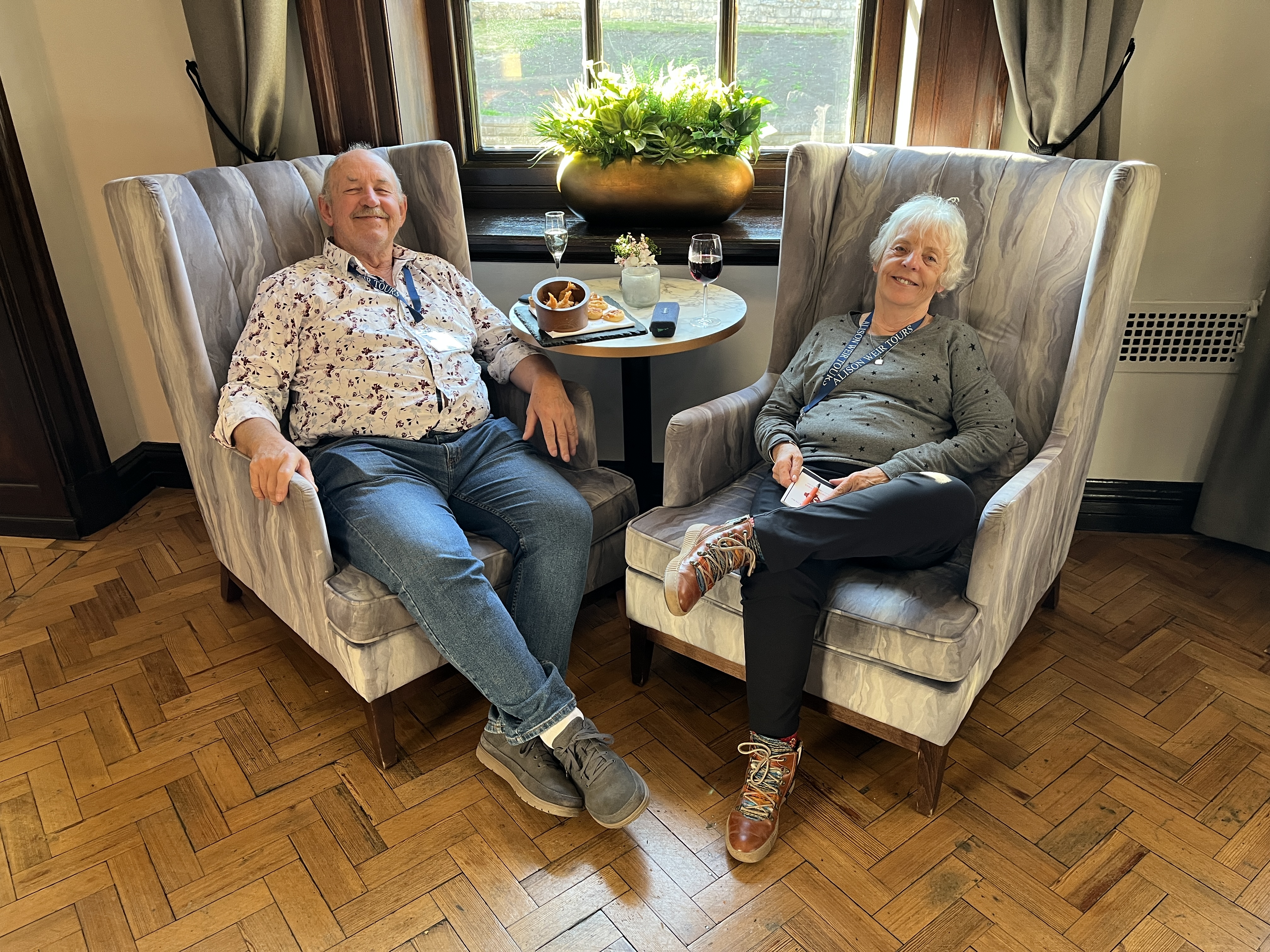
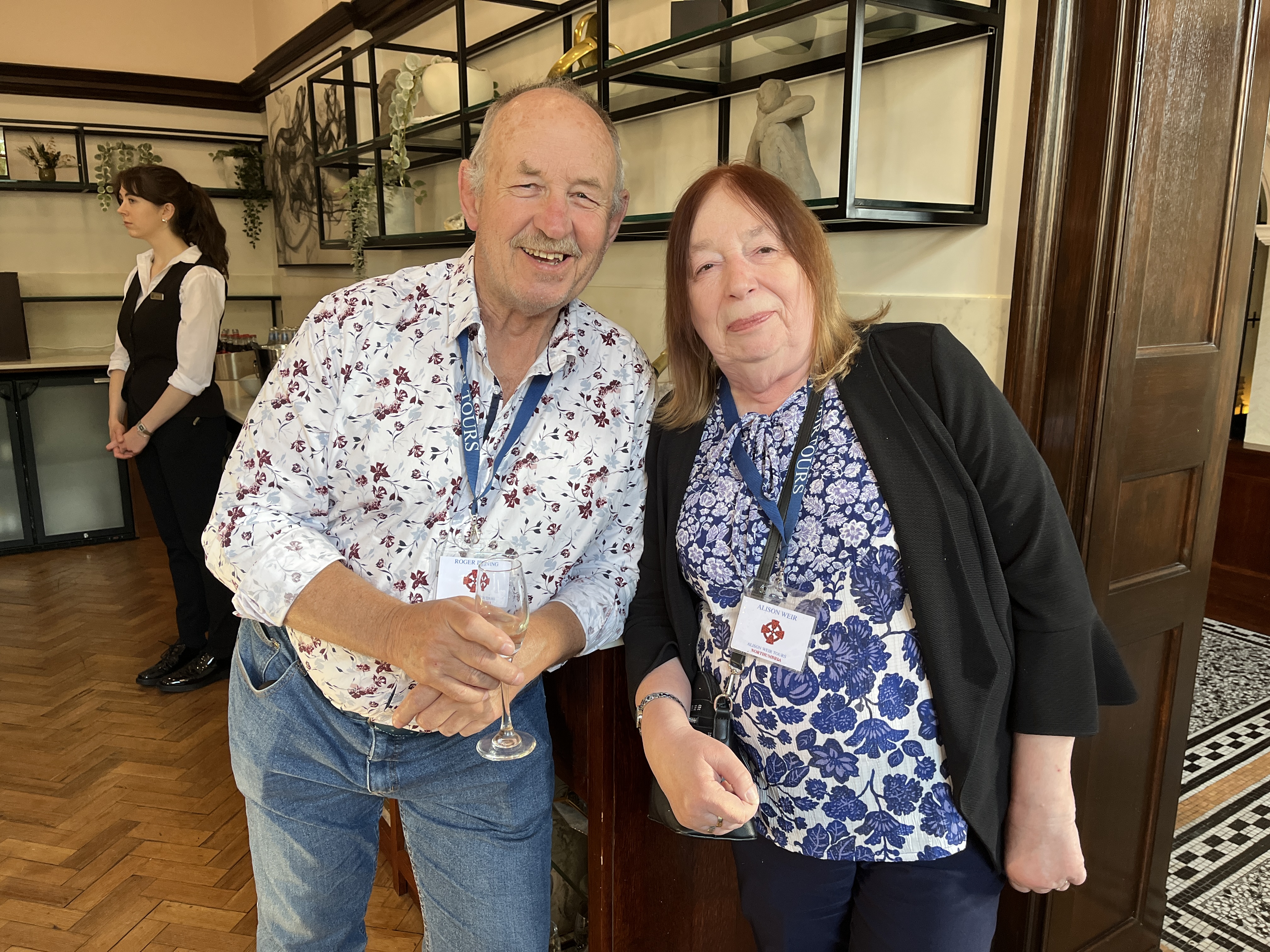
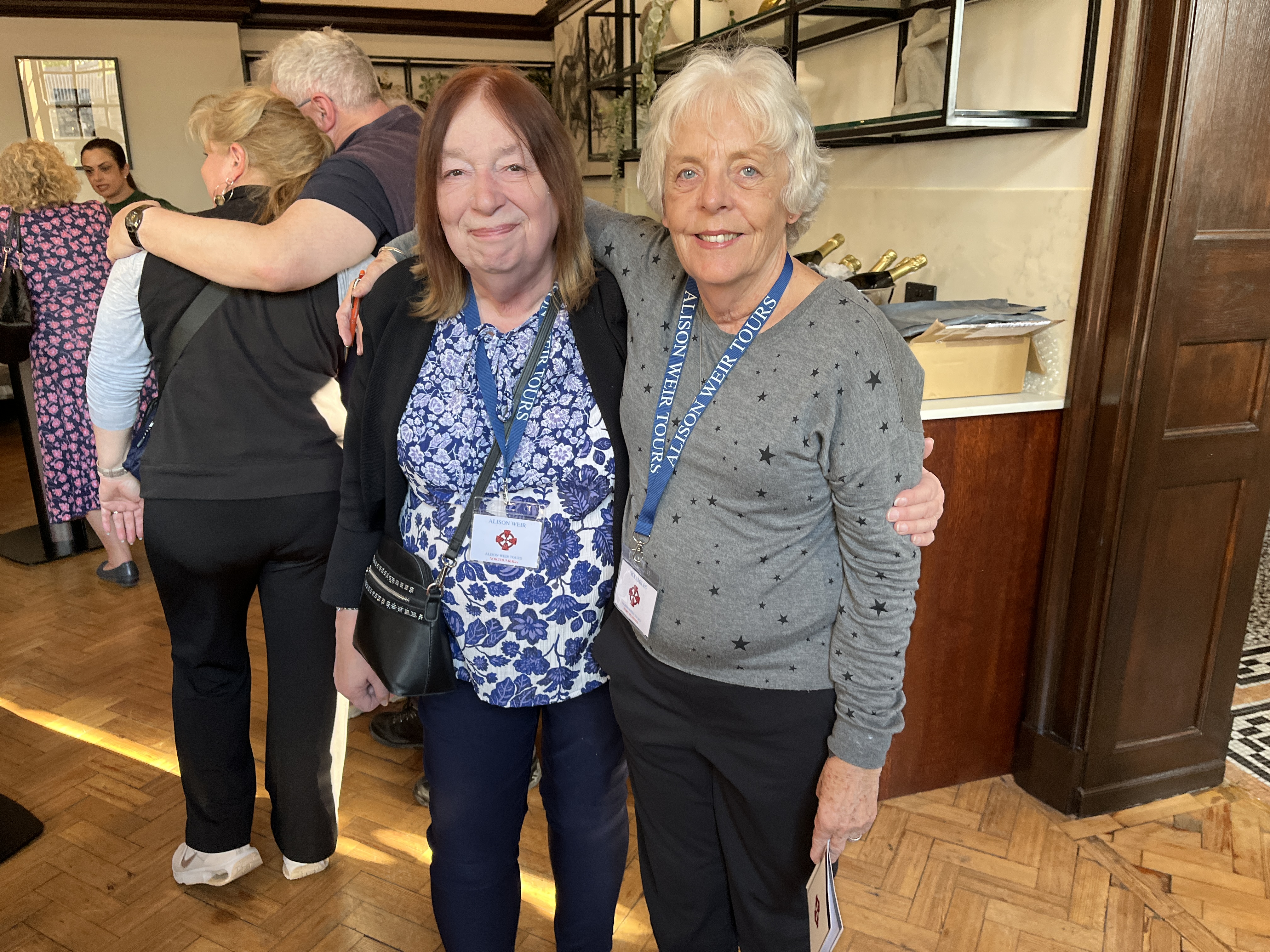
It was all a bit of a rush as some folk headed off to the train station; others made their way to airports for connections to international flights; and some, like us, checked back in to The Grand Hotel for a few days R&R and to catch up on parts of York that we still needed to see.
Post Tour:
Saturday, 10th May; Sunday, 11th May; Monday, 12th May

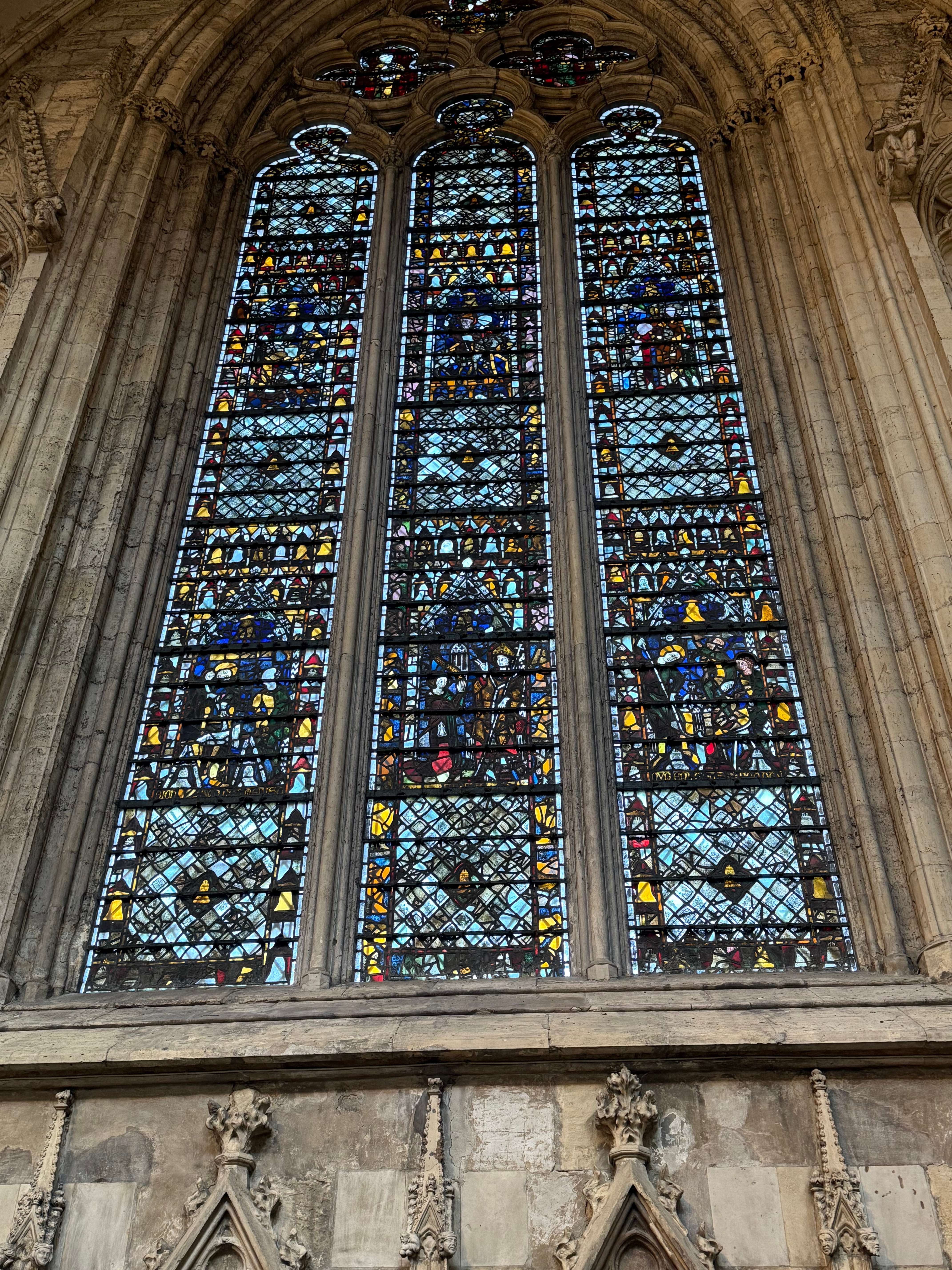

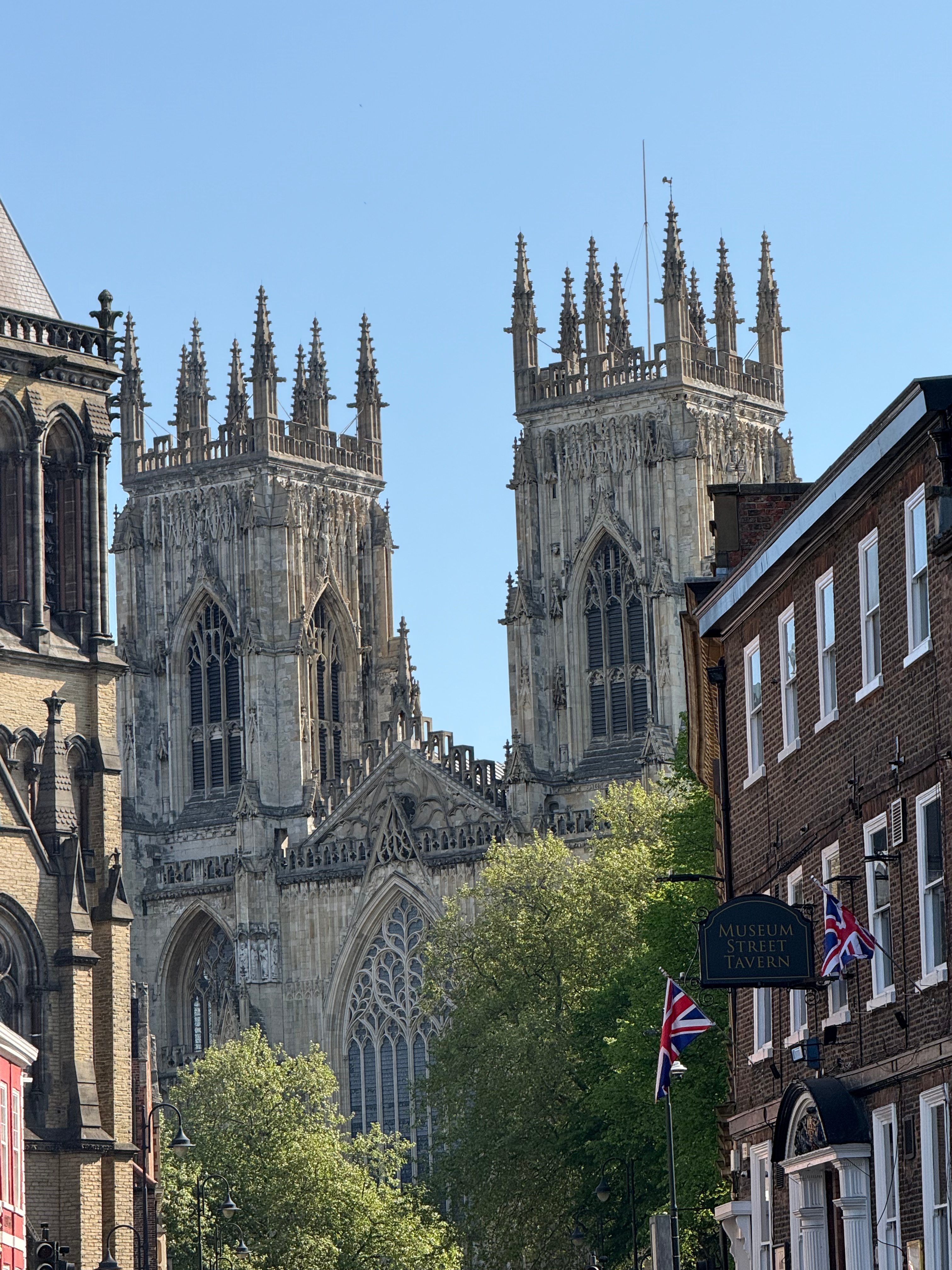
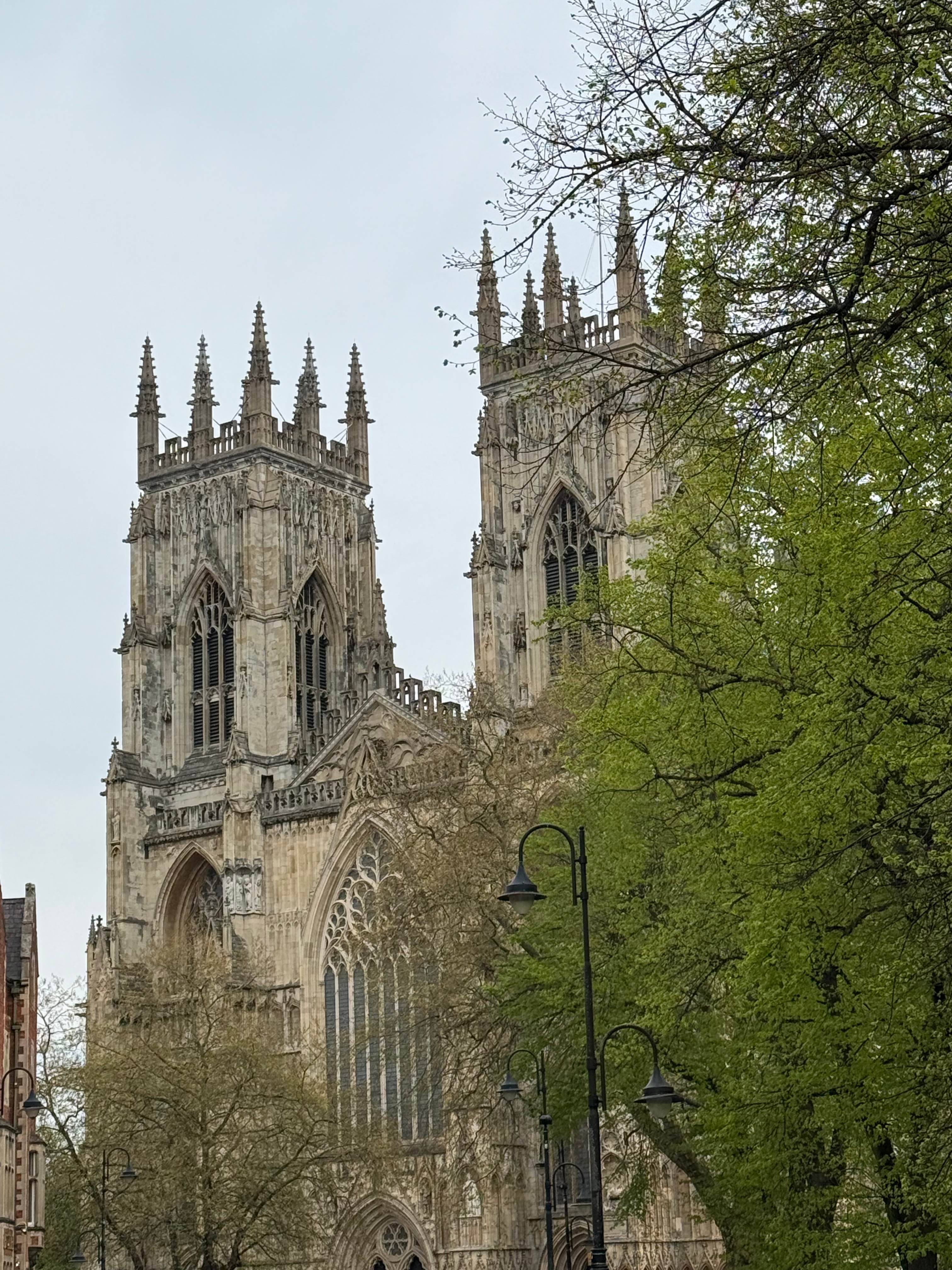
We caught up with Victoria, Eileen and Maureen the next day, Saturday, for a tour of the York Minster. There was a choir and orchestra practicing for that evening’s performance which made our time in the Minster quite special. We wandered around parts of the city in, once again, simply glorious sunshine before settling in for a Turkish meal with the North American trio at a restaurant near the hotel – Kapadokia. They were scheduled to fly out first thing in the morning, so an early night it was for all.
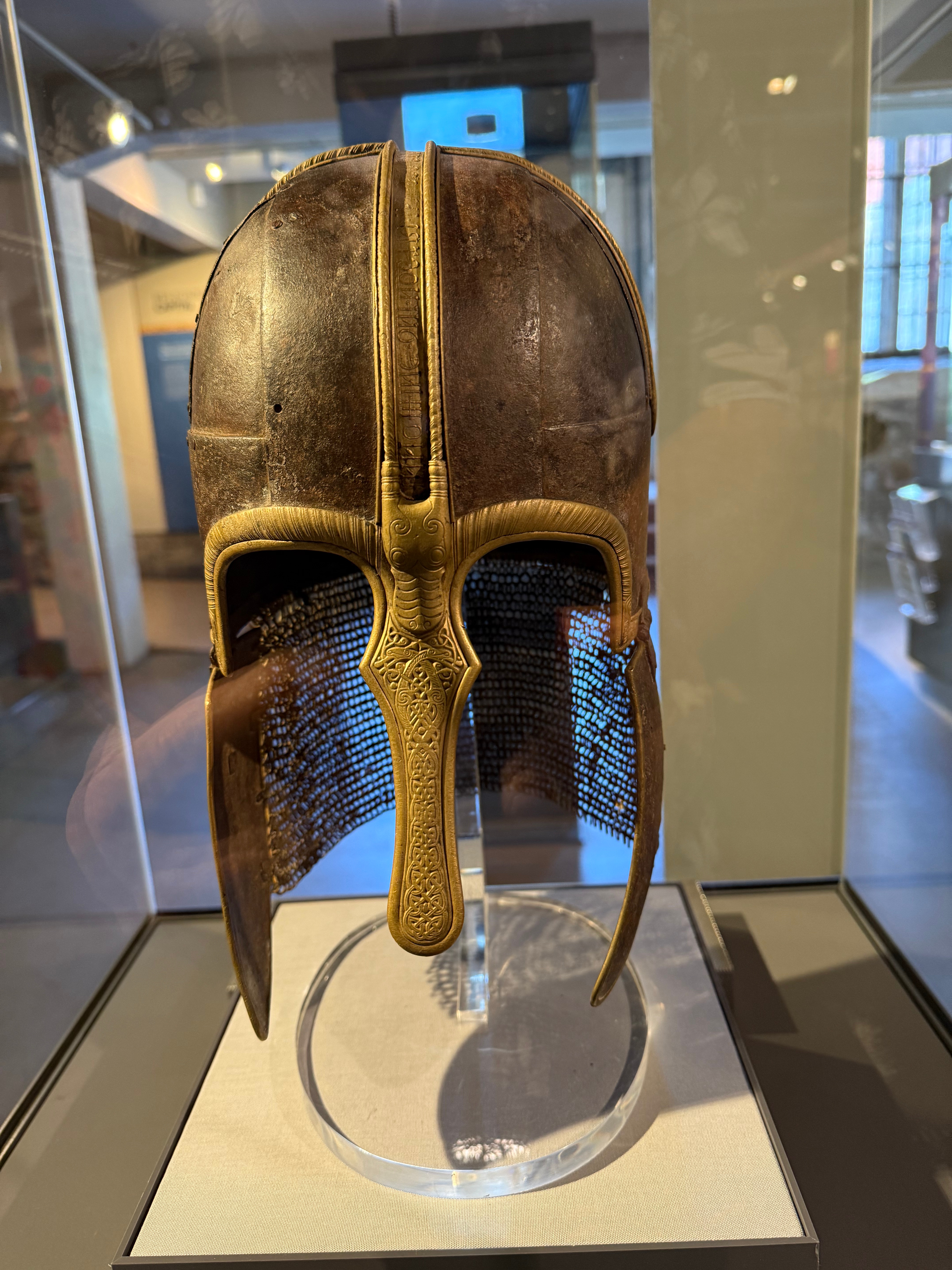
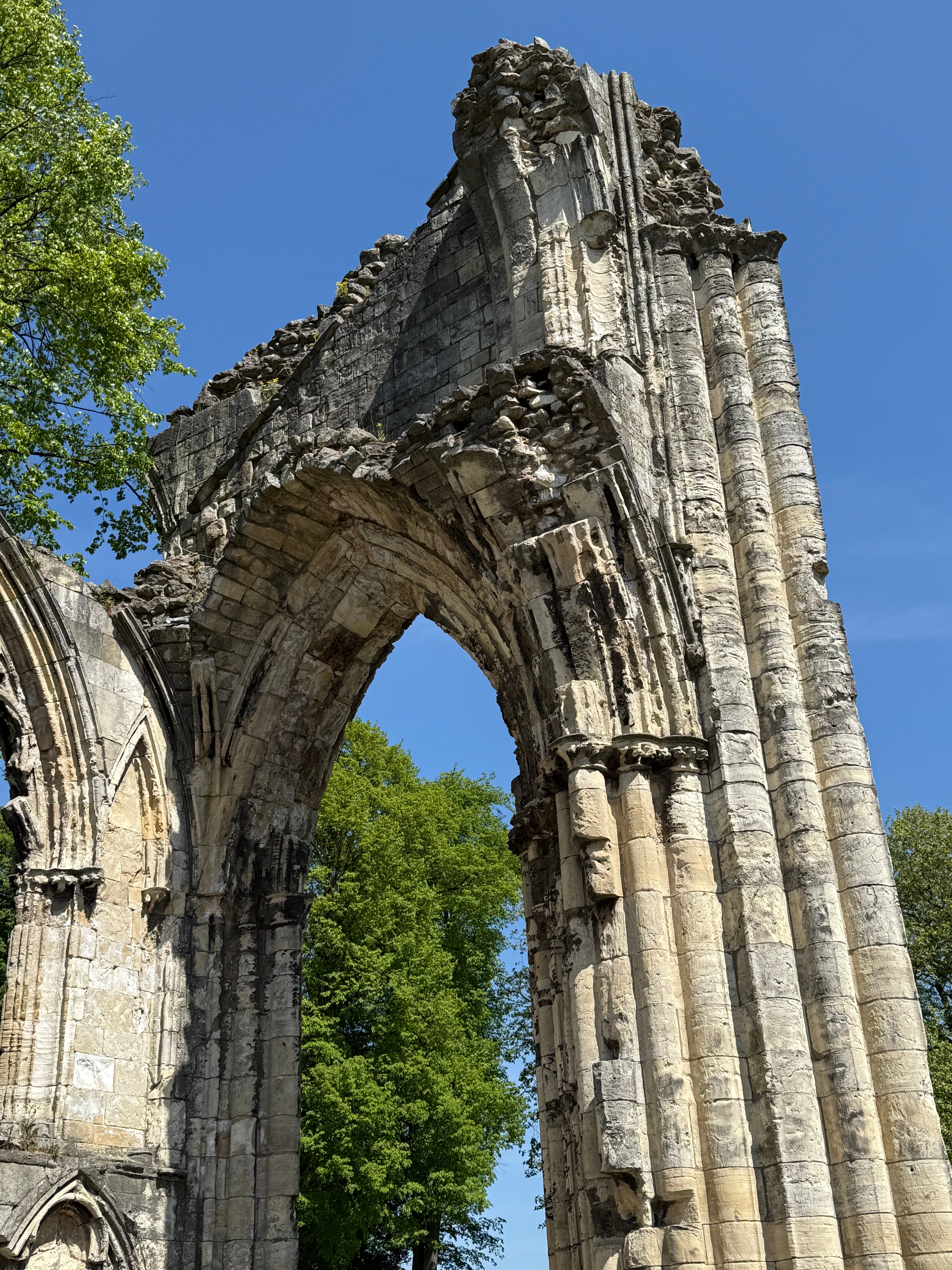
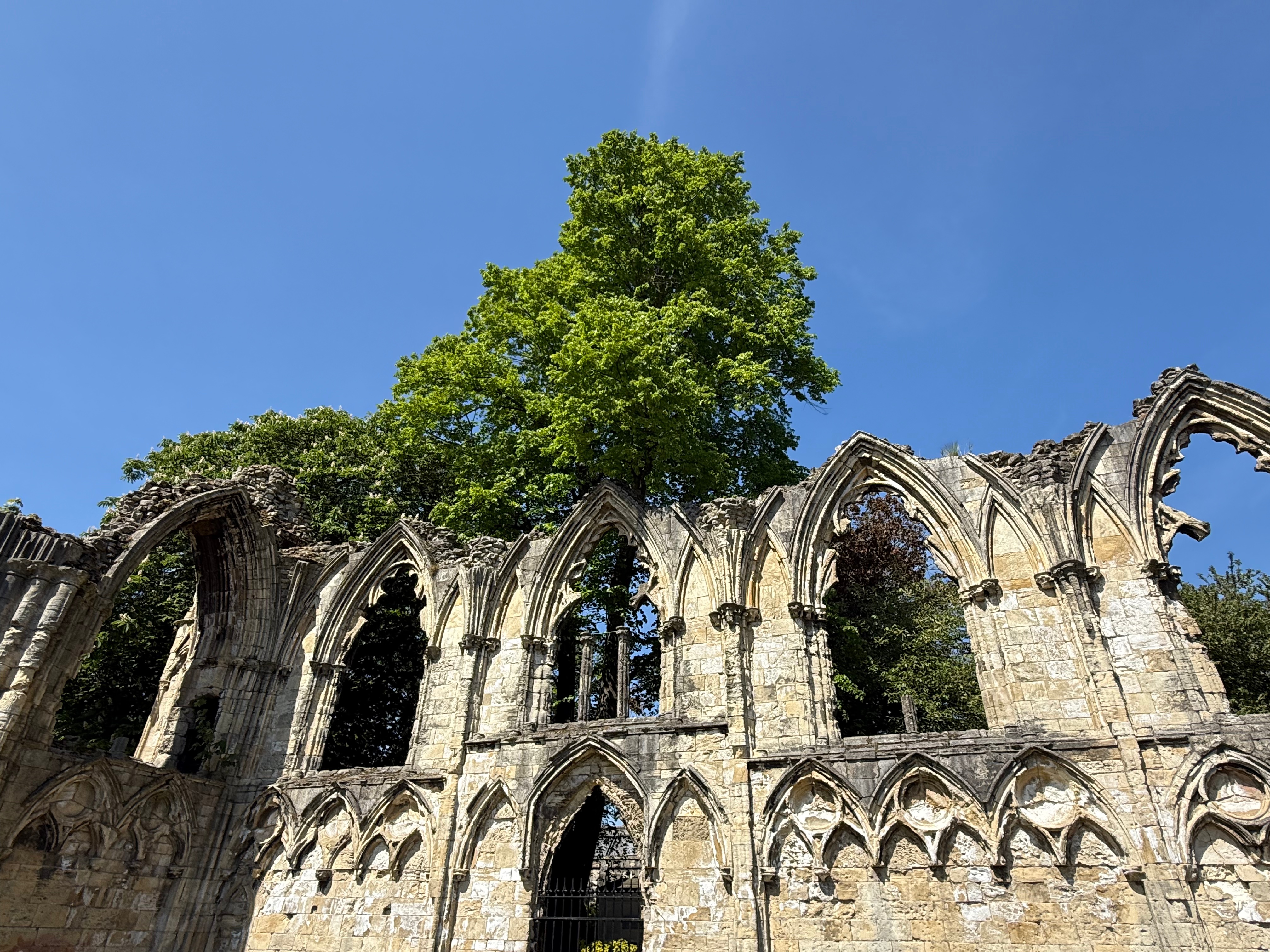
On Sunday we breakfasted at one of the cafes we’d found to have great coffee, then spent a few hours in the Museum. We walked through the park which was full of families enjoying the weather and the Abbey ruins. At the river we enjoyed some ice-cream before saying goodbye to the Ouse. Dinner was at our favourite, The Old Siam. Back to the hotel to make the final pack, double checking the weights so we could confidently breeze into Heathrow on Monday afternoon.
Breakfast on Monday morning was at the other great café we’d found, then check out of the hotel, spread a little baksheesh to the staff who’d looked after us so well, have a last pot of tea in the lounge while waiting for our ride to London to arrive.
Lots of fun, lots of good people, lots of nuanced history and exceptional weather. Perhaps we should do this all again next year?
 miles of irvings