My paternal ancestry has always been a bit muddled, primarily because my father was never forthcoming about his own life and deflected any questions about his ancestors. My mother wasn’t much help either, saying that her mother-in-law was a rather strange woman who had migrated to Australia from England just after WWI and had met her husband as she disembarked from the ship in Sydney.
There are two primary methods for tracing people and verifying family history in the 19th and 20th Centuries: births, deaths and marriages which are now readily available online; and by Censuses and business directories, which are also easily accessed online. There are many other documents that assist family history researchers such as passenger lists, military records, criminal records, prisoner movements & allocations, wills & probate, Government gazettes, newspapers and official journals like surgeons’ reports on particular immigration voyages. Some families have kept very accurate records of the major events in daily life over many generations, some families have actually kept a family tree, some have had all births and deaths faithfully written into the family bible. Some families, and individuals have kept diaries. All of these things assist the genealogist to decipher anecdotal history and present an actual true history. “True” history is a subject that we can debate into long evenings and bottomless glasses! And now we have DNA to add to the mix.
Many years ago, about the late 1990’s, my sister wanted to take her family to England so that her daughter could attend the Royal Conservatorium of Music and having an English grandparent qualified her family for temporary residency. In the process of assembling and presenting the necessary paperwork to validate her residency application she found that there was a lot of discrepancy between what we “knew” about our paternal grandmother and what was actually true. That information gave a framework and interest into the life of our parents and our grandmother.
When I first started our family tree my understanding was that my paternal grandfather, Reginald Norman Irving had two sisters, Gladys and Myra, and a brother Cecil. I was also under the impression that my father was an only child. I had visited my grandmother, Hilda Ethel Irving with my parents and siblings on a couple of occasions at her flat in Cammeray. I was quite young, probably 8 or 9, maybe 10 or 11 but all I remember is a tall severe old woman, a very dark unit, some inedible food and a strained, tense mood. My mother did relate some very interesting stories about the life & times of Hilda Ethel and her relationship with my father, but I’ll get to that later.
A few weeks ago, I had an email from a chap who was after background information on my great aunt – Constance Norris nee Irving. I professed ignorance of her existence but after a couple of hours researching, found that she was indeed the younger sister of Reginald Norman Irving, an aunt to my father. Quite remarkable! I wondered why I had never seen her presence on any Ancestry.com tree. I rechecked with some of the “regular” and trusted distant cousins on my paternal line, but no, they didn’t have any awareness or mention of Constance either. I did find a few trees in which Constance was listed, but the rest of the family were not mentioned.
A week later I received notification from MyHeritage.com that a new 2nd cousin had been “discovered” and verified by matching DNA – and this person, a female, shared with me 266.3cM across 10 segments with the largest being 59.2cM. Quite substantial! Immediate research verified that this lady, Michelle was indeed a descendant from a previously unknown great uncle – Edward Gordon Irving was another younger brother to Reginald Norman Irving. There are quite a few Ancestry trees where Edward Gordon Irving featured, but those trees had no mention of any of his siblings, just as with Constance! It was as if there were three totally separate groups – Reginald, Gladys, Myra & Cecil with their mother Florence featuring in the largest group. Then a small branch around Constance; and a final grouping around Edward Gordon and his family.
Barring any more previously unknown relatives emerging from the archives, here is the Irving side of the tree starting with a three-month voyage from England to Australia.

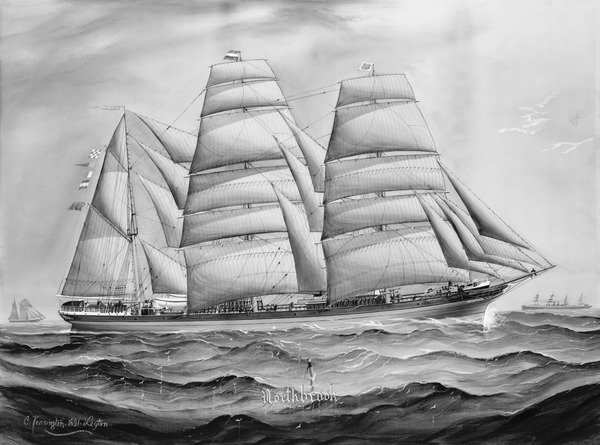
William Irving (1845-1891) & Annie Knight (1845-1886) came to Sydney, Australia in August 1879 as assisted immigrants on board the “Northbrook” which had sailed from London and Plymouth. They were from Cumberland in England, just south of the Lakes district, on the coast facing the Isle of Man and Ireland and about 70 miles north of Liverpool and Manchester. William, a carpenter, Annie and their children, twelve-year-old Edward Thomas Irving (Ted) (1867-1929) and nine-year-old Lilian Matilda (1870-1945), were listed as Presbyterian and all four of them could both read and write. Another daughter, Martha Jane born in 1871 had died before her second birthday. William & Annie had two more children after their migration to Sydney: William Wilfred (1881-1882) and Amy Annie (1882-1963).
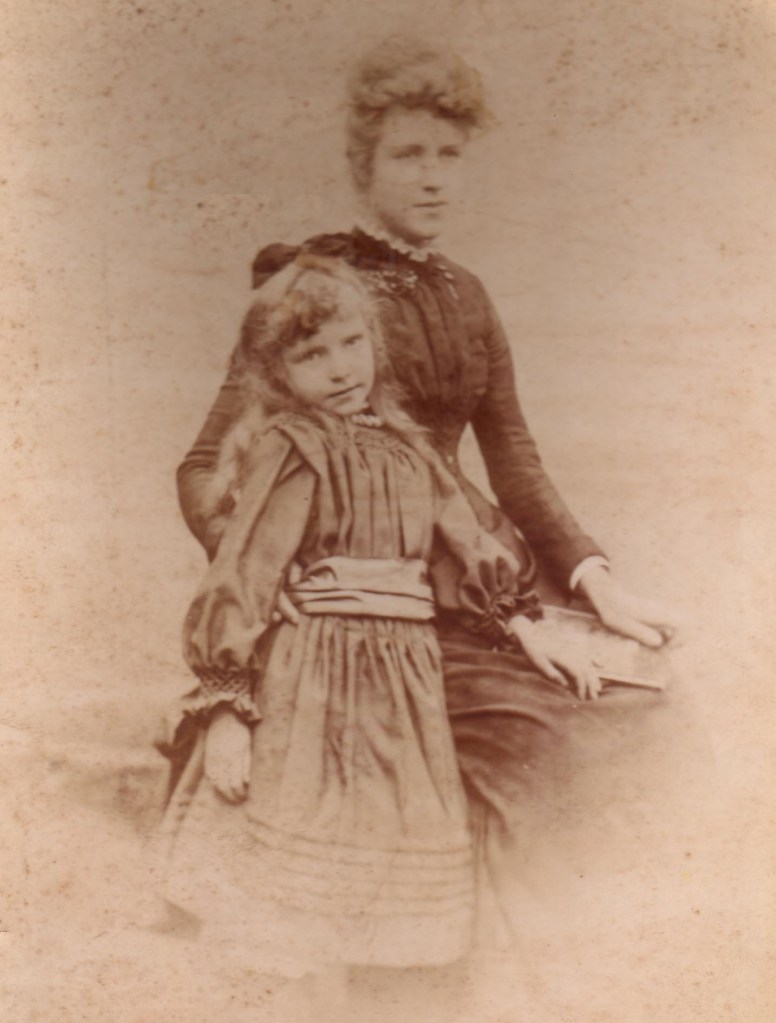
The first of the three Irving children to marry was Lilian (Lily) Matilda who married George Joseph Hanlon (1861- about 1930) on the 11th of February 1893 and had no children.
The youngest, Amy Annie who was only four when her mother died, married Captain George Arthur Roberts (1874-1958) in 1908 and their only child, Lilian Lucy Roberts was born on the 30th of January 1909. Captain Roberts was wounded at Gallipoli on May 29th, 1915. Lilian Lucy Roberts married Edmund Theodore Williams (Earl) on 21st December 1962. This was a second marriage for Edmund Williams and it produced two children, a son Ian, and a daughter Ruth.
Edward Thomas (E.T.) who was my great grandfather, married Florence Winton Stone (1870-1957) on 31stMay 1893 in Orange, NSW. Florence was the granddaughter of two pioneering Irish families in the Berrima region: a Protestant Minister, William Stone & his wife, Susan Pitt Johnson and an entrepreneurial trader James Jerome Higgins whose house in Berrima is now Heritage listed, and his wife Mary Ann Winton. Florence, a schoolteacher, was born in Goulburn and living in Orange as her father, Henry Stone was the local Postmaster. Henry Stone was in the habit of submitting witty and entertaining letters to the local newspaper under the nom-de-plume “Kilkenny Boy”, a reference to his birthplace.
E.T. Irving was embarking on a photography business which is possibly why he was out of Sydney and in rural NSW in the early 1890’s. Whatever the situation, their first child, Reginald Norman Irving (1893-1963) was born in Sydney. Florence had resigned from teaching in June 1893, because the Education Department only allowed single women teachers.
Their first born, Reginald Norman Irving, was my paternal grandfather and he had a number of vocations during his life. He was a steward on ships as a young man, this possibly being how he met his wife. He sold insurance, worked as a lithographer, then a photographer and for the last few years of his life he was listed as a flower grower. These pieces of information have been gleaned from documents such as marriage certificates and electoral rolls. I did not meet him, was told very little about him and had never seen a photograph of him.
The next child born to Florence and E.T. was a daughter, Gladys who arrived on the 13th of May 1895 in Corryong, Victoria, a small town about 120km east of Albury, near the upper reaches of the Murray River and close to the New South Wales border. Quite a distance from Sydney and quite a distance from Orange. E.T. is listed as a photographer on Gladys’s birth certificate; an unusual name, particularly as Gladys is not a name that appears in either E.T.’s family or in Florence’s. Perhaps this is simply E.T. & Florence being “modern folk” as neither Reginald nor Norman are names in either’s ancestors. Corryong is the town that has been made famous as the home of Jack Riley, “The Man From Snowy River”, Banjo Paterson’s poem written in 1890. Corryong is located in the foothills of the Australian Alps with Khancoban less than 30 km east. Corryong is claimed to have come from the Jaitmatang indigenous word “cooyong” meaning bandicoot.
Another daughter was born a year later, Myra Irving (1896-1974) in Tocumwal, 300km west of Corryong, on the NSW side of the Murray River. Tocumwal is said to be named after the local Bangarang indigenous word for “deep hole”, in reference to a blowhole 11km from the river. First Nation folklore about a giant fish living in the blowhole, and a young boy chased into the blowhole and emerging in the river indicate that there may be an underground stream which flows between the river and the blowhole in times of extreme drought. Prior to Federation, Tocumwal was in important customs point between New South Wales and Victoria. E.T. and Florence didn’t stay long in Tocumwal but moved almost 60km east to the booming town of Yarrawonga, Victoria where their next three children were all born between 1900 and 1905.
The first was Edward Gordon Irving (1900-1948), my newly discovered great uncle. Two years later he was followed by another brother, Cecil Clarence Irving (1902-1974). The last of E.T. and Florence’s children, Constance Irving (1905-1990) was the daughter most recently identified.
Yarrawonga is on the south bank of the Murray River and its twin town; Mulwala is on the opposite side of the river in New South Wales. The two towns are connected by a bridge over the mouth of Lake Mulwala, the great attraction of the area. Yarrawonga was the name given to a local pastoral station in 1842, the term meaning either “place where the wonga pigeon rested” or “water running over rocks”. The local indigenous people were the Mulla Walla, hence the derivation of the town and lake name.
E.T. and Florence Winton lived in Yarrawonga for about a dozen years at the start of the 20th Century. Yarrawonga was a major port on the Murray at that time and experienced substantial growth with daily rail connections to Melbourne, hotels, banks, schools, churches, courts and a well-appointed racecourse. Fruit growing, wine distillation and dairying were major industries and river trade was enhanced by numerous paddle steamers and punts. It would have been a good town for E.T. Irving to establish his photography business. On the birth certificate of Edward Gordon, he is listed as an “Artist Photographer” so it would also appear that he did not suffer from low self-esteem.
I have scoured the records in both Victoria and New South Wales and can now state with great confidence that my great grandparents, Edward Thomas Irving and Florence Winton Stone married in Orange on 31st May 1893 and had the following children:
Reginald Norman Irving b. 1893 in Sydney NSW
Gladys Irving b. 13th May 1895 in Corryong Victoria
Myra Irving b. 1896 in Tocumwal New South Wales
Edward Gordon Irving b. 22nd April 1900 in Yarrawonga Victoria
Cecil Clarence Irving b. 24th March 1902 in Yarrawonga
Constance Irving b. 22nd March 1905 in Yarrawonga Victoria
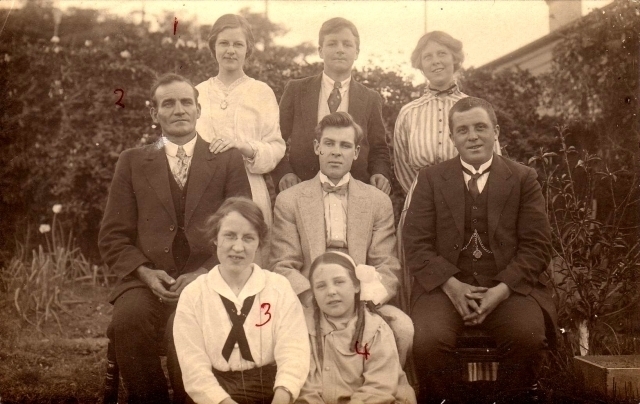
E.T. is found on most of the business directories published for Yarrawonga between 1900 and 1910, typical of them is the 1910 Sands Victorian Business Directory which lists him as a photographer with business premises on the east side of Belmore Street in Yarrawonga between C.J. Wallace, Saddler and John McNamara & Co, Auctioneer and stock and station agents. E.T. and Florence are listed on the Yarrawonga Electoral Roll in 1903, 1905, 1908 and 1909. By 1913 however, E.T. had left Yarrawonga and is plying his photography business in the town of Henty, about 150km north of Yarrawonga and mid-way between Albury and Wagga Wagga.
Electoral Rolls are an important document when tracing the movement of people when building a family history. They were issued by States and pertinent to the family’s movement Victoria published in 1903, 1905-6, 1908, 1909, 1910, 1912-13, 1914 and right up into the 1980’s; and similarly, New South Wales published in 1903-4, 1913, 1930 and up into the 1980’s.
There is no listing in any Electoral Roll in either state for either of them after 1909 until 1913 when Edward is listed on the Electoral Roll for Henty NSW. The assumption is that they have separated sometime in 1910 and E.T. has surfaced in Henty as evidenced by his name and profession listed on the Electoral Roll. Interestingly, that is the last time I can find E.T. appearing on any Electoral Roll anywhere in Australia. Florence may have moved to New South Wales as she appears on all Electoral Rolls in Naremburn from 1930 through to 1954 in a house at 43 Mitchell Street, Naremburn. So far there is nothing to verify where she was in the twenty years between 1910 and 1930.
I did however find more about E.T. and the New South Wales Police Gazette of 26th August 1914 provided the first clue. Under the category “Deserting Wives and Families, Service, etc.” is the following entry:
“Waverly. – A warrant has been issued by the Children’s Court Bench, Sydney for the arrest of Edward Irving, charged with child desertion. He is about 45 years of age, 5 feet 8 or 9 inches high, slight build, sallow complexion, brown hair and moustache; dressed in a navy-blue sac suit and brown soft-felt hat; a jewellery salesman. Complainant Thomas Egan, State Children’s Relief Department.”
Was this our man? Trove is a very good resource for family research and during my hunt for details it did not disappoint. This was in The Henty Observer and Culcairn Shire Register (NSW : 1914 – 1950), Friday 16 March 1917, under the heading Pithy Pars page 3:
“Edward Thomas Irving was arrested at Henty yesterday under a warrant of commitment from Sydney for failure to comply with an order of the court towards the maintenance of his child. He was removed to Albury gaol.”
I can’t yet find anything else about this situation, so I’m unsure if E.T. spent time behind bars or he paid what was needed to Florence.
The next event in the Irving family is the arrival of Hilda Ethel Cornish (1889-1977) into Sydney from England. Hilda’s maiden name was Wright, her parents were Frederick Wright and Emma Staff and she was born in Thurston, Suffolk, just a few miles from Bury St Edmunds and about 35 miles due east from Cambridge. She married Stephen Cornish (1887-1916) on 2nd January 1915 in his local Parish Church at Woolpit a few miles from Thurston. They were both involved in WWI, Stephen serving in France with the 1st Battalion of Grenadier Guards and Hilda was based in Aldershot, Hampshire as part of group of female Army Drivers. Tragically, Stephen died from injuries received in Flanders on 25th January 1916 and less than 2 months later Hilda gave birth to their son, George Ernest Cornish (1916-1991) in Aldershot. The Cornish family, like so many during this pointless war, lost another son to battle in France, Stephen’s younger brother Sydney Frank Cornish in 1918.
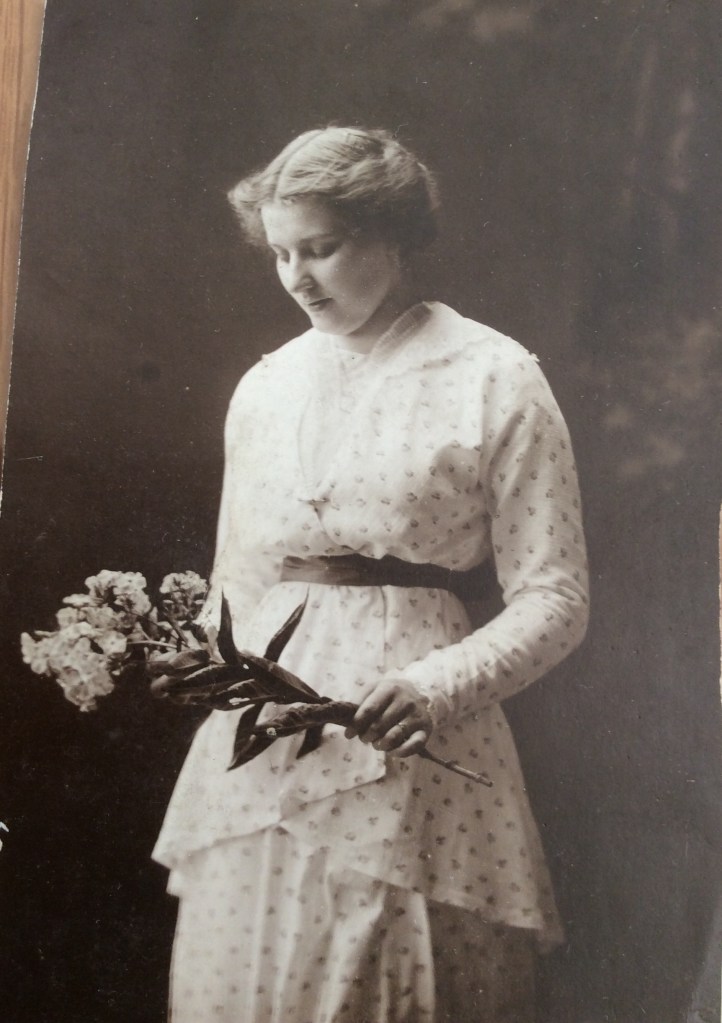
At the end of WWI Hilda decided that she would migrate to Australia. There is much speculation about the exact passage and the reasons for leaving her family. Grief and the prospect of life as a single mother are the most probable reasons. There is conjecture that she had met an Australian soldier and he had encouraged to come to Australia with marriage as a joint future. I can find her and her son on board the “Delta” which arrived in Melbourne on 3rd September 1919 via Port Said, Kantara and Colombo. An application form for a pension in 1970’s states that she arrived in Sydney, Australia on the “Ormonde” in May 1920. The tale gets murkier as Reginald Norman Irving had been working as a ship’s steward for about a decade and was listed on the “Ormonde” as a steward which landed in Sydney on the 15th of August 1919. The best version of the story that I like is that Reginald had struck up a friendship with Hilda on the voyage from London to Sydney and had said that if her goal of marriage to the Australian soldier didn’t eventuate, she should get in touch with him! I’ve looked at all sorts of information on ships between England and Australia immediately after the end of the war and the two things that stand out are the sheer number of ships deployed to return soldiers back to Australia and the effect of the Spanish Flu. Ships logs, troop movements, refugees, arrival dates and exact numbers are not absolutely clear for these years, making accuracy difficult. Ports in Australia had quarantines in place, media was muzzled and records fudged. The outbreak of the Spanish Flu was quickly spread to all military in Europe and returning soldiers and sailors were the obvious carriers of the virus.
Irrespective of exactly when she arrived and exactly when Reginald Norman proposed to Hilda, on Saturday November 13th in the North Sydney Christ Church in Lavender Bay they were married. The Marriage Certificate is most interesting. Hilda is listed as Hilda Cornish, a 25-year-old spinster from Argyle Scotland whose parents were Emma Staff and Frederick Cornish (deceased). Reginald Norman’s parents, Florence Irving and E.T. Irving have both signed the document as witnesses. There is no mention anywhere of Hilda’s son, George Ernest, nor can I recall any mention of him growing up. Hilda created a slightly burnished history for herself as evidenced by the marriage certificate and by the problems Adrienne encountered when applying for UK residency via Hilda’s status as a British citizen. Given the time and associated stigma this was very understandable.
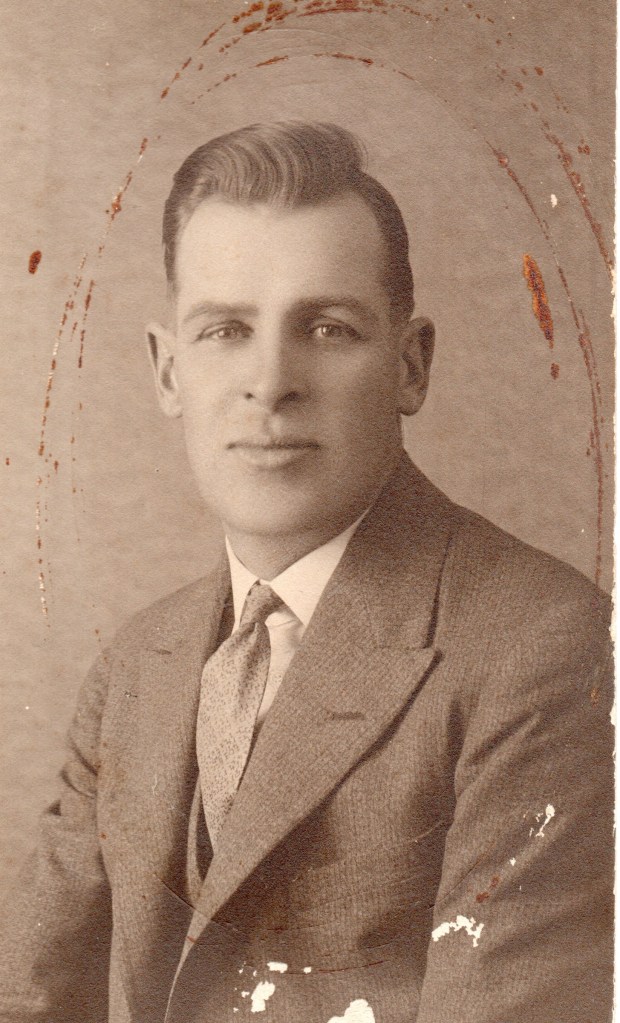
Hilda and Reg Irving only had one child – my father, Robert John Irving who was born in East Maitland on 17thAugust 1923 and baptised at St. Cuthbert’s Naremburn on 28th October 1923. I have no indication of where they were actually living, nor any idea of where Reg was employed. NSW did not publish any electoral rolls until 1930 and by then they were living in Sydney at Five Dock.
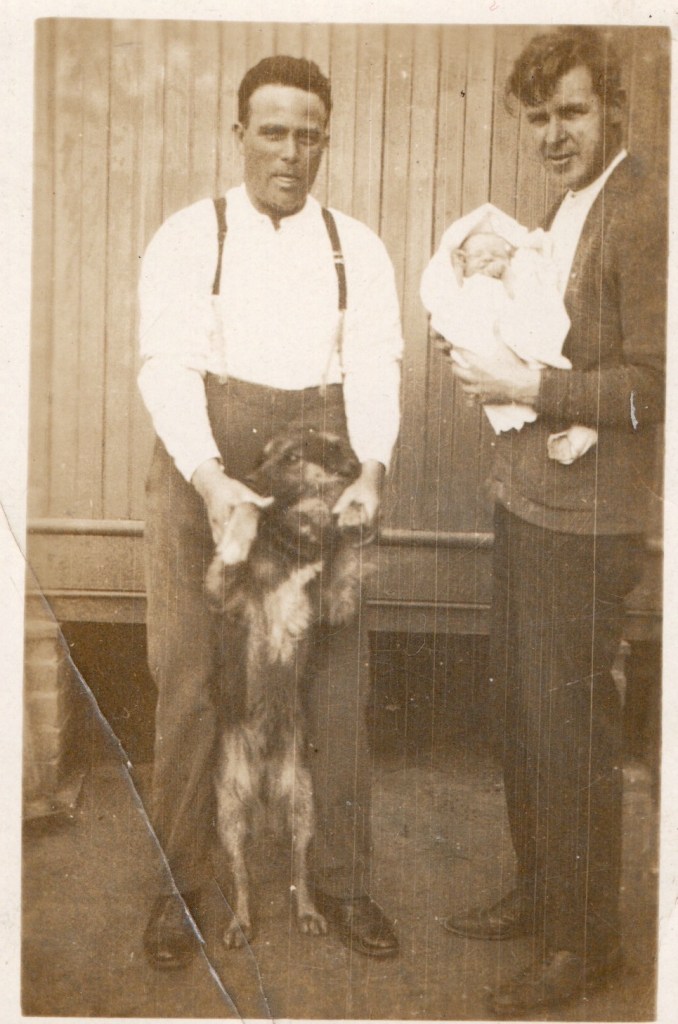
Eleven months after Hilda and Reg’s marriage, the next eldest, Gladys, married William Charles Dacey (1892-1978) at the St. Cuthbert’s Church in Naremburn. The marriage was held on Saturday 1st October 1921 with Gladys listed as a 25-year-old spinster living in Crow’s Nest and her father, E.T. noted as a photographer. Reg, her older brother was one of the witnesses and the groom was a 29-year-old salesman from Willoughby who was born in Mount Morgan, Queensland. Gladys and William had no children during their marriage. William had served in the military during WWI as a member of the 1st Infantry Battalion A.I.F., enlisting in February 1916 at Sydney’s Victoria Barracks and serving in France. He returned to Australia aboard the “Konig Frederick August” in June 1919 and was fully discharged on the 15th December 1919. They lived in San Souci, Maroubra and Parramatta and the 1949 electoral roll shows them in Wentworthville, William as a poultry farmer. They were living in St. Leonards when Gladys died in 1970. William died 8 years later in the RSL Anzac Age Care nursing home in Narrabeen.
The next mention of the family was an entry in Sydney’s Daily Telegraph on Thursday 6th March 1924:
IRVING v. IRVING
Alleging desertion, Edward Thomas Irving petitioned for a divorce from Florence Winton Irving, formerly Stone. The couple were married at Orange in 1893 according to Wesleyan rites. A decree nisi was granted. Mr. C. M. P. Horan appeared for the petitioner.
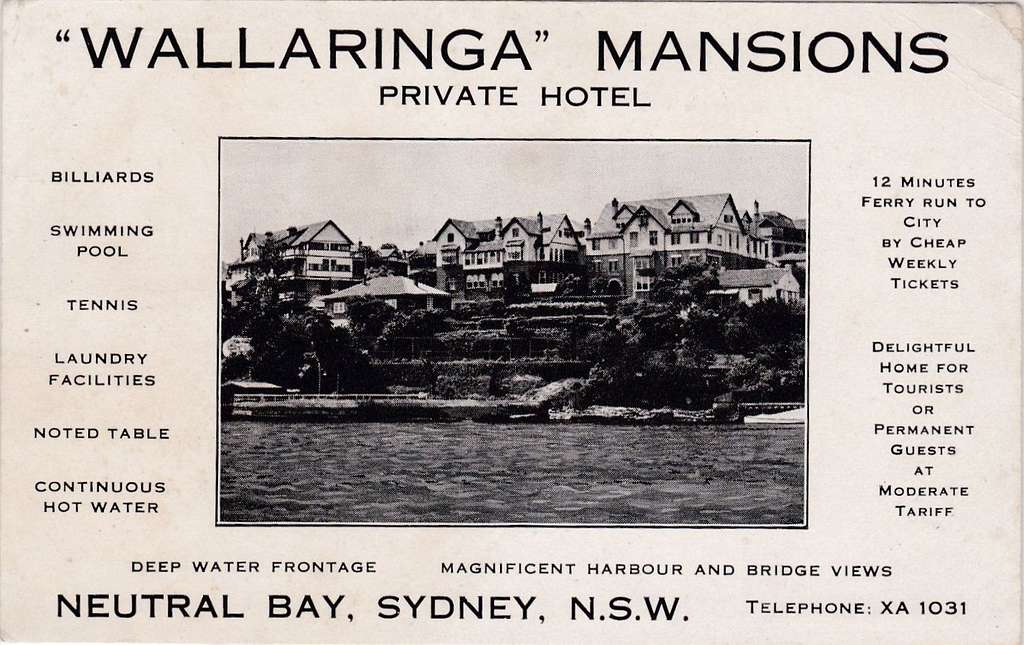
Another marriage provides some clues about the family’s situation. Edward Gordon Irving, a 24-year-old shipwright married 26-year-old Laura Beryl Williams on Saturday July 26th 1924 at St Cuthbert’s Church in Naremburn, the same church that his older sister Gladys had been married in. The marriage certificate has Edward’s residence as Mitchell Street, Crow’s Nest which is the address that his mother, Florence Winton Irving had from 1930 until her death. There were no published NSW electoral rolls during the 1920’s, so this could be where the family was living as early as 1921 when Gladys was married – her usual residence was listed simply as Crow’s Nest. Laura’s occupation was domestic duties and her residence was “Wallaringa Mansions” Neutral Bay, a quite famous property originally built in 1850’s and expanded as a solicitor’s family home before being used as a guest house and private hotel in the early 1900’s. Laura’s father was a pioneering grazier and miner from Moonan Brook about 30 km’s from Scone in the upper Hunter River region. Edward may have been employed at one of the many shipyards in and around Neutral Bay – the Wallaringa Mansions are only 4km’s from Mitchell Street. The two witnesses to the marriage are William Charles Dacey, Glady’s husband and Cecil Clarence Irving, Edward’s younger brother. Interestingly, E.T. Irving, Edward’s father, a photographer, is recorded as deceased; however, this is not the case.
Sydney’s Daily Telegraph, published on Friday 19th December 1924, on page 11:
DIVORCE
____
(Before Mr. Justice Owen)
DECREES ABSOLUTE.
His Honor declared absolute the decrees nisi granted in the following suits:
And amongst almost two dozen listed suits was Edward Thomas Irving v Florence Winton Irving.
Edward and Laura’s only child, Winton Dudley Irving is born 3rd January 1925 in North Sydney. When the 1930 electoral roll for N.S.W. is published they are living in East Maitland, Edward still a shipwright. In 1931 they have moved to Chatswood, less than 4km’s from the family home at 43 Mitchell Street. Over the next ten years they will move a few times, but always in Chatswood and always only a few km’s from Florence.
E.T. is now divorced and definitely not deceased as he is listed in the Sands Business Directory N.S.W. as a photographer in Scone, New South Wales in 1926 and 1927. Why Scone? I can’t find any documentation that indicates any detail, let alone rationale to his choice of towns to conduct his business. I am confident that 43 Mitchell Street Naremburn is where Florence and her children have been living since as early as 1920 when Reg and Hilda were married, possibly even earlier.
Keeping with family custom, St. Cuthberts Church in Naremburn, only a short walk of 650m from 43 Mitchell Street, was where the 32-year-old Myra Irving married William Olding on Saturday 31st March 1928. Edward Gordon was one of the witnesses and E.T. was not recorded as deceased, but simply as a photographer. William “Bill” Olding was from Salisbury in Wiltshire, only 8 miles south of Stonehenge. He was baptised in Lullington, just outside Frome in Somerset where Glenn’s (Lynn’s husband), ancestors were from. Deciphering the military records from both England and Australia shows that Bill enlisted into the British Navy in 1912 as a page boy 2nd Class. He stayed in the Navy after the war and transferred to the Royal Australian Navy in 1922 initially serving on the “Platypus”. The 1930 electoral roll has them living in Chatswood, only 3 km’s from the Mitchell Street home of Florence. Their only child, a son, Joseph Alan is born in July 1930 and Bill & Myra are still living in the same house in Chatswood well into the 1960’s.
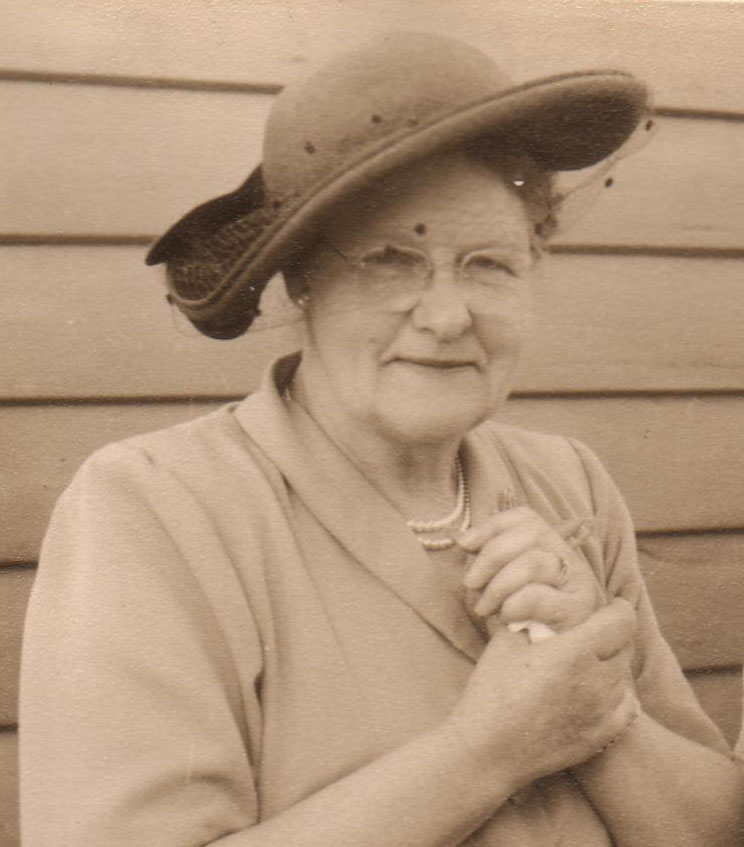
Trove provided an obituary in the “The Manning River Times and Advocate” published on Wednesday 6thNovember 1929 on Page 2:
MR. EDWARD THOMAS IRVING.
A very sudden death occurred at Taree about 2.30 on Sunday afternoon, when Mr. Edward Thomas Irving passed away. The late Mr. Irving, who was 55 years of age, had suffered for some time with heart trouble. A native of Lancashire (England) he was a son of Mr. and Mrs. Thomas Irving, well-known residents of that locality, and came to Australia some 30 years ago. During that interval Mr. Irving had several times visited his native land and had also travelled a good deal in New South Wales, Victoria and Queensland. About 15 years ago he married Miss A. Wiles, of Goulburn, who survives him. They resided at Bellingen for a time and came to Taree from Scone about two years ago. Mr. Irving was by profession a photographer and had his studio in the Taree School of Arts building. His only relatives are two sisters, both of whom reside at North Sydney, viz., Mrs. Hanlon and Mrs. George Roberts (sister-in-law to Rev. S. C. Roberts). During his illness the deceased was devotedly attended by his wife, for whom sympathy will be felt in her loneliness. The funeral took place at the Dawson cemetery on Monday morning, Rev. V. T. Smith conducting the service. Mr. S. A. Bridge was the undertaker.
And this obituary certainly raised a lot of questions, in fact probably more questions than any answers it provided.
By my records, E.T. was 62 when he died, not 55. His parents were William and Annie and had arrived in Australia as assisted migrants in 1879 and died probably penniless less than 12 years later. I can’t find any record of E.T. travelling back to England at any time during his life in Australia and although he was definitely living for some years in both Victoria and New South Wales there is no trace of any time spent in Queensland. There is not a record of any marriage with a Miss A. Wiles from Goulburn, nor is there any birth or death record of a Miss A. Wiles. His two sisters were both living in Chatswood, but there is no mention of his wife, six children and 4 grandchildren. It is true that Amy Annie Irving’s brother-in-law was the Reverend Samuel Cuthbert Roberts, a Methodist Minister but the obituary does seem like a marketing exercise. Perhaps The Manning River Times was part of Rupert’s outlets!
New South Wales publishes electoral rolls in 1930 and they provide a clear indication of where the family members are living. Florence Winton Irving, female designated as having home duties is living at 43 Mitchell Road Naremburn.
At the same address are Constance, a female stenographer and Cecil Clarence, Myra a male fitter. I’m not sure how the entry for Cecil came about with his sister’s name as part of his, but it does persevere in every electoral roll until 1968.
Hilda and Reg are living on the other side of the harbour at 2 Cross St. Five Dock; Hilda also has home duties and Reg is an insurance agent.
Gladys and William Dacey are well south of the harbour living on Terry Street Matraville where William is a salesman and Gladys has home duties.
Myra and Bill Olding are living at 22 Third Avenue Chatswood; Myra is another “home duties” and Bill is a roller-maker.
Edward Gordon and Laura are living on Victoria Street, East Maitland; Laura also has home duties and Edward is a shipwright.
E.T.’s sisters are both living on the northern side of the harbour. Lily and George Hanlon are at Mount Street, North Sydney, across the road from St. Joseph’s Convent; home duties have been assigned to Lily and George is a machinist. Amy and George Roberts are a few km’s north of Myra and Bill, living with their daughter Lilian Lucy on Corona Avenue in Roseville. Lilian is a music teacher; Amy has the home duties and George is an architect. In future electoral rolls, George is listed at his place of work at various addresses in Darlinghurst, although in 1954 he is listed in Neutral Bay, back on the north side. Amy, George and Lilian settle into a house on Lamont Street Wollstonecraft by the early 1940’s which is only 1 km from Florence on Mitchell Street. Lilian is living in that house after her parents have died and she has married the father of her children, Ted Williams in 1962.
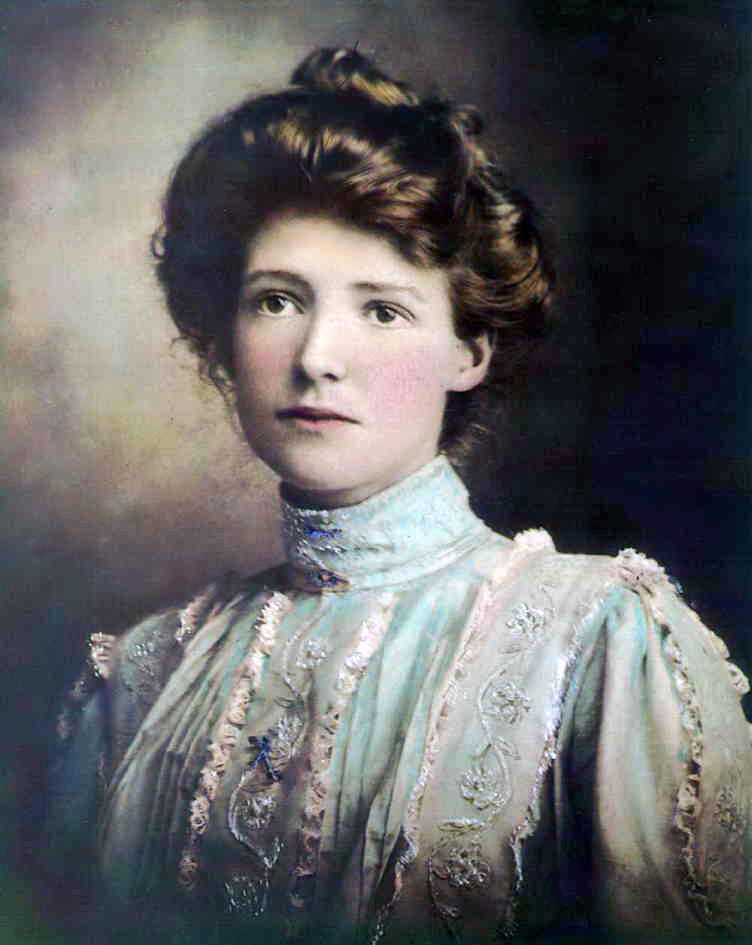
On Saturday 1st March 1930 Constance marries Patrick Stanislaus Norris an air mechanic from Boulder City in Western Australia. They break with the family tradition and utilise the St. Andrews Cathedral as their marriage venue, which is on the corner of Bathurst & George Streets just behind the Sydney Town Hall. They move around quite a lot in the first ten years of their marriage from Windsor to Turramurra as Patrick’s career with the R.A.A.F. flourishes. By 1963 they have two children, Valarie Florence Norris (b. 1932) and Warren Irving Norris (b.1940) and are settled in Epping where they remain until the early 1980’s when Patrick dies. The two children stay unmarried and living with their parents well into their 40’s.
Reginald & Hilda separate in 1936 or 1937. The 1936 electoral roll has them living on Avoca Street Randwick East, Hilda with home duties and Reg listed as a photographer, apparently now taking up his father’s profession. But the 1937 electoral rolls have Hilda living at 88 Frenchman’s Road in Randwick and Reginald is back with his mother Florence and brother Cecil at 43 Mitchell Street in Naremburn. My father, Robert John would have been a 13-14 year old at this time and attending Sydney Boys High School on Cleveland Street Moore Park. He lived with his mother and they moved to Cremorne in 1938 and then to Tunks Street, Waverton in 1939 which is only a little more than 2km’s from his grandmother’s house at 43 Mitchell Street. This may have been a practical move by Hilda to ensure that Robert John had access to his father and his father’s family, particularly as Hilda had no relatives in Australia. Robert John lived in Waverton with his mother until early 1942 when he finished school and joined the war effort. After 1937 there was no published electoral roll until 1943 and that roll shows that Reg, still a photographer, was another 10km’s further north on Yarrara Road in Pymble. I have no indication of when in those six years he moved to Pymble. Reg moved once more in his life, around the corner to 21 Yanko Road where he lived for the next 20 years.
The war was on in 1939; Australia as all good colonial outposts do pledged thousands of its young men and women to the support of England. Robert John Irving enlisted in the Citizen Military Forces on 2nd January 1942, serving in the 2nd Australian Ordnance Store Company until 17th June 1942. He then enlisted in the Royal Australian Air Force on 30th June 1942 and was discharged on 24th October 1945. During this period, he advanced from an Aircraftman Class 2 to a Flight Sergeant, gaining his Air Gunner’s Badge on 27th May 1943. He was transported with thousands of other military to England via Canada for training and preparation but did not participate in any active conflict.
Winton Dudley Irving was born two years after his cousin, Robert John, and was also involved in the war effort. The only record I can find is that he was a stoker in the Royal Australian Navy, enlisting very late in the war. We have a few copies of written communication between Robert John and his mother from February 1944 when he was in England. In one of them he writes: “Is Winton on the “Australia”? That is a big surprise to me. He must have finished his training quickly. By the way what is he?” These two cousins were the only members of the family that were part of the armed forces during WWII. Post war, Winton develops a career as a photographer, both press and commercial, following the path of his uncle and grandfather. My father, Robert John also has a love of photography – he converted the laundry in our Wollongong house into a dark room and would regularly enlarge and print his photographs.
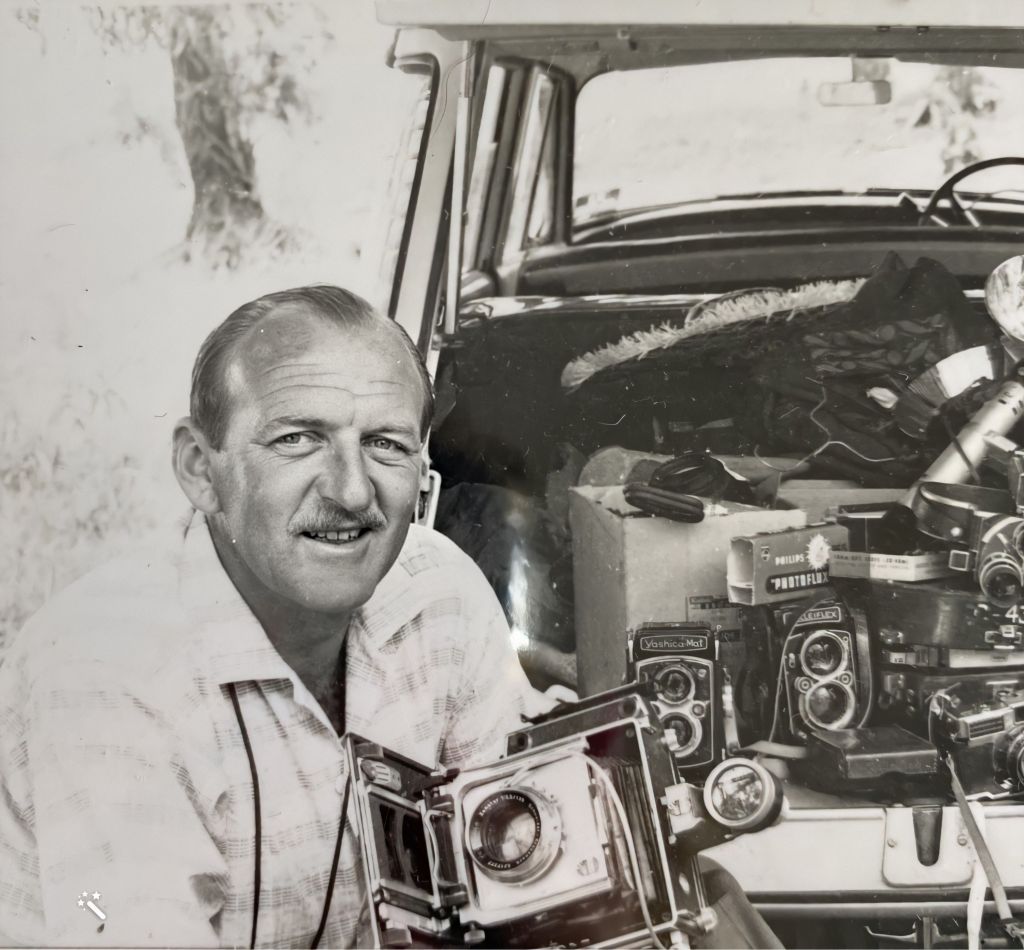
Reg and Hilda appear to have no reconciliation and in Robert John’s communication to his mother on February 2nd he writes: “I’ll be eagerly waiting for the sea mail explaining this R.N.I divorce development. It all sounds quite intriguing. Did you see him or did he merely write?”
After discharge from the Royal Air Force Robert John returned to Sydney and lived with his mother at the house on Tunks Street in Waverton and met my mother, Juli Vacchini. As with most aspects of this part of my family history, the exact meeting of my parents and their courtship before marriage are not gleaming with clarity. What we do know is this: my mother was engaged to an aircraftman from Morwell Victoria called Donald Alan “Puss” Newton. The notice was in the Sydney Morning Herald on 3rd February and 24th February 1945 and in the Morwell Advertiser on 1st March 1945. I have only recently found these notices on Trove but mum told us during our last visit to Germany in 2012 that she had been engaged. Mum had always said that her parent’s house often billeted Dutch Pilots during the war and that they all thought she was gorgeous, so I thought that it was just a little piece of self-promotion. In any case nothing came of it. Her parents lived on Eastern Valley Way in Northbridge, about 4 km’s from Hilda’s house in Waverton. Juli and Robert John were both librarians and I suspect that this is how they met. The family story says that when they decided to marry and Robert announced it to his mum, Hilda said no, he had to look after his mother. When Juli heard this, she immediately went to the pictures with another young man and this prompted Robert to go ahead with the marriage. My parents married on December 6th, 1947, at St. Philip’s Church, on the corner of York and Jamison Streets in the heart of Sydney, a block south of Wynyard Station. My grandfather, Caleb Hutton Vacchini and Robert’s best friend, Don Knudson were the official witnesses and both bride & groom were listed as library Assistants. Hilda did not attend the wedding and did not talk to the newlyweds for 18 months. Juli and Robert briefly moved into her parents’ house in Northbridge before moving to Milson’s Point and then Chatswood where their first child, a son named Christopher Jeffrey was born on 26th May 1949. Robert John was awarded a Bachelor of Arts from Sydney University in 1949 and worked as a library assistant with the NSW Public Service until they moved to Melbourne in 1953 to take up a position with the Department of Defence.
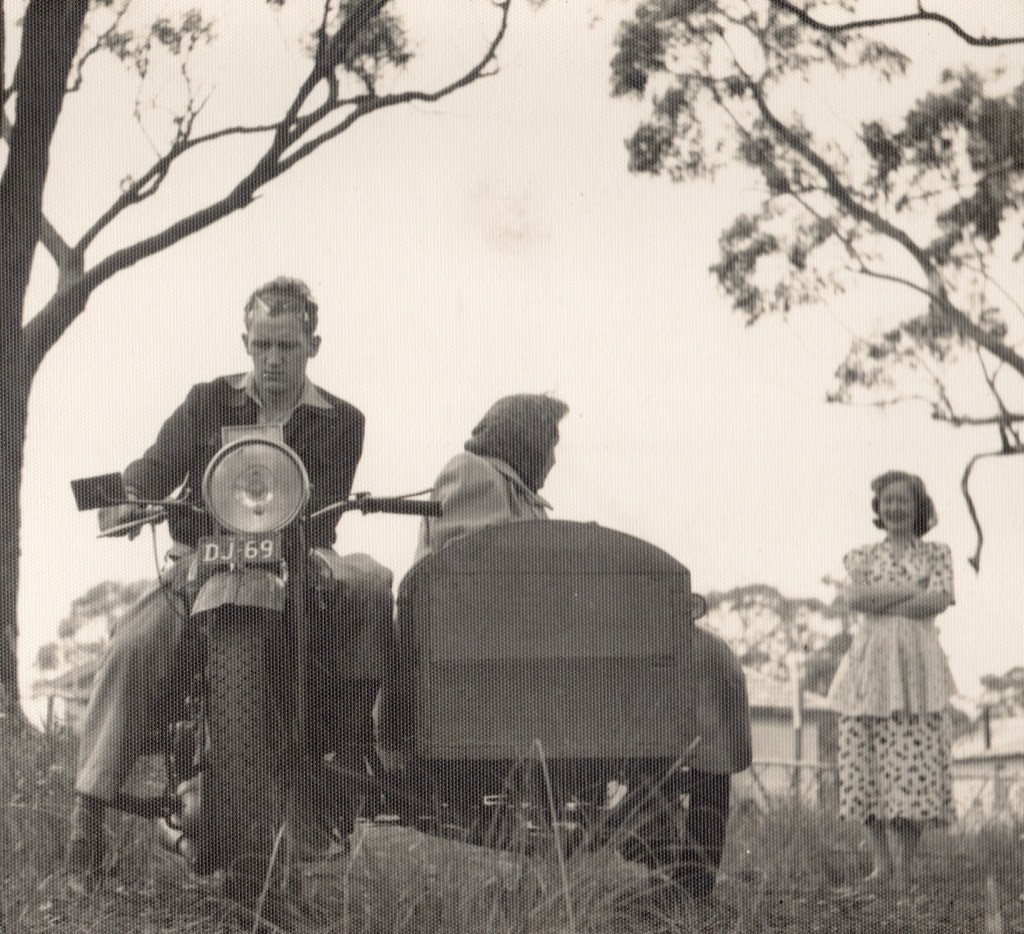
Florence Winton Irving died in 1957 at the magnificent age of 87, still living at 43 Mitchell Street with her youngest son, Cecil Clarence Irving, who was 55 years old. The electoral roll published in 1958 has only Cecil living at the house, but on 21st March 1959 he married Ruby Malcolm Tremain a stenographer in her late 40’s and they live together at Mitchell Street. They are still there in 1963 but the 1968 electoral roll shows them living in Pymble, at 76 Yanco Road, only a few blocks from where Reginald, Cecil older brother was living until his death in 1963.
That is the Irving family details three generations deep from William, who with his wife, Annie Knight, made the journey to Sydney from north-west England in 1879. There are 5th, 6th and 7th generations of family, all quite well documented which I’ll leave for others to detail.
 miles of irvings
Leave a comment