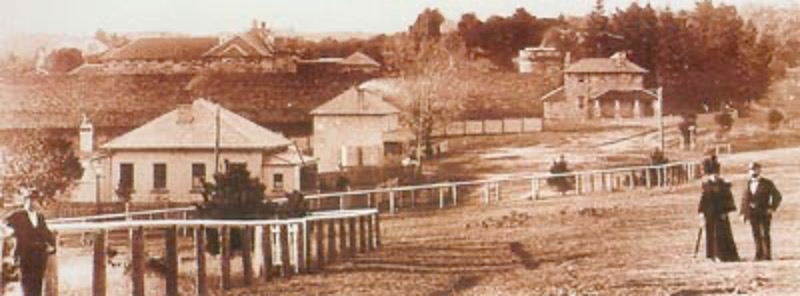
Two families, both from Ireland, both Protestant made their way to Berrima New South Wales decades prior to the celebrated gold rush in Australia. Both families were well respected, involved positively in developing their communities, produced very interesting characters and enjoyed a union of marriage between them.
The first to arrive were Roger’s 3rd Great Grandparents, James Jerome Higgins (abt. 1809 – 1855) and his wife, Mary Ann Winton (abt. 1816-1876) who landed in Port Jackson on 15th November 1833 aboard the Lady East from Liverpool. They had been married earlier in that year in Dublin County, Ireland, travelled cabin class and J.J. Higgins was listed as a merchant. It is unclear where in County Dublin either of them were born or who either of their parents were – there is a christening record associated with the Dublin Church of Ireland for a James Higgins on 16th August 1807 with parents named Samuel Higgins and Elizabeth, however this is not a verifiable link. There is also a Winton family from Holborn, Middlesex where Mary Ann might belong, but I think it is also not verifiable.
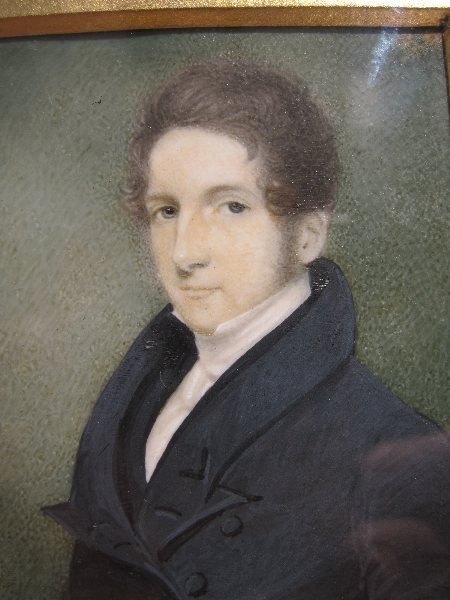
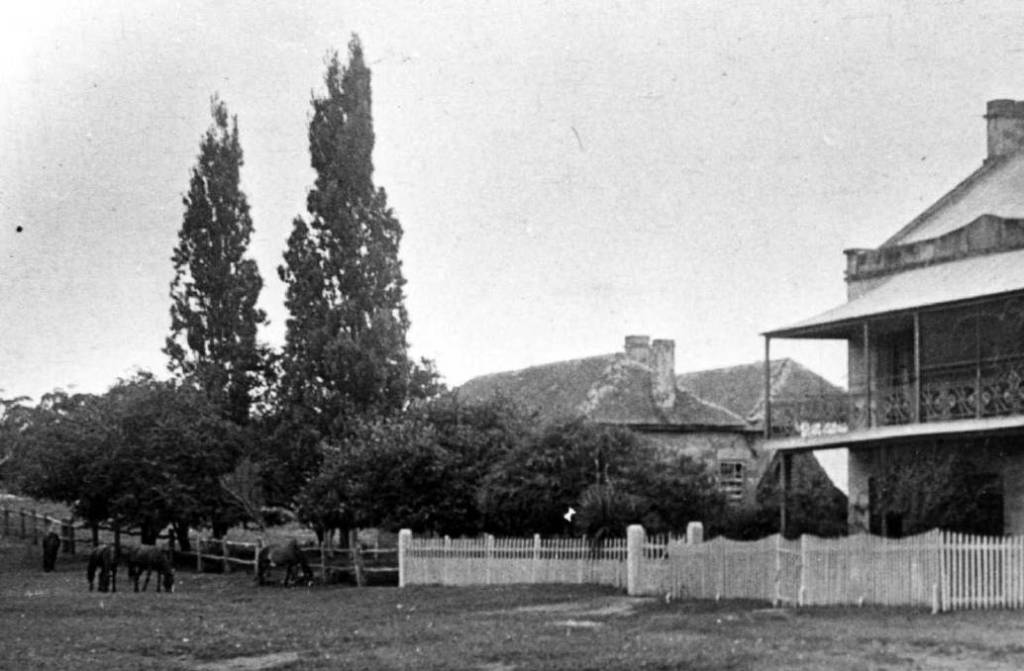
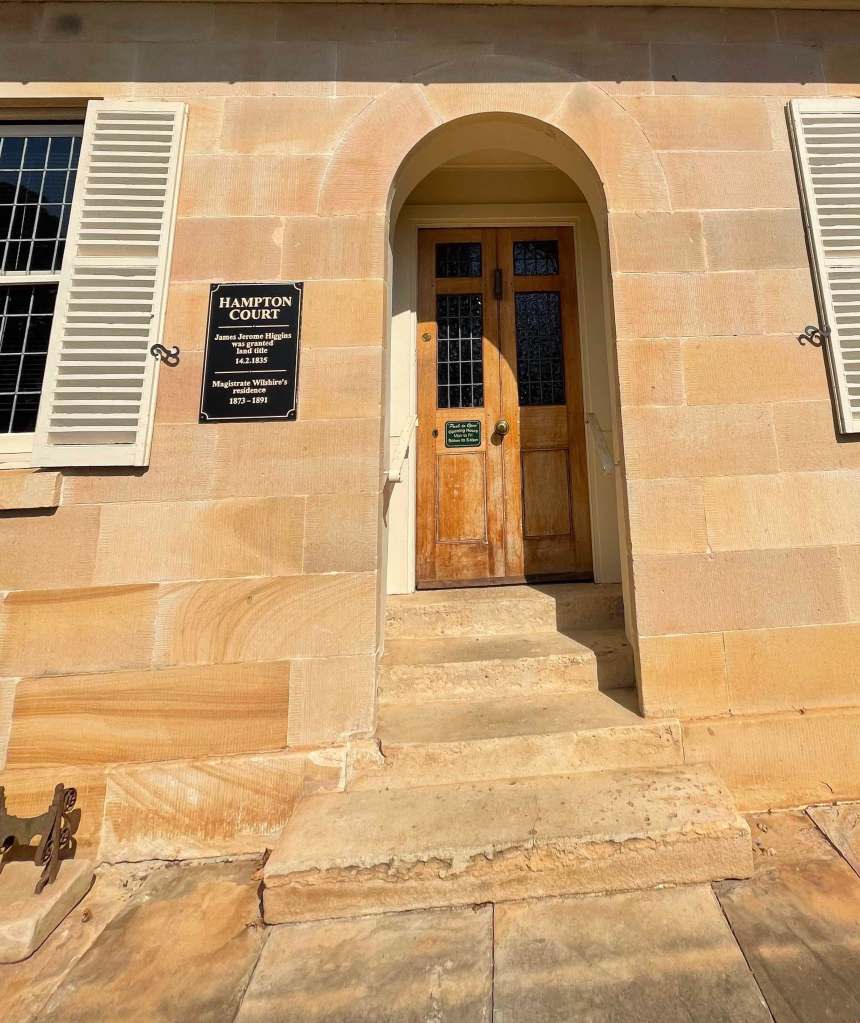
James and Mary first settled in the village of Bong Bong near Moss Vale, acquiring 100 acres of land on which James built a house and general store. James also acquired two parcels of land at Berrima and five parcels of land from the Bank of Australia. In 1835 James received a Crown Grant of land at Berrima and the family moved from Bong Bong to Berrima between 1836 and 1841 where James established himself as a local Storekeeper. In 1840 they built what is now a local landmark in Berrima – “The Magistrate’s House” and lived there for about ten years. It was originally known as Higgins House and was successively known as Hampton Court, Carthona, Stone House and Ballynahinch before it finally became known as The Magistrates House, after the Police Magistrate F.R. Wilshire who lived there in the 1880’s.
James Jerome Higgins was a merchant and auctioneer, for many years the village postmaster, was appointed as a Berrima District Councillor and the Berrima District Coroner. He was also one of three persons holding land in trust for the building of the Anglican Church. He died in Berrima on 3rd February 1855 and was buried on 6th February 1855, leaving 100 acres of land and buildings to his children. It has so far proved impossible to find details on his burial or to source an obituary, which is very curious given the obvious contribution he made to the region. His wife Mary died in 1876 in Hawthorn, Melbourne where she had been living for two years with her granddaughter, Emily Jenkins. Mary is buried in the Boroondara General Cemetery in Kew, Victoria.
The second Irish family, also Roger’s 3rd Great Grandparents, the Reverend William Stone (1783-1870) and his wife Susan Pitt Johnson (1791-1854) arrived almost eight years after the Higgins, on 4th February 1841 into Port Jackson, Sydney on board the Marquis of Hastings which had sailed from Plymouth.
There were some noticeable differences between these two families: Rev. Stone was almost 60 whereas JJ Higgins was in his early 20’s when they left England. The Stone children were all born in Ireland and the Higgins children all born around Berrima. JJ Higgins was an opportunist, merchant and entrepreneur; the Reverend Stone a Trinity trained Clergyman, son of a Trinity trained Clergyman and father of a Trinity trained Clergyman.
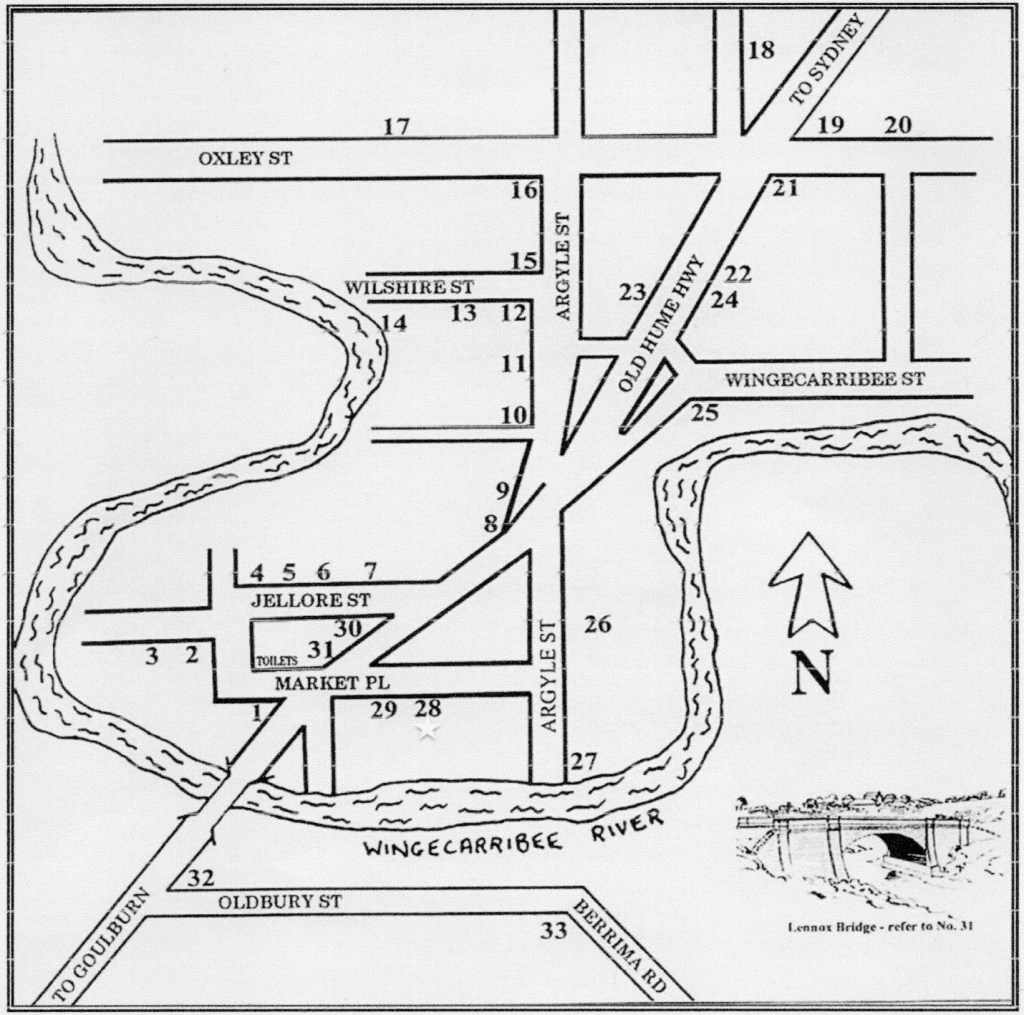
Number 28 is The Magistrates House
William Stone graduated from Trinity College Dublin, Ireland’s oldest University with a B.A. in 1809 after entering in 1802. He was the youngest son of the Reverend George Stone, born in Kilkenny and married Susannah Pitt Johnson in 1813. Susan was from an English military family who had been gifted property during Cromwell’s Irish Campaign in 1649. They had built Quarry Mount House in Killeigh and were connected by marriage and nationality to the Pitts, the Carpenters and the Tarletons, all at some stage prominent members of the English born Irish aristocracy. One of Susan’s nephews, William Henry Johnson (who also migrated to the Bowral region) noted in a letter to a younger family member: “One of my father’s sisters married the Revd. Mr. William Stone, who at the time was Chaplain to the Bishop of Kilkenny. This Revd. Mr. Stone came out to New South Wales and was stationed at Sutton Forest a place about nine miles from Bowral.” Later in his narrative he describes the family’s demise in Ireland: “My father inherited his father’s property at Ballinakill and also Quarry Mount. He sold the former and lived at the latter place, but as the Johnsons were never good at either making or keeping money, and as at that time all the upper class in Ireland seemed to vie with each other in reckless extravagance, he eventually lost all. Quarry Mount House was built by the Captain Johnson and was owned and inhabited by some one of his descendants till my father and the rest of us had to walk out of it and let strangers in. This was not an easy or pleasant thing to be forced to do.”
The younger sons and the younger daughters who married them in these families did not inherit much wealth as it all went to the first-born son. An heir, then a spare, an officer’s commission in one of the branches of the military, church education and position, the “career” was always quite predictable. However, it would seem some of the first-borns weren’t very good at hanging on to it!
Nevertheless, in 1832 Rev. William Stone was able to send his eldest son, George to Trinity College to follow the family tradition. It is worth noting that the students at Trinity College Dublin came not just from Ireland but also Britain and the British Empire. George did not migrate to Australia with the rest of his family, instead becoming a “Perpetual Curate” of the church in Wales, married with children and leaving them a tidy sum on his death in 1863.
The Rev William Stone was appointed to Sutton Forest by the Anglican Church in 1843 to replace Rev George Vidal. He served there many years until he retired in 1858, three years after the death of J.J. Higgins. He remained living at Sutton Forest and died there in 1870. He was buried in the churchyard and has a headstone next to his wife Susan, who had died many years earlier, in January 1854. We visited the church and graveyard in early April 2022 and the inscriptions are barely legible.
The Higgins had twelve children, although two died quite young – the first, James before they came to Australia and the sixth, Caroline in 1843. J.J. had left them all well off with the estate held in trust by his friend Edmund Burke of Mittagong and his son, Bartholomew Burke (who married the eldest daughter Clarice in 1855). It all became a bit messy – Edmund Burke died in 1866 and Bartholomew in 1872 and the Higgins widow Mary failed to appoint new trustees before she died in 1876. When some of the sons tried to sort out the matter sometime around 1879 this is what was determined: the eldest, Eugene (1834-?), had not been seen since 1869 and was presumed dead, possibly in Messina, Sicily. Marcus (1839-1889), the next oldest was prospering very well at Narrandera, James Junior (1844-1909) was insolvent, John (1847-1885 the fourth son) was a successful newspaper proprietor at Gunnedah and Walter (1852-1898), the fifth son and eleventh child was living at Trial Bay near Coffs Harbour and was described as a gentleman. He died in Bellingen.
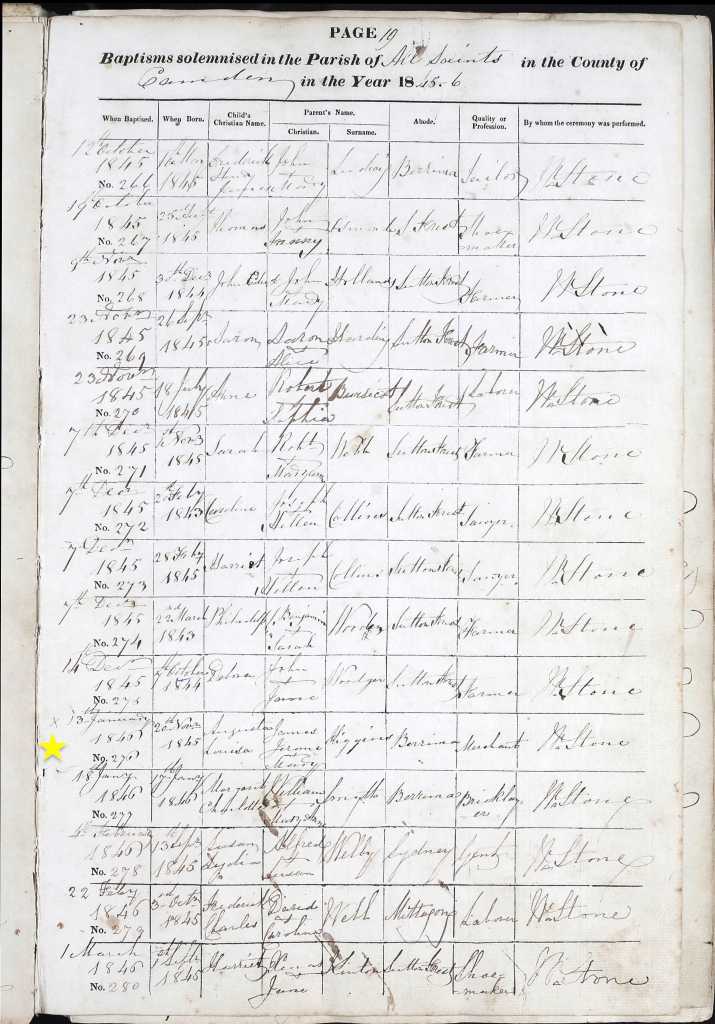
The daughters didn’t appear to have a say about the estate, but they all seemed to enjoy interesting lives which encompassed moving around the state, having children and in some cases more than one husband (not at the same time!). Emily (1837-1870) married in Berrima, lived in Sydney and had three children. Mary Ann (1841-1877) married a prominent grazier Francis Jenkins who owned Buckingbong Station near Narrandera. Mary Ann, like her mother, died in Hawthorn, Melbourne. Clarice (1836- 1918) was married to Bartholomew Burke, one of the estate trustees, but when he died in 1872 she partnered Tom Richards and moved to the Sutherland Shire. Frances Grace (1851-1923) married Henry Marr in Berrima and after he died in 1875, married William Edwards in Wagga Wagga before moving to Manly. Which only leaves Augusta Louisa (1845-1909) who was my 2nd Great Grandmother.
The Reverend William Stone retired in 1858 four years after his wife had died. They had nine children and some of them had married and had children before Susan had died which must have been some comfort for both William and Susan. Some stayed very close and the Reverend did not move from Sutton Forest so that his retirement would have been filled with grandchildren. As previously noted, the eldest son, George graduated from Trinity College and moved to Wales.
Susan (1817-1902), the second child and eldest daughter, married soon after arrival to Alfred Welby. They lived in the nearby town of Robertson and had 10 children. Alicia (1819-1903) married James Smith, had a daughter and settled at nearby Campbelltown. William J.J. (1821-?) became a teacher on the French island Reunion and married two sisters from Reunion. Firstly, Louise Lasthenie Gautier who tragically died at the age of 25 and then her older sister, Anne Alexandrine Gautier. Nothing has been heard of him since! Margaret (1829-1913) married a local, Charles Lindsay Nicholson from Moss Vale in 1854. They had 11 children and stayed in Moss Vale for the rest of their lives. Richard (1830-1913) married his sister-in-law, Susannah Anne Nicholson in 1857. They had 6 children and ended their days at Eden on the South Coast. Thomas Harvey (1831-1897) married Sarah Sophia Wiseman in Sutton Forest in 1859 and they had 4 children. Thomas forged a very successful career with the Post Office, ending up in Albury as the regional head of the Postal Service. Edward Pitt Johnson Stone (1832-1959), who got the whole maternal family names also pursued a career in the Postal Service. He married Maria Todhunter in her hometown of Sydney in 1856. They had 3 children before he died in his mid 20’s.
Which now leaves Henry Stone (1833-1915), the youngest child of the Reverend Stone, who married Augusta Louisa Higgins (1846-1909), the 2nd youngest Higgins daughter in Berrima in 1868. Henry, like two of his older brothers was employed by the Postal Service, both in Berrima and later in Orange. They had 11 children, nine of the first ten who were born in Berrima, one in Goulburn and the 11th in Orange where they had moved to by 1885.
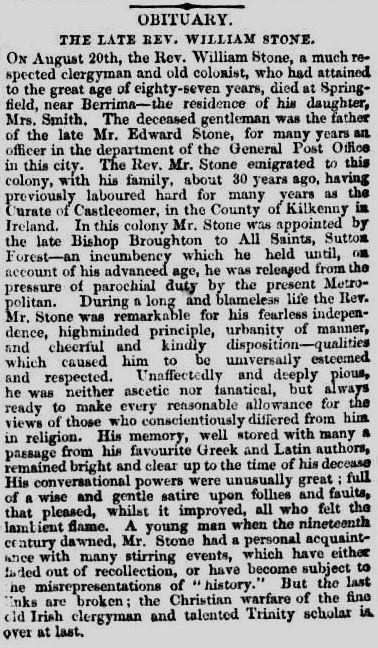
The Reverend William Stone died on August 20th at Springfield, near Berrima the home of his daughter Alicia and her husband James Smith. If his send-off was anything like his obituary it would have one of the funerals of the decade. I particularly like the bit about quoting passages from his favourite Latin and Greek authors.
Henry Stone and Augusta Louisa Higgins were living in retirement in Orange at the end of their lives. Their first daughter (the one born in Goulburn), Florence Winton Stone was Roger’s great grandmother – she married Ted Irving and they had four children and lived in Sydney before moving around the country river towns of Corryong, Tocumwal and Yarrawonga where Ted made his living as a photographer. Sadly, not a photo has survived from his business, but the obituary of his father-in-law, Henry Stone does.
It says in part –
“Mr. Stone was a native of Ireland, particularly well read,and until recently was a frequent contributor to the columns of‘The Leader’ under the nom de plume of Kilkenny Boy.”
The Irish settlers certainly left their mark.
 miles of irvings
Leave a comment